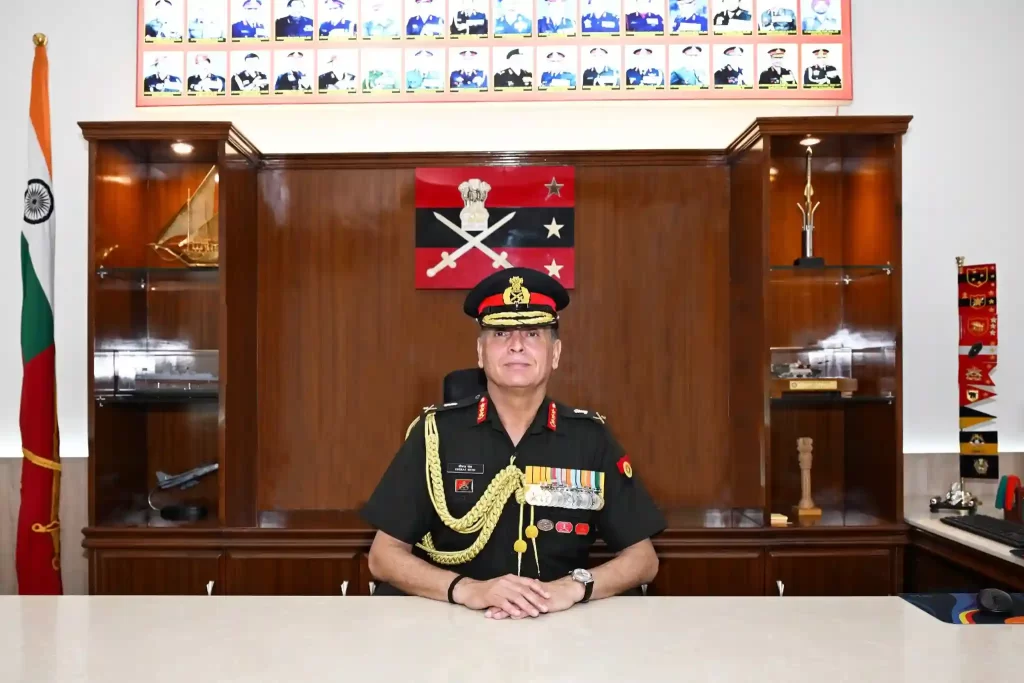


Four Stars of Destiny is the autobiography of Manoj Mukund Naravane, the former Chief of the Indian Army. The book offers a detailed account of Naravane’s personal life, military career, leadership experiences, and the strategic challenges he faced during his decades of service in the armed forces. The memoir traces his journey from his early years and training as a young cadet to eventually becoming the 28th Chief of the Indian Army, a position he held from December 2019 to April 2022.
The book is considered an important narrative of modern Indian military leadership, providing readers with insights into the functioning of the Indian Army, strategic decision-making at the highest levels, and the complexities of managing national security challenges in the twenty-first century.
About the Author
General Manoj Mukund Naravane was born on 22 April 1960 in Pune, Maharashtra. He comes from a family with a background in public service—his father served as an officer in the Indian Air Force while his mother worked with All India Radio. Naravane received his education in Pune before joining the National Defence Academy and later the Indian Military Academy, where he began his professional military journey.
He was commissioned into the 7th Battalion of the Sikh Light Infantry in June 1980, beginning a career that would span more than four decades. Over the years, he served in a wide range of operational, command, and staff roles across India and abroad. His service included counter-insurgency operations in Jammu and Kashmir and the Northeast, as well as participation in the Indian Peace Keeping Force in Sri Lanka.
These experiences shaped his leadership style and strategic understanding, themes that are extensively discussed in his autobiography.
Journey from Cadet to Army Chief
A central theme of Four Stars of Destiny is Naravane’s professional journey through the ranks of the Indian Army. The memoir describes how discipline, training, and operational experience helped shape his character and leadership philosophy.
The book recounts his early days as a young officer and his exposure to challenging military environments. It highlights how officers are trained to make difficult decisions under pressure while maintaining responsibility for the lives of their soldiers.
Naravane gradually rose through the ranks, commanding various units and formations and holding several senior positions in the Indian Army. His leadership roles included command of an infantry brigade, senior operational responsibilities in counter-insurgency areas, and high-level appointments in the defence establishment.
Eventually, he rose to become the Chief of the Army Staff, the highest position in the Indian Army. His tenure as army chief coincided with several significant national security developments and military challenges.
Insights into Military Leadership
One of the key aspects of the memoir is its discussion of leadership and decision-making in the armed forces. Naravane reflects on the values of discipline, professionalism, and responsibility that define military leadership.
Through personal anecdotes and experiences, he explains how officers must balance strategic planning with ground-level realities. The book also explores the importance of teamwork, trust within the chain of command, and the ethical responsibilities associated with leadership in the military.
The memoir also offers lessons on management and leadership that extend beyond the armed forces, showing how military principles such as preparedness, resilience, and clarity of command can be applied in other professional fields as well.
Key Military Events Discussed in the Book
Four Stars of Destiny also provides an insider’s perspective on several important security developments that took place during Naravane’s career.
Among the most significant is the India-China military standoff in eastern Ladakh in 2020, one of the most serious confrontations between the two countries since the 1962 war. The memoir discusses the strategic decisions taken by the Indian military leadership during the crisis and the measures implemented to manage tensions along the Line of Actual Control (LAC).
The book also touches upon other policy and organisational changes within the armed forces, including reforms related to recruitment and military preparedness.
Publication and Controversy
Although the memoir was originally scheduled for publication in 2024 by Penguin Random House India, its release has been delayed due to the review process required for books written by former senior military officials.
In India, manuscripts written by senior defence personnel often undergo scrutiny by the Ministry of Defence before publication to ensure that sensitive information related to national security is not disclosed.
The book also became the subject of political debate in Parliament after excerpts from the manuscript were cited during discussions on national security issues. This controversy brought renewed public attention to the memoir even before its official release.
Significance of the Memoir
Despite the publication delays, Four Stars of Destiny has generated considerable interest among readers, military analysts, and policymakers. The memoir is expected to provide valuable insights into the workings of India’s military leadership and the challenges faced by the armed forces in an evolving geopolitical environment.
More than just a record of personal achievements, the book is also seen as a reflection on the values and responsibilities associated with serving in the armed forces. It highlights how decades of dedication, discipline, and leadership can shape both an individual career and the broader institution of the military.
Conclusion
Four Stars of Destiny stands as an important account of the life and career of General Manoj Mukund Naravane. By narrating his journey from a young cadet to the head of the Indian Army, the autobiography provides readers with a deeper understanding of military service, leadership, and national security.
The memoir not only documents a distinguished military career but also offers lessons on perseverance, duty, and leadership—qualities that remain central to the ethos of the Indian armed forces.