
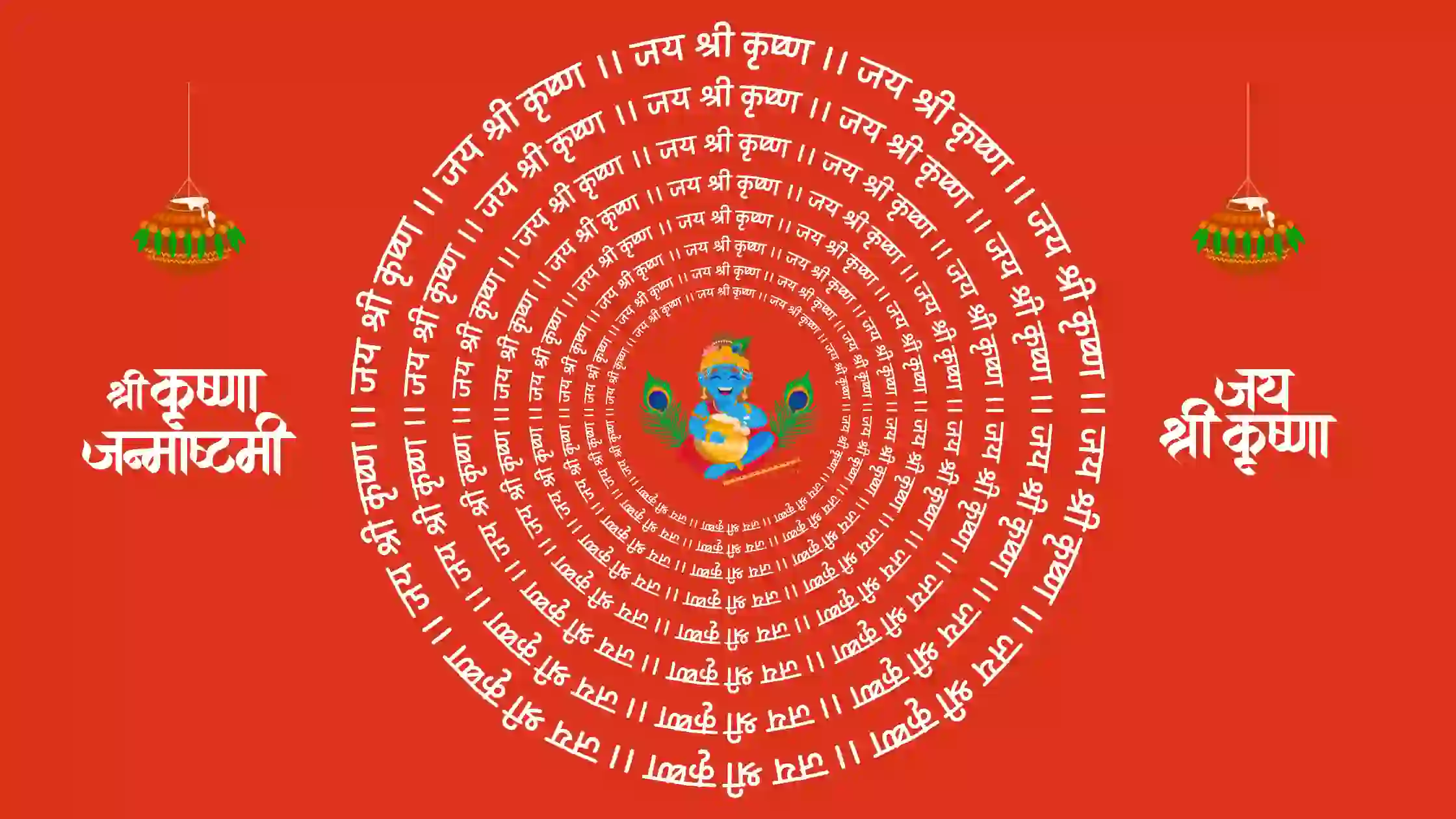
Krishna Janmashtami and Dahi Handi are two of India’s most vibrant religious festivals, and Janmashtami in particular is widely anticipated nationwide. The first is a reverent observance of Lord Krishna’s birth, while Dahi Handi, which follows on the next day, is a grand display of teamwork and tenacity as Govinda teams form human pyramids to reach a pot of yogurt that has been hoisted up a building or on a crane.
The Story Behind The Festival
Krishna Janmashtami is the birthday of Lord Krishna, the eighth incarnation of Vishnu, who is widely worshiped across Hinduism as a divine figure. According to legend, Krishna was born in Mathura when his parents, Devaki and Vasudeva, were imprisoned by the tyrant king Kamsa. It is said that the newborn baby was smuggled across the Yamuna river to Gokul where he was raised by his foster parents Yashoda and Nanda. Krishna Janmashtami and Dahi Handi are celebrated extensively in Maharashtra, particularly in Mumbai, Thane, and Pune. On the day of Dahi Handi, which is followed by Janmashtami the next day, Govinda teams compete with each other to form human pyramids and reach a pot of curd that has been tied between two buildings or on a crane. Teams perform extensively and are showered with water, cheers, and chants by spectators.
On the day of Dahi Handi, Govinda teams compete with each other to form human pyramids and reach a pot of curd that has been tied between two buildings or on a crane. Teams perform extensively and are showered with water, cheers, and chants by spectators. The pot, called the handi, is filled with curd, butter, milk, flattened rice, and fruits and sometimes contains a cash prize, and Govinda teams train hard for months to form human pyramids, some as high as five, seven, or even nine levels, in an attempt to reach it and break it open.
Janmashtami: Devotion And Ritual
Krishna Janmashtami is a festival of personal faith, communal celebration, and devotion. Many devotees observe a fast until midnight, the believed time of Krishna’s birth, and only break it once the day has started. Temples are decorated, flower garlands and lamps are hung, and offerings of food are made and the evenings and nights are spent in prayer, song, and dance.
In homes, altars are set up with pictures or idols of little Krishna, sometimes showing him crawling or stealing butter, and devotional songs and poems are sung and recited. Devotees believe that Krishna is not only a loving and wise deity but an all-powerful one and Janmashtami is seen by many as a chance to connect with Krishna in a deeper spiritual way.
Dahi Handi: Faith As A Public Performance
While Janmashtami is more of a devotional affair, Dahi Handi is a public display of faith and an expression of devotion in action. It has its epicentre in Maharashtra, where Govinda teams, or pathaks , compete to break as many handis (pots) as possible in a single day. Teams travel from place to place, sometimes on open trucks, with drums, music, and fans, and are cheered on by crowds. The teams then form human pyramids, with the strongest and heaviest men at the bottom and the lightest and agilest at the top, in an attempt to reach a pot of curd that has been tied between two buildings or on a crane. When the pot is broken open, the curd, milk, and fruits spill out, water is sprayed from nearby balconies, drums are beaten, and the pyramid collapses in a mass of cheers and laughter. It is a spectacle for the crowds, a test of strength and agility for the competitors.
It is the combination of the height of the pyramid and the trust that the men at the top must place in the men at the bottom that makes Dahi Handi such an enthralling spectacle. The men at the top of the pyramid must trust that the men at the bottom, who are holding them up, will not fail. With their necks and backs exposed, they are at the mercy of the men below, who are risking their lives to make sure that they do not. It is not uncommon for men from different castes and classes to join forces, and for those who might not have crossed paths otherwise to find themselves working together in the name of the festival. For many, it is a chance to earn money, and for some it is a chance to earn fame and recognition. In recent years, teams have competed for large cash prizes and the festival has become a way for communities to not only come together but to assert their identity and show off their organisational skills.
Safety, Regulation, And Change
As the festival has grown in popularity and scale, so too have the risks and dangers associated with it. In the past, there have been reports of serious injuries and even deaths as pyramids of men have fallen from great heights. As a result, rules have been put in place to try to reduce the risks and ensure the safety of participants. These include a ban on pyramids of more than a certain height and the use of body armour, helmets, and harnesses to protect participants.
In addition to this, permission must be obtained from local authorities and first aid must be available at all times. Schools and housing societies are encouraged to participate in celebrations that do not involve large pyramids of people, especially where children are involved. But these restrictions have not dulled the enthusiasm for the festival and for the human pyramids that take centre stage in its celebrations. They have ensured that the festival continues to attract large crowds and participants, and the spectacle of seeing people forming pyramids of incredible heights is still as enthralling as ever. In recent years, all-female Govinda teams have also emerged, dazzling crowds with their displays.
While Maharashtra is the festival’s epicentre, it is celebrated in other parts of the country as well, although it is not as widely observed elsewhere. In some places, it is known as Gopalakala and in Andhra Pradesh and Telangana it is celebrated as Utlotsavam. Everywhere it is celebrated, it is a festival that brings communities together in devotion, faith, and a spirit of playfulness. It is a way for people to come together in a spirit of goodwill and to celebrate the life and times of Lord Krishna. In Mathura and Vrindavan, the focus is more on Janmashtami, with processions and rituals, rather than Dahi Handi. However, the festival is still observed in these cities, although on a smaller scale than in Maharashtra.
Faith, Fun, And Festivity
The festival holds a special place in the hearts of many, and it is widely celebrated across India. It is a festival of faith, fun, and festivity, bringing communities together in a spirit of goodwill and a spirit of devotion. It is a time for devotees to express their faith and for competitors to test their skills, but it is also a time for reflection, as people remember the life and times of Lord Krishna and his many adventures. Above all, it is a time for people to come together, in whatever way they can, to share in the joy and the spectacle of the festival.
Conclusion
Krishna Janmashtami and Dahi Handi 2026 will be celebrated on September 4 and 5 and will see temples decorated, processions held, human pyramids formed, and pots of curd broken. It is a festival that unites people of all ages and backgrounds and brings them together in a spirit of devotion and festivity. As the sun sets on September 4, 2026, and the first whispers of Janmashtami begin to be heard, the festival will continue to captivate and inspire all who experience it.