
Introduction
Prime Minister Narendra Modi has made some of his most consequential speeches in front of Parliament. He has made others at Red Fort, at election rallies, and on Mann Ki Baat. But the speech he delivered at a public function in Hyderabad in the second week of May 2026 was different from most of them in one important way: it asked nothing of the government. It asked everything of the citizen.
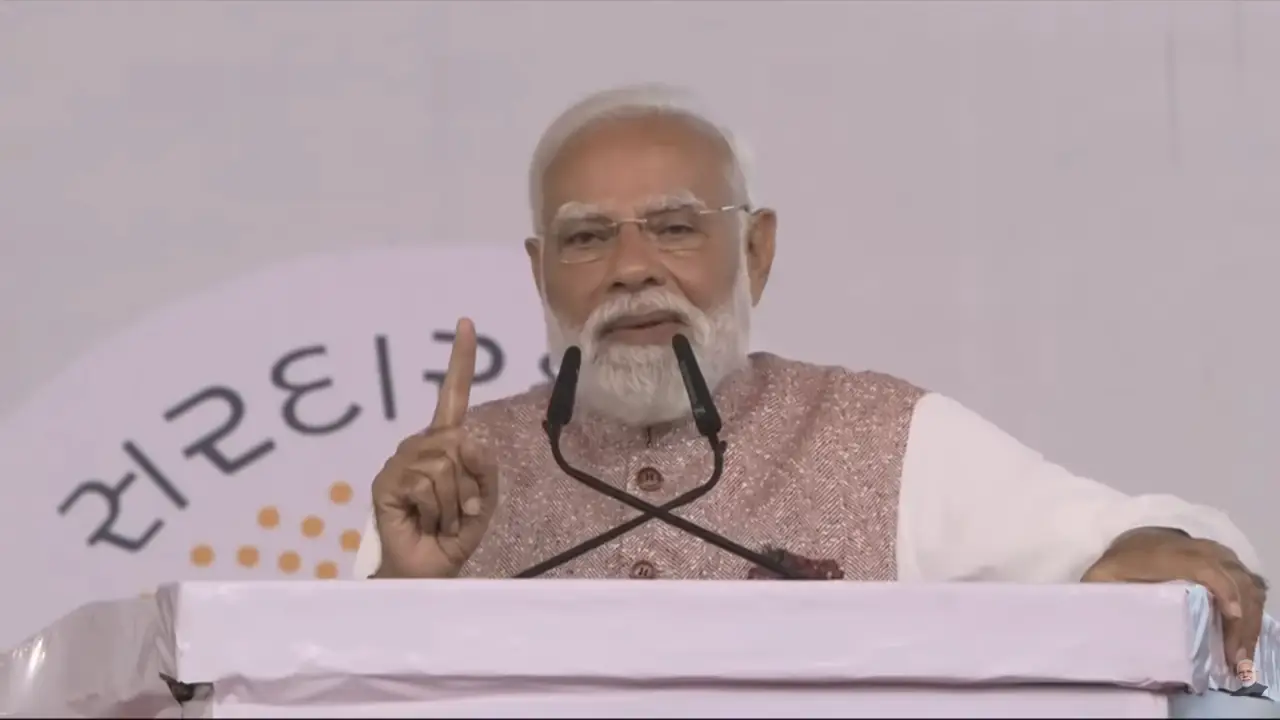
Prime Minister Modi called upon countrymen to become partners in strengthening the nation amid the West Asia crisis. Addressing a function in Hyderabad, he made seven appeals to the nation.
Seven specific asks. No legislation behind them, no penalty for non-compliance, no new taxes or emergency decree. Just a Prime Minister standing before a crowd and asking 1.4 billion people to change their daily behaviour — voluntarily, collectively, and urgently — because a war they had no part in starting was now threatening the economic stability of a country they shared.
"If 140 crore people take one step forward, the country also moves 140 crore steps forward," Modi said, setting the tone for what followed.
The speech was, at one level, a call to austerity. At another level, it was the government's most explicit public acknowledgement yet of how deeply the Strait of Hormuz crisis was beginning to press on India's economic foundations — and of how much the government needed its citizens to understand and respond to that pressure.
The Context: Why This Speech Was Necessary
To understand what Modi said in Hyderabad, you need to understand the specific economic weight that the West Asia conflict had placed on India by early May 2026.
India is the world's third-largest oil importer, behind only China and the United States. From April 2025 to March 2026, India imported crude oil worth $123 billion — the single largest contributor to India's import budget. That was before the Strait of Hormuz closed. After it closed, oil prices surged past $120 per barrel at their March peak. Brent crude was still trading above $100 per barrel at the time of the Hyderabad speech, with a 52-week high of $126 per barrel recorded at the end of the previous month.
India imports approximately 88 percent of its crude oil requirements and roughly 60 percent of its LPG, with 90 percent of that supply historically transiting the Strait of Hormuz. Every dollar by which the oil price rises above its baseline represents billions of additional dollars in India's import bill annually.
Oil is only one part of the problem. Indians imported gold worth $72 billion in the 2025-2026 fiscal year — second in the world only to China. Gold imports are paid in US dollars. They add nothing to India's productive capacity. They represent pure foreign exchange outflow.
Indians travelling abroad spent $31.7 billion in 2023-24, with about 30.9 million Indian nationals departing India in 2024, up from 27.9 million in 2023. Foreign travel, like gold, is paid in foreign currency and constitutes a direct drain on reserves.
India is also the world's largest importer of urea, having imported about 10 million tonnes of the fertiliser last year. Edible oil imports add another $14 to 16 billion annually.
The International Monetary Fund projected that India's current account deficit will be $84 billion in 2026. A current account deficit of that magnitude, in a year when the country's largest import — oil — had risen dramatically in cost, and when the rupee was under pressure from dollar strengthening, created precisely the kind of economic vulnerability that the government needed citizens to help manage.
A weaker rupee means imports become more expensive, which eventually affects fuel prices, transportation costs and inflation across sectors. The government wanted citizens to voluntarily adopt spending discipline before global economic conditions worsened further. The appeal was also being viewed as a preventive measure to control the current account deficit and reduce pressure on India's forex reserves.
This was the economic landscape when the Prime Minister took the stage in Hyderabad.
The Seven Appeals: In Full
Appeal 1: Use Public Transport and Carpooling
PM Modi urged citizens to help conserve foreign exchange reserves by reducing the consumption of imported fuel through the use of public transport and carpooling.
Calling fuel conservation the "need of the hour," Modi appealed to citizens to reduce unnecessary usage of petrol, diesel, and gas amid fears of rising crude oil prices due to tensions in West Asia. He said that shifting to buses, metros, and shared rides — even partially and temporarily — would reduce the national import burden at a time when every barrel saved had a direct and measurable impact on India's foreign exchange position.
Appeal 2: Revive Work-From-Home
Modi said people should move to online meetings instead of physical gatherings and use the work-from-home model that was adopted globally during the COVID-19 pandemic. He explained that such practices would cut down the use of fuel.
Modi said India had successfully adapted to virtual work, video conferencing, and online meetings during the Covid-19 period and those habits should be revived in the national interest. He urged offices and businesses to bring back work-from-home practices wherever possible to cut fuel consumption.
The COVID parallel was deliberate. During the pandemic, India's fuel consumption dropped significantly — not because of any conscious conservation effort, but as a side effect of lockdowns. Modi was asking the country to replicate that consumption reduction voluntarily, without waiting for an emergency to force it.
Appeal 3: Avoid Foreign Travel for One Year
Modi asked Indians to cut nonessential overseas travel for at least a year. He urged citizens to rethink discretionary spending, including reconsidering destination weddings abroad.
This was perhaps the most direct ask directed at urban, upper-middle-class Indians. Foreign travel — holidays in Europe and Southeast Asia, business trips, destination weddings in Bali and Tuscany — has become a significant and growing category of Indian consumer spending. Every overseas holiday spent in foreign currency is dollars leaving India. The aggregate of millions of such decisions, Modi's argument ran, had a real and measurable impact on the reserve position.
Appeal 4: Stop or Limit Gold Purchases for a Year
Modi asked Indians to avoid buying gold and to limit excessive gold purchases for a year.
According to him, reducing gold imports would help India reduce pressure on its forex reserves at a time of global economic stress.
Gold is India's most culturally embedded luxury import and its second-largest import category after oil. Indians buy gold at weddings, festivals, and as investment. At $72 billion in annual imports, it represents a massive and, in the Prime Minister's framing, largely discretionary outflow. Unlike oil, gold does not run a turbine or fuel a factory. It can, in principle, be deferred. Modi was asking Indians to exercise exactly that deferral — for one year, as a conscious act of national economic solidarity.
Appeal 5: Reduce Cooking Oil Consumption
Modi called on families to reduce their cooking oil consumption, describing that move as both healthy and patriotic.
India imports a significant portion of its edible oil — primarily palm oil from Malaysia and Indonesia, and sunflower oil that has been affected by the same geopolitical disruptions that have elevated energy prices. The framing of reduced cooking oil consumption as both a health choice and a patriotic act was characteristic of the speech's broader tone: connecting individual household decisions to national macroeconomic outcomes.
Appeal 6: Embrace Solar Irrigation and Reduce Chemical Fertiliser Use
The Prime Minister asked citizens to reduce edible oil consumption and urged farmers to cut dependence on chemical fertilisers imported from abroad. He encouraged greater adoption of electric vehicles and asked businesses to increasingly use railway networks for parcel and cargo movement instead of road transport. The move, he said, would lower fuel dependency and support long-term energy security.
Modi asked farmers to cut their fertiliser use by as much as half. India is the world's largest importer of urea. Urea is produced from natural gas, the price of which has spiked significantly due to the Gulf crisis. Reducing fertiliser use — through better application techniques, organic alternatives, and precision agriculture — would reduce both the import bill and the agricultural sector's vulnerability to global supply disruptions.
Appeal 7: Buy Indian, Vocal for Local
Championing the Vocal for Local movement, the Prime Minister stressed that self-reliance and organic farming are essential for India to achieve its Viksit Bharat goal by 2047.
Alongside the appeal to avoid unnecessary gold purchases, Modi urged citizens to prioritise Indian-made products over imported goods. The larger idea behind this appeal is linked to the government's Atmanirbhar Bharat strategy.
How Markets Read the Speech
The seven appeals were not delivered in a vacuum. They were received — immediately — by financial markets, and the markets' reaction was one of the most revealing interpretations of what Modi had said.
All of this from a Prime Minister who had simply asked people to use public transport, skip gold purchases, cancel their foreign holidays, reduce cooking oil consumption, buy Indian products, shift to solar irrigation, and cut back on chemical fertilisers. Seven appeals. No legislation. No new taxes. No emergency decree. Just words — and markets that understood exactly what those words were really saying.
What the markets heard in the Hyderabad speech was not a Prime Minister asking for small behavioural adjustments. They heard a Prime Minister signalling that the West Asia crisis was serious enough to require explicit public mobilisation — and that the government's own reserves were under enough pressure that it needed citizen behaviour to change to protect them. That signal, read through the lens of economic analysis rather than political messaging, was more alarming than reassuring.
The Government's Parallel Response: Seven Empowered Groups
The Hyderabad speech was the public-facing dimension of a broader government response to the energy crisis that had been taking shape for weeks.
Prime Minister Modi had announced the constitution of seven empowered groups to deal with potential long-term impacts of the West Asia conflict, urging states to work with the Centre in a Team India approach. Flagging "serious side effects of the war," Modi said the seven empowered groups would deal with the consequences of war and evolve strategies on fuel, fertilisers, gas, supply chains, and inflation.
Modi also said India is in constant touch with all parties, including Iran, Israel, and the United States, to stress de-escalation. He warned miscreants against taking advantage of the crisis and asked state governments to check black marketing and hoarding. The Prime Minister said the government is trying to procure gas and crude oil from all available sources, and efforts on this front will continue in the coming days to ensure that the common people are not affected.
Earlier, in a statement to the Lok Sabha in March 2026, the Prime Minister had stressed that there was no energy security crisis in India, while stating the country holds more than 5.3 million metric tonnes of strategic petroleum reserves and is working on arrangements for an additional 6.5 million metric tonnes of storage. He said all agencies — coastal security, border security, cyber security and strategic installations — have been put on high alert, and expressed confidence that India would successfully navigate the challenge just as it had during Covid-19.
The gap between that March assurance ("no energy crisis") and the May Hyderabad speech ("please stop buying gold for a year") reflects the rapid deterioration in global energy conditions between March and May, as the dual US-Iran blockade took full effect and Brent crude held persistently above $100 per barrel.
What the Numbers Behind the Appeals Look Like
The economic logic of the seven appeals becomes clear when the import data is laid out alongside the asks.
Import Category | Annual Value | Appeal Made |
Crude Oil | $123 billion | Use public transport, WFH, carpooling |
Gold | $72 billion | Avoid or limit gold purchases for one year |
Edible Oils | $14-16 billion | Reduce cooking oil consumption |
Urea (Fertilisers) | ~$3-4 billion (10 million tonnes) | Cut fertiliser use by up to half |
Foreign Travel | $31.7 billion (spending) | Avoid foreign travel for one year |
India's foreign exchange reserves are depleted by large volumes of imports of oil, gold, fertilisers, and by Indians spending abroad. Of these expenses, oil and fertilisers are hard for India to cut back on — energy imports are essential to drive India's economy, and fertilisers are critical for agriculture.
Which leaves gold, foreign travel, and edible oil as the categories where consumer behaviour change can meaningfully move the needle without damaging economic output. The Prime Minister's seven appeals were, in their economic logic, precisely targeted at the discretionary segments of India's import bill — the components that can be reduced without shutting down a factory or starving a farm.
The Challenges of Behaviour Change at Scale
For many citizens, especially in rural and semi-urban areas, some of these changes may require structural support from the government to become feasible. The availability and accessibility of public transport in smaller cities, the affordability and infrastructure for electric vehicles, the willingness of businesses to adopt hybrid work models, cultural preferences related to gold purchases and foreign travel, and awareness and support for natural farming practices are all factors that determine whether the appeals can be translated into actual behaviour change.
Gold, specifically, presents a cultural challenge that economic appeals alone cannot fully resolve. In India, gold is not simply an investment or a luxury. It is embedded in wedding rituals, religious ceremonies, and family wealth-preservation traditions that span centuries. Asking families to forego gold purchases — even for a year — touches practices that are not easily rationalised away by reference to the current account deficit.
PM Modi's appeal is being seen not merely as financial advice but as an attempt to prepare the country for possible global economic turbulence while encouraging what many economists call economic nationalism. The appeal is also being viewed as a preventive measure to control the current account deficit and reduce pressure on India's forex reserves.
The Historical Echo: A Different Kind of National Ask
India has seen Prime Ministers ask things of citizens before. Lal Bahadur Shastri's "Jai Jawan, Jai Kisan" included an appeal to skip one meal a week during the 1965 war. Indira Gandhi nationalised banks and imposed emergency in the name of national economic discipline. Rajiv Gandhi championed the "Mera Bharat Mahan" spirit through tourism promotion.
Modi's own pandemic-era communication — the Janata Curfew, the balcony clapping, the diya lighting — showed that he understands how to mobilise collective public action through symbolic appeals, not just legislation. The Hyderabad speech applied the same communication philosophy to an economic crisis.
The difference is that in 2020, the ask was about staying home. In 2026, it is about changing consumption patterns that are deeply ingrained in household economics and cultural practice — and doing so not under the compulsion of a lockdown but voluntarily, in the middle of normal daily life.
PM Modi's Hyderabad speech can be seen as an attempt to transform economic management into a collective national movement. In times of global instability, such an approach emphasises resilience through unity and discipline. Whether it is reducing fuel consumption, supporting local industries, conserving foreign exchange, or adopting sustainable farming practices, the underlying message remains consistent: India's economic strength lies not just in its policies, but in the collective actions of its 1.4 billion citizens.
Conclusion: Seven Asks and One Argument
The seven appeals delivered in Hyderabad added up to a single, coherent argument: that India's economic resilience in a time of global crisis is not solely a function of what the government does in its policy rooms, but of what 1.4 billion citizens do in their offices, kitchens, jewellery stores, and travel agents.
The Prime Minister was not asking for sacrifice in the way wartime leaders ask for sacrifice. He was asking for adjustment — temporary, voluntary, and grounded in the explicit understanding that the decisions of individual households, aggregated across the country, are themselves a form of national economic policy.
Whether the appeals will produce measurable changes in India's import patterns is something only the monthly trade data of the coming quarters will answer. What is already clear is that the speech itself was a signal — one that financial markets, economists, and ordinary citizens read with equal attention and unequal conclusions.
A Prime Minister who asks his citizens to stop buying gold for a year is not describing a minor inconvenience. He is describing a world in which the choices of the most ordinary household are now, whether those households know it or not, part of the country's front line.