


Nation First: PM Modi’s Seven Appeals to India in a Time of Global Energy Crisis
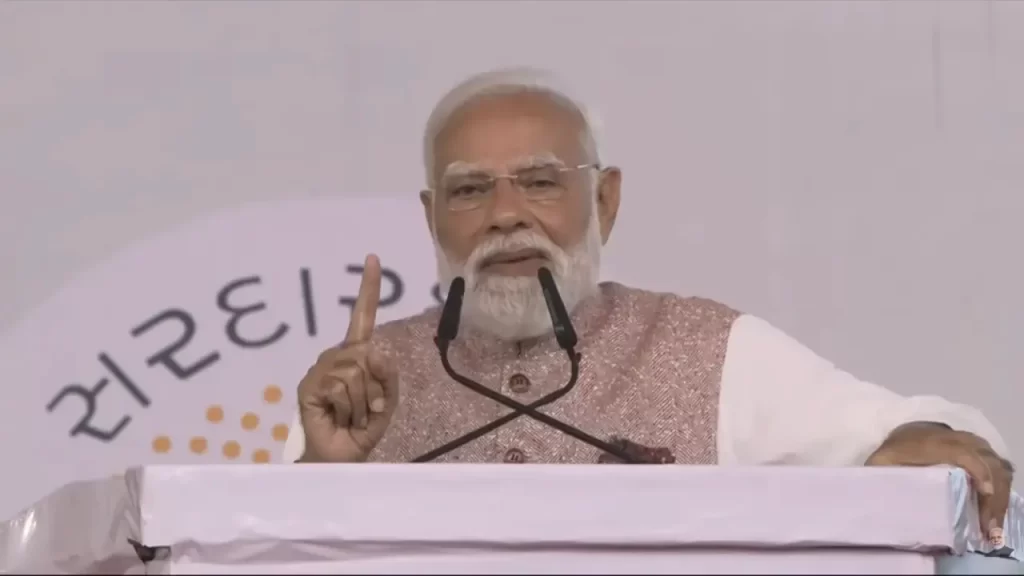
IntroductionPrime Minister Narendra Modi has made some of his most consequential speeches in front of Parliament. He has made others at Red Fort, at election rallies, and on Mann Ki Baat. But the speech he delivered at a public function in Hyderabad in the second week of May 2026 was different from most of them in one important way: it asked nothing of the government. It asked everything of the citizen.Prime Minister Modi called upon countrymen to become partners in strengthening the nation amid the West Asia crisis. Addressing a function in Hyderabad, he made seven appeals to the nation.Seven specific asks. No legislation behind them, no penalty for non-compliance, no new taxes or emergency decree. Just a Prime Minister standing before a crowd and asking 1.4 billion people to change their daily behaviour — voluntarily, collectively, and urgently — because a war they had no part in starting was now threatening the economic stability of a country they shared.”If 140 crore people take one step forward, the country also moves 140 crore steps forward,” Modi said, setting the tone for what followed.The speech was, at one level, a call to austerity. At another level, it was the government’s most explicit public acknowledgement yet of how deeply the Strait of Hormuz crisis was beginning to press on India’s economic foundations — and of how much the government needed its citizens to understand and respond to that pressure.The Context: Why This Speech Was NecessaryTo understand what Modi said in Hyderabad, you need to understand the specific economic weight that the West Asia conflict had placed on India by early May 2026.India is the world’s third-largest oil importer, behind only China and the United States. From April 2025 to March 2026, India imported crude oil worth $123 billion — the single largest contributor to India’s import budget. That was before the Strait of Hormuz closed. After it closed, oil prices surged past $120 per barrel at their March peak. Brent crude was still trading above $100 per barrel at the time of the Hyderabad speech, with a 52-week high of $126 per barrel recorded at the end of the previous month.India imports approximately 88 percent of its crude oil requirements and roughly 60 percent of its LPG, with 90 percent of that supply historically transiting the Strait of Hormuz. Every dollar by which the oil price rises above its baseline represents billions of additional dollars in India’s import bill annually.Oil is only one part of the problem. Indians imported gold worth $72 billion in the 2025-2026 fiscal year — second in the world only to China. Gold imports are paid in US dollars. They add nothing to India’s productive capacity. They represent pure foreign exchange outflow.Indians travelling abroad spent $31.7 billion in 2023-24, with about 30.9 million Indian nationals departing India in 2024, up from 27.9 million in 2023. Foreign travel, like gold, is paid in foreign currency and constitutes a direct drain on reserves.India is also the world’s largest importer of urea, having imported about 10 million tonnes of the fertiliser last year. Edible oil imports add another $14 to 16 billion annually.The International Monetary Fund projected that India’s current account deficit will be $84 billion in 2026. A current account deficit of that magnitude, in a year when the country’s largest import — oil — had risen dramatically in cost, and when the rupee was under pressure from dollar strengthening, created precisely the kind of economic vulnerability that the government needed citizens to help manage.A weaker rupee means imports become more expensive, which eventually affects fuel prices, transportation costs and inflation across sectors. The government wanted citizens to voluntarily adopt spending discipline before global economic conditions worsened further. The appeal was also being viewed as a preventive measure to control the current account deficit and reduce pressure on India’s forex reserves.This was the economic landscape when the Prime Minister took the stage in Hyderabad.The Seven Appeals: In FullAppeal 1: Use Public Transport and CarpoolingPM Modi urged citizens to help conserve foreign exchange reserves by reducing the consumption of imported fuel through the use of public transport and carpooling.Calling fuel conservation the “need of the hour,” Modi appealed to citizens to reduce unnecessary usage of petrol, diesel, and gas amid fears of rising crude oil prices due to tensions in West Asia. He said that shifting to buses, metros, and shared rides — even partially and temporarily — would reduce the national import burden at a time when every barrel saved had a direct and measurable impact on India’s foreign exchange position.Appeal 2: Revive Work-From-HomeModi said people should move to online meetings instead of physical gatherings and use the work-from-home model that was adopted globally during the COVID-19 pandemic. He explained that such practices would cut down the use of fuel.Modi said India had successfully adapted to virtual work, video conferencing, and online meetings during the Covid-19 period and those habits should be revived in the national interest. He urged offices and businesses to bring back work-from-home practices wherever possible to cut fuel consumption.The COVID parallel was deliberate. During the pandemic, India’s fuel consumption dropped significantly — not because of any conscious conservation effort, but as a side effect of lockdowns. Modi was asking the country to replicate that consumption reduction voluntarily, without waiting for an emergency to force it.Appeal 3: Avoid Foreign Travel for One YearModi asked Indians to cut nonessential overseas travel for at least a year. He urged citizens to rethink discretionary spending, including reconsidering destination weddings abroad.This was perhaps the most direct ask directed at urban, upper-middle-class Indians. Foreign travel — holidays in Europe and Southeast Asia, business trips, destination weddings in Bali and Tuscany — has become a significant and growing category of Indian consumer spending. Every overseas holiday spent in foreign currency is dollars leaving India. The aggregate of millions of such decisions, Modi’s argument ran, had a real and measurable impact on the reserve position.Appeal 4: Stop or Limit Gold Purchases for a