
Introduction
For decades, Gujarat has grappled with an uneven distribution of water resources. While some regions receive adequate rainfall and river water, others—particularly the Saurashtra, Kutch and North Gujarat regions—continue to face recurring water scarcity, declining groundwater levels and prolonged drought-like conditions. Addressing this challenge has remained one of the state's biggest developmental priorities.
Among the many water management initiatives proposed over the years, the Kalpasar Project stands out as one of the most ambitious and technically challenging. Envisioned as a multipurpose infrastructure project, Kalpasar aims to construct a massive dam across the Gulf of Khambhat to create what is expected to become the world's largest freshwater reservoir in a marine environment. The project has been designed not only to improve water availability but also to strengthen transport connectivity, support industrial growth and enhance long-term water security across Gujarat.
Although the project has been under discussion for nearly four decades, recent developments—including the finalisation of the Detailed Project Report (DPR) and renewed technical collaborations—have once again brought it into focus.
The Vision Behind the Kalpasar Project
The Kalpasar Project, officially known as the Gulf of Khambhat Development Project, was conceptualised during the 1980s as a long-term solution to Gujarat's growing water requirements.
The central idea behind the project is to construct a dam across the Gulf of Khambhat, preventing freshwater from flowing directly into the Arabian Sea. Instead, the freshwater carried by rivers such as the Narmada, Sabarmati, Mahi, Dhadhar and several smaller rivers would be stored within a massive coastal reservoir for future use.
Unlike conventional dams that are built across rivers, Kalpasar proposes building a barrier across a section of the sea. If implemented successfully, it would represent one of the largest and most complex coastal reservoir projects ever attempted anywhere in the world.
Why Gujarat Needs a Project Like Kalpasar
Despite significant investments in irrigation and river-linking projects, Gujarat continues to face considerable regional disparities in water availability.
Large quantities of freshwater from major rivers flow into the Gulf of Khambhat every monsoon before they can be effectively stored or utilised. Experts estimate that thousands of million cubic metres of freshwater eventually drain into the sea each year.
At the same time, several districts in western Gujarat regularly depend on groundwater extraction, water tankers and long-distance canal networks to meet drinking and irrigation requirements.
Kalpasar has been conceived as a solution to bridge this imbalance by capturing surplus monsoon water and storing it for use throughout the year.
The project is expected to support irrigation, drinking water supply and industrial development while reducing dependence on groundwater resources.
How the Project Will Work
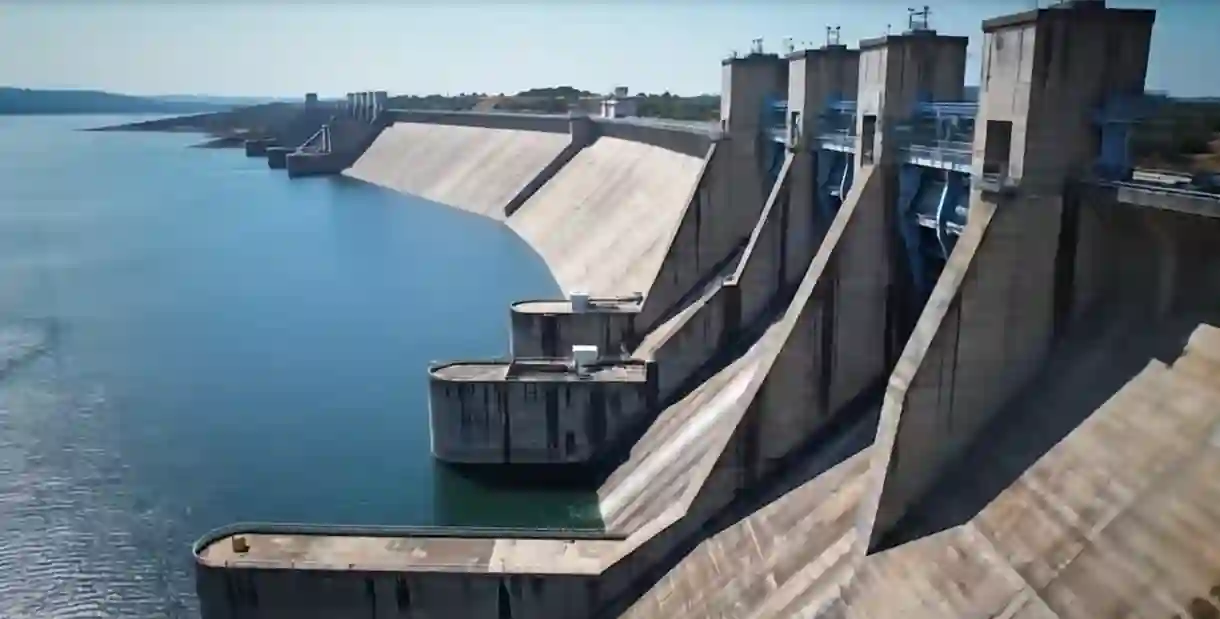
The project proposes constructing a massive sea dam across the Gulf of Khambhat, creating an enormous freshwater reservoir behind it.
Freshwater from multiple rivers flowing into the gulf would gradually accumulate within the reservoir, while engineering systems would prevent seawater intrusion and maintain water quality.
The revised plan also incorporates the Bhadbhut Barrage on the Narmada River, which will help divert freshwater into the proposed reservoir and reduce salinity intrusion in the river. This barrage has become an important component of the overall Kalpasar vision.
Apart from storing water, the project also proposes the construction of a multi-lane road over the dam, significantly improving connectivity between South Gujarat and the Saurashtra region.
Key Objectives of the Project
Kalpasar has been planned as a multipurpose infrastructure project rather than merely a water storage scheme.
Its primary objective is to create a reliable freshwater source capable of supplying drinking water to drought-prone regions while expanding irrigation coverage for agriculture.
The project also seeks to support Gujarat's rapidly growing industrial sector by ensuring long-term water availability for manufacturing and urban development.
Another important objective is to improve transportation by providing a direct road connection across the Gulf of Khambhat. Such connectivity is expected to substantially reduce travel distance and time between Bhavnagar, Bharuch and other parts of Gujarat, improving the movement of people and goods.
The project is also expected to contribute to fisheries development, groundwater recharge and regional economic growth. Earlier proposals included a tidal power generation component, although this has since been excluded from the revised project design.
Economic Importance
If completed, the Kalpasar Project could become one of Gujarat's most transformative infrastructure initiatives.
Reliable water availability is expected to benefit agriculture by enabling irrigation across large areas that currently depend on uncertain rainfall. Increased agricultural productivity could improve rural incomes while strengthening food security.
The project is also expected to support industrial expansion by ensuring water availability for manufacturing clusters, ports and urban centres.
The proposed road link over the dam would improve logistics, reduce transportation costs and enhance connectivity between different parts of the state, creating opportunities for trade and investment.
Large-scale construction activities are also expected to generate employment across engineering, construction, transport and allied sectors.
Environmental and Technical Challenges
Despite its potential benefits, Kalpasar remains one of India's most technically challenging infrastructure projects.
Constructing a dam across a tidal gulf requires sophisticated engineering solutions capable of withstanding strong tidal currents, marine conditions and complex geological formations.
Environmental experts have also expressed concerns regarding the project's potential impact on marine biodiversity, fisheries, coastal ecosystems and sediment movement.
Changes in salinity levels, water circulation and ecological balance within the Gulf of Khambhat will require careful scientific assessment before construction can proceed.
For this reason, numerous environmental, hydrological and technical studies have been conducted over the past several years to evaluate the project's long-term feasibility.
Why the Project Has Been Delayed
Although the Kalpasar Project was first proposed in the 1980s, implementation has been repeatedly delayed.
The project's enormous scale, evolving design, environmental concerns and engineering complexity have required extensive feasibility studies before construction could begin.
Over the years, multiple revisions have been made to the original proposal. The length of the proposed dam has been reduced, the tidal power component has been removed, and greater emphasis has been placed on ensuring environmental sustainability.
The preparation of the Detailed Project Report has taken considerable time due to the large number of scientific studies and inter-departmental consultations required for a project of this magnitude.
Current Status
The Kalpasar Project has recently gained renewed momentum.
According to the Gujarat government, the Detailed Project Report (DPR) has reached its final stages. Once it receives the necessary approvals from both the state and Union governments, implementation is expected to take several years because of the project's scale and engineering requirements.
The government has also explored technical collaboration with the Netherlands, a country recognised globally for its expertise in marine engineering, coastal protection and large-scale water management. Such cooperation is expected to strengthen project planning and provide access to international best practices.
Why the Project Matters for Gujarat
The significance of the Kalpasar Project extends beyond water storage.
With Gujarat's population, industrial activity and urbanisation continuing to grow, demand for freshwater is expected to increase substantially over the coming decades.
By creating a large freshwater reservoir capable of storing surplus river water, the project could provide long-term water security while reducing dependence on seasonal rainfall and groundwater extraction.
It also reflects Gujarat's broader strategy of combining infrastructure development with water resource management to support agriculture, industry, transportation and sustainable economic growth.
Conclusion
The Kalpasar Project is one of the most ambitious water infrastructure proposals ever conceived in India. Its vision of constructing a massive freshwater reservoir across the Gulf of Khambhat has the potential to reshape Gujarat's water management system while improving irrigation, drinking water supply, industrial development and regional connectivity.
At the same time, the project's scale presents significant engineering, environmental and financial challenges that require careful planning and scientific evaluation. The long period spent on feasibility studies reflects the complexity of balancing developmental needs with ecological sustainability.
As the Detailed Project Report moves towards completion and the project gathers fresh momentum, Kalpasar once again represents one of Gujarat's most closely watched infrastructure initiatives. If successfully implemented, it could become a landmark example of large-scale water resource engineering and play a crucial role in addressing the state's long-term water security needs.