


Kalpasar Project: Gujarat’s Ambitious Plan to Build the World’s Largest Freshwater Reservoir
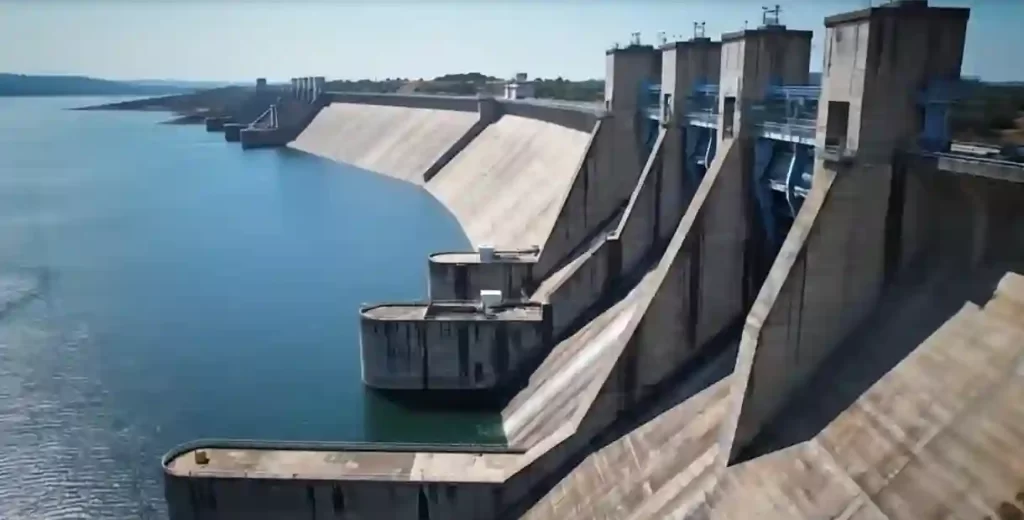
IntroductionFor decades, Gujarat has grappled with an uneven distribution of water resources. While some regions receive adequate rainfall and river water, others—particularly the Saurashtra, Kutch and North Gujarat regions—continue to face recurring water scarcity, declining groundwater levels and prolonged drought-like conditions. Addressing this challenge has remained one of the state’s biggest developmental priorities.Among the many water management initiatives proposed over the years, the Kalpasar Project stands out as one of the most ambitious and technically challenging. Envisioned as a multipurpose infrastructure project, Kalpasar aims to construct a massive dam across the Gulf of Khambhat to create what is expected to become the world’s largest freshwater reservoir in a marine environment. The project has been designed not only to improve water availability but also to strengthen transport connectivity, support industrial growth and enhance long-term water security across Gujarat. Although the project has been under discussion for nearly four decades, recent developments—including the finalisation of the Detailed Project Report (DPR) and renewed technical collaborations—have once again brought it into focus. The Vision Behind the Kalpasar ProjectThe Kalpasar Project, officially known as the Gulf of Khambhat Development Project, was conceptualised during the 1980s as a long-term solution to Gujarat’s growing water requirements.The central idea behind the project is to construct a dam across the Gulf of Khambhat, preventing freshwater from flowing directly into the Arabian Sea. Instead, the freshwater carried by rivers such as the Narmada, Sabarmati, Mahi, Dhadhar and several smaller rivers would be stored within a massive coastal reservoir for future use.Unlike conventional dams that are built across rivers, Kalpasar proposes building a barrier across a section of the sea. If implemented successfully, it would represent one of the largest and most complex coastal reservoir projects ever attempted anywhere in the world. Why Gujarat Needs a Project Like KalpasarDespite significant investments in irrigation and river-linking projects, Gujarat continues to face considerable regional disparities in water availability.Large quantities of freshwater from major rivers flow into the Gulf of Khambhat every monsoon before they can be effectively stored or utilised. Experts estimate that thousands of million cubic metres of freshwater eventually drain into the sea each year.At the same time, several districts in western Gujarat regularly depend on groundwater extraction, water tankers and long-distance canal networks to meet drinking and irrigation requirements.Kalpasar has been conceived as a solution to bridge this imbalance by capturing surplus monsoon water and storing it for use throughout the year.The project is expected to support irrigation, drinking water supply and industrial development while reducing dependence on groundwater resources. How the Project Will WorkThe project proposes constructing a massive sea dam across the Gulf of Khambhat, creating an enormous freshwater reservoir behind it.Freshwater from multiple rivers flowing into the gulf would gradually accumulate within the reservoir, while engineering systems would prevent seawater intrusion and maintain water quality.The revised plan also incorporates the Bhadbhut Barrage on the Narmada River, which will help divert freshwater into the proposed reservoir and reduce salinity intrusion in the river. This barrage has become an important component of the overall Kalpasar vision. Apart from storing water, the project also proposes the construction of a multi-lane road over the dam, significantly improving connectivity between South Gujarat and the Saurashtra region.Key Objectives of the ProjectKalpasar has been planned as a multipurpose infrastructure project rather than merely a water storage scheme.Its primary objective is to create a reliable freshwater source capable of supplying drinking water to drought-prone regions while expanding irrigation coverage for agriculture.The project also seeks to support Gujarat’s rapidly growing industrial sector by ensuring long-term water availability for manufacturing and urban development.Another important objective is to improve transportation by providing a direct road connection across the Gulf of Khambhat. Such connectivity is expected to substantially reduce travel distance and time between Bhavnagar, Bharuch and other parts of Gujarat, improving the movement of people and goods.The project is also expected to contribute to fisheries development, groundwater recharge and regional economic growth. Earlier proposals included a tidal power generation component, although this has since been excluded from the revised project design.Economic ImportanceIf completed, the Kalpasar Project could become one of Gujarat’s most transformative infrastructure initiatives.Reliable water availability is expected to benefit agriculture by enabling irrigation across large areas that currently depend on uncertain rainfall. Increased agricultural productivity could improve rural incomes while strengthening food security.The project is also expected to support industrial expansion by ensuring water availability for manufacturing clusters, ports and urban centres.The proposed road link over the dam would improve logistics, reduce transportation costs and enhance connectivity between different parts of the state, creating opportunities for trade and investment.Large-scale construction activities are also expected to generate employment across engineering, construction, transport and allied sectors.Environmental and Technical ChallengesDespite its potential benefits, Kalpasar remains one of India’s most technically challenging infrastructure projects.Constructing a dam across a tidal gulf requires sophisticated engineering solutions capable of withstanding strong tidal currents, marine conditions and complex geological formations.Environmental experts have also expressed concerns regarding the project’s potential impact on marine biodiversity, fisheries, coastal ecosystems and sediment movement.Changes in salinity levels, water circulation and ecological balance within the Gulf of Khambhat will require careful scientific assessment before construction can proceed.For this reason, numerous environmental, hydrological and technical studies have been conducted over the past several years to evaluate the project’s long-term feasibility. Why the Project Has Been DelayedAlthough the Kalpasar Project was first proposed in the 1980s, implementation has been repeatedly delayed.The project’s enormous scale, evolving design, environmental concerns and engineering complexity have required extensive feasibility studies before construction could begin.Over the years, multiple revisions have been made to the original proposal. The length of the proposed dam has been reduced, the tidal power component has been removed, and greater emphasis has been placed on ensuring environmental sustainability.The preparation of the Detailed Project Report has taken considerable time due to the large number of scientific studies and inter-departmental consultations required for a project of this magnitude.Current StatusThe Kalpasar Project has recently gained renewed momentum.According to the Gujarat government, the Detailed Project Report (DPR) has reached its final stages.
GIFT City Updates: IPO Withdrawal, New Initiatives, and Growth Milestones in Gujarat’s Financial Hub

Gandhinagar, April 2026 – Gujarat International Finance Tec-City (GIFT City) saw key developments this week. These include the withdrawal of the first GIFT City IPO, the launch of an industry-academia collaboration series, Niyam Group’s insurance authorization, and recognition as India’s first fully operational global financial hub. All details are from official sources, IFSCA, and company statements.XED Executive Development Withdraws $12 Million IPOXED Executive Development, the first company to launch an IPO in GIFT City, withdrew its $12 million share sale on Monday.Reason: Weak investor demand due to global uncertainties.Subscription: Only 5% of the offer size, per NSE International Exchange data, despite extensions.Company statement: “We withdraw in the current environment and plan to return at a better time.” Informed GIFT City-IFSC and exchanges.Challenges: KYC bottlenecks for retail investors; caution from institutions amid volatility and low liquidity.Impact: Industry calls it a setback for GIFT City’s IFSC ambitions against global hubs.GIFT City Launches Industry-Academia Roundtable SeriesGIFT City started its Industry-Academia Roundtable series to align talent with IFSC needs.First event: Held recently in GIFT City with leaders from Ahmedabad/Gandhinagar universities, tech firms, and GCC companies.Focus areas:Curriculum alignment with financial services, fintech, and tech.Structured internships and live projects.Research collaboration and talent pipelines.Quotes:Ms. Shefali Gaur, IBM: “Future workforce needs adaptability, digital fluency, and problem-solving. These platforms build employable talent.”Mr. Nimay Kalyani, University of Wollongong: “Evolve from alignment to integration for job-ready graduates.”Future: Expand to key Indian cities to boost employability and partnerships.Niyam Group Gets Tier 2 Insurance Intermediary ApprovalNiyam Group received IFSCA approval as a Tier 2 Insurance Intermediary Office (IIO) in GIFT City.Launch: January 2026 by insurance veteran Bobby Swarup (20+ years experience).Focus: Bring reinsurance capacity to India; supports Viksit Bharat 2047.Key approvals: Lloyd’s of London for Syndicate 2047; first IIO to offer Lloyd’s capacity from GIFT City.Principal Officer: Sumit Aneja, based in GIFT City, to scale operations.Quotes:Aneja: “Focused on building a high-performing team for Vision 2047.”Company: “Grateful to IFSCA; GIFT City key to India’s re/insurance growth.”GIFT City: India’s First Fully Operational Global HubGIFT City is now India’s first fully operational global financial and IT hub.Vision: Started under PM Narendra Modi as Gujarat CM; advanced by CM Bhupendra Patel.Features: Policy-driven center with financial services, tech, regulatory ease, and infrastructure.Goal: Serve India and the world by competing with global financial centers.Status: Transformed into a vibrant ecosystem per official press release.Recent Developments RecapXED IPO Withdrawal: First GIFT City IPO ($12M) pulled due to 5% subscription amid global issues and KYC hurdles.Industry-Academia Roundtables: New series bridges education and fintech needs; first event with universities and firms like IBM.Niyam Group Approval: Tier 2 IIO license; first to offer Lloyd’s Syndicate 2047 capacity; led by Sumit Aneja.Hub Milestone: Fully operational global finance/IT center, envisioned by PM Modi and advanced by CM Bhupendra Patel.Future Plans for ExpansionGIFT City targets rapid scaling post-2026:GCCs and Innovation: Priority on Global Capability Centres (GCCs), Global Innovation Centres (GICs), and centres of excellence for cost advantages.Workforce Goal: 100,000 jobs by 2030.Infrastructure: Add 10.25M sq ft (DTA, ~52,300 jobs) + 12.26M sq ft (SEZ, ~84,600 jobs) by FY2030; total 136,900+ new jobs.Residential: 7,500 units by 2030 for a live-work balance.Talent Focus: Deeper skills via partnerships, regulatory sandboxes, and social infrastructure. Outreach: Global events like Davos drive commitments beyond banking.Comparison: GIFT City vs. DIFC (Dubai) and SingaporeGIFT City competes effectively with established hubs, emphasizing India’s market access and low costs.FeatureGIFT City DIFC (Dubai) gift.Singapore Tax Exemptions100% for 10 years (profits, gains, no GST/MAT)0% on qualifying Free Zone income; 50-year holiday possibleAttractive rates, treatiesOperational CostsLowModerateHighRegulationsIFSCA: Flexible, global standardsStrict, investor-friendlyBusiness-friendly, GST exemptionsMarket AccessIndia’s 1.4B populationMiddle East/AfricaAsia-PacificSetup EaseSimple for funds/fintechUSD 50M AUM min for someHigh but costlyBest ForCost-effective offshore financeHigh-net-worth family officesEstablished tradingGIFT City excels in tax holidays and proximity to India’s growth, while DIFC offers long-term certainty for larger assets.Strategic ImportanceDespite IPO hiccups, GIFT City’s momentum – via reinsurance, talent initiatives, and expansions- positions it as a rival to offshore hubs like Singapore/Mauritius. It supports India’s Viksit Bharat 2047 vision with reinsurance capacity and fintech innovation.These updates show GIFT City’s push in finance, talent, and reinsurance despite challenges like the IPO pullback. The hub strengthens Gujarat’s role in India’s economy.
PM Modi Inaugurates Micron’s Semiconductor ATMP Facility in Sanand
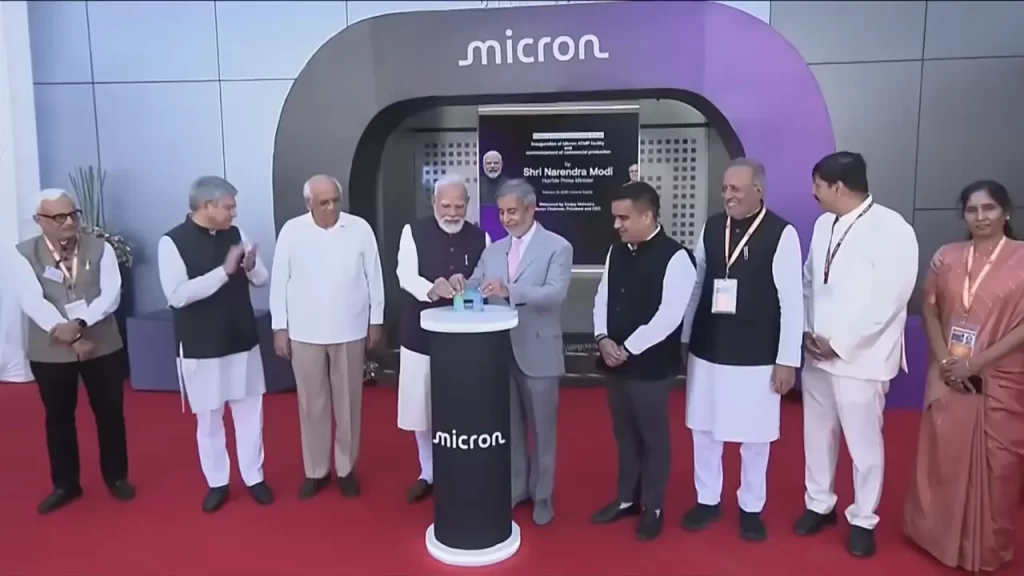
Prime Minister Narendra Modi inaugurated Micron Technology’s state-of-the-art Semiconductor Assembly, Test, and Packaging (ATMP) facility in Sanand, Gujarat, on February 28, 2026, marking India’s entry into commercial semiconductor production. This $2.75 billion milestone, the first of its kind in the country, converts advanced DRAM and NAND wafers into finished memory products for AI, data centers, and mobiles, positioning India as a key player in the global chip value chain.From MoU to Production: Lightning-Fast ExecutionThe project’s speed exemplifies India’s “New India” mindset. Signed in June 2023, groundbreaking occurred in September 2023, pilot machines installed by February 2024, and commercial production began in February 2026, just 33 months end-to-end. PM Modi highlighted streamlined regulations, like Advanced Pricing Agreements (APAs) cleared in months versus 3-5 years elsewhere, crediting clear intent and nation-first dedication.The Sanand plant boasts over 500,000 sq ft of cleanroom, one of the world’s largest single-floor ATMP cleanrooms, ISO 9001:2015 certified, LEED Gold-bound, and zero-liquid discharge via water-saving tech. First made-in-India memory modules shipped to Dell for local laptops, with tens of millions of chips expected in 2026, scaling to hundreds of millions in 2027.Micron CEO Sanjay Mehrotra, at the event with Gujarat CM Bhupendra Patel, Union Minister Ashwini Vaishnaw, and US Ambassador Sergio Gor, called it a “proud moment” building resilient AI ecosystems. Vaishnaw termed it “historic,” shifting India from chip consumer to manufacturing hub under PM Modi’s leadership.Microchips: The Oil of the 21st CenturyPM Modi framed semiconductors as the bridge from the Industrial Revolution to the AI era: “If oil regulated the last century, microchips will regulate this one.” Launched amid COVID chaos via the Semiconductor Mission, early seeds now yield fruit. India approved 10 projects under Semicon India; three more ramp up soon in Uttar Pradesh, Assam, Odisha, and Punjab, creating a pan-India ecosystem beyond factories, encompassing machines, design, R&D, logistics, and skills.Budget 2026’s India Semiconductor Mission 2.0 targets the full value chain, spurring domestic demand for materials amid booming gadget adoption. Electronics production and exports surged manifold in 11 years; “Make in India” now powers automobiles, mobiles, and tech.Sanand mirrors its auto-hub transformation, now anchoring semiconductors alongside chemicals, petrochemicals, and skill centers. Gujarat’s policies on approvals, land, and utilities boost investor faith; Dholera and Sanand emerge as Western India’s chip clusters.India-US Partnership Powers Global Supply ResilienceThe facility underscores deepening India-US ties in AI and chips, including the Pax Silica agreement from the recent AI Summit for critical minerals. The two largest democracies secure supply chains amid geopolitical flux. PM Modi messaged investors: “India is ready, reliable, delivers, capable, competitive, committed.”Micron’s Gujarat push builds talent via PDEU, Namtech, nationwide universities, and govt skills programs, focusing on STEM, advanced manufacturing, digital/AI literacy. Sustainability integrates health, safety, and eco-commitments.Broader Semiconductor Ecosystem BoomThis ATMP unit complements fabs like Tata’s in Dholera and others, addressing AI-driven memory demand. India’s electronics journey, from IT services to hardware, accelerates Viksit Bharat. Key Project MetricsDetailsKey Project MetricsDetailsInvestment$2.75B (Micron + govt)Cleanroom Size500,000+ sq ft (world’s largest single-floor ATMP)Output 2026Tens of millions of chipsOutput 2027Hundreds of millionsTimelineMoU Jun’23 → Production Feb’26States InvolvedGujarat, UP, Assam, Odisha, PunjabGlobal PartnersUS (Micron, Dell), via Pax SilicaA Tech Leadership LeapFrom software superpower to hardware contender, the nation builds self-reliant ecosystems fueling AI, mobiles, EVs. As PM Modi envisioned post-AI Summit, this hardware milestone cements technology leadership, inviting the world to co-create in a reliable, scalable hub.