
Before there was an India that could dream of becoming a global power, there was an India that simply wanted to be free.
Before there were satellites, expressways, digital payments, billion-dollar companies and missions to the Moon, there was a country struggling to decide its own destiny.
And before the Tricolour became a familiar sight every August 15, there were millions of Indians who fought, protested, went to prison and sacrificed their lives without knowing what the India they were fighting for would eventually become.
That is what makes Independence Day more than a national holiday.
It is a reminder of what India was, a celebration of what it has become and a moment to consider where the country is headed next.
On August 15, 2026, India celebrated its 80th Independence Day, marking 79 years since the country became independent from British rule in 1947. The national celebration at the Red Fort in New Delhi brought together the familiar symbols of India's freedom struggle with a strong focus on the country's future, particularly its youth, self-reliance, technology and the ambition of building a developed India by 2047.
The celebrations also carried special significance as 2026 marks 150 years of "Vande Mataram", which was included in the Red Fort ceremony in a historic first.
A Morning of National Pride at the Red Fort
The Red Fort once again became the centre of the country's Independence Day celebrations.
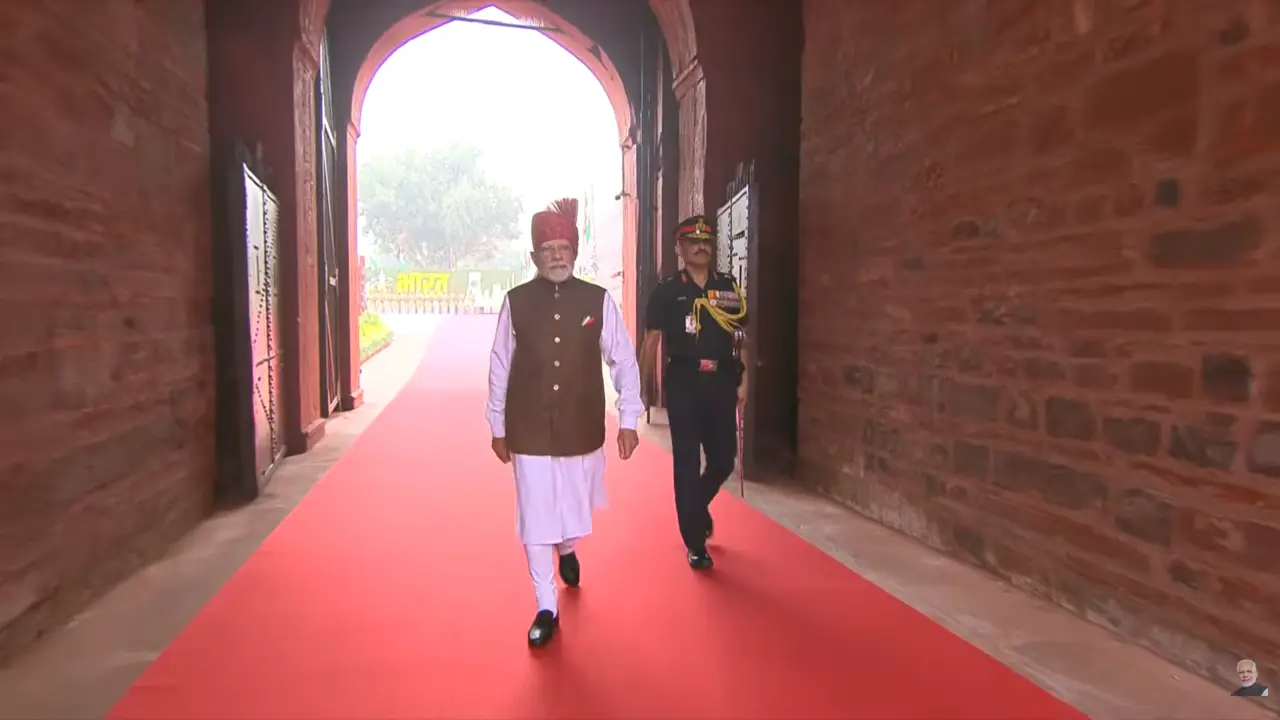
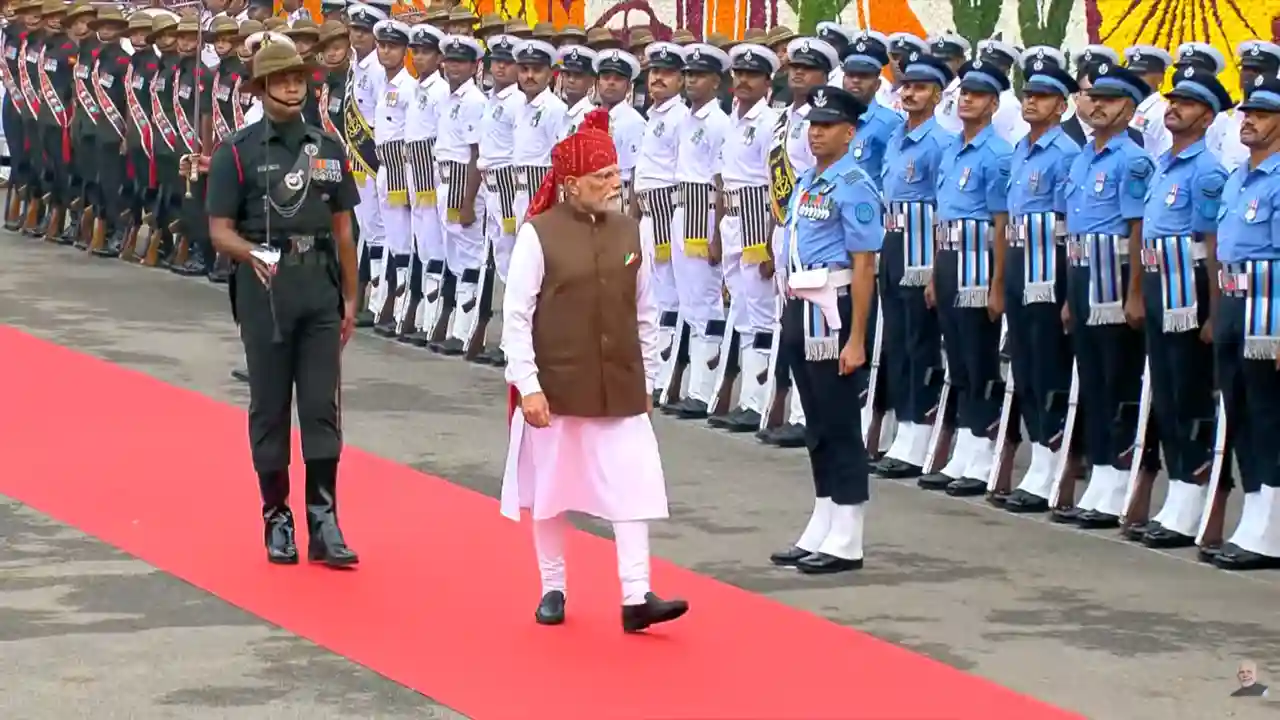
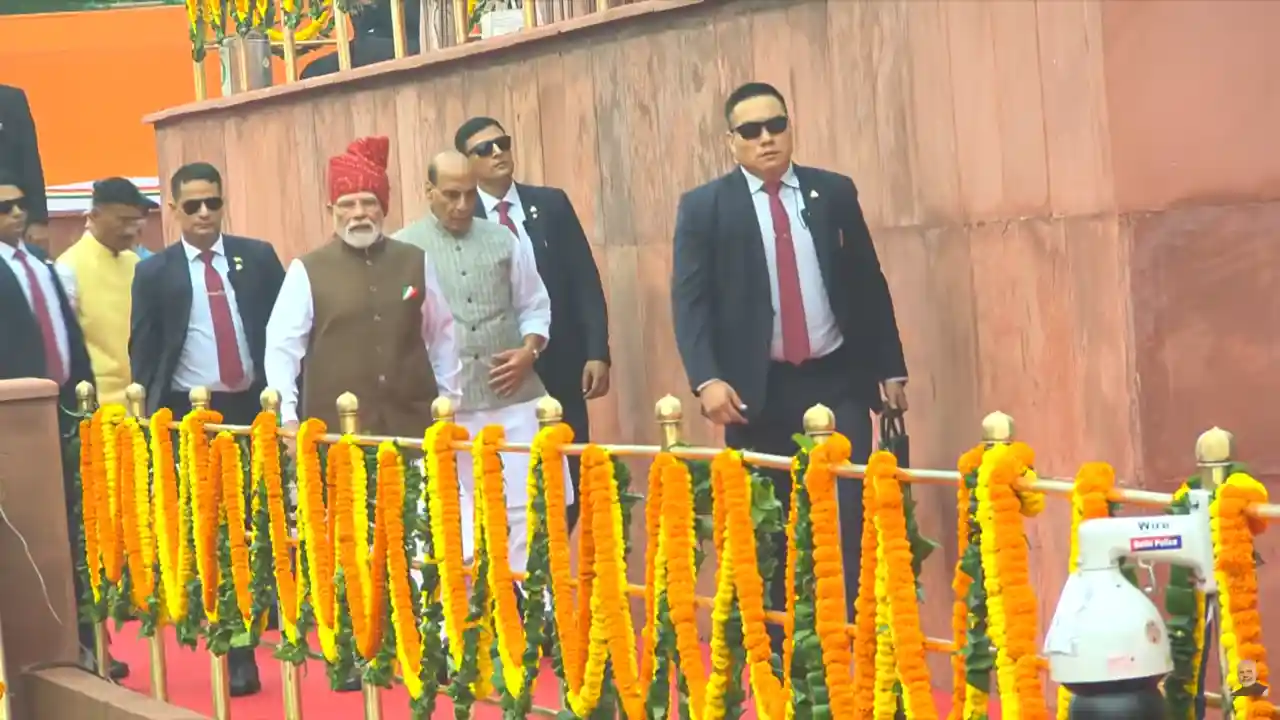
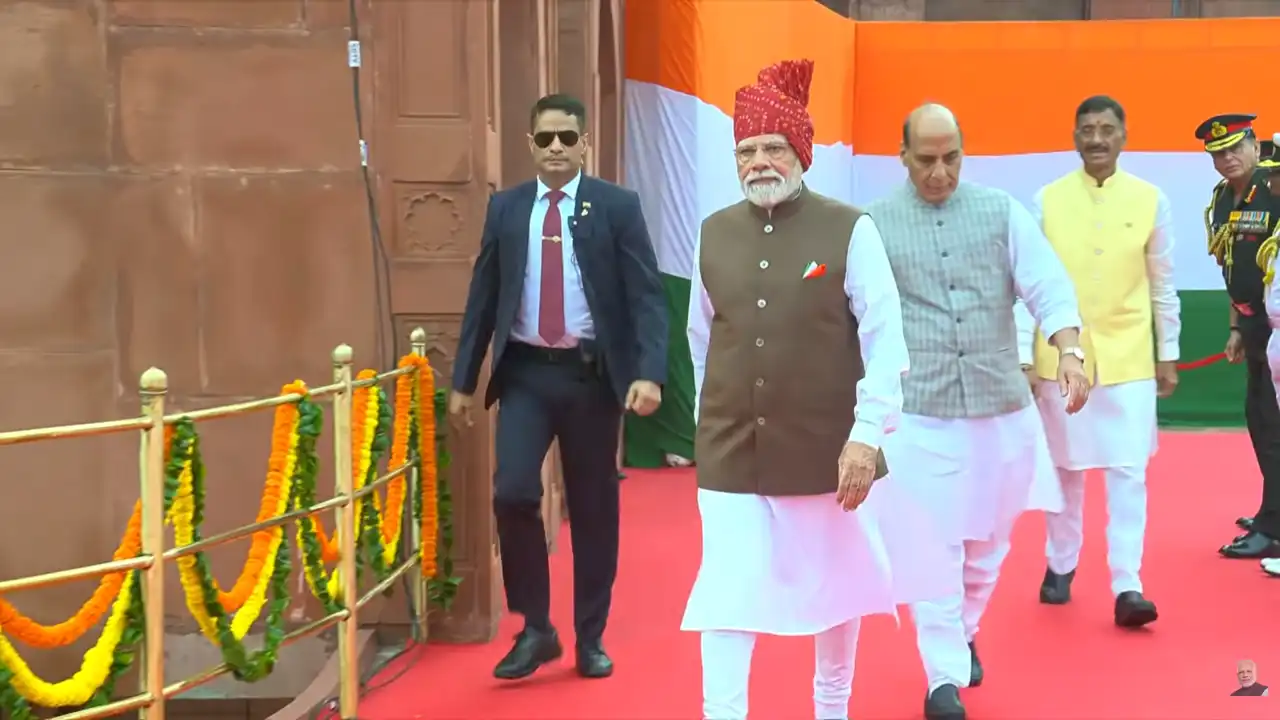
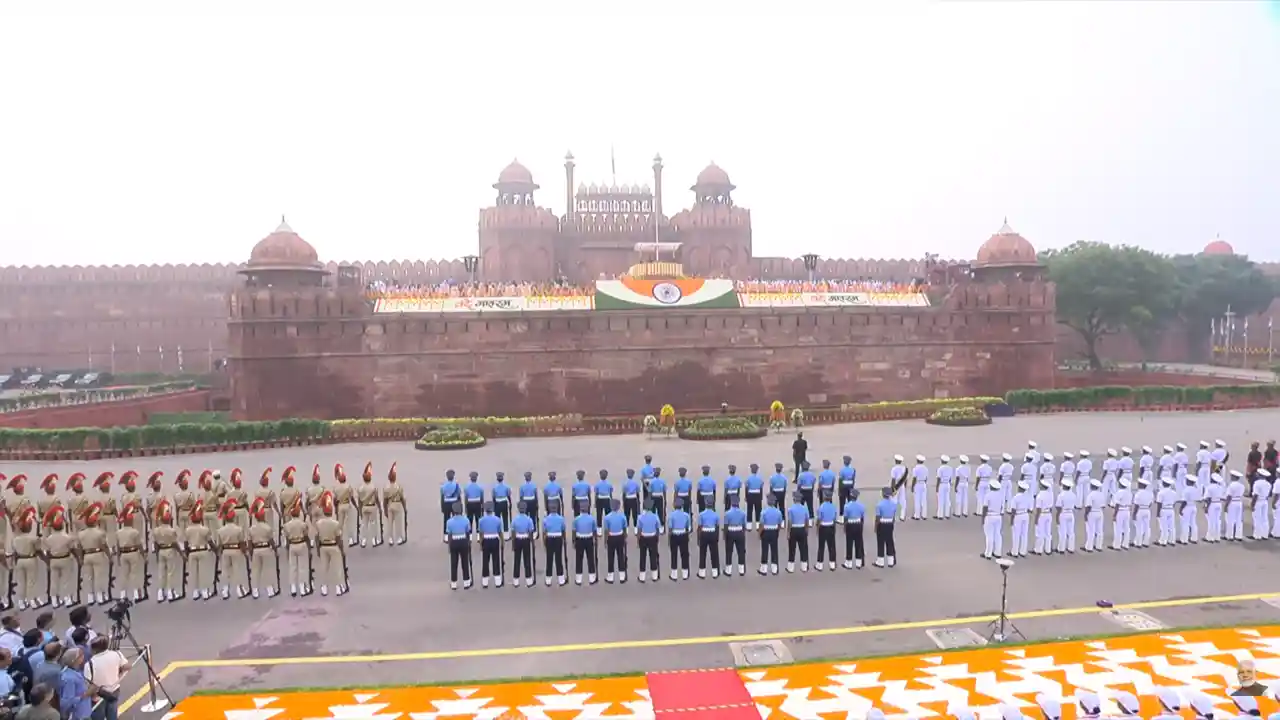
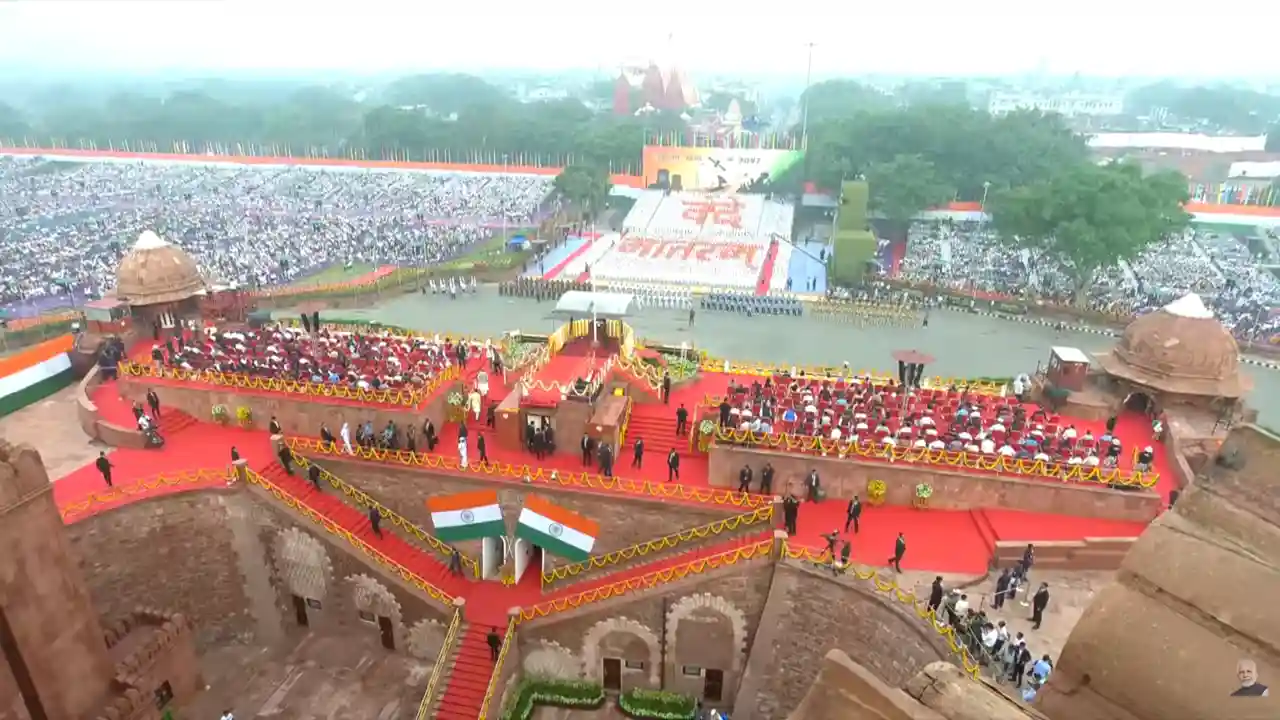
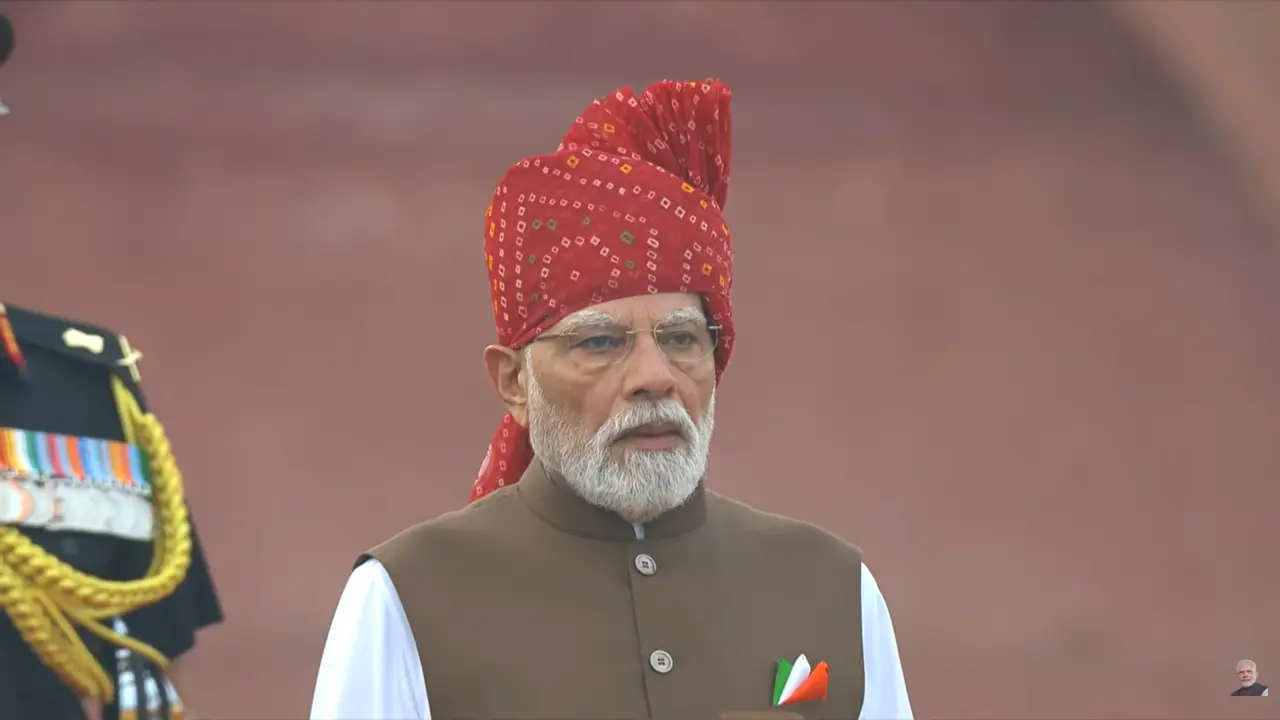
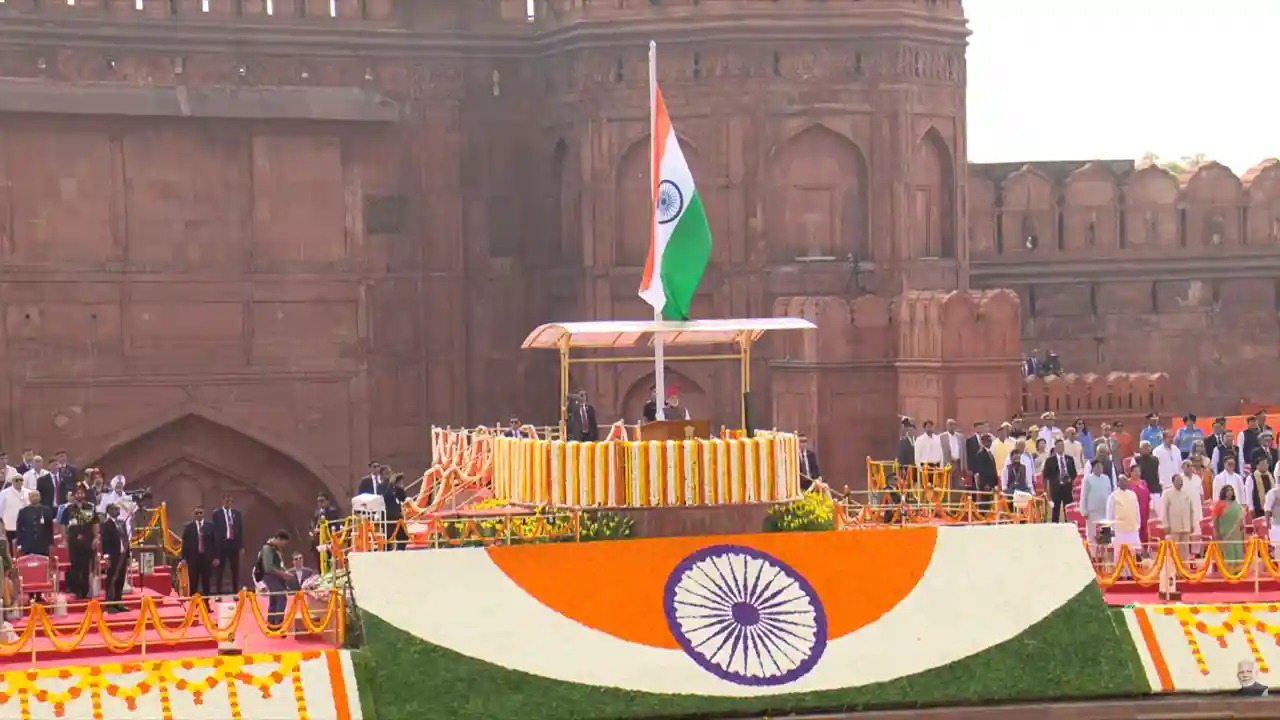
Prime Minister Narendra Modi began the ceremony by paying tribute to the freedom fighters before proceeding with the traditional flag-hoisting ceremony.
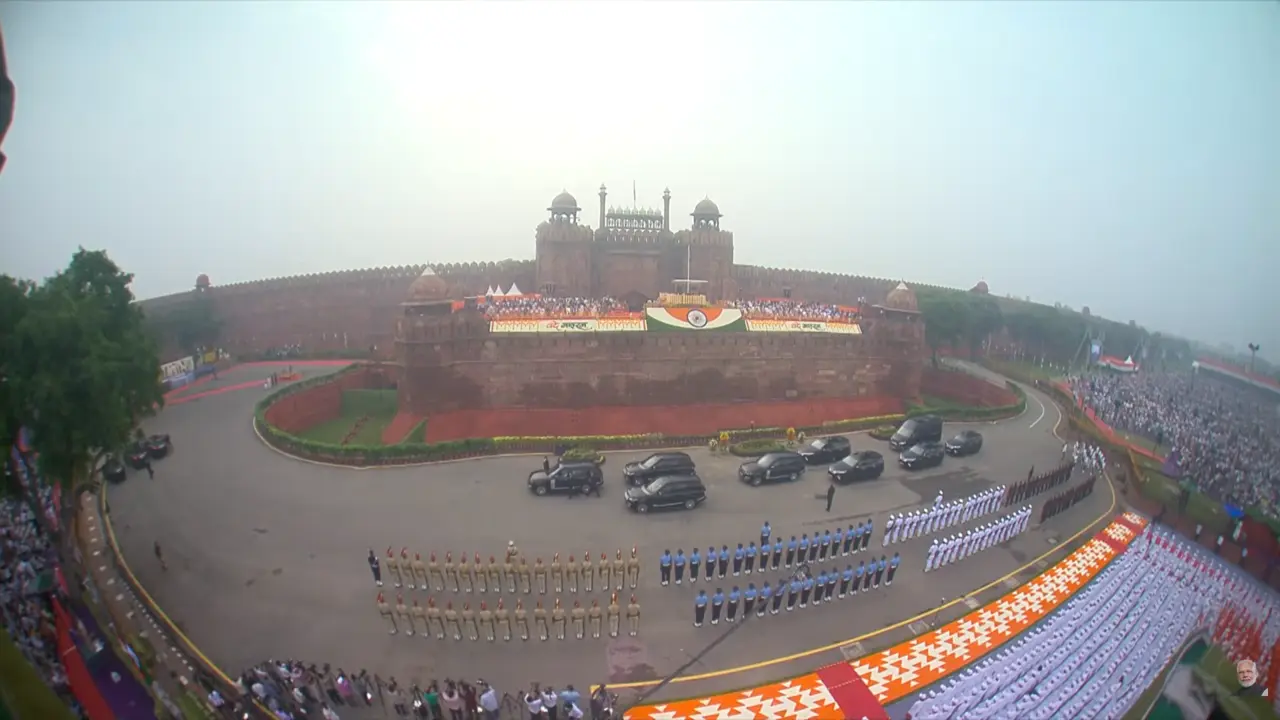
The Tricolour was unfurled against the backdrop of the historic Red Fort, accompanied by the national anthem and a ceremonial 21-gun salute. The ceremony brought together personnel representing India's armed forces and Delhi Police, reflecting the traditional inter-services character of the national celebration.
One of the notable features of this year's ceremony was the rendition of Vande Mataram before the national anthem, marking the first time the national song was presented from the Red Fort during the Independence Day ceremony. The inclusion came in the year marking 150 years of the song.
The ceremony also placed considerable emphasis on India's young population, with the theme centred on "Yuva Shakti for Viksit Bharat@2047", highlighting the role of young Indians in shaping the country's development over the next two decades.
From the Freedom Struggle to a New India
There was a time when the idea of an independent India was itself a distant dream.
For generations, Indians challenged British colonial rule through political movements, protests, revolutionary activities, social mobilisation and civil disobedience.
Mahatma Gandhi transformed the freedom struggle into a mass movement through non-violent resistance. Subhas Chandra Bose pursued a different path through the Indian National Army. Bhagat Singh and other revolutionaries represented another strand of resistance.
There were also thousands whose names never became part of popular history.
They marched.
They protested.
They went to prison.
They lost their livelihoods.
Some lost their lives.
Freedom was not handed to India. It was fought for.
The Road to August 15, 1947
The demand for complete independence gained a decisive political expression when the Indian National Congress adopted Purna Swaraj, or complete independence, as its goal in 1929.
The Civil Disobedience Movement followed, bringing large numbers of ordinary Indians into the struggle against colonial rule.
Then came the Quit India Movement in 1942, one of the defining moments of the final phase of the freedom struggle.
The call of "Do or Die" reflected the determination of a population increasingly unwilling to accept continued colonial rule.
Thousands were arrested. Many were subjected to imprisonment and violence. The movement demonstrated the scale of public resistance to British rule.
Five years later, India became independent.
But freedom came alongside the trauma of Partition.
1947: Freedom and the Pain of Partition
The celebrations of Independence were accompanied by one of the most painful episodes in the subcontinent's history.
Partition resulted in the displacement of millions of people. Families were separated, homes were abandoned and communities that had lived together for generations were torn apart.
India therefore began its independent journey under extraordinarily difficult circumstances.
There was poverty.
There was widespread illiteracy.
There were food shortages.
Industrial capacity was limited.
The newly independent country also faced the enormous task of building democratic institutions and integrating hundreds of princely states.
Yet India made a remarkable choice.
It chose democracy.
India Chose to Govern Itself
India's independence was followed by the creation of a constitutional framework for the new republic.
The Constituent Assembly worked on the Constitution, which was adopted on November 26, 1949, and came into force on January 26, 1950.
Independence had given India political sovereignty.
The Constitution provided the framework through which that sovereignty would be exercised.
India committed itself to democratic government, elections and constitutional institutions at a time when several newly independent countries around the world were struggling with political instability.
The journey has not been perfect.
There have been political conflicts, social challenges and periods of considerable difficulty.
But India's democratic system has endured.
That endurance is itself an important part of the country's post-Independence story.
Look at India Then. Look at India Now.
The India of 1947 would be almost unrecognisable to an Indian today.
At Independence, the country had a largely agrarian economy, limited industrial infrastructure and extremely low literacy compared with modern standards.
Today, India is one of the world's largest economies.
Indian companies operate globally.
Indian scientists and engineers work on advanced technologies.
Indian cities have expanded rapidly.
Highways, airports, ports, metro systems and digital networks have transformed connectivity.
The country has developed major capabilities in pharmaceuticals, information technology, space technology, defence production and renewable energy.
The transformation did not happen overnight.
It happened one generation at a time.
The India That Learned to Feed Itself
One of independent India's biggest early challenges was food security.
The country faced serious food shortages and depended heavily on imports.
The Green Revolution transformed agricultural production through high-yielding crop varieties, irrigation, fertilisers and improved farming practices.
India gradually moved from a country deeply concerned about food shortages to one of the world's major agricultural producers.
It was more than an agricultural transformation.
It demonstrated what sustained investment in science, technology and public policy could accomplish.
From a Young Space Programme to the Moon
Few stories capture India's technological journey better than its space programme.
India's early space programme began with modest resources.
Today, the country has developed sophisticated launch vehicles, satellites and deep-space capabilities.
The Chandrayaan-3 mission's successful landing near the lunar south polar region in 2023 became a defining moment in India's space journey.
India has also undertaken missions to Mars and continues to develop increasingly ambitious space capabilities.
For millions of Indians, these achievements represent something larger than technological progress.
They demonstrate how a country that began its independent journey with limited resources developed the ability to compete in some of the world's most demanding technological fields.
The Digital Transformation
Another major transformation has taken place in India's digital economy.
The spread of smartphones, affordable internet and digital public infrastructure has changed everyday life for millions of people.
Digital payments have become part of routine transactions.
The Unified Payments Interface, or UPI, has enabled instant digital payments across banks and platforms.
Government services that once required physical visits can increasingly be accessed digitally.
For a country of India's size and diversity, this transformation has been particularly significant.
Technology has not simply changed how India communicates. It has changed how India functions.
The Tricolour Means Something Different to Everyone
The Independence Day ceremony at the Red Fort is a national event, but the meaning of the Tricolour is deeply personal.
For a soldier, it can represent the country they have pledged to defend.
For a farmer, it can represent the land they work.
For a student, it can represent opportunity.
For an athlete standing on an international podium, it represents home.
For an Indian living thousands of kilometres away from the country, seeing the Tricolour can bring back a connection that distance cannot erase.
That is perhaps the extraordinary strength of the national flag.
It belongs to everyone.
PM Modi's 2026 Independence Day Speech
The Prime Minister's address from the Red Fort provided the central political message of this year's Independence Day celebrations.
At the heart of the speech was the ambition of making India a developed nation by 2047, when the country completes 100 years of Independence.
Modi presented the country's future around the idea of "Sapta Dhara", or seven streams of strength, with emphasis on areas including economic growth, technology, energy, critical minerals, semiconductor manufacturing, infrastructure and national capability.
The Prime Minister also placed youth at the centre of the country's development agenda.
Among the announcements was a plan to provide AI training to one crore young Indians, alongside free online coaching aimed at helping young people prepare for competitive examinations.
The emphasis was significant because India's young population is expected to remain one of its biggest economic advantages in the coming decades.
The message was clear: India's demographic strength has to be converted into skills, employment, innovation and entrepreneurship.
A Push for Self-Reliance
Another major theme of the speech was Atmanirbharta, or self-reliance.
The Prime Minister highlighted the expansion of domestic manufacturing and urged Indians to support products made in the country through the broader ideas of "Make in India" and "Vocal for Local."
He pointed to growth in sectors including defence, electronics, rail coaches, mobile phones and other areas of manufacturing over the past decade.
The emphasis on self-reliance is also linked to India's wider effort to reduce dependence on imports in strategically important sectors.
Semiconductors were particularly prominent in the address, with the Prime Minister outlining ambitions to expand domestic semiconductor manufacturing. He also spoke about energy security and increasing India's nuclear power capacity.
Technology at the Centre of India's Next Phase
The 2026 address reflected how dramatically India's development priorities have changed since Independence.
The country's early decades were dominated by questions of food security, basic infrastructure and industrialisation.
Today, the national conversation increasingly includes semiconductors, artificial intelligence, digital infrastructure, advanced manufacturing and energy security.
That transition says something important about India's journey.
The problems have changed.
So have the ambitions.
India is no longer only asking how it can build the foundations of a modern economy.
It is asking how it can compete in the technologies that will shape the next one.
A Stronger Focus on Energy Security
Energy was another important component of the Prime Minister's vision.
India's economic growth depends heavily on reliable and affordable energy, making energy security a strategic priority.
The speech highlighted nuclear energy, domestic capabilities and efforts to reduce dependence on external energy vulnerabilities. The government has also been pursuing expansion in renewable energy and green technologies.
For a rapidly growing economy, the challenge is not simply producing more energy.
It is producing enough energy while ensuring affordability, reliability and long-term sustainability.
National Security and Self-Reliance
The Independence Day address also placed emphasis on national security.
The Prime Minister highlighted India's efforts to strengthen domestic defence manufacturing and reduce dependence on foreign suppliers.
This has become an increasingly important part of India's strategic thinking.
Modern national security depends not only on soldiers and weapons but also on technology, manufacturing, energy, cyber capabilities and secure supply chains.
The push for indigenous capabilities therefore extends well beyond traditional defence production.
A Warning Against Extremism
The Prime Minister also spoke strongly about the remaining threat posed by Maoist violence and warned about what he described as "dimagi Naxals", referring to ideological supporters of the movement.
He said that armed Maoist violence had been significantly weakened but argued that ideological extremism continued to pose a challenge.
The comments formed part of a broader message around national unity, security and the need to prevent forces that seek to destabilise the country.
Vande Mataram Takes Centre Stage
One of the most memorable moments of the 2026 ceremony was the inclusion of Vande Mataram in the Red Fort programme.
The national song was performed before the national anthem, a change that carried particular significance because 2026 marks 150 years since Bankim Chandra Chattopadhyay's song first appeared in print.
The song has occupied a unique place in India's history.
During the freedom struggle, "Vande Mataram" became a powerful expression of national consciousness and resistance to colonial rule.
Its presence at the 2026 Independence Day ceremony therefore connected the modern Republic with the political and cultural history of the freedom movement.
The India Being Built Today
The India of today is attempting to build capabilities that would have been difficult to imagine in 1947.
The country is developing a domestic semiconductor ecosystem.
It is investing in artificial intelligence and quantum technology.
It is expanding renewable energy.
It is developing green hydrogen.
It is building new airports, highways, ports and railway corridors.
It is expanding digital infrastructure.
And it is attempting to increase domestic manufacturing in strategically important sectors.
None of these ambitions come without challenges.
India still has to create millions of productive jobs, improve education and healthcare, address inequality, manage rapid urbanisation and ensure that economic growth reaches people across regions.
But that is precisely what makes the story unfinished.
Independence Is Also a Responsibility
There is a tendency to think of Independence as something that happened in the past.
But freedom is not a finished achievement.
Every generation inherits a free country and then decides what it will do with that freedom.
The freedom struggle was connected to ideas of dignity, self-government and the right of Indians to determine their own future.
The Constitution later gave those aspirations an institutional framework built around justice, liberty, equality and fraternity.
Those principles remain relevant today.
Building a stronger India means creating opportunities for young people, improving public institutions, protecting democratic values and ensuring that development is shared as widely as possible.
Nation-building does not end with Independence.
It continues with every generation.
The Road to 2047
India is already looking towards 2047, when the country will complete 100 years of Independence.
The 2026 Independence Day celebrations placed that milestone firmly in the national conversation.
The India of 2047 will be shaped by decisions being made today.
How India responds to climate change.
How it educates its children.
How it creates jobs.
How it uses artificial intelligence.
How it manages its cities.
How it develops energy security.
How it protects its democratic institutions.
And how effectively it converts its young population into a skilled and productive workforce.
These questions will determine what the centenary of India looks like.
The Freedom Fighters Never Saw This India
There is something humbling about remembering the people who fought for India's freedom.
They did not see Chandrayaan-3.
They did not see UPI.
They did not see Indian technology companies operating around the world.
They did not see modern airports, metro systems or digital public infrastructure.
They did not see Indian athletes standing on international podiums with the Tricolour behind them.
They did not know what India would eventually become.
They simply fought for the right of Indians to decide their own future.
And that future became ours.
Now, it is our turn to decide what comes next.
79 Years Later, The Story Is Still Being Written
The 2026 Independence Day celebrations at the Red Fort brought together two very different moments in India's history.
There was the memory of the freedom struggle, represented by the Tricolour, the national anthem, the Red Fort and the rendition of Vande Mataram.
And there was the future, represented by the emphasis on youth, artificial intelligence, semiconductors, energy security, manufacturing and the ambition of a developed India by 2047.
That combination is perhaps the most appropriate way to understand Independence Day.
It is not only about remembering where India came from.
It is about recognising how far it has travelled.
And it is about understanding that the journey is far from over.
India is 79 years into its life as an independent nation.
But it is still building.
Still learning.
Still changing.
Still dreaming.
And perhaps that is what makes the Indian story so remarkable.
Independence did not give India a finished destination. It gave India the freedom to choose its destination.
The generation that fought for freedom gave the country independence.
The generations that followed built its foundations.
The generation of today has inherited both freedom and responsibility.
The Tricolour is not just a reminder of the India we inherited.
It is a reminder of the India we are responsible for leaving behind.
Jai Hind.
Video: YT/@NaMo