


Independence Day 2026: 79 Years of Freedom, A Nation Still Becoming
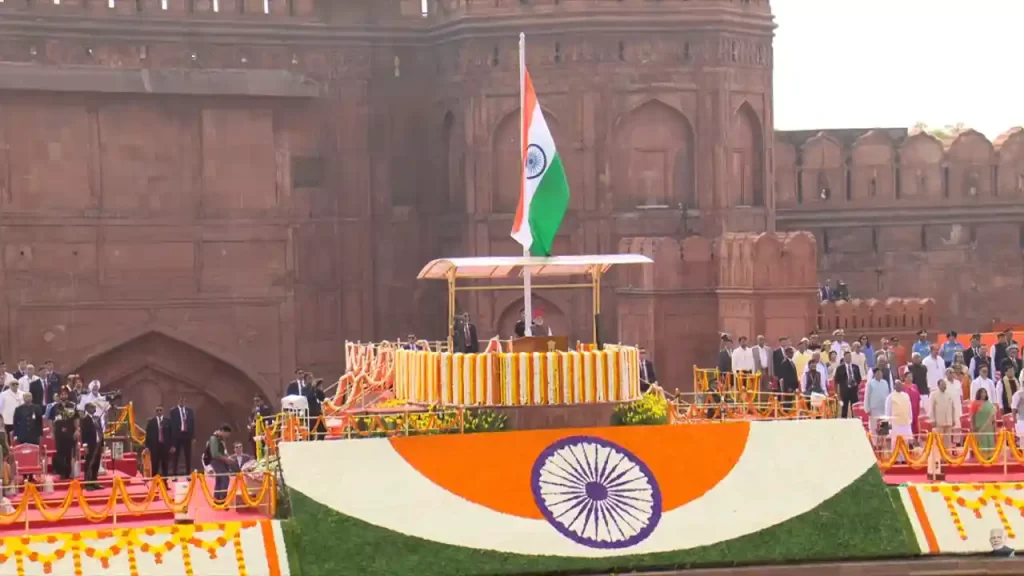
Before there was an India that could dream of becoming a global power, there was an India that simply wanted to be free.Before there were satellites, expressways, digital payments, billion-dollar companies and missions to the Moon, there was a country struggling to decide its own destiny.And before the Tricolour became a familiar sight every August 15, there were millions of Indians who fought, protested, went to prison and sacrificed their lives without knowing what the India they were fighting for would eventually become.That is what makes Independence Day more than a national holiday.It is a reminder of what India was, a celebration of what it has become and a moment to consider where the country is headed next.On August 15, 2026, India celebrated its 80th Independence Day, marking 79 years since the country became independent from British rule in 1947. The national celebration at the Red Fort in New Delhi brought together the familiar symbols of India’s freedom struggle with a strong focus on the country’s future, particularly its youth, self-reliance, technology and the ambition of building a developed India by 2047. The celebrations also carried special significance as 2026 marks 150 years of “Vande Mataram”, which was included in the Red Fort ceremony in a historic first.A Morning of National Pride at the Red FortThe Red Fort once again became the centre of the country’s Independence Day celebrations.Prime Minister Narendra Modi began the ceremony by paying tribute to the freedom fighters before proceeding with the traditional flag-hoisting ceremony.The Tricolour was unfurled against the backdrop of the historic Red Fort, accompanied by the national anthem and a ceremonial 21-gun salute. The ceremony brought together personnel representing India’s armed forces and Delhi Police, reflecting the traditional inter-services character of the national celebration. One of the notable features of this year’s ceremony was the rendition of Vande Mataram before the national anthem, marking the first time the national song was presented from the Red Fort during the Independence Day ceremony. The inclusion came in the year marking 150 years of the song. The ceremony also placed considerable emphasis on India’s young population, with the theme centred on “Yuva Shakti for Viksit Bharat@2047”, highlighting the role of young Indians in shaping the country’s development over the next two decades. From the Freedom Struggle to a New IndiaThere was a time when the idea of an independent India was itself a distant dream.For generations, Indians challenged British colonial rule through political movements, protests, revolutionary activities, social mobilisation and civil disobedience.Mahatma Gandhi transformed the freedom struggle into a mass movement through non-violent resistance. Subhas Chandra Bose pursued a different path through the Indian National Army. Bhagat Singh and other revolutionaries represented another strand of resistance.There were also thousands whose names never became part of popular history.They marched.They protested.They went to prison.They lost their livelihoods.Some lost their lives.Freedom was not handed to India. It was fought for.The Road to August 15, 1947The demand for complete independence gained a decisive political expression when the Indian National Congress adopted Purna Swaraj, or complete independence, as its goal in 1929.The Civil Disobedience Movement followed, bringing large numbers of ordinary Indians into the struggle against colonial rule.Then came the Quit India Movement in 1942, one of the defining moments of the final phase of the freedom struggle.The call of “Do or Die” reflected the determination of a population increasingly unwilling to accept continued colonial rule.Thousands were arrested. Many were subjected to imprisonment and violence. The movement demonstrated the scale of public resistance to British rule.Five years later, India became independent.But freedom came alongside the trauma of Partition.1947: Freedom and the Pain of PartitionThe celebrations of Independence were accompanied by one of the most painful episodes in the subcontinent’s history.Partition resulted in the displacement of millions of people. Families were separated, homes were abandoned and communities that had lived together for generations were torn apart.India therefore began its independent journey under extraordinarily difficult circumstances.There was poverty.There was widespread illiteracy.There were food shortages.Industrial capacity was limited.The newly independent country also faced the enormous task of building democratic institutions and integrating hundreds of princely states.Yet India made a remarkable choice.It chose democracy.India Chose to Govern ItselfIndia’s independence was followed by the creation of a constitutional framework for the new republic.The Constituent Assembly worked on the Constitution, which was adopted on November 26, 1949, and came into force on January 26, 1950.Independence had given India political sovereignty.The Constitution provided the framework through which that sovereignty would be exercised.India committed itself to democratic government, elections and constitutional institutions at a time when several newly independent countries around the world were struggling with political instability.The journey has not been perfect.There have been political conflicts, social challenges and periods of considerable difficulty.But India’s democratic system has endured.That endurance is itself an important part of the country’s post-Independence story.Look at India Then. Look at India Now.The India of 1947 would be almost unrecognisable to an Indian today.At Independence, the country had a largely agrarian economy, limited industrial infrastructure and extremely low literacy compared with modern standards.Today, India is one of the world’s largest economies.Indian companies operate globally.Indian scientists and engineers work on advanced technologies.Indian cities have expanded rapidly.Highways, airports, ports, metro systems and digital networks have transformed connectivity.The country has developed major capabilities in pharmaceuticals, information technology, space technology, defence production and renewable energy.The transformation did not happen overnight.It happened one generation at a time.The India That Learned to Feed ItselfOne of independent India’s biggest early challenges was food security.The country faced serious food shortages and depended heavily on imports.The Green Revolution transformed agricultural production through high-yielding crop varieties, irrigation, fertilisers and improved farming practices.India gradually moved from a country deeply concerned about food shortages to one of the world’s major agricultural producers.It was more than an agricultural transformation.It demonstrated what sustained investment in science, technology and public policy could accomplish.From a Young Space Programme to the MoonFew stories capture India’s technological journey better than its space programme.India’s early space programme began with modest resources.Today, the country has developed sophisticated launch