


India's aviation sector has witnessed unprecedented expansion over the past decade, driven by rising passenger traffic, increasing regional connectivity and sustained investment in airport infrastructure. As air travel becomes more accessible and India's economy continues to grow, several states have undertaken large-scale airport projects to support tourism, trade and industrial development.
One of the most significant additions to this network is the Alluri Sitarama Raju International Airport at Bhogapuram, commonly known as Bhogapuram International Airport, in Andhra Pradesh's Vizianagaram district. Developed as a greenfield international airport, the project is expected to transform air connectivity for North Andhra while serving as a modern alternative to the existing Visakhapatnam Airport, which currently operates as a civil enclave within the Indian Navy's INS Dega airbase.





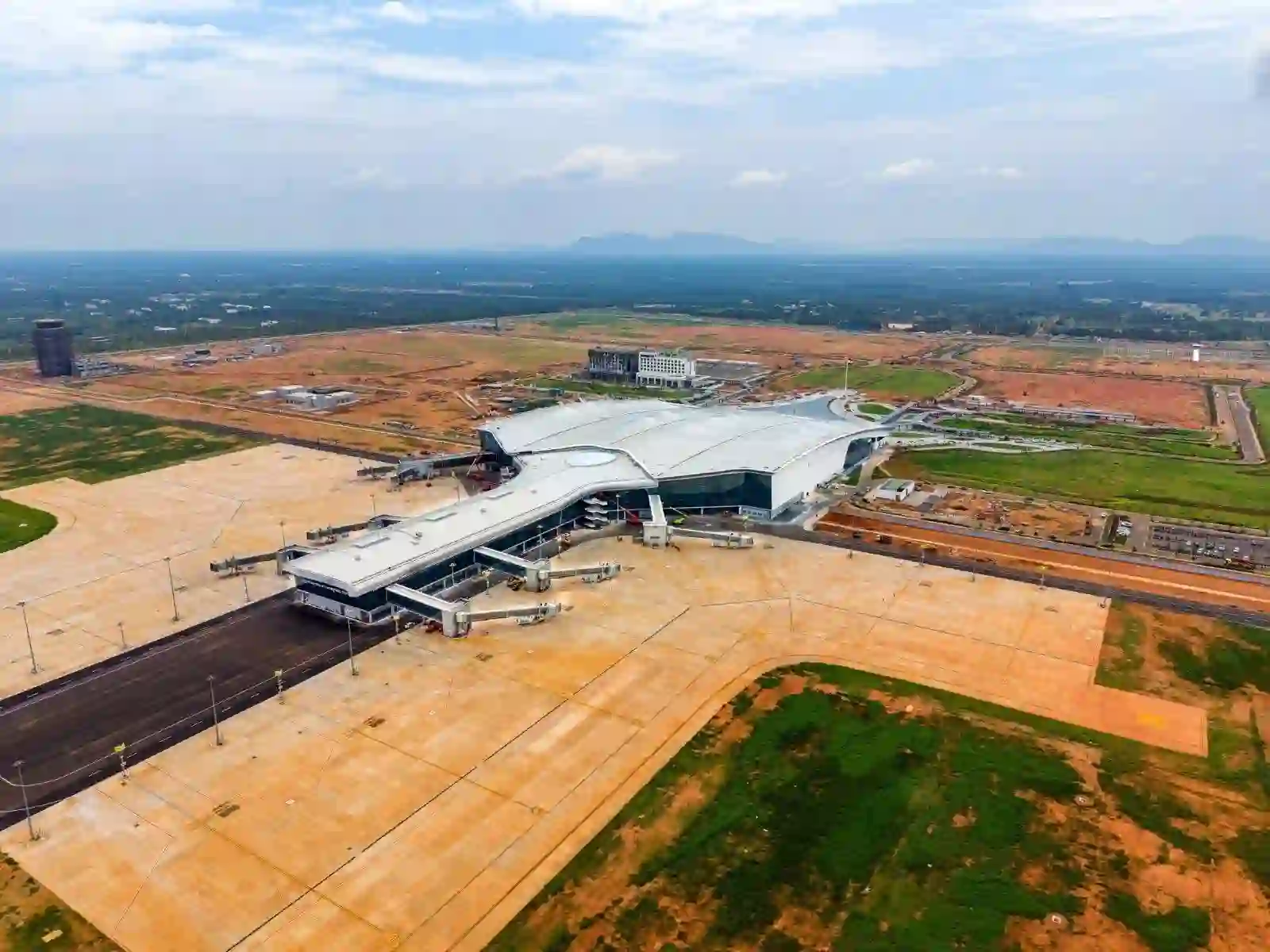
Designed with modern aviation infrastructure, sustainability features and significant room for future expansion, Bhogapuram Airport is among India's most ambitious airport development projects. Beyond improving passenger travel, it is expected to become a major catalyst for economic growth, logistics, tourism and industrial investment across the region.
Why Bhogapuram Airport Was Needed
For several decades, Visakhapatnam Airport served as the primary aviation hub for North Andhra Pradesh. However, the airport functions as a civil enclave inside INS Dega, limiting its ability to expand operations due to military restrictions.
With passenger numbers steadily increasing, the existing airport faced constraints in runway expansion, terminal capacity and future international operations. As Visakhapatnam evolved into one of eastern India's fastest-growing cities and emerged as an important industrial, maritime and tourism centre, the need for a dedicated greenfield international airport became increasingly evident.
Bhogapuram was selected because it offers sufficient land for long-term expansion while providing convenient access to Visakhapatnam, Vizianagaram and Srikakulam districts. The project is intended not only to accommodate future passenger demand but also to support cargo operations, exports and regional economic development.
Project Overview
Bhogapuram International Airport has been developed under a Public-Private Partnership (PPP) model by GMR Visakhapatnam International Airport Limited (GVIAL), a subsidiary of GMR Airports Limited.
The first phase of the project has been developed at an estimated investment of approximately ₹4,700 crore across nearly 2,700 acres. The airport has been designed to handle around six million passengers annually during Phase I, with master plans allowing expansion to accommodate significantly higher passenger traffic in future phases.
The airport has also received its Aerodrome Licence from the Directorate General of Civil Aviation (DGCA), confirming its operational readiness ahead of commercial services.
Modern Infrastructure and Facilities
Bhogapuram Airport has been planned as a next-generation aviation hub equipped with modern passenger amenities and operational infrastructure.
The airport features a 3,800-metre Code-E runway, capable of handling wide-body aircraft such as the Boeing 777, Boeing 787 Dreamliner and Airbus A350. This capability enables the airport to support both domestic and future long-haul international services.
The passenger terminal incorporates contemporary architectural design while integrating digital technologies intended to improve passenger movement through self-service check-in systems, baggage handling and security processes.
A dedicated cargo terminal has also been developed to strengthen the movement of agricultural products, seafood, pharmaceuticals and industrial goods from Andhra Pradesh to domestic and international markets. Initial cargo handling capacity is estimated at around 20,000 metric tonnes annually, with provisions for future expansion.
Sustainability and Passenger Experience
Environmental sustainability has been incorporated into the airport's planning and construction.
The terminal design incorporates energy-efficient systems, natural lighting, rainwater harvesting and environmentally conscious construction practices aimed at reducing operational impact. The airport has also been planned with landscaped public areas and infrastructure capable of supporting future green mobility initiatives.
The terminal architecture reflects regional cultural identity while incorporating modern airport design standards expected at international gateways. These features are intended to improve both operational efficiency and passenger comfort.
Strengthening Connectivity
One of Bhogapuram Airport's primary objectives is to improve connectivity across North Andhra Pradesh.
Located approximately 50 kilometres from Visakhapatnam city, the airport is expected to serve not only Visakhapatnam but also neighbouring districts including Vizianagaram and Srikakulam. State authorities have invested substantially in supporting road infrastructure, while dedicated public transport services, including electric buses, have been introduced to improve airport accessibility.
Improved connectivity is expected to reduce travel times for residents, facilitate business travel and encourage greater movement of tourists to the region's beaches, Buddhist heritage sites, hill stations and coastal attractions.
Economic Impact on North Andhra Pradesh
Perhaps the most significant aspect of Bhogapuram Airport is its expected contribution to regional economic development.
Large-scale airport projects often become catalysts for wider infrastructure investment, industrial growth and urban expansion. Bhogapuram is expected to attract investments across sectors such as logistics, warehousing, hospitality, information technology, aviation services and manufacturing.
The airport is also expected to generate substantial direct and indirect employment during both operational and expansion phases. Businesses dependent on efficient air connectivity—including exporters, logistics providers and multinational companies—are likely to benefit from improved transportation infrastructure.
In addition, plans for an aviation ecosystem, including aviation-related educational and industrial facilities near the airport, could further strengthen the region's long-term economic prospects.
Boost to Tourism
Andhra Pradesh possesses diverse tourism assets, including beaches, temples, Buddhist heritage sites and eco-tourism destinations.
Improved international and domestic air connectivity is expected to make these destinations more accessible to visitors from across India and overseas. Visakhapatnam already serves as an important gateway to attractions such as Araku Valley, Borra Caves, Rushikonda Beach, Yarada Beach and the state's growing cruise tourism sector.
The airport is expected to support higher tourist arrivals while encouraging greater investment in hotels, convention centres, restaurants and tourism infrastructure throughout the region.
Role in India's Aviation Growth
Bhogapuram Airport reflects India's broader strategy of expanding aviation infrastructure beyond metropolitan cities.
Under national initiatives to strengthen regional connectivity and improve airport capacity, several greenfield airports are being developed across the country. These projects aim to accommodate growing passenger demand while supporting economic development in emerging regions.
Bhogapuram is particularly important because it provides Andhra Pradesh with a modern international airport capable of handling future traffic growth without the operational limitations associated with military-controlled facilities. Its development also strengthens aviation infrastructure along India's eastern coastline, complementing the country's broader logistics and infrastructure ambitions.
Challenges and Future Development
While Bhogapuram Airport offers significant long-term potential, its success will depend on continued investment in supporting infrastructure.
Efficient road connectivity, public transport integration, airline route expansion and commercial development around the airport will play an important role in maximising its economic impact. As passenger demand increases, future phases are expected to expand terminal capacity, aircraft parking facilities and cargo operations.
Authorities also envision the airport becoming the centre of a larger aviation and business ecosystem capable of attracting investments across multiple sectors.
Conclusion
The Bhogapuram International Airport represents one of the most significant infrastructure developments in Andhra Pradesh in recent years. Developed as a modern greenfield international airport, it addresses the long-standing capacity limitations of the existing Visakhapatnam Airport while creating new opportunities for regional connectivity, tourism, trade and industrial growth.
With its modern infrastructure, wide-body aircraft capability, dedicated cargo facilities and long-term expansion potential, the airport is expected to become a key aviation hub on India's eastern coast. More importantly, it has the potential to reshape the economic landscape of North Andhra Pradesh by attracting investment, generating employment and improving access to global markets. As India's aviation sector continues to expand, Bhogapuram Airport stands as an important example of how strategic infrastructure can support both regional development and national economic growth.
Video: YT/@NaMo