


Bhogapuram International Airport: Andhra Pradesh’s New Aviation Gateway
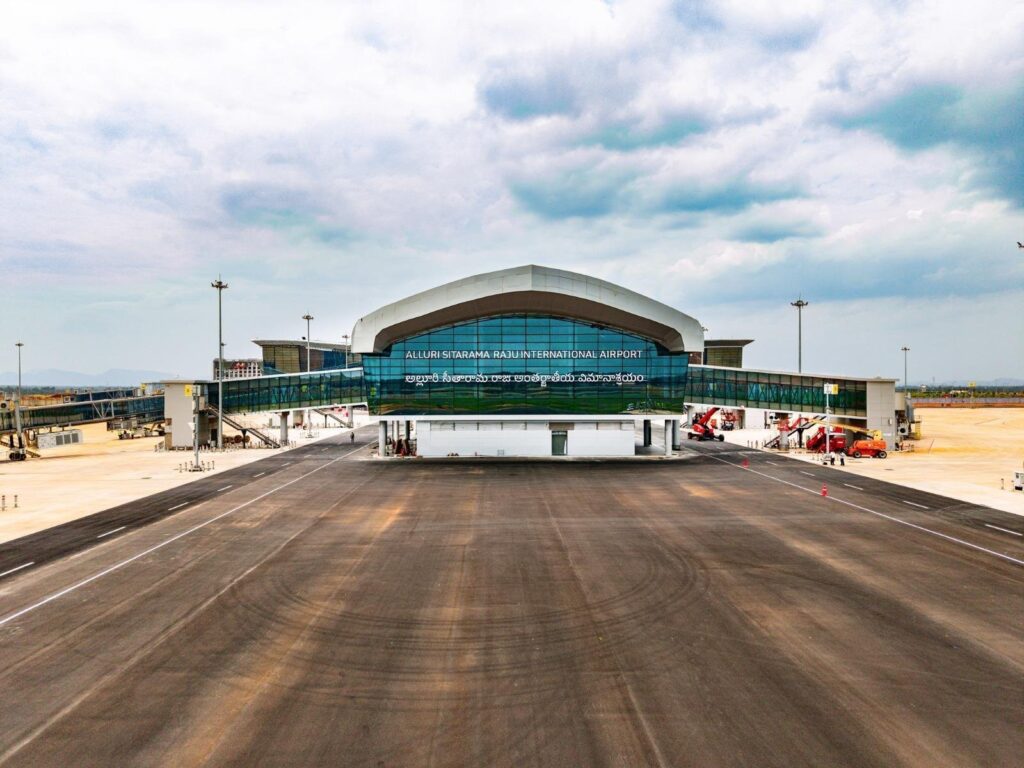
India’s aviation sector has witnessed unprecedented expansion over the past decade, driven by rising passenger traffic, increasing regional connectivity and sustained investment in airport infrastructure. As air travel becomes more accessible and India’s economy continues to grow, several states have undertaken large-scale airport projects to support tourism, trade and industrial development.One of the most significant additions to this network is the Alluri Sitarama Raju International Airport at Bhogapuram, commonly known as Bhogapuram International Airport, in Andhra Pradesh’s Vizianagaram district. Developed as a greenfield international airport, the project is expected to transform air connectivity for North Andhra while serving as a modern alternative to the existing Visakhapatnam Airport, which currently operates as a civil enclave within the Indian Navy’s INS Dega airbase.Designed with modern aviation infrastructure, sustainability features and significant room for future expansion, Bhogapuram Airport is among India’s most ambitious airport development projects. Beyond improving passenger travel, it is expected to become a major catalyst for economic growth, logistics, tourism and industrial investment across the region.Why Bhogapuram Airport Was NeededFor several decades, Visakhapatnam Airport served as the primary aviation hub for North Andhra Pradesh. However, the airport functions as a civil enclave inside INS Dega, limiting its ability to expand operations due to military restrictions.With passenger numbers steadily increasing, the existing airport faced constraints in runway expansion, terminal capacity and future international operations. As Visakhapatnam evolved into one of eastern India’s fastest-growing cities and emerged as an important industrial, maritime and tourism centre, the need for a dedicated greenfield international airport became increasingly evident.Bhogapuram was selected because it offers sufficient land for long-term expansion while providing convenient access to Visakhapatnam, Vizianagaram and Srikakulam districts. The project is intended not only to accommodate future passenger demand but also to support cargo operations, exports and regional economic development.Project OverviewBhogapuram International Airport has been developed under a Public-Private Partnership (PPP) model by GMR Visakhapatnam International Airport Limited (GVIAL), a subsidiary of GMR Airports Limited.The first phase of the project has been developed at an estimated investment of approximately ₹4,700 crore across nearly 2,700 acres. The airport has been designed to handle around six million passengers annually during Phase I, with master plans allowing expansion to accommodate significantly higher passenger traffic in future phases.The airport has also received its Aerodrome Licence from the Directorate General of Civil Aviation (DGCA), confirming its operational readiness ahead of commercial services.Modern Infrastructure and FacilitiesBhogapuram Airport has been planned as a next-generation aviation hub equipped with modern passenger amenities and operational infrastructure.The airport features a 3,800-metre Code-E runway, capable of handling wide-body aircraft such as the Boeing 777, Boeing 787 Dreamliner and Airbus A350. This capability enables the airport to support both domestic and future long-haul international services.The passenger terminal incorporates contemporary architectural design while integrating digital technologies intended to improve passenger movement through self-service check-in systems, baggage handling and security processes.A dedicated cargo terminal has also been developed to strengthen the movement of agricultural products, seafood, pharmaceuticals and industrial goods from Andhra Pradesh to domestic and international markets. Initial cargo handling capacity is estimated at around 20,000 metric tonnes annually, with provisions for future expansion.Sustainability and Passenger ExperienceEnvironmental sustainability has been incorporated into the airport’s planning and construction.The terminal design incorporates energy-efficient systems, natural lighting, rainwater harvesting and environmentally conscious construction practices aimed at reducing operational impact. The airport has also been planned with landscaped public areas and infrastructure capable of supporting future green mobility initiatives.The terminal architecture reflects regional cultural identity while incorporating modern airport design standards expected at international gateways. These features are intended to improve both operational efficiency and passenger comfort.Strengthening ConnectivityOne of Bhogapuram Airport’s primary objectives is to improve connectivity across North Andhra Pradesh.Located approximately 50 kilometres from Visakhapatnam city, the airport is expected to serve not only Visakhapatnam but also neighbouring districts including Vizianagaram and Srikakulam. State authorities have invested substantially in supporting road infrastructure, while dedicated public transport services, including electric buses, have been introduced to improve airport accessibility.Improved connectivity is expected to reduce travel times for residents, facilitate business travel and encourage greater movement of tourists to the region’s beaches, Buddhist heritage sites, hill stations and coastal attractions.Economic Impact on North Andhra PradeshPerhaps the most significant aspect of Bhogapuram Airport is its expected contribution to regional economic development.Large-scale airport projects often become catalysts for wider infrastructure investment, industrial growth and urban expansion. Bhogapuram is expected to attract investments across sectors such as logistics, warehousing, hospitality, information technology, aviation services and manufacturing.The airport is also expected to generate substantial direct and indirect employment during both operational and expansion phases. Businesses dependent on efficient air connectivity—including exporters, logistics providers and multinational companies—are likely to benefit from improved transportation infrastructure.In addition, plans for an aviation ecosystem, including aviation-related educational and industrial facilities near the airport, could further strengthen the region’s long-term economic prospects.Boost to TourismAndhra Pradesh possesses diverse tourism assets, including beaches, temples, Buddhist heritage sites and eco-tourism destinations.Improved international and domestic air connectivity is expected to make these destinations more accessible to visitors from across India and overseas. Visakhapatnam already serves as an important gateway to attractions such as Araku Valley, Borra Caves, Rushikonda Beach, Yarada Beach and the state’s growing cruise tourism sector.The airport is expected to support higher tourist arrivals while encouraging greater investment in hotels, convention centres, restaurants and tourism infrastructure throughout the region.Role in India’s Aviation GrowthBhogapuram Airport reflects India’s broader strategy of expanding aviation infrastructure beyond metropolitan cities.Under national initiatives to strengthen regional connectivity and improve airport capacity, several greenfield airports are being developed across the country. These projects aim to accommodate growing passenger demand while supporting economic development in emerging regions.Bhogapuram is particularly important because it provides Andhra Pradesh with a modern international airport capable of handling future traffic growth without the operational limitations associated with military-controlled facilities. Its development also strengthens aviation infrastructure along India’s eastern coastline, complementing the country’s broader logistics and infrastructure ambitions.Challenges and Future DevelopmentWhile Bhogapuram Airport offers significant long-term potential, its success will depend on continued investment in supporting infrastructure.Efficient road
Noida International Airport Officially Opens: Commercial Flights Begin June 15, Marking New Era for Viksit UP and Viksit Bharat
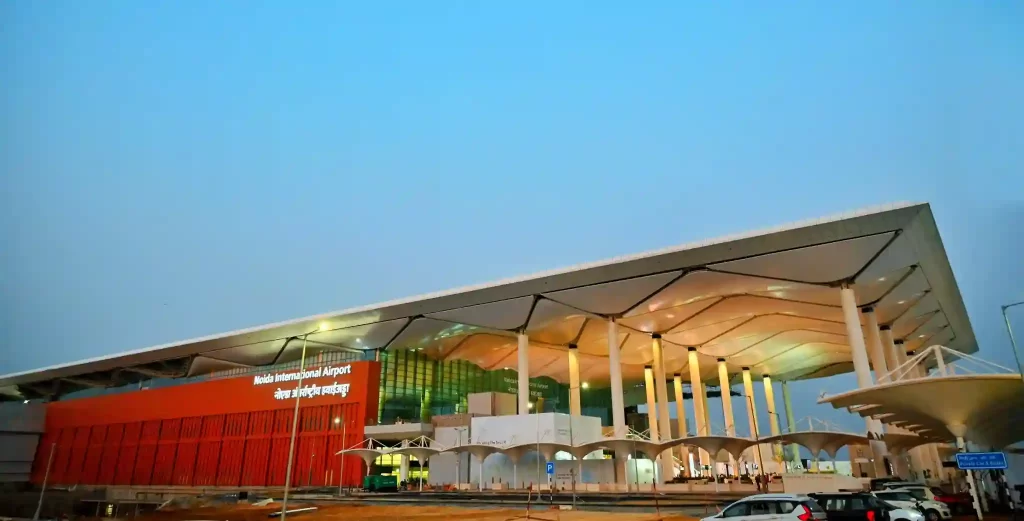
Noida, May 27, 2026 — Prime Minister Narendra Modi officially inaugurated Phase I of the Noida International Airport at Jewar in Gautam Buddha Nagar district of Uttar Pradesh on March 28, 2026, marking a transformative moment for India’s aviation sector and northern India’s connectivity. Noida International Airport at Jewar has officially opened for commercial operations, with flights scheduled to commence from June 15, 2026, marking a transformative moment for India’s aviation sector and northern India’s connectivity. Prime Minister Narendra Modi inaugurated the first phase of the airport earlier this month at Jewar in Gautam Buddha Nagar district of Uttar Pradesh, and the facility has now received final security clearance from the Bureau of Civil Aviation Security. The Prime Minister also laid the foundation stone for 40 acres of Maintenance, Repair, and Overhaul (MRO) facilities at the site during the inauguration ceremony. Speaking on the occasion, Modi declared this a new chapter for the Viksit UP and Viksit Bharat campaign, emphasizing that Uttar Pradesh has now emerged as one of the states with the highest number of international airports in India.Noida International Airport stands among the largest greenfield airport projects in the country, with Phase I developed at a total investment of approximately ₹11,200 crore under a Public-Private Partnership model. The airport will initially handle 12 million passengers per annum, with scalability up to 70 million passengers annually upon full development. Commercial flight operations officially begin June 15, following receipt of approval for its Aerodrome Security Programme from the Bureau of Civil Aviation Security, which certified that the airport’s security framework meets regulatory requirements for commercial operations. IndiGo will operate the first flight from NIA, marking the start of scheduled passenger services, followed shortly by Akasa Air and Air India Express.From Vision to Reality: A 23-Year Journey to CompletionThe airport project was first approved in 2003 during the tenure of former Prime Minister Atal Bihari Vajpayee, making this operational launch the culmination of a 23-year vision. Prime Minister Modi recalled that as soon as the current government was formed, the foundation was laid, construction happened, and now it has started operations. He expressed feeling doubly proud, first for having laid the foundation stone of this airport and now seeing it operational, and second because the name of this grand airport is linked to Uttar Pradesh, the state that chose him as its representative and made him a Member of Parliament.The airport will benefit numerous districts across western UP, including Agra, Mathura, Aligarh, Ghaziabad, Meerut, Etawah, Bulandshahr, and Faridabad, bringing new opportunities for farmers, small and medium enterprises, and the youth of the region. The site is positioned near freight corridors and logistics networks, supporting the movement of goods by air and rail. The area around Dadri, where freight routes converge, has been identified as a key logistics point for northern India. Prime Minister Modi pointed out that this area is becoming the hub of two major freight corridors with special railway tracks laid for goods trains, enhancing North India’s connectivity with the seas of Bengal and Gujarat.Economic Impact Connecting Western UP to Global MarketsPrime Minister Modi emphasized that airports are not just basic facilities in any country but give wings to progress. Due to the expansion of connectivity in the region, agricultural products of western UP will reach the global market in a much better way. The airport will bring numerous new opportunities for farmers, small and medium industries, and the youth of western Uttar Pradesh, with aircraft flying from here to the world, and the airport becoming a symbol of a developed Uttar Pradesh taking flight.The expansion of modern connectivity will further boost food processing prospects in western UP. Prime Minister Modi expressed gratitude to the farmers who gave up their lands to make this project a reality, noting that agriculture and farming hold great importance in the region’s economy. He highlighted that today, Noida is ready to welcome the entire world, and this whole area is strengthening the resolve of Aatmanirbhar Bharat. This multi-modal connectivity is making UP a major attraction for investors worldwide, as whatever farmers grow and industries produce here can now reach every corner of the world swiftly by land and by air.MRO Facility Lays Foundation for Aviation Self-RelianceAddressing a critical gap in India’s aviation ecosystem, Prime Minister Modi drew attention to the Maintenance, Repair, and Overhaul sector, noting that 85 percent of Indian aircraft still have to go abroad for MRO services. The government has resolved to make India self-reliant in the MRO sector, and the foundation stone of an MRO facility was laid at Jewar during the inauguration. When ready, it will serve aircraft from India and abroad, generating revenue for the country, keeping money within India, and creating numerous jobs for the youth.This facility will support aircraft servicing within India, where a significant share of such work is currently carried out overseas, reducing dependency on foreign MRO providers and saving foreign exchange. The government has decided to make India self-reliant in this sector as part of its broader economic policy framework, positioning India as a global hub for aircraft maintenance services.Operational Timeline and First Year ProjectionsThe airport will commence commercial flight operations from June 15 after appointing an Indian CEO, following the security regulator’s approval for its Aerodrome Security Programme. An airport official stated they are looking at 50-60 lakh passengers in the first year of operations. After domestic operations stabilize, they will launch international services, confident of going international before the end of 2026. The airport currently features one runway and one passenger terminal with a capacity to handle 12 million passengers annually, with its master plan including future expansion to accommodate over 70 million passengers each year.The launch follows the DGCA’s clearance granted in March, with PM Modi inaugurating the airport in late March. The airport said the June 15 start date marks the final stage of security clearance after regulatory concerns over a foreign CEO were addressed by appointing Chief Financial Officer Nitu Samra as interim CEO, replacing Swiss national