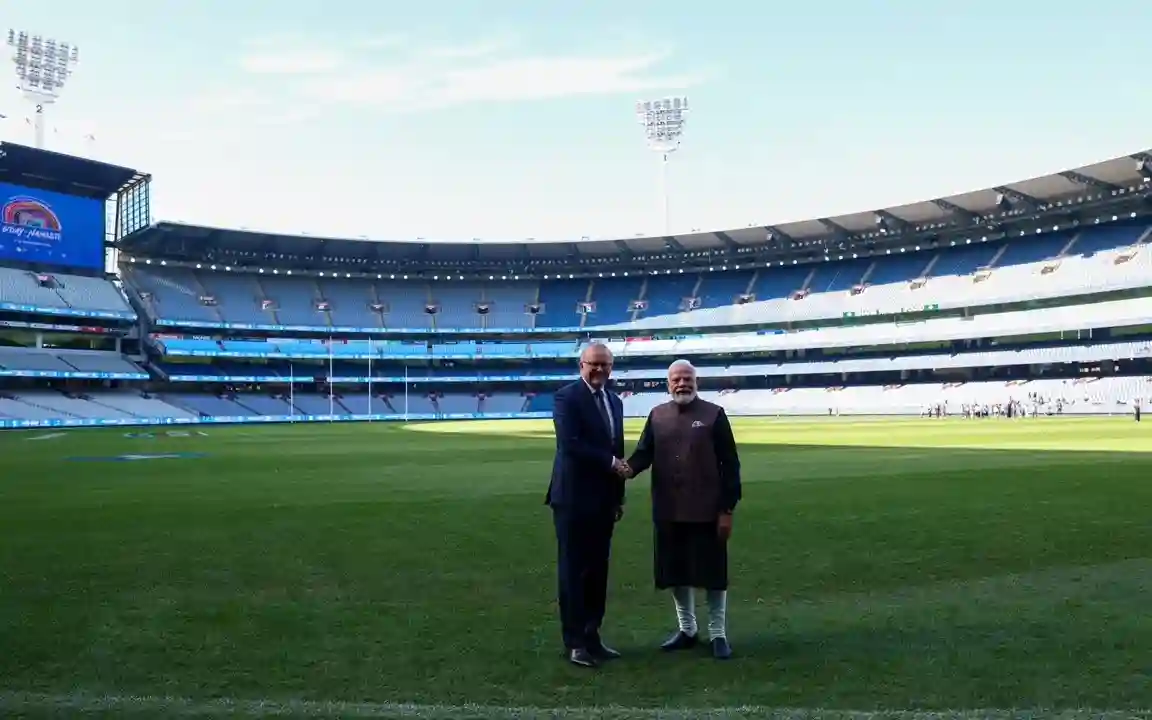
Prime Minister Narendra Modi’s July 2026 visit to Australia has given fresh momentum to a partnership that is now clearly moving beyond symbolism and into institutionally grounded cooperation. The visit produced a wide set of outcomes across defence, energy, critical technologies, education, skills, maritime security, culture, and the Indo-Pacific, underscoring how far India and Australia have come from the uneven and often cautious relationship of earlier decades.
What stands out most is not simply the number of agreements signed, but the coherence of the overall package. Defence, energy security, supply chains, education, and regional strategy were all treated as interconnected priorities, reflecting a relationship that is becoming more resilient, more practical, and more difficult to derail.
A Relationship Built on Trust
This was Modi’s third visit to Australia, and that in itself is historically significant. It reflects a diplomatic rhythm that has become more regular and more substantive, with both countries now willing to engage at a high level even when the broader global environment is uncertain.
The summit’s central message was clear: India and Australia are no longer relying on ad hoc engagement. Instead, they are building a partnership that can absorb disagreements, manage differences, and still keep expanding in strategically important areas.
Defence Cooperation Deepens
The most important strategic outcome was the Joint Declaration on Defence and Security Cooperation, which renews and expands earlier bilateral frameworks and places greater emphasis on interoperability, maritime domain awareness, counter-terrorism, HADR, cyber security, defence-industrial collaboration, and professional military education.
The declaration also supports a more regular defence dialogue, including an annual defence ministers’ mechanism, which should help the two sides move from broad strategic alignment to more structured operational cooperation. In a region where maritime competition and security uncertainty are growing, that kind of institutionalisation matters.
A parallel Maritime Security Collaboration Roadmap further strengthens coordination on information sharing, capability development, and operational planning. The MoU between the Indian Coast Guard and Australia’s Maritime Border Command adds a practical layer to this effort by linking maritime law-enforcement and border-protection agencies directly.
Energy Security and Nuclear Cooperation
Energy security emerged as another major pillar of the visit. The two countries issued a joint statement reaffirming cooperation on reliable, affordable, and sustainable energy, while also highlighting the importance of resilience in the face of geopolitical disruptions.
The most notable breakthrough came with the finalisation of the administrative arrangement under the civil nuclear agreement, which clears the path for Australian uranium exports to India for peaceful use under IAEA safeguards. That step carries both practical and symbolic weight, because it reflects a new level of trust and helps India diversify its uranium supply sources.
Technology, Supply Chains, and the Future Economy
The summit also launched the Australia–India Partnership for Cyber, Critical Technologies, Supply Chains (PACTS), signalling that both countries want to cooperate more closely in the technological domains that will shape economic competitiveness and national security in the coming years.
PACTS builds on earlier cyber and critical technology arrangements, but it goes further by linking digital resilience, supply-chain diversification, and defence-related innovation. That makes it one of the most forward-looking outcomes of the visit, especially at a time when trusted technology partnerships are becoming central to global strategy.
Education, Skills, and People-to-People Ties
Education and skills cooperation formed a major part of the summit’s practical agenda. The visit included the issuance of a Letter of Intent to Flinders University for a campus in Bengaluru and a Letter of Approval to Victoria University to operate in Gurugram, reinforcing the growing role of Australian higher education in India. The two sides also advanced vocational cooperation through a new agreement between India’s regulators and Australia’s skills authority, along with a Centre of Excellence in Mining and Mining Equipment, Technology and Services at NSTI Bhubaneswar. These are the kinds of arrangements that create long-term institutional links rather than one-off announcements.
Culture and Heritage
The visit also included a meaningful cultural dimension. Australia’s voluntary repatriation of Indian antiquities, including Nandi, a Bhadrakali trident, and a six-headed Skanda, underscored how heritage cooperation is becoming an important part of the bilateral relationship.
The broader emphasis on heritage restitution, along with parallel work on human remains and cultural exchange, shows that the relationship is now capable of accommodating not just strategic interests but also historical and moral concerns.
A Shared Indo-Pacific Vision
Regionally, the two leaders reaffirmed support for a free, open, rules-based Indo-Pacific and emphasized the importance of UNCLOS, ASEAN centrality, IORA, the Pacific Islands Forum, and the Quad. They also condemned terrorism, voiced concern about instability in the Middle East, Ukraine, and Myanmar, and stressed the need for diplomacy, restraint, and adherence to international law.
This regional alignment is important because it gives the partnership strategic depth. India and Australia are not merely coordinating bilaterally; they are also trying to shape a regional order that supports stability, maritime security, and economic resilience.
Why This Visit Matters
The real significance of Modi’s Australia visit is that it shows how much the relationship has matured. Earlier phases were marked by distrust, interruptions, and political hesitations, but the present phase is defined by continuity, institutional trust, and an expanding set of shared interests. That shift matters because it makes the partnership more durable. Agreements on defence, energy, technology, education, and regional security now sit within a broader framework of cooperation that appears strong enough to withstand domestic political changes and strategic pressure.
Conclusion
Modi’s July 2026 visit to Australia should be seen as more than a successful diplomatic tour. It was a signal that India–Australia ties have entered a deeper, more consequential phase, one in which both sides are investing in mechanisms that can support long-term cooperation rather than short-term headlines. From defence and maritime security to uranium exports, universities, and cultural repatriation, the visit delivered a broad and carefully balanced set of outcomes. Taken together, they point to a partnership that is increasingly built on trust, institutional depth, and a shared understanding of what stability and prosperity in the Indo-Pacific require