


Who Is General Dhiraj Seth? Meet India’s New Army Chief, His Military Career, VIJAY Vision and Key Responsibilities
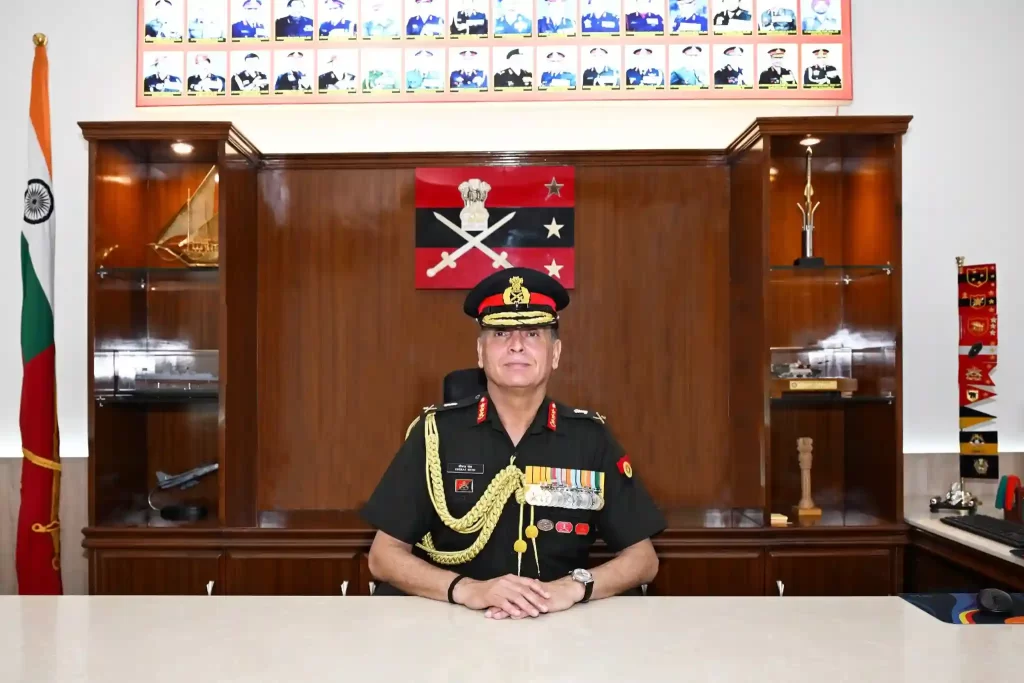
General Dhiraj Seth took charge as the 31st Chief of the Army Staff (COAS) of the Indian Army on June 30, 2026, succeeding General Upendra Dwivedi. A veteran officer of the Armoured Corps with nearly four decades of military service, General Seth has held several key operational and command positions, including leading the Southern Command and South Western Command. His appointment comes at a time when the Indian Army is placing increasing emphasis on modernisation, jointness, indigenous defence capabilities and technology-driven warfare.General Dhiraj Seth is now at the helm of the Indian Army, taking over one of the country’s most important military responsibilities. Before becoming Army Chief, he served as the Vice Chief of the Army Staff and had commanded two major Army commands during his career.His elevation to the top Army post also carries particular significance for the Armoured Corps. General Seth is the first Armoured Corps officer to become Chief of the Army Staff since General Shankar Roy Chowdhary, who retired in 1997.General Dhiraj Seth Takes Charge as 31st Army ChiefGeneral Seth formally assumed command of the Indian Army on June 30, 2026, after General Upendra Dwivedi completed his tenure and superannuated after more than four decades of service.The Ministry of Defence had announced General Seth’s appointment on June 13, stating that he would take over from General Dwivedi from June 30. At the time of his appointment, Seth was serving as Lieutenant General and Vice Chief of the Army Staff.His elevation followed a rapid succession of senior appointments. He became the General Officer Commanding-in-Chief of Southern Command in July 2024, moved to the post of Vice Chief of the Army Staff in April 2026 and became Army Chief less than three months later.The progression reflects the breadth of his experience across operational commands, Army Headquarters and higher military leadership.Who Is General Dhiraj Seth?General Dhiraj Seth is a career Army officer who was commissioned into the Armoured Corps on December 20, 1986. He is an alumnus of the National Defence Academy, Khadakwasla, and the Indian Military Academy, Dehradun.During his career, he also attended the Defence Services Staff College in Wellington, the Army War College in Mhow and the National Defence College in New Delhi. His professional military education extended overseas as well, including the General Staff Course at France’s Collège interarmées de Défense and an International Defense Acquisition Management Course at the US Naval Postgraduate School.His academic and professional training is significant because much of his later career involved areas beyond conventional battlefield command, including strategic planning, weapons and equipment, capability development and modernisation.At the Defence Services Staff College, he was reportedly adjudged the best all-round student of his course in 2006. He also earned the ‘Silver Centurion’ during the Young Officers Course and stood first in the order of merit in several courses during his career.General Dhiraj Seth’s Military CareerGeneral Seth’s military career spans nearly four decades and includes experience in armoured warfare, counter-insurgency operations, command responsibilities and strategic planning.After being commissioned into the 2nd Lancers (Gardner’s Horse), he served in a variety of regimental, brigade and staff appointments.One of his important operational assignments came in Jammu and Kashmir, where he commanded a Counter-Insurgency Force. He later commanded the Sudarshan Chakra Corps, one of the Indian Army’s major strike formations.His command experience also includes an armoured regiment in the desert sector and an armoured brigade in the western theatre.These appointments gave him experience across different operational environments, ranging from armoured formations and conventional military preparedness to counter-insurgency operations.He Also Served With the United NationsAn aspect of General Seth’s career that receives comparatively less attention is his international military experience.He served as an operations officer with the United Nations Angola Verification Mission III (UNAVEM III) between 1995 and 1996. The mission was part of the UN’s efforts in Angola during the country’s transition towards peace following years of civil conflict.His UN assignment came relatively early in his military career and added an international dimension to his operational experience.Command of South Western and Southern CommandsGeneral Seth went on to lead two major Army commands that have strategic importance because of their locations and operational responsibilities.On November 1, 2023, he took over as the General Officer Commanding-in-Chief of the South Western Command, succeeding Lieutenant General B. S. Raju.On July 1, 2024, he took charge of the Southern Command, succeeding Lieutenant General Ajai Kumar Singh. He remained in command until March 31, 2026.His tenure in senior command positions meant that by the time he became Vice Chief, General Seth had already gained experience overseeing large formations and dealing with operational preparedness at the command level.The Ministry of Defence had also identified him in official communications as Southern Army Commander during his tenure. In October 2025, for example, he attended a military event in Bhuj alongside Defence Minister Rajnath Singh and then Army Chief General Upendra Dwivedi.From Vice Chief to Army ChiefGeneral Dhiraj Seth became Vice Chief of the Army Staff on April 1, 2026, succeeding Lieutenant General Pushpendra Pal Singh.The Vice Chief is one of the most senior positions within Army Headquarters and is involved in the functioning, planning and administration of the force.His tenure as Vice Chief was brief. On June 13, the government announced that he would become the next Chief of the Army Staff, and he formally assumed command on June 30.This means General Seth moved from Vice Chief to Army Chief in less than three months.General Dhiraj Seth’s ‘VIJAY’ Vision for the Indian ArmyOne of the most important aspects of General Seth’s first days as Army Chief has been his emphasis on transforming the Army into a technology-enabled and future-ready force.After assuming office, he outlined his vision around the acronym ‘VIJAY’, which he said would provide a foundation for the Army’s future direction.The five elements of VIJAY are:V: VigilanceI: Innovation and TransformationJ: Jointness and IntegrationA: AtmanirbhartaY: Yodha FirstThe framework reflects the changing nature of military operations and the growing importance of technology, integration and indigenous defence capabilities.General Seth has stressed that the Army must adapt to
Kargil Vijay Diwas: A Day of Remembrance, Gratitude, and National Resolve
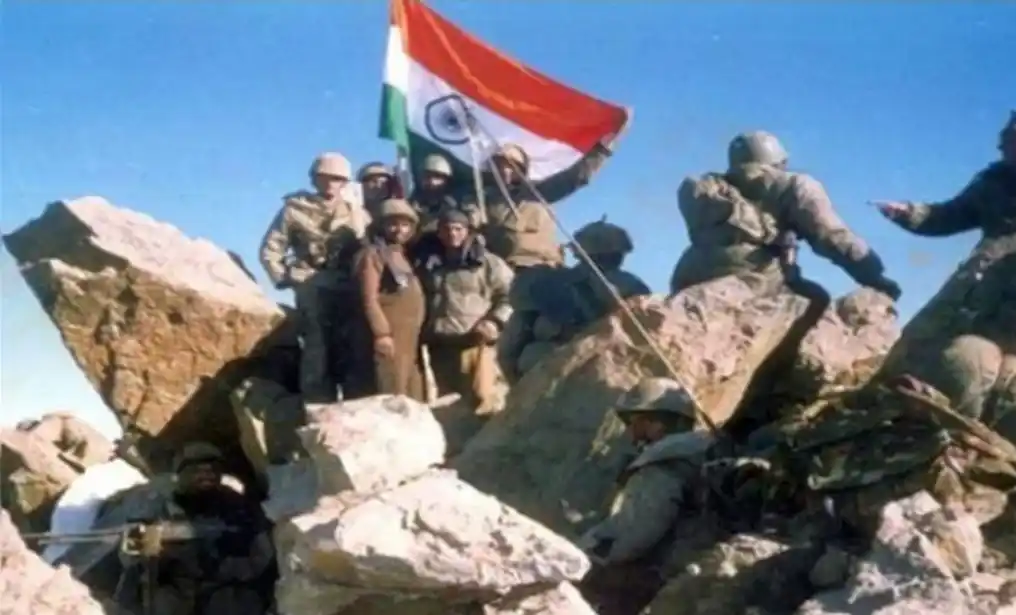
Kargil Vijay Diwas is one of India’s most solemn national observances, marked every year to honour the soldiers who fought in the Kargil War of 1999 and to remember the extraordinary cost of reclaiming India’s territory in the Himalayas. On the 27th anniversary of Operation Vijay, commemorations across the country once again placed the focus on courage, sacrifice, and the enduring responsibility to protect the nation’s sovereignty. This year’s observance carried special emotional weight in places like Drass, Shimla, Belagavi, Bhaderwah, and Lucknow, where wreath-laying ceremonies, military tributes, and public remembrance events brought together serving officers, veterans, families of martyrs, cadets, and citizens in a shared act of gratitude. The Meaning of Kargil Vijay DiwasKargil Vijay Diwas marks India’s victory in the Kargil conflict, which culminated in the successful execution of Operation Vijay and the recovery of territory in the Kargil district of Jammu and Kashmir that had been infiltrated by Pakistani soldiers and militants. The day is not simply about military success; it is about remembering the harsh conditions in which the war was fought, the high altitude at which soldiers operated, and the discipline and determination that made the eventual victory possible. Photo: PIBThe anniversary matters because it reminds the country that national security is often secured in places that most citizens will never see, on mountain heights where every advance is costly and every act of bravery carries real risk. It is also a reminder that freedom and territorial integrity are preserved not in abstract terms, but through sacrifice, planning, and unflinching commitment by the armed forces. Tributes Across the CountryAt the Kargil War Memorial in Drass, the main national ceremony was held in a deeply solemn atmosphere, with Defence Minister Rajnath Singh leading the commemorations by paying floral tributes at the cenotaph in honour of the bravehearts of Operation Vijay. He also inaugurated the Virtual Walkthrough Portal of the Kargil War Memorial, visited the Hut of Remembrance and Veer Bhoomi, interacted with Veer Naris and Veer Matas, and flagged off the Shaurya Vijay Yatra motorcycle rally. In Shimla, Army Training Command commemorated the 27th anniversary of the day with a wreath-laying ceremony at Shradhanjali Sthal in Annandale, followed by two minutes of silence and the sounding of the Last Post. The ceremony ended with all ranks of ARTRAC taking a pledge to uphold patriotism, courage, and selfless service, underscoring how the memory of Kargil continues to shape military ethos even decades later. Belagavi also saw an emotional observance, where officers and personnel of the Maratha Light Infantry Regimental Centre marked the day with a wreath-laying ceremony at the war memorial. Such regimental commemorations matter because they connect the memory of Kargil not only to the nation at large, but also to the traditions, identities, and inherited sense of duty within India’s military units.Drass and the National Centre of MemoryDrass remains the symbolic heart of Kargil Vijay Diwas because it is where the nation gathers most visibly to remember the war. The Kargil War Memorial there stands not only as a site of tribute, but also as a physical expression of collective memory, where names, stones, and ceremonial rituals help translate history into lived remembrance. The memorial’s significance grows each year because the war itself has become part of India’s national narrative of resilience. The presence of soldiers’ families, veterans, young cadets, and public officials creates a powerful bridge between the generation that fought in 1999 and the generations that now inherit the duty of remembering what was won and what was lost. The Voices of National LeadersPublic tributes from national leaders have reinforced the day’s seriousness. Rajnath Singh described the soldiers who fought on the inaccessible heights of Kargil as examples of indomitable bravery, supreme sacrifice, and unwavering resolve, saying the nation would remain forever grateful for their service. Amit Shah called Kargil Vijay Diwas a symbol of the Army’s indomitable courage, while S. Jaishankar emphasized that the service and sacrifice of those who laid down their lives to protect India’s unity and integrity would always be remembered. Dr. L. Murugan also paid tribute, urging people to remember the valour and dedication of the soldiers not only on this day but every day. [user-provided]These statements are more than ceremonial language. They reflect the way Kargil Vijay Diwas has become part of India’s civic calendar, a day when public remembrance, military pride, and national unity are brought together through ritual and reflection. The Human Cost of VictoryThe Kargil War is often remembered through strategy and geography, but the deeper reality is human. Soldiers fought under extreme cold, difficult terrain, and the strategic advantage held by enemy positions on higher ground, and they did so with the knowledge that many would not return. That human cost is why observances such as the felicitation of Veer Naris, Veer Matas, and families of martyrs carry such emotional force. In Lucknow, for instance, the municipal corporation honoured the families of soldiers who sacrificed their lives, while officials were instructed to create a database of military families and resolve their grievances on priority. These acts of recognition help ensure that remembrance is not just symbolic, but also practical and humane. Why the Day Still MattersKargil Vijay Diwas remains relevant because it speaks to values that do not age: duty, sacrifice, discipline, and loyalty to the nation. In an era when public attention can move quickly from one event to another, the day insists on memory and gratitude, asking citizens to pause and reflect on the people who secured the country’s safety in one of its most difficult military conflicts.It also carries a lesson about preparedness. The war showed how quickly high-altitude infiltration and strategic surprise can create danger, and how crucial it is for armed forces to have the resilience, equipment, training, and national support needed to respond effectively. That lesson remains important even today, because sovereignty is never protected only by sentiment; it is protected by readiness.A Legacy Passed ForwardThe enduring power of Kargil Vijay Diwas lies in the way it connects past sacrifice to present responsibility. Students performing patriotic songs in
Four Stars of Destiny: The Autobiography of General Manoj Mukund Naravane

Four Stars of Destiny is the autobiography of Manoj Mukund Naravane, the former Chief of the Indian Army. The book offers a detailed account of Naravane’s personal life, military career, leadership experiences, and the strategic challenges he faced during his decades of service in the armed forces. The memoir traces his journey from his early years and training as a young cadet to eventually becoming the 28th Chief of the Indian Army, a position he held from December 2019 to April 2022.The book is considered an important narrative of modern Indian military leadership, providing readers with insights into the functioning of the Indian Army, strategic decision-making at the highest levels, and the complexities of managing national security challenges in the twenty-first century.About the AuthorGeneral Manoj Mukund Naravane was born on 22 April 1960 in Pune, Maharashtra. He comes from a family with a background in public service—his father served as an officer in the Indian Air Force while his mother worked with All India Radio. Naravane received his education in Pune before joining the National Defence Academy and later the Indian Military Academy, where he began his professional military journey.He was commissioned into the 7th Battalion of the Sikh Light Infantry in June 1980, beginning a career that would span more than four decades. Over the years, he served in a wide range of operational, command, and staff roles across India and abroad. His service included counter-insurgency operations in Jammu and Kashmir and the Northeast, as well as participation in the Indian Peace Keeping Force in Sri Lanka.These experiences shaped his leadership style and strategic understanding, themes that are extensively discussed in his autobiography.Journey from Cadet to Army ChiefA central theme of Four Stars of Destiny is Naravane’s professional journey through the ranks of the Indian Army. The memoir describes how discipline, training, and operational experience helped shape his character and leadership philosophy.The book recounts his early days as a young officer and his exposure to challenging military environments. It highlights how officers are trained to make difficult decisions under pressure while maintaining responsibility for the lives of their soldiers.Naravane gradually rose through the ranks, commanding various units and formations and holding several senior positions in the Indian Army. His leadership roles included command of an infantry brigade, senior operational responsibilities in counter-insurgency areas, and high-level appointments in the defence establishment.Eventually, he rose to become the Chief of the Army Staff, the highest position in the Indian Army. His tenure as army chief coincided with several significant national security developments and military challenges.Insights into Military LeadershipOne of the key aspects of the memoir is its discussion of leadership and decision-making in the armed forces. Naravane reflects on the values of discipline, professionalism, and responsibility that define military leadership.Through personal anecdotes and experiences, he explains how officers must balance strategic planning with ground-level realities. The book also explores the importance of teamwork, trust within the chain of command, and the ethical responsibilities associated with leadership in the military.The memoir also offers lessons on management and leadership that extend beyond the armed forces, showing how military principles such as preparedness, resilience, and clarity of command can be applied in other professional fields as well.Key Military Events Discussed in the BookFour Stars of Destiny also provides an insider’s perspective on several important security developments that took place during Naravane’s career.Among the most significant is the India-China military standoff in eastern Ladakh in 2020, one of the most serious confrontations between the two countries since the 1962 war. The memoir discusses the strategic decisions taken by the Indian military leadership during the crisis and the measures implemented to manage tensions along the Line of Actual Control (LAC).The book also touches upon other policy and organisational changes within the armed forces, including reforms related to recruitment and military preparedness.Publication and ControversyAlthough the memoir was originally scheduled for publication in 2024 by Penguin Random House India, its release has been delayed due to the review process required for books written by former senior military officials.In India, manuscripts written by senior defence personnel often undergo scrutiny by the Ministry of Defence before publication to ensure that sensitive information related to national security is not disclosed.The book also became the subject of political debate in Parliament after excerpts from the manuscript were cited during discussions on national security issues. This controversy brought renewed public attention to the memoir even before its official release.Significance of the MemoirDespite the publication delays, Four Stars of Destiny has generated considerable interest among readers, military analysts, and policymakers. The memoir is expected to provide valuable insights into the workings of India’s military leadership and the challenges faced by the armed forces in an evolving geopolitical environment.More than just a record of personal achievements, the book is also seen as a reflection on the values and responsibilities associated with serving in the armed forces. It highlights how decades of dedication, discipline, and leadership can shape both an individual career and the broader institution of the military.ConclusionFour Stars of Destiny stands as an important account of the life and career of General Manoj Mukund Naravane. By narrating his journey from a young cadet to the head of the Indian Army, the autobiography provides readers with a deeper understanding of military service, leadership, and national security.The memoir not only documents a distinguished military career but also offers lessons on perseverance, duty, and leadership—qualities that remain central to the ethos of the Indian armed forces.
India Army’s Combat Battalions Bhairav Force Ready for Modern Warfare
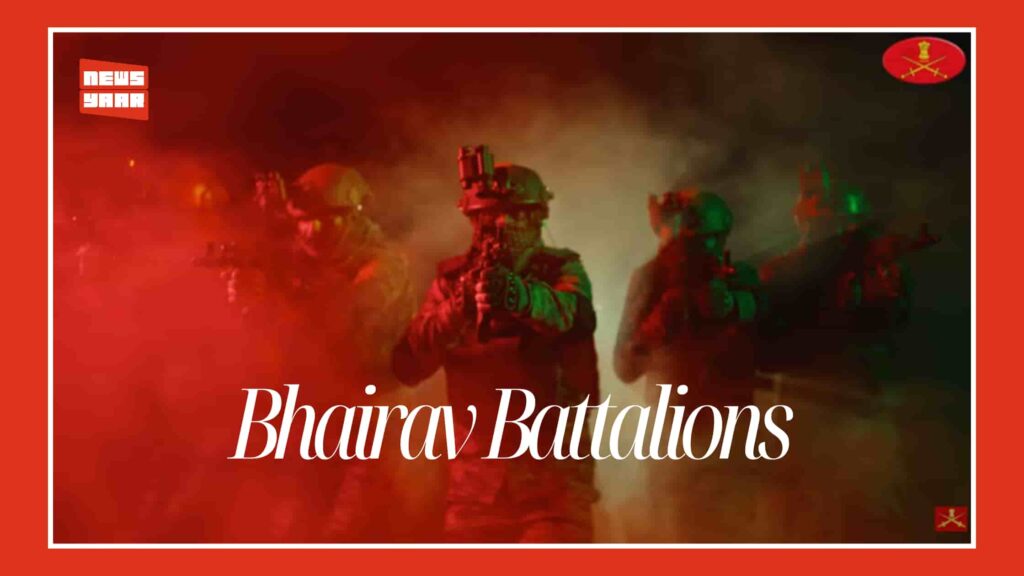
The Indian Army’s Bhairav Battalions are fast emerging as a key element of the force’s modernisation drive, designed to meet the demands of 21st-century warfare with speed, technology, and tactical agility.These newly raised light commando units are set to play a significant role in both operational deployments and ceremonial showcases, including participation in the upcoming 78th Army Day Parade in Jaipur.A New Chapter in Army ModernisationOfficially introduced in 2025, the Bhairav Battalions form part of a broader restructuring effort by the Indian Army to adapt to rapidly evolving threats along India’s borders.Rather than replacing traditional infantry or elite Special Forces, these units are meant to bridge the capability gap between regular battalions and the highly specialised Para Special Forces. Each battalion typically consists of around 250 soldiers selected from various arms of the Army, including infantry, artillery, air defence, and signals, providing an integrated and versatile combat unit.The Bhairav formation reflects the Army’s recognition that future conflicts will likely involve hybrid warfare, where speed, technology, and precision matter as much as manpower. Strategic Deployment and ExpansionThe Bhairav concept has already seen practical implementation, with around 15 battalions raised and integrated across various commands on both the northern and western borders. Plans are underway to expand this number to 25 battalions within the next few months, underscoring the Army’s emphasis on adaptability and readiness.Two of these units, the 2 Bhairav Battalion from Southern Command, known as the “Desert Falcons”, and the 4 Bhairav Battalion from South Western Command, have been confirmed to participate in this year’s Army Day celebrations in Jaipur.The 2 Bhairav Battalion’s distinctive war cry, “Raja Ramchandra ki Jai,” embodies its fighting spirit and commitment to mission success.Role and Operational FocusUnlike the Para Special Forces, Bhairav Battalions operate as a rapid response force capable of acting independently at short notice. Their training emphasises modern tactical manoeuvres, drone integration, surveillance, and quick-strike capabilities, making them well-suited to the challenges of today’s complex battlefield environments.With their smaller size and high mobility, Bhairav units can rapidly respond to evolving threats, conduct targeted operations in diverse terrains, and support conventional forces during high-intensity situations.Final Insights The rise of the Bhairav Battalions signals a significant shift in the Indian Army’s operational doctrine, blending traditional combat strength with modern warfare capabilities.These units represent the service’s efforts to stay ahead of contemporary threats while enhancing overall battlefield effectiveness. As they take centre stage during national events and operational deployments alike, the Bhairav Force stands as a symbol of India’s evolving military prowess in an increasingly dynamic security landscape.Video credit: DD India
Historic Army Day Parade in Jaipur: A Public Spectacle of Pride
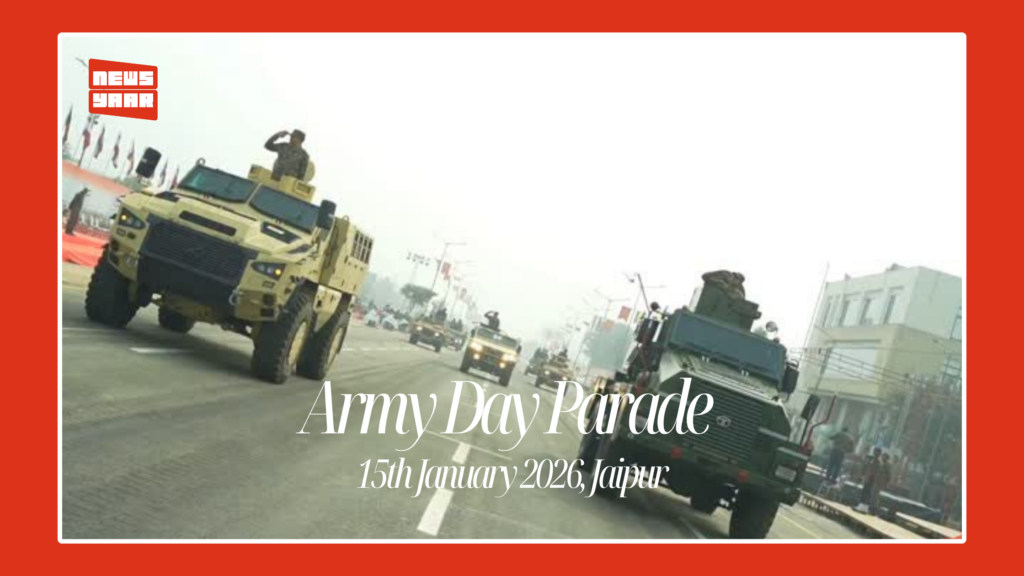
Jaipur is up for a historic celebration as the 78th Army Day Parade & is set to take place on January 15, 2026.The event along Mahal Road in Jagatpura is one of the most inclusive tributes to the Indian Army.Army Day is observed every year on January 15 to honour Field Marshal Kodandera M. Cariappa, who became the first Indian Commander-in-Chief of the Indian Army in 1949 following independence.A Parade Like Never BeforeAuthorities have organised open rehearsals on January 9, 11, and 13, allowing thousands of residents to witness military precision, disciplined marching contingents, and displays of modern weapons well ahead of the main parade.Public enthusiasm has been palpable, with crowds gathering early along Mahal Road to watch tanks, missile systems, and advanced defence technologies.Patriotism on DisplayOfficials have emphasised the parade’s role in reinforcing civil-military harmony and national pride. Thousands of audiences, including school and college students, women’s groups, ex-servicemen, and families, are expected to attend under a registration system implemented by the Rajasthan government.The excitement has translated into public participation during rehearsals, with residents capturing performances on mobile phones and cheering the march-past and military bands. More Than a Parade: The Final InsightsAlongside the main event, Jaipur will host a variety of complementary programs, including a “Know Your Army” exhibition, which showcases armoured vehicles, missile systems, and interactive displays aimed at deepening public awareness of India’s defence forces.A special evening event, Shaurya Sandhya 2026, featuring cultural performances, light and sound shows, and a tribute to families of martyrs, will take place as part of the broader celebration.The 78th Army Day Parade stands as a celebration of military tradition and discipline, but also as a powerful symbol of national unity, pride, and collective respect for the service of the Indian Army.Video credit: DD News