


Vande Bharat Cargo: India’s Push to Build a Faster, Modern Freight Rail Network
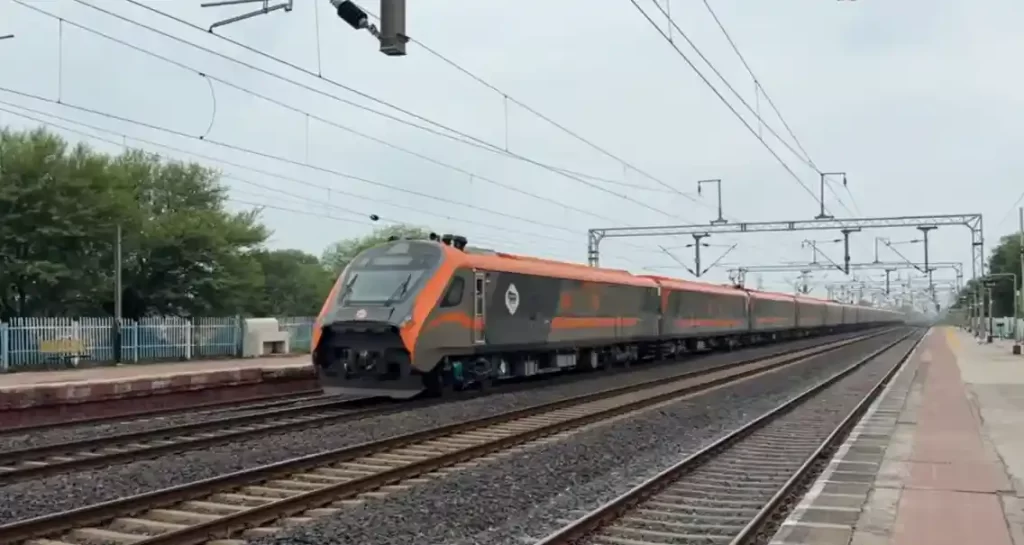
Indian Railways is looking beyond passenger trains as it expands its next generation of railway services. Alongside the rapid rollout of Vande Bharat passenger trains, the railways is also exploring a new generation of faster, more modern freight services designed to move high-value and time-sensitive goods more efficiently.This effort has brought the Vande Bharat Cargo concept into focus.Unlike conventional freight trains, which are primarily designed to move large volumes of bulk commodities, a Vande Bharat-style cargo train is intended for a different segment of the logistics market: time-sensitive, high-value and relatively lightweight cargo. The idea is to use modern train technology and dedicated logistics infrastructure to make rail more competitive with road and air transport for certain categories of goods.The concept is part of a broader transformation underway in Indian Railways, where freight is increasingly being viewed not simply as a source of railway revenue but as a critical component of India’s logistics and supply-chain infrastructure.What Is Vande Bharat Cargo?Vande Bharat Cargo refers to the development of a dedicated freight version of the Vande Bharat train platform, designed specifically for cargo movement rather than passenger transportation.The concept builds on the technology and design philosophy of the Vande Bharat trainsets, including modern propulsion, faster acceleration and efficient use of railway infrastructure.The fundamental difference is the interior.Instead of passenger seats, a cargo train would use its available space for transporting goods. The configuration can be designed around loading and unloading efficiency, cargo protection and rapid turnaround at terminals.The objective is not to replace conventional freight trains.India will continue to depend on long, heavy freight trains to transport coal, iron ore, cement, foodgrains, fertilisers, petroleum products and other bulk commodities. Vande Bharat Cargo is aimed at a different market: goods where speed, reliability and delivery time are more important than simply moving the largest possible tonnage.Why Does India Need Faster Cargo Trains?India’s logistics sector remains heavily dependent on road transport.Roads offer the flexibility of door-to-door delivery and can reach destinations that are not connected directly to railway lines. However, road freight can be affected by congestion, fuel costs, weather conditions and unpredictable travel times.Rail transport, on the other hand, can move large quantities over long distances with comparatively high energy efficiency.The challenge is that traditional freight rail is often optimised for bulk cargo rather than speed.This creates a gap between rail and road for time-sensitive shipments.A faster cargo train could potentially fill that gap.For example, products such as electronics, pharmaceuticals, automobile components, e-commerce shipments, perishables and other high-value goods may benefit from a predictable rail service that offers shorter transit times than conventional freight trains.The Vande Bharat Technology AdvantageThe Vande Bharat platform was developed as a modern self-propelled trainset rather than a conventional locomotive-hauled passenger train.One of its key characteristics is distributed propulsion, with traction equipment distributed across the trainset rather than concentrated entirely in a locomotive.This configuration allows the train to accelerate quickly and makes better use of its available track time.For a cargo application, faster acceleration could be particularly useful because freight trains frequently need to start, stop and operate around other railway services.A modern trainset could potentially reduce turnaround times and improve schedule reliability.However, speed alone does not determine whether a freight service will be commercially successful. Loading and unloading time, terminal infrastructure, cargo handling, route availability and pricing will be equally important.What Kind of Cargo Could It Carry?A Vande Bharat Cargo service would be best suited to goods that have a relatively high value compared with their weight and need to reach their destination quickly.Potential categories include:E-commerce shipments: India’s online retail market generates enormous volumes of parcels that need predictable delivery times.Electronics: Smartphones, computers, components and other electronic goods are relatively high-value and can benefit from secure transportation.Pharmaceuticals: Medicines and medical products can be time-sensitive and, in some cases, require controlled transportation conditions.Automobile components: Manufacturers increasingly operate integrated supply chains in which delays in receiving components can disrupt production.Perishable goods: Fruits, vegetables, dairy products, seafood and other perishables can lose value rapidly if transportation takes too long.Express parcels: Courier and logistics companies could potentially use dedicated rail services for inter-city movement.High-value industrial goods: Precision equipment, machinery components and other specialised products could also be candidates.The key consideration is that the cargo must justify paying a premium for faster and more predictable rail transportation.How It Would Differ From Conventional Freight TrainsThe distinction between Vande Bharat Cargo and traditional freight services is important.Conventional freight trains are designed primarily around capacity and haulage efficiency. Their strength is the ability to move thousands of tonnes of cargo over long distances.A Vande Bharat Cargo service would focus more heavily on speed and turnaround time.A conventional freight train carrying coal, for instance, may consist of dozens of wagons and be hauled by one or more powerful locomotives.A cargo train designed around the Vande Bharat platform would instead operate as a dedicated trainset, with cargo space integrated into the train.This makes the two services complementary rather than competing.India needs both.Heavy freight trains will remain essential for the country’s industrial economy, while faster services could target the rapidly expanding express logistics market.The E-Commerce OpportunityThe growth of e-commerce has fundamentally changed India’s logistics requirements.Consumers increasingly expect products to be delivered within one or two days, particularly on routes connecting major cities.This has created enormous demand for faster inter-city logistics.Most e-commerce deliveries currently depend heavily on road transportation for the middle-mile segment.A dedicated rail cargo service could potentially provide a faster and more predictable alternative for certain long-distance routes.For example, parcels could be consolidated at a logistics hub, transported overnight by rail between major cities and then transferred to local delivery networks for the final mile.Such a model would essentially turn railways into a high-speed middle-mile logistics network.The Perishables MarketAgricultural products present another potential opportunity.India is one of the world’s largest producers of fruits, vegetables, dairy products and other agricultural commodities. However, post-harvest losses remain a significant concern, particularly for products with short shelf lives.Faster transportation can help reduce the time between production and consumption.A dedicated cargo train
Skyroot Vikram-1 Launch: India’s Private Space Breakthrough and a New Chapter in Orbital Access
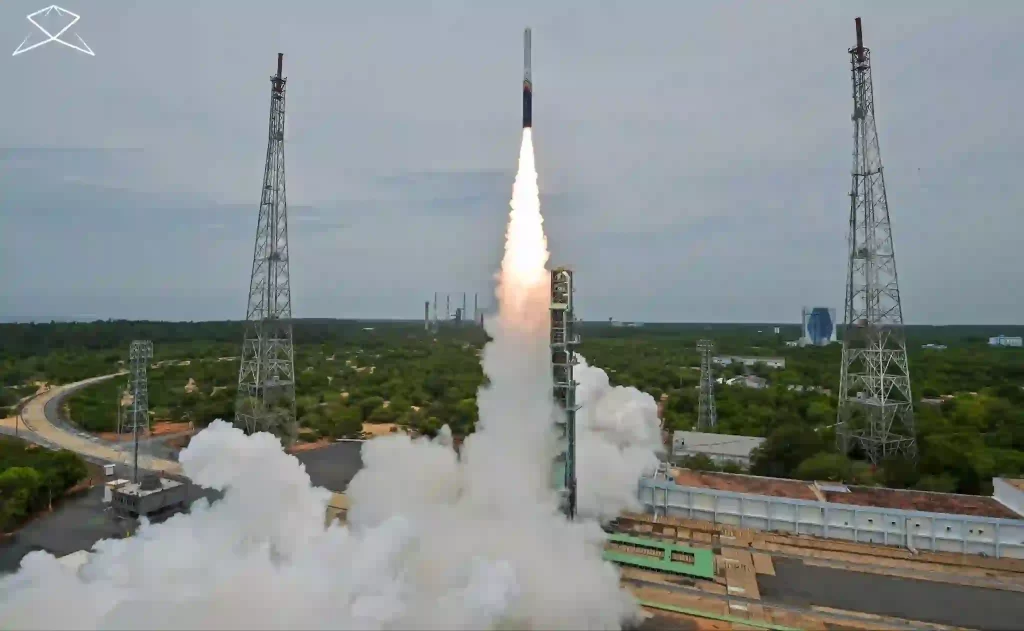
Skyroot Aerospace’s Vikram-1 mission, called Aagaman, is a landmark moment for India’s space story because it demonstrates that a privately built Indian rocket can reach orbit and place payloads successfully into low Earth orbit. For a country that has long been admired for the strength of ISRO, this is an equally important signal of something new: India’s commercial space sector is no longer just preparing for lift-off, it is already there.What makes the launch so significant is not only the technical success, but the symbolism attached to it. Vikram-1 is India’s first private orbital-class rocket, and with its successful flight from Sriharikota, India has entered a small and elite group of nations where private enterprise has independently achieved orbital launch capability.Why Vikram-1 MattersThe space industry often measures progress in very specific terms: payload mass, orbital accuracy, propulsion reliability, turnaround time, and the ability to scale launch services commercially. Vikram-1 matters because it checks several of those boxes at once, proving that an Indian private company can design, build, integrate, and launch a working orbital vehicle from Indian soil.That is a major shift from the older model in which space capability was seen primarily as the domain of the state. Today, Vikram-1 suggests that India’s space future will be shaped not just by ISRO, but by a wider ecosystem of private companies, engineering talent, investors, and customers who want Indian launch capability to be part of the global market.The Launch and Mission ProfileThe rocket lifted off from the Satish Dhawan Space Centre at Sriharikota after a planned pause shifted the launch time from 11:30 am to 12:05 pm. Built by Hyderabad-based Skyroot Aerospace, the mission achieved its intended orbital objective and placed multiple technology demonstration payloads, including postcards from Prime Minister Narendra Modi, into low Earth orbit.Vikram-1 is a three-stage rocket and stands about 22 metres tall, roughly the scale of a seven-storey building. It reportedly delivered customer payloads into an orbit around 450 km above Earth, which is a strong demonstration of practical launch capability rather than a symbolic suborbital test.A Private Rocket With National MeaningIndia has made remarkable progress in space through ISRO’s long record of dependable missions, but the Vikram-1 launch adds a new layer to that success story. It shows that India’s space economy is maturing from a government-led program into a more diversified industrial ecosystem where private players can compete, innovate, and ultimately carry national prestige into commercial markets. That matters because orbital launch is one of the hardest parts of the space business. It requires deep systems engineering, high-reliability propulsion, precision guidance, rigorous testing, and the ability to survive failure during development without losing technical momentum. A successful private orbital launch is therefore not a single achievement; it is proof that a company has built institutional competence at the highest level.The Technology Behind the RocketOne of the most interesting aspects of Skyroot’s approach is its use of modern manufacturing methods, including additive manufacturing, better known as 3D printing. In traditional rocket production, engines are built from many separate parts that must be machined, welded, sealed, and assembled with extreme precision, while 3D printing allows complex components to be built layer by layer, reducing weight, simplifying the structure, and cutting lead time. Skyroot has emphasized this approach before, noting that fully printed components can reduce mass and simplify production. For a startup, that is especially important because launch vehicles are not just engineering artifacts; they are also manufacturing systems, and every improvement in production speed, cost, and consistency improves competitiveness in a market where reliability and economics matter equally.The Commercial Space AngleVikram-1 is also important because it strengthens India’s place in the global commercial launch market. Satellite launches are increasingly driven by demand for small satellites, technology demonstrations, earth observation constellations, and rapid deployment missions, and countries that can offer dependable launch services will have a strategic and economic advantage.India already has strong space credibility through ISRO, but a successful private launcher expands the country’s offering. It suggests that future customers may one day choose India not only for low-cost space hardware or satellite services, but for launch options provided by a competitive domestic private sector. PM Modi’s Response and National SymbolismPrime Minister Narendra Modi praised the mission as a historic new frontier in India’s space journey, framing it as a reflection of the talent, entrepreneurial spirit, and ambition of India’s youth. That kind of response matters because space achievements often become national symbols, and private-sector success at orbit is particularly resonant in a country that sees technology as a key pathway to economic and strategic power. The presence of a postcard from the Prime Minister among the payloads added a distinctive symbolic touch. It turned the mission into something more than a test flight, linking the technical achievement with a broader sense of national participation in the event. What Comes NextThe real test for Vikram-1 begins after the headlines. A successful launch is a milestone, but a repeatable launch service is what turns a demonstration into a business. Skyroot’s challenge now will be to convert this success into a reliable cadence of missions, customer confidence, and operational maturity that can sustain the company over time. If it succeeds, Vikram-1 could become one of the defining vehicles in India’s commercial space era. More importantly, it could help normalize the idea that Indian private companies are not peripheral players in space, but central participants in a new national ecosystem built around launch, innovation, and scale. ConclusionThe Vikram-1 launch is historic because it marks the moment India’s private space sector moved from promise to proof. By placing payloads into orbit with a homegrown private rocket, Skyroot Aerospace has demonstrated that India’s space ambitions are no longer limited to state-led achievement alone.That makes Aagaman feel like more than the name of a mission. It reads like a declaration that a new era has arrived, one in which India’s space story will be written not only by institutions, but by entrepreneurs, engineers, and private companies ready to reach orbit on their own terms.Video: Skyroot Aerospace
Prambanan Temple, Indonesia: Java’s Majestic Hindu Monument and a Living Bridge Between Civilizations

Prambanan Temple is one of Indonesia’s most remarkable historical treasures, a soaring 9th-century Hindu complex near Yogyakarta that still feels powerful even in ruins, not because it is perfectly preserved, but because it carries the grandeur of an ancient civilization in every carved stone and rising spire. As the largest Hindu temple complex in Indonesia and one of the most important in Southeast Asia, it stands today not only as a UNESCO World Heritage Site, but also as a symbol of the long cultural conversation between India and Indonesia.The recent visit by Indian Prime Minister Narendra Modi to Prambanan, alongside Indonesian President Prabowo Subianto, gave the temple renewed international attention, especially after the two leaders marked the beginning of India’s archaeological conservation and restoration project for the site. That gesture matters because Prambanan is more than a monument; it is a shared civilizational memory, built in stone and preserved through diplomacy, scholarship, and devotion.A Monument With Deep RootsPrambanan was built during the 9th and 10th centuries under the Sanjaya dynasty of the ancient Mataram Kingdom, at a time when Hinduism and Buddhism both shaped life on Java’s fertile plains. The temple was dedicated to the Hindu Trimurti, Shiva, Vishnu, and Brahma, and was designed as a sacred landscape rather than a single isolated shrine.What makes its origin story so fascinating is the way it reflects the cosmopolitan character of ancient Southeast Asia. Java was not a peripheral outpost of Indic culture; it was a place where Hindu ideas were absorbed, adapted, and given local artistic expression, creating a monument that feels both familiar and distinctly Indonesian. In that sense, Prambanan is not simply an import from India’s religious world, but a mature regional interpretation of it.Scale and StructureThe Prambanan Temple Compound is made up of several groups of buildings, including the main Prambanan temple complex as well as Sewu, Bubrah, and Lumbung temples. At the heart of the site once stood roughly 240 temples, large and small, spread across a landscape of nearly 40 hectares, making it one of the grandest religious complexes ever built in ancient Java.The central shrine arrangement is especially striking. Three main temples honor Shiva, Vishnu, and Brahma, with Shiva’s temple rising highest at around 47 metres and dominating the skyline with a verticality that immediately sets Prambanan apart from many other temple traditions in Asia. That upward sweep creates a sense of aspiration and sacred hierarchy, as if the entire complex is trying to lift the visitor’s gaze toward the divine.The Architecture & Carvings That SpeakThe first impression Prambanan gives is one of dramatic elegance. Unlike sprawling temple compounds that spread horizontally across a broad footprint, Prambanan rises sharply and symmetrically, with stone towers that create a powerful silhouette against the Javanese sky. This vertical design is not just beautiful; it reflects Hindu cosmology and the idea of sacred order expressed through geometry, elevation, and alignment.Inside the Shiva temple are chambers that house statues of Shiva, Durga, Ganesha, and the sage Agastya, reinforcing the temple’s theological depth and ritual purpose. Around the central shrines, rows of smaller pervara shrines once created a dense sacred field, and although many are now in ruins, their remains still help convey the scale and ambition of the original complex.One of Prambanan’s greatest artistic achievements is its relief sculpture. The temple galleries are decorated with finely carved bas-reliefs depicting episodes from the Ramayana, allowing visitors to move around the structure almost as if they are reading a sacred story in stone. That narrative quality gives the site a remarkable human texture. The carvings are not merely decorative; they function as theological instruction, cultural memory, and visual storytelling, connecting architecture to epic literature in a way that turns the temple into a living manuscript. Visitors traditionally walk clockwise around the corridors, following the sequence of scenes, which turns movement itself into an act of contemplation.Prambanan and BorobudurPrambanan is often discussed alongside Borobudur, the great Buddhist monument nearby, and the pairing is one of the most compelling features of Java’s cultural landscape. Where Borobudur represents the island’s Buddhist heritage, Prambanan reveals its Hindu legacy, and together they show that ancient Java was home to overlapping traditions rather than a single religious identity.That coexistence is historically important because it reminds us that Southeast Asian civilizations were deeply plural, creative, and interconnected. The two monuments, standing in the same broader region, make a powerful case for understanding heritage not as a fixed label, but as a layered record of exchange, adaptation, and local genius.UNESCO Recognition and PreservationPrambanan was designated a UNESCO World Heritage Site in 1991, a recognition that underlined both its architectural importance and its vulnerability. Like many ancient monuments, it has faced damage from age, weathering, and seismic events, which is why conservation has been central to its survival.India’s involvement in the current restoration effort is especially notable because the Archaeological Survey of India has a long history of heritage conservation in Southeast Asia, including documentation work at the Borobudur temple compounds. The Prambanan project is therefore part of a broader effort to preserve not just a structure, but a shared historical vocabulary that connects South and Southeast Asia across centuries.Why Prambanan Still MattersPrambanan matters today because it speaks to more than religion or tourism. It is a reminder that civilizations travel through architecture, that faith can become form, and that cultural influence often survives longest in stone. For Indonesia, it is a monument to the Hindu past that helped shape its early history; for India, it is a reminder of how widely Indic traditions once flowed and how deeply they were transformed abroad.It also matters because heritage diplomacy is not abstract. When leaders jointly restore a temple, they are not only protecting old walls; they are affirming a relationship between histories, publics, and identities. The plaque unveiled by Modi and Prabowo at Prambanan therefore carries meaning well beyond ceremony, because it ties preservation to friendship, scholarship, and mutual respect.ConclusionPrambanan Temple is one of Southeast Asia’s great cultural masterpieces, a place
The Longest-Serving Indian PM: Narendra Modi Surpasses Nehru’s Record with 4,399 Days
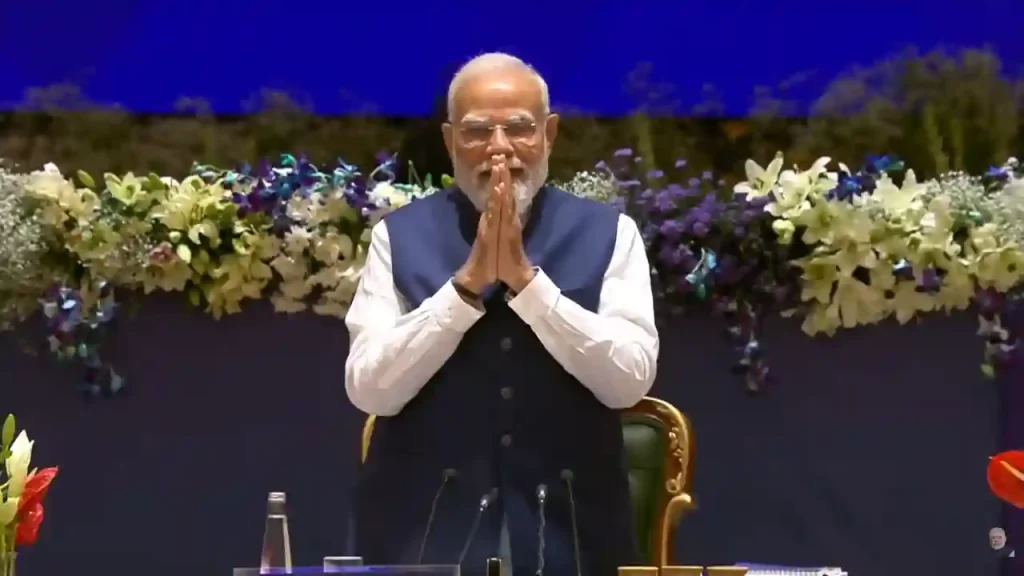
Prime Minister Narendra Modi has officially become India’s longest continuously serving elected Prime Minister, completing 4,399 consecutive days in office on June 10, 2026, surpassing the previous record of 4,398 days held by Jawaharlal Nehru after the country’s first general elections, with the Union Cabinet passing a historic resolution marking this milestone as a symbol of India’s democratic consciousness and public trust. Mr Modi took the oath of office on 26th May 2014 and has surpassed Pandit Jawaharlal Nehru, who first took the oath as an elected Prime Minister on 13th May 1952 and served until 27th May 1964, with Nehru’s tenure amounting to 4,398 days while Modi’s continuous tenure from 26th May 2014 to 10th June 2026 now stands at 4,399 days, making him the longest-serving elected Prime Minister in India’s history.The Historic Milestone: 4,399 Days of Continuous Service Surpassing Nehru’s 1952-1964 RecordThe achievement of Prime Minister Narendra Modi is particularly noteworthy given the scale and complexity of governance in India, a nation of over 1.4 billion people characterized by extraordinary diversity in language, culture, religion, and geography, making sustained leadership across three consecutive national mandates in the world’s largest democracy unprecedented in Indian political history. At a time when many countries have witnessed political churn, frequent changes in government, and policy uncertainty, India has experienced continuity in leadership and governance, reflecting sustained public trust across three consecutive national mandates that demonstrates the unprecedented support bestowed by the people upon a leader guided by the ‘Nation First’ resolve.The Union Cabinet today passed a resolution marking June 10, 2026, as an historic milestone in the journey of Indian democracy, applauding Shri Narendra Modi for becoming the longest-serving elected Prime Minister of the country by establishing a record of 4,399 days of continuous service as an elected PM, surpassing the previous record held by Shri Jawaharlal Nehru, who served for 4,398 continuous days from 1952 to 1964. This occasion stands as a symbol of India’s democratic consciousness, public trust, and the power of public participation, with the resolution extending heartfelt congratulations and best wishes to the Prime Minister while highlighting that this achievement coincides with the NDA government completing 12 years under his leadership.From Humble Beginnings to the Nation’s Highest OfficePrime Minister Modi’s rise from a humble socio-economic background to the highest elected office without the support of a political dynasty is widely seen as an illustration of the opportunities and social mobility offered by India’s democratic system, marking a departure from traditional political patterns where family connections often determined leadership trajectories. Shri Narendra Modi served as the Chief Minister of Gujarat for 14 years and was applauded for the economic growth and setting up advanced infrastructure in the state, among other key developments, before ascending to the nation’s highest office, where he is known for campaigns like Swachh Bharat, Make in India, Digital India, and many more.Amongst his several accolades, he is also famous for being the first Indian to win the Seoul Peace Prize award in 2018, while Independent global surveys have consistently ranked Prime Minister Modi among the world’s most popular democratic leaders, with him also being conferred with the highest civilian honours of more than 30 countries. Harivansh Narayan Singh, Deputy Chairman of the Rajya Sabha, praised PM Modi’s leadership, describing him as a “visionary” who has successfully translated ideas into action, remarking to ANI that “since independence, he is perhaps the first politician and a visionary who didn’t just dream but actually implemented those dreams, bringing them to reality on the ground”.Poverty Eradication and Inclusive Development:During Prime Minister Modi’s tenure, nearly 250 million Indians moved out of multidimensional poverty, with the resolution acknowledging that the welfare of the poor has been placed at the center of governance, detailing an unprecedented scale of amenities delivered including pucca houses, electricity, clean water, and direct benefit transfers, alongside free rations for over 80 crore citizens and free medical treatment for over 60 crore poor individuals. These efforts collectively boosted national self-confidence and enabled over 25 crore people to defeat poverty, expressing gratitude for the policies that have enabled more than 25 crore poor people in India to defeat poverty under his leadership.The resolution maps the empowerment of key demographics, recognizing the focus on youth power that propelled India into becoming the world’s third-largest startup ecosystem and a scientific power through Mission Chandrayaan, while a new chapter of ‘Women-Led Development’ is detailed through comprehensive policies ranging from smoke-free kitchens and the Lakhpati Didi campaign to the historic 33 percent reservation for women in legislative bodies. Affirming farmers as a core pillar of a ‘Viksit Bharat’, the text applauds initiatives like PM Kisan Samman Nidhi and the provision of Kisan Credit Cards to pastoralists and fishermen, which have helped propel agricultural exports past the Rs 5 lakh crore mark, appreciating his efforts directed towards inclusive growth and social justice.Digital Infrastructure and Economic TransformationDuring this period, India has strengthened its position as the world’s fastest-growing major economy, concluded major trade agreements with leading economies, and emerged as a more influential voice on global issues, including development, technology, climate action, and the priorities of the Global South, with people seeing rapid expansion of digital public infrastructure, large-scale infrastructure development, improvements in welfare delivery, and broad-based socio-economic progress. The resolution attributes the advancement of India’s manufacturing capabilities in sectors from defense to AI to the momentum gained by the ‘Make in India’ and ‘Aatmanirbhar Bharat’ campaigns, underlining that political stability, dynamic governance, and far-sighted policies of the last 12 years have transformed India into the world’s fastest-growing large economy.Union Minister Sukanta Majumdar also celebrated PM Modi’s historic milestone, emphasizing its significance in Indian political history, saying “There is a special day in the political history of India. Prime Minister Narendra Modi has set the record for the longest tenure as India’s Prime Minister.” Singh highlighted key policy initiatives under Modi’s tenure, including the introduction of a 33 per cent reservation for women in the Lok Sabha and State Legislative Assemblies, the implementation of
Government Approves E85 and E100 Fuels: India Opens the Door to a New Ethanol-Driven Mobility Era
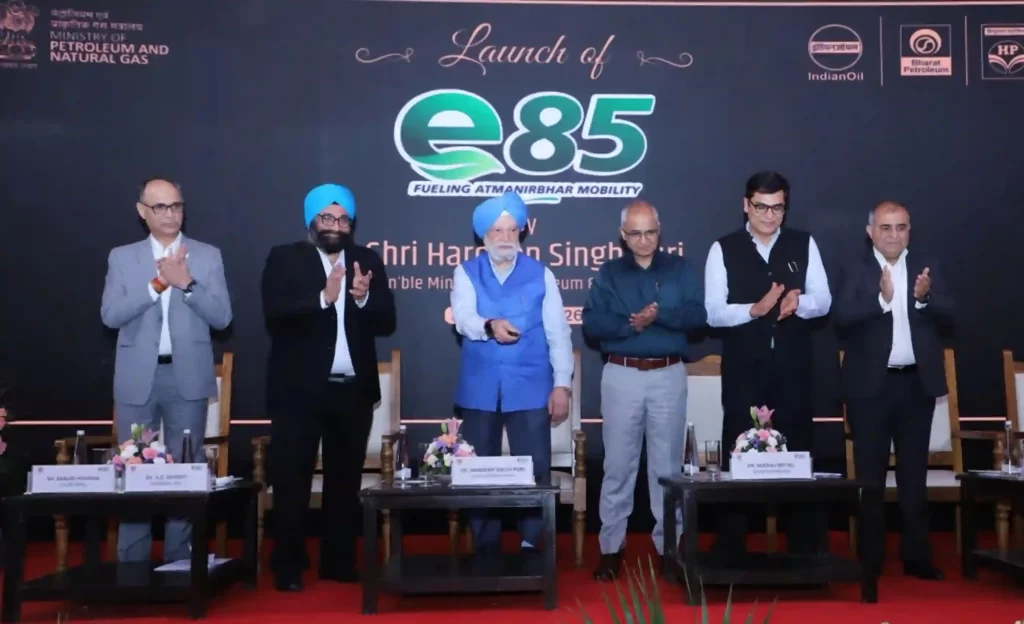
India has taken a significant step toward cleaner and more diversified transport energy by clearing the regulatory framework for E100 fuel, while E85 has already begun appearing in the market in limited form. The move is important not only because it gives legal backing to ethanol-only vehicles, but because it signals that India’s fuel strategy is no longer just about blending ethanol into petrol, it is now about creating a parallel mobility ecosystem around biofuels.The announcement by Union Road Transport and Highways Minister Nitin Gadkari, made at the Sugar, Ethanol & Bio-Energy India Conference in Nagpur, marks a turning point for automakers, fuel retailers, and policy makers alike. Gadkari said he signed the file authorising the use of 100 percent ethanol at 8 pm, giving manufacturers the regulatory certainty they need to invest in flex-fuel platforms and ethanol-compatible powertrains. What E85 and E100 MeanE85 is a high-ethanol fuel blend that contains roughly 85 percent ethanol and a smaller share of petrol or additives, while E100 refers to fuel that is essentially pure ethanol for transport use, though in practice it usually includes a small amount of petrol and additives to support cold starts and handling. These fuels are very different from India’s current E20 programme, which uses 20 percent ethanol blended with petrol.That distinction matters because E20 can be used in vehicles designed or calibrated for it, while E100 requires much more specialised hardware, fuel-system materials, and engine tuning. In other words, this is not a simple switch at the pump; it is a structural shift in how vehicles are designed, tested, and supplied.Why the Approval MattersThe biggest significance of the E100 approval is that it gives the market a legal framework for ethanol-only mobility, something India has been inching toward for years through its broader ethanol-blending push. By creating a formal pathway for E100, the government has effectively opened another route for low-carbon transport alongside electric, CNG, hybrid, and hydrogen technologies. It also sends a strong signal to manufacturers. When policy becomes clearer, investment typically follows, and that is especially true in the auto sector, where new engine families and fuel systems cannot be developed without regulatory certainty. Gadkari said that flex-fuel vehicles are already entering the market, citing Maruti Suzuki’s WagonR flex-fuel model and Hero’s ethanol-compatible motorcycles, with Toyota and Hyundai expected to launch E100-capable vehicles soon. The Technology Behind Flex-Fuel VehiclesFlex-fuel vehicles are built to run on multiple fuel mixes, often ranging from petrol-heavy blends to high-ethanol fuels. To do that safely and efficiently, they need specific changes in engine calibration, corrosion-resistant fuel-system components, and software that can manage combustion differently depending on the blend.This is especially important because ethanol behaves differently from petrol. It absorbs moisture more readily, can be more corrosive to certain materials, and contains less energy per litre than petrol, which means fuel consumption tends to rise when vehicles run on higher ethanol blends. That is one reason E100-compatible vehicles cannot simply be older petrol cars with a software update. Why India Is Pushing EthanolIndia’s ethanol strategy is not just about cleaner tailpipes; it is also about energy security and rural economics. The country imports more than 85 percent of its crude requirement, so every litre of domestic biofuel that replaces imported petrol or diesel helps reduce exposure to volatile global oil prices and improves the trade balance. At the same time, ethanol creates a stronger market for agricultural feedstocks such as sugarcane and maize. Gadkari described the sugar and bio-energy sector as the backbone of rural development, arguing that higher ethanol production can support farm incomes, stimulate bio-refinery investment, and create more value in the countryside rather than only in refineries and fuel-import channels. What Still Needs to HappenFor E100 to move from regulation to widespread use, India will need more than a policy announcement. Oil marketing companies will have to build dedicated E100 dispensing infrastructure, and storage and transportation systems may need upgrades because ethanol’s moisture sensitivity and handling requirements differ from conventional petrol.There is also a vehicle-readiness challenge. Existing E20-compatible vehicles cannot simply be switched to E100, and consumers will need clear guidance on which cars and two-wheelers are certified for which fuel. Emission certification, homologation standards, and warranty frameworks will also need to align before E100 can become a normal part of the retail fuel network. Market Impact for AutomakersFor automakers, the E100 framework creates a new option at a time when the industry is already balancing electrification, hybridisation, CNG, and conventional ICE innovation. That matters because not every market or customer will move to EVs at the same pace, and ethanol-based mobility gives manufacturers an additional decarbonisation path that can be localised more quickly than imported technology chains.It may also accelerate component localisation. If India builds a strong ethanol vehicle ecosystem, suppliers of fuel injectors, seals, sensors, elastomers, and engine control systems could all develop new product lines around alcohol-compatible mobility. In practical terms, that means E100 could become not just a fuel story but a manufacturing story as well.The Consumer QuestionFor consumers, the immediate question is simple: will E100 be cheaper to run? The answer is not straightforward. Ethanol is usually domestically produced and can help reduce dependency on imported fuel, but because it has lower energy density than petrol, a vehicle typically consumes more of it to travel the same distance.So while the policy may improve energy security and support farmers, ownership economics will depend on the final pump price, vehicle efficiency, and how widely the fuel is available. In the short term, the appeal of E100 is likely to be strongest for fleet operators, fuel-conscious early adopters, and buyers who want to support alternative-fuel mobility without moving fully to electric.ConclusionIndia’s approval of the E100 regulatory framework is a major policy shift because it moves ethanol from being only a blending ingredient to being a standalone transport fuel with its own future in the mobility market. Combined with the rollout of E85 in limited markets and the growth of flex-fuel vehicles, the decision shows that the government wants ethanol to play a
PM Modi Celebrates Nari Shakti at National Sammelan in Delhi
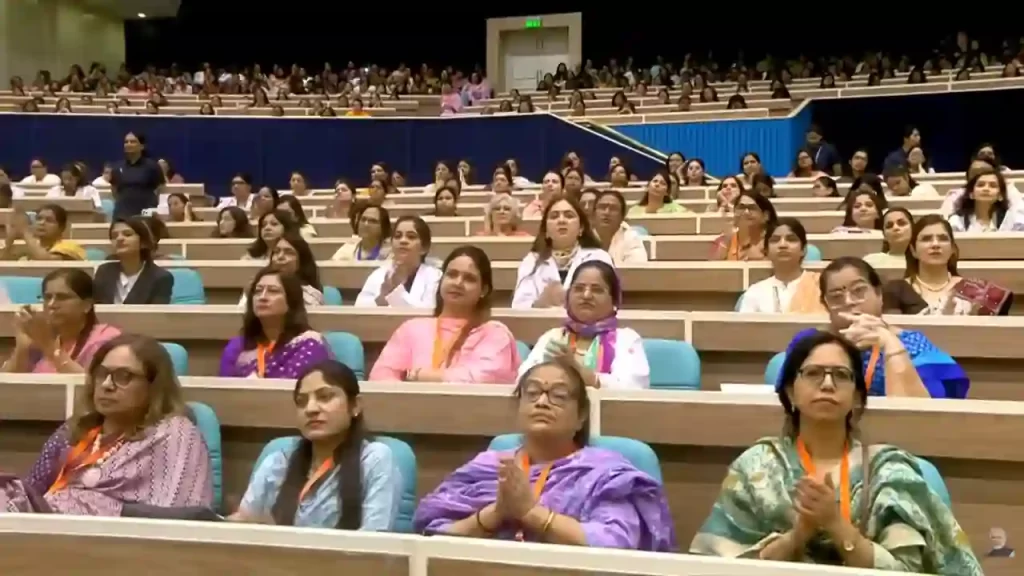
Prime Minister Narendra Modi addressed a large gathering of women achievers in New Delhi. The event, called Nari Shakti Vandan Sammelan, took place at Vigyan Bhawan on April 13, 2026. He spoke at around 11 AM to honor India’s women’s power, known as Nari Shakti. The program brought together successful women from many fields. These included government, science, sports, business, media, social work, arts, and education. The Sammelan showed India’s strong push for women-led growth as part of the Viksit Bharat 2047 vision.The Prime Minister called the day historic. It came just before a special Parliament session on April 16, 2026. That session focused on rolling out the Nari Shakti Vandan Adhiniyam. Parliament passed this law in September 2023. It reserves one-third of seats for women in the Lok Sabha and state assemblies. PM Modi stressed that all parties agreed to implement it by 2029 at the latest. He urged women to stay active and talk to their MPs about their hopes. This law ends decades of waiting for equal say in law-making.Event Highlights Women’s Rise from Panchayat to ParliamentThe Sammelan gathered top women leaders and everyday heroes. They shared stories of breaking barriers. PM Modi praised their hard work, courage, and confidence. He said India’s Nari Shakti has reached new heights. Now, the nation must open more doors for them. The event linked local wins to national goals. Over 14 lakh women lead panchayats today. In 21 states, nearly half of panchayat seats go to women. Their work surprises global experts and boosts India’s image.Women in power bring fresh views, said the PM. They focus on water, health, schools, and food. The Jal Jeevan Mission succeeds because panchayat women push it. These leaders have years of experience. The new law gives them a path to bigger roles. The journey from village councils to Parliament will get easier.Government Schemes Support Women at Every Life StagePM Modi listed many programs his government has started since 2014. They cover women from birth to old age. Beti Bachao Beti Padhao fights female foeticide. Mothers get Rs 5,000 under the Matru Vandan Yojana for good nutrition. Sukanya Samriddhi Yojana saves for girls’ education with high interest.Kids get Mission Indradhanush vaccines on time. Swachh Bharat builds toilets. Nearly free sanitary pads help teens. Khel India funds sports. Sainik Schools and NDA now welcome girls. Adults gain from Ujjwala’s gas connections. Har Ghar Nal Se Jal brings water home. Free rations ensure food. Ayushman Bharat gives Rs 5 lakh health cover. Jan Aushadhi cuts medicine costs by 80 percent.Homes under PM Awas Yojana register in women’s names first. Over 3 crore women own houses now. This makes them strong financially. Jan Dhan opened bank accounts for 32 crore women. Mudra loans go 60 percent to women. Startups list women directors in 45 percent of cases. Maternity leave lasts 26 weeks. Drone Didis teaches farmers with tech. Ten crore women join self-help groups. Three crore are Lakhpati Didis, earning lakhs yearly. They promote Vocal for Local.Women Break into Male-Dominated FieldsIndia leads the world with the highest share of women pilots. Daughters fly fighter jets. PhD enrollments for women doubled since 2014. Half of higher education spots go to women. In math and science, girls make up 43 percent. PM Modi said old mindsets are changing fast.Safety gets top focus, too. Fast-track courts speed justice. Bharatiya Nyaya Sanhita protects women. File e-FIR or Zero-FIR anywhere. Record statements with audio-video. The government acts on women’s dreams.PM’s Call to Action for All WomenThe Prime Minister paid tribute to the Jallianwala Bagh martyrs on Baisakhi. He tied the event to social justice. India wants real equality, not just words. Women from the freedom fights to today’s leaders have built the nation. The President and Finance Minister show women’s mark.PM Modi appealed to all women. Take this message to every village. Use meetings and social media. Help every woman know her power. Dream big for assemblies and Parliament. He promised the nation stands with mothers, sisters, and daughters.Bigger Picture: Women-Led Development for Viksit BharatThe Sammelan fits India’s big plan. Viksit Bharat 2047 means a developed India by 2047. Women lead it. From panchayats to Parliament, their voice grows. The law strengthens democracy. It ensures decisions reflect half the population.Similar events happened elsewhere. In Mumbai, actor Raveena Tandon was honored. Maharashtra CM Devendra Fadnavis praised women from teaching, music, films, and fashion. They back the quick rollout of the Act. Rouble Nagi, Vaishali Samant, Prajakta Mali, and Archana Kochhar joined.The Sammelan builds excitement nationwide. Women voice hopes for Parliament seats. A positive wave spreads. PM Modi wants dialogue and teamwork. This honors Parliament and empowers Nari Shakti.India nears a landmark choice for women. The Sammelan lights the path. It celebrates past wins and future roles. Nari Shakti will shape a strong, fair India.Video: @YT/NaMo
Anji Khad Bridge: India’s First Cable-Stayed Railway Marvel Connecting Kashmir to the Nation
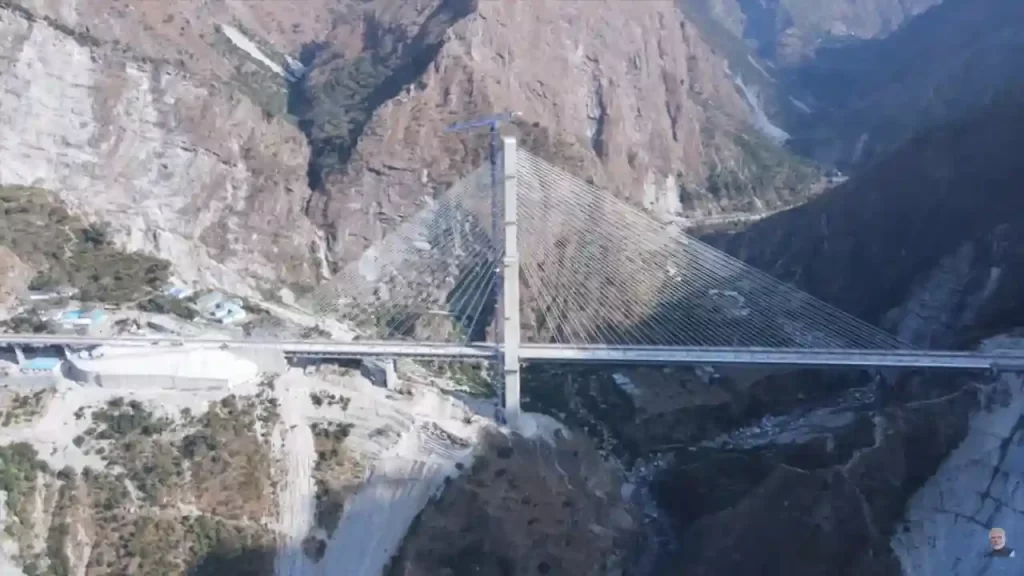
In the rugged hills of Jammu & Kashmir, where steep gorges and fierce winds challenge every builder, a stunning engineering wonder now stands tall. The Anji Khad Bridge is India’s very first cable-stayed railway bridge, a key piece of the massive Udhampur-Srinagar-Baramulla Rail Link (USBRL) project. This 272-kilometer all-weather rail line will finally connect the beautiful Kashmir Valley to the rest of India, ending decades of isolation. Prime Minister Narendra Modi inaugurated it on June 6, 2025, alongside the world’s highest rail bridge over the Chenab River. These bridges mark a historic moment, turning tough Himalayan dreams into reality and opening doors for faster travel, trade, and tourism.Where It Stands and What It ConnectsThe Anji Khad Bridge stretches gracefully across the Anji River, a sparkling tributary of the mighty Chenab, in Reasi district of Jammu & Kashmir. It links the pilgrimage town of Katra (base for the Vaishno Devi temple) to Reasi, about 80 kilometers from Jammu city. This spot sits in the young, shaky folds of the Himalayas – a place with deep gorges, near-vertical walls, earthquakes, and winds gusting up to 213 km/h (almost cyclone strength). Before this bridge, trains had to take long, winding detours. Now, passengers zoom through safely, cutting travel time and costs.Part of the USBRL mega-project, which includes 943 bridges and 36 tunnels, the bridge ensures year-round connectivity. No more snow-blocked roads or floods, trains will run smoothly, carrying people, goods, and hope to Srinagar and beyond.A First in India: Cable-Stayed Design Explained SimplyCable-stayed bridges are like giant clotheslines holding up a road or rail deck. Strong cables stretch from tall pylons (towers) directly to the bridge floor, making them perfect for long spans over deep valleys. Unlike suspension bridges (like Howrah), these are simpler, cheaper, and quicker to build in tough spots.The Anji Khad Bridge shines with these standout features:Total length: 725 meters (about 2,380 feet), with a 473-meter cable-stayed section.Height: 331 meters (1,086 feet) above the riverbed – taller than many skyscrapers.Main pylon: Inverted Y-shape, rising 193-196 meters (633 feet) from foundation – one of the tallest of its kind.Cables: 96 high-tensile cables of different lengths, using 653 kilometers of strands total. They create an asymmetrical design for stability.Deck width: Supports double rail tracks, plus a 12.3-foot service road and 5-foot footpaths on both sides.Train speed: Safe for 100 km/h services like Vande Bharat.Built with 8,200 metric tonnes of steel, it took just 11 months for the main structure. Italian firm Italferr (FS Group) handled design and supervision, their $70 million project won the 2024 ENR Global Best Projects Award for excellence, innovation, and safety.Built for Battle: Surviving the Himalayas’ FuryThe Himalayas don’t play nice. Steep slopes, loose rocks, quakes (Zone V), and howling winds tested every bolt. Engineers used:Seismic-proof tech: Flexible joints absorb shocks.Wind tunnels: Tested for 213 km/h gusts.Sensors everywhere: Integrated health monitoring tracks stress, vibrations, and cracks in real-time.Special concrete: Resists extreme cold (-20°C) and heat.One clever trick? Asymmetrical layout let most work happen from one side, avoiding unstable slopes. Construction used cranes, helicopters for cables, and precision tech, all without harming the fragile ecology.Part of USBRL: Kashmir’s Rail LifelineThe USBRL (started 2002, cost Rs 40,000+ crore) drills through mountains to link Udhampur (on Jammu-Del train line) to Baramulla near Srinagar. Highlights:Chenab Bridge: World’s highest rail arch (359m/1,178 ft), inaugurated same day.Tunnels: 119 km total, including the longest at 12.7 km.Benefits: Srinagar is 3.5 hours from Delhi; apples, saffron to markets fast; jobs, tourism boom.PM Modi flagged Vande Bharat trains from Katra to Srinagar, zipping tourists to Vaishno Devi and Kashmir’s valleys.Global Praise and Real ImpactThe bridge isn’t just Indian pride, it’s world-class. ENR Award beat 120 entries for bridging tough terrain sustainably. Italferr calls it “unprecedented” for India. Locals cheer: Faster pilgrimages, cheaper goods, and army supplies secure.Challenges? Monsoon floods, landslides delayed it years. But grit won, now trains roll where eagles soar.
French President Macron’s India Visit Strengthens Tech and Defense Ties
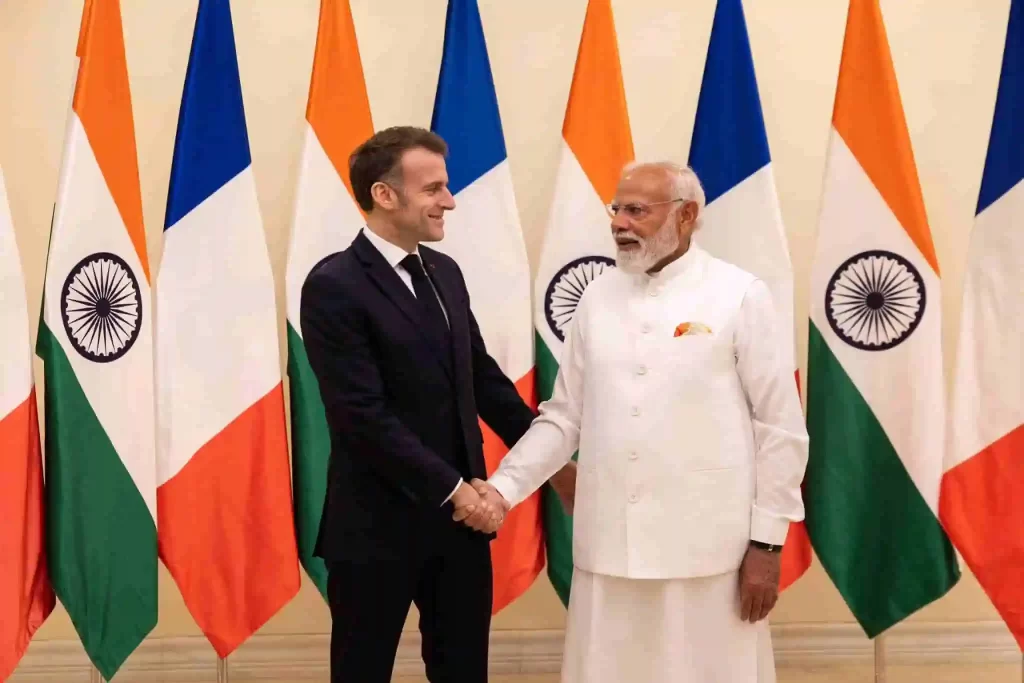
French President Emmanuel Macron and his wife, Brigitte Macron, completed a successful three-day official visit to India from February 17 to 19, 2026. This marked President Macron’s fourth trip to India since 2017 and built on the strong friendship between the two nations. The visit highlighted shared goals in technology, defense, and innovation. It followed Prime Minister Narendra Modi’s trip to France in February 2025 and came one year after the AI Action Summit in Paris. Both leaders focused on the Horizon 2047 Roadmap, a plan set in 2023 to guide ties until India’s 100th Independence anniversary.Mumbai Welcomes Leaders with Tribute and Cultural LaunchThe visit kicked off in Mumbai, India’s bustling financial hub, on February 17. President Macron and Mrs. Macron first paid heartfelt tribute to the victims of the 2008 terrorist attacks at the iconic Taj Mahal Palace hotel. This emotional moment honored those lost in the tragic events and underscored the shared commitment to fight terrorism. Later that morning, they joined a special lunch focused on the film industry. Indian and French cultural figures, filmmakers, and Bollywood stars gathered to celebrate creative exchanges between the two countries.In the afternoon, President Macron met Prime Minister Modi for in-depth bilateral talks at the Residence of the Governor of Maharashtra in Lok Bhavan. The leaders reviewed progress in their strategic partnership and discussed ways to expand it into new areas like defense, space, and digital technology. They addressed regional and global issues, including cooperation in the Indo-Pacific region. Around 5:15 PM, they jointly inaugurated the India-France Year of Innovation 2026 at the majestic Gateway of India. This year-long initiative will feature events across both nations to boost collaboration in innovation, research, startups, and people-to-people ties. The two leaders then addressed a lively gathering of business leaders, innovators, researchers, and entrepreneurs from India and France.On February 18, President Macron engaged with Indian investors during a dynamic round-table discussion. He shared insights on economic opportunities and partnership potential. He also gave an exclusive interview to popular Indian podcaster Raj Shamani, reaching young audiences with talks on leadership and global challenges. That evening, he flew to New Delhi for the next phase of the visit. Business France and Mission French Tech brought over 100 French companies to explore collaborations, signaling strong economic momentum.New Delhi Hosts AI Impact Summit and Strategic DialoguesThe visit shifted to New Delhi on February 19, where President Macron participated in the AI Impact Summit. Hosted by India, this was the first major global AI summit in the Global South. It revolved around three guiding principles: People, Planet, and Progress, structured across seven key focus areas or “chakras.” The summit showcased cutting-edge discussions on artificial intelligence’s role in solving global problems. President Macron’s presence highlighted France and India’s leadership in AI governance and ethical tech development.During the Delhi leg, the leaders continued their bilateral engagements. They exchanged views on pressing issues like climate action, sustainable development, and security. The talks elevated the India-France relationship to a “Special Global Strategic Partnership.” This upgrade expands cooperation in defense, civil nuclear energy, space, AI, and multilateral affairs. Bilateral trade had already reached €12.67 billion, boosted by the recent India-EU Free Trade Agreement and rising investments.Raj Shammi Podcast with the President Raj Shamani’s Historic Podcast with French President Emmanuel Macron (FO473) stands out as a groundbreaking episode of his popular “Figuring Out” series. Recorded on February 18, 2026, in Mumbai during President Macron’s official visit to India, this marked the French leader’s first-ever podcast appearance worldwide. At just 28 years old, Raj Shamani, host of one of India’s top-ranked global podcasts, bypassed traditional media to secure this exclusive, reaching millions of young viewers directly through digital platforms. The 40-minute conversation went viral instantly, blending diplomacy, tech vision, and personal insights.Horizon 2047 Roadmap Drives Ambitious Future PlansThe Horizon 2047 Roadmap forms the backbone of this partnership. Launched on July 14, 2023, by President Macron and Prime Minister Modi, it sets bold targets for the next two decades. The plan focuses on three pillars. First, Partnership for Security and Sovereignty covers defense, space, civil nuclear energy, digital tech, emerging technologies, the Indo-Pacific, and counter-terrorism. Second, Partnership for the Planet addresses environment, climate, health, energy transitions, and sustainable development. Third, Partnership for the People promotes student and professional mobility, as well as cultural exchanges.In defense, exciting developments include India’s clearance for 114 Rafale fighter jets from France’s Dassault Aviation, potentially worth €30 billion, the “contract of the century.” Most jets will be manufactured in India, reducing reliance on imports and boosting local production. This adds to the 62 Rafales already in service. The leaders also inaugurated India’s first helicopter final assembly line via videoconference. A Tata Group-Airbus joint venture in Karnataka near Bengaluru will produce the H125 single-engine helicopter, Airbus’s bestseller. Ongoing Scorpène submarine projects and co-development of advanced military tech further deepen ties.Space cooperation shines bright too. The third India-France Strategic Space Dialogue is set for 2026. India will join the International Space Summit in France in July. New initiatives include the India-France Innovation Network, a binational center for digital sciences with France’s National Institute for Research in Digital Science and Technology, and a Joint Center for Advanced Materials.A Partnership for Global Stability and InnovationPresident Modi called the relationship a “partnership for global stability” in today’s turbulent world. President Macron praised the “remarkable acceleration” of ties amid a changing international order. They referred to each other as “dear friends” on social media, reflecting personal rapport. The visit celebrated 25 years of strategic cooperation and 100 years of diplomatic relations approaching in 2047.France sees India as a key player in demographics, economy, science, and diplomacy. The trip consolidated diplomatic, economic, and civil society links. It addressed G20 outcomes from New Delhi in 2023, security challenges, and growth in defense, space, and cyber sectors. Over 100 French firms joined to tap India’s vibrant market. Challenges like defense delays, AI regulations, trade barriers, and geopolitical differences persist, but momentum is strong.This visit reinforces India and France as forces for good. From Mumbai’s cultural
Indus Awakens: Sarvam’s Homegrown AI Chatbot Challenges ChatGPT in India’s Language Arena
India’s AI battlefield just got fiercer. Bengaluru-based startup Sarvam AI stealth-launched Indus, its multilingual chat app powered by the mighty Sarvam 105B model, on February 20, 2026, mere days after disclosing 105B and 30B LLMs at the India AI Impact Summit. Now in beta on iOS, Android, and web (indus.sarvam.ai), Indus is entering a market where ChatGPT boasts 100M+ weekly Indian users, and Claude claims a 5.8% global share (second to the US).Google CEO Sundar Pichai’s recent praise, “Sarvam’s local models have no impediments, very well positioned,” fuels the hype. As OpenAI, Anthropic, and Google dominate, Sarvam bets on sovereignty: Built entirely in India for 22+ Indic languages, voice-first, culturally attuned.From Summit Spotlight to Consumer HandsIndus interfaces Sarvam 105B (105B parameters, mixture-of-experts for complex reasoning; 128K token context) and nimble 30B (real-time chats). Disclosed amid summit buzz, partnerships with HMD (Nokia feature phones), Bosch (auto AI), the app rolled out gradually on limited compute. Beta quirks: No per-chat deletion (full account wipe only), mandatory reasoning mode (slows some responses). Phone/Google/Microsoft/Apple login; India-limited now. Early users rave on Reddit/YouTube: Seamless Hinglish switching, ethical dilemmas solved step by step, puzzles cracked in Hindi.ModelParametersStrengthsUse CaseSarvam 105B105BComplex reasoning, 128K contextDeep analysis, docs/imagesSarvam 30B30BReal-time convos, efficiencyVoice chats, daily queries Tailored for Bharat: Features That Speak LocalIndus shines where globals falter, Indic mastery. Type/speak in any of 22 scheduled languages; mid-chat switches (English→Hindi→Tamil) flow naturally. Upload images/PDFs for analysis; future AI agents automate tasks, in-app doc edit/write.Voice-first: Bulbul TTS (11 langs, 39 voices), Saaras STT (code-mixed, telephony audio). Reasoning demos crush: River crossing puzzles, math series, trolley ethics, historical what-ifs, all Hindi/English, step-by-step. YouTube tests (e.g., Nitish Verma) hail puzzle-solving, troubleshooting smarts.Beta perks: Free API trials for devs; file uploads for visual reasoning (charts/tables/handwritten Indic scripts).Sarvam’s Rebel Rise: $41M Fuel, Sovereign VisionFounded in 2023 by Raghavan/Kumar, Sarvam snagged $41M from Lightspeed, Peak XV, and Khosla, building Indic-optimized LLMs amid data scarcity. Unlike English-biased GPT-4, Sarvam trains on local data for accuracy in dialects/scripts. Summit feats: Outperformed Gemini/ChatGPT on Indic OCR (84.3% olmOCR-Bench).Enterprise wins: UIDAI (Aadhaar voice/fraud), Odisha/Tamil Nadu AI hubs, SBI Life (11-lang policy bots). Consumer Indus democratizes it.Full List of Supported LanguagesSarvam 105B supports all 22 scheduled languages of India, as defined in the Constitution’s Eighth Schedule, trained on high-quality Indic datasets for superior handling of code-mixed speech, scripts, and contexts.These form India’s official linguistic backbone, enabling seamless multilingual interactions in Indus and enterprise apps:AssameseBengaliBodoDogriGujaratiHindiKannadaKashmiriKonkaniMaithiliMalayalamManipuri (Meitei)MarathiNepaliOdiaPunjabiSanskritSantaliSindhiTamilTeluguUrduBattle for India’s AI SoulIndia’s genAI frenzy, 100M ChatGPT users, demands sovereignty. Indus fights import reliance, privacy risks. Competitors: Global giants (latency, culture gaps); locals like Krutrim, CoRover lag scale. Sarvam’s edge: Open-source leanings, partnerships (Nokia cars/glasses).Challenges: Compute scaling (waitlists), refinement (deletions/reasoning toggle). Upside: Population-scale data moat, govt IndiaAI Mission backing.Indus isn’t just code, it’s India’s digital voice. From Hinglish banter to ethical debates, Sarvam crafts AI that gets us.
ODOP – One District One Product: Transforming Local Economies into Global Opportunities
The One District One Product (ODOP) initiative has emerged as a key strategy in India’s effort to promote balanced regional development and strengthen local economies. The programme focuses on identifying and promoting a unique product from each district, with the aim of boosting manufacturing, generating employment, and enhancing exports.By linking traditional skills and local specialisations with modern market access, ODOP seeks to position India’s diverse district-level products on both national and global platforms.Concept and Origin of ODOPThe idea behind ODOP is rooted in the principle that every district has a distinct product, craft, or agricultural strength that can be developed into a competitive economic asset. The initiative was first implemented at the state level in Uttar Pradesh, where it gained considerable success in promoting local industries and artisans.Building on this model, the concept was later adopted at the national level to encourage districts across India to identify and develop their unique products. These include handicrafts, textiles, agricultural goods, processed foods, and industrial products.Objectives of the InitiativeODOP is designed to address multiple economic and developmental challenges through a focused approach. The initiative aims to promote indigenous products, support local artisans and manufacturers, and create sustainable employment opportunities at the district level.Another key objective is to reduce regional imbalances by ensuring that economic growth is not limited to major urban centres but is distributed across smaller districts. By strengthening local industries, ODOP also contributes to increasing exports and enhancing India’s global trade presence.Implementation and Institutional FrameworkThe ODOP initiative is implemented through coordination between central ministries, state governments, and district administrations. Each district identifies its flagship product based on factors such as historical significance, availability of raw materials, and existing skill sets.Once identified, support is provided in areas such as production, processing, packaging, branding, and marketing. Financial assistance, training programmes, and infrastructure development are also part of the implementation framework.The initiative is closely aligned with broader national programmes aimed at promoting self-reliance and entrepreneurship.Focus on Skill Development and Capacity BuildingA significant component of ODOP is the emphasis on skill development. Artisans and producers are trained in modern techniques, quality control, and business practices to improve productivity and competitiveness.Capacity-building programmes also focus on enhancing design, innovation, and value addition, enabling local products to meet global standards. This approach helps traditional industries adapt to changing market demands without losing their authenticity.Market Linkages and Export PromotionOne of the major challenges faced by local producers has been access to markets. ODOP addresses this by facilitating market linkages through exhibitions, e-commerce platforms, and export channels.Products identified under the initiative are promoted through various trade fairs and government-supported platforms, helping them reach a wider audience. The focus on branding and packaging has further improved the visibility and appeal of these products in international markets.Economic and Social ImpactThe ODOP initiative has contributed to strengthening local economies by creating employment opportunities and increasing income levels in districts. By promoting district-specific industries, it has encouraged entrepreneurship and reduced migration to urban areas.Socially, the initiative has helped preserve traditional crafts and cultural heritage, providing recognition and support to artisans who were previously operating in informal sectors.Integration with National Development GoalsODOP aligns with India’s broader vision of self-reliance and inclusive growth, complementing initiatives focused on manufacturing and exports. It also supports the development of micro, small, and medium enterprises (MSMEs), which play a crucial role in the country’s economy.The initiative contributes to the goal of making India a global manufacturing hub by leveraging local strengths and diversifying production bases.Challenges and the Way ForwardDespite its potential, the implementation of ODOP faces certain challenges. These include issues related to infrastructure, supply chain inefficiencies, and limited awareness among producers in some regions.Ensuring consistent quality, scaling production, and maintaining competitiveness in global markets are also areas that require continued attention. Strengthening digital platforms and improving logistics will be crucial for the initiative’s long-term success.The One District One Product initiative represents a strategic approach to decentralised economic development. By focusing on local strengths and connecting them to larger markets, it is creating new opportunities for growth while preserving India’s rich cultural and industrial diversity.