


Omnicom Completes IPG Acquisition, Creating World’s Largest Advertising Group
Omnicom Group has officially completed its acquisition of Interpublic Group of Companies (IPG), finalizing a deal that creates the world’s largest advertising holding company and marks a major shift in the global agency landscape.The stock-for-stock transaction, valued at approximately $8.9 billion, closed on November 26, 2025. With the merger, Omnicom moves to the top of the global agency rankings, reporting $26.4 billion in combined worldwide revenue for 2024, ahead of Accenture Song, WPP, and Publicis Groupe.Omnicom Chairman and CEO John Wren, along with senior leadership, described the merger as a strategic move focused on scale, technology, and operational efficiency rather than expansion for its own sake.Creative Networks RestructuredAs part of the integration, Omnicom confirmed it will retire three legacy creative networks, DDB, FCB, and MullenLowe. FCB will be consolidated into BBDO, while TBWA will absorb both DDB and MullenLowe. McCann will remain the sole surviving IPG global creative network, selected for its strong international presence and brand recognition.The move reflects a broader industry trend toward fewer, globally scalable agency brands.Media Agencies Largely UnchangedUnlike the creative restructuring, Omnicom’s media operations will remain largely intact. The combined company will continue to operate five global media agency brands, with no immediate plans to eliminate any of them.Technology at the CoreOmnicom executives positioned the deal as a technology-driven merger, highlighting the company’s AI-powered intelligence platform, Omni, and an expanded agentic framework designed to unify data, identity, and activation across the organization.Leadership said the combined entity now holds one of the strongest data and technology foundations in the advertising industry.Workforce ImpactThe merger will result in significant job reductions. Omnicom expects its global workforce to total approximately 105,000 employees, down from a combined 128,200 at the end of 2024, implying around 23,200 job cuts worldwide.A Giant RebornAs Omnicom enters this new chapter, it stands taller, leaner and more technologically ambitious than ever before. Built on the foundations of BBDO, McCann and TBWA, the company is betting that clarity, scale, and data-driven creativity will define the next decade of marketing.The merger doesn’t just create the world’s largest agency holding company, it redraws the rules of what an agency is expected to be.
HUL Demerger: What Changed and Why It Matters
HUL has recently completed the demerger of its ice-cream and frozen-desserts business , including brands such as Kwality Wall’s, Cornetto, Magnum, Feast and Creamy Delight, into a new standalone company, Kwality Wall’s (India) Ltd. (KWIL). The separation became effective on 1 December 2025, with the record date for shareholders set as 5 December 2025. On that date, every shareholder holding 1 share of HUL became eligible to receive 1 fully paid-up share of KWIL. This demerger forms part of a strategic shift: HUL aims to focus more sharply on its core business areas, home care, beauty & personal care, and other high-margin segments, while allowing the ice-cream business to operate independently with its own strategy, management and capital structure.KWIL, once listed, will become a pure-play ice-cream company. Industry analysts believe it could be India’s first large-scale, listed company dedicated solely to ice cream / frozen desserts. Market Reaction: HUL Shares Adjust, Some Volatility As expected with such corporate restructuring, the market reacted swiftly. On 5 December 2025 (the record date), HUL’s share price initially plunged around 7% to hit a day’s low of approximately ₹2,289 on the BSE. The fall reflected the fact that the ice-cream business no longer remains part of HUL, and the stock traded “ex-ice-cream business.” Consequently, investors recalibrated the valuation of HUL, excluding the future standalone value of KWIL.After initial volatility, the stock recovered some ground to close around ₹2,339–₹2,341. That said, the demerger also implies that existing HUL shareholders have exposure to two separate entities now, HUL’s core business and the new ice-cream venture, which may offer more transparent valuations for both. What’s Next: KWIL Listing, Valuation, and HUL Outlook According to broker estimates, KWIL, the demerged ice cream business, could be valued at ₹50–55 per share at listing, which is expected around February 2026, subject to regulatory approval. Analysts see potential upside for both companies.For HUL, the separation allows a sharper strategic focus on its high-margin FMCG categories. For KWIL, being a dedicated ice-cream company may allow agile growth and brand expansion in a competitive but high-potential frozen desserts market.At the same time, KWIL’s listing could open a new chapter for ice-cream investors. If the ₹50–55 per-share valuation holds, investors who receive KWIL shares may see a separate upside from HUL’s core operations. What This Means for Ordinary Investors? For ordinary investors, the HUL–KWIL demerger simply means that anyone who held HUL shares before 5 December now owns shares in two separate companies, HUL and the newly formed Kwality Wall’s (India) Ltd. The fall in HUL’s share price after the record date does not signal any decline in the company’s performance; it is only a technical adjustment because the ice-cream division has been carved out.By holding both HUL and KWIL, investors now get exposure to two different kinds of businesses: HUL’s stable, diversified FMCG portfolio and KWIL’s focused, high-growth ice-cream segment. As India’s frozen-dessert market expands, KWIL could unlock fresh opportunities, while HUL, now leaner and more streamlined may improve profitability. Overall, the restructuring aims to unlock value by creating two clearer, more focused companies, offering investors greater transparency, flexibility, and potentially better long-term growth visibility.
IndiGo’s December 2025 Meltdown: What Really Happened?
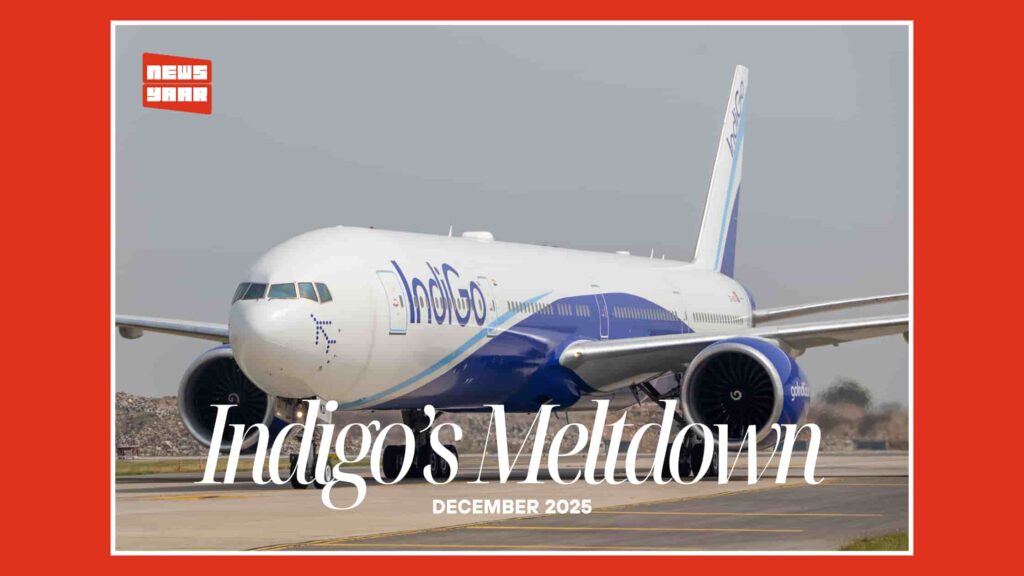
In early December 2025, IndiGo, India’s biggest budget airline, faced one of the worst aviation breakdowns the country has seen in years. Starting around December 2, thousands of flights were cancelled across major cities. Airports were filled with stranded passengers, long queues, and growing frustration. What looked like a crisis was actually the result of a deeper planning failure.Why Did Everything Collapse?The core issue began with new rules introduced by the Directorate General of Civil Aviation (DGCA). These updated regulations required airlines to:Strictly limit pilot flying hoursGive longer rest breaks between flightsReduce fatigue risks, especially on late-night schedulesWhile these rules had been planned for months, it appears IndiGo didn’t reorganise its crew schedules, standby pilots, or rosters in time.The result?Many flights simply had no pilot or co-pilot who was legally eligible to fly. Without meeting DGCA requirements, IndiGo was forced to cancel entire sets of flights, creating a ripple effect across the network.IndiGo flies over 2,200 flights daily, including many night operations. So even a small scheduling disruption hit the airline on a massive scale.The Passenger Impact: A Domino Effect Across IndiaWhat began as a few hundred cancellations quickly escalated. On some of the worst days:550–560 flights were cancelled within hoursBengaluru alone saw around 150 flight cancellationsDelhi, Mumbai, Hyderabad, and Kolkata experienced severe chaosPassengers experienced:Sudden last-minute cancellationsExtremely long lines at help desksDelayed or misplaced luggageStruggles to find alternate flights during the busy winter and wedding seasonHow IndiGo Tried to RecoverFacing public anger, media pressure, and regulatory scrutiny, IndiGo moved into crisis-recovery mode. They claimed rapid improvements:About 1,800 flights were operating again within daysOn-time performance slowly improvedThey released ₹827 crore in refunds to affected passengersBaggage delays and customer complaints were prioritisedMost routes were restored by mid-DecemberThe airline also deployed additional staff to manage queues and customer support.Final Words IndiGo’s December 2025 crisis wasn’t a one-day glitch; it was a major systems failure. Safety rules triggered the disruption, but weak internal preparation turned it into a nationwide travel meltdown. Strong safety regulations must be matched with strong operational readiness. Otherwise, passengers end up paying the price.
New Labour Codes 2025: Opportunity or Outcry?
On 21 November 2025, India’s labour landscape changed forever: the government replaced 29 older laws with four comprehensive new labour codes, covering wages, industrial relations, social security, and workplace safety.What does that mean for workers? For many, it sounded like a win, especially for contract and fixed-term workers, who, under the updated rules, now qualify for gratuity after just one year of service, instead of the previous five.Add to that expanded definitions for “wage” (so allowances count more), protections for health, social security, and more inclusive job norms, and it seems like a long-awaited step toward modern labour reform. For many gig, contract, and temporary workers, long excluded from benefits, this appears to be a landmark shift. Suddenly, some of the perks traditionally reserved only for permanent staff are extended to a much larger pool. It is social security made more inclusive.The Political Backlash: Protests Outside ParliamentBut this reform didn’t sail smoothly. The moment the new codes were notified, alarm bells rang for many union leaders and opposition parties. On December 2, MPs, including Sonia Gandhi and Mallikarjun Kharge, staged a protest outside the Parliament complex, raising placards and slogans demanding that he new laws be rolled back.Their argument? These codes benefit corporations more than workers, allowing easier layoffs, diluting job security, and undermining collective bargaining rights. Trade unions across the country echo similar fears: what if “flexibility” becomes “exploitation”? What if temporary jobs, previously light on benefits, become even more vulnerable under the cloak of new definitions and frequent hiring-firing cycles? For them, this isn’t reform, it’s a disguised rollback of worker rights. Between Reform and Risk: What’s the Verdict?The new labour codes walk a tightrope. On one side, there’s a needed push toward inclusivity, protection for informal workers, and flexibility for modern businesses. On the other, a legitimate fear that under relaxed labour norms, job security and worker welfare might take a back seat.For contract workers, the cut in gratuity eligibility from five years to one is a game-changer. For millions of India’s unorganised workforce, it might mean a combination of dignity and safety. But for many unions and opposition leaders, the same laws signal a slippery slope.As politics rages on and protests echo through Parliament corridors, the real test will be in implementation, whether the laws reflect worker protection or corporate convenience. For now, the 2025 labour reforms remain India’s most ambitious overhaul in decades: hopeful for some, controversial for many, and undoubtedly the biggest labour conversation in recent memory.Video credit: DD News