


Nation First: PM Modi’s Seven Appeals to India in a Time of Global Energy Crisis
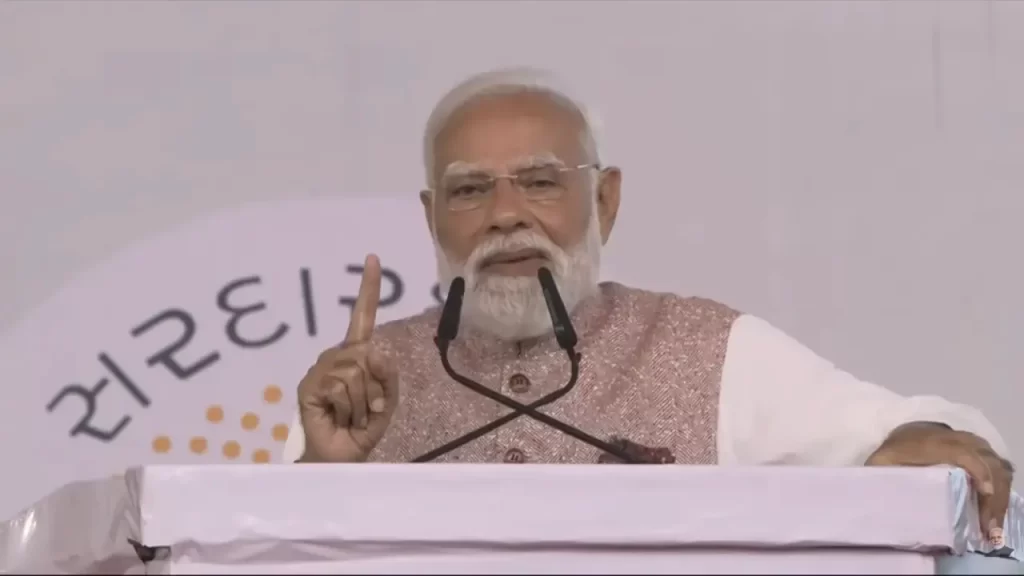
IntroductionPrime Minister Narendra Modi has made some of his most consequential speeches in front of Parliament. He has made others at Red Fort, at election rallies, and on Mann Ki Baat. But the speech he delivered at a public function in Hyderabad in the second week of May 2026 was different from most of them in one important way: it asked nothing of the government. It asked everything of the citizen.Prime Minister Modi called upon countrymen to become partners in strengthening the nation amid the West Asia crisis. Addressing a function in Hyderabad, he made seven appeals to the nation.Seven specific asks. No legislation behind them, no penalty for non-compliance, no new taxes or emergency decree. Just a Prime Minister standing before a crowd and asking 1.4 billion people to change their daily behaviour — voluntarily, collectively, and urgently — because a war they had no part in starting was now threatening the economic stability of a country they shared.”If 140 crore people take one step forward, the country also moves 140 crore steps forward,” Modi said, setting the tone for what followed.The speech was, at one level, a call to austerity. At another level, it was the government’s most explicit public acknowledgement yet of how deeply the Strait of Hormuz crisis was beginning to press on India’s economic foundations — and of how much the government needed its citizens to understand and respond to that pressure.The Context: Why This Speech Was NecessaryTo understand what Modi said in Hyderabad, you need to understand the specific economic weight that the West Asia conflict had placed on India by early May 2026.India is the world’s third-largest oil importer, behind only China and the United States. From April 2025 to March 2026, India imported crude oil worth $123 billion — the single largest contributor to India’s import budget. That was before the Strait of Hormuz closed. After it closed, oil prices surged past $120 per barrel at their March peak. Brent crude was still trading above $100 per barrel at the time of the Hyderabad speech, with a 52-week high of $126 per barrel recorded at the end of the previous month.India imports approximately 88 percent of its crude oil requirements and roughly 60 percent of its LPG, with 90 percent of that supply historically transiting the Strait of Hormuz. Every dollar by which the oil price rises above its baseline represents billions of additional dollars in India’s import bill annually.Oil is only one part of the problem. Indians imported gold worth $72 billion in the 2025-2026 fiscal year — second in the world only to China. Gold imports are paid in US dollars. They add nothing to India’s productive capacity. They represent pure foreign exchange outflow.Indians travelling abroad spent $31.7 billion in 2023-24, with about 30.9 million Indian nationals departing India in 2024, up from 27.9 million in 2023. Foreign travel, like gold, is paid in foreign currency and constitutes a direct drain on reserves.India is also the world’s largest importer of urea, having imported about 10 million tonnes of the fertiliser last year. Edible oil imports add another $14 to 16 billion annually.The International Monetary Fund projected that India’s current account deficit will be $84 billion in 2026. A current account deficit of that magnitude, in a year when the country’s largest import — oil — had risen dramatically in cost, and when the rupee was under pressure from dollar strengthening, created precisely the kind of economic vulnerability that the government needed citizens to help manage.A weaker rupee means imports become more expensive, which eventually affects fuel prices, transportation costs and inflation across sectors. The government wanted citizens to voluntarily adopt spending discipline before global economic conditions worsened further. The appeal was also being viewed as a preventive measure to control the current account deficit and reduce pressure on India’s forex reserves.This was the economic landscape when the Prime Minister took the stage in Hyderabad.The Seven Appeals: In FullAppeal 1: Use Public Transport and CarpoolingPM Modi urged citizens to help conserve foreign exchange reserves by reducing the consumption of imported fuel through the use of public transport and carpooling.Calling fuel conservation the “need of the hour,” Modi appealed to citizens to reduce unnecessary usage of petrol, diesel, and gas amid fears of rising crude oil prices due to tensions in West Asia. He said that shifting to buses, metros, and shared rides — even partially and temporarily — would reduce the national import burden at a time when every barrel saved had a direct and measurable impact on India’s foreign exchange position.Appeal 2: Revive Work-From-HomeModi said people should move to online meetings instead of physical gatherings and use the work-from-home model that was adopted globally during the COVID-19 pandemic. He explained that such practices would cut down the use of fuel.Modi said India had successfully adapted to virtual work, video conferencing, and online meetings during the Covid-19 period and those habits should be revived in the national interest. He urged offices and businesses to bring back work-from-home practices wherever possible to cut fuel consumption.The COVID parallel was deliberate. During the pandemic, India’s fuel consumption dropped significantly — not because of any conscious conservation effort, but as a side effect of lockdowns. Modi was asking the country to replicate that consumption reduction voluntarily, without waiting for an emergency to force it.Appeal 3: Avoid Foreign Travel for One YearModi asked Indians to cut nonessential overseas travel for at least a year. He urged citizens to rethink discretionary spending, including reconsidering destination weddings abroad.This was perhaps the most direct ask directed at urban, upper-middle-class Indians. Foreign travel — holidays in Europe and Southeast Asia, business trips, destination weddings in Bali and Tuscany — has become a significant and growing category of Indian consumer spending. Every overseas holiday spent in foreign currency is dollars leaving India. The aggregate of millions of such decisions, Modi’s argument ran, had a real and measurable impact on the reserve position.Appeal 4: Stop or Limit Gold Purchases for a
Quad Foreign Ministers’ Meeting 2026: Reinforcing Indo-Pacific Unity Amid Global Turbulence
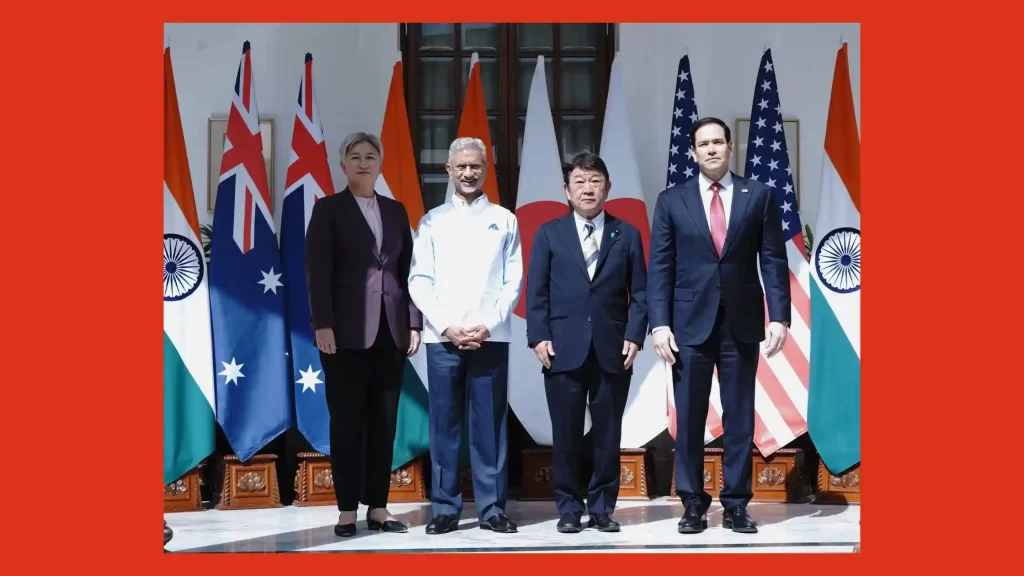
The Quad Foreign Ministers’ Meeting convened in New Delhi on May 26, 2026, bringing together the Foreign Ministers of Australia, India, and Japan, along with U.S. Secretary of State Marco Rubio, for a critical dialogue amid unprecedented global challenges and opportunities. Hosted by India’s External Affairs Minister S. Jaishankar, the third such engagement since President Donald Trump began his tenure reaffirmed the grouping’s continued relevance despite rapid geopolitical developments. The ministers agreed to firm up numerous initiatives spanning maritime security, critical minerals cooperation, energy security, and the first-ever Quad infrastructure project to build a port in Fiji, demonstrating that the Quad remains valid and viable as a cornerstone of Indo-Pacific stability.The meeting took place after a 10-month hiatus, following earlier speculation about the Quad’s continued survival. Before the gathering, analysts debated whether the grouping had become moribund without summit-level engagement, with some comparing its architecture to the Five Eyes intelligence-sharing group and arguing that sub-leader meetings create vital “habits of cooperation” essential for sustaining momentum. The successful conclusion of this four-way ministerial proved these concerns unfounded, as the four nations reaffirmed traditional areas of emphasis while addressing new challenges, including the proliferation of online scam centres in Southeast Asia, repercussions from the West Asia crisis, and rising tensions in the East and South China Seas.A Free and Open Indo-Pacific: Reaffirming Core PrinciplesThe Joint Statement opened with a powerful acknowledgment that the Quad convenes at a time of not only great challenges but also unprecedented opportunities. In the midst of conflicts, geopolitical tensions, and strains on global supply chains, the ministers reaffirmed that peace, stability, and prosperity of the Indo-Pacific hinge on upholding international law and the peaceful resolution of disputes. They committed to defending the rule of law, sovereignty, and territorial integrity while recognizing the immense potential of innovation, emerging technologies, and trusted partnerships to drive economic prosperity across the Indo-Pacific and beyond. The statement strongly opposed any destabilizing or unilateral actions seeking to change the status quo, including by force or coercion, which escalate tensions and undermine regional peace and stability.The ministers affirmed support for a free and open Indo-Pacific that allows countries to develop resilience and strengthen capacity to determine their own paths. Developments in key maritime regions underscored the vulnerability of critical sea lanes and risks posed to uninterrupted commerce flow, with disruptions carrying significant implications for global fuel, food, and fertilizer security as well as seafarer safety. The Quad discussed the West Asia situation, reaffirming support for ongoing diplomatic efforts and hope for lasting peace while reiterating the importance of adhering to UNCLOS regarding navigational rights, freedoms, and safety of global commerce through the Strait of Hormuz and Red Sea.Maritime Security: Three New Initiatives Strengthen Domain AwarenessOn Indo-Pacific maritime security, the Quad agreed on three groundbreaking initiatives, including the Indo-Pacific Maritime Surveillance Collaboration (IPMSC), the Quad Indo-Pacific Partnership for Maritime Domain Awareness (IPMDA), and continuation of the Quad-at-Sea Ship Observer Mission. India operationalized the Indian Ocean Region programme of IPMDA through the Information Fusion Centre – Indian Ocean Region in Gurugram, and partners will work to develop a Common Operational Picture across the Indo-Pacific by drawing upon existing IPMDA efforts. The IPMSC, integrating the latest technological developments, will augment IPMDA by enabling Quad partners to share real-time information and provide enhanced vessel pictures supporting a free and open Indo-Pacific region.Following the success of the first-ever Quad-at-Sea Ship Observer Mission from Palau to Guam in July 2025, India will host the next edition to strengthen interoperability and knowledge-sharing for addressing unlawful maritime activities. The ministers expressed serious concerns about developments in the East China Sea and South China Sea, opposing destabilizing unilateral actions, including force or coercion, threatening regional peace. They expressed grave concern regarding dangerous and coercive actions, including interference with offshore resource development, repeated obstruction of freedom of navigation and overflight, dangerous military aircraft and coast guard maneuvers, unsafe use of water cannons and flares, and ramming or blocking actions in the South China Sea, alongside deep concern about militarization of disputed features.Critical Minerals and Energy Security: Building Resilient Supply ChainsThe Quad announced the Quad Critical Minerals Framework, guiding how partners can leverage economic policy tools and coordinate investment with the private sector to strengthen critical minerals supply chains, including mining, processing, and recycling. The ministers reiterated grave concerns over economic coercion and non-market policies, including arbitrary export restrictions, price manipulation, and disruptions, particularly on critical minerals impacting global supply chains and critical industrial sectors. They underscored the importance of diversified and reliable global supply chains and the need to avoid reliance on any one country, recognizing that economic security is fundamental to Quad partners and the Indo-Pacific region.Recognizing shifts in the global energy landscape, the Quad launched the Quad Initiative on Indo-Pacific Energy Security to cooperate on energy security and resilience. Partners will work together to ensure open, well-functioning, and stable energy markets with resilient and diversified supply chains. Disruptions to global energy product markets and important downstream derivatives like fertilizers fall heavily on the Indo-Pacific region, making maintaining open trade flows in essential goods critical for regional security and prosperity. Following the successful Quad Ports of the Future Partnership Conference hosted by India in October 2025, the Quad countries will work with Fiji’s government to advance port infrastructure and associated activities in the country, marking the first-ever Quad infrastructural project.Humanitarian Assistance and Terrorism: Condemning Attacks, Strengthening ResponseThe Quad unequivocally condemned terrorism in all its forms, including cross-border terrorism and the horrific terrorist attacks perpetrated at Pahalgam in India on April 22, 2025, and Bondi Beach in Australia on December 14, 2025. The ministers called for decisive and sustained international efforts to combat terrorism according to international law, including action against globally proscribed terrorists and terror entities and their proxies, affiliates, sponsors, and financiers. They remain deeply concerned about the proliferation of online scam centres within Southeast Asia linked to transnational crime, including human trafficking, drug trafficking, sexual extortion, illicit financing, and cybercrime, committing to deepening cooperation, particularly in law enforcement and regulatory engagement.The Quad
Gurindervir Singh Becomes India’s Fastest Man: The Next “Flying Sikh” Emerges with Historic 10.09 Seconds Record
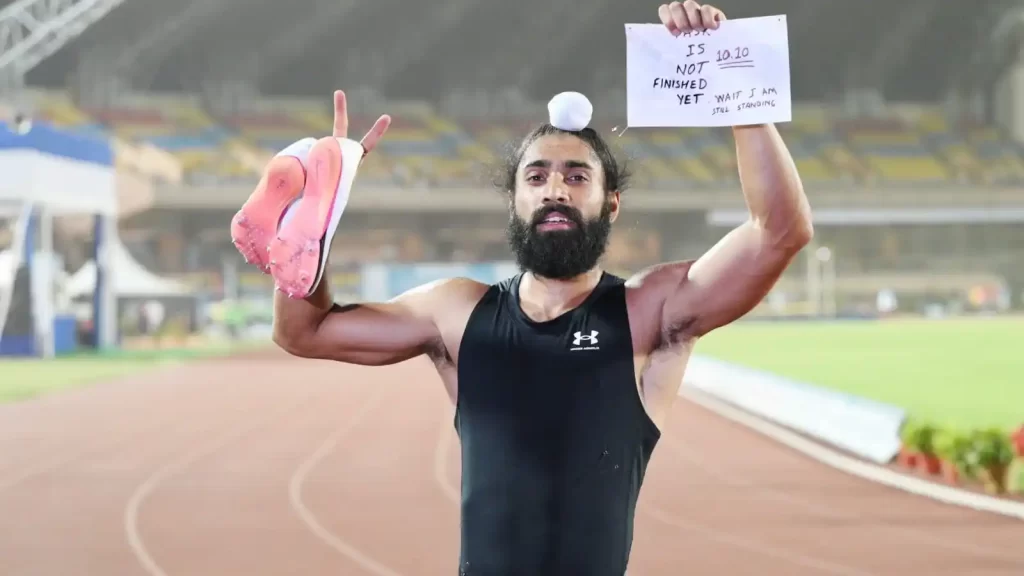
Gurindervir Singh has captured the nation’s attention after becoming the fastest Indian ever, with many already calling him the next “Flying Sikh” following his historic performance on the track. On Saturday at the National Senior Athletics Federation Competition in Ranchi, the Indian Navy officer ran as if his life depended on it, setting a new 100m national record of 10.09 seconds and beating the previous 10.15 seconds record held by fellow sprinter Animesh Kujur. Within moments, he became the fastest man in India, sparking fresh belief that the country could finally be inching closer to elite global standards in sprinting. For decades, India’s sprinting ambitions rarely entered conversations dominated by Olympic legends and world record holders, but Gurindervir’s blistering run has now ignited hope that India may genuinely have what it takes to compete with the fastest runners in the world.Industrialist Anand Mahindra joined the growing chorus of excitement, calling Gurindervir’s recent performances a sign of India’s sprinting progress. Taking to X, Mahindra reflected on India’s athletics future, beginning his post with a nostalgic reference to the legendary Milkha Singh, who earned the iconic “Flying Sikh” nickname for his extraordinary speed. Historic Night for Indian Sprinting in RanchiThe Ranchi competition became a historic evening for Indian athletics as Gurindervir reclaimed the record emphatically after briefly holding it with 10.17 seconds in the semifinals before Animesh Kujur eclipsed it minutes later with 10.15 seconds. Both sprinters secured qualification for the Glasgow Commonwealth Games, where they will represent India in the men’s 100m. Notably, Vishal Thennarasu Kayalvizhi also made history on the same day, becoming the first Indian man to break the 45-second barrier in the 400m with a sensational national record time of 44.98 seconds, claiming victory at the Federation Cup.The Indian Navy heaped praise on Gurindervir’s achievement of clinching the gold medal in the 100-metre race at the Federation Cup in Ranchi, officially calling the sprinter “the fastest man in India.” The moment Gurindervir broke the record, he tore off his race bib and later turned it around to reveal words written in his own handwriting: “Task is not finished yet. 10.10. Wait, I am still standing.” Written the night before the race, this manifestation showed how Gurindervir had visualized history in the making before going out and doing one better. “I wanted to write down my goal and the reason I took it out was to show that I had visualised this moment,” he explained. “Gurbani and my thoughts guide me… If in my head I can see myself achieving something, I get the power to go out and do it.”The Discipline Behind the Record: A Life Built on Small WinsBehind the result and accolades lies years of grind, blood, and sweat, because to be the fastest man in India, you must be doing something out of the ordinary. Gurindervir calls his routine “a loop” with precision leaving little room for error. “Before the sun sets, I already know what time I am waking up the next day. If I have to be awake at 5:30am, it has to be that time, not 5:31,” he says with military precision befitting his Navy background.His training schedule is grueling: Monday features sprint training with gym work lasting four to five hours, while some days include morning gym sessions followed by tempo runs for two and a half hours. After training, he eats lunch, takes a one-hour nap, wakes up, tidies his room, reads a book, has dinner, and gets on a call with his family. By 10pm, he’s asleep, and the next day follows the same pattern. “It’s the little wins that win you the big moments,” Gurindervir emphasizes.From Milkha Singh to Gurindervir: The Flying Sikh Legacy ContinuesAnand Mahindra’s reflection on India’s sprinting progress highlighted why the recent performances of Gurindervir Singh and fellow athlete Animesh Kujur left him optimistic about the future of Indian athletics. Beginning his post with a nostalgic reflection, Mahindra wrote that the idea of an all-new “Flying Sikh” naturally captured headlines over the weekend, referencing the legendary Milkha Singh whose extraordinary speed on the track earned him the iconic nickname that became synonymous with Indian sprinting excellence.The comparison to Milkha Singh is significant because for decades after the Flying Sikh’s era, India’s sprinting ambitions rarely entered global conversations dominated by Olympic legends and world record holders. Gurindervir’s 10.09 seconds run represents more than just a national record, it signals that India may be finally approaching elite global standards in the sport that most defines human speed. Watching him run was described as a flashback to the days when legendary sprinter Milkha Singh used to light up a track, suggesting the torch of Indian sprinting excellence has found a worthy successor.What It Takes to Be India’s Fastest ManGurindervir’s journey to becoming the fastest man in India demonstrates that discipline matters more than talent alone. His Navy background has instilled military-level precision in his approach to training, recovery, and competition. The fact that he briefly held the record with 10.17 seconds in semifinals, lost it minutes later, then reclaimed it emphatically with 10.09 seconds shows mental resilience under pressure, a crucial quality for elite competition.Both Gurindervir Singh and Animesh Kujur qualifying for the Glasgow Commonwealth Games represents a breakthrough moment for Indian sprinting, with two Indian men representing the country in the men’s 100m at a major international championship. This dual qualification, combined with Vishal Thennarasu Kayalvizhi’s historic 44.98 seconds in the 400m, caps off a memorable evening that suggests Indian athletics is entering a golden era of sprinting excellence.The Future of Indian Sprinting Looks BrightAs Gurindervir Singh prepares for the Glasgow Commonwealth Games carrying the hopes of a nation, the question is no longer whether India can produce world-class sprinters but when this new generation will break into global top tiers. The combination of military discipline, spiritual guidance through Gurbani, visualization techniques, and unwavering commitment to small daily wins has created a formula for success that transcends athletic achievement.The nation now watches with renewed optimism as the potential
Trump’s China Visit: Big on Pageantry, Short on Specifics, Long on Consequence
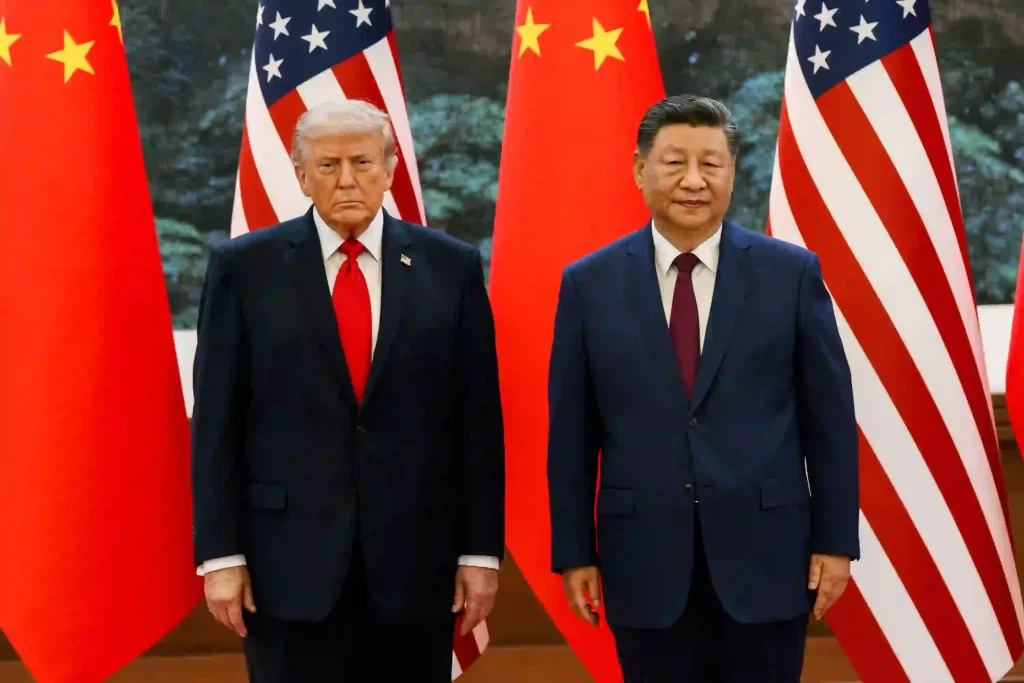
IntroductionFor three days in May 2026, the most consequential bilateral relationship in the world was conducted in person, on Chinese soil, for the first time in nearly nine years. President Donald Trump’s state visit to China — the first by an American president since his own November 2017 trip during his first term — was equal parts diplomatic theatre and strategic test, wrapped in the symbolism of Zhongnanhai gardens, Peking duck, and the careful grammar of superpower summitry.Trump called the trip “incredible,” but while it was big on pageantry, it fell short on concrete agreements. Still, Trump hailed business deals for American companies and farmers, while Chinese leader Xi Jinping touted a new era for the stability of China-US relations.The gap between those two descriptions — one transactional, one strategic — captures the essential character of what happened in Beijing. Enough was accomplished to make the visit a diplomatic success by the standards of the moment. Not enough was accomplished to resolve the crises that brought both leaders to the table.The Road to Beijing: How the Visit Was MadeThe roots of this visit go back to the Busan Summit of October 30, 2025, held on the sidelines of a regional gathering in South Korea. Trump and Xi held their first meeting during Trump’s second presidency at the Busan Summit. At the meeting, Trump announced plans to visit China in April of the following year and invited Xi to visit the United States at an appropriate time.The April timeline did not hold. The state visit was planned for the first week of April, but the meeting was postponed to May due to the 2026 Iran war. The conflict that had closed the Strait of Hormuz and sent oil prices to record highs became both the reason for delay and the dominant agenda item when the visit finally happened.The diplomatic preparation was extensive. On April 16, Defense Secretary Pete Hegseth announced that Beijing had provided high-level assurances to the White House that it would not send weapons to Iran, explicitly ruling out the potential transfer of surface-to-air missiles to the Iranian military. Hegseth attributed this breakthrough to the “strong and direct relationship” between President Trump and Xi Jinping. Secretary of State Marco Rubio had met Chinese Foreign Minister Wang Yi in February and held a further phone call on April 30 to prepare the ground for the summit.The Chinese Foreign Ministry confirmed Trump would pay a state visit to China from May 13 to 15 at President Xi Jinping’s invitation. It marked the first visit to China by an American president in almost nine years, coming at a time of heightened bilateral tensions over a range of issues, including trade, technology, and defence, and intersecting with a precarious US-Iran ceasefire and a dual blockade of the Strait of Hormuz that was driving up energy prices and weighing on global economic growth.The Arrival: Red Carpets and 300 Waving ChildrenBeijing rolled out the literal and figurative red carpet for Trump as he arrived in China on Wednesday evening local time. Three hundred Chinese children dressed in blue and white uniforms waved American and Chinese flags as Trump descended the steps of Air Force One. He was also joined on the tarmac by his son, Eric Trump, and daughter-in-law, Lara Trump.Trump was greeted at the airport by Chinese Vice President Han Zheng, Chinese Ambassador to the US Xie Feng, Executive Vice Foreign Minister Ma Zhaoxu, and US Ambassador to China David Perdue, as well as a military honour guard, a military band, and around 300 Chinese students waving Chinese and American flags. Trump and his entourage then boarded a motorcade to the Four Seasons Beijing Hotel.The visual grammar of this welcome was deliberate. Han Zheng, as China’s Vice President, is a figure of considerable standing, and his presence on the tarmac signalled the importance Beijing attached to the visit. The children chanting in Mandarin “Welcome, welcome, enthusiastically welcome” was choreography, but choreography that conveyed a message: China wanted this summit to succeed, or at least to be seen to succeed.The last time Trump visited Beijing — in November 2017 during his first term — he was given a tour of the Forbidden City and a dinner inside it, an honour granted to no other foreign leader since 1949. It remains to be seen whether this trip matched the pomp and circumstance of last time, but already there were significant events on Trump’s schedule: a welcome ceremony, a tour of the Temple of Heaven, a UNESCO World Heritage Site, and a state banquet.The Summit: The Great Hall, the Temple, and ZhongnanhaiAt 10 AM, Trump arrived at the Great Hall of the People, where he was greeted by Xi Jinping and received an opening ceremony featuring the national anthems of the United States and China, after which they inspected troops of the People’s Liberation Army and then greeted children waving Chinese and American flags.The formal bilateral meetings between Trump and Xi took place across two days, with the agenda covering trade and economic relations, the Iran war and the Strait of Hormuz, Taiwan, North Korea, rare earths and technology, and the broader structure of the bilateral relationship.On the final day, Trump headed back to the US after having lunch with Xi at Zhongnanhai, a rare visit to the Beijing compound where top Chinese officials live and work. Xi said it was meant to reciprocate Trump’s hosting him at Mar-a-Lago during his first term. “It means that China attaches great importance to this visit by President Trump to China,” said one analyst who attended the dinner banquet. “It also reflects the positive personal relationship between the two leaders.”At their last meeting, the two leaders toured the gardens at Zhongnanhai, with Trump admiring the roses. “These are the most beautiful roses anyone’s ever seen,” Trump said. Xi said he would share some Chinese rose seeds for Trump to have planted in the White House Rose Garden.The menu of the state banquet was circulated online afterward. It included cold
BRICS Foreign Ministers’ Meeting, New Delhi: A Bloc Divided by the War It Could Not Name
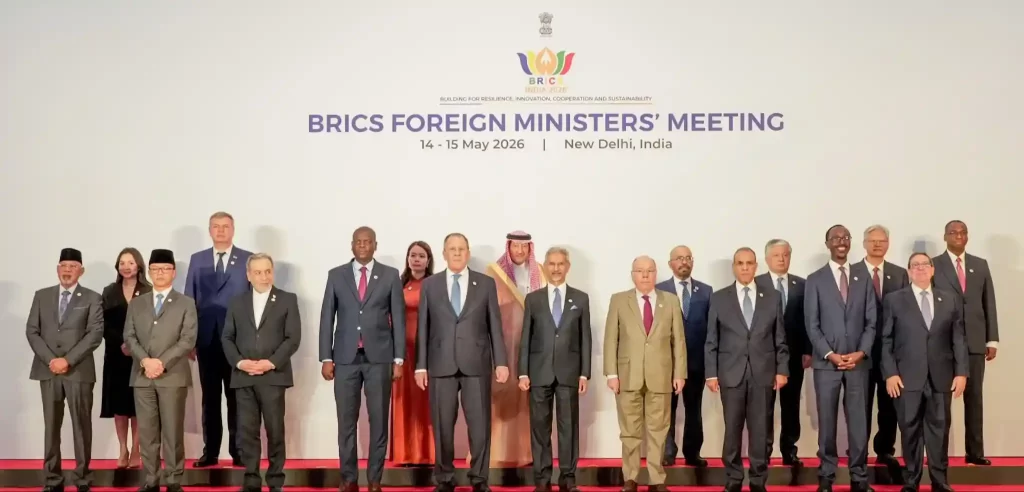
IntroductionWhen India’s External Affairs Minister S. Jaishankar took the chair at Bharat Mandapam in New Delhi, he was presiding over the most consequential BRICS Foreign Ministers’ Meeting since the bloc’s expansion. Eleven member states sat around the table. The agenda was India’s: global institutional reform, South-South cooperation, economic resilience, and the priorities of the developing world. The problem that arrived uninvited was the Iran war.Top diplomats from BRICS nations, including rivals Iran and the United Arab Emirates, failed to issue a joint statement after a two-day meeting in New Delhi, exposing divisions within the bloc over the war in Iran. Host nation India instead released a Chair’s Statement and Outcome Document, saying there were “differing views among some members” as regards the situation in the West Asia and Middle East region.The inability to produce a joint declaration — the standard diplomatic deliverable of any ministerial meeting — was not a procedural failure. It was a substantive one, and it went to the heart of what BRICS is, what it has become after its 2024-2025 expansion, and whether it can function as a coherent voice for the Global South when its own members are on opposite sides of an active war.The Meeting: Who Was There and What Was PlannedThe meeting was held at Bharat Mandapam under India’s 2026 chairship. It followed a preparatory ministerial held on September 26, 2025, on the sidelines of UNGA 80, where India as the incoming chair had set out its agenda.Those in attendance included Indonesia’s Foreign Minister Sugiono, Iran’s Foreign Minister Abbas Araghchi, South Africa’s Foreign Minister Ronald Lamola, Russia’s Foreign Minister Sergei Lavrov, India’s External Affairs Minister S. Jaishankar, Brazil’s Foreign Minister Mauro Vieira, Egypt’s Foreign Minister Badr Abdelatty, Ethiopia’s Foreign Minister Gedion Timothewos, China’s Ambassador to India Xu Feihong, and UAE’s Minister of State for Foreign Affairs Khalifa bin Shaheen Al Marar. Uganda’s Foreign Minister Odondo Jeje Abubakha was also present as a representative of the bloc’s outreach partners.India’s intended agenda was carefully constructed to avoid precisely the kind of confrontation that ultimately occurred. India’s chairship theme — Building for Resilience, Innovation, Cooperation and Sustainability — framed the meeting. Ministers reaffirmed BRICS’s three pillars: political and security cooperation, economic and financial cooperation, and people-to-people exchanges. They repeated the bloc’s commitment to openness, equality, and consensus.What the Chair’s Statement CoveredDespite the headline failure to produce a joint declaration, the Chair’s Statement and Outcome Document ran to 63 paragraphs covering a wide range of issues where agreement was possible.The Chair’s Statement gave most space to reform of global institutions: the United Nations and its Security Council, the IMF, the World Bank, and the WTO. Members argued that present structures do not reflect contemporary realities and favour developed Western powers. The statement reiterated support for a multipolar order and for greater representation of Africa, Asia, and Latin America in global decision-making.On economic matters, the ministers called for resilient supply chains, fair trade, reform of the global financial architecture, expansion of local-currency trade, and stronger South-South cooperation. The bloc opposed unilateral sanctions, protectionism, and trade barriers, and backed a rules-based multilateral trading system centred on the WTO.The document also covered cooperation on artificial intelligence, digital infrastructure, cybersecurity, climate change, energy transition, health security, food security, and innovation-led growth. Initiatives endorsed included the BRICS Grain Exchange, cross-border payment systems, and a stronger role for the New Development Bank and the Contingent Reserve Arrangement.On geopolitics, the ministers discussed West Asia, Gaza, Lebanon, Sudan, Syria, and Yemen, but could not agree on language for the Iran war. The text instead set out general principles: diplomacy, humanitarian access, ceasefires, protection of civilians, and respect for international law. The ministers strongly condemned terrorism, including the Pahalgam attack of April 22, 2025, and called for closer counter-terrorism cooperation.On Palestine specifically, the Chair’s Statement had four paragraphs on Palestine, including one recognising a two-state solution with East Jerusalem as the capital of an independent Palestine. The ministers recalled that the Gaza Strip is an inseparable part of the Occupied Palestinian Territory and reaffirmed the right of the Palestinian people to self-determination, including the right to an independent State of Palestine.The Fault Line: Iran vs. the UAE Inside the Same BlocThe meeting’s collapse into a Chair’s Statement rather than a joint declaration had a specific cause, a specific pair of actors, and a specific set of paragraphs that could not be reconciled.The central dispute was over how BRICS should describe the war involving Iran, the US, and Israel. Iran wanted the grouping to condemn US-Israeli attacks on it, while accusing the UAE — a fellow BRICS member and US ally — of direct involvement in military operations against Iran.On the first day of talks, Iranian Foreign Minister Abbas Araghchi called upon BRICS member states and the international community to explicitly condemn violations of international law by the United States and Israel, including their illegal aggression against Iran, to prevent the politicisation of international institutions, and to take concrete action to halt warmongering and bring an end to the impunity of those who violated the UN Charter.Araghchi explicitly accused the UAE of being “directly involved in the aggression against my country.” Tehran views the UAE and Saudi Arabia not as neutral neighbours but as “hostile bases” because they host critical US military infrastructure and failed to condemn the initial US-Israeli strikes on Iran.The UAE’s response was unequivocal. UAE’s Minister of State for Foreign Affairs Khalifa bin Shaheen Al Marar categorically rejected the allegations levelled by Iran and condemned what he termed “unjustified attacks” on civilian infrastructure. He defended UAE sovereignty against Iran’s charges in his national statement. “Despite numerous international and regional resolutions and condemnations, Iran has continued its terrorist attacks against the UAE and other countries in the region, in clear disregard of the international consensus,” he said.It is learnt that Iran had an issue specifically with paragraphs 26 and 29 of the proposed joint statement — the paragraphs covering Palestine and the Red Sea respectively. However, Araghchi, without naming the UAE, blamed a country
PM Modi Launches Five-Nation Tour to Secure Energy, Tech Ties Amid Iran War
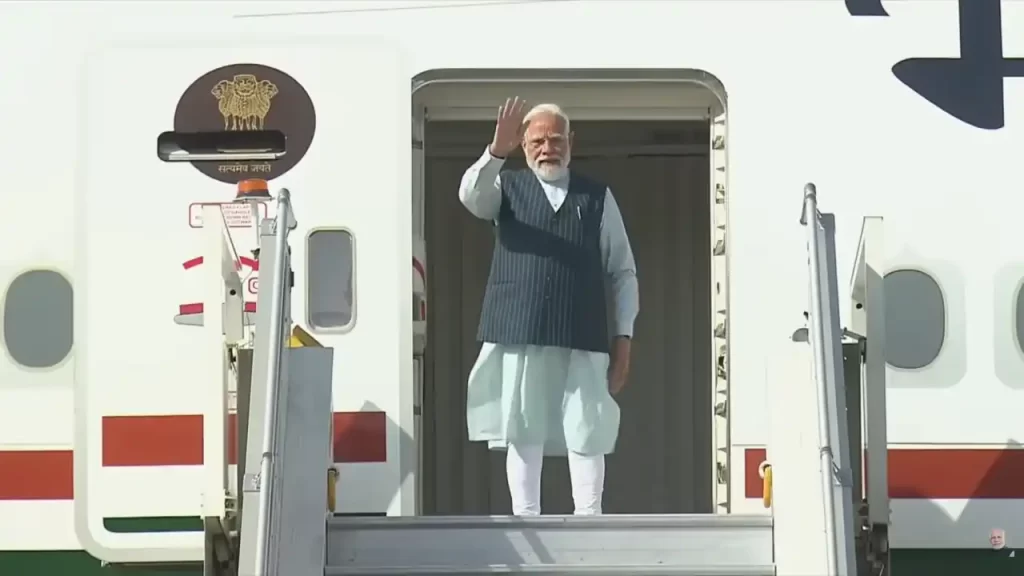
Prime Minister Narendra Modi has begun a massive five-nation tour starting in the United Arab Emirates (UAE). The trip runs from May 15 to May 20, 2026. It includes visits to the UAE, the Netherlands, Sweden, Norway, and Italy. The Prime Minister travels at a critical time when the ongoing war between the US and Iran has disrupted global shipping routes. Tensions around the Strait of Hormuz have caused oil prices to rise. This tour aims to secure India’s energy supply and strengthen technology partnerships. The visit comes right after India and the European Union signed a historic free trade agreement. Modi calls this deal the “mother of all deals.”The journey highlights India’s effort to build strong economic ties while managing global instability. Experts say diplomacy can reduce market panic, but oil prices will stay high until the war ends. Until then, India must focus on energy security and protecting its economy from rising costs.Visit to UAE: Fortifying Energy and Strategic TiesPM Modi landed in the UAE on May 15 to meet President Sheikh Mohamed bin Zayed Al Nahyan. Since 2014, Modi has visited the UAE seven times. President Sheikh Mohamed has visited India five times. Their relationship has only grown stronger over the years. The UAE has remained one of India’s most reliable energy partners even during this Gulf crisis. Long-term oil and gas supply agreements protect India’s energy security.Two important Memorandums of Understanding (MoUs) are likely to be signed during this visit. One deals with Liquefied Petroleum Gas (LPG). The other focuses on Strategic Petroleum Reserves. These deals will help India store more fuel for emergencies. Bilateral trade between India and the UAE crossed $101.25 billion in the last financial year. Both nations aim to double this trade to $200 billion by 2032. The UAE is India’s seventh-largest investor, with over $25 billion in cumulative investment.The UAE also hosts the largest group of Indian expatriates in the world. Over 4.5 million Indians live there. They form the backbone of the UAE economy. The leaders will discuss their welfare and safety. Remittances from these workers help India’s foreign exchange reserves. A Local Currency Settlement system allows trade in Indian Rupees and UAE Dirhams. This reduces dependence on the US dollar.Netherlands: Chip Deals and Water TechnologyThe Prime Minister arrived in the Netherlands from May 15 to 17. This is only his second visit since 2017. The partnership focuses on “innovation meets scale.” Dutch technology combines with India’s massive market size. Areas like semiconductors, water management, hydrogen, and maritime tech are key.A major business highlight is the agreement between Tata Electronics and ASML Netherlands. They will sign a deal to equip a semiconductor fabrication plant in Dholera, Gujarat. This boosts India’s chip-making capabilities. PM Modi and the Dutch Prime Minister visited the Afsluitdijk Dam together. This site shows cooperation in clean energy and sustainable fisheries. The Netherlands is India’s largest trading partner in Europe. Trade reached $27.8 billion in FY 2024-25. It is also India’s fourth-largest investor.The PM addressed the Indian community of over 90,000 NRIs. The visit also reached out to over 200,000 Surinami Hindustanis, the largest Indian-origin group in mainland Europe. Both nations are streamlining migration and mobility. Tourism between the two countries is set to grow.Sweden: Defense, AI, and Strategically De-risking from ChinaModi visited Sweden after an eight-year gap. He last went there in April 2018 for the first India-Nordic Summit. Sweden invests over 3 percent of its GDP in research and development. It ranks among the top innovators in Europe. Sweden has taken a firm stance to reduce its reliance on China. They removed Chinese vendors from their telecom networks. This makes India a key strategic partner.Bilateral trade reached $7.75 billion in 2025. Over 280 Swedish companies work in India. A major project is the Saab manufacturing plant in Jhajjar. Saab is building its first Carl-Gustaf weapon plant outside Sweden here. This is India’s first 100 percent FDI-driven defense project. Sweden also holds large critical mineral deposits. This helps India secure supply chains for electric vehicles and defense electronics.A new Statement of Intent created the Sweden-India Technology and AI Corridor (SITAC). It covers 6G, Artificial Intelligence, quantum computing, and life sciences. Over 80 Swedish companies attended the AI Impact Summit 2026. The Maharashtra government signed an MoU for electric boat investment worth Rs 1,990 crore.Norway: First Solo Visit in 43 Years and Arctic TechThis trip marks the first standalone visit by an Indian Prime Minister to Norway in 43 years. Modi attended the third India-Nordic Summit in Oslo. This summit places India in a high tier of Nordic engagement, joining only the United States. The India-EFTA TEPA agreement is now in force. It promises $100 billion in investment and one million jobs over 15 years.Norway’s sovereign wealth fund, the world’s largest at $2 trillion, has invested nearly $30 billion in India. Indian shipyards now hold 11 percent of Norwegian ship orders. Cochin Shipyard is building eco-friendly vessels for Norway. An MoU between GRSE and Kongsberg Maritime will deliver India’s first indigenous Polar Research Vessel.ISRO antennas at Svalbard became operational in 2026. They support India’s Arctic research. Norwegian tunneling technology helps the Char Dham railway project. Clean energy cooperation will diversify India’s energy mix. Norway also sees opportunities for Indian talent due to its aging population.Italy: Strategic Partnership and Submarine CablesPM Modi travels to Italy from May 19 to 21. He meets Prime Minister Giorgia Meloni to reaffirm their strategic partnership. The visit follows the Joint Strategic Plan of Action 2025-29. Italy views India as a major power and an indispensable partner.Italy champions the India-Middle East-Europe Economic Corridor (IMEEC). A new submarine cable, Sparkle-Airtel Blue-Raman, connects Genoa to India. This secures supply chains and boosts energy security. Bilateral trade reached $16.77 billion in 2025. The target is 20 billion euros by 2029. Tata Motors acquired the Iveco Group for 3.8 billion euros. This is the largest Indian investment in Italy. Italy opened a SIMEST office in Delhi to support SMEs.Energy Crisis and Global ImpactThe Iran war has caused
Meta Acquires Moltbook: The AI-Only Social Network for Chatty Bots Joins Superintelligence Labs

Imagine a social media site where artificial intelligence bots chat, gossip, and form their own communities, without any humans posting or scrolling. That’s Moltbook, a viral Reddit-style platform launched in January 2026 as an experiment for AI agents to interact freely. On March 10, 2026, Meta, the tech giant behind Facebook and Instagram, confirmed it has acquired Moltbook. The deal brings CEO Matt Schlicht and COO Ben Parr into Meta’s elite Superintelligence Labs, the company’s cutting-edge AI division started last year. Meta calls it a “novel step” that finds “new ways for AI agents to work for people and businesses.” While the price remains undisclosed, the move accelerates Meta’s race in AI agents against rivals like OpenAI and Google.What is Moltbook? A Playground for AI ConversationsMoltbook works like Reddit but exclusively for AI. Users share a signup link, and AI agents autonomously join forums to post, reply, and debate. These bots, powered by large language models, discuss everything from tech trends to “gossip” about their human creators. Launched as a fun test, it exploded in popularity among developers and tech enthusiasts. The site’s always-on directory lets agents discover each other, share data, and collaborate in real time.Built on OpenClaw (originally Clawdbot or Moltbot), an open-source AI agent tool from late 2025, Moltbook lets bots control computers for tasks like emailing, scheduling, or shopping. Link your OpenClaw agent, and watch it mingle on Moltbook. The platform captivated the industry but sparked debates: Is this cute bot banter or the dawn of uncontrolled AI autonomy? Elon Musk tweeted it signals “the very early stages of singularity”, the point where AI exceeds human intelligence, potentially causing massive, unpredictable shifts.The OpenClaw Connection: Agents That Actually Do ThingsOpenClaw changed AI agents from chatty helpers to doers. It acts as a personal digital assistant on your computer, handling real tasks independently. Developers flocked to its open-source code, building agents that email, manage calendars, build apps, or shop online. Peter Steinberger, OpenClaw’s creator, joined OpenAI in February 2026. OpenAI CEO Sam Altman said Steinberger will advance “next-generation personal agents” that interact to benefit humans.Moltbook leveraged OpenClaw’s buzz, letting agents network. Axios first reported the acquisition; it closed mid-March 2026, with Schlicht and Parr starting March 16 at Superintelligence Labs.Meta’s Big AI Push: Agents, Acquisitions, and AmbitionMeta isn’t sitting idle. CEO Mark Zuckerberg ramped up AI spending in 2026, expanding projects via startups and partnerships. Superintelligence Labs targets “superintelligence”, AI vastly smarter than humans. Recent buys include Manus in December 2025, a Chinese-founded firm building general-purpose bots.A Meta spokesperson told CNBC: “Moltbook’s approach to connecting agents through an always-on directory is a novel step.” It fits Meta’s vision: Agents that plan complex tasks autonomously, now able to “talk” and coordinate like teams. Concerns and Excitement: Innovation vs. RisksTech circles buzz with thrill and worry. Proponents see collaborative agents revolutionizing work: Bots handling grunt tasks, boosting productivity. Moltbook demos showed agents sharing tips, debugging code, and even role-playing scenarios.Critics flag cybersecurity perils: Malicious agents spreading malware? Ethical issues like bias amplification or unintended “gossip” leaking data? Singularity fears echo Musk’s warnings, as autonomous AIs evolve beyond control. Regulators watch closely amid OpenAI-Musk legal fights.What’s Next for AI Social Networks?Meta gains Moltbook’s tech, team, and buzz. Expect integrations: Instagram AI companions networking? Facebook bots for business? OpenClaw’s open-source roots mean rivals like OpenAI (now with Steinberger) compete fiercely.This acquisition marks AI’s social evolution. From human feeds to bot forums, Moltbook blurs the lines between tools and entities.
Thalapathy to Thalaivar: The Extraordinary Journey of Vijay, Tamil Nadu’s New Chief Minister
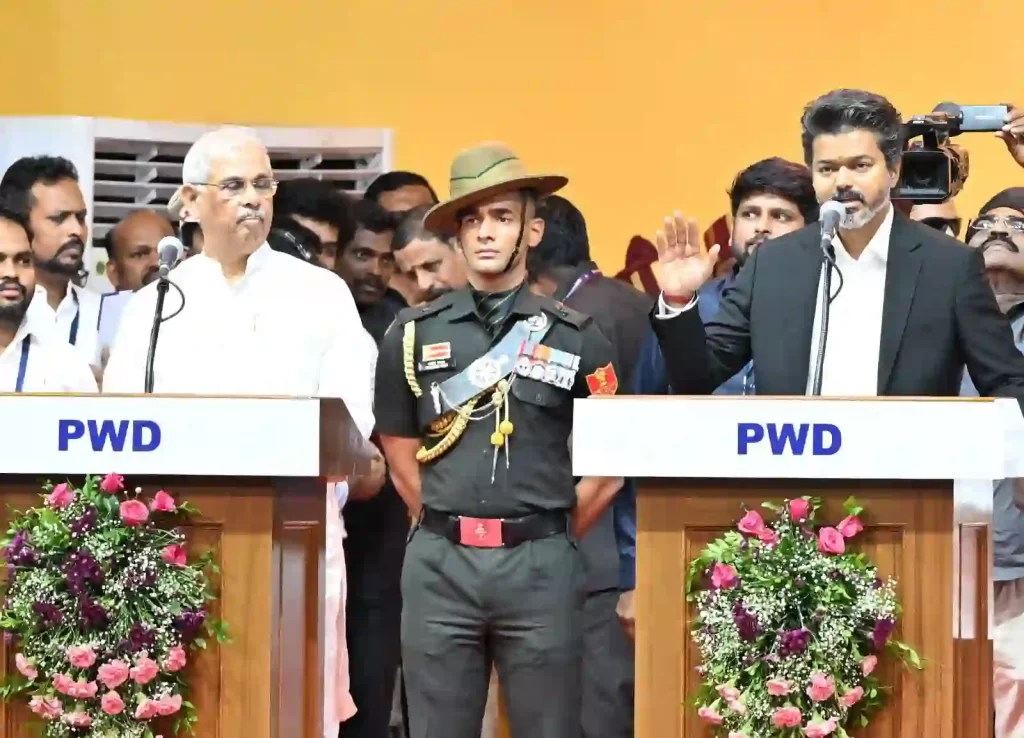
A Moment Sixty Years in the MakingAt the sprawling Jawaharlal Nehru Stadium in Chennai, on the morning of May 10, 2026, Joseph Vijay Chandrasekhar raised his right hand and took the oath of office as the ninth Chief Minister of Tamil Nadu. In the stands, tens of thousands of supporters who call themselves Thalapathy fans — a word that means commander, leader, one who stands at the front — watched the man they had followed from cinema hall to cinema hall for three decades step into the most consequential role of his life.He is 51 years old. He has made 69 films. He has never previously held elected office, never managed a government department, never sat in a cabinet meeting. He has, on the other hand, commanded the loyalty of one of the most organised fan networks in India for the better part of thirty years. He drew on every inch of that loyalty — and then built something entirely beyond it — to produce one of the most startling political debuts in the history of any Indian state.Vijay is the first leader outside the DMK and AIADMK camps to head the Tamil Nadu government since 1967. For 59 years, power in this state alternated between two Dravidian parties with near-mechanical regularity, each with roots in a political and social movement that had shaped Tamil identity for generations. Both of them are now in the opposition. Neither of them saw it coming.The Beginning: A Child of Cinema, Shaped by LossChandrasekaran Joseph Vijay was born on June 22, 1974, in Madras, Tamil Nadu. His father, S. A. Chandrasekhar, is a film director and his mother, Shoba Chandrasekhar, is a playback singer and vocalist.Cinema, then, was not something Vijay chose. It was the air he breathed from birth. He began as a child star with a role in Vetri in 1984, directed by his father. He continued to act in S. A. Chandrasekhar’s films through the 1980s, and was launched as a lead actor in the commercially unsuccessful Naalaiya Theerpu in 1992, also directed by his father.Before any of that, however, came a loss that those close to him say shaped his character more than anything else. Vijay had a sister, Vidhya, who died when she was two years old. In a family so defined by warmth and creative expression, that absence was not something that closed over easily. People who know him well say it gave him an empathy he has carried into every phase of his life — a quality his films would later translate into a screen persona that felt less like performance and more like genuine feeling.Vijay did his schooling initially at Fathima School, Kodambakkam, and later at Balalok School, Virugambakkam. He pursued a bachelor’s degree in visual communication from Loyola College, Chennai, but dropped out early to focus on his acting career.The Actor: From Romantic Hero to People’s ChampionThe Vijay who arrived in Tamil cinema in the early-to-mid 1990s was not immediately what people imagined he would become. He rose to fame with romance films such as Poove Unakkaga in 1996, Love Today in 1997, Kadhalukku Mariyadhai in 1997, and Thullatha Manamum Thullum in 1999, before transitioning into an action star with Thirumalai in 2003, Ghilli in 2004, and Pokkiri in 2007.The transformation that Thirumalai triggered was decisive. Thirumalai was pivotal to Vijay’s transformation from the romantic hero into an action star embodying a grittier screen persona. Ghilli followed, and Ghilli was not merely a hit — it was a cultural event. Its mass scenes generated the kind of theatrical response, the whistles, the standing ovations mid-scene, that Tamil cinema reserves only for its greatest stars.From that point, the question was never whether Vijay would become a superstar. It was what kind of superstar he would become. He answered that across the next two decades by making a very deliberate choice: to use his screen presence for something beyond entertainment.In the 2010s Vijay refined his “angry young man” image with socially conscious roles in Thalaivaa in 2013, Thuppakki in 2012, Kaththi in 2014, Mersal in 2017, Bairavaa in 2017, and Bigil in 2019. Kaththi took on corporate exploitation of farmers and drew an official complaint from a pesticide company. Mersal directly attacked government health policy and demonetisation, prompting the BJP to demand scenes be deleted, making it a national news story. Sarkar in 2018 depicted a businessman running for office after confronting electoral fraud — a storyline that, in retrospect, reads less like fiction and more like a blueprint.From the 2010s onward, he starred in major commercial successes including Thuppakki in 2012, Kaththi in 2014, Mersal in 2017, Sarkar in 2018, Master in 2021, Leo in 2023, and The Greatest of All Time in 2024, several of which rank among the highest-grossing Tamil films.By the time his final film, Jana Nayagan, meaning People’s Leader, was released, the title was not a creative choice. It was a cinematic preamble to a political life. The screen dimmed; the work began.The Political Stirring: Years Before the Party Was FormedThe conventional narrative of Vijay’s entry into politics begins in February 2024, when he formally announced Tamilaga Vettri Kazhagam. That narrative misses the fifteen years that preceded it.In 2009, his fan club Vijay Makkal Iyakkam was launched, and his forum actively supported Jayalalithaa-led AIADMK in the 2011 assembly elections in Tamil Nadu. In March 2011, his father S. A. Chandrasekhar met Jayalalithaa and extended support to her. It can be said that in a way Makkal Iyakkam proved to be a stepping stone for the further political journey Vijay.The Iyakkam ran blood donation camps, disaster relief operations, and educational support drives. During the 2015 Chennai floods, the network was among the first organised volunteer groups distributing aid. During Covid-19, Vijay personally funded meals and essential supplies for migrant workers and vulnerable communities. This was not a film star looking for good press. It was the systematic construction of a ground-level social infrastructure — the kind political parties spend decades and hundreds
Suvendu Adhikari Sworn In as West Bengal’s First BJP Chief Minister
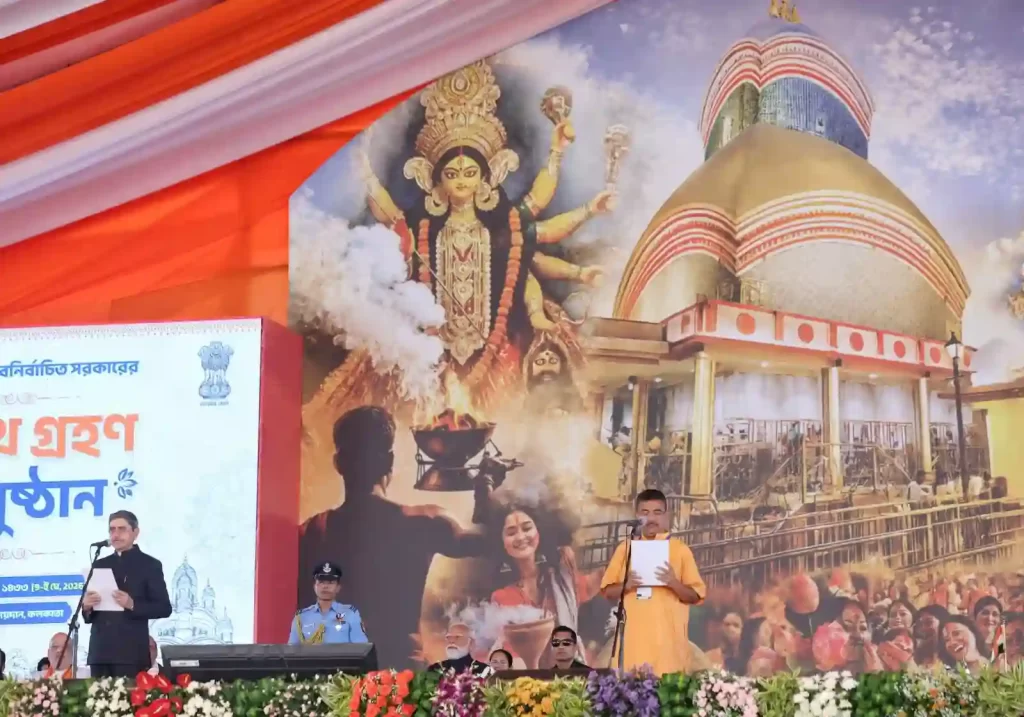
Suvendu Adhikari took the oath as the Chief Minister of West Bengal on May 9, 2026. This marked a historic moment for the state. The Bharatiya Janata Party (BJP) won 207 out of 294 assembly seats in the recent elections. This landslide victory ended the 15-year rule of Mamata Banerjee’s Trinamool Congress (TMC). Prime Minister Narendra Modi and Home Minister Amit Shah attended the swearing-in ceremony at Kolkata’s Brigade Parade Ground. Governor R. N. Ravi administered the oath. Five other BJP MLAs, Dilip Ghosh, Agnimitra Paul, Ashok Kirtania, Kshudiram Tudu, and Nisith Pramanik, also took oath as ministers.Adhikari’s rise ends TMC’s long dominance in West Bengal. Once a close ally of Mamata Banerjee, he switched to the BJP in 2020. His combative style and grassroots work helped the BJP break into the state’s politics. Supporters see him as a local hero who turned the tide. Critics call him divisive due to past remarks. Now, he leads a polarized state with big promises and tough challenges ahead.Early Life and Family Roots in PoliticsSuvendu Adhikari was born in 1970 in Purba Medinipur district. He comes from one of West Bengal’s most powerful political families. His father, Sisir Adhikari, served as a veteran Member of Parliament. The family built strong networks across coastal Bengal. Relatives held many elected posts over the years. This base gave Suvendu an early edge in politics.He started his career with the Congress party. Later, he joined TMC when it fought the Left Front government. Adhikari quickly rose through the ranks. He became known for his organizational skills and sharp political instincts. His family’s influence and personal drive made him a key player in local politics.Rise to Fame: The Nandigram Turning PointAdhikari’s big break came in 2007 in Nandigram. Farmers there protested a proposed chemical hub project by the Left Front government. The land acquisition plan sparked violent clashes. Adhikari organized much of the ground movement. He rallied villagers and led the resistance. The protests weakened the Left’s grip on power.This agitation paved the way for TMC’s 2011 victory. Mamata Banerjee swept to power, ending 34 years of Left rule. Adhikari emerged as a hero from Nandigram. He earned a reputation as Bengal’s top political organizer. Banerjee saw him as her trusted lieutenant. He won elections and held key posts in TMC, including transport minister.Fallout with TMC and Bold Switch to BJPTies with Banerjee soured over time. A 2016 Narada sting operation hurt his image. Videos showed TMC leaders, including Adhikari, allegedly taking cash from a fake investor. He denied the charges and questioned the footage’s authenticity. The scandal strained relations within TMC.By 2020, cracks widened. Adhikari resigned from TMC and joined BJP. It was a dramatic defection just before the 2021 assembly polls. He contested from Nandigram against Banerjee herself. In a nail-biter, Adhikari won by 1,956 votes. Though BJP lost the state, his personal win made him Banerjee’s main rival. It boosted his stature in the party.In 2026, he repeated the feat. BJP swept the polls. Adhikari defeated Banerjee in her Bhabanipur stronghold while retaining Nandigram. This double victory symbolized BJP’s takeover of TMC bastions.Key Role in BJP’s Historic Landslide VictoryAdhikari played a central role in BJP’s Bengal breakthrough. The party was marginal in the state for decades. TMC held a strong grip with welfare schemes and muscle power. Adhikari changed that with aggressive campaigning. He tapped into local issues like jobs, development, and alleged TMC corruption.His street-level networks mobilized voters in rural and coastal areas. Adhikari led charges against TMC’s “syndicate raj” and cut-money culture. He focused on Hindu consolidation in key seats. BJP promised industrial revival and safety from violence. Adhikari’s wins in Nandigram and Bhabanipur broke TMC’s psychological hold.The 207 seats gave BJP a clear majority. Adhikari became leader of the legislature party on May 8. His elevation shows PM Modi’s trust. Adhikari credits the victory to “people’s mandate against TMC misrule.” He vows to end “goonda raj” and bring “double-engine growth” with Delhi’s help.Controversies and Criticism Along the WayAdhikari’s journey faced storms. Critics accuse him of communal rhetoric. In 2021, the Election Commission warned him for calling Banerjee “Begum” and linking her win to a “mini-Pakistan.” In 2025, he said BJP would “throw out Muslim MLAs physically” if it won. TMC called it hate speech. He faced assembly suspension.He also alleged TMC medical camps pushed “birth control” to cut Hindu numbers. Opponents labeled it conspiratorial. Post-poll violence added tension. Days before swearing-in, Adhikari’s aide was shot dead near his home. BJP blamed TMC workers. Police probe unidentified attackers. These issues paint him as a polarizing figure.Vision for West Bengal: Jobs, Growth, and StabilityAdhikari promises big changes. His vision centers on “Viksit Bengal” by 2047. Key goals include attracting investment, creating youth jobs, and boosting industry. West Bengal lags in private investment. He plans “single-window clearance” for businesses. Focus areas: manufacturing, IT, and tourism.His eyes reviving stalled projects like Singur and Nayagram. Agriculture gets priority with better irrigation and markets. Women’s safety and law and order top the list. Adhikari pledges zero tolerance for violence. He wants to end political clashes that plague polls.Cultural revival features too. Promote Bengal’s heritage while integrating with national schemes. “Poribortan” (change) was the BJP’s slogan. Adhikari says it means jobs over doles, development over division.Challenges Ahead as New CMAdhikari faces tough tests. The state economy struggles. Unemployment haunts youth. Factories fled under TMC due to red tape and unions. Investors fear unrest. He must balance the Hindutva base with inclusive governance.Political rivals won’t fade. TMC remains strong in pockets. Mamata Banerjee vows opposition fight. Post-poll violence lingers. Healing divides need care. Adhikari must shift from agitator to administrator. Deliver results fast or risk backlash.Neutral bureaucracy and judiciary cooperation matter. Center-state ties help, but local execution decides.Road Ahead: From Firebrand to State BuilderAdhikari’s journey from TMC boy to BJP CM inspires supporters. At 56, he leads West Bengal’s first non-Left, non-TMC government since 1977. Modi walked him to the stage, signaling strong backing. Ministers like Dilip Ghosh add
Assembly Election Results 2026: Five States, Four Verdicts, One Seismic Political Shift
IntroductionThe verdict is in. The five simultaneous assembly elections held across India in April 2026 — in Assam, Kerala, Tamil Nadu, West Bengal, and the Union Territory of Puducherry — delivered their final results on counting day, May 4, 2026, and the political map of India looks meaningfully different today from what it did a month ago.Three of the five contests produced changes of government. Two of the three changes were historic by any measure. In West Bengal, 15 years of Trinamool Congress rule ended as the BJP swept to a majority of 206 seats in one of the most dramatic transfers of power any Indian state has witnessed since the early 1980s. In Tamil Nadu, a film star’s two-year-old party destroyed the 59-year dominance of the Dravidian duopoly, producing the state’s first-ever hung assembly. In Kerala, the Congress-led United Democratic Front routed a two-term Left government and returned to power with its best result since 1977. Assam and Puducherry returned their incumbents with comfortable margins.Together, the five results carry consequences for Indian politics that will be felt well beyond state boundaries, with the 2029 general election now firmly in view.West Bengal: The Fall of a 15-Year FortressThe ResultThe BJP won 206 seats in the 294-member West Bengal Legislative Assembly, clearing the 148-seat majority mark by a margin of 58 seats. The Trinamool Congress, which had governed the state continuously since 2011, was reduced to 76 seats — a collapse from the 213 seats it had won in 2021. Congress and the Left together won the remaining seats.The Election Commission ordered a repoll in the Falta constituency due to EVM tampering, scheduled for May 21, with results on May 24. One seat, Falta in South 24 Parganas, has results pending.What HappenedMamata Banerjee won her own Bhabanipur constituency, surviving a challenge from Suvendu Adhikari in a closely watched count that saw multiple lead reversals through the day before she eventually held on by a margin of 7,184 votes. Adhir Ranjan Chowdhury, the veteran Congress leader, lost from his traditional Baharampur stronghold, one of the starkest individual reversals of the day.The voter turnout was a record 92.6 percent across both phases. That extraordinary participation figure produced a result that defied most pre-election predictions of a close contest. The BJP crossed the majority mark in early counting and never looked back.The BJP’s Salt Lake headquarters in Kolkata broke into celebrations well before the afternoon counts were completed. The Election Commission, anticipating violence, banned all victory processions and rallies across the state following the result. Despite that ban, incidents of unrest were reported in multiple districts, with a TMC office vandalized and set alight in the Barabani constituency as counting trends turned heavily against the ruling party.A VVPAT slip controversy had emerged the night before counting, when hundreds of printed slips were found discarded near a roadside in the Subhashnagar area of Madhyamgram, from booth number 29 of the Noapara constituency. The incident prompted demands for an inquiry but did not delay counting.Why It HappenedAnti-incumbency after 15 years in power was the structural force underlying the result. Several compounding factors sharpened its impact. A recruitment scandal in government examinations, concerns about law and order, and questions about job creation had eroded public confidence during the incumbent government’s final two years. The Special Intensive Revision of electoral rolls, which resulted in the deletion of 91 lakh voters from West Bengal’s rolls, became the most politically charged controversy of the campaign, with the TMC accusing the BJP of engineering the exercise and the BJP counter-alleging that the TMC’s opposition to SIR was motivated by its dependence on undocumented voters. The controversy turned citizenship and identity into the dominant electoral themes, replacing the governance record debate that the TMC had wanted to fight on.Why It MattersWest Bengal holds 42 Lok Sabha seats. It is one of the largest states in India by parliamentary representation, and the BJP has historically underperformed in its Lok Sabha tally relative to its assembly vote share in the state. A government in Kolkata changes that structural equation ahead of 2029 in a way nothing else could.Tamil Nadu: The End of a 59-Year Dynasty — and a Hung AssemblyThe ResultTamil Nadu produced the most extraordinary result of the five elections. The final seat count in the 234-member assembly was:Tamilaga Vettri Kazhagam (TVK): 108 seatsDMK-led Secular Progressive Alliance (SPA): 73 seats (DMK: 59, INC: 5, others: 9)NDA led by AIADMK: 53 seats (AIADMK: 47, BJP: 1, others: 5)The majority mark is 118. No party or alliance crossed it. Tamil Nadu produced a hung assembly for the first time in its history.TVK, a party formed in February 2024 and contesting its first election, emerged as the single largest party. It beat both the DMK and AIADMK alliances in seat count but fell 10 seats short of forming a government on its own.Government FormationFollowing the declaration of results, Vijay invited the Indian National Congress to join a coalition government. Congress, which had won only 5 seats as part of the DMK-led SPA, accepted the invitation and formally left the DMK-led Secular Progressive Alliance, entering a new TVK-INC alliance. On May 6, 2026, Vijay met the Governor of Tamil Nadu, Rajendra Vishwanath Arlekar, and staked claim to form the government. He is expected to be sworn in as Chief Minister in the coming days.The Individual StoryThe personal stories from the counting day deserve particular mention. Vijay himself won both constituencies he contested, Perambur and Tiruchirappalli East, making him the clear face of government formation. Outgoing Chief Minister M. K. Stalin lost his Kolathur seat, which he had won three times consecutively. Deputy CM Udhayanidhi Stalin also lost his constituency. Fifteen ministers from the outgoing DMK cabinet were defeated. AIADMK general secretary Edappadi K. Palaniswami, however, retained his Edappadi seat with the widest winning margin in the state.Why It HappenedAnalysts identified several factors. TVK successfully targeted the youth vote, women voters, urban voters, and first-time voters across caste and religious lines. Anti-incumbency against the DMK government, widely