


Anthropic’s Claude Cowork Plug-ins Spark ‘SaaSpocalypse’: Global Tech Sell-Off Hits Indian IT Hard

Global tech markets plunged into chaos following Anthropic’s January 30, 2026, launch of 11 open-source plug-ins for its Claude Cowork agent, igniting fears that agentic AI could obliterate traditional SaaS models and disrupt India’s IT services giants. Indian IT stocks like Infosys (down 8%), TCS (6.46%), HCLTech (5.76%), Wipro, and Tech Mahindra cratered, erasing over ₹5.7 lakh crore in market cap as the Nifty IT index dropped 19% in eight sessions, its worst since 2020.The Trigger: Claude Cowork’s Game-Changing Plug-insAnthropic, founded in 2021 by ex-OpenAI leaders Dario and Daniela Amodei, shifted AI from chatbots to autonomous “coworkers.” These no-code plug-ins bundle skills, connectors, and sub-agents for enterprise roles, autonomously planning, executing, and validating multi-step tasks like document processing, cross-verification, and adaptive strategies. Key offerings target:Plug-in CategoryCore FunctionsLegalContract review, NDA analysis, compliance checks, risk flagging.SalesProspect research, deal prep, process tracking.FinanceFinancial modelling, metrics tracking.Data/Marketing/ProductQuery/visualise datasets, campaign planning, and roadmap prioritisation.Others (Productivity, Support, Biology)Task/calendar management, issue triage, and literature analysis.This “vibe coding” lets users describe intent in plain English, bypassing specialised software from Salesforce, ServiceNow, or Adobe—threatening recurring subscriptions that fueled SaaS profits.Market Carnage: Wall Street to Dalal StreetUS: Nasdaq fell 1.4-2.4%; Goldman Sachs software basket 6%; S&P 500 -0.84%. Adobe (-7.31%), Cognizant (-10.14%), Thomson Reuters (-15.67%), Gartner (-20.87%), Equifax (-12.11%), ServiceNow/Salesforce (~7%) shed $ 300 B in market cap. Even Nvidia/Meta dipped 2-3%.India: Infosys ADR -5.56% (Nasdaq); TCS mcap below ₹10 lakh crore (2020 levels); Nifty IT -3-6% daily. Sensex dragged 100+ points.Termed ‘SaaSpocalypse’: Jefferies warns AI agents compress software categories into one interface, turning tools into utilities.Palantir’s CTO noted AI slashing SAP migrations from years to weeks, amplifying panic over billable hours in legal research, compliance, and due diligence, bread-and-butter for Indian IT juniors.Indian IT Sector: Existential Threat or Overreaction?India’s IT behemoths thrived on outsourcing data processing, analysis, and support—now AI-vulnerable. Economic Survey 2025-26 flagged risks: concentrated AI data/compute erodes India’s edge if adaptation lags. Mustafa Suleyman-like warnings predict 12-month white-collar hits (lawyers, accountants, coders).Bear Case: Agentic AI automates L1 support, reporting, testing—hollowing low-end services; clients rethink headcount-heavy models.Bull Rebuttals:JPMorgan sees “compelling value” in Infosys/TCS; correction temporary.Cognizant CEO Ravi Kumar: Enterprises need integrators for AI-human bridges; no “plug-and-play” magic.Zoho’s Sridhar Vembu: Domain expertise trumps AI; SaaS woes predated agents.Happiest Minds’ Ashok Soota: Disruption expands IT roles in transformation.Experts (Pareekh Jain, Prasad Valavade): Incremental impact; humans essential for governance, legacy integration, high-stakes decisions. Legal AI needs oversight (Adv. Varun Singh).Broader Implications and Road AheadSalesforce’s 1,000 AI-driven layoffs signal restructuring. Anthropic’s Dario Amodei reassures startups: “Claude powers AI-native firms.” Indian firms pivot to AI orchestration, but face pricing pressure (fixed-fee vs. hours). JPMorgan urges buying the dip; long-term, IT survives as AI embedders.As of February 17, 2026, markets stabilise slightly, but the AI shift, from assistant to executor, reshapes software economics. Indian IT must accelerate: reskill, embed AI in processes, or risk obsolescence. The ‘SaaSpocalypse’ may be hype, but evolution is inevitable.
India AI Impact Summit 2026: Detailed Agenda for Global AI Action in New Delhi
New Delhi, February 9, 2026 – India gears up for the India AI Impact Summit 2026, set for February 16-20 at Bharat Mandapam, Pragati Maidan, New Delhi, the primary venue for the India AI Impact Summit 2026, which will host the main events on February 19-20.Hosted by the Ministry of Electronics and Information Technology (MeitY), this first Global South edition, billed by Union Minister Ashwini Vaishnaw as the “largest yet,” transitions AI discourse from vision to verifiable impact under the “Three Sutras”: People, Planet, and Progress.Some sources mention a broader program across February 16-20, potentially using additional Delhi venues like Sushma Swaraj Bhawan for side events, sessions, or exhibitions. Bharat Mandapam, one of India’s largest convention centers, was upgraded by NDMC for this flagship gathering. Chief Guests and Stellar LineupPrime Minister Narendra Modi serves as the Chief Guest, inaugurating on February 16 with a keynote and hosting a leaders’ dinner. Expected heads of government include representatives from Singapore, the UAE, and Brazil (15-20 total), plus 50+ ministers. Key speakers feature Google’s Sundar Pichai, Anthropic’s Dario Amodei, Microsoft’s Satya Nadella, and Indian luminaries like Nandan Nilekani (Infosys co-founder) and Ola’s Bhavish Aggarwal. Over 40 CEOs from Reliance, TCS, and global firms join, along with a Chinese delegation, signaling a thaw in collaboration. Event Schedule and Dialogues Feb 16: Inauguration, Modi address, CEO roundtable.Feb 17-18: Plenary sessions and seven “Chakras” (working groups) on core topics.Feb 19: Startup showcase (500+ ventures), AI model launches, bilateral dialogues.Feb 20: Closing with actionable declarations.Expect 500+ parallel sessions, hackathons, and exhibitions. Dialogues include G20-style tracks on AI ethics, public-private partnerships, and Global South priorities. Participating Governments in India AI Impact Summit 2026 The summit, hosted by India’s Ministry of Electronics and Information Technology (MeitY) under the IndiaAI Mission, expects involvement from over 100 countries. Key highlights:High-Level Representation: 15-20 heads of government and 50+ ministers confirmed, including from Singapore, UAE, Brazil, and others.China: Delegation attending after India’s formal invitation, signaling AI collaboration.Preceding Hosts: Builds on summits by UK (2023 Bletchley), South Korea (2024 Seoul), France (2025 Paris).Collaborators: NITI Aayog (India’s policy think tank), state governments like Uttarakhand (pre-summit host), and international bodies (ITU, World Economic Forum).Global Engagement: Multinational working groups across Chakras, with US, UK, EU, and ASEAN nations active in prep consultations. Key Topics and Seven ChakrasThe India AI Impact Summit 2026 is structured around three foundational “Sutras” (People, Planet, Progress) that guide its discussions, with seven interconnected “Chakras” (working groups) translating these into specific, actionable themes.Core SutrasPeople: Focuses on human-centric AI, including safeguarding rights, enhancing access to services (e.g., healthcare, education), building user trust, workforce reskilling amid job impacts, and ensuring equitable benefits across societies.Planet: Addresses sustainable AI deployment, such as energy-efficient models, responsible resource use (e.g., reducing GPU/data center power demands), and AI applications for climate action, environmental monitoring, and resilience.Progress: Emphasizes inclusive innovation, capacity-building, productivity gains in sectors like agriculture and manufacturing, economic growth, and bridging the AI divide for the Global South. Seven Chakras (Key Discussion Topics)These working groups, involving 100+ countries, cover:AI governance and ethical frameworks.Trust and safety protocols for AI models (e.g., bias mitigation, transparency).AI’s impact on work and future jobs.Sector-specific applications (healthcare, agriculture, industry).Innovation and scalable solutions.Sustainability and environmental integration.Equitable access, inclusion, and development outcomes.Sessions will also spotlight IndiaAI Mission launches, startup innovations, and global standards, prioritizing “on-ground” results over regulations. What to Expect in India AI Summit?MeitY leads with partners like NITI Aayog, NASSCOM, World Economic Forum, and ITU. Corporate backers include Google, Microsoft, NVIDIA (GPU focus), and Indian firms like Tata and Adani (data centers). Governments from US, UK, EU, and ASEAN collaborate. Attendees (10,000+), policymakers, researchers, startups, NGOs, can expect networking zones, live demos (e.g., edge AI), policy labs, and a “Global AI Talent Fair.” Launches include indigenous foundational models under the Rs 10,370 crore IndiaAI Mission. India’s Strategic Push Amid HurdlesEchoing Bletchley (2023), Seoul (2024), and Paris (2025), India’s summit prioritizes “on-ground” wins for 1.4 billion people, as per Secretary S. Krishnan. AI could add $500B to GDP (NASSCOM), but challenges like GPU imports persist—eased by US trade deals and data center tax holidays to 2047. Budget 2026-27 tweaks fund nuclear-powered AI infra, as Vaishnaw eyes energy self-reliance.Vaishnaw hailed “phenomenal” global buy-in, with NDMC upgrading venues. Beyond talks, expect MoUs on compute sharing, talent visas, and sustainable AI pacts, positioning India as an AI diplomacy hub.This summit promises not just dialogue, but deliverables: inclusive, green AI for humanity’s progress.Video credit: YT@/Digital India
India’s Semiconductor Leap: 2 nm Chips Designed from India Signal a Strategic Technological Shift
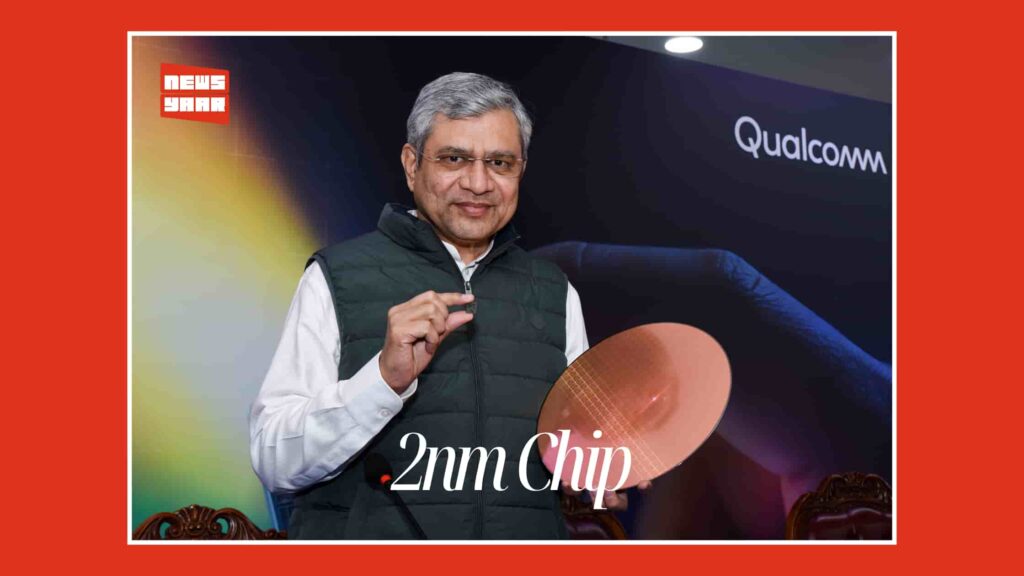
In a development being widely recognised as a milestone for India’s semiconductor ambitions, engineers based in the country have played a central role in designing 2 nanometre (nm) semiconductor chips — one of the most advanced chip technologies in existence today. This achievement, marked by a successful 2 nm chip tape-out at a leading global chipmaker’s Indian facilities, underscores a significant shift in India’s role in the global semiconductor value chain from primarily back-office support to end-to-end engineering and advanced chip design.What Is a 2 nm Chip and Why It MattersIn semiconductor terminology, the “nanometre (nm)” designation refers to the scale of the technology node — essentially the size of the features etched onto a chip. As technology nodes shrink, chips become more power-efficient, faster and capable of packing more transistors in the same physical space. The 2 nm node represents one of the most cutting-edge levels of chip design, sitting at the forefront of global semiconductor innovation alongside 3 nm and 4 nm processes.These advanced chips are expected to power future generations of smartphones, artificial intelligence (AI) systems, edge devices, data centre hardware, autonomous systems and high-performance computing applications. The density and complexity at this level — with tens of billions of transistors on a single die — enable significant improvements in performance and energy efficiency over earlier generations.The India Breakthrough: Design in Bengaluru and BeyondThe chip design milestone was publicly showcased at **Qualcomm Technologies’ engineering centre in Bengaluru, where the company completed the **tape-out of its 2 nm semiconductor design, with development contributions distributed across its Indian engineering hubs in Bengaluru, Chennai and Hyderabad. “Tape-out” refers to the stage in chip development where the final design is completed and ready for manufacturing at a wafer fab — a critical endpoint of the design phase.While the actual manufacturing (fabrication) of the 2 nm chips will continue to be handled by specialised semiconductor foundries overseas due to the extremely capital- and technology-intensive infrastructure required, the fact that high-end design work is being led from India reflects a meaningful advance in the country’s engineering capabilities.Government Perspectives and Industry InterpretationUnion Minister for Electronics and Information Technology, Ashwini Vaishnaw, highlighted this development as a marker of India’s transition toward holistic semiconductor capabilities, emphasising that the country is moving beyond “back-office development work” toward complete engineering cycles — from product definition, design and silicon layout to tape-out and validation — all conducted within Indian talent pools.At a press conference during the event, Minister Vaishnaw noted that this achievement demonstrates how India’s semiconductor design ecosystem has matured and is now integral to global engineering efforts. He indicated that the next strategic target would be to establish semiconductor “fabs” (fabrication facilities) in India, which would enable domestic production of advanced chips.Experts emphasise that such milestones are not merely technical achievements but also symbolic markers of India’s growing integration into the global semiconductor landscape, particularly in high-end design work that drives product performance and innovation.India as a Growing Engineering HubThe development also puts into sharp focus India’s rapidly expanding semiconductor ecosystem — one that combines a deep talent pipeline with increasing participation from global chipmakers. India hosts one of the largest engineering workforces outside the United States for companies like Qualcomm, which have invested in design, validation, system-level optimisation and AI integration efforts for next-generation chip platforms.Indian engineering teams contribute across multiple stages of semiconductor development, including architecture implementation, system integration and advanced feature validation — competencies that are critical in designing chips competitive at global levels.Policy Momentum: Semicon Mission 2.0 and Indigenous Design FocusThe Government of India’s semiconductor policy framework, particularly Semicon Mission 2.0, prioritises indigenous chip design as a key objective alongside talent development, equipment and material ecosystem building, and eventual manufacturing capacity expansion. The revised mission includes funding and incentives for design-led startups, R&D centres, industry collaborations and skill development, aimed at creating a future-ready semiconductor workforce.Under this framework, global companies setting up design operations in India — including multinational firms like Arm — reflect international confidence in Indian engineering capabilities. Such initiatives help build intellectual property (IP), research expertise and design capability at a world-class level.Broader Strategic and Economic ImplicationsThe design of 2 nm chips from Indian engineering centres carries significance beyond technology alone. It contributes to:Enhanced strategic positioning in global semiconductor supply chainsAttraction of further foreign direct investment (FDI) in high-tech R&DUpskilling of engineering talent and creation of advanced tech jobsFoundation for future advanced manufacturing and fab developmentIntegration with AI, edge computing and next-gen connectivity sectorsBy enabling Indian engineers to work at the forefront of semiconductor design, the country is positioning itself as a competitor and collaborator in the high-performance chip ecosystem — a space historically dominated by a handful of global players.Conclusion: A Step Toward a Global Semiconductor RoleWhile India’s semiconductor journey — from design to full-scale manufacturing — remains a multi-decade endeavour, the successful 2 nm chip tape-out driven by Indian talent and engineering operations represents a strategic inflection point. It reinforces the narrative that India is not just a consumer of cutting-edge technologies but a contributor and innovator, capable of playing a meaningful role in one of the most consequential fields of modern technology.This milestone, achieved through collaboration between global industry leaders and Indian engineers under supportive policy frameworks, signals that the country is steadily moving up the semiconductor value chain — from design and verification to eventual productisation and broader ecosystem participation.Video credit: YT@/ANI
Adani, Leonardo Sign Strategic Deal for Helicopter Manufacturing in India

In a significant development for India’s defence and aerospace sector, Adani Defence & Aerospace, the defence arm of India’s Adani Group, and Leonardo, the Italian aerospace and defence giant, have signed a strategic Memorandum of Understanding (MoU) to establish a comprehensive helicopter manufacturing ecosystem in India. The partnership, announced in early February 2026, represents a milestone in the country’s bid to enhance indigenous manufacturing capabilities, support national security requirements and reduce dependence on imports for military rotorcraft. Overview of the Agreement The MoU was signed in New Delhi by Ashish Rajvanshi, CEO of Adani Defence & Aerospace, and Stefano Villanti, Senior Vice President – Helicopters at Leonardo, in the presence of senior officials including India’s Defence Secretary Rajesh Kumar Singh and Director General of Acquisition, A. Anbarasu. The agreement lays the foundation for collaborative efforts to develop, manufacture, sustain and support a range of helicopter platforms in India. Under the pact, both parties will work to build an integrated helicopter production base that encompasses not just manufacturing, but also assembly, maintenance, repair and overhaul (MRO) capabilities, pilot training infrastructure and a phased transfer of technology to Indian industry. Focus on Key Helicopter Platforms The partnership is expected to centre initially on the production of Leonardo’s AW169M and AW109 TrekkerM helicopter models — platforms designed for multi-role utility in military, parapublic, law enforcement and support missions. These models are chosen for their versatility, modern avionics and suitability for diverse operational environments. The strategic intent is to position India as a hub for helicopter manufacturing in the Asia-Pacific region, with future potential expansion into civil applications once the defence ecosystem is established. Market analysts believe that India’s armed forces may require more than 1,000 helicopters over the coming decade, making this collaboration timely for meeting long-term demand while promoting domestic capabilities. Strategic Importance and Government Alignment The Indo-Italian partnership aligns closely with the Government of India’s “Make in India” and “Aatmanirbhar Bharat” (self-reliant India) initiatives, which seek to strengthen the domestic defence industrial base, attract foreign direct investment and develop advanced technological and manufacturing expertise within the country. By facilitating technology transfer, indigenous production and high-skill job creation, the collaboration is expected to contribute to broader policy goals of reducing import dependency in critical defence platforms while improving operational readiness and supply chain resilience for the Indian Armed Forces. Economic and Industrial Impact Industry observers note that the agreement could catalyse growth in India’s aerospace sector by: Creating an integrated manufacturing ecosystem for helicopters and related aerospace products Fostering technology transfer and skill development for Indian engineers and technicians Boosting local supply chains and components manufacturing **Generating high-value employment opportunities across engineering, production and MRO segments Supporting ancillary industries such as avionics, composite materials and specialised tooling The collaboration also has potential spill-over effects into civil aviation and emergency services, where helicopter platforms play a key role in operations such as medical evacuation, disaster relief, law enforcement support and search-and-rescue missions. Context: Rising Demand for Helicopters India’s demand for helicopters spans both military and civilian needs. The Indian armed forces regularly modernise and expand their rotary-wing fleets to address border security, rapid deployment, logistics and humanitarian tasks. Meanwhile, civil sectors including tourism, offshore operations and corporate transport increasingly require reliable and versatile helicopter platforms, driving overall growth in the rotorcraft market. Broader Aerospace Strategy of Adani Defence & Aerospace This strategic tie-up with Leonardo complements other moves by Adani Defence & Aerospace to broaden its footprint in India’s aerospace landscape. For instance, the company recently signed a separate MoU with Brazilian aerospace firm Embraer to explore the establishment of an integrated regional transport aircraft manufacturing ecosystem, aiming to set up assembly lines and develop supply chain and pilot training infrastructure in support of India’s broader aviation ambitions. These partnerships reflect Adani’s evolving role in advancing India’s capabilities in both fixed-wing and rotary-wing aviation manufacturing — a sector historically dominated by public-sector enterprises and foreign imports. Industry and Market Reaction The announcement has been met with cautious optimism in industry circles and on financial markets. Shares of Leonardo saw a modest uptick following the news, signalling investor confidence in the strategic growth potential of expanded manufacturing operations in India. Analysts have highlighted that structured collaborations between Indian private industry and global aerospace leaders could accelerate the development of high-end manufacturing competencies domestically. Challenges and Future Prospects While the MoU lays a strategic roadmap, experts note that detailed implementation will require further clarity on timelines, investment commitments, facility locations and regulatory approvals. Establishing an end-to-end helicopter manufacturing ecosystem — from component production to final assembly and life-cycle support — is capital-intensive and requires strong coordination between industry partners, government bodies and defence stakeholders. Nevertheless, the Adani-Leonardo partnership is widely seen as a transformational step in India’s defence manufacturing strategy, reinforcing the country’s march towards self-reliance and technological maturity in aerospace.
India-US Trade Deal 2026: Comprehensive Framework, Key Terms and Strategic Implications
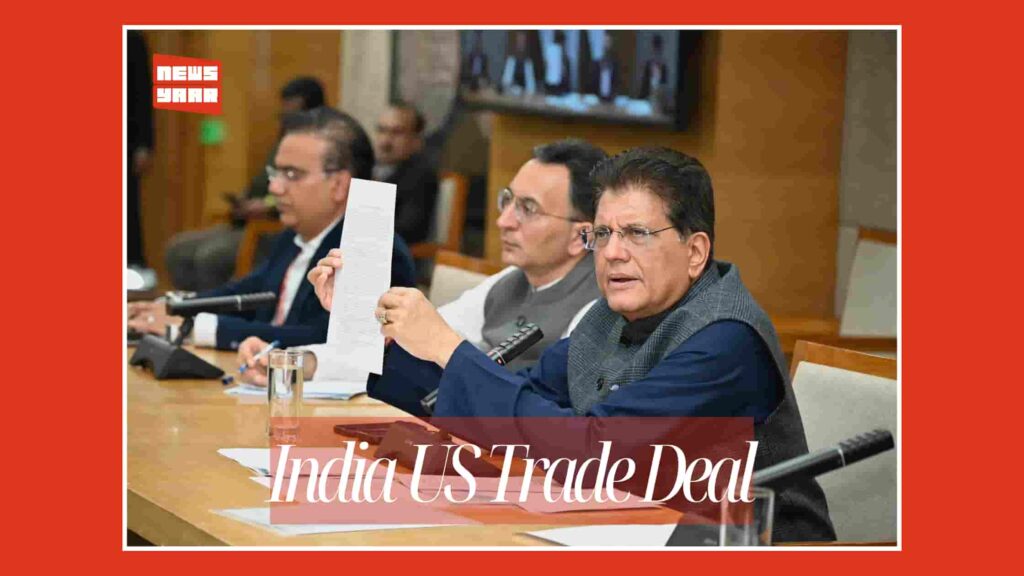
India and the United States have announced a framework for an interim trade agreement aimed at deepening economic ties, expanding market access, and strengthening bilateral cooperation on trade and investment. The trade deal represents progress in long-running negotiations between the two largest democracies and is viewed by New Delhi and Washington as a step toward a broader Bilateral Trade Agreement (BTA). The framework was unveiled following discussions between Prime Minister Narendra Modi and U.S. President Donald J. Trump, who first launched formal talks on a comprehensive India-U.S. trade arrangement in February 2025. Interim Framework OverviewUnder the interim framework, both countries have agreed to substantial tariff reductions and preferential market access commitments, while also embedding safeguards for politically sensitive and strategic sectors in their respective economies. The agreement stops short of a full free-trade agreement but sets out structured commitments that could be built upon in future negotiations. According to the joint statement issued by India and the U.S., the interim agreement emphasises mutual and reciprocal market access, rule-based trade enhancement, and sustained cooperation in areas of economic interest. It also commits both sides to work on non-tariff barriers to facilitate smoother trade flows. Tariff Reductions and Market AccessOne of the central features of the deal is reduction of mutually imposed tariffs on a wide range of goods:The United States will reduce its **reciprocal tariffs on Indian exports to 18 per cent from previous levels that reached up to 50 per cent on certain products, significantly improving access to the U.S. market. Tariffs will also be entirely eliminated for select Indian exports, including generic pharmaceuticals, gems and diamonds, and aircraft parts. India has agreed to eliminate or reduce tariffs on all U.S. industrial goods and a broad spectrum of American food and agricultural products, including dried distillers’ grains (DDGs), red sorghum for animal feed, tree nuts, fresh and processed fruits, soybean oil, wine and spirits. The reciprocal tariff arrangement is expected to open up significant opportunities for Indian exporters in traditional and emerging sectors, while also making a range of American products more competitive within India’s markets.Agriculture and Sensitive Sector ProtectionsA major concern throughout negotiations has been safeguarding India’s agricultural and rural economy, which supports a vast portion of the population. Commerce and Industry Minister Piyush Goyal has repeatedly emphasised that the deal will fully protect sensitive agricultural and dairy products from tariff concessions. Products explicitly shielded include:Staple crops such as maize, wheat, rice and soyaDairy and poultry products including milk, cheese and meatOther items critical to rural livelihoods such as ethanol (fuel), tobacco and certain vegetablesThese protections are intended to prevent adverse impacts on the livelihoods of farmers, smallholder producers and rural communities, who form the backbone of India’s agricultural economy. At the same time, India has offered zero-duty access for its farm products entering the U.S. market, including items such as spices, tea, coffee, coconut and coconut oil, cashew nuts, certain fruits like mangoes, bananas and pineapples, bakery products and vegetable waxes. This is expected to enhance export earnings for agricultural producers and MSMEs. Sectoral Gains and Strategic OutcomesThe interim framework includes sectoral provisions designed to boost trade and cooperation across diverse industries:Pharmaceuticals and Medical Devices: Zero tariffs on generic drugs and improved regulatory alignment are expected to bolster India’s strong position in the U.S. pharmaceutical market. Aerospace and Defence: Eliminating tariffs on aircraft parts and securing Section 232 exemptions are expected to benefit aerospace trade and support defence and commercial aircraft manufacturing. Manufacturing and ICT Goods: Commitments to address non-tariff barriers and streamline standards are expected to facilitate trade in information and communication technology (ICT) products and select machinery. Auto Components and Heavy Industry: The agreement anticipates tariff rate quotas for auto parts and preferential access for certain manufactured goods, enhancing industrial trade cooperation. Combined, these measures aim to reduce supply chain friction, attract investment, and support India’s Make in Indiainitiative by integrating domestic production more closely with global value chains.Energy and Long-term Procurement CommitmentsAs part of the broader economic engagement, India has signalled intentions to import approximately USD 500 billion worth of goods from the United States over the next five years. These imports include energy products such as crude oil, liquefied natural gas (LNG) and liquefied petroleum gas (LPG), along with aircraft and aircraft parts, technology products, precious metals and coking coal. These procurement commitments align with India’s strategy of diversifying its energy sources and deepening strategic economic ties with the U.S. . Expected Economic ImpactCommerce Minister Goyal has described the interim framework as a “historic and equitable agreement” that could potentially open a US$ 30 trillion market for Indian exporters. This expanded access is expected to deliver significant benefits for micro, small and medium enterprises (MSMEs), artisans, agricultural producers and women- and youth-led businesses by removing tariff barriers in the U.S. market. Key economic gains envisaged include:Boost to Indian exports in textiles, leather and footwear, plastic and rubber products, organic chemicals, home decor, artisanal goods and select machinery. Increased competitiveness for Indian pharmaceutical and aerospace sectors through zero tariff access. Enhancement of India’s MSME ecosystem through sustained preferential access and reduced non-tariff barriers. Political and Analytical PerspectivesThe trade framework has drawn both support and criticism within India. Proponents highlight its potential to create jobs, expand market reach for diverse sectors and attract foreign direct investment. Several state leaders have welcomed the deal as a step forward for economic growth and industrial development. Critics — including farmer unions and opposition figures — argue that the framework lacks sufficient detail and may expose certain sectors to unfair competition, particularly if tariff reductions are asymmetric. Concerns have been raised about the long-term impact on domestic agriculture and industrial policies. Why the Deal MattersThe interim India-U.S. trade deal is significant on multiple fronts:It marks a milestone in trade relations between the world’s two largest democracies, anchoring economic cooperation alongside strategic and defense ties. It represents a shift in India’s trade policy, balancing openness with protection for sensitive sectors while pursuing broader market access. For the United States, it strengthens economic engagement with a high-growth market and supports bilateral cooperation on technology, supply chains and industrial standards. The interim framework is
Wings India 2026: Celebrating Aviation Excellence and Cultural Unity in the Skies
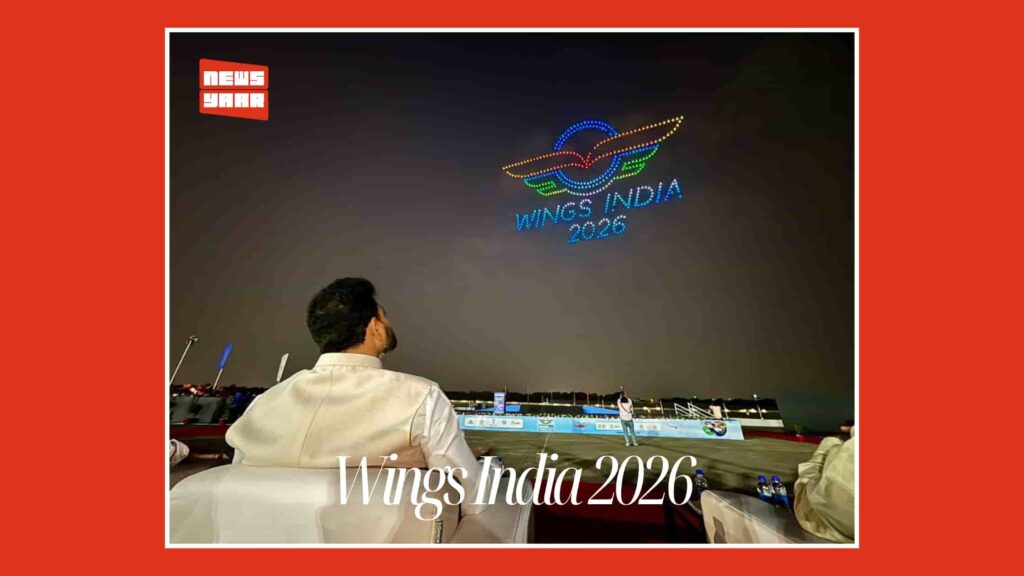
Gujarat wins top aviation award as Air India Express showcases India’s rich heritage through music and art Hyderabad: The Wings India 2026 aviation expo, held at Begumpet Airport from January 28-31, has emerged as more than just an industry gathering—it’s a celebration of how aviation connects cultures, builds communities, and drives economic progress across the nation. The four-day event brought together thousands of aviation professionals, exhibitors, and enthusiasts from around the world, highlighting India’s position as one of the fastest-growing aviation markets globally. From cutting-edge technology exhibits to cultural performances on the tarmac, the expo demonstrated that modern aviation is about more than just moving people—it’s about creating meaningful connections. Gujarat Soars High with Prestigious Recognition Gujarat received the coveted ‘Best State for Promotion of Aviation Ecosystem’ award, presented by Union Minister for Civil Aviation Shri K. Ram Mohan Naidu. The state shared this honor with Telangana and Uttarakhand, recognizing their exceptional contributions to India’s aviation sector. KL Bachani, Gujarat’s Civil Aviation Commissioner, attributed the achievement to Chief Minister Bhupendra Patel’s visionary leadership and the state’s focus on world-class infrastructure. “This honor reflects Gujarat’s commitment to making air travel more accessible for citizens while driving economic growth,” Bachani said. The award acknowledges Gujarat’s impressive progress in aviation infrastructure, including maintenance, repair, and overhaul (MRO) facilities and the aircraft leasing sector. This marks Gujarat’s third consecutive recognition at Wings India, having previously won awards in 2022 and 2024, demonstrating sustained excellence in aviation development. When Aviation Meets Art: Air India Express’s Cultural Showcase One of the most memorable moments at Wings India 2026 was Air India Express’s spectacular cultural performance featuring legendary singer Usha Uthup. The unique event took place on the airport tarmac beside the airline’s stunning first line-fit Boeing 737-8 aircraft, VT-RNT, adorned with livery inspired by traditional Parsi Gara embroidery. Uthup performed alongside talented artists from eleven Indian states: Andhra Pradesh, Assam, Delhi, Gujarat, Jammu & Kashmir, Karnataka, Kerala, Maharashtra, Odisha, Punjab, and Tamil Nadu. The performance created a vibrant tapestry of India’s diverse cultural heritage against the backdrop of modern aviation. “Music is a language that connects people across cultures and geographies,” Uthup said. “Performing at Wings India as the country’s cultural ambassador makes this truly special.” Aviation with Heart: Connecting People, Not Just Places Siddhartha Butalia, Chief Marketing Officer of Air India Express, emphasized the deeper purpose behind aviation. “In an increasingly digitally connected world, the true value of travel lies in real, immersive experiences and meaningful human connections,” he explained. The airline also received the prestigious ‘Domestic Connectivity’ award from the Ministry of Civil Aviation, recognizing its efforts to expand air travel access across India. This follows their ‘Sustainability Champions’ recognition at Wings India 2024. Air India Express’s ‘Tales of India’ initiative showcases India’s artistic heritage through aircraft liveries featuring indigenous designs like Kalamkari, Bandhani, Jamawar, Warli, and Phulkari. Their ‘Gourmair’ in-flight dining extends this cultural celebration to regional cuisines, featuring special menus for festivals like Onam, Navratri, and Diwali. The new Boeing 737-8 aircraft features ergonomically designed seats, fast-charging power outlets, on-board ovens for hot meals, spacious overhead bins, and Boeing’s Sky Interior with soothing mood lighting, proving that comfort and culture can fly together. Building Tomorrow’s Skies Today Wings India 2026 demonstrated that India’s aviation sector is not just about economic growth; it’s about inclusivity, sustainability, and preserving cultural identity while embracing innovation. As states like Gujarat lead infrastructure development and airlines like Air India Express celebrate regional diversity, Indian aviation is truly paving the future from design to deployment. The event reinforced that when aviation connects people meaningfully, everyone wins, from passengers experiencing rich cultural journeys to states driving economic development through better connectivity.
India Secures Record Investments at Davos 2026
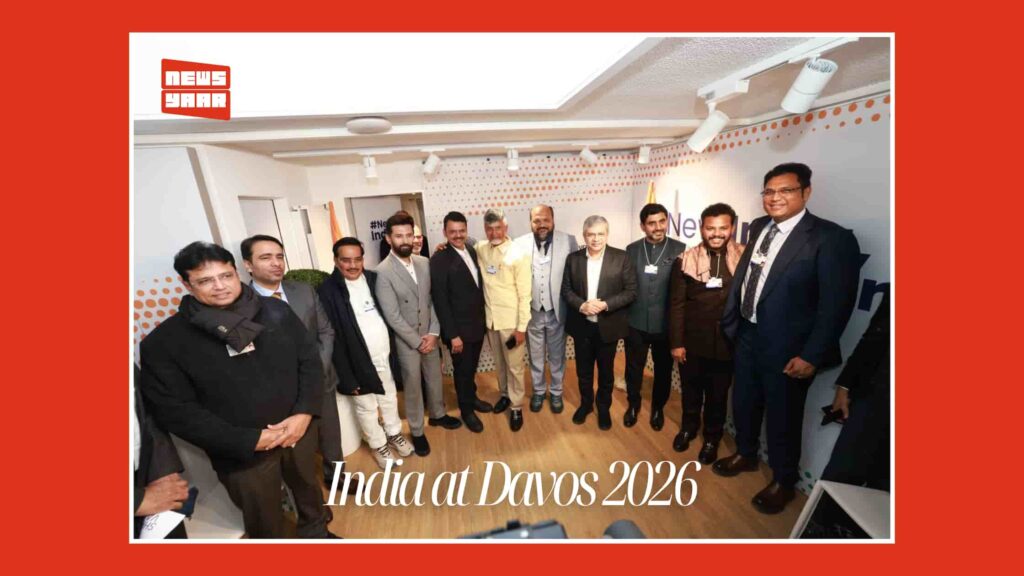
Nine States Present Unified Investment Vision at World Economic ForumIndia emerged as the preferred investment destination at the World Economic Forum 2026 held in Davos, Switzerland, with nine participating states securing commitments worth lakhs of crores across artificial intelligence, clean energy, manufacturing, and digital infrastructure. The states presented themselves as a single, integrated investment market, showcasing opportunities that position India firmly as a future-ready economic powerhouse. Gujarat, Maharashtra, Telangana, Karnataka, Uttar Pradesh, Andhra Pradesh, Kerala, Assam, and Jharkhand participated in the summit, with Assam and Jharkhand making their inaugural appearances. All states are integrated with the National Single Window System, a centralised digital platform designed to streamline investment approvals and clearances for global investors. India’s Strategic Objectives at Davos 2026 India’s presence at Davos 2026 represented a coordinated national strategy with several key objectives: Positioning India as a Unified Investment Destination: Rather than competing against each other, states presented complementary strengths, demonstrating policy alignment and infrastructure readiness across the country. Showcasing Digital Infrastructure Readiness: With the National Single Window System integration, India demonstrated its commitment to ease of doing business and rapid investment approvals. Accelerating Clean Energy Transition: States highlighted renewable energy commitments aligned with India’s net-zero targets, attracting global climate-focused investors. Building AI and Technology Leadership: Multiple states positioned themselves as AI-ready economies, competing for next-generation technology investments. Creating Employment at Scale: Investment commitments focused on job creation, with Maharashtra alone projecting over 40 lakh jobs from secured MoUs. Maharashtra Leads with ₹30 Lakh Crore Investment Pipeline Maharashtra Chief Minister Devendra Fadnavis announced MoUs worth ₹30 lakh crore, with 83 per cent involving foreign direct investment and 16 per cent in partnerships with foreign technologies. Companies from 18 countries are committed to investing in the state, potentially creating over 40 lakh jobs. Major investors include Lodha Developers, OpenAI, Iron Mountain, Princeton Data Group, Volkswagen, and Coca-Cola, with a primary focus on developing data centres. Lodha Developers pledged ₹1 lakh crore to develop a 2.5 GW Green Data Centre Park in the Mumbai Metropolitan Region, set to become one of India’s largest digital infrastructure hubs. Plans also include an AI innovation city near Navi Mumbai, a Global Capability Centre in Bandra Kurla Complex, and a ₹20,000 crore steel plant expansion in Gadchiroli. Technology and Clean Energy Drive State Commitments Telangana secured investments worth ₹30,000 crore, positioning itself as an AI-first economy. L’Oréal will establish an AI-powered Global Beauty Tech Hub in Hyderabad, while UPC Volt plans a 100 MW AI-ready data centre in Bharat Future City. The Rashmi Group committed ₹12,500 crore for a steel plant, and Schneider Electric India announced manufacturing capacity expansion. Uttar Pradesh signed MoUs exceeding ₹9,750 crore, coordinated by Invest UP. Key projects include SAEL Industries’ ₹8,000 crore waste-to-energy initiative, Sift Technologies’ ₹1,600 crore AI-ready data centres, and a ₹150 crore AI city in Noida focused on defence manufacturing. Assam has secured investment commitments worth Rs 1 lakh crore already, and it is only a base for the state in the global arena, Chief Minister Himanta Biswa Sarma said on Wednesday. Karnataka attracted interest from Nokia for Global Capability Centres and research facilities beyond Bengaluru, with discussions involving Cloudflare and aerospace companies Vast Space and Voyager Technologies. The RPSG Group invested in renewable energy projects in Vijapura and Ballari districts, supporting wind power manufacturing expansion. Kerala secured $14 billion (₹1.18 lakh crore) in commitments across renewable energy, skill development, tourism, medical services, and infrastructure. Andhra Pradesh partnered with RMZ Corporation for large-scale mixed-use, digital, industrial, and logistics infrastructure development. Jharkhand received Tata Steel’s ₹11,000 crore investment commitment for low-carbon steelmaking technologies and held discussions with Hitachi India on power and grid infrastructure. National Clean Energy Push India is rapidly expanding its clean electricity pipeline through large-scale solar and wind farms while upgrading grid infrastructure. The focus includes battery storage and hybrid storage options to meet 24×7 renewable power needs, increasing energy reliability across regions. Davos 2026 showcased India’s growing stature as a global investment destination. From state-led projects to nationwide green energy initiatives, the announcements reflect strong investor confidence in India’s policy stability, scale, and future-ready growth story, promising long-term economic growth, job creation, and deeper global integration. Why Davos 2026 Matters for India? Davos 2026 showcased India’s growing stature as a global investment destination. From state-led projects to nationwide green energy initiatives, the announcements reflect strong investor confidence in India’s policy stability, scale, and future-ready growth story, promising long-term economic growth, job creation, and deeper global integration. The success of India’s Davos 2026 participation will ultimately be measured not just in MoU values, but in actual project implementation, job creation, technology transfer, and contribution to India’s vision of becoming a developed nation by 2047. The unified approach by participating states, supported by central government infrastructure and policy frameworks, creates a strong foundation for translating commitments into tangible economic outcomes.
Union Budget 2026–27: Government Raises Capex, Boosts Defence, Maintains Fiscal Consolidation Path

The Union Budget for 2026–27, presented by Finance Minister Nirmala Sitharaman in Parliament on Saturday, has laid out a comprehensive fiscal roadmap aimed at sustaining economic growth, strengthening infrastructure, enhancing national security and maintaining fiscal discipline amid global uncertainty. The Budget pegs the total expenditure of the Union government at ₹53.5 lakh crore for FY27, marking a sharp increase from the revised estimate of about ₹49.6 lakh crore in FY26. The increase reflects the government’s continued emphasis on public investment, defence preparedness and social sector spending. According to Budget documents, total receipts excluding borrowings are estimated at ₹36.5 lakh crore, while gross tax revenue is projected at ₹44.04 lakh crore, up from ₹42.7 lakh crore in the current financial year. Net tax receipts to the Centre are estimated at ₹28.7 lakh crore after devolution to states. To bridge the gap between receipts and expenditure, the Centre has proposed gross market borrowings of ₹17.2 lakh crore, with net market borrowings pegged at ₹11.7 lakh crore for 2026–27. Fiscal Deficit and Debt Position The government has projected the fiscal deficit at 4.3 per cent of GDP for FY27, marginally lower than the previous year, signalling a continued commitment to fiscal consolidation. The debt-to-GDP ratio is estimated at 55.6 per cent, compared with around 56.1 per cent in FY26, indicating a gradual reduction in sovereign debt levels. Finance Minister Sitharaman said the government remains focused on balancing growth imperatives with macroeconomic stability, even as it scales up spending on infrastructure and security. Capital Expenditure at Record High Capital expenditure has once again emerged as a central pillar of the Budget. The government has allocated ₹12.2 lakh crore towards capital expenditure in FY27, compared to ₹11.2 lakh crore in FY26. At 4.4 per cent of GDP, capex remains at its highest level in over a decade. The enhanced allocation will support investments in roads, railways, ports, urban infrastructure, logistics and digital connectivity, with the aim of crowding in private investment and improving long-term productivity. The Ministry of Road Transport and Highways has been allocated around ₹3.09 lakh crore, while Indian Railways has received ₹2.81 lakh crore, continuing the focus on network expansion, modernisation and safety. Defence Allocation Sees Major Jump Defence spending witnessed one of the most significant increases in the Union Budget. The total defence allocation for FY27 has been pegged at ₹7.84 lakh crore, up from ₹6.81 lakh crore in FY26. Of this, capital outlay stands at ₹2.19 lakh crore, reflecting a strong push towards military modernisation and indigenous defence manufacturing. Revenue expenditure, including pensions and operational costs, has been placed at ₹5.54 lakh crore. Within the capital budget, allocations include ₹63,733 crore for aircraft and aero engines, ₹25,023 crore for naval platforms, and enhanced funding for missiles, armoured vehicles and advanced defence technologies. Taxation: Stability and Simplification The Budget has maintained status quo on personal income tax slabs, providing stability to taxpayers. The government reiterated its commitment to simplifying tax administration and reducing litigation. The Finance Minister confirmed that the new Income Tax Act, 2025, which aims to replace the Income Tax Act of 1961, will come into effect from April 1, 2026, introducing clearer language and streamlined procedures. On the indirect tax front, customs duties were rationalised to support domestic manufacturing by reducing duties on selected capital goods and raw materials, while levies on certain imported luxury items were increased. Ministry-wise Allocations Among all ministries, the Ministry of Finance received the largest allocation at approximately ₹19.72 lakh crore, primarily towards interest payments, subsidies and transfers. The Ministry of Home Affairs has been allocated around ₹2.55 lakh crore, while the Ministry of Consumer Affairs, Food and Public Distribution received ₹2.39 lakh crore, reflecting continued support for food security and subsidies. The Ministry of Education has been allocated about ₹1.39 lakh crore, with increased funding for school education, higher education and skill development. The Ministry of Health and Family Welfare has received approximately ₹1.06 lakh crore, aimed at strengthening public healthcare infrastructure and services. Agriculture and Rural Economy Agriculture and rural development remain key focus areas. The Budget continues support for minimum support price (MSP) operations, irrigation projects and agri-infrastructure development. Allocations for rural employment schemes and farmer welfare programmes have been maintained to support rural incomes and consumption. MSMEs, Employment and Industry To support job creation and small businesses, the government expanded credit guarantee schemes for micro, small and medium enterprises (MSMEs) and announced measures to ease access to institutional finance. Skill development programmes received higher allocations to align workforce capabilities with emerging industry needs. The manufacturing and export sectors are expected to benefit from infrastructure investments, stable tax policies and continued incentives under production-linked incentive (PLI) schemes. Green Growth and Energy Transition The Budget reaffirmed India’s commitment to sustainable development, with increased allocations for renewable energy, green hydrogen, electric mobility and climate-resilient infrastructure. Incentives for electric vehicles and clean energy projects were extended to support the transition to a low-carbon economy. Market Borrowing and Revenue Outlook The government expects improved tax buoyancy, supported by steady economic growth and compliance measures. Gross tax revenue growth is projected to support higher spending without significantly widening the deficit. Bond markets are expected to closely track the government’s borrowing programme and fiscal trajectory in the coming months. Overall Assessment The Union Budget 2026–27 presents a calibrated approach focused on infrastructure-led growth, defence preparedness, fiscal prudence and inclusive development. By sustaining high public investment while gradually lowering the fiscal deficit, the government aims to support economic momentum amid global headwinds. While the immediate impact will be seen in infrastructure activity and defence manufacturing, the broader effects of the Budget are expected to unfold through higher private investment, job creation and improved economic resilience in the years ahead.
Flamingo Aerospace, Russia’s UAC Partner to Manufacture Il-114-300 Regional Aircraft in India

In a significant development for India’s civil aviation and aerospace manufacturing ecosystem, Hyderabad-based Flamingo Aerospace has entered into a strategic partnership with Russia’s United Aircraft Corporation (UAC) to bring the Ilyushin Il-114-300 regional turboprop aircraft to India. The collaboration marks a major step toward strengthening India’s regional air connectivity while expanding indigenous aerospace manufacturing capabilities under the government’s Make in India and Atmanirbhar Bharat initiatives. The agreement was announced on the sidelines of Wings India 2026, the country’s premier civil aviation exhibition, held in Hyderabad, where senior representatives from Flamingo Aerospace and UAC formalised a framework cooperation and supply agreement. As per the initial arrangement, six Il-114-300 aircraft will be supplied, with deliveries expected to begin from 2028, followed by phased localisation and manufacturing activities in India. About the Il-114-300 Aircraft The Il-114-300 is a next-generation regional turboprop aircraft developed by Russia’s Ilyushin Aviation Complex under UAC. It is designed to carry up to 68 passengers and is optimised for short-haul and regional routes, particularly in areas with limited airport infrastructure. The aircraft is powered by TV7-117ST-01 turboprop engines, developed by the United Engine Corporation (UEC), and is capable of operating in extreme climatic conditions, ranging from sub-zero Arctic temperatures to hot and humid tropical environments. With its ability to take off and land on short and semi-prepared runways, the Il-114-300 is positioned as a strong contender for regional connectivity markets dominated by aircraft such as the ATR-72 and Dash-8. Industry experts note that the aircraft’s fuel efficiency, rugged design and lower operating costs make it particularly suitable for India’s tier-II and tier-III city routes, as well as remote and underserved regions. Details of the Flamingo–UAC Partnership Under the agreement, Flamingo Aerospace will initially procure six Il-114-300 aircraft from UAC. Beyond supply, the partnership outlines a long-term roadmap that includes: Assembly and localisation of aircraft components in India Establishment of Maintenance, Repair and Overhaul (MRO) facilities Development of a local supplier ecosystem for parts and systems Training of Indian engineers, technicians and pilots Potential expansion into full-scale manufacturing depending on market demand The phased approach is aimed at gradually transferring technology and industrial capability, positioning India as a regional hub for turboprop aircraft manufacturing and support services. Flamingo Aerospace: India’s Emerging Aviation Player Founded in 2022, Flamingo Aerospace is a private Indian aerospace and aviation company headquartered in Hyderabad, a growing centre for aerospace and defence manufacturing. The company focuses on regional aircraft programmes, aviation engineering services, MRO development and sustainable aviation solutions. Flamingo’s leadership has repeatedly emphasised the need for India to develop home-grown regional aircraft capabilities to support domestic aviation growth. With India now the third-largest domestic aviation market in the world, demand for efficient short-haul aircraft is expected to rise sharply over the next decade. The Il-114-300 programme aligns with Flamingo’s vision of creating an end-to-end aviation ecosystem, starting with aircraft acquisition and moving toward local manufacturing and lifecycle support. Strategic Importance for India’s Aviation Sector The Flamingo-UAC collaboration comes at a time when India is aggressively expanding regional air connectivity through schemes such as UDAN (Ude Desh ka Aam Naagrik). While India has witnessed rapid growth in metro-to-metro air travel, connectivity to smaller cities and remote regions remains limited. Regional turboprop aircraft like the Il-114-300 are seen as critical to bridging this gap, offering: Lower operating costs for airlines Ability to operate from smaller airports Improved connectivity to remote and hilly regions Support for tourism, trade and economic development Aviation analysts believe the introduction of an additional aircraft platform could also reduce dependence on a limited set of foreign suppliers, increase competition and provide airlines with more fleet options. Part of Broader Indo-Russian Civil Aviation Cooperation The Il-114-300 agreement complements a broader trend of expanding Indo-Russian cooperation in civil aviation. Earlier, Hindustan Aeronautics Limited (HAL) signed an agreement with UAC to manufacture the Sukhoi Superjet 100 (SJ-100) in India, signalling a diversification of aviation ties beyond defence aircraft. For Russia, partnerships with Indian firms offer access to one of the world’s fastest-growing aviation markets at a time when Western sanctions have constrained its traditional export channels. For India, these collaborations present opportunities to build industrial capability, acquire technology and create skilled jobs. Economic and Industrial Impact If fully realised, the Il-114-300 programme could generate significant economic benefits, including: Creation of high-skilled aerospace jobs Boost to India’s aerospace manufacturing supply chain Development of regional MRO hubs serving South Asia Strengthening of India’s position in the global aviation value chain Officials involved in the programme have indicated that future phases could include higher localisation levels, depending on airline interest and regulatory clearances. Looking Ahead While the agreement is currently at a framework stage, industry observers view it as a strategic entry point into regional aircraft manufacturing in India. The success of the programme will depend on certification timelines, airline orders, regulatory approvals and the pace of localisation. Nevertheless, the Flamingo Aerospace–UAC partnership represents a notable shift in India’s civil aviation landscape, reflecting growing confidence in domestic aerospace capability and a clear focus on regional connectivity as the next frontier of aviation growth. As India prepares for a sustained expansion in air travel, initiatives such as the Il-114-300 programme could play a crucial role in shaping a more inclusive, resilient and self-reliant aviation ecosystem.
HAL, Russia’s UAC to Manufacture SJ 100 Regional Jet in India: A Major Leap for Civil Aviation

Hindustan Aeronautics Limited (HAL) has entered into a strategic aviation partnership with Russia’s United Aircraft Corporation (UAC) to manufacture the SJ 100 regional jet in India, marking a significant expansion of HAL’s footprint into the civil aviation sector. The move was announced on the sidelines of the Wings India 2026 aviation exhibition held at Begumpet Airport in Hyderabad, where the collaboration was formally unveiled amid industry attention. The pact — which builds on a Memorandum of Understanding (MoU) signed on October 28, 2025, in Moscow — provides HAL with a licence to produce the twin-engine SJ 100 commercial aircraft in India for domestic customers, including local assembly, component manufacturing and maintenance support, alongside technical and consulting assistance from UAC. What Is the SJ 100 and Why It Matters The Yakovlev SJ 100 (often referred to as Sukhoi Superjet 100) is a twin-engine, narrow-body regional passenger jet designed to seat between 87 and 108 passengers, with a range of around 3,000 km, tailored for short- to mid-distance routes. The aircraft is already in service with airlines in Russia and abroad, with over 200 units produced and operated by multiple carriers. The SJ 100 is capable of operating from smaller airports and shorter runways, making it particularly suitable for India’s expanding regional network under initiatives such as the UDAN (Ude Desh ka Aam Naagrik) scheme, which aims to improve connectivity to underserved and tier-2/tier-3 cities. Strategic Shift for HAL HAL — traditionally focused on military aerospace manufacturing (including fighters, trainers and helicopters) — is now actively diversifying into civil aviation manufacturing. Civil platforms currently contribute only about 4–5 per cent of HAL’s revenue. The SJ 100 partnership is a cornerstone of HAL’s strategy to increase this share to about 25 per cent over the next decade, according to HAL Chairman and Managing Director D.K. Sunil. Sunil explained at Wings India 2026 that HAL plans a phased approach to aircraft introduction. Initially, HAL aims to lease about 10–20 fully assembled SJ 100 aircraft from Russia to Indian operators to familiarise them with the aircraft and validate performance and support infrastructure under Indian operating conditions. Timeline and ‘Make in India’ Ambition The partnership foresees several key stages: Short term (next 18 months): Leasing of fully built SJ 100 jets to Indian operators. Medium term (around three years): Commencement of semi-knocked-down (SKD) assembly in India, utilising HAL’s existing facilities at locations such as Nashik and Kanpur. Long term (by late decade): Full domestic manufacture capability with enhanced localisation and “Make in India” content, aligning with national goals of reduced import dependence and broader industrial development. This would mark the first time since the production of the AVRO HS-748 ended in 1988 that a complete passenger aircraft will be manufactured in India, making it a milestone for the country’s civil aviation manufacturing base. Broader Industry and Policy Context The HAL-UAC collaboration highlights deeper Indo-Russian aerospace cooperation, historically rooted in military aircraft production, now extending to civil aircraft. It also dovetails with government measures designed to attract and scale aircraft manufacturing in India. The Union Budget 2026 removed basic customs duty on aircraft components, significantly lowering the cost of establishing manufacturing lines for regional aircraft such as the SJ 100, potentially boosting both HAL’s and other manufacturers’ plans in the civil aviation domain. Industry observers note that HAL’s entry into regional jet production addresses a long-recognized gap in India’s aviation ecosystem: the absence of indigenous passenger aircraft manufacturing. India is among the world’s fastest-growing domestic aviation markets, with demand for short- to medium-haul aircraft projected to remain strong over the next decade. Local assembly and production of the SJ 100 could help airlines bridge capacity needs more cost-effectively while supporting domestic aerospace supply chains. Technology, Certification and Future Prospects Under the agreement, HAL will assist UAC in gaining type certification for the SJ 100 in India, a critical step before domestically produced jets can enter commercial service. In exchange, HAL obtains manufacturing rights and support for establishing production infrastructure, quality control systems, and maintenance ecosystems. Experts see this collaboration as a key step toward building India’s aircraft manufacturing competencies. While HAL’s primary strength has been in defence platforms, working with UAC on a complex regional jet programme is expected to transfer valuable design, production, certification and lifecycle support expertise. Officials and industry executives involved in the pact have described the arrangement as mutually beneficial: it enhances HAL’s capabilities and helps Russia sustain civilian aircraft exports in the face of geopolitical and sanction-related challenges, while opening a new avenue for aerospace collaboration between the two countries. What This Means for Passengers and Airlines If the phased plan succeeds, airlines operating within India could have access to the SJ 100 as an alternative to turboprops and larger narrow-body jets for regional routes. The regional jet segment (90–100 seats) is seen as crucial for balancing operational economics with demand on short-haul sectors, particularly under government connectivity programmes. Leasing a small fleet in the initial phase also allows airlines and HAL to build operational familiarity with the SJ 100 without requiring immediate large capital commitments, potentially encouraging broader adoption in India’s growing domestic market. Conclusion HAL’s partnership with Russia’s United Aircraft Corporation to manufacture the SJ 100 regional jet in India represents a significant step in diversifying India’s aviation industry and strengthening its manufacturing base. By combining Russian aerospace experience with HAL’s production capabilities and India’s burgeoning aviation market, the collaboration aims to deliver regional aircraft solutions tailored to national connectivity needs while advancing the government’s Make in India and civil aerospace ambitions.