


Skye Air Launches Drone and Robot Deliveries in Gurugram: A New Era for Fast Local Shipping
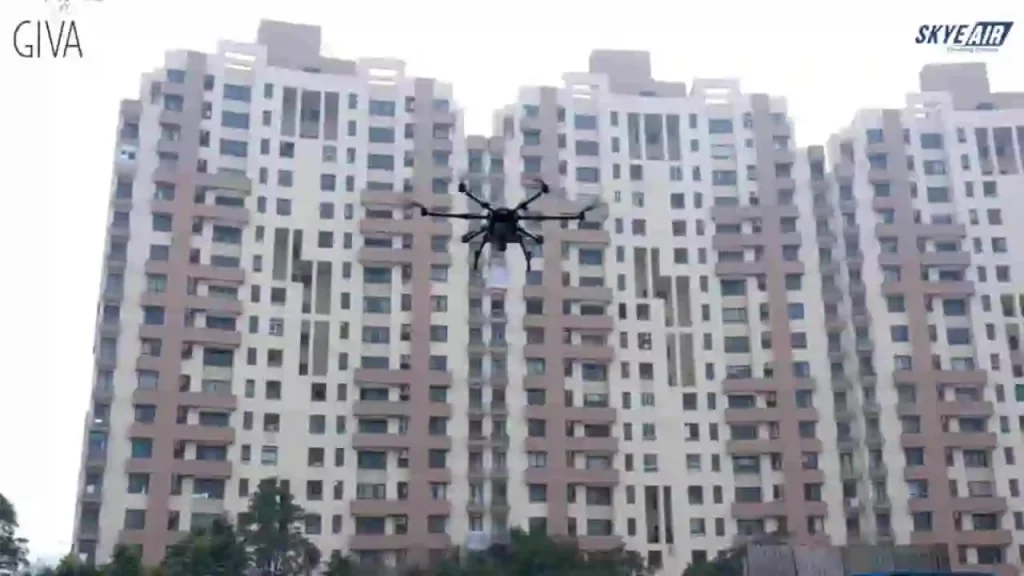
Skye Air Mobility, a drone delivery company based in Gurugram, has started a new service. They now deliver packages right to people’s doorsteps using drones and smart robots powered by artificial intelligence. This big step forward in fast local deliveries was announced at the AI Impact Summit. The summit happened recently in New Delhi. Ankit Kumar is the Founder and CEO of Skye Air. He shared details about this exciting change. The company has already done a lot with drones. Now they add robots to make deliveries even smoother and greener.How the New Delivery System Works Step by StepThe system starts with Skye Air’s special hubs called Skye Ports. These are like local delivery stations for hyperlocal areas. Drones pick up packages from these ports and fly them to the right spot. They land at smart mailboxes called Arrive Points. These mailboxes go in housing societies, apartment complexes, or office buildings. Everything happens automatically with no people needed in between.Once the drone drops the package in the Arrive Point, a robot takes over. The robot is an autonomous rover made by a US company called Autonomy. It picks up the package and drives it straight to the customer’s door. The customer just enters a simple OTP code on the rover. The door opens, and they get their shipment safely. This whole process cuts out traffic jams, saves time, and keeps things secure. No human hands touch the package after the drone drops it off. It works perfectly in busy cities like Gurugram where streets get crowded fast.Impressive Past Success and Green ImpactSkye Air has a strong track record already. Over the last two and a half years, they completed nearly 3.6 million drone deliveries. This huge number shows their experience in the field. Best of all, these flights saved over 1,000 tons of carbon emissions. That means less pollution compared to cars or bikes making the same trips. Ankit Kumar explained this at the summit. He said they connected their drone ports with physical AI setups for the first time. This mix of air and ground tech makes deliveries faster and better for the planet.The company tested drones in hilly areas and cities before. Now they bring it all together in Gurugram. This home base will test the full system before going bigger.Key Partnerships with US Tech CompaniesSkye Air teamed up with three American companies to make this possible. First is Arrive AI. This firm trades on the NASDAQ stock market. They make the Arrive Point smart mailboxes. Skye Air installs these in buildings. Drones drop packages there safely.The second partner helps with last-mile tech. The third is Autonomy. They built the smart rovers that roll from the mailbox to your door. Ankit Kumar announced these deals at the AI Impact Summit. These partnerships bring top global tech to India. They create a full automatic chain from drone to doorstep.Plans to Grow Big Across India and the WorldGurugram is just the starting point. Ankit Kumar sees it as the perfect launchpad. The city has tall buildings, traffic, and tech-savvy people. It tests the system in real urban challenges. Soon, they plan to cover every part of Gurugram. After that, expansion hits other Indian cities.India leads the way here. Ankit noted Prime Minister Narendra Modi’s words on AI growth. India laid the foundation first in the world for this kind of delivery. They want to perfect it locally before going national. The final goal is global reach. This could change how packages arrive everywhere from Delhi to Dubai.Prime Minister Modi praised the AI Impact Summit on social media. He said the world admires India’s tech skills. The event ended with the New Delhi Declaration on AI Impact. Eighty-eight countries and groups signed it. It focuses on using AI for jobs and better lives.Why This Matters for Gurugram and IndiaGurugram buzzes with offices, homes, and shops. Fast deliveries matter a lot here. Drones skip roads and fly straight. Robots handle the last few steps without getting stuck. Customers get parcels quicker and safer. Businesses save money on fuel and drivers. The environment wins too with less carbon.This fits India’s big push into drones and AI. Rules now allow more drone use. Companies like Skye Air lead innovation. They turn ideas into real services. Local jobs grow in tech and operations. Soon, anyone in Gurugram can order food, medicine, or goods and see a drone overhead.Skye Air proves India innovates at world speed. From 3.6 million deliveries to robot doorsteps, they set the pace. Watch for drones in your sky soon. The future of shopping arrives one package at a time.
Nothing’s First Store in Bengaluru: A Fun, Hands-On Tech Adventure Awaits

On a sunny Saturday, February 14, 2026, something exciting happened in Bengaluru. Nothing, the trendy London-based tech company known for its see-through smartphones and cool designs, opened its very first flagship store in India. The location? Right in the heart of Indiranagar’s bustling 100 Feet Road, a spot perfect for tech lovers and shoppers. Nothing’s CEO, Carl Pei (who also co-founded OnePlus), and co-founder and India President, Akis Evangelidis, personally cut the ribbon. They greeted hundreds of fans who lined up to be among the first inside. This store marks Nothing’s big leap into physical retail in India, its largest and fastest-growing market. The store stays open every day from 11 AM to 9 PM, welcoming everyone to explore.Why Bengaluru? India’s Tech Heart Loves Nothing’s StyleAccording to market research from IDC, Nothing holds over 2% of India’s smartphone market. In Q2 2025 alone, their sales jumped 85% compared to the previous year, making them the fastest-growing brand in the country. Counterpoint Research notes steady growth over many quarters. “India is our strongest market,” Pei has said. “A huge part of our users live here.” Evangelidis added, “Opening this store is a major milestone. We didn’t build a regular shop. We created an immersive space to build trust, spark curiosity, and host community events.” This is Nothing’s second store worldwide after their London flagship. Tokyo and New York are next, but India gets the honor of being first in Asia.Nothing, founded in 2020 and backed by investors like Tiger Global, raised $450 million total, including a $200 million Series C round in 2025 that valued the company at $1.3 billion. Their budget sub-brand, CMF (spun off last year and headquartered in India with a joint venture partner Optiemus), targets everyday buyers, while Nothing focuses on premium, niche gadgets.Walk Inside: It’s Like Stepping Into a Factory PlaygroundPicture this: You enter a massive 5,032-square-foot, two-story wonderland that feels like a 1970s industrial workshop mixed with a futuristic lab. No boring glass shelves here. Instead, raw concrete walls, shiny steel beams, aluminum frames, and clear glass show off the building’s “guts.” This matches Nothing’s famous transparency theme, remember their phones with see-through backs? On Day 1, over 2,000 people visited, sipping free coffee and chatting excitedly.Hands-on zones let you try everything:Nothing smartphones like the Phone 3a Pro, with glyph LED lights for notifications and super-clean Nothing OS software.CMF accessories – affordable earbuds, smartwatches, and more for budget fans.Custom options: Personalize cases or engravings.Merch corner: Hoodies, stickers, and limited-edition items.The vibe? Playful teamwork and community. “We wanted a fun space inspired by our factory world,” Pei explained. Over 2,000 visitors on launch day proved it worked, social media exploded with photos and stories.Nothing’s Meteoric Rise in India: From Online Buzz to Real StoresNothing started as an online-only brand, selling through Flipkart and their site. Their secret? Unique designs, no bloatware, and affordable prices (CMF under Rs 10,000, Nothing around Rs 20,000+). Indian YouTubers and reviewers raved about the glyph interface (fun lights for calls) and battery life. India became their top market quickly. Now, with rising component costs (Pei warned of price hikes), physical stores help build loyalty.They’re joining giants like Apple, which opened its sixth India store in Mumbai’s Borivali on February 26. Samsung and Xiaomi have experience centers too. Nothing stands out by focusing on “experiential retail”, not just buying, but belonging.Challenges Ahead and What’s NextCompetition is tough, prices may rise due to chip shortages. But Nothing plans more India stores (Mumbai? Delhi?). Rumors swirl of Phone 4 and CMF Watch Pro 2. Their goal: Make tech joyful, community-driven.If you’re in Bengaluru, head to Indiranagar. Test a phone, grab coffee, play a game, discover why Nothing feels different.
French President Macron’s India Visit Strengthens Tech and Defense Ties

French President Emmanuel Macron and his wife, Brigitte Macron, completed a successful three-day official visit to India from February 17 to 19, 2026. This marked President Macron’s fourth trip to India since 2017 and built on the strong friendship between the two nations. The visit highlighted shared goals in technology, defense, and innovation. It followed Prime Minister Narendra Modi’s trip to France in February 2025 and came one year after the AI Action Summit in Paris. Both leaders focused on the Horizon 2047 Roadmap, a plan set in 2023 to guide ties until India’s 100th Independence anniversary.Mumbai Welcomes Leaders with Tribute and Cultural LaunchThe visit kicked off in Mumbai, India’s bustling financial hub, on February 17. President Macron and Mrs. Macron first paid heartfelt tribute to the victims of the 2008 terrorist attacks at the iconic Taj Mahal Palace hotel. This emotional moment honored those lost in the tragic events and underscored the shared commitment to fight terrorism. Later that morning, they joined a special lunch focused on the film industry. Indian and French cultural figures, filmmakers, and Bollywood stars gathered to celebrate creative exchanges between the two countries.In the afternoon, President Macron met Prime Minister Modi for in-depth bilateral talks at the Residence of the Governor of Maharashtra in Lok Bhavan. The leaders reviewed progress in their strategic partnership and discussed ways to expand it into new areas like defense, space, and digital technology. They addressed regional and global issues, including cooperation in the Indo-Pacific region. Around 5:15 PM, they jointly inaugurated the India-France Year of Innovation 2026 at the majestic Gateway of India. This year-long initiative will feature events across both nations to boost collaboration in innovation, research, startups, and people-to-people ties. The two leaders then addressed a lively gathering of business leaders, innovators, researchers, and entrepreneurs from India and France.On February 18, President Macron engaged with Indian investors during a dynamic round-table discussion. He shared insights on economic opportunities and partnership potential. He also gave an exclusive interview to popular Indian podcaster Raj Shamani, reaching young audiences with talks on leadership and global challenges. That evening, he flew to New Delhi for the next phase of the visit. Business France and Mission French Tech brought over 100 French companies to explore collaborations, signaling strong economic momentum.New Delhi Hosts AI Impact Summit and Strategic DialoguesThe visit shifted to New Delhi on February 19, where President Macron participated in the AI Impact Summit. Hosted by India, this was the first major global AI summit in the Global South. It revolved around three guiding principles: People, Planet, and Progress, structured across seven key focus areas or “chakras.” The summit showcased cutting-edge discussions on artificial intelligence’s role in solving global problems. President Macron’s presence highlighted France and India’s leadership in AI governance and ethical tech development.During the Delhi leg, the leaders continued their bilateral engagements. They exchanged views on pressing issues like climate action, sustainable development, and security. The talks elevated the India-France relationship to a “Special Global Strategic Partnership.” This upgrade expands cooperation in defense, civil nuclear energy, space, AI, and multilateral affairs. Bilateral trade had already reached €12.67 billion, boosted by the recent India-EU Free Trade Agreement and rising investments.Raj Shammi Podcast with the President Raj Shamani’s Historic Podcast with French President Emmanuel Macron (FO473) stands out as a groundbreaking episode of his popular “Figuring Out” series. Recorded on February 18, 2026, in Mumbai during President Macron’s official visit to India, this marked the French leader’s first-ever podcast appearance worldwide. At just 28 years old, Raj Shamani, host of one of India’s top-ranked global podcasts, bypassed traditional media to secure this exclusive, reaching millions of young viewers directly through digital platforms. The 40-minute conversation went viral instantly, blending diplomacy, tech vision, and personal insights.Horizon 2047 Roadmap Drives Ambitious Future PlansThe Horizon 2047 Roadmap forms the backbone of this partnership. Launched on July 14, 2023, by President Macron and Prime Minister Modi, it sets bold targets for the next two decades. The plan focuses on three pillars. First, Partnership for Security and Sovereignty covers defense, space, civil nuclear energy, digital tech, emerging technologies, the Indo-Pacific, and counter-terrorism. Second, Partnership for the Planet addresses environment, climate, health, energy transitions, and sustainable development. Third, Partnership for the People promotes student and professional mobility, as well as cultural exchanges.In defense, exciting developments include India’s clearance for 114 Rafale fighter jets from France’s Dassault Aviation, potentially worth €30 billion, the “contract of the century.” Most jets will be manufactured in India, reducing reliance on imports and boosting local production. This adds to the 62 Rafales already in service. The leaders also inaugurated India’s first helicopter final assembly line via videoconference. A Tata Group-Airbus joint venture in Karnataka near Bengaluru will produce the H125 single-engine helicopter, Airbus’s bestseller. Ongoing Scorpène submarine projects and co-development of advanced military tech further deepen ties.Space cooperation shines bright too. The third India-France Strategic Space Dialogue is set for 2026. India will join the International Space Summit in France in July. New initiatives include the India-France Innovation Network, a binational center for digital sciences with France’s National Institute for Research in Digital Science and Technology, and a Joint Center for Advanced Materials.A Partnership for Global Stability and InnovationPresident Modi called the relationship a “partnership for global stability” in today’s turbulent world. President Macron praised the “remarkable acceleration” of ties amid a changing international order. They referred to each other as “dear friends” on social media, reflecting personal rapport. The visit celebrated 25 years of strategic cooperation and 100 years of diplomatic relations approaching in 2047.France sees India as a key player in demographics, economy, science, and diplomacy. The trip consolidated diplomatic, economic, and civil society links. It addressed G20 outcomes from New Delhi in 2023, security challenges, and growth in defense, space, and cyber sectors. Over 100 French firms joined to tap India’s vibrant market. Challenges like defense delays, AI regulations, trade barriers, and geopolitical differences persist, but momentum is strong.This visit reinforces India and France as forces for good. From Mumbai’s cultural
Indus Awakens: Sarvam’s Homegrown AI Chatbot Challenges ChatGPT in India’s Language Arena
India’s AI battlefield just got fiercer. Bengaluru-based startup Sarvam AI stealth-launched Indus, its multilingual chat app powered by the mighty Sarvam 105B model, on February 20, 2026, mere days after disclosing 105B and 30B LLMs at the India AI Impact Summit. Now in beta on iOS, Android, and web (indus.sarvam.ai), Indus is entering a market where ChatGPT boasts 100M+ weekly Indian users, and Claude claims a 5.8% global share (second to the US).Google CEO Sundar Pichai’s recent praise, “Sarvam’s local models have no impediments, very well positioned,” fuels the hype. As OpenAI, Anthropic, and Google dominate, Sarvam bets on sovereignty: Built entirely in India for 22+ Indic languages, voice-first, culturally attuned.From Summit Spotlight to Consumer HandsIndus interfaces Sarvam 105B (105B parameters, mixture-of-experts for complex reasoning; 128K token context) and nimble 30B (real-time chats). Disclosed amid summit buzz, partnerships with HMD (Nokia feature phones), Bosch (auto AI), the app rolled out gradually on limited compute. Beta quirks: No per-chat deletion (full account wipe only), mandatory reasoning mode (slows some responses). Phone/Google/Microsoft/Apple login; India-limited now. Early users rave on Reddit/YouTube: Seamless Hinglish switching, ethical dilemmas solved step by step, puzzles cracked in Hindi.ModelParametersStrengthsUse CaseSarvam 105B105BComplex reasoning, 128K contextDeep analysis, docs/imagesSarvam 30B30BReal-time convos, efficiencyVoice chats, daily queries Tailored for Bharat: Features That Speak LocalIndus shines where globals falter, Indic mastery. Type/speak in any of 22 scheduled languages; mid-chat switches (English→Hindi→Tamil) flow naturally. Upload images/PDFs for analysis; future AI agents automate tasks, in-app doc edit/write.Voice-first: Bulbul TTS (11 langs, 39 voices), Saaras STT (code-mixed, telephony audio). Reasoning demos crush: River crossing puzzles, math series, trolley ethics, historical what-ifs, all Hindi/English, step-by-step. YouTube tests (e.g., Nitish Verma) hail puzzle-solving, troubleshooting smarts.Beta perks: Free API trials for devs; file uploads for visual reasoning (charts/tables/handwritten Indic scripts).Sarvam’s Rebel Rise: $41M Fuel, Sovereign VisionFounded in 2023 by Raghavan/Kumar, Sarvam snagged $41M from Lightspeed, Peak XV, and Khosla, building Indic-optimized LLMs amid data scarcity. Unlike English-biased GPT-4, Sarvam trains on local data for accuracy in dialects/scripts. Summit feats: Outperformed Gemini/ChatGPT on Indic OCR (84.3% olmOCR-Bench).Enterprise wins: UIDAI (Aadhaar voice/fraud), Odisha/Tamil Nadu AI hubs, SBI Life (11-lang policy bots). Consumer Indus democratizes it.Full List of Supported LanguagesSarvam 105B supports all 22 scheduled languages of India, as defined in the Constitution’s Eighth Schedule, trained on high-quality Indic datasets for superior handling of code-mixed speech, scripts, and contexts.These form India’s official linguistic backbone, enabling seamless multilingual interactions in Indus and enterprise apps:AssameseBengaliBodoDogriGujaratiHindiKannadaKashmiriKonkaniMaithiliMalayalamManipuri (Meitei)MarathiNepaliOdiaPunjabiSanskritSantaliSindhiTamilTeluguUrduBattle for India’s AI SoulIndia’s genAI frenzy, 100M ChatGPT users, demands sovereignty. Indus fights import reliance, privacy risks. Competitors: Global giants (latency, culture gaps); locals like Krutrim, CoRover lag scale. Sarvam’s edge: Open-source leanings, partnerships (Nokia cars/glasses).Challenges: Compute scaling (waitlists), refinement (deletions/reasoning toggle). Upside: Population-scale data moat, govt IndiaAI Mission backing.Indus isn’t just code, it’s India’s digital voice. From Hinglish banter to ethical debates, Sarvam crafts AI that gets us.
The Cheesecake Factory Bakery Lands in Bengaluru: US Icon Targets 55 Outlets and ₹250 Crore Milestone
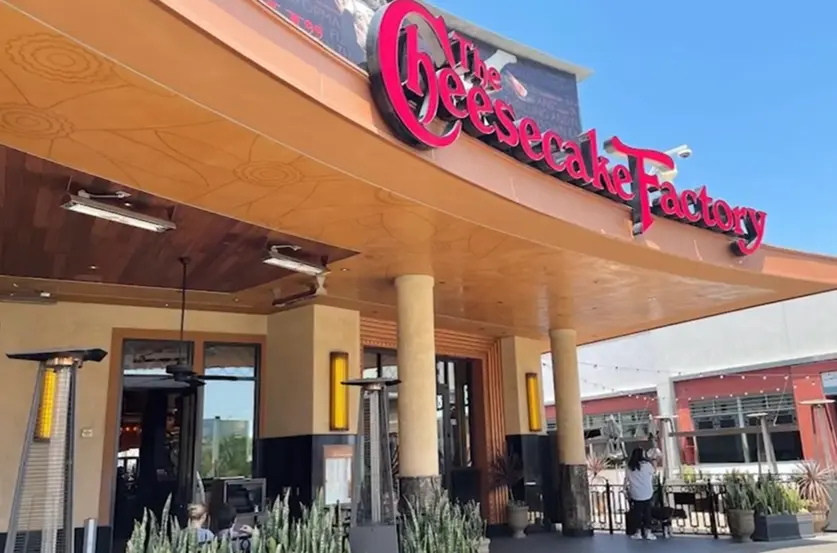
Bengaluru’s dessert lovers have a new indulgence spot. The Cheesecake Factory Bakery, the celebrated bakery arm of the iconic American restaurant chain, officially debuted in India with its first outlet in the city, partnering with local player The Gourmet Cafe. This QSR-style launch signals a smart pivot for global brands entering India’s booming premium cafe scene, blending authenticity with local tastes.Strategic Debut in India’s Desert BoomThe Cheesecake Factory, famous worldwide for its massive menu and 40+ cheesecake varieties (including Big Bang Theory fame via Penny’s waitress gig), now brings its bakery portfolio to India via a distribution deal, not a franchise. The Gourmet Cafe, founded by Masthan Adam, handles both B2B supply and B2C outlets, starting with this Bengaluru flagship.Positioned as a premium dessert specialist, outlets offer cheesecakes, bakery treats, coffee, and ice cream in differentiated portion sizes versus local rivals. Online sales target 20-30% of revenue, tapping India’s digital-savvy youth. Adam eyes metros first (Delhi, Mumbai), then tier-1s like Chandigarh, Kochi, Coimbatore, 6-10 premium stores per major market initially.Ambitious Expansion: 55 Stores, $60M BetThe roadmap: 55 outlets nationwide over 4-5 years, fueled by a $60 million investment (~₹500 crore). Projections: ₹200-250 crore revenue within five years, riding premium cafe growth (projected 15-20% CAGR amid rising disposable incomes).Authenticity reigns, cheesecakes baked in the USA, shipped frozen for consistency. India-first: An eggless cheesecake, approved specially for local palates (huge for vegetarian-heavy markets). Launch lineup: 14 flavors, expanding to 20-25 soon (classics like Original, Chocolate Mousse, plus innovations).Expansion PhaseTimelineFocus AreasStores PlannedPhase 1: LaunchNowBengaluru flagship1Phase 2: Metros1-2 yearsDelhi-NCR, Mumbai, Chennai, Hyderabad20-25Phase 3: Tier-1/23-5 yearsChandigarh, Kochi, Coimbatore, Pune, Ahmedabad30+Total Investment4-5 yearsNationwide QSR + B2B$60M (₹500 Cr)Revenue Goal5 yearsPremium desserts + coffee₹200-250 CrWhy Now? Premium Cafe Surge Meets Pop Culture PullIndia’s QSR cafe market hits ₹15,000 crore+, with premium desserts exploding—Starbucks, Cafe Coffee Day expansions prove demand. Cheesecake Factory Bakery skips full restaurants (high real estate costs) for agile QSR: Grab-and-go slices, whole cakes for events, coffee pairings.Bengaluru fits perfectly, Silicon Valley hub craves global flavors amid 10M+ millennials/Gen Z. Localization smart: Eggless option nods to 30-40% vegetarian population; smaller portions suit Indian sweet tooth without excess.What to Expect: Menu, Ambiance, PricingExpect velvet-rope vibes: Sleek QSR design with Instagrammable cheesecake displays. Core: 14 US-imported flavors (e.g., Godiva Chocolate, Dulce de Leche), bakery (brownies, cookies), ice creams, specialty coffee. Prices: Slice ₹250-400, whole cake ₹2,000-4,000—premium but value via unique tastes/sizes.Sustainability nod: Frozen shipping minimizes waste; local sourcing for coffee/non-cheesecake items.Challenges and TailwindsHurdles: High import costs, competition (Bird Box, Paul’s, local patisseries). Tailwinds: Brand recall (TV/streaming fame), rising cafe culture (urban India spends 10% F&B budget on desserts), e-com delivery tie-ups (Zomato/Swiggy).Gourmet Cafe’s edge: Proven scaling (multi-city cafes), Adam’s vision for “cheesecake specialization.” If it hits targets, could inspire more US chains (Dunkin’, Cinnabon) via bakery-first models.This Bengaluru launch isn’t just sweets, it’s a blueprint for global brands cracking India: Partner local, localize smart, scale via QSR. Cheesecake Factory Bakery eyes not slices, but a subcontinent-sized slice of the market. Sweet success awaits.
PM Modi Inaugurates Micron’s Semiconductor ATMP Facility in Sanand
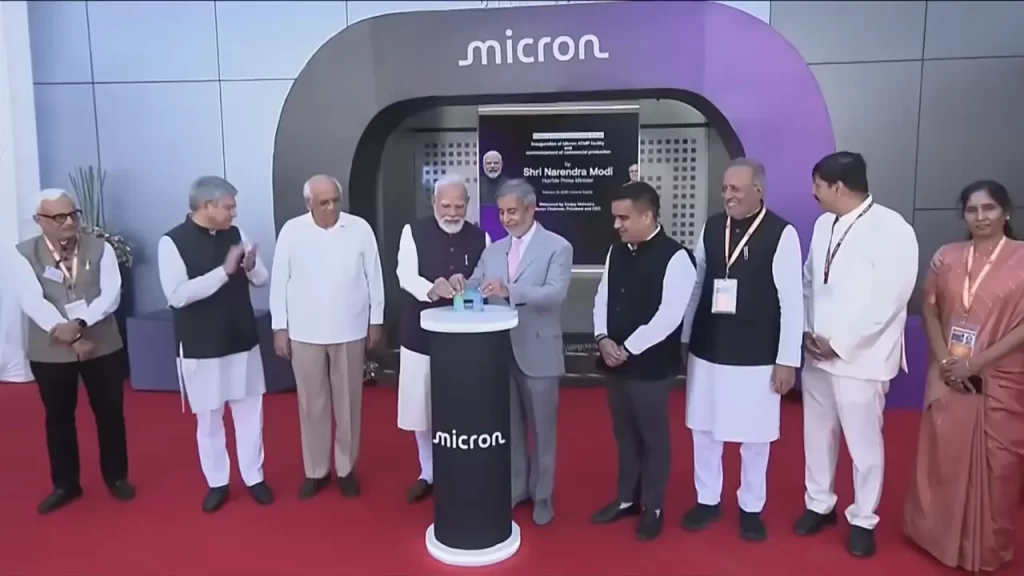
Prime Minister Narendra Modi inaugurated Micron Technology’s state-of-the-art Semiconductor Assembly, Test, and Packaging (ATMP) facility in Sanand, Gujarat, on February 28, 2026, marking India’s entry into commercial semiconductor production. This $2.75 billion milestone, the first of its kind in the country, converts advanced DRAM and NAND wafers into finished memory products for AI, data centers, and mobiles, positioning India as a key player in the global chip value chain.From MoU to Production: Lightning-Fast ExecutionThe project’s speed exemplifies India’s “New India” mindset. Signed in June 2023, groundbreaking occurred in September 2023, pilot machines installed by February 2024, and commercial production began in February 2026, just 33 months end-to-end. PM Modi highlighted streamlined regulations, like Advanced Pricing Agreements (APAs) cleared in months versus 3-5 years elsewhere, crediting clear intent and nation-first dedication.The Sanand plant boasts over 500,000 sq ft of cleanroom, one of the world’s largest single-floor ATMP cleanrooms, ISO 9001:2015 certified, LEED Gold-bound, and zero-liquid discharge via water-saving tech. First made-in-India memory modules shipped to Dell for local laptops, with tens of millions of chips expected in 2026, scaling to hundreds of millions in 2027.Micron CEO Sanjay Mehrotra, at the event with Gujarat CM Bhupendra Patel, Union Minister Ashwini Vaishnaw, and US Ambassador Sergio Gor, called it a “proud moment” building resilient AI ecosystems. Vaishnaw termed it “historic,” shifting India from chip consumer to manufacturing hub under PM Modi’s leadership.Microchips: The Oil of the 21st CenturyPM Modi framed semiconductors as the bridge from the Industrial Revolution to the AI era: “If oil regulated the last century, microchips will regulate this one.” Launched amid COVID chaos via the Semiconductor Mission, early seeds now yield fruit. India approved 10 projects under Semicon India; three more ramp up soon in Uttar Pradesh, Assam, Odisha, and Punjab, creating a pan-India ecosystem beyond factories, encompassing machines, design, R&D, logistics, and skills.Budget 2026’s India Semiconductor Mission 2.0 targets the full value chain, spurring domestic demand for materials amid booming gadget adoption. Electronics production and exports surged manifold in 11 years; “Make in India” now powers automobiles, mobiles, and tech.Sanand mirrors its auto-hub transformation, now anchoring semiconductors alongside chemicals, petrochemicals, and skill centers. Gujarat’s policies on approvals, land, and utilities boost investor faith; Dholera and Sanand emerge as Western India’s chip clusters.India-US Partnership Powers Global Supply ResilienceThe facility underscores deepening India-US ties in AI and chips, including the Pax Silica agreement from the recent AI Summit for critical minerals. The two largest democracies secure supply chains amid geopolitical flux. PM Modi messaged investors: “India is ready, reliable, delivers, capable, competitive, committed.”Micron’s Gujarat push builds talent via PDEU, Namtech, nationwide universities, and govt skills programs, focusing on STEM, advanced manufacturing, digital/AI literacy. Sustainability integrates health, safety, and eco-commitments.Broader Semiconductor Ecosystem BoomThis ATMP unit complements fabs like Tata’s in Dholera and others, addressing AI-driven memory demand. India’s electronics journey, from IT services to hardware, accelerates Viksit Bharat. Key Project MetricsDetailsKey Project MetricsDetailsInvestment$2.75B (Micron + govt)Cleanroom Size500,000+ sq ft (world’s largest single-floor ATMP)Output 2026Tens of millions of chipsOutput 2027Hundreds of millionsTimelineMoU Jun’23 → Production Feb’26States InvolvedGujarat, UP, Assam, Odisha, PunjabGlobal PartnersUS (Micron, Dell), via Pax SilicaA Tech Leadership LeapFrom software superpower to hardware contender, the nation builds self-reliant ecosystems fueling AI, mobiles, EVs. As PM Modi envisioned post-AI Summit, this hardware milestone cements technology leadership, inviting the world to co-create in a reliable, scalable hub.
ODOP – One District One Product: Transforming Local Economies into Global Opportunities
The One District One Product (ODOP) initiative has emerged as a key strategy in India’s effort to promote balanced regional development and strengthen local economies. The programme focuses on identifying and promoting a unique product from each district, with the aim of boosting manufacturing, generating employment, and enhancing exports.By linking traditional skills and local specialisations with modern market access, ODOP seeks to position India’s diverse district-level products on both national and global platforms.Concept and Origin of ODOPThe idea behind ODOP is rooted in the principle that every district has a distinct product, craft, or agricultural strength that can be developed into a competitive economic asset. The initiative was first implemented at the state level in Uttar Pradesh, where it gained considerable success in promoting local industries and artisans.Building on this model, the concept was later adopted at the national level to encourage districts across India to identify and develop their unique products. These include handicrafts, textiles, agricultural goods, processed foods, and industrial products.Objectives of the InitiativeODOP is designed to address multiple economic and developmental challenges through a focused approach. The initiative aims to promote indigenous products, support local artisans and manufacturers, and create sustainable employment opportunities at the district level.Another key objective is to reduce regional imbalances by ensuring that economic growth is not limited to major urban centres but is distributed across smaller districts. By strengthening local industries, ODOP also contributes to increasing exports and enhancing India’s global trade presence.Implementation and Institutional FrameworkThe ODOP initiative is implemented through coordination between central ministries, state governments, and district administrations. Each district identifies its flagship product based on factors such as historical significance, availability of raw materials, and existing skill sets.Once identified, support is provided in areas such as production, processing, packaging, branding, and marketing. Financial assistance, training programmes, and infrastructure development are also part of the implementation framework.The initiative is closely aligned with broader national programmes aimed at promoting self-reliance and entrepreneurship.Focus on Skill Development and Capacity BuildingA significant component of ODOP is the emphasis on skill development. Artisans and producers are trained in modern techniques, quality control, and business practices to improve productivity and competitiveness.Capacity-building programmes also focus on enhancing design, innovation, and value addition, enabling local products to meet global standards. This approach helps traditional industries adapt to changing market demands without losing their authenticity.Market Linkages and Export PromotionOne of the major challenges faced by local producers has been access to markets. ODOP addresses this by facilitating market linkages through exhibitions, e-commerce platforms, and export channels.Products identified under the initiative are promoted through various trade fairs and government-supported platforms, helping them reach a wider audience. The focus on branding and packaging has further improved the visibility and appeal of these products in international markets.Economic and Social ImpactThe ODOP initiative has contributed to strengthening local economies by creating employment opportunities and increasing income levels in districts. By promoting district-specific industries, it has encouraged entrepreneurship and reduced migration to urban areas.Socially, the initiative has helped preserve traditional crafts and cultural heritage, providing recognition and support to artisans who were previously operating in informal sectors.Integration with National Development GoalsODOP aligns with India’s broader vision of self-reliance and inclusive growth, complementing initiatives focused on manufacturing and exports. It also supports the development of micro, small, and medium enterprises (MSMEs), which play a crucial role in the country’s economy.The initiative contributes to the goal of making India a global manufacturing hub by leveraging local strengths and diversifying production bases.Challenges and the Way ForwardDespite its potential, the implementation of ODOP faces certain challenges. These include issues related to infrastructure, supply chain inefficiencies, and limited awareness among producers in some regions.Ensuring consistent quality, scaling production, and maintaining competitiveness in global markets are also areas that require continued attention. Strengthening digital platforms and improving logistics will be crucial for the initiative’s long-term success.The One District One Product initiative represents a strategic approach to decentralised economic development. By focusing on local strengths and connecting them to larger markets, it is creating new opportunities for growth while preserving India’s rich cultural and industrial diversity.
Bharatiya GPT: India’s Push Towards Indigenous AI Models

As artificial intelligence continues to reshape industries globally, India has been steadily moving towards building its own large language models (LLMs), often referred to in public discourse as “Bharatiya GPT.” The term does not denote a single product, but rather represents a broader effort to develop India-focused AI systems that understand the country’s languages, cultural context, and governance needs.At the centre of this movement are government-backed initiatives, academic collaborations, and private sector innovations aimed at reducing dependence on global AI platforms.The Need for an India-Centric AI ModelMost globally dominant AI systems, including those developed by OpenAI and Google, are primarily trained on English-heavy datasets and Western contexts. While they perform well globally, their understanding of India’s linguistic diversity and socio-cultural nuances remains limited.India, with over 20 officially recognised languages and hundreds of dialects, requires AI systems that can:Understand and generate regional languages accuratelyInterpret local context, idioms, and governance frameworksServe sectors like agriculture, healthcare, and public administration at scale“Bharatiya GPT” is therefore envisioned as a solution tailored specifically to these needs.Government-Led Initiatives and Policy PushThe Indian government has played a key role in advancing indigenous AI capabilities. Under its broader digital transformation agenda, several initiatives have been launched to support AI research and deployment.One of the central efforts is the IndiaAI Mission, which focuses on:Building domestic AI infrastructureSupporting startups and research institutionsCreating datasets in Indian languagesAdditionally, institutions like Indian Institute of Technology Madras and Indian Institute of Technology Bombay have been actively involved in AI research, contributing to language models and speech technologies tailored for Indian users.Rise of Indigenous AI ModelsIndia has already seen the emergence of several homegrown AI models that align with the idea of “Bharatiya GPT.”Key Developments:AI4BharatA research initiative focused on building open-source datasets and models for Indian languages. It has played a significant role in enabling multilingual AI capabilities.KrutrimDeveloped by Ola, Krutrim is one of India’s first large language models designed specifically for Indian users, supporting multiple regional languages.Reliance Jio AI initiativesIn collaboration with global technology partners, Jio has been working on AI platforms aimed at large-scale deployment across its digital ecosystem.These developments indicate a growing ecosystem where both public and private players are contributing to India’s AI ambitions.Challenges in Building Bharatiya GPTDespite strong momentum, developing a fully indigenous AI model comes with several challenges:1. Data AvailabilityHigh-quality datasets in Indian languages are limited compared to English, making training complex.2. Computing InfrastructureTraining large AI models requires massive computational resources, an area where global players still have an advantage.3. Linguistic ComplexityIndia’s linguistic diversity adds layers of difficulty in ensuring accuracy, consistency, and contextual understanding.4. Funding and ScaleBuilding and maintaining LLMs is capital-intensive, requiring sustained investment.Strategic Importance for IndiaThe push for Bharatiya GPT is not just technological—it is also strategic.Key Benefits:Digital SovereigntyReduces dependence on foreign AI systemsInclusionEnables access to AI in regional languages, especially in rural areasEconomic GrowthSupports startups, innovation, and job creationGovernance EfficiencyHelps in citizen services, policy implementation, and digital governanceGlobal Context and CompetitionIndia’s efforts mirror a broader global trend, where countries are developing their own AI models to maintain technological independence. Nations like China and the European Union have already invested heavily in localized AI systems.In this context, Bharatiya GPT represents India’s attempt to establish itself as a serious player in the global AI ecosystem, rather than just a consumer of foreign technology.The Road AheadIndia’s journey towards building a fully functional “Bharatiya GPT” is still evolving. Future developments are expected to focus on:Expanding multilingual capabilitiesImproving accuracy and contextual understandingScaling infrastructure through public-private partnershipsIntegrating AI into everyday governance and business use casesConclusion“Bharatiya GPT” is not a single product but a national vision for AI self-reliance. It reflects India’s ambition to create technology that is not only globally competitive but also deeply rooted in its own linguistic and cultural landscape.As development continues, the success of this initiative will depend on how effectively India can balance innovation, inclusivity, and scale—while building AI systems that truly understand and serve its diverse population.
WIRIN: India’s First Driverless Car Developed by Wipro, IISc and RV College

Image: EvfyIndia took a significant step towards autonomous mobility with the development of WIRIN (Wipro Infrastructure Engineering Research & Innovation Network), the country’s first indigenously developed driverless car prototype. The project was a collaborative effort between Wipro, Indian Institute of Science, and RV College of Engineering, bringing together industry expertise and academic research.The initiative marked a major milestone in India’s journey towards autonomous vehicle technology, a field that has largely been dominated by global players.Concept and Development of WIRINWIRIN was conceptualised as a research-driven project aimed at building a self-driving vehicle prototype suited for Indian road conditions. Unlike controlled environments in Western countries, Indian roads present unique challenges such as:High traffic densityMixed vehicle types (cars, bikes, pedestrians, animals)Unpredictable driving behaviourThe project focused on creating an intelligent system capable of navigating these complexities through advanced sensing and decision-making technologies.Technology Behind the Driverless SystemThe WIRIN prototype was equipped with a combination of cutting-edge technologies that enabled autonomous driving.At its core, the vehicle used:Sensors and cameras to detect surroundingsLidar and radar systems to map obstacles and distancesArtificial Intelligence (AI) algorithms for decision-makingMachine learning models to continuously improve driving behaviourThese systems worked together to help the car:Identify road lanes and traffic signalsDetect pedestrians and other vehiclesMake real-time navigation decisionsControl speed, braking, and steering without human interventionThe integration of hardware and software was designed to simulate human-like driving capabilities, while maintaining higher levels of precision and safety.Role of Collaborating InstitutionsEach partner in the project played a crucial role in its development.Wipro contributed technological infrastructure, research funding, and industry expertise.Indian Institute of Science led core research in artificial intelligence, robotics, and data processing.RV College of Engineering was involved in system integration, testing, and engineering development.This collaboration reflected a growing trend in India where academia and industry are working together to build advanced technological solutions.Testing and DemonstrationThe WIRIN driverless car was tested in controlled environments, particularly within campus premises and designated test tracks in Bengaluru. During these trials, the vehicle demonstrated its ability to:Navigate predefined routes autonomouslyAvoid obstaclesRespond to dynamic changes in the environmentWhile the system performed effectively in controlled settings, developers acknowledged that large-scale deployment on public roads would require further refinement and regulatory approval.Challenges in the Indian ContextDeveloping a driverless car in India comes with unique challenges that go beyond technology.One of the biggest hurdles is the lack of standardised road infrastructure, including inconsistent lane markings and traffic management systems. Additionally, unpredictable road behaviour and diverse traffic patterns make real-world deployment more complex.There are also regulatory and legal considerations, as India currently does not have a fully developed framework for autonomous vehicles. Safety concerns, liability issues, and policy guidelines need to be addressed before such vehicles can be commercially introduced.Significance for India’s Mobility FutureDespite these challenges, the WIRIN project represents an important step forward in India’s mobility landscape. It highlights the country’s growing capability in:Artificial intelligence and roboticsAutomotive innovationResearch and developmentThe project also opens up possibilities for future applications such as:Autonomous public transport systemsSmart city mobility solutionsDriver-assistance technologies in conventional vehiclesA Beginning, Not the EndThe development of WIRIN does not immediately translate into driverless cars on Indian roads, but it lays the foundation for future advancements. As technology evolves and regulatory frameworks are established, such innovations could gradually move from prototypes to practical use.The WIRIN driverless car project stands as a testament to India’s progress in emerging technologies. By combining academic research with industry expertise, it has demonstrated that the country is capable of developing sophisticated autonomous systems tailored to its unique conditions.
Amazon Opens Its Second-Largest Office in Asia with 12-Storey Campus in North Bengaluru
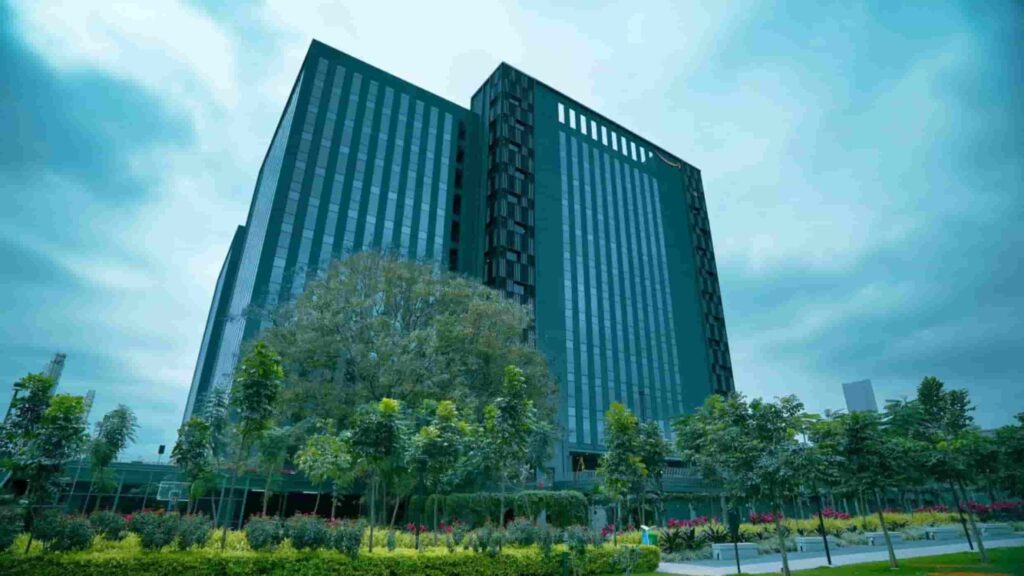
Global technology and e-commerce company Amazon has inaugurated its second-largest office in Asia in North Bengaluru, marking another major milestone in the company’s long-term expansion in India. The new corporate campus reflects Amazon’s continued investment in the country’s technology ecosystem and highlights Bengaluru’s position as one of the world’s leading technology hubs.The newly opened office spans 1.1 million square feet and consists of a 12-storey building, making it one of the largest corporate campuses operated by the company in the Asia-Pacific region. The facility is designed to accommodate more than 7,000 employees working across various business divisions including e-commerce, technology, operations, payments, and seller services.The campus was officially inaugurated on 23 February 2026 in the presence of Karnataka’s Minister for Large and Medium Industries and Infrastructure Development, Dr. M. B. Patil, along with senior leaders from Amazon India.Location and Campus SizeThe new Amazon office is located in North Bengaluru, near the rapidly developing technology corridor close to the airport region. The campus stands on a five-acre site located about 15 kilometres from Kempegowda International Airport, making it strategically accessible for employees and business partners.With its 1.1 million square-foot built-up area, the facility ranks as Amazon’s second-largest office building in Asia and one of its largest single-building corporate offices globally.The campus is part of Amazon’s broader strategy to expand its operational and technological presence in India, where the company has been building large infrastructure facilities for more than two decades.A Major Hub for Amazon’s India OperationsThe new Bengaluru campus will serve as a major hub for several of Amazon’s key business functions in India. Employees working in technology development, e-commerce operations, payments, logistics, and seller services will operate from this facility.Amazon India’s leadership has emphasised that Bengaluru has played a central role in the company’s journey in the country. Over the years, the city has hosted some of Amazon’s earliest technology and innovation teams.Samir Kumar, Country Manager of Amazon India, stated that India remains a long-term priority for the company and that Bengaluru continues to be a critical centre for talent, innovation, and global operations.Modern Workplace InfrastructureThe campus has been designed with a modern workplace philosophy that prioritises collaboration, flexibility, and employee well-being. The building includes multiple meeting rooms, collaboration zones, breakout spaces, and event areas to encourage teamwork and innovation.Several recreational and wellness facilities have also been incorporated into the campus. These include:Basketball and pickleball courtsOutdoor landscaped spacesAmphitheatres and community gathering areasRecreation zones for employeesLarge cafeterias serving diverse cuisines across two floorsThe design approach aims to create a workplace that supports both productivity and work-life balance for thousands of employees working in the building.Sustainability and Future-Ready DesignAmazon’s new campus also reflects the company’s broader sustainability commitments. The building has been designed with features intended to support energy efficiency, environmental sustainability, and responsible resource usage.Large corporate campuses like this are increasingly designed to reduce carbon footprints, improve indoor air quality, and promote sustainable operations.The campus is also aligned with Amazon’s global environmental initiative known as The Climate Pledge, through which the company aims to achieve net-zero carbon emissions by 2040.Amazon’s Investment in IndiaThe opening of this large office campus also highlights the scale of Amazon’s investment in the Indian market. Since entering India, the company has invested over 40 billion dollars in the country, and it has committed an additional 35 billion dollars in investment by 2030.India has become one of Amazon’s most important global markets, not only for e-commerce but also for technology development, cloud services, logistics, and digital payments.Large corporate campuses like the one in Bengaluru are intended to support this long-term expansion strategy while strengthening the company’s innovation capabilities in the region.Bengaluru as a Global Technology HubThe decision to establish such a large office in Bengaluru also reflects the city’s status as a global centre for technology and innovation. Often referred to as India’s “Silicon Valley,” Bengaluru hosts thousands of technology companies, research centres, and startups.The presence of global companies such as Amazon, along with major technology firms, has helped transform the city into one of the world’s largest technology talent hubs.Government officials have also highlighted that investments like Amazon’s new campus contribute significantly to the local economy by creating high-skilled jobs, strengthening the technology ecosystem, and supporting the growth of India’s digital economy.Economic and Employment ImpactThe new campus is expected to generate significant employment opportunities and strengthen the technology ecosystem in Bengaluru. With space for over 7,000 employees, the facility will host professionals working in engineering, operations, business strategy, logistics management, and digital services.In addition to direct employment, large corporate campuses often create indirect economic benefits by supporting local businesses, service providers, and infrastructure development in surrounding areas.Experts believe that investments of this scale also reinforce India’s role as a major centre for global technology development.ConclusionAmazon’s new 12-storey corporate campus in North Bengaluru represents one of the largest office developments by a technology company in India. As the company’s second-largest office in Asia, the facility underscores Amazon’s continued commitment to expanding its operations in the country.With thousands of employees expected to work from the campus and with modern infrastructure designed for collaboration and innovation, the new office is likely to play an important role in Amazon’s global operations in the years ahead.The project also highlights the growing importance of Bengaluru as a global technology hub and reflects India’s increasing role in the international digital economy.