Image: Evfy
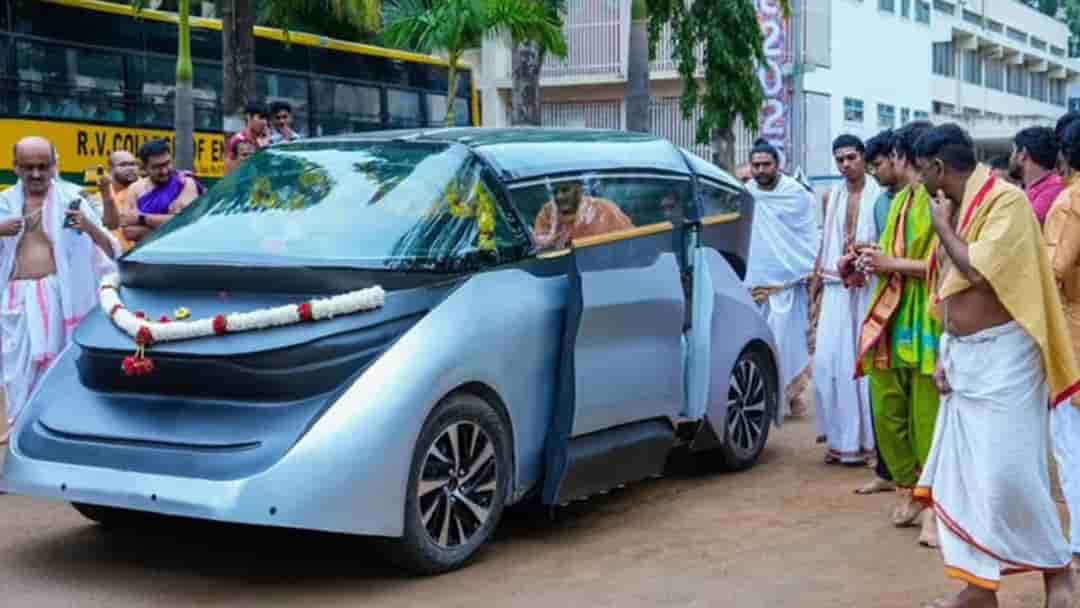
India took a significant step towards autonomous mobility with the development of WIRIN (Wipro Infrastructure Engineering Research & Innovation Network), the country’s first indigenously developed driverless car prototype. The project was a collaborative effort between Wipro, Indian Institute of Science, and RV College of Engineering, bringing together industry expertise and academic research.
The initiative marked a major milestone in India’s journey towards autonomous vehicle technology, a field that has largely been dominated by global players.
Concept and Development of WIRIN
WIRIN was conceptualised as a research-driven project aimed at building a self-driving vehicle prototype suited for Indian road conditions. Unlike controlled environments in Western countries, Indian roads present unique challenges such as:
- High traffic density
- Mixed vehicle types (cars, bikes, pedestrians, animals)
- Unpredictable driving behaviour
The project focused on creating an intelligent system capable of navigating these complexities through advanced sensing and decision-making technologies.
Technology Behind the Driverless System
The WIRIN prototype was equipped with a combination of cutting-edge technologies that enabled autonomous driving.
At its core, the vehicle used:
- Sensors and cameras to detect surroundings
- Lidar and radar systems to map obstacles and distances
- Artificial Intelligence (AI) algorithms for decision-making
- Machine learning models to continuously improve driving behaviour
These systems worked together to help the car:
- Identify road lanes and traffic signals
- Detect pedestrians and other vehicles
- Make real-time navigation decisions
- Control speed, braking, and steering without human intervention
The integration of hardware and software was designed to simulate human-like driving capabilities, while maintaining higher levels of precision and safety.
Role of Collaborating Institutions
Each partner in the project played a crucial role in its development.
- Wipro contributed technological infrastructure, research funding, and industry expertise.
- Indian Institute of Science led core research in artificial intelligence, robotics, and data processing.
- RV College of Engineering was involved in system integration, testing, and engineering development.
This collaboration reflected a growing trend in India where academia and industry are working together to build advanced technological solutions.
Testing and Demonstration
The WIRIN driverless car was tested in controlled environments, particularly within campus premises and designated test tracks in Bengaluru. During these trials, the vehicle demonstrated its ability to:
- Navigate predefined routes autonomously
- Avoid obstacles
- Respond to dynamic changes in the environment
While the system performed effectively in controlled settings, developers acknowledged that large-scale deployment on public roads would require further refinement and regulatory approval.
Challenges in the Indian Context
Developing a driverless car in India comes with unique challenges that go beyond technology.
One of the biggest hurdles is the lack of standardised road infrastructure, including inconsistent lane markings and traffic management systems. Additionally, unpredictable road behaviour and diverse traffic patterns make real-world deployment more complex.
There are also regulatory and legal considerations, as India currently does not have a fully developed framework for autonomous vehicles. Safety concerns, liability issues, and policy guidelines need to be addressed before such vehicles can be commercially introduced.
Significance for India’s Mobility Future
Despite these challenges, the WIRIN project represents an important step forward in India’s mobility landscape. It highlights the country’s growing capability in:
- Artificial intelligence and robotics
- Automotive innovation
- Research and development
The project also opens up possibilities for future applications such as:
- Autonomous public transport systems
- Smart city mobility solutions
- Driver-assistance technologies in conventional vehicles
A Beginning, Not the End
The development of WIRIN does not immediately translate into driverless cars on Indian roads, but it lays the foundation for future advancements. As technology evolves and regulatory frameworks are established, such innovations could gradually move from prototypes to practical use.
The WIRIN driverless car project stands as a testament to India’s progress in emerging technologies. By combining academic research with industry expertise, it has demonstrated that the country is capable of developing sophisticated autonomous systems tailored to its unique conditions.