


Indus Awakens: Sarvam’s Homegrown AI Chatbot Challenges ChatGPT in India’s Language Arena
India’s AI battlefield just got fiercer. Bengaluru-based startup Sarvam AI stealth-launched Indus, its multilingual chat app powered by the mighty Sarvam 105B model, on February 20, 2026, mere days after disclosing 105B and 30B LLMs at the India AI Impact Summit. Now in beta on iOS, Android, and web (indus.sarvam.ai), Indus is entering a market where ChatGPT boasts 100M+ weekly Indian users, and Claude claims a 5.8% global share (second to the US).Google CEO Sundar Pichai’s recent praise, “Sarvam’s local models have no impediments, very well positioned,” fuels the hype. As OpenAI, Anthropic, and Google dominate, Sarvam bets on sovereignty: Built entirely in India for 22+ Indic languages, voice-first, culturally attuned.From Summit Spotlight to Consumer HandsIndus interfaces Sarvam 105B (105B parameters, mixture-of-experts for complex reasoning; 128K token context) and nimble 30B (real-time chats). Disclosed amid summit buzz, partnerships with HMD (Nokia feature phones), Bosch (auto AI), the app rolled out gradually on limited compute. Beta quirks: No per-chat deletion (full account wipe only), mandatory reasoning mode (slows some responses). Phone/Google/Microsoft/Apple login; India-limited now. Early users rave on Reddit/YouTube: Seamless Hinglish switching, ethical dilemmas solved step by step, puzzles cracked in Hindi.ModelParametersStrengthsUse CaseSarvam 105B105BComplex reasoning, 128K contextDeep analysis, docs/imagesSarvam 30B30BReal-time convos, efficiencyVoice chats, daily queries Tailored for Bharat: Features That Speak LocalIndus shines where globals falter, Indic mastery. Type/speak in any of 22 scheduled languages; mid-chat switches (English→Hindi→Tamil) flow naturally. Upload images/PDFs for analysis; future AI agents automate tasks, in-app doc edit/write.Voice-first: Bulbul TTS (11 langs, 39 voices), Saaras STT (code-mixed, telephony audio). Reasoning demos crush: River crossing puzzles, math series, trolley ethics, historical what-ifs, all Hindi/English, step-by-step. YouTube tests (e.g., Nitish Verma) hail puzzle-solving, troubleshooting smarts.Beta perks: Free API trials for devs; file uploads for visual reasoning (charts/tables/handwritten Indic scripts).Sarvam’s Rebel Rise: $41M Fuel, Sovereign VisionFounded in 2023 by Raghavan/Kumar, Sarvam snagged $41M from Lightspeed, Peak XV, and Khosla, building Indic-optimized LLMs amid data scarcity. Unlike English-biased GPT-4, Sarvam trains on local data for accuracy in dialects/scripts. Summit feats: Outperformed Gemini/ChatGPT on Indic OCR (84.3% olmOCR-Bench).Enterprise wins: UIDAI (Aadhaar voice/fraud), Odisha/Tamil Nadu AI hubs, SBI Life (11-lang policy bots). Consumer Indus democratizes it.Full List of Supported LanguagesSarvam 105B supports all 22 scheduled languages of India, as defined in the Constitution’s Eighth Schedule, trained on high-quality Indic datasets for superior handling of code-mixed speech, scripts, and contexts.These form India’s official linguistic backbone, enabling seamless multilingual interactions in Indus and enterprise apps:AssameseBengaliBodoDogriGujaratiHindiKannadaKashmiriKonkaniMaithiliMalayalamManipuri (Meitei)MarathiNepaliOdiaPunjabiSanskritSantaliSindhiTamilTeluguUrduBattle for India’s AI SoulIndia’s genAI frenzy, 100M ChatGPT users, demands sovereignty. Indus fights import reliance, privacy risks. Competitors: Global giants (latency, culture gaps); locals like Krutrim, CoRover lag scale. Sarvam’s edge: Open-source leanings, partnerships (Nokia cars/glasses).Challenges: Compute scaling (waitlists), refinement (deletions/reasoning toggle). Upside: Population-scale data moat, govt IndiaAI Mission backing.Indus isn’t just code, it’s India’s digital voice. From Hinglish banter to ethical debates, Sarvam crafts AI that gets us.
WIRIN: India’s First Driverless Car Developed by Wipro, IISc and RV College
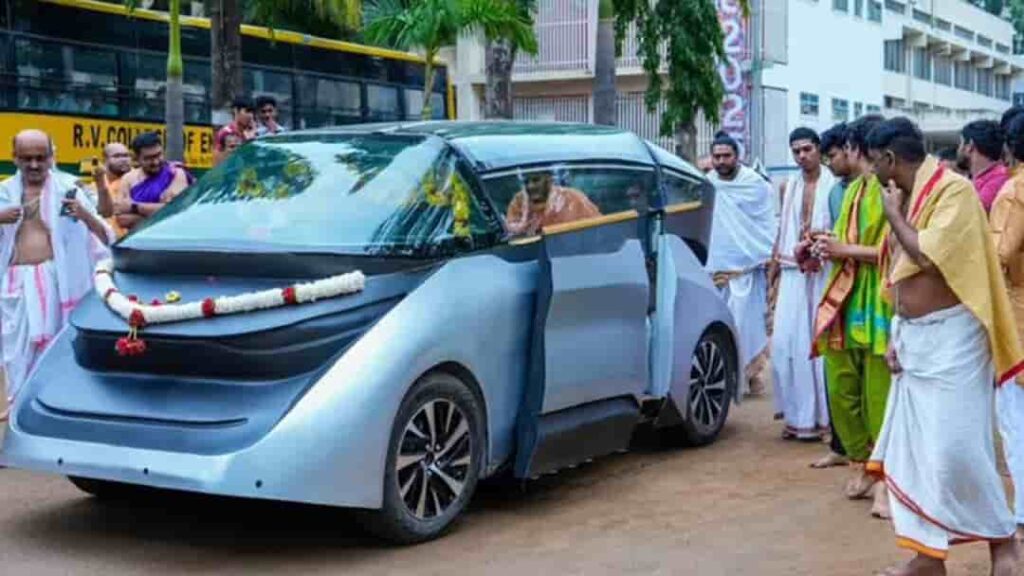
Image: EvfyIndia took a significant step towards autonomous mobility with the development of WIRIN (Wipro Infrastructure Engineering Research & Innovation Network), the country’s first indigenously developed driverless car prototype. The project was a collaborative effort between Wipro, Indian Institute of Science, and RV College of Engineering, bringing together industry expertise and academic research.The initiative marked a major milestone in India’s journey towards autonomous vehicle technology, a field that has largely been dominated by global players.Concept and Development of WIRINWIRIN was conceptualised as a research-driven project aimed at building a self-driving vehicle prototype suited for Indian road conditions. Unlike controlled environments in Western countries, Indian roads present unique challenges such as:High traffic densityMixed vehicle types (cars, bikes, pedestrians, animals)Unpredictable driving behaviourThe project focused on creating an intelligent system capable of navigating these complexities through advanced sensing and decision-making technologies.Technology Behind the Driverless SystemThe WIRIN prototype was equipped with a combination of cutting-edge technologies that enabled autonomous driving.At its core, the vehicle used:Sensors and cameras to detect surroundingsLidar and radar systems to map obstacles and distancesArtificial Intelligence (AI) algorithms for decision-makingMachine learning models to continuously improve driving behaviourThese systems worked together to help the car:Identify road lanes and traffic signalsDetect pedestrians and other vehiclesMake real-time navigation decisionsControl speed, braking, and steering without human interventionThe integration of hardware and software was designed to simulate human-like driving capabilities, while maintaining higher levels of precision and safety.Role of Collaborating InstitutionsEach partner in the project played a crucial role in its development.Wipro contributed technological infrastructure, research funding, and industry expertise.Indian Institute of Science led core research in artificial intelligence, robotics, and data processing.RV College of Engineering was involved in system integration, testing, and engineering development.This collaboration reflected a growing trend in India where academia and industry are working together to build advanced technological solutions.Testing and DemonstrationThe WIRIN driverless car was tested in controlled environments, particularly within campus premises and designated test tracks in Bengaluru. During these trials, the vehicle demonstrated its ability to:Navigate predefined routes autonomouslyAvoid obstaclesRespond to dynamic changes in the environmentWhile the system performed effectively in controlled settings, developers acknowledged that large-scale deployment on public roads would require further refinement and regulatory approval.Challenges in the Indian ContextDeveloping a driverless car in India comes with unique challenges that go beyond technology.One of the biggest hurdles is the lack of standardised road infrastructure, including inconsistent lane markings and traffic management systems. Additionally, unpredictable road behaviour and diverse traffic patterns make real-world deployment more complex.There are also regulatory and legal considerations, as India currently does not have a fully developed framework for autonomous vehicles. Safety concerns, liability issues, and policy guidelines need to be addressed before such vehicles can be commercially introduced.Significance for India’s Mobility FutureDespite these challenges, the WIRIN project represents an important step forward in India’s mobility landscape. It highlights the country’s growing capability in:Artificial intelligence and roboticsAutomotive innovationResearch and developmentThe project also opens up possibilities for future applications such as:Autonomous public transport systemsSmart city mobility solutionsDriver-assistance technologies in conventional vehiclesA Beginning, Not the EndThe development of WIRIN does not immediately translate into driverless cars on Indian roads, but it lays the foundation for future advancements. As technology evolves and regulatory frameworks are established, such innovations could gradually move from prototypes to practical use.The WIRIN driverless car project stands as a testament to India’s progress in emerging technologies. By combining academic research with industry expertise, it has demonstrated that the country is capable of developing sophisticated autonomous systems tailored to its unique conditions.