


ASSOCHAM’s India Business Reform Summit 2026: The Measurable Outcomes for Viksit Bharat
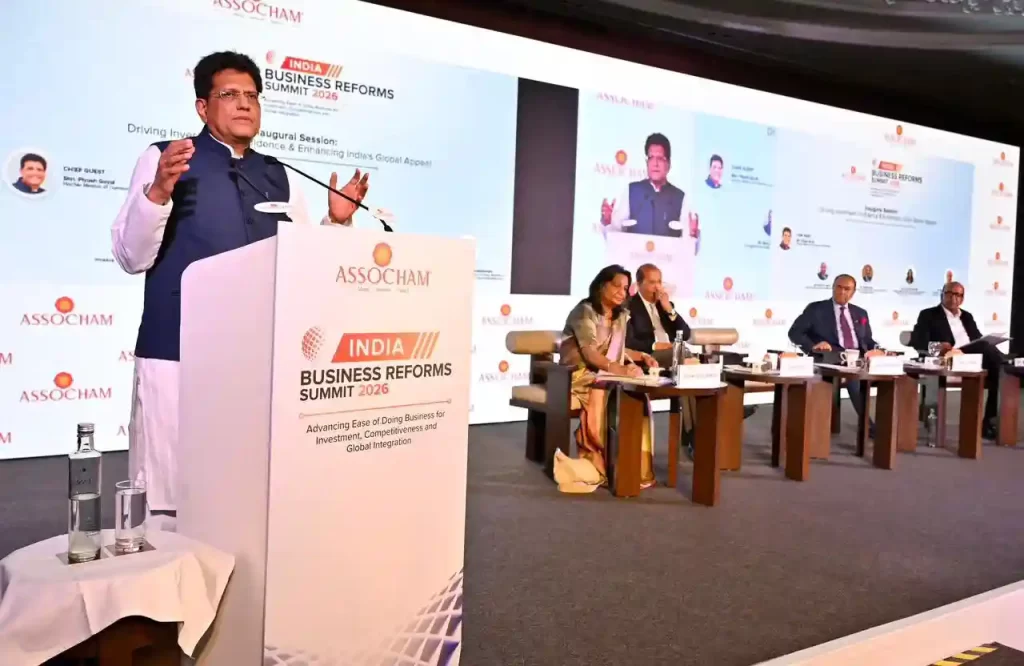
The Associated Chambers of Commerce and Industry of India (ASSOCHAM) successfully convened the India Business Reform Summit 2026 on May 19, 2026, in New Delhi, bringing together policymakers, senior bureaucrats, center-state government representatives, and industry leaders under the theme “Advancing Ease of Doing Business for Investment, Competitiveness and Global Integration.” The summit marked a critical juncture in India’s economic journey, focusing on the essential transition from reform intent to reform outcomes as the country advances towards becoming a developed economy by 2047. Over the past decade, India has undertaken significant reforms to simplify regulatory processes, reduce compliance burden, digitize approvals, and strengthen investor facilitation, but as the nation advances towards becoming a globally competitive manufacturing hub and preferred investment destination, the next phase must focus on implementation efficiency, policy predictability, and measurable outcomes.Commerce and Industry Minister Piyush Goyal delivered the keynote address as chief guest, urging Indian businesses to turn current global economic uncertainties into opportunities for growth rather than panicking over the situation. “India and Prime Minister Narendra Modi have never let a crisis go by, and the situation in the world is truly an opportunity, a moment of uncertainty that we should engage more deeply with,” Goyal remarked at the summit. “Find ways to strengthen our business processes and prepare ourselves for these uncertain times for a brighter and better future.” His address set the tone for deliberations that would explore how India could leverage global challenges to strengthen business processes, undertake faster reforms, build greater resilience, and fortify supply chains.From Reform Intent to Execution: The Next Phase of India’s Business TransformationThe summit’s core deliberations centered on moving from reform intent to execution efficiency, supply chain resilience, and making India a globally competitive manufacturing hub. In the context of evolving global supply chains, increasing private sector participation, and growing emphasis on manufacturing and MSME development, the summit provided a platform to discuss key priorities for strengthening India’s business ecosystem. The discussions highlighted the importance of strengthening Center-State cooperation for consistent policy execution and showcasing state-level investment facilitation, recognizing that successful implementation requires coordinated efforts across all levels of government.Despite global challenges such as tariffs, the Ukraine conflict, and the West Asia crisis, India’s exports reached an all-time high of USD 863 billion last fiscal year, with growth recorded in both merchandise and services exports. Minister Goyal pointed to this achievement as proof that Indian businesses could thrive even amid global turbulence. “The present global situation and geopolitical uncertainties should be viewed as an opportunity for India to strengthen business processes, undertake faster reforms, build greater resilience, and strengthen supply chains,” he emphasized. Free trade agreements finalized by India are opening doors for greater engagement, which needs to be leveraged for attracting investments and increasing exports rather than allowing imports alone to rise.MSME Empowerment: Simplifying Compliance and Enabling GrowthA significant focus of the summit was placed on targeted interventions to reduce the compliance burden on micro, small, and medium enterprises, which form the backbone of India’s economy. The final panel discussion brought together perspectives on strengthening enterprise growth, faster execution, and competitiveness across MSMEs and services-led sectors. Chaired by Smt. Mercy Epao, Joint Secretary, Ministry of Micro, Small and Medium Enterprises, Government of India, the session focused on simplified compliance frameworks, improved access to credit, stronger value chain integration, regulatory efficiency, and reforms needed to help businesses scale with greater confidence.The discussion reinforced the need for a more agile and enabling business environment that supports India’s enterprise ecosystem in its journey towards Viksit Bharat. Speaking on suggestions received during discussions with industry representatives, Minister Goyal said the government is examining the possibility of establishing a single body at industrial parks to function as a one-stop shop for all central and state approvals. This initiative, part of the “Bhavya” program for developing 100 new industrial parks with centralized clearance bodies, aims to drastically reduce the time and complexity involved in obtaining multiple approvals from different agencies.Digital Integration and One-Stop Service CentersMinister Goyal highlighted that lessons learned during the COVID period had demonstrated the effectiveness of digital engagement and remote working models. “In such a situation, we do not need to panic,” he said, adding that the West Asia crisis and emerging technologies like AI bring opportunities for the Indian industry to seize. The ministry, which has 482 offices across 216 cities under 46 organizations, is working towards consolidating operations into single-point contact centers in state capitals and major cities. This would enable businesses to access services related to organizations such as DGFT, Coffee Board, Spices Board, GeM, and other bodies through integrated and digitally connected systems.Goyal urged greater engagement from the private sector in improving government systems, while expressing concern that the national single-window system had not received adequate participation and feedback from the industry. He called upon businesses to work with the government in identifying specific pain points and improving the ease of doing business through collaborative efforts. India is now targeting exports worth USD 1 trillion, and exporters should proactively leverage upcoming FTAs by exploring new markets, conducting sampling and trial orders, and increasing global engagement even before the agreements formally come into effect.Global Opportunities Amid Uncertainty: AI, Manufacturing, and Supply Chain ResilienceThe minister urged the industry to adopt greater efficiency and reduce waste by learning from global best practices, including Japanese manufacturing systems. Referring to emerging technologies, Goyal noted that AI brings significant opportunities for the Indian industry to seize, particularly in manufacturing optimization, supply chain management, and predictive analytics. The summit brought together eminent speakers from government, industry, and leading institutions to share insights on accelerating investment, enhancing competitiveness, and improving ease of operating businesses in India.Manufacturing transformation, state-led investment facilitation, and enabling MSMEs through simplified regulatory frameworks and improved access to opportunities emerged as key priorities during the deliberations. The discussions recognized that India’s demographic dividend, combined with improving infrastructure and digital infrastructure, positions the country uniquely to benefit from global supply chain diversification as multinational corporations seek to reduce dependency on single-source manufacturing hubs.A
Sarvam AI: India’s Sovereign Multilingual Powerhouse Outshines Global Giants
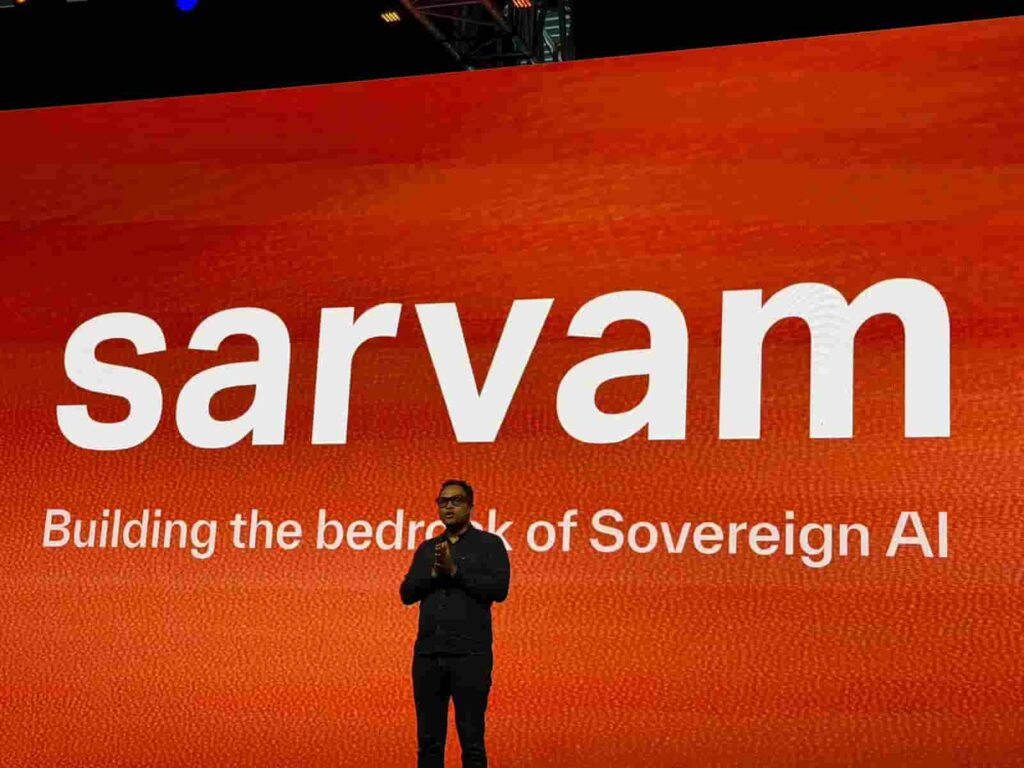
India emerges as an AI powerhouse with Sarvam AI’s indigenous models, earning praise from global tech leaders and government backing. Selected under the IndiaAI Mission with ₹246.72 crore support, Sarvam AI is building sovereign, multilingual AI tailored for India’s diverse linguistic and governance needs.Homegrown AI for Viksit BharatSarvam AI, founded in August 2023 by Vivek Raghavan and Pratyush Kumar, develops full-stack AI platforms entirely in India, from compute infrastructure to applications. At the India AI Impact Summit 2026, Union Minister Amit Shah lauded it as exemplifying why “the future belongs to India,” advancing Viksit Bharat through inclusive tech reaching every citizen.Google CEO Sundar Pichai highlighted Sarvam’s developer energy, stating their local models for Indian languages face “no impediments” and are “very well positioned.” The startup’s Sarvam Vision model achieved 84.3% accuracy on olmOCR-Bench (English subset), outperforming Google’s Gemini 3 Pro and OpenAI’s ChatGPT in document understanding.Core Foundational ModelsSarvam’s models prioritize India’s 22 scheduled languages, code-mixed speech, and mixed scripts:Bulbul (Text-to-Speech): 11 Indian languages, 39 distinct voices for natural, culturally fluent output.Saaras (Speech-to-Text): All 22 scheduled languages, 8kHz telephony audio, handles code-mixed inputs.Vision (Document Understanding): 22+ languages, including handwritten/historical texts; excels in OCR, image captioning, and chart/table interpretation.These enable multimodal tasks like visual analysis across languages, surpassing global rivals in Indic benchmarks with the new Sarvam Indic OCR Bench.Full-Stack Sovereign EcosystemSarvam’s integrated AI stack spans conversations, work, content, and edge deployment:PlatformKey CapabilitiesImpactSarvam for ConversationsHuman-like voices in 11 languages; 100M+ interactions, <500ms latency, 10x ROIEnterprise-scale voice AI, deploys in <24 hoursSarvam for WorkAI-assisted build-debug-optimize; open/modular integrationAccelerates enterprise value across models/dataSarvam for ContentMultilingual video dubbing (voice cloning, lip-sync), document translation preserving layout/toneContent creation with quality review toolsSarvam for EdgeLow-latency multimodal AI for on-device NLP, real-time translation/summarizationEdge-cloud hybrid for assistantsStrategic Partnerships Driving ScaleSarvam embeds AI in public services and enterprises:UIDAI: GenAI stack for Aadhaar, voice interaction, fraud detection, and real-time enrollment feedback in 10 languages (on-premise).Odisha Govt: 50MW Sovereign AI Hub for mining safety, industrial use, Odia skilling.Tamil Nadu & IIT Madras: Digital Sangam—India’s first Sovereign AI Research Park with 20MW data center for compute, research, startups.SBI Life Insurance: Samvaad/Arya for 8 crore customers—voice policy servicing (11 languages), multilingual claims bot, agent co-pilot; nationwide rollout by August 2026.Path to Digital SovereigntyBy reducing foreign AI dependence, Sarvam fosters open-source innovation across startups, academia, and industry. Free Document Intelligence API (February 2026) invites developers to build at scale. As Pichai noted India’s thriving entrepreneurship, Sarvam positions the nation as a global AI contender, rooted in linguistic diversity, governed locally, and scaled for population-level impact.
India’s DHRUV64: The First 1 GHz, 64-Bit Dual-Core Microprocessor
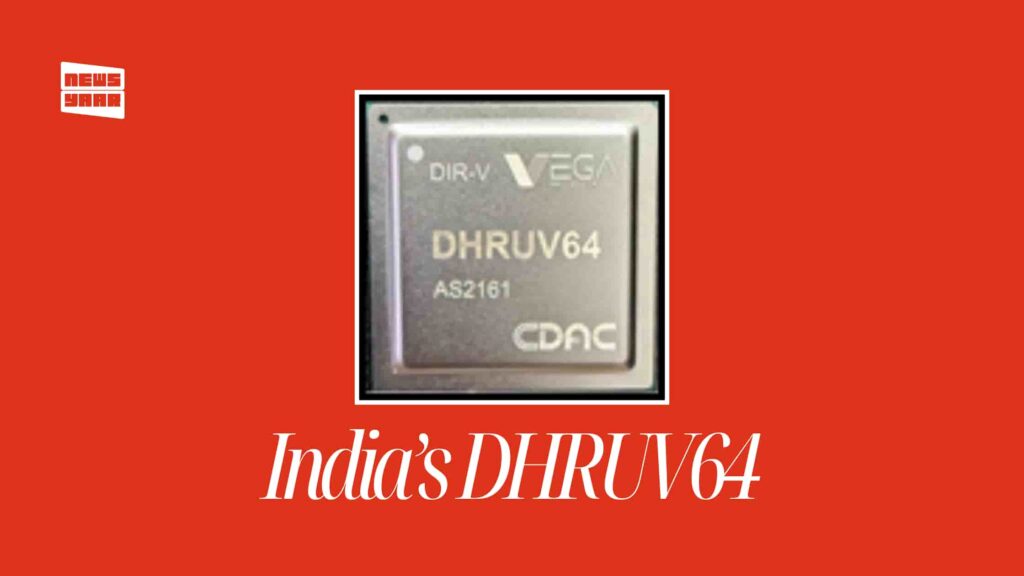
In a landmark moment for India’s semiconductor ambitions, the Centre for Development of Advanced Computing (C-DAC) has unveiled DHRUV64, the country’s first 1 GHz, 64-bit dual-core microprocessor.Developed under the government’s Microprocessor Development Programme and showcased as part of the Digital India RISC-V (DIR-V) initiative, DHRUV64 represents a major stride toward self-reliance in advanced chip design and computing technology. A Milestone in Indigenous Chip DesignDHRUV64 is built on an open-source RISC-V architecture, an increasingly popular set of instructions that allows chip designers to innovate without costly licensing fees from foreign companies.Operating at a clock speed of 1.0 GHz with dual processing cores and 64-bit capability, it brings India into the realm of gigahertz-class embedded processors, a class previously dominated by global players.Unlike earlier academic or specialised chips, DHRUV64 is designed for broader strategic and commercial applications, including industrial automation, automotive electronics, 5G infrastructure, consumer devices, and Internet of Things (IoT) systems. It supports modern operating systems, integrates with diverse hardware systems, and provides multitasking efficiency suited for a range of real-world deployments. How Does It Matter?India currently consumes roughly 20 percent of the world’s microprocessors, yet historically has relied heavily on imports for core computing technology.Developing a homegrown processor like DHRUV64 is significant not only for technological sovereignty but also for enhancing security, reducing supply-chain vulnerabilities, and building local expertise in semiconductor design.By creating a platform that domestic startups, researchers, and established companies can build upon, DHRUV64 is expected to boost innovation across the electronics ecosystem and support cheaper prototyping and product development.It also provides a foundation for a growing pipeline of skilled chip design professionals, further energising India’s tech sector.A Step Toward Aatmanirbhar Bharat in TechnologyDHRUV64 marks a continuation of India’s journey toward an Aatmanirbhar (self-reliant) semiconductor ecosystem. The chip follows earlier indigenous designs such as SHAKTI, AJIT, VIKRAM, and THEJAS64, and sits alongside future variants like Dhanush and Dhanush+ in the development pipeline.While India still relies on global fabrication technologies for manufacturing, the design and strategic deployment of processors like DHRUV64 signal a slow but steady shift toward autonomous capabilities in core computing technologies, a critical competitiveness marker in the global tech landscape.