


IPL 2026: Key Takeaways from the 19th Season of the Indian Premier League
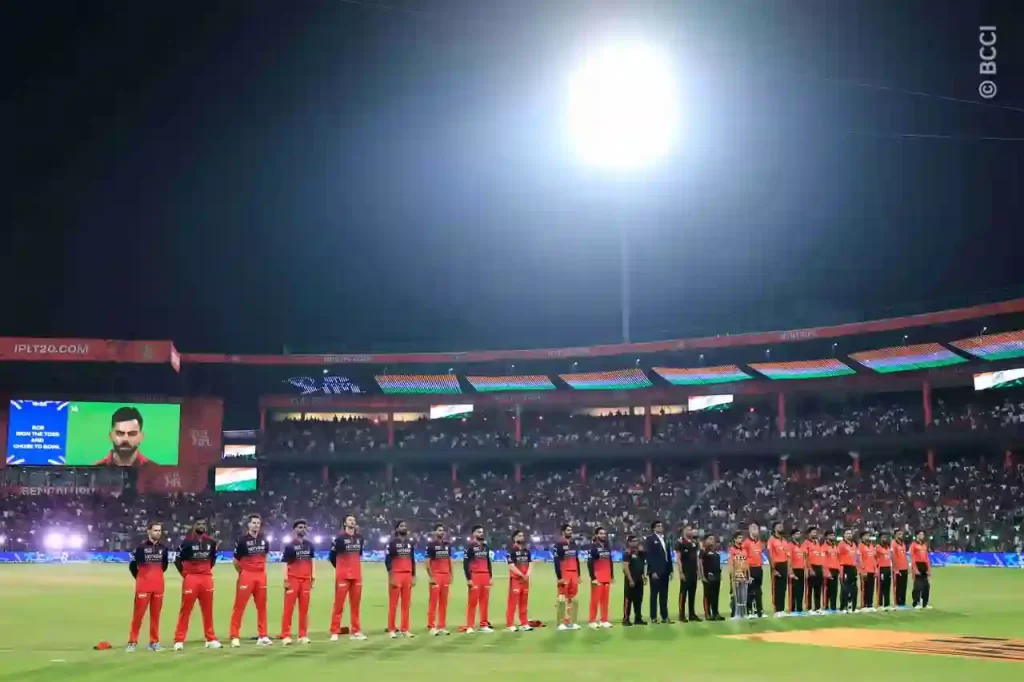
IntroductionForty-six matches into the Indian Premier League’s 19th season, and the narrative is already impossible to summarise in a single sentence. A 15-year-old schoolboy from Bihar is rewriting record books that veteran observers thought would stand for decades. A veteran pacer past his peak has rediscovered his best. A Sri Lankan teenager born into one of cricket’s most recognisable surnames is proving he belongs at the highest level. The defending champions are in the mix but not yet in command. And the points table, with barely half the league stage played, is as compressed and volatile as any in the tournament’s history.IPL 2026, which began on March 28 and runs through to the final on May 31, features 74 matches across 70 league-stage games and four playoff fixtures. Royal Challengers Bengaluru enter as defending champions, having won the title in 2025. All 10 teams are in action: RCB, Chennai Super Kings, Mumbai Indians, Kolkata Knight Riders, Sunrisers Hyderabad, Rajasthan Royals, Punjab Kings, Gujarat Titans, Lucknow Super Giants, and Delhi Capitals.This article covers everything of significance from the season so far.Points Table: Where Things StandAs of May 4, 2026, after 46 matches have been played, Punjab Kings lead the standings with 13 points, having won more games than any other team at this stage. The table behind them is extremely tight, with RCB, Sunrisers Hyderabad, and Rajasthan Royals locked in a three-way tussle for the second, third, and fourth positions. Gujarat Titans sit fifth with 12 points after a sequence of results that has revived their playoff push.Below the top five, Delhi Capitals, Chennai Super Kings, Kolkata Knight Riders, Mumbai Indians, and Lucknow Super Giants are all scrambling to stay alive in the race for the top four. Net run rate is already a significant factor in several of these positions, with margins between teams separated by points often being decided by run-rate differentials from earlier matches.The race to qualify for the playoffs via Qualifier 1, Qualifier 2, and the Eliminator has never looked more open at this point in the season. With each team still having several games to play, no team has mathematically sealed their place, and no team outside the bottom three has been mathematically eliminated.The Season’s Defining Story: Vaibhav SooryavanshiNo individual narrative in IPL 2026 comes close to matching the story of Vaibhav Sooryavanshi. Born on March 27, 2011, the Rajasthan Royals opener is 15 years old and still attending school. He has, in under two months of this IPL season, established himself as the most statistically remarkable young batter in the recorded history of T20 cricket.Sooryavanshi’s IPL 2026 numbers through 10 matches: 404 runs at a strike rate of 237.65, including one century, two fifties, and 37 sixes. His strike rate of 238 across 300-plus runs is, according to ESPNcricinfo’s Smart Stats analysis, the best among all batters to have scored 300 or more runs in any IPL season across 460 instances throughout the tournament’s history.His century against Sunrisers Hyderabad on April 25 was a 37-ball 103, which became the third-fastest hundred in the history of the IPL. He hit 12 sixes and 5 fours in that innings alone. That knock broke his own record of 11 sixes in a single IPL innings, which he had set against Gujarat Titans the previous season. The 12-six innings is now the highest by any Indian batter in a single IPL match.He also achieved a milestone of extraordinary rarity during that knock: at 15 years and 29 days, Sooryavanshi became the youngest cricketer in history to reach 1,000 T20 runs. He reached the milestone in 473 deliveries, also the fastest anyone has ever done so, beating the previous record held by Mitchell Owen of 533 balls.He became the youngest centurion in men’s T20 cricket the previous season, when he hit 101 off 38 deliveries against Gujarat Titans, with his hundred coming off 35 balls, the second fastest in IPL history. He is now one of two players this season to score two IPL centuries, making him the first teenager in IPL history to do so. He is one six away from becoming the first teenager ever to hit 100 sixes in T20 cricket, and six sixes away from Abhishek Sharma’s all-time IPL record of 42 sixes in a single season, a mark he appears likely to break before the league stage ends.ESPNcricinfo’s Smart Stats has named Sooryavanshi the Most Valuable Player of the season so far, noting that he has contributed more than 58 percent of runs scored by Rajasthan Royals while he is at the crease.His path to IPL 2026 reads more like fiction than biography. He debuted in the Ranji Trophy at 12 for Bihar. He set a record with a 58-ball century against Australia Under-19s. He became the youngest player to earn an IPL contract when Rajasthan Royals picked him up for INR 1.1 crore at the 2025 Mega Auction. He then captained India Under-19 to the Under-19 World Cup in early 2026, finishing as Player of the Tournament after a 175 off 80 balls in the final against England Under-19.Sooryavanshi has also hit three separate 15-ball fifties in IPL 2026, an extraordinary record, and leads the six-hitting chart for the season with 37 maximums in 10 games.Orange Cap Race: Abhishek Sharma Leads, But the Gap Is MinimalThe Orange Cap battle in IPL 2026 is the most fiercely contested in recent seasons, with the leader having changed multiple times and the top five separated by fewer than 40 runs as of May 4.After 10 matches, SRH opener Abhishek Sharma leads the Orange Cap standings with 440 runs at a strike rate of 206.57. He has scored one century this season, matching Sooryavanshi’s total. KL Rahul of Delhi Capitals sits in second place with 433 runs. Heinrich Klaasen of SRH, another explosive presence at the top of the Sunrisers batting order, is third with 425 runs at a strike rate that regularly exceeds 200. Vaibhav Sooryavanshi is fourth with 404 runs, and B Sai Sudharsan of
Shiva’s Stadium: Varanasi’s New Cricket Temple Blends Mythology, Modernity, and Green Power
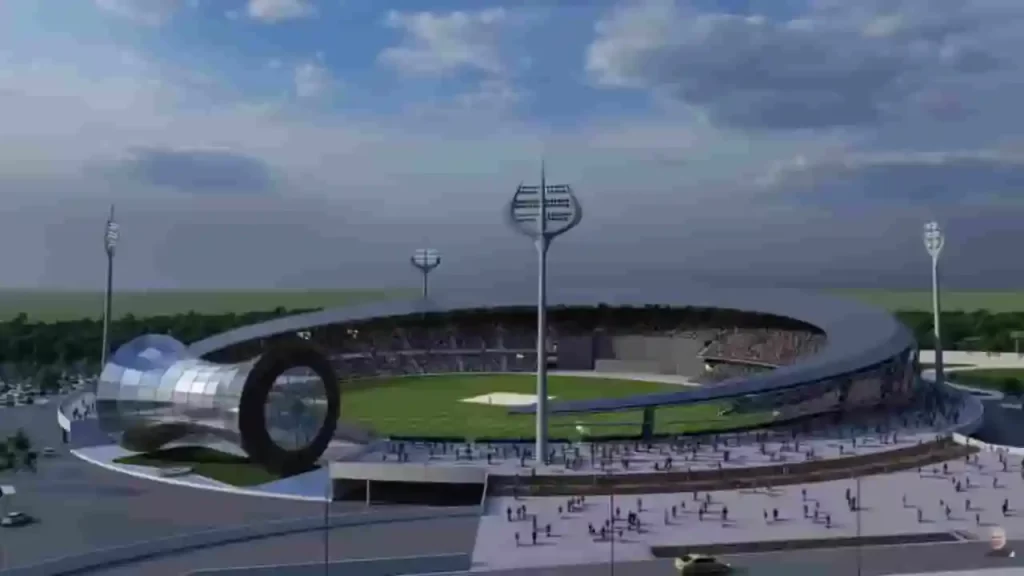
Amid the eternal ghats of Kashi, where Lord Shiva is said to have founded the city as his divine abode, a new landmark is emerging that marries cricket’s feverish passion with the city’s spiritual soul. The Varanasi International Cricket Stadium, under rapid construction in Gajari village (Raja Talab tehsil, 22 km from the sacred Dashashwamedh Ghat), promises to redefine sports venues in India. With a ₹452 crore price tag and a 30,000-seat capacity, this project, launched by Prime Minister Narendra Modi in September 2023, stands over 90% complete. District Magistrate Satyendra Kumar told ABP Live: “Construction is organized and on track for handover by late April, with floodlights up, premium grass turf installed, and seating finalized. Quality and Varanasi’s cultural heritage are priorities.”Divine Design: Every Element Echoes ShivaWhat sets this stadium apart is its immersive Shiva-themed architecture, turning a sports arena into a living tribute to ‘Bholenath.’ Viral images, shared by BJP leader @naveenjindalbjp on X, showcase trishul-shaped floodlights that pierce the skyline like Shiva’s weapon, igniting online buzz: “Perfect tribute to Lord Shiva in Kashi, the energy will be unmatched!” and “Trishul rules in Shivji ki Nagri.” The crescent-shaped canopy symbolizes the moon in Shiva’s jatamakuta (matted locks), while the dome-like media centre replicates the damru, his rhythmic instrument that beats the universe’s pulse. Outer walls feature intricate belpatra (bael leaf) motifs, sacred to Shiva, and the seating cascades in ghat-inspired steps, evoking the Ganga’s ritual stairs where devotees gather for aarti.BCCI Vice President Rajeev Shukla hailed it as visionary: “From Shiva-inspired architecture to solar-powered design, it represents sustainable, inclusive venues rooted in heritage.” This isn’t mere aesthetics; it’s cultural synergy. Varanasi, revered as Shiva’s earthly home in Hindu lore, now channels that mystique into cricket, blending the roar of crowds with the city’s devotional hum.Pitch Perfection and Cricketing NurseryAt the heart lies a state-of-the-art playing field with nine curated pitches: four red soil (for bounce and spin), three black soil (for seam movement), and two hybrid mixes. Modeled after top venues like Lucknow’s Ekana Stadium and Ahmedabad’s Narendra Modi Stadium, these offer versatile conditions to test international stars and hone domestic talent. The outfield uses premium grass with advanced sub-surface drainage, monsoon-proofed for uninterrupted play.Beyond the boundary, a dedicated cricket academy includes dormitories for 100 trainees – a boon for Uttar Pradesh’s budding players. UPCA officials envision it as North India’s next powerhouse, scouting from local maidans to global arenas.Green Revolution: Solar, Recycling, and EV PioneersSustainability is woven into the blueprint. Solar panels will power operations, slashing carbon footprints in a city grappling with Ganga pollution. A comprehensive water recycling system reuses rainwater and greywater for irrigation, aligning with national Swachh Bharat goals. Standout? An on-site EV recharging station, “We’re probably the first stadium to install one,” says a UPCA official, future-proofing for electric team buses and fan vehicles amid India’s green mobility push.These features position Varanasi as a model for eco-stadiums, especially as climate change threatens Indian pitches with erratic weather.Timeline and Trials: From Foundation to FloodlightsLaunched amid fanfare in 2023, progress accelerated post-2025 monsoons. Early 2026 saw structural steel framing complete, followed by roofing and electrics. Speculation swirled about IPL 2026 hosting, fueled by the April deadline, but UPCA clarified to TOI: “Not this season; focus is readiness for internationals.” Whispers of 2027 ODI World Cup matches add intrigue, with the venue eyeing BCCI approval for prime fixtures.Challenges? Logistical hurdles in rural Gajari were met with efficient supply chains, ensuring the April handover.A Game-Changer for Varanasi and Indian CricketFor Varanasi’s economy, reliant on tourism and festivals, it promises jobs, hospitality booms, and events blending cricket with bhajans or cultural nights. Nationally, it underscores PM Modi’s infrastructure vision: 11 new UP stadiums since 2017, elevating the state from backyard cricket to world-class hubs.
Women’s Premier League 2026: A Tipping Point for Women’s Cricket in India

The Women’s Premier League (WPL) 2026 has emerged as one of the most compelling sporting narratives of the year, combining competitive cricket on the field with strong commercial momentum off it. Organised by the Board of Control for Cricket in India (BCCI), the fourth edition of the franchise-based Twenty20 tournament kicked off on January 9 and will run until February 5, 2026, with matches spread across Navi Mumbai and Vadodara in a double round-robin format followed by playoffs.The league features five teams, Mumbai Indians Women, Royal Challengers Bengaluru Women, Delhi Capitals Women, UP Warriorz, and Gujarat Giants, all vying for supremacy in a tightly contested season. The defending champions, Mumbai Indians, have set the benchmark with title victories in two of the three previous editions, while Royal Challengers Bengaluru (RCB) has consistently been a frontrunner, lifting the trophy in 2024.On the field, WPL 2026 has delivered a mix of exhilarating performances and strategic battles. RCB continued its dominant run with four consecutive wins in the early stages, including a comprehensive victory over Delhi Capitals, powered by captain Smriti Mandhana’s leadership and stellar all-round performances. Meanwhile, UP Warriorz clinched back-to-back wins, highlighted by strong contributions from international stars like Meg Lanning and Phoebe Litchfield, signalling a resurgence after a slow start.Off the pitch, WPL 2026 is marking its presence as a commercially viable and culturally significant league. According to industry reports, sponsorship revenue for the season is projected to exceed ₹130 crore, reflecting rising brand confidence in women’s cricket as a premium entertainment product.Innovative collaborations are also taking shape. For instance, UP Warriorz’s tie-up with online gaming brand PartyCasino has highlighted the growing trend of purpose-led partnerships, promoting social impact initiatives alongside sporting excellence.WPL’s influence extends beyond the marquee fixtures, driving grassroots engagement and talent development. Recent trials in Indore saw over 100 young fast bowlers participate in the WPL Speed Queen event, showcasing the rising interest in structured pathways for women’s cricket at junior levels. Selectors and franchise scouts used the event to identify promising players in the Under-19 and Under-23 categories, reinforcing WPL’s role as a feeder system for future stars.With all teams now positioned for the crucial second half of the league stage, attention is firmly on qualification scenarios and playoff implications as the tournament heads into the business end. While RCB and Mumbai Indians aim to maintain consistency, Delhi Capitals, UP Warriorz and Gujarat Giants are plotting breakthroughs that could redefine the competitive balance of the league.As WPL 2026 progresses towards its climactic finale in Vadodara on February 5, it is fast becoming clear that the league is not just a sporting competition, it is a platform that champions women’s sport, nurtures talent at scale and strengthens the business case for women’s cricket in India and beyond.