


Trump’s China Visit: Big on Pageantry, Short on Specifics, Long on Consequence
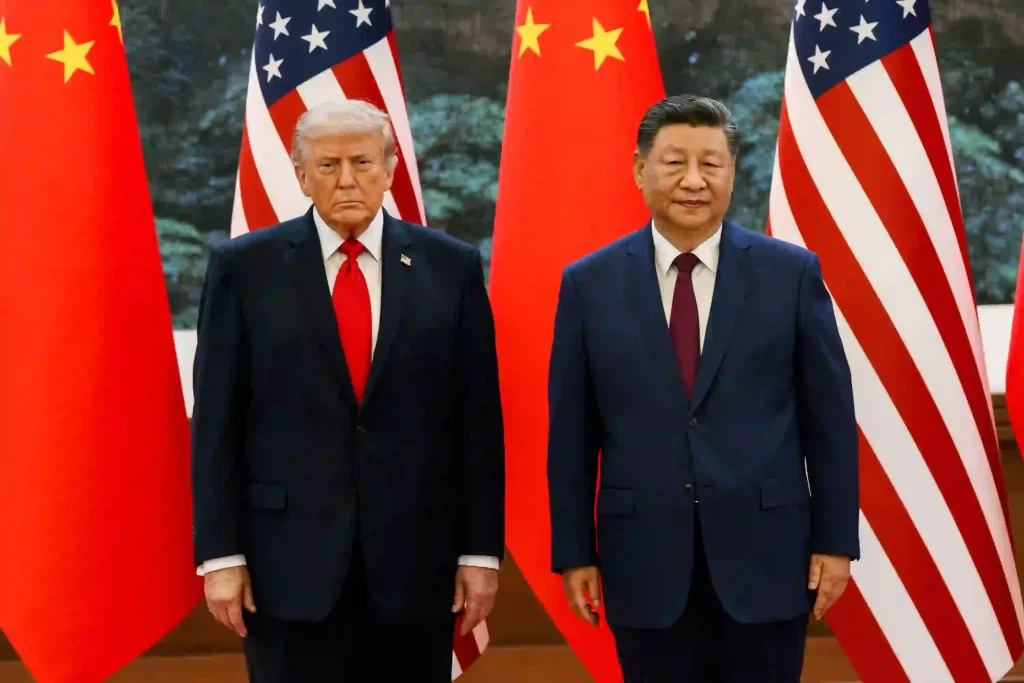
IntroductionFor three days in May 2026, the most consequential bilateral relationship in the world was conducted in person, on Chinese soil, for the first time in nearly nine years. President Donald Trump’s state visit to China — the first by an American president since his own November 2017 trip during his first term — was equal parts diplomatic theatre and strategic test, wrapped in the symbolism of Zhongnanhai gardens, Peking duck, and the careful grammar of superpower summitry.Trump called the trip “incredible,” but while it was big on pageantry, it fell short on concrete agreements. Still, Trump hailed business deals for American companies and farmers, while Chinese leader Xi Jinping touted a new era for the stability of China-US relations.The gap between those two descriptions — one transactional, one strategic — captures the essential character of what happened in Beijing. Enough was accomplished to make the visit a diplomatic success by the standards of the moment. Not enough was accomplished to resolve the crises that brought both leaders to the table.The Road to Beijing: How the Visit Was MadeThe roots of this visit go back to the Busan Summit of October 30, 2025, held on the sidelines of a regional gathering in South Korea. Trump and Xi held their first meeting during Trump’s second presidency at the Busan Summit. At the meeting, Trump announced plans to visit China in April of the following year and invited Xi to visit the United States at an appropriate time.The April timeline did not hold. The state visit was planned for the first week of April, but the meeting was postponed to May due to the 2026 Iran war. The conflict that had closed the Strait of Hormuz and sent oil prices to record highs became both the reason for delay and the dominant agenda item when the visit finally happened.The diplomatic preparation was extensive. On April 16, Defense Secretary Pete Hegseth announced that Beijing had provided high-level assurances to the White House that it would not send weapons to Iran, explicitly ruling out the potential transfer of surface-to-air missiles to the Iranian military. Hegseth attributed this breakthrough to the “strong and direct relationship” between President Trump and Xi Jinping. Secretary of State Marco Rubio had met Chinese Foreign Minister Wang Yi in February and held a further phone call on April 30 to prepare the ground for the summit.The Chinese Foreign Ministry confirmed Trump would pay a state visit to China from May 13 to 15 at President Xi Jinping’s invitation. It marked the first visit to China by an American president in almost nine years, coming at a time of heightened bilateral tensions over a range of issues, including trade, technology, and defence, and intersecting with a precarious US-Iran ceasefire and a dual blockade of the Strait of Hormuz that was driving up energy prices and weighing on global economic growth.The Arrival: Red Carpets and 300 Waving ChildrenBeijing rolled out the literal and figurative red carpet for Trump as he arrived in China on Wednesday evening local time. Three hundred Chinese children dressed in blue and white uniforms waved American and Chinese flags as Trump descended the steps of Air Force One. He was also joined on the tarmac by his son, Eric Trump, and daughter-in-law, Lara Trump.Trump was greeted at the airport by Chinese Vice President Han Zheng, Chinese Ambassador to the US Xie Feng, Executive Vice Foreign Minister Ma Zhaoxu, and US Ambassador to China David Perdue, as well as a military honour guard, a military band, and around 300 Chinese students waving Chinese and American flags. Trump and his entourage then boarded a motorcade to the Four Seasons Beijing Hotel.The visual grammar of this welcome was deliberate. Han Zheng, as China’s Vice President, is a figure of considerable standing, and his presence on the tarmac signalled the importance Beijing attached to the visit. The children chanting in Mandarin “Welcome, welcome, enthusiastically welcome” was choreography, but choreography that conveyed a message: China wanted this summit to succeed, or at least to be seen to succeed.The last time Trump visited Beijing — in November 2017 during his first term — he was given a tour of the Forbidden City and a dinner inside it, an honour granted to no other foreign leader since 1949. It remains to be seen whether this trip matched the pomp and circumstance of last time, but already there were significant events on Trump’s schedule: a welcome ceremony, a tour of the Temple of Heaven, a UNESCO World Heritage Site, and a state banquet.The Summit: The Great Hall, the Temple, and ZhongnanhaiAt 10 AM, Trump arrived at the Great Hall of the People, where he was greeted by Xi Jinping and received an opening ceremony featuring the national anthems of the United States and China, after which they inspected troops of the People’s Liberation Army and then greeted children waving Chinese and American flags.The formal bilateral meetings between Trump and Xi took place across two days, with the agenda covering trade and economic relations, the Iran war and the Strait of Hormuz, Taiwan, North Korea, rare earths and technology, and the broader structure of the bilateral relationship.On the final day, Trump headed back to the US after having lunch with Xi at Zhongnanhai, a rare visit to the Beijing compound where top Chinese officials live and work. Xi said it was meant to reciprocate Trump’s hosting him at Mar-a-Lago during his first term. “It means that China attaches great importance to this visit by President Trump to China,” said one analyst who attended the dinner banquet. “It also reflects the positive personal relationship between the two leaders.”At their last meeting, the two leaders toured the gardens at Zhongnanhai, with Trump admiring the roses. “These are the most beautiful roses anyone’s ever seen,” Trump said. Xi said he would share some Chinese rose seeds for Trump to have planted in the White House Rose Garden.The menu of the state banquet was circulated online afterward. It included cold