


Dubai’s World Governments Summit 2026: Global Leaders Shape Tomorrow’s Governance
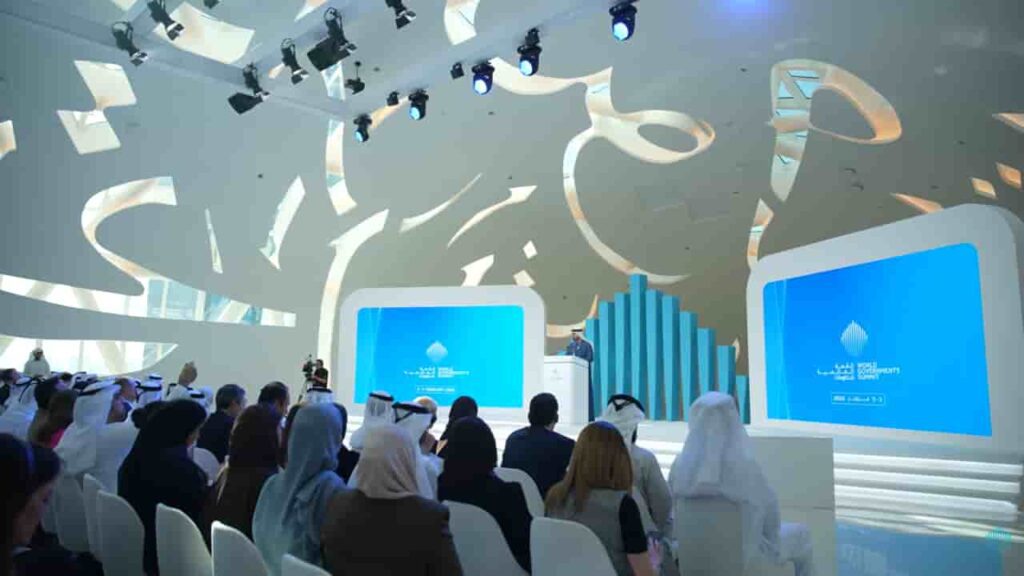
Dubai hosted the landmark World Governments Summit (WGS) 2026 from February 3-5, drawing record crowds under the theme “Shaping Future Governments.” Over 6,000 leaders from 150+ countries gathered for 320+ sessions, creating solutions for AI, sustainability, and resilient economies.Record-Breaking ParticipationThe summit featured more than 35 heads of state, 500+ ministers, and 450+ experts, including delegations from the IMF, IFC, and World Bank. It marked the largest international turnout in WGS history, with 100+ organizations collaborating on 24 specialized forums. Key forums included the New Silk Road Forum, IFC’s Latin America & Caribbean Investment Forum, the 10th International Cooperation Conference with the Association of Caribbean States, and the Future of Economy Forum.Debuting outside Shanghai, the World Laureates Summit (WLS) united Nobel, Turing, and Fields Medal winners like Michael Levitt (2013 Chemistry Nobel), Kip Thorne (2017 Physics Nobel), and John Hopcroft (1986 Turing Award) to tackle global challenges.Star-Studded Speakers LineupCategoryExamplesPresidents/PMsJoko Widodo (Indonesia), William Ruto (Kenya), Mostafa Madbouly (Egypt), Masrour Barzani (Kurdistan Region), Macky Sall (former Senegal)Global Org LeadersNgozi Okonjo-Iweala (WTO), Ajay Banga (World Bank), Catherine Russell (UNICEF), Haitham Al Ghais (OPEC)Tech/BusinessElon Musk, Alexander Karp (Palantir), Klaus SchwabOtherSanjay Gupta (CNN), Idris Elba, Aaron Ciechanover (Nobel Laureate)Speakers spanned presidents, CEOs, and laureates. Heads of government included Indonesia’s Joko Widodo, Kenya’s William Ruto, Egypt’s Mostafa Madbouly, Kurdistan Region’s Masrour Barzani, and the Maldives’ Mohamed Muizzu.Global organization heads: WTO’s Ngozi Okonjo-Iweala, World Bank’s Ajay Banga, UNICEF’s Catherine Russell, OPEC’s Haitham Al Ghais, and NDB’s Dilma Rousseff.Tech and business icons: Elon Musk (Tesla, SpaceX, X), Palantir’s Alexander Karp, WEF’s Klaus Schwab, CNN’s Sanjay Gupta, actor Idris Elba, PepsiCo’s Aamer Sheikh, and Nobel chemist Aaron Ciechanover.Others: Former Senegal President Macky Sall, Cuba’s Manuel Cruz, Sierra Leone’s David Sengeh, Indonesia’s Asman Abnur, Warwick economist Andrew Oswald, and NEA’s William Magwood IV.PwC’s Strategic RolePwC continued as Knowledge Partner, spotlighting the Best Minister Award and Global Ministers Survey. Executives joined closed-door roundtables: Hani Ashkar on Apple’s “AI in Manufacturing” (Day 1), Laurent Depolla on Agility’s “Partnerships for a Sustainable, Intelligent Economy” (Day 2), and Khaled Bin Braik on “The Future of HR in the Era of AI” (Day 3). PwC launched three reports: Anchoring Degrees, Accelerating Skills, Policies Towards a Stackable, Skills-First Ecosystem, Smart Trade Diplomacy, Transport and Logistics Alliances in a Multipolar World, and Harnessing AI to Build Whole-of-Society Resilience, A Blueprint for Governments of the Future.Outcomes and ImpactDiscussions emphasized international cooperation, innovative policies, and empowering next-gen governments amid economic and tech shifts. WLS outcomes were announced on-site, highlighting science-driven fixes for pressing issues.The event reinforced Dubai’s hub status, blending policy discourse with actionable insights for resilient societies.
PM Modi Receives the UAE President at the Airport
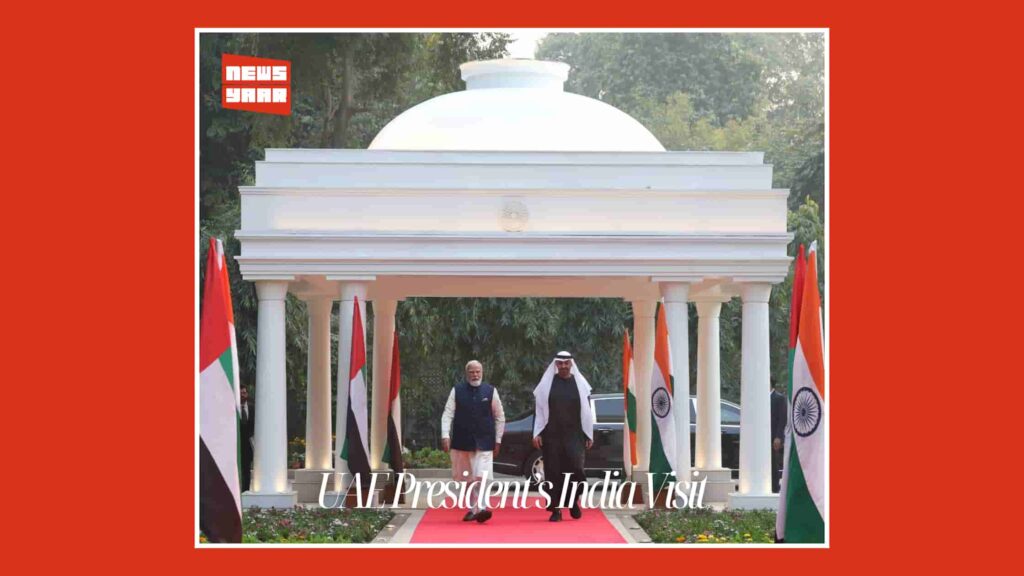
New Delhi: United Arab Emirates President Sheikh Mohamed bin Zayed Al Nahyan concluded a high-profile official visit to India on January 19, 2026, reinforcing the growing strategic partnership between New Delhi and Abu Dhabi. In a rare and symbolic gesture, Prime Minister Narendra Modi personally received the UAE President at the airport, underscoring the importance India attaches to its relationship with the Gulf nation.This marked Sheikh Mohamed bin Zayed’s third official visit to India since assuming office as UAE President and his fifth visit to the country over the past decade. The visit highlighted the sustained political engagement between the two countries and reflected the UAE’s view of India as a key strategic partner in Asia.During the visit, the two leaders held comprehensive talks covering trade, investment, energy security, defence cooperation, technology, and regional geopolitics. Several agreements and memoranda of understanding (MoUs) were signed to further strengthen bilateral cooperation. These included frameworks to expand collaboration in renewable energy, food security, digital infrastructure, fintech, and defence manufacturing, aligning with India’s “Make in India” and self-reliance goals while offering new opportunities for UAE investors.A major focus of the discussions was economic cooperation under the Comprehensive Economic Partnership Agreement (CEPA), which has significantly boosted bilateral trade since its implementation. Both sides reviewed progress under CEPA and agreed to work toward further increasing non-oil trade, easing market access, and encouraging private-sector partnerships. The use of local currency settlement mechanisms and the bilateral investment treaty were also highlighted as key enablers of smoother financial flows and long-term investment confidence.From India’s perspective, the outcomes of the visit strengthen energy security through long-term supply arrangements and increased cooperation in clean energy and green hydrogen. The UAE’s continued interest in investing in Indian infrastructure, ports, logistics, and technology startups was seen as a strong vote of confidence in India’s growth story.For the UAE, deeper engagement with India supports its strategy of economic diversification and strengthens its footprint in one of the world’s fastest-growing major economies. Enhanced cooperation in food corridors, technology, and innovation helps Abu Dhabi secure supply chains while expanding its global economic influence.The leaders also exchanged views on regional and global issues, including developments in West Asia, maritime security, and global economic uncertainty. Both sides reaffirmed their commitment to stability, dialogue, and cooperation in an increasingly complex geopolitical environment.Beyond agreements, the visit carried strong symbolic value. Prime Minister Modi’s decision to personally welcome Sheikh Mohamed bin Zayed sent a clear message of trust, warmth, and strategic alignment. It also reflected the personal rapport between the two leaders, which has played a significant role in elevating India–UAE ties over the years.As the UAE President departed India, the visit was widely seen as a reaffirmation of a mature and forward-looking partnership, one that goes beyond transactional ties to focus on long-term strategic, economic, and people-centric cooperation.