


Sarvam AI: India’s Sovereign Multilingual Powerhouse Outshines Global Giants
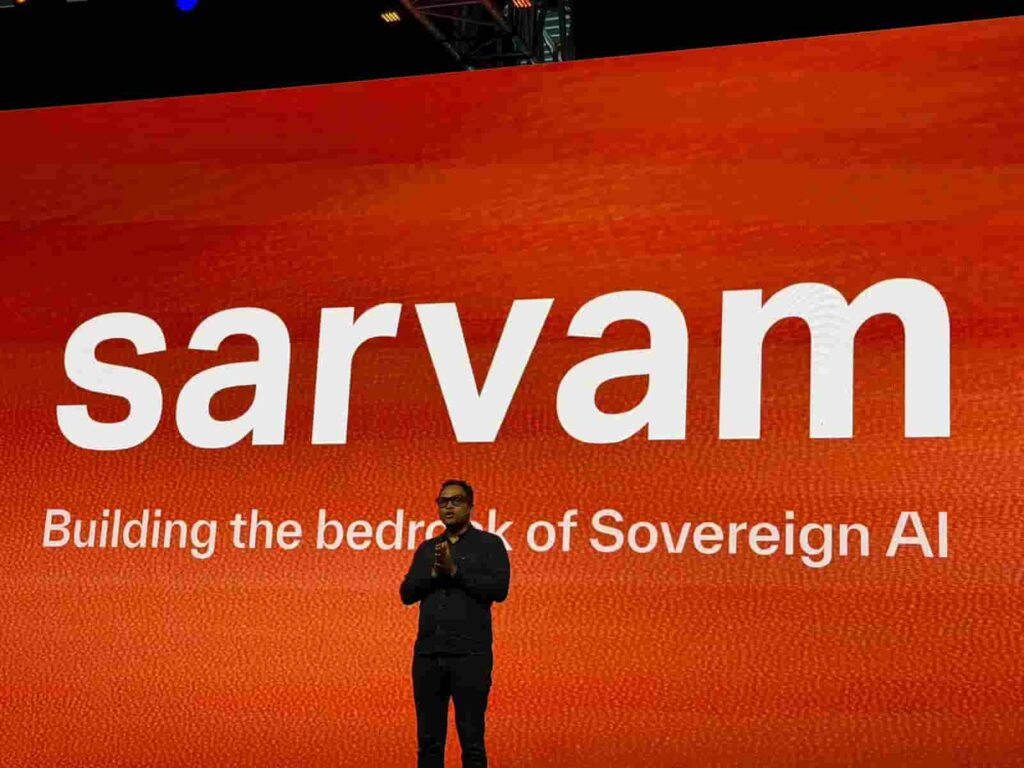
India emerges as an AI powerhouse with Sarvam AI’s indigenous models, earning praise from global tech leaders and government backing. Selected under the IndiaAI Mission with ₹246.72 crore support, Sarvam AI is building sovereign, multilingual AI tailored for India’s diverse linguistic and governance needs.Homegrown AI for Viksit BharatSarvam AI, founded in August 2023 by Vivek Raghavan and Pratyush Kumar, develops full-stack AI platforms entirely in India, from compute infrastructure to applications. At the India AI Impact Summit 2026, Union Minister Amit Shah lauded it as exemplifying why “the future belongs to India,” advancing Viksit Bharat through inclusive tech reaching every citizen.Google CEO Sundar Pichai highlighted Sarvam’s developer energy, stating their local models for Indian languages face “no impediments” and are “very well positioned.” The startup’s Sarvam Vision model achieved 84.3% accuracy on olmOCR-Bench (English subset), outperforming Google’s Gemini 3 Pro and OpenAI’s ChatGPT in document understanding.Core Foundational ModelsSarvam’s models prioritize India’s 22 scheduled languages, code-mixed speech, and mixed scripts:Bulbul (Text-to-Speech): 11 Indian languages, 39 distinct voices for natural, culturally fluent output.Saaras (Speech-to-Text): All 22 scheduled languages, 8kHz telephony audio, handles code-mixed inputs.Vision (Document Understanding): 22+ languages, including handwritten/historical texts; excels in OCR, image captioning, and chart/table interpretation.These enable multimodal tasks like visual analysis across languages, surpassing global rivals in Indic benchmarks with the new Sarvam Indic OCR Bench.Full-Stack Sovereign EcosystemSarvam’s integrated AI stack spans conversations, work, content, and edge deployment:PlatformKey CapabilitiesImpactSarvam for ConversationsHuman-like voices in 11 languages; 100M+ interactions, <500ms latency, 10x ROIEnterprise-scale voice AI, deploys in <24 hoursSarvam for WorkAI-assisted build-debug-optimize; open/modular integrationAccelerates enterprise value across models/dataSarvam for ContentMultilingual video dubbing (voice cloning, lip-sync), document translation preserving layout/toneContent creation with quality review toolsSarvam for EdgeLow-latency multimodal AI for on-device NLP, real-time translation/summarizationEdge-cloud hybrid for assistantsStrategic Partnerships Driving ScaleSarvam embeds AI in public services and enterprises:UIDAI: GenAI stack for Aadhaar, voice interaction, fraud detection, and real-time enrollment feedback in 10 languages (on-premise).Odisha Govt: 50MW Sovereign AI Hub for mining safety, industrial use, Odia skilling.Tamil Nadu & IIT Madras: Digital Sangam—India’s first Sovereign AI Research Park with 20MW data center for compute, research, startups.SBI Life Insurance: Samvaad/Arya for 8 crore customers—voice policy servicing (11 languages), multilingual claims bot, agent co-pilot; nationwide rollout by August 2026.Path to Digital SovereigntyBy reducing foreign AI dependence, Sarvam fosters open-source innovation across startups, academia, and industry. Free Document Intelligence API (February 2026) invites developers to build at scale. As Pichai noted India’s thriving entrepreneurship, Sarvam positions the nation as a global AI contender, rooted in linguistic diversity, governed locally, and scaled for population-level impact.
Anthropic’s Claude Cowork Plug-ins Spark ‘SaaSpocalypse’: Global Tech Sell-Off Hits Indian IT Hard
Global tech markets plunged into chaos following Anthropic’s January 30, 2026, launch of 11 open-source plug-ins for its Claude Cowork agent, igniting fears that agentic AI could obliterate traditional SaaS models and disrupt India’s IT services giants. Indian IT stocks like Infosys (down 8%), TCS (6.46%), HCLTech (5.76%), Wipro, and Tech Mahindra cratered, erasing over ₹5.7 lakh crore in market cap as the Nifty IT index dropped 19% in eight sessions, its worst since 2020.The Trigger: Claude Cowork’s Game-Changing Plug-insAnthropic, founded in 2021 by ex-OpenAI leaders Dario and Daniela Amodei, shifted AI from chatbots to autonomous “coworkers.” These no-code plug-ins bundle skills, connectors, and sub-agents for enterprise roles, autonomously planning, executing, and validating multi-step tasks like document processing, cross-verification, and adaptive strategies. Key offerings target:Plug-in CategoryCore FunctionsLegalContract review, NDA analysis, compliance checks, risk flagging.SalesProspect research, deal prep, process tracking.FinanceFinancial modelling, metrics tracking.Data/Marketing/ProductQuery/visualise datasets, campaign planning, and roadmap prioritisation.Others (Productivity, Support, Biology)Task/calendar management, issue triage, and literature analysis.This “vibe coding” lets users describe intent in plain English, bypassing specialised software from Salesforce, ServiceNow, or Adobe—threatening recurring subscriptions that fueled SaaS profits.Market Carnage: Wall Street to Dalal StreetUS: Nasdaq fell 1.4-2.4%; Goldman Sachs software basket 6%; S&P 500 -0.84%. Adobe (-7.31%), Cognizant (-10.14%), Thomson Reuters (-15.67%), Gartner (-20.87%), Equifax (-12.11%), ServiceNow/Salesforce (~7%) shed $ 300 B in market cap. Even Nvidia/Meta dipped 2-3%.India: Infosys ADR -5.56% (Nasdaq); TCS mcap below ₹10 lakh crore (2020 levels); Nifty IT -3-6% daily. Sensex dragged 100+ points.Termed ‘SaaSpocalypse’: Jefferies warns AI agents compress software categories into one interface, turning tools into utilities.Palantir’s CTO noted AI slashing SAP migrations from years to weeks, amplifying panic over billable hours in legal research, compliance, and due diligence, bread-and-butter for Indian IT juniors.Indian IT Sector: Existential Threat or Overreaction?India’s IT behemoths thrived on outsourcing data processing, analysis, and support—now AI-vulnerable. Economic Survey 2025-26 flagged risks: concentrated AI data/compute erodes India’s edge if adaptation lags. Mustafa Suleyman-like warnings predict 12-month white-collar hits (lawyers, accountants, coders).Bear Case: Agentic AI automates L1 support, reporting, testing—hollowing low-end services; clients rethink headcount-heavy models.Bull Rebuttals:JPMorgan sees “compelling value” in Infosys/TCS; correction temporary.Cognizant CEO Ravi Kumar: Enterprises need integrators for AI-human bridges; no “plug-and-play” magic.Zoho’s Sridhar Vembu: Domain expertise trumps AI; SaaS woes predated agents.Happiest Minds’ Ashok Soota: Disruption expands IT roles in transformation.Experts (Pareekh Jain, Prasad Valavade): Incremental impact; humans essential for governance, legacy integration, high-stakes decisions. Legal AI needs oversight (Adv. Varun Singh).Broader Implications and Road AheadSalesforce’s 1,000 AI-driven layoffs signal restructuring. Anthropic’s Dario Amodei reassures startups: “Claude powers AI-native firms.” Indian firms pivot to AI orchestration, but face pricing pressure (fixed-fee vs. hours). JPMorgan urges buying the dip; long-term, IT survives as AI embedders.As of February 17, 2026, markets stabilise slightly, but the AI shift, from assistant to executor, reshapes software economics. Indian IT must accelerate: reskill, embed AI in processes, or risk obsolescence. The ‘SaaSpocalypse’ may be hype, but evolution is inevitable.
National Startup Day 2026: India Celebrates a Decade of Entrepreneurial Transformation
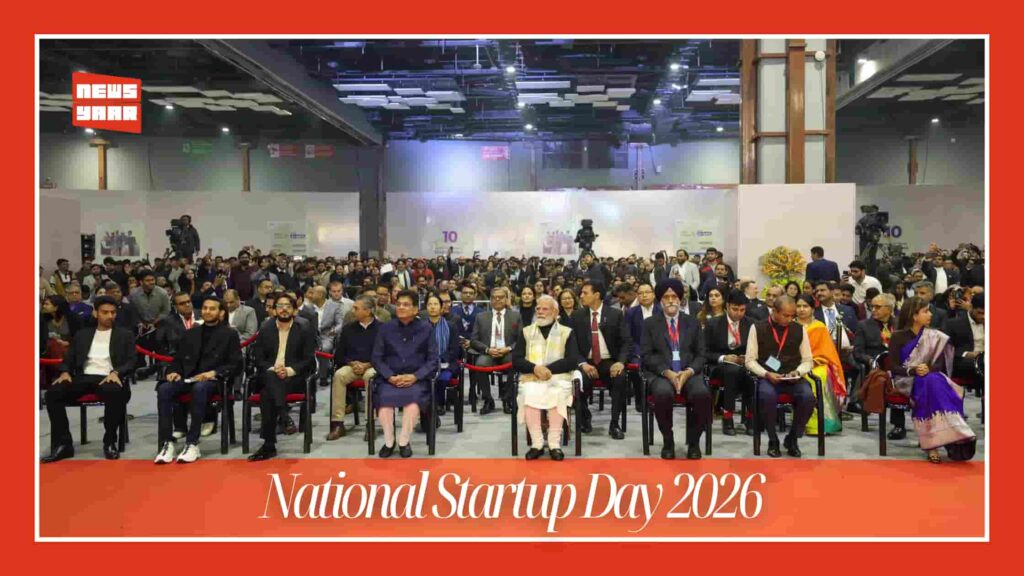
New Delhi, 16 January 2026: India marked National Startup Day 2026 with grand celebrations highlighting ten years of the government’s Startup India initiative and its transformative impact on the nation’s innovation landscape. The event drew founders, investors, policymakers, and ecosystem leaders from across the country to reflect on the journey of entrepreneurship and chart the path ahead.At a flagship event held in New Delhi, Prime Minister Narendra Modi joined startup founders and industry stakeholders to commemorate the milestone. Addressing the gathering, he emphasized the courage and innovative spirit of India’s youth, calling startups engines of economic growth and societal change. His remarks underscored how risk–taking and problem-solving have become mainstream within the entrepreneurial community.Over the past decade since the launch of Startup India, more than 200,000 startups have been recognised across sectors such as technology, healthcare, climate solutions, logistics, fintech, and education. These ventures have collectively generated millions of jobs and helped India emerge as one of the world’s largest and most dynamic startup ecosystems.The celebrations showcased a broad shift in the startup narrative—from chasing rapid valuations to focusing on sustainable growth and real-world impact. Industry experts highlighted that Indian startups are increasingly building deep-tech and AI-driven solutions tailored to local challenges, with a rising emphasis on climate tech, healthcare innovation, and sovereign AI platforms.A notable trend highlighted during the day was the geographical diversification of entrepreneurship. Recent data suggests that over half of registered startups now originate from Tier-2 and Tier-3 cities, signalling a decentralisation of innovation beyond traditional metropolitan hubs.Panel discussions and keynote sessions throughout the event brought to light how startups are contributing to India’s economic resilience, job creation, and technological advancement. Speakers also discussed policy priorities for the next decade, including a renewed push into manufacturing, deep-tech research, and global market expansion.Celebrations were not limited to New Delhi alone. Across states and regions, local startup communities hosted meetups, pitch events, and mentoring sessions, reinforcing a nationwide commitment to empowering entrepreneurs.As National Startup Day 2026 concluded, the startup ecosystem stood not only proud of its achievements over the last ten years but also energized for future challenges, firmly anchored in innovation, inclusivity, and impact.
India’s DHRUV64: The First 1 GHz, 64-Bit Dual-Core Microprocessor
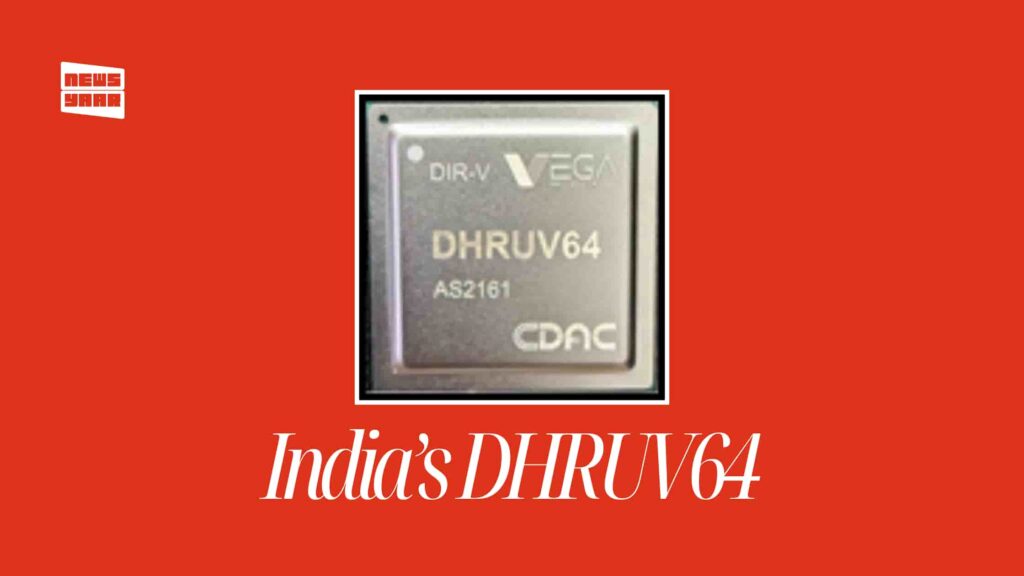
In a landmark moment for India’s semiconductor ambitions, the Centre for Development of Advanced Computing (C-DAC) has unveiled DHRUV64, the country’s first 1 GHz, 64-bit dual-core microprocessor.Developed under the government’s Microprocessor Development Programme and showcased as part of the Digital India RISC-V (DIR-V) initiative, DHRUV64 represents a major stride toward self-reliance in advanced chip design and computing technology. A Milestone in Indigenous Chip DesignDHRUV64 is built on an open-source RISC-V architecture, an increasingly popular set of instructions that allows chip designers to innovate without costly licensing fees from foreign companies.Operating at a clock speed of 1.0 GHz with dual processing cores and 64-bit capability, it brings India into the realm of gigahertz-class embedded processors, a class previously dominated by global players.Unlike earlier academic or specialised chips, DHRUV64 is designed for broader strategic and commercial applications, including industrial automation, automotive electronics, 5G infrastructure, consumer devices, and Internet of Things (IoT) systems. It supports modern operating systems, integrates with diverse hardware systems, and provides multitasking efficiency suited for a range of real-world deployments. How Does It Matter?India currently consumes roughly 20 percent of the world’s microprocessors, yet historically has relied heavily on imports for core computing technology.Developing a homegrown processor like DHRUV64 is significant not only for technological sovereignty but also for enhancing security, reducing supply-chain vulnerabilities, and building local expertise in semiconductor design.By creating a platform that domestic startups, researchers, and established companies can build upon, DHRUV64 is expected to boost innovation across the electronics ecosystem and support cheaper prototyping and product development.It also provides a foundation for a growing pipeline of skilled chip design professionals, further energising India’s tech sector.A Step Toward Aatmanirbhar Bharat in TechnologyDHRUV64 marks a continuation of India’s journey toward an Aatmanirbhar (self-reliant) semiconductor ecosystem. The chip follows earlier indigenous designs such as SHAKTI, AJIT, VIKRAM, and THEJAS64, and sits alongside future variants like Dhanush and Dhanush+ in the development pipeline.While India still relies on global fabrication technologies for manufacturing, the design and strategic deployment of processors like DHRUV64 signal a slow but steady shift toward autonomous capabilities in core computing technologies, a critical competitiveness marker in the global tech landscape.