


Anji Khad Bridge: India’s First Cable-Stayed Railway Marvel Connecting Kashmir to the Nation
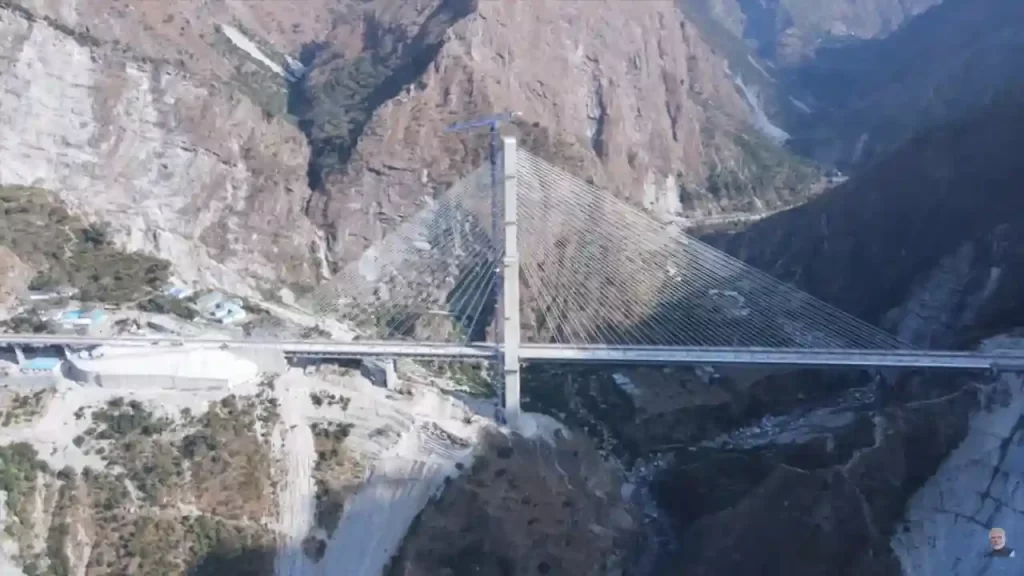
In the rugged hills of Jammu & Kashmir, where steep gorges and fierce winds challenge every builder, a stunning engineering wonder now stands tall. The Anji Khad Bridge is India’s very first cable-stayed railway bridge, a key piece of the massive Udhampur-Srinagar-Baramulla Rail Link (USBRL) project. This 272-kilometer all-weather rail line will finally connect the beautiful Kashmir Valley to the rest of India, ending decades of isolation. Prime Minister Narendra Modi inaugurated it on June 6, 2025, alongside the world’s highest rail bridge over the Chenab River. These bridges mark a historic moment, turning tough Himalayan dreams into reality and opening doors for faster travel, trade, and tourism.Where It Stands and What It ConnectsThe Anji Khad Bridge stretches gracefully across the Anji River, a sparkling tributary of the mighty Chenab, in Reasi district of Jammu & Kashmir. It links the pilgrimage town of Katra (base for the Vaishno Devi temple) to Reasi, about 80 kilometers from Jammu city. This spot sits in the young, shaky folds of the Himalayas – a place with deep gorges, near-vertical walls, earthquakes, and winds gusting up to 213 km/h (almost cyclone strength). Before this bridge, trains had to take long, winding detours. Now, passengers zoom through safely, cutting travel time and costs.Part of the USBRL mega-project, which includes 943 bridges and 36 tunnels, the bridge ensures year-round connectivity. No more snow-blocked roads or floods, trains will run smoothly, carrying people, goods, and hope to Srinagar and beyond.A First in India: Cable-Stayed Design Explained SimplyCable-stayed bridges are like giant clotheslines holding up a road or rail deck. Strong cables stretch from tall pylons (towers) directly to the bridge floor, making them perfect for long spans over deep valleys. Unlike suspension bridges (like Howrah), these are simpler, cheaper, and quicker to build in tough spots.The Anji Khad Bridge shines with these standout features:Total length: 725 meters (about 2,380 feet), with a 473-meter cable-stayed section.Height: 331 meters (1,086 feet) above the riverbed – taller than many skyscrapers.Main pylon: Inverted Y-shape, rising 193-196 meters (633 feet) from foundation – one of the tallest of its kind.Cables: 96 high-tensile cables of different lengths, using 653 kilometers of strands total. They create an asymmetrical design for stability.Deck width: Supports double rail tracks, plus a 12.3-foot service road and 5-foot footpaths on both sides.Train speed: Safe for 100 km/h services like Vande Bharat.Built with 8,200 metric tonnes of steel, it took just 11 months for the main structure. Italian firm Italferr (FS Group) handled design and supervision, their $70 million project won the 2024 ENR Global Best Projects Award for excellence, innovation, and safety.Built for Battle: Surviving the Himalayas’ FuryThe Himalayas don’t play nice. Steep slopes, loose rocks, quakes (Zone V), and howling winds tested every bolt. Engineers used:Seismic-proof tech: Flexible joints absorb shocks.Wind tunnels: Tested for 213 km/h gusts.Sensors everywhere: Integrated health monitoring tracks stress, vibrations, and cracks in real-time.Special concrete: Resists extreme cold (-20°C) and heat.One clever trick? Asymmetrical layout let most work happen from one side, avoiding unstable slopes. Construction used cranes, helicopters for cables, and precision tech, all without harming the fragile ecology.Part of USBRL: Kashmir’s Rail LifelineThe USBRL (started 2002, cost Rs 40,000+ crore) drills through mountains to link Udhampur (on Jammu-Del train line) to Baramulla near Srinagar. Highlights:Chenab Bridge: World’s highest rail arch (359m/1,178 ft), inaugurated same day.Tunnels: 119 km total, including the longest at 12.7 km.Benefits: Srinagar is 3.5 hours from Delhi; apples, saffron to markets fast; jobs, tourism boom.PM Modi flagged Vande Bharat trains from Katra to Srinagar, zipping tourists to Vaishno Devi and Kashmir’s valleys.Global Praise and Real ImpactThe bridge isn’t just Indian pride, it’s world-class. ENR Award beat 120 entries for bridging tough terrain sustainably. Italferr calls it “unprecedented” for India. Locals cheer: Faster pilgrimages, cheaper goods, and army supplies secure.Challenges? Monsoon floods, landslides delayed it years. But grit won, now trains roll where eagles soar.
Sonamarg Tunnel: A Key Milestone in Jammu and Kashmir’s All-Weather Connectivity
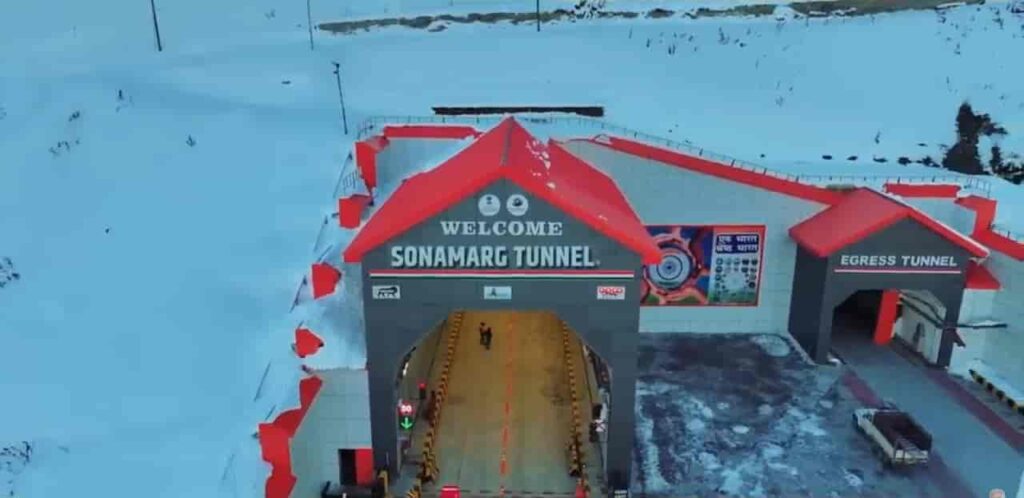
The Sonamarg Tunnel, officially known as the Z-Morh Tunnel, marked a significant step in improving infrastructure in Jammu and Kashmir. Built along the strategic Srinagar–Leh highway, the tunnel has addressed one of the region’s long-standing challenges—seasonal isolation of Sonamarg due to extreme weather conditions.For decades, Sonamarg remained cut off during winters as heavy snowfall and avalanches made the route unsafe and often impassable. The opening of this tunnel has fundamentally changed that reality, ensuring smoother, safer, and uninterrupted connectivity.Overcoming a Long-Standing Connectivity ChallengeLocated between Gagangir and Sonamarg, the tunnel bypasses a particularly vulnerable stretch of road that was notorious for landslides, avalanches, and sharp turns. This stretch, often referred to as the “Z-Morh” due to its winding shape, posed serious risks to travellers and frequently led to prolonged road closures.With the tunnel now operational, the dependency on weather conditions has been significantly reduced. What was once a seasonal route has now been transformed into an all-weather corridor, ensuring that Sonamarg remains accessible throughout the year.Engineering in Extreme TerrainConstructing the tunnel in the Himalayan region was a complex and demanding task. The area is characterised by fragile geology, sub-zero temperatures, and unpredictable weather patterns, all of which posed challenges during construction.The tunnel stretches approximately 6.5 kilometres and has been designed as a modern, two-lane passage capable of handling bi-directional traffic efficiently. Advanced tunnelling techniques were used to cut through the mountainous terrain, while maintaining structural stability and safety.In addition to the main tunnel, extensive work was carried out on approach roads and protective structures to safeguard the route from avalanches and falling debris.Safety and Modern InfrastructureThe Sonamarg Tunnel has been equipped with several modern safety systems to ensure a secure travel experience. Continuous ventilation ensures air quality inside the tunnel, while surveillance systems allow real-time monitoring of traffic movement.Emergency response mechanisms, including escape routes and communication systems, have been integrated into the design. These features are particularly important given the tunnel’s location in a remote and high-altitude region, where immediate external assistance may not always be available.Boost to Tourism and Local EconomyOne of the most immediate impacts of the tunnel has been on tourism. Sonamarg, often called the “Meadow of Gold,” is one of the most scenic destinations in Jammu and Kashmir, but its accessibility was limited to a few months each year.With year-round connectivity now possible, the region is expected to witness a steady increase in tourist inflow. This will directly benefit local businesses, including hotels, transport operators, and small vendors who rely heavily on seasonal tourism.The tunnel has also improved the movement of goods and services, contributing to better economic stability for local communities.Strategic Importance and Connectivity to LadakhBeyond tourism, the tunnel plays a crucial role in enhancing connectivity towards Ladakh. The Srinagar–Leh highway is of significant strategic importance, particularly for defence movement and logistics.By ensuring smoother and more reliable access along this route, the Sonamarg Tunnel strengthens both civilian and strategic mobility in the region. It also complements larger infrastructure projects such as the Zojila Tunnel, which aims to further enhance all-weather connectivity between Srinagar and Leh.Transforming Travel in the RegionThe experience of travelling to Sonamarg has changed considerably with the opening of the tunnel. Journeys that were once uncertain and weather-dependent have become more predictable and safer.Reduced travel time, improved road safety, and uninterrupted access have collectively enhanced the overall connectivity of the region. This shift is expected to play a long-term role in integrating remote areas with mainstream economic and social networks.The Sonamarg Tunnel stands as a testament to India’s growing capability in executing complex infrastructure projects in challenging terrains. By addressing both connectivity and safety concerns, it has not only improved access to a key tourist destination but also contributed to the broader goal of regional development in Jammu and Kashmir.