


Modi at G7 Summit 2026: Maritime Security, Global Solidarity, and International Relations
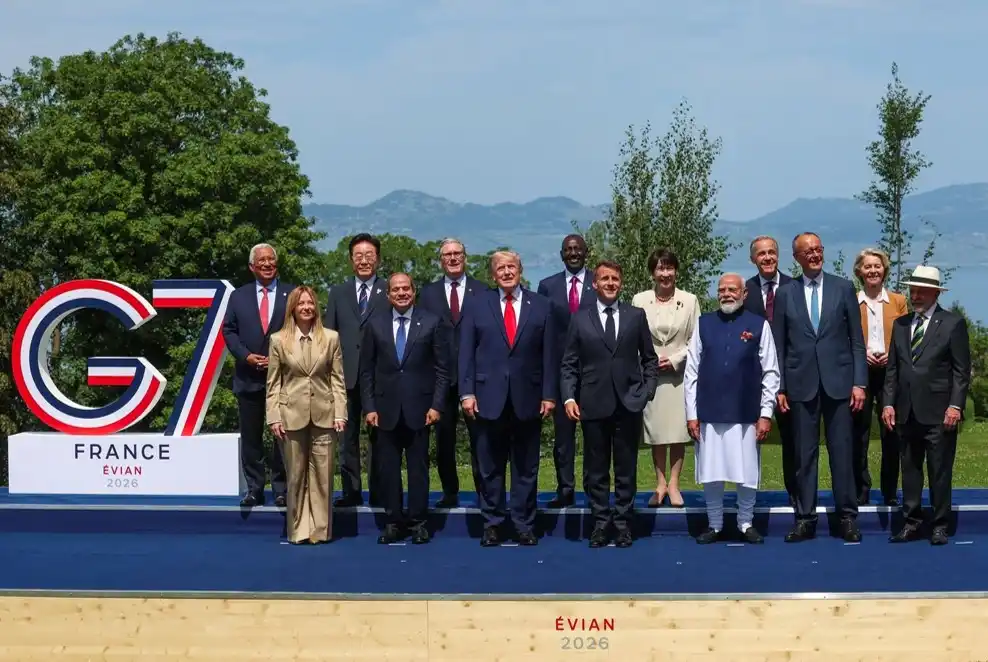
Prime Minister Narendra Modi delivered a powerful address at the 52nd G7 Summit in Evian-les-Bains, France, on Tuesday, June 16, 2026, voicing India’s firm concern over disruptions to maritime trade through the Strait of Hormuz and highlighting that several Indian civilians lost their lives during the West Asia conflict. Speaking at the outreach session on “Forging New Partnerships and Rebuilding International Solidarity,” Modi emphasized that lasting solutions to conflicts can only be achieved through dialogue, diplomacy, and international cooperation, while calling for the safety of seafarers who connect all nations through global maritime trade.The summit, held from June 15 to 17 on the shores of Lake Geneva, brings together leaders of France, Britain, Canada, Germany, Italy, Japan, and the United States alongside the European Union, with India invited as a partner country for its 13th participation and PM Modi’s 7th consecutive attendance. During his extensive diplomatic outreach on the sidelines, Modi held bilateral meetings with Canadian Prime Minister Mark Carney, British Prime Minister Keir Starmer, UAE President Sheikh Mohamed bin Zayed Al Nahyan, Kenyan President William Ruto, Egyptian President Abdel Fattah El-Sisi, Japanese Prime Minister Sanae Takaichi, and South Korean President Lee Jae-myung, while also exchanging greetings with U.S. President Donald Trump ahead of their scheduled bilateral meeting.Maritime Security and the Strait of Hormuz: India’s Core ConcernPM Modi’s remarks on the need to protect seafarers came amid growing anger in India over the deaths of three Indian crew members in a U.S. military attack on a merchant vessel off the coast of Oman last week. The U.S. Central Command said it had taken action against three vessels, Marivex on June 8, Settebello on June 9, and Jalveer on June 11, alleging that they were attempting to violate the U.S. blockade of Iranian ports. Modi raised this issue a day before his bilateral talks with President Trump, underscoring how conflicts in West Asia have disrupted global trade and caused loss of life.“We welcome the progress made in peace efforts in West Asia. This conflict has caused loss of life and property in our friendly countries in the region. Disruptions to maritime trade through the Strait of Hormuz have affected the global economy. Several Indian civilians have also lost their lives,” Modi said during his address. “It is our responsibility to ensure the safety of the seafarers who connect all nations through global maritime trade. We must ensure that maritime routes remain secure and that seafarers can perform their duties without fear,” he added.Modi’s concerns reflect India’s strategic dependence on the Strait of Hormuz, one of the world’s most critical maritime chokepoints for oil shipments and global commerce. As a major importer of energy and a nation with significant maritime trade volumes, disruptions in Hormuz directly impact India’s economic security, energy prices, and the safety of its nationals working in global shipping. The deaths of three Indian mariners in the U.S. strike have heightened domestic pressure on the government to address maritime security and protect Indian citizens abroad.Trust as the Ultimate Strategic Asset: Modi’s Vision for International RelationsIn his address, Modi underscored the importance of trust in international relations, saying that confidence among nations has become a more valuable strategic asset than minerals, technology, or markets. He argued that in an increasingly interconnected world, where energy, food, health, cyber, and economic security are closely linked, stronger international partnerships are essential for humanity’s progress and prosperity. Warning that trade and technology were being used to pursue narrow interests, Modi said such practices had contributed to a growing trust deficit in the international system.Modi wrote in an X post: “Shared my thoughts at the Outreach Session on ‘Forging New Partnerships and Rebuilding International Solidarity’ at the G7 Summit in Evian. In a world that is getting more interconnected and interdependent than ever before, this subject becomes all the more vital.” His emphasis on trust reflects India’s diplomatic philosophy that international cooperation must be founded on mutual respect, reciprocity, and shared interests rather than coercion or unilateralism.The trust deficit Modi highlighted is particularly relevant in the current global context, where geopolitical tensions, trade restrictions, technology bans, and security concerns have led nations to prioritize national interests over collective action. As the G7 discusses issues ranging from AI access to critical minerals supply chains, India’s call for trust-based partnerships offers an alternative framework that emphasizes inclusivity, cooperation, and shared prosperity for all nations, not just the wealthy few.Bilateral Outreach: Strengthening India’s Strategic PartnershipsIndia-Canada: Forward-Looking Strategic PartnershipDuring his meeting with Canadian Prime Minister Mark Carney, PM Modi and his counterpart welcomed the positive momentum in India-Canada relations and reaffirmed their commitment to building a forward-looking strategic partnership. The two leaders reviewed progress in economic cooperation, including commercial arrangements relating to Liquefied Natural Gas (LNG), Liquefied Petroleum Gas (LPG), and metallurgical coal. They expressed satisfaction over ongoing negotiations for a Comprehensive Economic Partnership Agreement, with both sides aiming to conclude the pact this year.The leaders also welcomed growing cooperation in science and technology, defence, finance, and migration. To further strengthen defence and security ties, the two countries agreed to launch negotiations on a General Security of Information Agreement. PM Modi expressed India’s support for Canada becoming a Dialogue Partner of the Indian Ocean Rim Association, and both leaders announced the establishment of Raisina Americas as a platform to enhance dialogue and cooperation.India-UK: Vision 2035 and Comprehensive Economic PartnershipDuring his meeting with British Prime Minister Keir Starmer, PM Modi reviewed progress in India-UK relations under Vision 2035. The two leaders welcomed cooperation across trade, defence, technology, education, and people-to-people ties, looking forward to the early implementation of the Comprehensive Economic and Trade Agreement. They expressed satisfaction over the strong education partnership, noting recent progress in establishing campuses of British universities in India, including the University of Liverpool in Bengaluru and the Universities of York and Bristol in Mumbai.The leaders exchanged views on regional and global developments and reaffirmed their commitment to further strengthening the India-UK Comprehensive Strategic Partnership, demonstrating how both nations are working to deepen their bilateral
UP Chief Minister Yogi Adityanath’s Singapore and Japan Visit: A Landmark Investment Roadshow
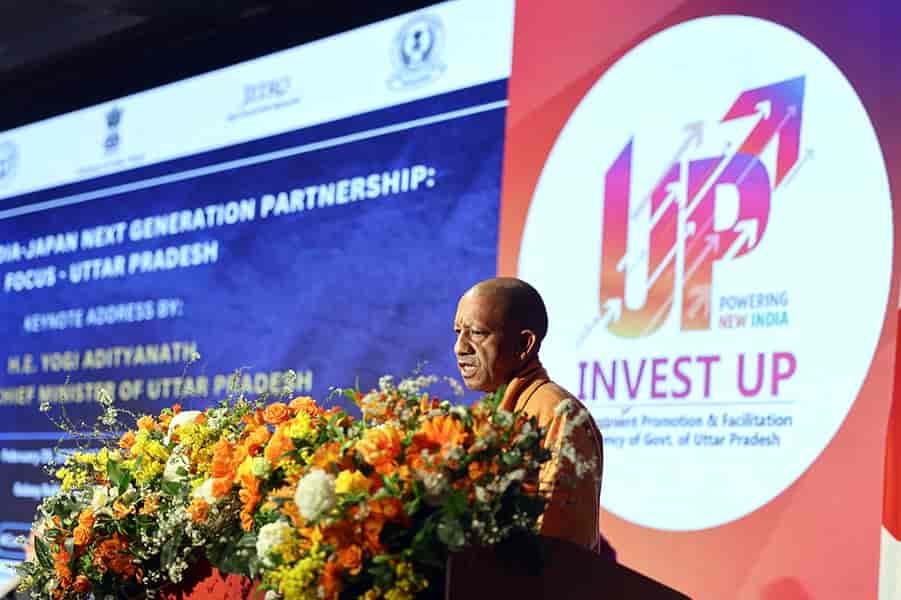
IntroductionUttar Pradesh Chief Minister Yogi Adityanath’s official visit to Singapore (February 22–24) and Japan (February 25–26) has emerged as one of the most consequential investment outreach efforts undertaken by any Indian state government in recent years. Undertaken as part of the UP Invest Roadshow, the twin-country visit generated MoUs worth ₹1.5 lakh crore and fresh investment proposals amounting to ₹2.5 lakh crore, spanning sectors ranging from semiconductors and data centres to green hydrogen and advanced manufacturing.The visit is expected to serve as a key milestone in Uttar Pradesh’s stated goal of becoming a one-trillion-dollar economy by 2029–30. With a Gross State Domestic Product of ₹30.25 lakh crore in 2024–25, projected to reach approximately ₹36 lakh crore in 2025–26, UP is positioning itself as one of India’s most competitive destinations for global capital.Singapore Visit (February 22–24, 2026)High-Level Government EngagementsThe Singapore leg of the visit was anchored in high-level political diplomacy. Chief Minister Yogi Adityanath held meetings with Singapore’s top leadership, including:President Tharman Shanmugaratnam (meeting took place on February 24)Prime Minister Lawrence Wong, who described UP as India’s third-largest economy and noted that Singaporean companies are actively investing in the state, particularly in logistics, connectivity, and infrastructureMinister for Foreign Affairs Vivian Balakrishnan, who described Uttar Pradesh as “India’s most populous state and among its fastest-growing economies, with a young and dynamic workforce”Minister for Manpower and Minister-in-charge of Energy and Science and Technology Tan See LengThe discussions were framed within the India–Singapore Comprehensive Strategic Partnership (CSP) Roadmap, which identifies priority collaboration areas including economic cooperation, digitalisation, skills development, sustainability, connectivity, and advanced manufacturing.Investor Meetings and Business EngagementsBeyond governmental meetings, the Chief Minister held substantive discussions with leaders from Singapore’s top financial and infrastructure institutions:Tan Su Shan, CEO, DBS Group — financial cooperation and infrastructure project financing for UPLim Chow Kiat, CEO, GIC — long-term institutional investments in infrastructure, logistics, and sustainable urban development; GIC is already a partner in projects such as the Ganga ExpresswayTeo Chee Hean, Chairman, Temasek — sovereign investment opportunities in data centres, renewable energy, and industrial infrastructureKerry Mok, President and CEO, SATS Ltd. — aviation sector collaborationLeaders from Mapletree, PSA India, Greenfield Ventures, AVPN, Kaizenvest, and the Private Infrastructure Development Group — covering logistics, green energy, sustainable infrastructure, and impact investmentSkill Development and Vocational TrainingThe Chief Minister reviewed Singapore’s technical and vocational education model at the ITE College Central campus, including its Aviation Hub facilities. MoUs were signed to strengthen collaboration in technical and vocational education, aviation skills, and industry-aligned training programmes.UP Investors’ Roadshow — Singapore Business FederationCM Yogi addressed business leaders at the UP Investors’ Roadshow organised by the Singapore Business Federation. He described the “new Uttar Pradesh” as offering safety, stability, and speed to investors.On the first day alone, UP secured total investment commitments of ₹19,877 crore. The single largest proposal came from Universal Success Group, which committed ₹6,650 crore for group housing, a logistics park, and a data centre.Sectoral Focus AreasKey sectors covered during the Singapore engagements included:MRO (Maintenance, Repair & Overhaul) and cargo hubs — positive discussions were held on developing the Noida International Airport at Jewar as an MRO and cargo hubSemiconductors and data centres — UP is positioning land parcels near Jewar Airport as potential sites for hyperscale and AI-enabled data infrastructureLogistics and fintechSkill development and digital economySingapore is India’s largest source of Foreign Direct Investment, contributing USD 14.94 billion in FY 2024–25.Japan Visit (February 25–26, 2026)UP Investment Roadshow, TokyoFollowing Singapore, Chief Minister Yogi Adityanath arrived in Tokyo to host the UP Investment Road Show, where he invited Japanese industrialists and investors to explore opportunities in Uttar Pradesh. He stated that “Uttar Pradesh has emerged as the most preferred state for investment in India due to its secure environment, strong infrastructure, large market potential, and young workforce.”He also referred to Japan as the “Land of the Rising Sun”, and drew a cultural connection by noting that Uttar Pradesh is the birthplace of Lord Ram and a significant node of India’s Buddhist heritage.MoUs Signed — Day One: ₹11,000 CroreOn the first day of the Japan visit, MoUs worth approximately ₹11,000 crore were signed with a range of Japanese companies. The companies included:CompanySectorKubota CorporationAgricultural machinery and equipmentMinda Corporation (with Toyo Denso)Automobiles and auto componentsJapan Aviation Electronics IndustryElectronics and defenceNagase & Co. Ltd.Chemicals and technologySeiko AdvanceIndustrial printing and graphicsO&O GroupHospitality and real estateFuji Partnership / Fuji Silvertech ConcreteIndustrial infrastructureB2G (Business-to-Government) MeetingsIn separate B2G interactions, senior representatives from the following corporations engaged with the UP government:Suzuki Motor CorporationHonda Cars India Ltd.Konoike Transport Co. Ltd.Mitsui & Co. Ltd. — discussions centred on renewable energy, ICT, semiconductor manufacturing, data centres, and logisticsRapidus CorporationMarubeni CorporationSumitomo Realty & Development Co. Ltd.MUFG BankJapan City in YEIDA RegionA centrepiece announcement of the Japan visit was the confirmation that a dedicated 500-acre “Japan City” will be developed in the Yamuna Expressway Industrial Development Authority (YEIDA) region, near the upcoming Noida International Airport. The township is envisioned as an exclusive industrial ecosystem for Japanese companies, with dedicated auto clusters and R&D facilities for OEMs and component manufacturers.The Japan Desk at Invest UP will be further strengthened, with direct monitoring by the Chief Minister’s Office (CMO), to ensure seamless facilitation of Japanese investment.Green Hydrogen Centre of ExcellenceA significant announcement on clean energy was the establishment of a Green Hydrogen Centre of Excellence, to be developed collaboratively between:University of Yamanashi (Japan)Yamanashi Hydrogen Company (Japan)IIT KanpurHarcourt Butler Technical University (HBTU)IIT BHUMadan Mohan Malaviya University of Technology (MMMUT)Technology and Industrial VisitsChief Minister Yogi Adityanath visited the L0-Series Maglev Train Station and experienced a ride on the high-speed train, exploring possibilities for collaboration in advanced transport technologies.He also inspected FANUC Corporation’s industrial robot and factory automation plant. FANUC expressed interest in investing in UP and supporting technological upgradation of the state’s MSME sector.Tourism and Cultural CollaborationBoth sides agreed to strengthen tourism ties by linking UP’s globally significant Buddhist Circuit and Ramayana Circuit with Japan’s cultural interest in these heritage routes, promoting spiritual, cultural, and heritage tourism between the two regions.Cumulative Investment OutcomesCategoryAmountMoUs Signed (Singapore + Japan combined)₹1.5 lakh croreFresh
Government Announces 7 New Bullet Train Corridors in India: A Transformative Push for High-Speed Connectivity
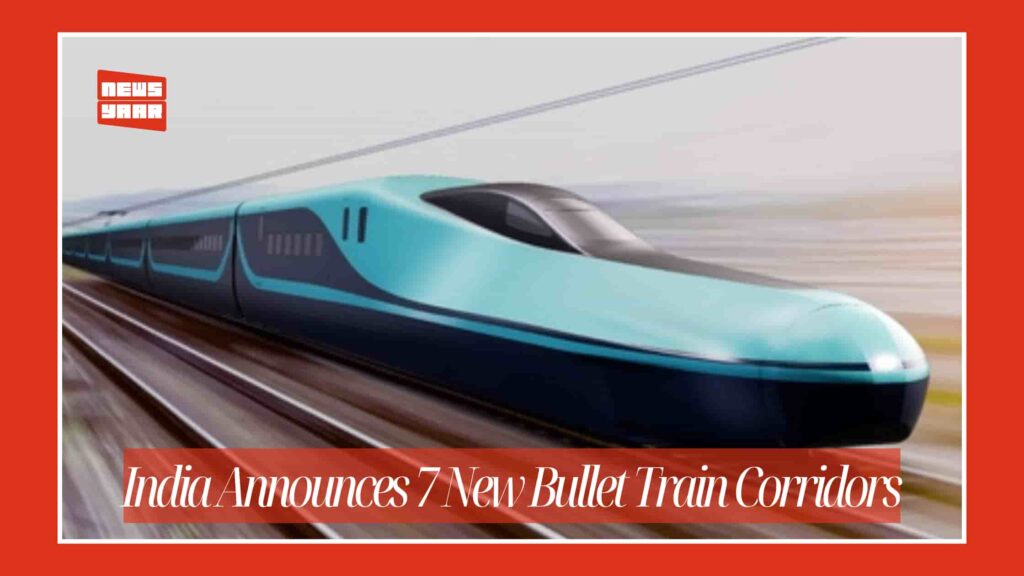
In a landmark expansion of India’s rail infrastructure, the Government of India has announced the development of seven new high-speed rail corridors — popularly referred to as bullet train routes — as part of the Union Budget 2026–27. The ambitious initiative aims to transform inter-city travel by significantly reducing travel times, boosting economic growth and enhancing connectivity between major urban and economic hubs across the country.Announcement and Policy ContextUnion Finance Minister Nirmala Sitharaman unveiled the corridors during her Budget 2026–27 speech in Parliament, categorising them as “growth connectors” that will promote environmentally sustainable passenger transport systems across India’s rail network. These high-speed corridors complement the Mumbai–Ahmedabad High-Speed Rail Corridor (MAHSR) — India’s first bullet train project — and build on the government’s broader infrastructure and mobility agenda.Railway Minister Ashwini Vaishnaw has confirmed that detailed preparations are underway, with Detailed Project Reports (DPRs) being finalized and pre-construction activities initiated through the National High Speed Rail Corporation Limited (NHSRCL). The government is focused on fast-tracking implementation and standardising high-speed rail system development nationwide.Proposed Bullet Train Corridors: Routes and ConnectivityThe announcement includes seven high-speed rail corridors that will link key cities and regions across India. These corridors are expected to span nearly 4,000 km and strategically connect major economic, industrial and cultural centres. The routes identified are:Mumbai–Pune High-Speed Rail Corridor — strengthening connectivity within Maharashtra’s economic belt.Pune–Hyderabad High-Speed Rail Corridor — linking western and southern economic hubs.Hyderabad–Bengaluru High-Speed Rail Corridor — a major southern technology and industry link.Hyderabad–Chennai High-Speed Rail Corridor — connecting southern metros with coastal economic zones.Chennai–Bengaluru High-Speed Rail Corridor — improving travel between two major southern cities.Delhi–Varanasi High-Speed Rail Corridor — enhancing northern connectivity with Uttar Pradesh’s cultural capital.Varanasi–Siliguri High-Speed Rail Corridor — extending high-speed reach toward eastern India and gateway regions.Collectively, these corridors aim to connect financial hubs, technology clusters, manufacturing centres and emerging cities with modern high-speed rail infrastructure.Strategic Goals and Economic RationaleGovernment officials have described the new corridors as not just transport projects but growth engines that will:Reduce travel times drastically between key city pairs (for example, a bullet train between Mumbai and Pune could reduce travel to under an hour), enhancing convenience and productivity.Stimulate regional economic development by creating linked urban-industrial corridors that attract investment, tourism and job creation.Support environmental sustainability by offering cleaner and more energy-efficient alternatives to road and air travel.Drive technology and manufacturing growth by enabling high-speed rail ecosystem development, including engineering, signalling, rolling stock and systems integration.Union Minister Ashwini Vaishnaw has emphasised that the initiative will contribute toward India becoming 100 per cent self-reliant (Atmanirbhar) in high-speed rail technologies, with a focus on leveraging indigenous manufacturing and innovation wherever feasible.Implementation and TimelineWhile the Mumbai–Ahmedabad corridor is already under construction and expected to begin phased operations starting 2027 for the Surat–Bilimora section and full completion by 2029, the new seven corridors are in the pre-construction and planning stage.Officials have indicated that preparation of DPRs, alignment finalisation, land acquisition and contract documentation will be prioritised over the coming months, with work expected to begin once these foundational studies are complete. Dedicated field teams for each corridor will support expedited project execution.Broader Impact on Indian Railways and MobilityThe seven new bullet train corridors represent a shift toward world-class rail mobility in India, aligning with global best practices in high-speed transportation. Once operational, these corridors are expected to:Enhance national connectivity across key economic belts in the west, south, north and east.Reduce congestion on existing air and road networks by providing faster, reliable alternatives.Boost tourism by enabling easy access to major cultural and heritage destinations.Encourage urban transformation through transit-oriented development along high-speed rail alignments.Looking Ahead: A New Era of Rail TravelThe announcement of seven additional bullet train corridors marks a transformational phase for Indian Railways, moving the nation closer to a widespread high-speed rail network that complements existing infrastructure and accelerates economic integration. By linking metropolitan centres and regional hubs with modern, efficient rail travel, the government aims to redefine mobility in India and position the country as a global leader in high-speed rail development.Summary of the New Bullet Train CorridorsRouteRegionStrategic RoleMumbai–PuneWestEconomic mobility in MaharashtraPune–HyderabadWest–SouthIndustrial and technology linkageHyderabad–BengaluruSouthConnects major IT & innovation hubsHyderabad–ChennaiSouthCoastal economic corridorChennai–BengaluruSouthSouthern metro connectivityDelhi–VaranasiNorthLinks capital with cultural heartlandVaranasi–SiliguriNorth–EastGateway to eastern region