


Spiritual Immersion at Isha’s Adiyogi: From Chikkaballapur to Coimbatore’s Mahashivratri

In the shadow of the 112-foot Adiyogi Shiva statue, the world’s largest bust of the Yogeshwara, a spontaneous road trip from Bengaluru unveils a cinematic tapestry of devotion, chants, and cosmic energy. From barefoot pilgrimages at Isha Foundation’s Chikkaballapur outpost, featuring the mesmerizing Adiyogi Light & Sound Show, to the temple realms of Linga Bhairavi, one day here transcends time, blending ancient wisdom with modern spectacle. This journey mirrors the grander spiritual vortex at Coimbatore’s Isha Yoga Centre, where Mahashivratri draws lakhs, dignitaries, and Sadhguru’s transformative rituals, as seen in past epics with President Droupadi Murmu and Defence Minister Rajnath Singh.Picture this: a midnight drive from Bengaluru’s bustle to Chikkaballapur’s serene foothills, 60 km away, where Isha’s Adiyogi replica beckons under starlit skies. The air hums with Sanskrit chants as devotees gather barefoot, shedding worldly weights at the threshold. The highlight? Adiyogi’s Light & Sound Show, a symphony of lasers, music, and narration tracing Shiva’s 84 prime yogas, from stillness to ecstatic tandav. Colors dance across the towering black steel form, evoking the Adiyogi’s Coimbatore original: 112 feet tall, weighing 500 tons, handcrafted over five years by 100 artisans using advanced alloy tech for seismic resilience. Unveiled in 2017 by PM Narendra Modi, it’s Guinness-recognized as yoga’s source, symbolizing the 7 chakras via its meditative gaze.The pilgrimage deepens at Linga Bhairavi Temple nearby, Isha’s consecrated powerhouse for the fierce Divine Feminine. Devotees offer coconuts amid flickering lamps, experiencing prasadam rituals that Sadhguru designed as energy elixirs, amplifying inner fire amid the yantra-charged sanctum. From dawn treks through mist-shrouded paths to communal yoga under Adiyogi’s watchful eyes, these 24 hours foster surreal calm: silent meditations dissolve ego, while group bhajans ignite unity. It’s no mere visit; it’s a reset, echoing Sadhguru’s vision of Adiyogi as humanity’s first yogi, gifting tools for self-realization.This intimate odyssey connects to Isha’s global beacon: the Coimbatore Yoga Centre, where Mahashivratri, next on February 15, 2026, erupts into a night-long vigil. Past editions set the template: Defence Minister Rajnath Singh as chief guest, Maharashtra CM Devendra Fadnavis, and ministers like L. Murugan joining lakhs from 6 PM to 6 AM. Sadhguru leads powerhouse sessions, midnight Sandhya meditations tapping planetary alignments for life-force surges, mantra chants, and musical feasts by top artists. A 2026 highlight? The first-ever Maha Abhishekam to the Yogeshwara Linga, with public registration for free immersion in sacred waters, mantras, and dedications amplifying its blessings.In 2023, President Droupadi Murmu served as Guest of Honour, received by Sadhguru for Pancha Bhutha Kriya at Dhyanalinga – a consecrated energy form for liberation. “I feel especially blessed… in Adiyogi’s presence,” she reflected, alongside Tamil Nadu Governor RN Ravi and Minister Thiru Mano Thangaraj. Shivratri’s Masi-month timing, per tradition, harnesses cosmic support for sadhana, turning all-night vigils into portals for transcendence.Why Adiyogi Captivates: Engineering Meets EternityAdiyogi isn’t just sculpture; it’s a technological marvel fused with mysticism. The Coimbatore colossus symbolizes 114 chakras (84 accessible via yoga), its jatamakuta cradling a crescent moon, eyes half-closed in kriya. Isha’s ecosystem – Dhyanalinga, Theerthakunds, and Bhairavi, forms a self-sustaining spiritual campus, drawing global seekers for programs like Inner Engineering.A Day’s Transformative RhythmDawn: Barefoot arrival, yoga amid hills, Adiyogi’s meditative aura dissolving dawn fog.Midday: Linga Bhairavi darshan, prasadam-fueled energy surges.Dusk: Light show spectacle – lights pulse like Shiva’s breath, sounds invoke 84 postures.Night: Chants fade into silence, mirroring Mahashivratri’s vigil blueprint.For the Bengaluru devotee, it’s “surreal calm” after urban chaos; for pilgrims worldwide, a call to yoga’s source. As Chikkaballapur’s Adiyogi lights up, it heralds Coimbatore’s 33rd Mahashivratri, a meaningful reminder: in Shiva’s gaze, every moment is eternal practice.
Soaring Heights: How Tata-Airbus H-125 Facility Marks India’s Aerospace Leap

India’s aerospace ambitions just touched new heights, literally. On February 17, 2026, Prime Minister Narendra Modi and French President Emmanuel Macron virtually inaugurated the Tata Advanced Systems Limited (TASL) Final Assembly Line (FAL) for Airbus H-125 light utility helicopters in Vemagal, Karnataka, from Mumbai. This isn’t mere infrastructure; it’s a fusion of strategic trust, technological prowess, and economic firepower, propelling India’s Make-in-India and Aatmanirbhar Bharat visions skyward.A Historic Virtual Ribbon-CuttingPicture this: Leaders from two global powers, Modi and Macron, hitting the digital button to unveil a facility that symbolises Indo-French synergy. Raksha Mantri Rajnath Singh, on-site at Vemagal, called it a “milestone in the strategic partnership between India and France,” quipping that “even the sky is not the limit.” Joining him were French Minister of Armed Forces and Veterans Affairs Catherine Vautrin, Union Civil Aviation Minister KR Naidu, Karnataka’s Minister for Large & Medium Industries MB Patil, Chief of Air Staff Air Chief Marshal AP Singh, Defence Secretary Rajesh Kumar Singh, and Secretary (Defence Production) Sanjeev Kumar.This event builds directly on TASL-Airbus’ prior triumph: the C-295 military transport aircraft FAL, India’s first private-sector final assembly for military planes. Now, the H-125 line cements a full-spectrum military aerospace ecosystem, blending French engineering with Indian manufacturing muscle.H-125: The Everest-Conquering WorkhorseAt its core, the H-125 is no ordinary chopper; it’s the world’s most trusted single-engine light utility helicopter, with unmatched reliability across brutal conditions. The military-optimised H-125M variant acts as a high-altitude force multiplier: stealthy low acoustic and thermal signatures enable tactical reconnaissance and surveillance. It delivers logistics to remote frontline outposts, rushes search-and-rescue (SAR) or medical evacuations (MEDEVAC), and thrives where others falter.Why? It’s the only helicopter to land on Mount Everest’s summit, proof of its extreme performance ceiling. For India’s armed forces, battling “hot-and-high” terrains from Ladakh’s icy peaks to Siachen’s glaciers, this is gold. Traditional fleets struggle above 6,000 meters; the H-125 powers through, ensuring supply drops, troop insertions, and rapid response in oxygen-starved zones. Globally, over 9,000 H-125 family units fly missions, from VIP transport to firefighting, logging 45+ million flight hours.PM Modi captured the pride: “We take pride in manufacturing in India the world’s only helicopter capable of flying to the heights of Mount Everest and exporting it worldwide.” Raksha Mantri echoed, praising its “exceptional reliability, versatility, and outstanding performance.”Economic Engine: Jobs, Investment, and ExportsThis FAL isn’t just about rotors; it’s an economic turbocharger. Projected investment surpasses ₹1,000 crore, igniting direct and indirect jobs for India’s “skilled and hardworking youth.” It supercharges the MSME ecosystem, now boasting 16,000+ defence-linked units supplying global giants.Since 2014, under Modi, reforms have flipped the script: Ordnance Factories corporatised into seven DPSUs, liberalised FDI (up to 74% on the automatic route), and twin Defence Industrial Corridors (Uttar Pradesh-Tamil Nadu). Private sector share? A robust 25% of total defence production. Exports? Multi-fold surge, ranking India among the top global defence exporters. Foreign OEMs now tap Indian MSMEs for components, with Rajnath Singh inviting deeper tech transfers to fuel security solutions worldwide.Schemes like Production Linked Incentives (PLI), massive infrastructure (roads, ports), and startup boosts have slashed gestation periods, drawing high-capital plays like this. Result: Holistic growth, from domestic self-reliance to export powerhouse.Economic Impact MetricsDetailsInvestment>₹1,000 croreEmploymentDirect + indirect jobs for youth; boosts 16,000+ MSMEsDefence ReformsPrivate share at 25%; exports up manifoldBroader EcosystemPLI schemes, FDI liberalisation, industrial corridorsGlobal ReachComponent sourcing by foreign firms; export-ready H-125sMake-in-India’s Aerospace AscentLaunched in 2014, Make-in-India targeted manufacturing revival; Aatmanirbhar Bharat amplified it post-COVID, prioritising critical tech. Defence exemplifies: From 65% import dependence, India now produces 70%+ indigenously. Private players like TASL lead, absorbing complex tech via offsets and partnerships.This H-125 FAL exemplifies “mutually beneficial partnerships.” Airbus gains India as a low-cost hub; TASL masters final assembly, testing, and avionics integration. Future? Potential exports to friendly nations, plus civilian H-125 variants for tourism, charters, and disaster relief. Karnataka’s Vemagal, near Bengaluru’s aerospace cluster, optimises logistics, skills, and supply chains.Indo-French Ties: Boundless HorizonsIndia-France defence bonds run deep: Rafale jets, Scorpene submarines, joint exercises. Macron’s visit layered geopolitics, countering China in Indo-Pacific, onto tech ties. Vautrin’s presence signals sustained commitment. As Singh noted, collaborations are “limitless,” eyeing AI, drones, and sixth-gen fighters.Charting the Future SkiesThe Vemagal FAL isn’t an endpoint; it’s a launchpad. For troops in unforgiving Himalayas, it means swifter rescues. For workers, stable careers. For India, a louder global voice in aerospace. As helicopters hum off the line, they carry more than passengers; they ferry self-reliance, innovation, and unbreakable partnerships into tomorrow’s skies.
Amazon Opens Its Second-Largest Office in Asia with 12-Storey Campus in North Bengaluru
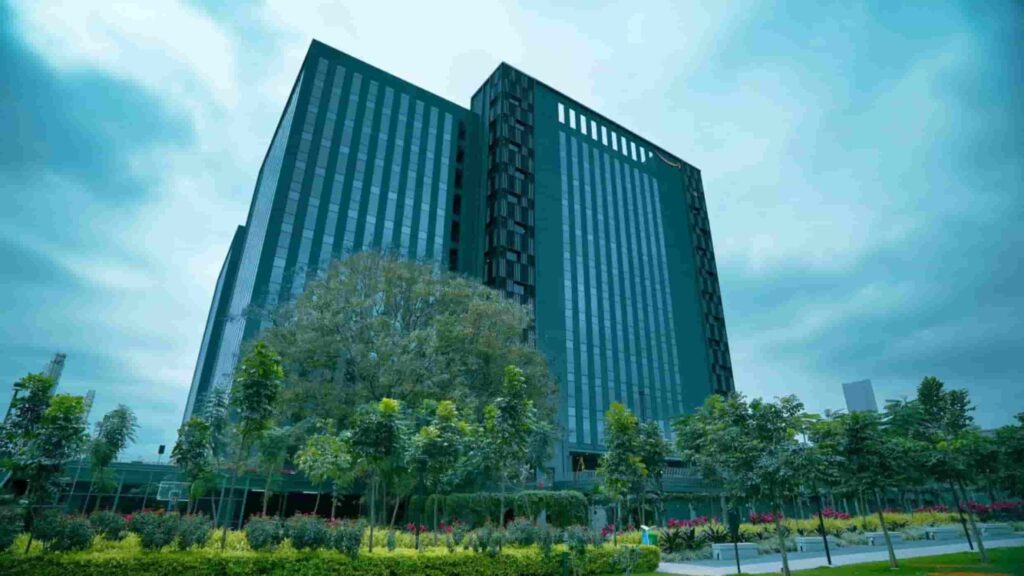
Global technology and e-commerce company Amazon has inaugurated its second-largest office in Asia in North Bengaluru, marking another major milestone in the company’s long-term expansion in India. The new corporate campus reflects Amazon’s continued investment in the country’s technology ecosystem and highlights Bengaluru’s position as one of the world’s leading technology hubs.The newly opened office spans 1.1 million square feet and consists of a 12-storey building, making it one of the largest corporate campuses operated by the company in the Asia-Pacific region. The facility is designed to accommodate more than 7,000 employees working across various business divisions including e-commerce, technology, operations, payments, and seller services.The campus was officially inaugurated on 23 February 2026 in the presence of Karnataka’s Minister for Large and Medium Industries and Infrastructure Development, Dr. M. B. Patil, along with senior leaders from Amazon India.Location and Campus SizeThe new Amazon office is located in North Bengaluru, near the rapidly developing technology corridor close to the airport region. The campus stands on a five-acre site located about 15 kilometres from Kempegowda International Airport, making it strategically accessible for employees and business partners.With its 1.1 million square-foot built-up area, the facility ranks as Amazon’s second-largest office building in Asia and one of its largest single-building corporate offices globally.The campus is part of Amazon’s broader strategy to expand its operational and technological presence in India, where the company has been building large infrastructure facilities for more than two decades.A Major Hub for Amazon’s India OperationsThe new Bengaluru campus will serve as a major hub for several of Amazon’s key business functions in India. Employees working in technology development, e-commerce operations, payments, logistics, and seller services will operate from this facility.Amazon India’s leadership has emphasised that Bengaluru has played a central role in the company’s journey in the country. Over the years, the city has hosted some of Amazon’s earliest technology and innovation teams.Samir Kumar, Country Manager of Amazon India, stated that India remains a long-term priority for the company and that Bengaluru continues to be a critical centre for talent, innovation, and global operations.Modern Workplace InfrastructureThe campus has been designed with a modern workplace philosophy that prioritises collaboration, flexibility, and employee well-being. The building includes multiple meeting rooms, collaboration zones, breakout spaces, and event areas to encourage teamwork and innovation.Several recreational and wellness facilities have also been incorporated into the campus. These include:Basketball and pickleball courtsOutdoor landscaped spacesAmphitheatres and community gathering areasRecreation zones for employeesLarge cafeterias serving diverse cuisines across two floorsThe design approach aims to create a workplace that supports both productivity and work-life balance for thousands of employees working in the building.Sustainability and Future-Ready DesignAmazon’s new campus also reflects the company’s broader sustainability commitments. The building has been designed with features intended to support energy efficiency, environmental sustainability, and responsible resource usage.Large corporate campuses like this are increasingly designed to reduce carbon footprints, improve indoor air quality, and promote sustainable operations.The campus is also aligned with Amazon’s global environmental initiative known as The Climate Pledge, through which the company aims to achieve net-zero carbon emissions by 2040.Amazon’s Investment in IndiaThe opening of this large office campus also highlights the scale of Amazon’s investment in the Indian market. Since entering India, the company has invested over 40 billion dollars in the country, and it has committed an additional 35 billion dollars in investment by 2030.India has become one of Amazon’s most important global markets, not only for e-commerce but also for technology development, cloud services, logistics, and digital payments.Large corporate campuses like the one in Bengaluru are intended to support this long-term expansion strategy while strengthening the company’s innovation capabilities in the region.Bengaluru as a Global Technology HubThe decision to establish such a large office in Bengaluru also reflects the city’s status as a global centre for technology and innovation. Often referred to as India’s “Silicon Valley,” Bengaluru hosts thousands of technology companies, research centres, and startups.The presence of global companies such as Amazon, along with major technology firms, has helped transform the city into one of the world’s largest technology talent hubs.Government officials have also highlighted that investments like Amazon’s new campus contribute significantly to the local economy by creating high-skilled jobs, strengthening the technology ecosystem, and supporting the growth of India’s digital economy.Economic and Employment ImpactThe new campus is expected to generate significant employment opportunities and strengthen the technology ecosystem in Bengaluru. With space for over 7,000 employees, the facility will host professionals working in engineering, operations, business strategy, logistics management, and digital services.In addition to direct employment, large corporate campuses often create indirect economic benefits by supporting local businesses, service providers, and infrastructure development in surrounding areas.Experts believe that investments of this scale also reinforce India’s role as a major centre for global technology development.ConclusionAmazon’s new 12-storey corporate campus in North Bengaluru represents one of the largest office developments by a technology company in India. As the company’s second-largest office in Asia, the facility underscores Amazon’s continued commitment to expanding its operations in the country.With thousands of employees expected to work from the campus and with modern infrastructure designed for collaboration and innovation, the new office is likely to play an important role in Amazon’s global operations in the years ahead.The project also highlights the growing importance of Bengaluru as a global technology hub and reflects India’s increasing role in the international digital economy.