


Amarnath Yatra 2026: Faith, Security, and the Himalayan Pilgrimage Season
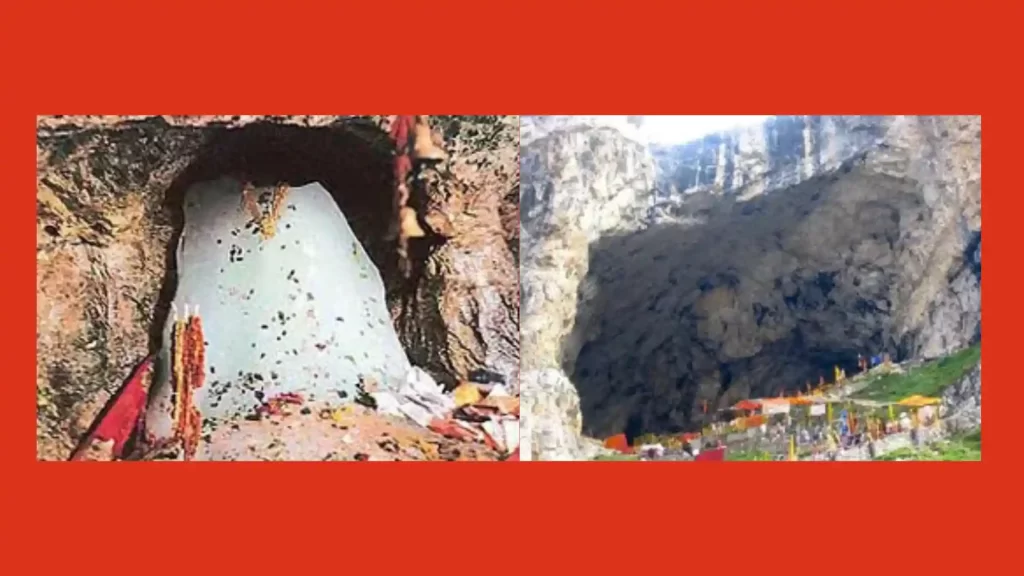
The Amarnath pilgrimage in 2026 is unfolding as one of Jammu and Kashmir’s most significant religious and administrative operations of the year, combining devotion, difficult Himalayan terrain, large-scale public infrastructure, and extensive security planning. While the main Shri Amarnath Ji Yatra to the high-altitude cave shrine runs from July 3 to August 28, the parallel Baba Budha Amarnath Yatra in Poonch began in August and will also culminate around Raksha Bandhan. Together, these pilgrimages reflect the many layers of the Amarnath tradition: the spiritual pull of Lord Shiva, the importance of local shrines, the resilience of pilgrims, and the enormous coordination required to make a high-altitude religious journey safer and more accessible.Main Amarnath Yatra 2026The principal Shri Amarnath Ji Yatra began on July 3, 2026, and is scheduled to conclude on August 28, covering 57 days. Registration opened on April 15 through online and offline channels, with arrangements intended to regulate the number of pilgrims and manage the capacity of the two main routes. The pilgrimage leads to the revered cave shrine in south Kashmir, where devotees worship the naturally formed ice Shivling associated with Lord Shiva. The two traditional routes begin from Pahalgam and Baltal, each offering a different physical and logistical experience.The Pahalgam route is longer and generally considered more gradual, while the Baltal route is shorter but steeper. Pilgrims may use facilities such as ponies, palkis, camps, and other authorised support services, though the journey remains physically demanding because of altitude, weather, steep gradients, and rapidly changing mountain conditions.The Significance of the Cave ShrineThe Amarnath Cave is one of the most revered Shiva pilgrimage sites in India. Its religious importance comes from the belief that Lord Shiva revealed the secret of immortality to Goddess Parvati in this remote Himalayan cave, away from the distractions of the world. For devotees, the journey is therefore not simply a visit to a temple. It is an act of endurance and surrender, where the difficulty of the terrain becomes part of the spiritual experience. Walking through the mountains, chanting “Har Har Mahadev,” and reaching the cave after days of effort gives the pilgrimage a deeply personal meaning that cannot be separated from the physical journey.Baba Budha Amarnath Yatra. The Baba Budha Amarnath Yatra is a separate but closely associated pilgrimage to the ancient Baba Budha Amarnath Temple in Rajpura village of Mandi tehsil in Poonch district. The 2026 yatra began in mid-August and will continue until August 28, with the first batch of pilgrims travelling from Bhagwati Nagar in Jammu under enhanced security arrangements. The temple is located at an altitude of around 4,600 feet and is associated with a self-manifested white stone Shivling. Pilgrims traditionally bathe in the nearby Pulastya River before entering the shrine, adding a ritual dimension to the journey. The route from Jammu to Poonch covers roughly 230 kilometres through mountainous terrain. Although it is distinct from the higher-altitude cave pilgrimage, many devotees regard the Baba Budha Amarnath journey as an important part of their wider spiritual connection with the Amarnath tradition. Security and AdministrationBecause the pilgrimage takes place in sensitive and difficult terrain, security is one of the central pillars of the 2026 arrangements. Authorities have deployed multi-layered surveillance across Poonch, Rajouri, Jammu, and the main transit routes, while pilgrim convoys are being moved under police escort with additional Central Armed Police Forces deployed in key areas. The district administration has prepared waterproof tents, langar facilities, parking zones, medical stations, sanitation arrangements, and route-management systems. A dedicated portal has also been launched to support advance registration for pilgrims travelling to Baba Budha Amarnath from different parts of the country. These arrangements are particularly important because a pilgrimage of this scale involves more than crowd control. Authorities must coordinate transport, emergency response, weather monitoring, food supply, medical care, communications, and evacuation systems across difficult terrain where access can quickly become complicated.Food Safety at BaltalFood safety has emerged as another important part of the 2026 Amarnath operation. At the Baltal base camp, the Food Safety Department tested 576 samples during the SANJAY-2026 exercise and reported that all samples met the prescribed standards. The department also carried out 354 inspections of langars and food establishments, conducted awareness programmes for food handlers, and organised training sessions on hygiene and safe food preparation. Such preventive measures are crucial because thousands of pilgrims depend on communal kitchens and temporary food facilities during the yatra. The figures show that modern pilgrimage management is no longer limited to roads, tents, and security. Public health, sanitation, food quality, and disease prevention have become equally important parts of the infrastructure supporting religious travel. The Chhari MubarakThe Chhari Mubarak, the sacred mace associated with the Amarnath pilgrimage, remains one of the most important religious traditions of the yatra. In 2026, it is scheduled to leave Srinagar on August 22 and reach the Holy Cave on August 28 after halting at important religious locations along the route. The journey includes visits to temples such as the Shiv Temple at Bijbehara, Martand-Tirth Mattan, and the Gourishankar Temple at Pahalgam. Officials have been directed to ensure that firewood, food, puja materials, drinking water, accommodation, and sanitation remain available throughout the procession. The Chhari Mubarak gives the yatra a ceremonial and spiritual centre. While ordinary pilgrims undertake the difficult route in large numbers, the sacred mace represents the continuity of the tradition itself, linking present-day devotees with generations of worshippers who have followed the same devotional path. Why the Yatra Matters to the RegionThe Amarnath Yatra has significance beyond religion. It supports local transport operators, pony owners, porters, hotels, restaurants, medical workers, traders, camp operators, and small businesses along the routes. For many families in the region, the pilgrimage season is an important source of annual income.It also brings together people from different regions of India, creating a distinctive social and cultural exchange. Pilgrims arrive from across the country, while local communities, security personnel, volunteers, and service providers participate in the organisation of the journey. At the same time, the scale of the pilgrimage creates
Sonamarg Tunnel: A Key Milestone in Jammu and Kashmir’s All-Weather Connectivity
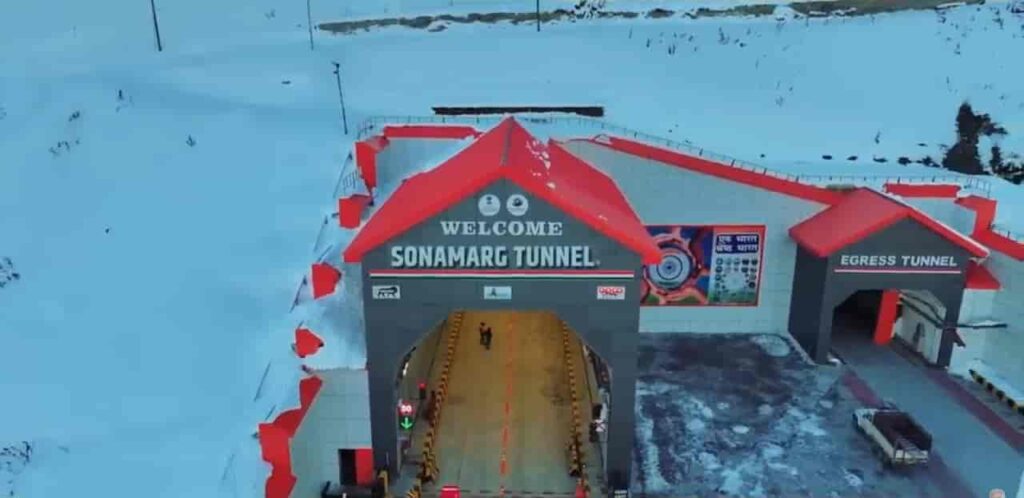
The Sonamarg Tunnel, officially known as the Z-Morh Tunnel, marked a significant step in improving infrastructure in Jammu and Kashmir. Built along the strategic Srinagar–Leh highway, the tunnel has addressed one of the region’s long-standing challenges—seasonal isolation of Sonamarg due to extreme weather conditions.For decades, Sonamarg remained cut off during winters as heavy snowfall and avalanches made the route unsafe and often impassable. The opening of this tunnel has fundamentally changed that reality, ensuring smoother, safer, and uninterrupted connectivity.Overcoming a Long-Standing Connectivity ChallengeLocated between Gagangir and Sonamarg, the tunnel bypasses a particularly vulnerable stretch of road that was notorious for landslides, avalanches, and sharp turns. This stretch, often referred to as the “Z-Morh” due to its winding shape, posed serious risks to travellers and frequently led to prolonged road closures.With the tunnel now operational, the dependency on weather conditions has been significantly reduced. What was once a seasonal route has now been transformed into an all-weather corridor, ensuring that Sonamarg remains accessible throughout the year.Engineering in Extreme TerrainConstructing the tunnel in the Himalayan region was a complex and demanding task. The area is characterised by fragile geology, sub-zero temperatures, and unpredictable weather patterns, all of which posed challenges during construction.The tunnel stretches approximately 6.5 kilometres and has been designed as a modern, two-lane passage capable of handling bi-directional traffic efficiently. Advanced tunnelling techniques were used to cut through the mountainous terrain, while maintaining structural stability and safety.In addition to the main tunnel, extensive work was carried out on approach roads and protective structures to safeguard the route from avalanches and falling debris.Safety and Modern InfrastructureThe Sonamarg Tunnel has been equipped with several modern safety systems to ensure a secure travel experience. Continuous ventilation ensures air quality inside the tunnel, while surveillance systems allow real-time monitoring of traffic movement.Emergency response mechanisms, including escape routes and communication systems, have been integrated into the design. These features are particularly important given the tunnel’s location in a remote and high-altitude region, where immediate external assistance may not always be available.Boost to Tourism and Local EconomyOne of the most immediate impacts of the tunnel has been on tourism. Sonamarg, often called the “Meadow of Gold,” is one of the most scenic destinations in Jammu and Kashmir, but its accessibility was limited to a few months each year.With year-round connectivity now possible, the region is expected to witness a steady increase in tourist inflow. This will directly benefit local businesses, including hotels, transport operators, and small vendors who rely heavily on seasonal tourism.The tunnel has also improved the movement of goods and services, contributing to better economic stability for local communities.Strategic Importance and Connectivity to LadakhBeyond tourism, the tunnel plays a crucial role in enhancing connectivity towards Ladakh. The Srinagar–Leh highway is of significant strategic importance, particularly for defence movement and logistics.By ensuring smoother and more reliable access along this route, the Sonamarg Tunnel strengthens both civilian and strategic mobility in the region. It also complements larger infrastructure projects such as the Zojila Tunnel, which aims to further enhance all-weather connectivity between Srinagar and Leh.Transforming Travel in the RegionThe experience of travelling to Sonamarg has changed considerably with the opening of the tunnel. Journeys that were once uncertain and weather-dependent have become more predictable and safer.Reduced travel time, improved road safety, and uninterrupted access have collectively enhanced the overall connectivity of the region. This shift is expected to play a long-term role in integrating remote areas with mainstream economic and social networks.The Sonamarg Tunnel stands as a testament to India’s growing capability in executing complex infrastructure projects in challenging terrains. By addressing both connectivity and safety concerns, it has not only improved access to a key tourist destination but also contributed to the broader goal of regional development in Jammu and Kashmir.
Snowfall Returns to Bare Himalayas: Tourism Boom Brings Joy, Chaos, and Economic Lifeline
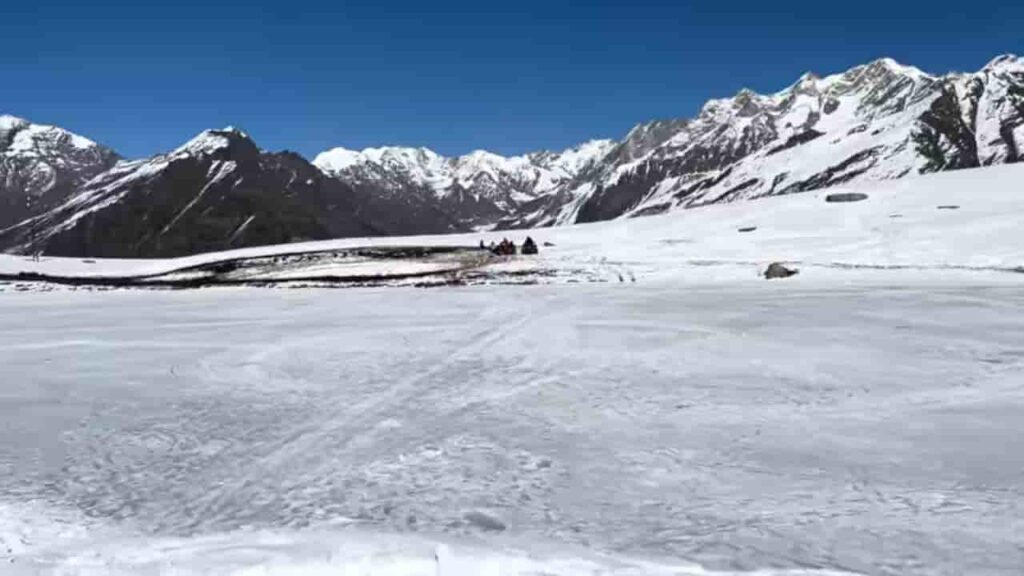
New Delhi – After months of barren peaks and a crippling “snow drought,” fresh western disturbances have blanketed Uttarakhand, Himachal Pradesh, and Jammu & Kashmir with snow, igniting jubilation among tourists and local businesses. From Auli’s ski slopes to Manali’s adventure hubs, the white resurgence is breathing life into mountain economies, but a sudden influx has exposed infrastructure gaps, traffic snarls, and administrative overstretch.The Himalayas, Asia’s “Third Pole,” stand starkly bare this winter, with vast swathes of peaks in Uttarakhand, Himachal Pradesh, and Jammu & Kashmir defying their snow-clad legacy. Satellite data and IMD reports confirm a severe “snow drought”, the lowest snow persistence in 23 years per ICIMOD’s 2025 update, threatening rivers, glaciers, and 2 billion downstream lives.December 2025’s 100% snowfall deficit in Uttarakhand and 99% in Himachal crushed tourism: Auli hotel occupancy plunged 80%, leaving taxi drivers and paragliding operators idle. Shimla and Gulmarg saw 50-70% cancellations as the “snowless selfies” trend went negative online. But IMD’s Feb 9-11 forecast delivered: 6-12 inches in higher reaches, reviving hopes. “Finally, the mountains look like mountains again,” cheered a Delhi visitor in Manali, where bookings spiked 300% overnight.Causes: Warming & VariabilityIPCC links this to global warming: warmer air favors rain over snow, quickens melt, shifts snowline upward. Western disturbances, key moisture carriers, were weak/irregular, delaying onset 30-40 days. Over five years, winters lag 1980-2020 averages, with mid-elevations (3,000-6,000m) hit hardest.Primary Drivers:Weak Western Disturbances: Extratropical storms from the Mediterranean deliver winter moisture but were irregular/weak in 2025-26, causing 100% deficits in Uttarakhand, 99% in Himachal. Delayed onset (30-40 days late) slashed accumulation.Rising Temperatures (Elevation-Dependent Warming): HKH warms 2-3x global average; warmer air holds more moisture, shifting precipitation from snow to rain, raising snowline, and accelerating melt.Snow Drought Types:Precipitation Deficit: Below-normal winter storms (e.g., Dec 2025: J&K -78%, Ladakh -63%).Snowmelt Drought: Normal precipitation but hot conditions cause rain/early melt.Long-Term Trends: ICIMOD: 23.6% snow persistence drop (23-year low); 4/5 recent winters below 1980-2020 norms. IPCC: Warming shortens cover, worsens by 2100.Compounding Factors: Greenhouse emissions amplify variability; mid-elevations are most vulnerable as small temp rises tip the snow-to-rain balance.Impacts & Effects Water Security: Snowmelt supplies 25% runoff to the Indus, Ganga, and Brahmaputra; glaciers add dry-season flow. Losses spike spring melt, then shortages, risking droughts for 1/4 of humanity’s basins.Glaciers: Uttarakhand’s may turn negative mass balance; HKH projected 75% loss by 2100.Hazards: Destabilized slopes fuel landslides, GLOFs, fires, Uttarakhand/Himachal fires rose amid dry winters.Economy/Tourism: Auli bookings crashed; Shimla/Manali snowless.Impacts of Reduced Himalayan Snow on Ganges and Indus RiversReduced snow in the Himalayas, exacerbated by warming and weak western disturbances, poses severe threats to the Ganges (Ganga) and Indus basins, which sustain 1.65-2 billion people.Short-Term Effects (Peak Melt Phase)Peak Flows Shift: Earlier snowmelt floods rivers prematurely (spring surge), raising flood risks in the Indo-Gangetic plains.Temporary Boost: Glacier/snow melt temporarily increases runoff (to 2050), but erratic.Long-Term Consequences (Post-2050)Declining Dry-Season Flow: Snow contributes 25% annual runoff; deficits (Indus: 30-50%, Ganga: 50-60% by 2100) slash baseflow, causing summer shortages for irrigation, drinking water, and hydropower.Ganga Basin: Upper Ganga snow persistence down 17%; earlier melt disrupts Gangotri/Ganges timing, hitting 500M+ farmers, ecosystems (forest biodiversity loss).Indus Basin: 23% snow drop; critical for Pakistan/India agriculture/hydropower; projected 20-30% flow reduction by 2100.Broader RisksDroughts/Water Stress: Shorter snow cover (5 fewer days/decade) worsens seasonal deficits.Agriculture: 129M farmers affected; reduced irrigation in kharif/rabi seasons.Hydropower/Ecosystems: Diminished reservoirs; biodiversity shifts, fires.Glacier Amplification: Combined with 75% HKH glacier loss by 2100.ICIMOD urges drought plans and transboundary cooperation.Economic Lifeline for Mountain CommunitiesSnowfall is the heartbeat of Himalayan tourism, fueling 70% of winter revenue in hill stations. Himachal’s adventure sector, skiing, snowmobiling, yak safaris, generates ₹5,000 crore annually, employing 2 million in hotels, homestays, taxis, and gear rentals. Uttarakhand’s Auli and Chopta saw ₹1,200 crore from the 2025 peak season alone. Local vendors selling woolens, momos, and hot chai thrive; pony rides and snowman-building add family fun.In Gulmarg, gondola rides resumed at full capacity, injecting cash into shepherds and handicraft sellers. “One good snow week equals a month’s earnings,” said a Manali hotelier. J&K’s Pahalgam reported 40% occupancy jump, easing post-conflict economic pressures. For women-led homestays and tribal artisans, it’s empowerment: snow draws cultural tourists craving authentic pahadi experiences.Joy Amid Chaos: The Double-Edged SnowfallTourists are ecstatic, families build snow forts, influencers capture reels, and adventure seekers hit slopes. “Pure magic after the drought scare,” posted a group from Punjab. But the rush creates mayhem: narrow Rohtang Pass jams with 5,000 vehicles daily; Auli’s lone cable car queues stretch hours. In Shimla, overbooked hotels turn away families, sparking online fury.Poor preparedness amplifies woes. Landslides from melt-snow mix block paths; inadequate parking floods meadows; waste piles up sans dustbins. Last year, Manali’s “snow chaos” saw 20-hour delays, oxygen shortages at high camps, and petty scams. Locals lament: “Tourists bring money but trash our paradise.”Both Sides: Boom vs. BurdenPro-tourism voices hail snow as salvation: “It saved our season,” says a Kasol trek operator. Businesses invested in snow chains, heated tents—paying off now. Environmentally, snow aids groundwater recharge, curbing wildfires.Critics warn of overload: fragile ecology suffers trampling, pollution spikes (diesel generators, plastic litter). Over-reliance risks bust-boom cycles; climate-vulnerable hills can’t sustain endless crowds. “Sustainable numbers, not mass frenzy,” urges a Nainital activist.Path Forward: Building ResilienceAuthorities must act decisively:Local Administration: Deploy traffic wardens, mobile toilets, waste squads; enforce carrying capacity (e.g., 2,000/day in Auli). Digital booking for parking/gondolas prevents no-shows.State Governments: Himachal/Uttarakhand invest ₹500 crore in snow-clearing machines, widened roads (Atal Setu-style tunnels), and eco-lodges. Promote off-peak treks and homestays via apps.Central Government/Ministries: MoT allocates ₹2,000 crore for infra (helicopter pads, EV charging at 5,000m). Skill 1 lakh youth in hospitality/glaciology tourism. NGT-monitored waste rules; drone surveillance for crowds.Collaborative Wins: Public-private PPPs for solar-powered resorts; train locals as guides. Incentives for green certifications attract high-end tourists, boosting per-head spend 3x.With smart planning, snow can sustain joy and jobs without chaos. As peaks gleam anew, balancing delight with duty will secure these economies for winters ahead.
Madhavi Latha: The Engineer Behind the World’s Highest Rail Bridge
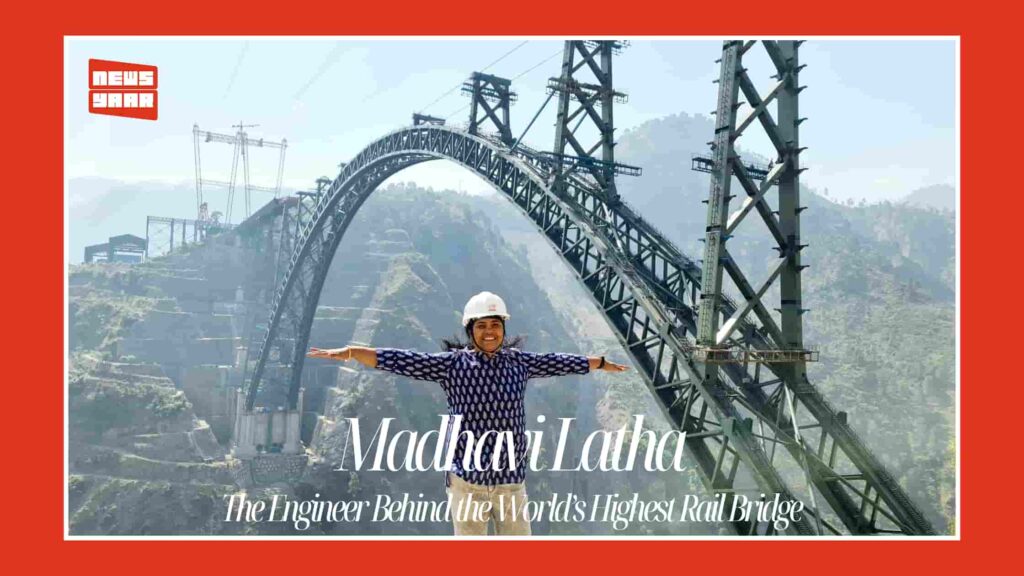
When the Chenab Rail Bridge, the world’s highest railway bridge, stands tall amid the rugged Himalayas, it represents more than an engineering marvel. It tells the story of Dr. G. Madhavi Latha, the engineer whose expertise and vision played a pivotal role in turning an impossible idea into reality. She has also been awarded the NDTV Science Icon of the Year Award.Towering at 359 metres above the Chenab River in Jammu and Kashmir, the bridge is higher than the Eiffel Tower and is one of India’s most ambitious infrastructure projects. Designed to withstand extreme winds, earthquakes, and challenging geological conditions, the Chenab Bridge is a symbol of modern India’s engineering strength, and Dr. Madhavi Latha was at the heart of it.A professor at IIT Madras, Dr. Madhavi Latha, served as the geotechnical consultant for the project. Her role was crucial: the bridge stands in a highly seismic zone with fragile rock formations and unpredictable terrain. Traditional construction methods were not enough. Innovative geotechnical solutions were required to stabilise slopes, design foundations, and ensure long-term safety in one of the most hostile environments imaginable.Dr. Latha and her team worked extensively on slope stabilisation, foundation design, and rock reinforcement, addressing landslide risks and geological uncertainties. What made the challenge even greater was the remoteness of the site, harsh weather conditions, and limited accessibility. Despite these obstacles, her scientific approach and practical problem-solving ensured that the bridge could safely support high-speed trains while enduring nature’s extremes.Beyond its technical brilliance, Dr. Madhavi Latha’s contribution carries deep symbolic value. In a field traditionally dominated by men, her leadership and expertise have made her an inspiration for young engineers across India. She has often spoken about how the project demanded patience, collaboration, and unwavering commitment, qualities as critical as technical knowledge.The Chenab Rail Bridge is a vital link in the Udhampur–Srinagar–Baramulla Rail Line (USBRL) project, aimed at improving connectivity, mobility, and development in Jammu and Kashmir. Its completion marks a major milestone in India’s infrastructure journey.Dr. Madhavi Latha’s story reminds us that behind every iconic structure lies human effort, intellect, and resilience. As trains begin to cross the world’s highest rail bridge, they carry with them not just passengers, but the legacy of an engineer who redefined what was possible.