


Ravi Tamta: The Almora Innovator Behind India’s New Flying Vehicle Prototype

For years, the idea of a flying car has existed somewhere between science fiction and engineering ambition. In India, that idea has now taken an unusual turn in the hills of Uttarakhand.Ravi Tamta, an innovator from Almora, has developed and test-flown a single-seater electric flying vehicle prototype called HAPIDA SKYNeX. The prototype, developed under his venture Hapida Sky, has attracted attention after videos of its test flight in Almora surfaced online.The achievement is particularly striking because Tamta’s work has emerged from Kaflikhan village in Almora, rather than from a large aerospace company or a major metropolitan technology hub. His journey reflects a growing interest in grassroots innovation in India’s smaller towns and hilly regions.At the same time, the vehicle is still a prototype. It is not a commercially available flying car, and its development should not be confused with the large-scale electric vertical take-off and landing aircraft programmes being pursued by established aerospace companies around the world.What makes the story interesting is the attempt itself: using electric propulsion and modified drone technology to explore personal air mobility in a region where terrain can make conventional transportation difficult.Who Is Ravi Tamta?Ravi Tamta is a young entrepreneur and innovator based in Almora, Uttarakhand. His company, Hapida, describes him as its founder and says his work focuses on developing technology and products suited to hilly areas and village life. His earlier work has included several unconventional inventions. Hapida’s website lists products and projects ranging from a smart bamboo stick and mobile-chargeable shoes to an electrolyte pump that the company describes as an electric vehicle charging technology. This background is important to understanding Tamta’s latest project.His work has consistently focused on using relatively accessible technology to address problems associated with difficult terrain, mobility and everyday life in hill regions.The flying vehicle is an extension of that approach, although on a considerably more ambitious scale.HAPIDA SKYNeX: What Has Been Developed?The vehicle developed by Tamta is known as HAPIDA SKYNeX.It is described as a single-seater electric personal flying vehicle prototype. Unlike the conventional image of a flying car that can drive on roads and then take off, SKYNeX is better understood at its current stage as a compact electric vertical-flight vehicle.The prototype uses multiple electric motors and propellers to generate lift and manoeuvre through the air. Its design draws on principles used in multirotor drones, allowing the vehicle to take off vertically rather than requiring a conventional runway.The recent test flight in Almora demonstrated that the prototype could become airborne with a person onboard. Reports said the test was conducted in an open field in the Almora region.That distinction matters.SKYNeX is currently a flying vehicle prototype, not a road-going car that can seamlessly switch between driving and flying.Calling it a “flying car” is useful for describing the broader idea behind the project, but the technology demonstrated so far is closer to a personal electric aerial vehicle.The Almora Test FlightThe test flight became the moment when Tamta’s project moved from an experimental concept to something that could be seen operating in the real world.The prototype was flown in an open area in Almora, with Tamta demonstrating its ability to lift off and remain airborne.The test attracted attention because of the location.Almora is part of Uttarakhand’s mountainous Kumaon region, where steep slopes, winding roads and difficult terrain can make road connectivity time-consuming.For such regions, the concept of short-distance aerial mobility has obvious appeal.A journey that requires considerable time by road could theoretically be shortened dramatically if a small electric aircraft could travel directly from one point to another.Reports surrounding the prototype have cited the possibility of reducing journeys that could take around 90 minutes by road to roughly 10 minutes through the air. These figures represent the potential being discussed around the concept, rather than an established commercial service. Why Build a Flying Vehicle in the Hills?The geography of Uttarakhand provides an interesting context for the project.Mountainous terrain makes transportation fundamentally different from transportation across plains.Roads often have to follow the contours of mountains rather than taking a straight route between two locations. Building new roads can involve tunnels, bridges, land acquisition and significant construction costs.Air travel, in principle, can bypass some of these geographical constraints.This is one reason small electric aircraft and vertical-flight technologies are attracting interest globally.For a state such as Uttarakhand, potential applications could extend beyond personal transportation.Such aircraft could eventually have applications in emergency response, medical transportation, tourism, logistics and connectivity to remote areas.However, turning that potential into a safe and economically viable transportation system would require considerably more development.From Drone Technology to Personal Air MobilityThe basic technology behind SKYNeX draws on the rapid development of electric drone systems.Multirotor drones have demonstrated that multiple electronically controlled propellers can provide vertical lift and directional movement without the need for conventional aircraft wings or runways.The challenge becomes much greater when the system has to carry a human being.A passenger-carrying aircraft needs considerably higher levels of reliability, redundancy, structural strength, battery capacity, flight control and safety.A drone that weighs a few kilograms can tolerate design limitations that a vehicle carrying a person cannot.That is why a successful prototype flight is only an early stage in the development process.The Biggest Challenge: SafetyThe most important question surrounding any passenger-carrying flying vehicle is not whether it can take off.It is whether it can take off safely, remain controllable and land safely under a wide range of conditions.A human-carrying electric aircraft must account for motor failures, battery problems, electronic failures, weather conditions, loss of control, emergency landings and structural stresses.It also needs systems capable of preventing a single component failure from immediately becoming a catastrophic event.For commercial deployment, aviation regulators would also need to establish appropriate certification and operating requirements.Therefore, the successful flight of SKYNeX should be seen as a demonstration of a prototype’s capability, not as proof that the vehicle is ready for public transportation.The Battery ProblemElectric propulsion offers an important advantage because electric motors are mechanically simpler than conventional combustion engines and can produce power efficiently.But batteries remain one of the
VoxelGrids Builds India’s First Indigenous MRI Machine: A 12-Year Zoho-Backed Mission
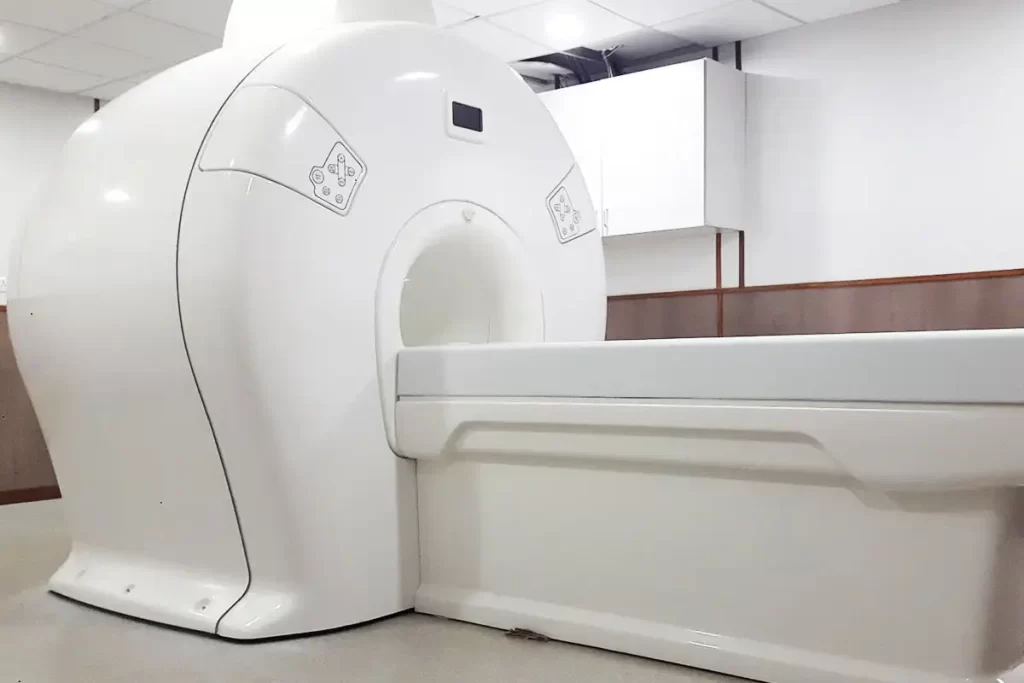
In a major milestone for Made-In-India medtech, VoxelGrids, a Zoho-backed start-up, has developed the country’s first indigenous MRI (Magnetic Resonant Imaging) scanner, deploying it at Chandrapur Cancer Care Foundation near Nagpur as the culmination of a 12-year mission by Founder Arjun Arunachalam and his team to domestically design and build an MRI system, a critical diagnostic tool for hospitals that currently relies almost entirely on imports. The scanner, with a Magnetic Field Strength of 1.5 tesla, is not just a locally made version of MRIs from global giants like Siemens or GE HealthCare but comes with its own technological advancements, with VoxelGrids’ MRI scanners, due to the absence of liquid helium, being around 40 per cent cheaper to build, transforming how India accesses critical diagnostic technology.The 12-Year Journey: From Arjun Arunachalam’s Vision to Chandrapur Cancer Care DeploymentVoxelGrids’ founder Arjun Arunachalam embarked on a 12-year mission to domestically design and build an MRI system, spending years perfecting the technology that would finally deploy at Chandrapur Cancer Care Foundation near Nagpur, marking India’s transition from complete import dependence to indigenous manufacturing capability. This critical diagnostic tool for hospitals, which currently relies almost entirely on foreign imports, has now become domestically available through VoxelGrids’ innovation, with the 1.5 tesla magnetic field strength matching global standards while introducing technological advancements that differentiate it from traditional MRI systems.The Zoho-backed start-up’s success represents more than just technological achievement; it embodies the broader Made-In-India medtech movement that seeks to reduce India’s dependence on foreign medical technology, with the deployment at Chandrapur Cancer Care Foundation demonstrating practical viability in real healthcare settings. The absence of liquid helium in VoxelGrids’ MRI scanners, which makes them around 40 per cent cheaper to build, addresses one of the most significant cost barriers in MRI technology, potentially making critical diagnostics accessible to smaller hospitals and rural healthcare centers that previously couldn’t afford foreign MRIs.Indigenous Innovation: Beyond Copying Global Giants with Technological Advancements The machine, with a Magnetic Field Strength of 1.5 tesla, is not just a locally made version of MRIs from global giants like Siemens or GE HealthCare but comes with its own technological advancements, distinguishing VoxelGrids’ innovation from simple replication and positioning it as genuine technological breakthrough rather than import substitution. VoxelGrids’ MRI scanners, due to the absence of liquid helium, are around 40 per cent cheaper to build, eliminating one of the most expensive and maintenance-intensive components of traditional MRI systems while maintaining diagnostic quality equivalent to global standards.Liquid helium has traditionally been essential for cooling MRI magnets, requiring regular replenishment and specialized maintenance that adds high operational costs, but VoxelGrids’ helium-free design eliminates this dependency while maintaining the 1.5 tesla magnetic field strength needed for high-quality imaging. This technological advancement represents genuine innovation rather than mere localization, positioning VoxelGrids as competitive with global giants while offering cost advantages that could democratize MRI access across India’s diverse healthcare landscape. Inter-University Accelerator Centre’s Decade-Long MRI Magnet DevelopmentSimultaneously with VoxelGrids’ commercial success, New Delhi’s Inter-University Accelerator Centre has been developing India’s first indigenous MRI ecosystem through ten years of work by Indian scientists, with a life-sized stainless steel cylinder with a hollow centre sitting in a ground-floor room representing the coveted magnet of a Magnetic Resonance Imaging (MRI) machine conceptualized and developed by engineers at the centre. “We want to democratise MRI machines in India. Our Indigenous MRI project is not just about creating the technology, but also transferring it to industry and helping build a manufacturing ecosystem,” said Rajesh Harsh, scientist at the Society for Applied Microwave Electronics Engineering and Research (SAMEER) and head of the Indigenous MRI (IMRI) programme, emphasizing the broader mission beyond technological creation.The IMRI project, funded by the Ministry of Electronics and Information Technology (MeitY), aims to allow India to join the league of countries that manufacture the entire MRI machine ecosystem, as currently only a handful of companies across five countries—including China, Japan, Germany, the US, and the UK—manufacture the complete MRI ecosystem. Once completed, India will join this exclusive group, transitioning from import dependence to manufacturing capability that encompasses the entire MRI ecosystem rather than just individual components.How 40% Cost Reduction Transforms Healthcare for Rural and Small HospitalsThe 40 per cent cost reduction in VoxelGrids’ MRI scanners, achieved through the absence of liquid helium, has profound implications for democratizing MRI access in India, particularly for smaller hospitals and rural healthcare centers that previously couldn’t afford foreign MRIs costing significantly more. Currently, only a handful of companies across five countries manufacture the entire MRI machine ecosystem, creating supply constraints and high costs that limit MRI access in India’s diverse healthcare landscape, but VoxelGrids’ indigenous production breaks this monopoly while offering cost advantages.Democratizing MRI machines in India means more than just creating technology; it means transferring it to industry and helping build a manufacturing ecosystem that can serve India’s entire healthcare system, from urban metropolitan hospitals to rural primary care centers. The Indigenous MRI project’s goal of transferring technology to industry aligns with VoxelGrids’ commercial deployment at Chandrapur Cancer Care Foundation, demonstrating that indigenous MRI technology can move from research laboratories to practical healthcare applications.Made-In-India Medtech Milestone: VoxelGrids Positions India Alongside Global MRI Manufacturing PowersVoxelGrids’ development of India’s first indigenous MRI scanner represents a major milestone for Made-In-India medtech, positioning India alongside China, Japan, Germany, the US, and the UK as countries with companies manufacturing the entire MRI machine ecosystem. The Zoho-backed start-up’s success demonstrates that Indian innovation can compete with global giants like Siemens and GE HealthCare while offering cost advantages through technological innovations like helium-free design, marking India’s transition from import dependence to manufacturing capability in critical medical technology.The deployment at Chandrapur Cancer Care Foundation near Nagpur validates VoxelGrids’ 12-year mission, proving that indigenous MRI technology can meet real healthcare needs while the 1.5 tesla magnetic field strength matches global standards. As the Indigenous MRI (IMRI) project funded by MeitY continues development with the Inter-University Accelerator Centre’s decade-long magnet work, India’s indigenous MRI ecosystem will strengthen, with both VoxelGrids’ commercial success and SAMEER’s research efforts
CII Annual Business Summit 2026: Navigating Disruption, Charting India’s Path to Viksit Bharat
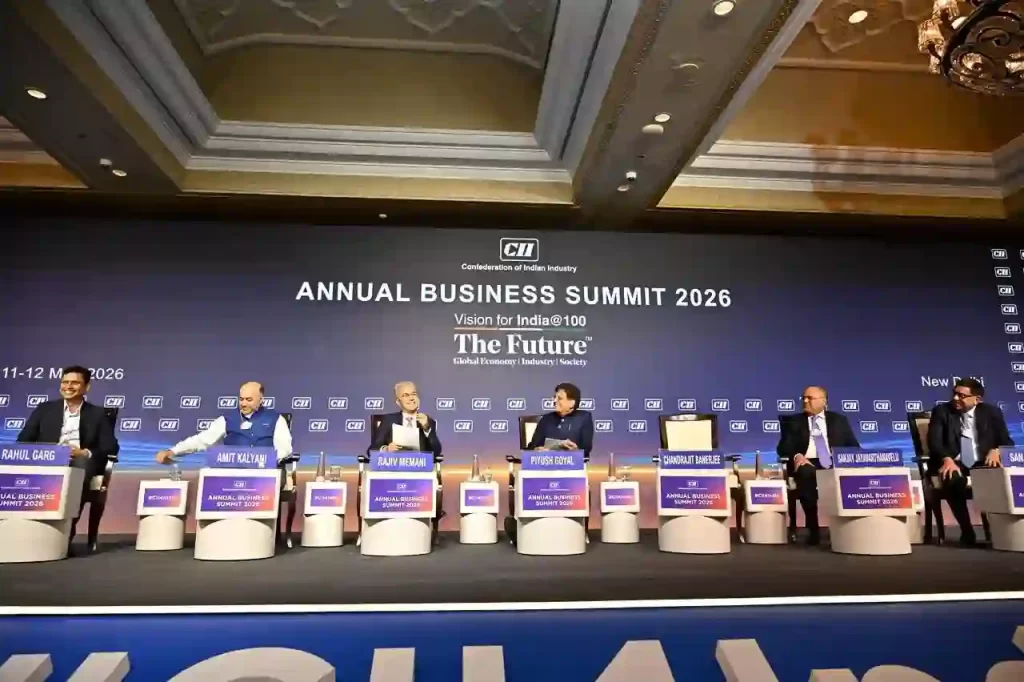
IntroductionThe Confederation of Indian Industry’s Annual Business Summit is one of India’s most consequential conversations between government and industry — a two-day forum where policy signals are sent, investment narratives are shaped, and the mood of Indian business leadership is read out loud for the entire economy to hear. The 2026 edition, held on May 11 and 12 in New Delhi, arrived at a moment of unusual global pressure: a war blocking the world’s most critical energy artery, a trade architecture being rewritten by American tariffs, an AI revolution reshaping every sector simultaneously, and India sitting at the precise intersection of all four.The CII Annual Business Summit 2026 convened under the theme “The Future | Global Economy, Industry, Society.” The focus was on navigating disruption and exercising leadership: aligning policy, industry, and society to translate this moment of inflection into sustained national advantage.The theme was not chosen casually. At a defining moment of global transformation, multiple forces including geopolitical shifts, technological change, climate urgency, and evolving societal expectations are reshaping the world. In this environment, trust, resilience, and effective governance are becoming central to long-term competitiveness. The challenge is no longer to resist change but to harness it through strong institutions, partnerships, and adaptive capabilities.About CII: The Institution Behind the SummitBefore the summit’s content can be fully appreciated, the institution organising it deserves its own introduction, because CII is not simply a trade body. It is one of India’s most influential policy-shaping institutions.Founded in 1895 as the Engineering and Iron Trades Association, the Confederation of Indian Industry has grown into India’s largest apex industry organisation, representing over 9,000 direct member companies and 300,000 companies within its associate and affiliated network through 65 sectoral industry bodies. It operates across 63 offices in India and 10 overseas offices, with institutional partnerships in 119 countries.CII works to create and sustain an environment conducive to the development of India by partnering industry, government, and civil society through advisory and consultative processes. It has been central to many of India’s significant economic policy transitions — from the liberalisation of the 1990s to the ease of doing business reforms of the 2010s to the PLI scheme architecture of the 2020s. When CII speaks, Finance Ministry officials, NITI Aayog planners, and cabinet ministers are typically in the room, listening. The Annual Business Summit is the highest-visibility manifestation of that engagement each year.The CII Annual General Meeting, which determines the organisation’s leadership and strategic direction for the year ahead, was held on May 12, the second day of the summit.The Context: Why the 2026 Summit Carried Extra WeightThe annual summit always takes place against the backdrop of the economic moment. The 2026 edition was held against a particularly demanding one.The Strait of Hormuz crisis, which had closed the world’s most critical oil transit route since late February, was still unresolved at the time of the summit. India, which imports nearly 85 percent of its crude oil and depends heavily on Hormuz-transiting Gulf supply, had been absorbing a significant cost shock to its energy import bill for months. Oil prices had spiked to record levels in March and remained elevated. The rupee had come under pressure. Inflation in fuel and logistics had fed through into manufacturing input costs and consumer prices.Simultaneously, the Trump administration’s tariff architecture — which had imposed sweeping duties on Indian exports in several categories — was creating both anxiety and opportunity for Indian industry. Anxiety because export competitiveness in affected sectors had been hurt. Opportunity because the same tariffs on Chinese goods were accelerating the global search for alternative manufacturing bases, and India remained the most credible alternative at scale.India’s own macroeconomic position entering the summit was one of relative resilience. The economy had maintained its position as the fastest-growing major economy through 2025-26, with GDP growth continuing to outperform most comparable peers. The Viksit Bharat 2047 agenda — India’s aspiration to be a fully developed economy by the centenary of independence — provided the long-term frame within which the short-term disruptions were being absorbed.As India approaches its centenary, India@100 provides a roadmap for inclusive and sustainable growth. The CII Annual Business Summit 2026 connects this long-term vision with the realities of a rapidly evolving global economy.The Theme: Three Questions for India’s FutureThe summit’s overarching theme — “The Future | Global Economy, Industry, Society” — was anchored in three interlocking questions that ran across every session of the two-day programme.Three system enablers were identified as decisive. First, governance must build trust, embed ethics, and sustain institutional legitimacy in an increasingly complex and risk-prone environment. Second, strong state capacity is essential to design coherent policy. Third, robust financial architecture must mobilise long-term capital, manage risk, and support sustained investment. Together, these enablers determine whether transformation becomes credible, resilient, and enduring across sectors, enabling growth that is both competitive and inclusive.Industry will play a central role in shaping India’s future economy as growth increasingly depends on how firms invest, innovate, and engage with society. The shift from shareholder value to broader responsibility calls for alignment with national priorities while remaining globally competitive. Leadership must extend beyond firms to ecosystems, driving R&D, integrating MSMEs, and strengthening trust through ethical governance.India’s energy transition is now a strategic economic advantage, with rapid growth in renewables reshaping cost structures and competitiveness. That last point carries particular weight in the context of the Hormuz crisis: India’s accelerating transition to non-fossil energy — non-fossil sources already account for over 50 percent of installed power capacity — is now seen not just as a climate obligation but as a strategic hedge against the kind of energy price shock that the Gulf war has delivered.Key Sessions and SpeakersLabour Reforms: Government’s CommitmentUnion Minister Mansukh Mandaviya addressed the session on “Next-Gen Labour Reforms: Driving Industry Growth and Job Creation.” He said social security coverage has increased from 29 crore people a decade ago to 94 crore at present. Highlighting the new labour codes, Mandaviya said the reforms are both labour-centric and industry-centric. He added that the
India’s Semiconductor Manufacturing Story: How New Chip Plants Are Transforming the Country’s Technological Future
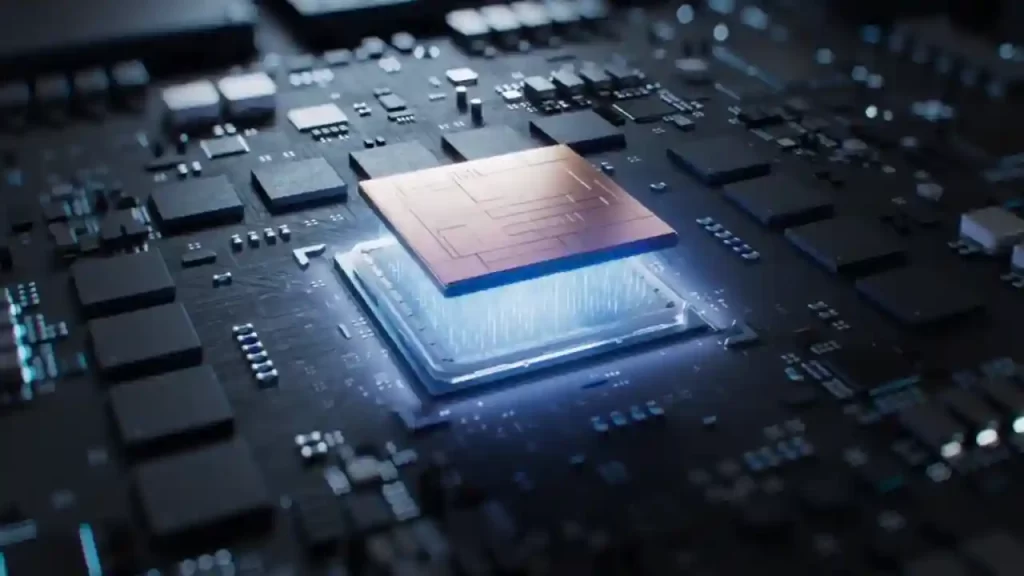
IntroductionSemiconductors are often described as the “new oil” of the digital economy. These tiny electronic chips serve as the brains behind modern technology, powering smartphones, computers, automobiles, telecommunications equipment, medical devices, defence systems, artificial intelligence platforms, and industrial machinery. In an increasingly digital world, access to semiconductors has become a matter not only of economic growth but also of national security and technological sovereignty.For years, India remained heavily dependent on imported semiconductors despite being one of the world’s largest consumers of electronic products and a major hub for chip design services. While Indian engineers contributed significantly to global semiconductor design, the country lacked large-scale manufacturing facilities capable of producing chips domestically.The global semiconductor shortage that emerged during and after the COVID-19 pandemic exposed the vulnerabilities of this dependence. Supply chain disruptions affected industries worldwide, delaying automobile production, consumer electronics manufacturing, and critical infrastructure projects. The crisis prompted governments across the globe to invest heavily in domestic semiconductor capabilities.India responded by launching an ambitious strategy aimed at building a complete semiconductor ecosystem. Over the last few years, this vision has begun to materialise through a series of major investments, policy initiatives, and the launch of new semiconductor manufacturing and packaging facilities across the country.Today, India’s semiconductor story is no longer about future possibilities—it is increasingly about projects under construction, facilities being established, and the emergence of a domestic chip manufacturing ecosystem.Why Semiconductors MatterModern economies run on semiconductors. Every smartphone contains multiple chips. Electric vehicles depend on semiconductors for battery management, safety systems, and autonomous features. Data centres, cloud computing infrastructure, artificial intelligence applications, telecommunications networks, and defence technologies all rely on advanced semiconductor components.As digitalisation accelerates worldwide, demand for semiconductors continues to grow rapidly.Industry estimates suggest that India’s semiconductor consumption could exceed $100 billion annually in the coming years. This growth is being driven by:Expansion of the electronics manufacturing sectorRising smartphone penetrationGrowth of electric vehiclesDeployment of 5G networksArtificial intelligence and cloud computing adoptionIncreasing digitisation of public servicesWithout domestic manufacturing capabilities, India would remain vulnerable to external supply disruptions and geopolitical uncertainties.The Semiconductor Mission: India’s Strategic PushRecognising the strategic importance of semiconductors, the Government of India launched the India Semiconductor Mission (ISM) as part of a broader effort to strengthen the country’s electronics manufacturing sector.The government announced incentive packages worth tens of thousands of crores aimed at attracting investments in semiconductor fabrication, assembly, testing, packaging, and display manufacturing.The objective was not merely to establish individual factories but to create a complete semiconductor ecosystem involving:Chip fabrication plants (fabs)Assembly and packaging facilitiesDesign centresResearch and development infrastructureTalent development programsSupply chain networksThe initiative marked one of the largest industrial policy interventions in India’s recent history.Tata Electronics and the Dholera Semiconductor FabOne of the most significant milestones in India’s semiconductor journey came with the announcement of a semiconductor fabrication facility by Tata Electronics in partnership with Taiwan-based Powerchip Semiconductor Manufacturing Corporation (PSMC).The facility is being established at Dholera in Gujarat, a location that has emerged as a key industrial hub under India’s infrastructure development plans.The project represents India’s first major commercial semiconductor fabrication plant and involves an investment estimated at over ₹91,000 crore.The facility is expected to manufacture chips used in:AutomobilesConsumer electronicsCommunication systemsComputing devicesIndustrial applicationsIndustry experts consider the Dholera fab a landmark development because semiconductor fabrication represents the most technologically complex and capital-intensive segment of the semiconductor value chain.For decades, only a handful of countries such as Taiwan, South Korea, the United States, Japan, and China have possessed significant semiconductor fabrication capabilities.The Dholera project signals India’s entry into this highly strategic domain.Micron Technology’s Semiconductor Facility in GujaratAnother major development has been the investment by American semiconductor giant Micron Technology.Micron announced a substantial investment in a semiconductor assembly and testing facility in Sanand, Gujarat.The facility focuses on:AssemblyTestingMarkingPackaging (ATMP)These activities are critical parts of semiconductor manufacturing and represent an important step toward building a complete semiconductor ecosystem.The project has attracted significant attention because it marks one of the largest semiconductor investments by a global company in India.Commercial production is expected to play a crucial role in integrating India into global semiconductor supply chains.Semiconductor Expansion in AssamIndia’s semiconductor ambitions are not limited to western India.The Tata Group has also announced a semiconductor assembly and testing facility in Assam, making the northeastern state an unexpected but important participant in the country’s technology manufacturing push.The project is expected to generate thousands of direct and indirect jobs while promoting industrial development in a region historically less associated with high-technology manufacturing.The facility demonstrates the government’s effort to geographically diversify semiconductor investments rather than concentrating them in a few industrial clusters.For Assam, the project represents one of the most significant industrial investments in recent history.Additional Semiconductor Projects Across IndiaRecent years have witnessed multiple semiconductor-related announcements involving both domestic and international players.Several projects have been proposed in areas such as:Semiconductor packagingCompound semiconductorsDisplay manufacturingAdvanced electronics productionCompanies have expressed interest in participating across different stages of the semiconductor value chain, creating the foundations of a broader manufacturing ecosystem.These investments indicate growing confidence in India’s policy framework and long-term market potential.Why Global Companies Are Looking at IndiaSeveral factors have contributed to India’s emergence as a preferred destination for semiconductor investments.Growing Domestic MarketIndia is among the world’s fastest-growing markets for electronics and digital technologies.The rapid adoption of smartphones, connected devices, electric vehicles, and digital services creates substantial domestic demand for semiconductors.China Plus One StrategyGlobal companies are increasingly seeking to diversify manufacturing operations beyond China.The strategy, often referred to as “China Plus One,” has encouraged businesses to establish additional production bases in countries such as India, Vietnam, and Mexico.India has emerged as a major beneficiary of this shift.Government IncentivesGenerous fiscal incentives, capital subsidies, and infrastructure support have significantly improved the attractiveness of semiconductor investments.The government has committed substantial financial resources to reduce the high costs associated with semiconductor manufacturing.Skilled WorkforceIndia already possesses one of the world’s largest pools of semiconductor design talent.Many global semiconductor companies operate research and design centres in cities such as Bengaluru, Hyderabad, Noida, and Pune.This existing talent base provides a strong foundation for manufacturing expansion.Challenges Facing
ASSOCHAM’s India Business Reform Summit 2026: The Measurable Outcomes for Viksit Bharat
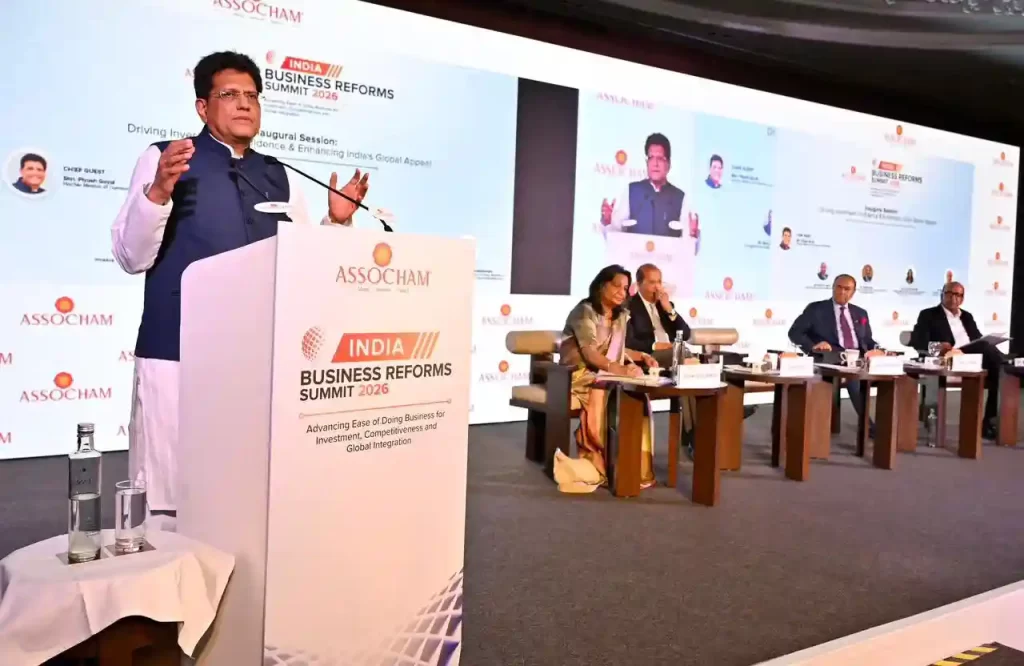
The Associated Chambers of Commerce and Industry of India (ASSOCHAM) successfully convened the India Business Reform Summit 2026 on May 19, 2026, in New Delhi, bringing together policymakers, senior bureaucrats, center-state government representatives, and industry leaders under the theme “Advancing Ease of Doing Business for Investment, Competitiveness and Global Integration.” The summit marked a critical juncture in India’s economic journey, focusing on the essential transition from reform intent to reform outcomes as the country advances towards becoming a developed economy by 2047. Over the past decade, India has undertaken significant reforms to simplify regulatory processes, reduce compliance burden, digitize approvals, and strengthen investor facilitation, but as the nation advances towards becoming a globally competitive manufacturing hub and preferred investment destination, the next phase must focus on implementation efficiency, policy predictability, and measurable outcomes.Commerce and Industry Minister Piyush Goyal delivered the keynote address as chief guest, urging Indian businesses to turn current global economic uncertainties into opportunities for growth rather than panicking over the situation. “India and Prime Minister Narendra Modi have never let a crisis go by, and the situation in the world is truly an opportunity, a moment of uncertainty that we should engage more deeply with,” Goyal remarked at the summit. “Find ways to strengthen our business processes and prepare ourselves for these uncertain times for a brighter and better future.” His address set the tone for deliberations that would explore how India could leverage global challenges to strengthen business processes, undertake faster reforms, build greater resilience, and fortify supply chains.From Reform Intent to Execution: The Next Phase of India’s Business TransformationThe summit’s core deliberations centered on moving from reform intent to execution efficiency, supply chain resilience, and making India a globally competitive manufacturing hub. In the context of evolving global supply chains, increasing private sector participation, and growing emphasis on manufacturing and MSME development, the summit provided a platform to discuss key priorities for strengthening India’s business ecosystem. The discussions highlighted the importance of strengthening Center-State cooperation for consistent policy execution and showcasing state-level investment facilitation, recognizing that successful implementation requires coordinated efforts across all levels of government.Despite global challenges such as tariffs, the Ukraine conflict, and the West Asia crisis, India’s exports reached an all-time high of USD 863 billion last fiscal year, with growth recorded in both merchandise and services exports. Minister Goyal pointed to this achievement as proof that Indian businesses could thrive even amid global turbulence. “The present global situation and geopolitical uncertainties should be viewed as an opportunity for India to strengthen business processes, undertake faster reforms, build greater resilience, and strengthen supply chains,” he emphasized. Free trade agreements finalized by India are opening doors for greater engagement, which needs to be leveraged for attracting investments and increasing exports rather than allowing imports alone to rise.MSME Empowerment: Simplifying Compliance and Enabling GrowthA significant focus of the summit was placed on targeted interventions to reduce the compliance burden on micro, small, and medium enterprises, which form the backbone of India’s economy. The final panel discussion brought together perspectives on strengthening enterprise growth, faster execution, and competitiveness across MSMEs and services-led sectors. Chaired by Smt. Mercy Epao, Joint Secretary, Ministry of Micro, Small and Medium Enterprises, Government of India, the session focused on simplified compliance frameworks, improved access to credit, stronger value chain integration, regulatory efficiency, and reforms needed to help businesses scale with greater confidence.The discussion reinforced the need for a more agile and enabling business environment that supports India’s enterprise ecosystem in its journey towards Viksit Bharat. Speaking on suggestions received during discussions with industry representatives, Minister Goyal said the government is examining the possibility of establishing a single body at industrial parks to function as a one-stop shop for all central and state approvals. This initiative, part of the “Bhavya” program for developing 100 new industrial parks with centralized clearance bodies, aims to drastically reduce the time and complexity involved in obtaining multiple approvals from different agencies.Digital Integration and One-Stop Service CentersMinister Goyal highlighted that lessons learned during the COVID period had demonstrated the effectiveness of digital engagement and remote working models. “In such a situation, we do not need to panic,” he said, adding that the West Asia crisis and emerging technologies like AI bring opportunities for the Indian industry to seize. The ministry, which has 482 offices across 216 cities under 46 organizations, is working towards consolidating operations into single-point contact centers in state capitals and major cities. This would enable businesses to access services related to organizations such as DGFT, Coffee Board, Spices Board, GeM, and other bodies through integrated and digitally connected systems.Goyal urged greater engagement from the private sector in improving government systems, while expressing concern that the national single-window system had not received adequate participation and feedback from the industry. He called upon businesses to work with the government in identifying specific pain points and improving the ease of doing business through collaborative efforts. India is now targeting exports worth USD 1 trillion, and exporters should proactively leverage upcoming FTAs by exploring new markets, conducting sampling and trial orders, and increasing global engagement even before the agreements formally come into effect.Global Opportunities Amid Uncertainty: AI, Manufacturing, and Supply Chain ResilienceThe minister urged the industry to adopt greater efficiency and reduce waste by learning from global best practices, including Japanese manufacturing systems. Referring to emerging technologies, Goyal noted that AI brings significant opportunities for the Indian industry to seize, particularly in manufacturing optimization, supply chain management, and predictive analytics. The summit brought together eminent speakers from government, industry, and leading institutions to share insights on accelerating investment, enhancing competitiveness, and improving ease of operating businesses in India.Manufacturing transformation, state-led investment facilitation, and enabling MSMEs through simplified regulatory frameworks and improved access to opportunities emerged as key priorities during the deliberations. The discussions recognized that India’s demographic dividend, combined with improving infrastructure and digital infrastructure, positions the country uniquely to benefit from global supply chain diversification as multinational corporations seek to reduce dependency on single-source manufacturing hubs.A
Amaravati: Andhra Pradesh’s New Capital City Finally Coming to Life After Years of Drama
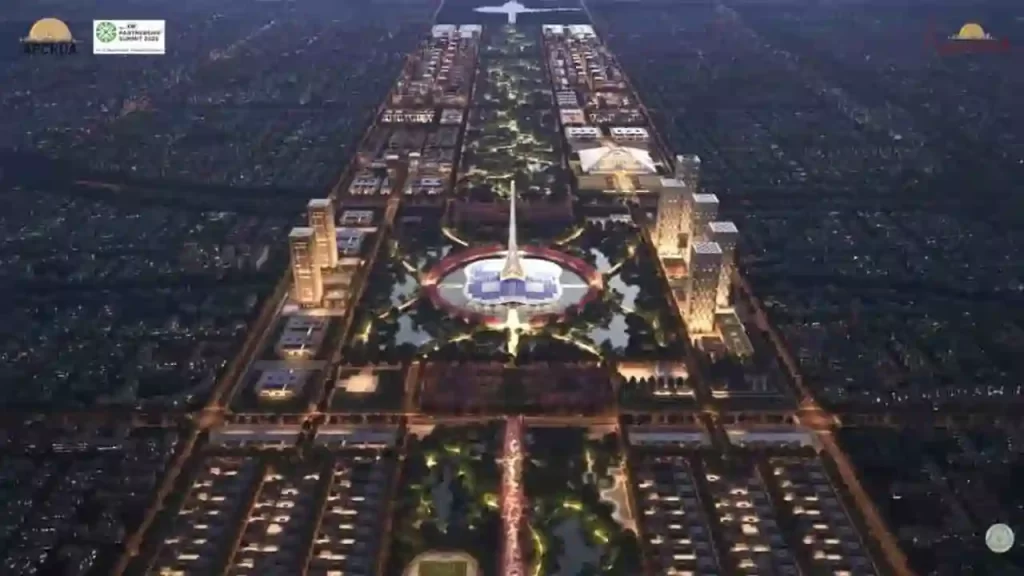
Imagine building a brand-new capital city from scratch – a modern wonder along a mighty river, designed by global experts, powered by green energy, and home to millions. That’s the dream of Amaravati, Andhra Pradesh’s greenfield capital project led by Chief Minister N. Chandrababu Naidu. Once stalled for five long years, this ambitious “people’s capital” or Praja Rajadhani is now buzzing with activity. As of April 2026, projects worth Rs 57,821 crore are underway, with Rs 50,943 crore already grounded. Prime Minister Narendra Modi laid the foundation stone recently, and Naidu promises that Phase 1 will be ready in months. After a decade of twists, turns, protests, and court battles, Amaravati is rising again on the Krishna River banks, ready to be India’s most sustainable city.A Dream Born in 2014: From Bifurcation Blues to Bold VisionAndhra Pradesh lost Hyderabad as its capital after the 2014 bifurcation with Telangana. The state needed a fresh start. Naidu, then Chief Minister, picked Amaravati, a 2,300-year-old site in Guntur district with deep history. Ancient Satavahanas ruled here around 225 BCE, and Emperor Ashoka’s Buddhist stupa (Amaravati Mahachaitya) still whispers of Gautama Buddha’s visits. In the 18th century, zamindar Raja Vasireddy Venkatadri Naidu revived it as a thriving town, building palaces amid fertile Krishna delta lands.Why here? Perfect spot, central, near Vijayawada and Guntur, with great roads, rails, and river views. Naidu announced it on October 22, 2015, with Modi’s foundation stone. The name “Amaravati” means “abode of immortals,” linked to the Amareswara Shiva temple. Singapore’s experts (like Foster + Partners) crafted the masterplan: 217 square km of nine themed sub-cities, Government, Justice, Knowledge, Finance, Health, Sports, Culture, Tourism, and Electronics. At the heart? A green spine like New York’s Central Park, with the Assembly as a 250-meter lily-shaped tower.The Land Pooling Magic: Farmers as True PartnersNo forced takeovers, that’s Naidu’s genius Land Pooling Scheme (LPS) from 2015. Over 27,000 farmers voluntarily gave 33,000 acres. In return:Wet land owners: 1,000 sq yd residential + 450 sq yd commercial plots per acre, plus Rs 50,000/year annuity (rising 10% yearly for 10 years).Dry land owners: 250 sq yd commercial plots per acre + Rs 30,000/year annuity.Landless farmers: Rs 2,500/month pension for 10 years.The Andhra Pradesh Capital Region Development Authority (APCRDA) manages it. Bhoomi puja happened in June 2015; the secretariat and assembly moved to temporary sites by 2017. The Big Halt: Politics, Protests, and a Three-Capitals Twist (2019-2024)Joy turned to pain in 2019. YSR Congress’s Jagan Mohan Reddy won, suspended annuities for 2,903 farmers, canceled pensions for 4,422 families, and ditched LPS for 33,000 acres. He pushed a “three capitals” plan: Amaravati (legislative), Visakhapatnam (executive), Kurnool (judicial). World Bank and AIIB pulled $1 billion in funding. Farmers protested 1,630 days straight, facing lathi charges. The High Court ruled in 2022: Amaravati stays the sole capital. Reddy withdrew the bill in 2021 amid legal heat.The five-year freeze? Cost overruns of 40-45%, roads up 25-28%, buildings 35-55%. The original Rs 51,000 crore budget swelled to Rs 64,910 crore. Infrastructure rusted; investors fled.Revival Under Naidu 2.0: Money Flows, Work Speeds Up (2024-Now)Naidu’s TDP won big in June 2024. He restarted annuities, pensions, and bank loans for plots. Farmers invited to events, Naidu calls them “heroes.” Parliament passed the Andhra Pradesh Reorganisation (Amendment) Bill 2026 on April 1, making Amaravati the permanent sole capital.Funding floodgates opened:World Bank: $800M (first $205M in March 2025) for urban infra, jobs, flood-proofing.ADB: $788.8M loan + $3.64B commitment (2025-2029) via Results-Based Lending.HUDCO: Rs 11,000 crore loan.Centre: Rs 4,200 crore released; state budget Rs 15,000 crore (2024-25), Rs 6,000 crore (2026-27).Land monetization for more cash. A World-Class Green Dream City: What’s PlannedAmaravati won’t just be offices, a smart, carbon-neutral hub for 3.5 million people and 1.5 million jobs by 2050:Renewable power: 2,700 MW from solar, wind, hydro – world’s first 100% green capital. Rooftop solar is mandatory.Transport: Metro, e-buses, EV stations, cycle paths.Tech: Smart grids, IoT traffic, flood drains.Layout: 13 plazas for districts; themed hubs like Knowledge City (universities) and Finance City (banks).Inspired by Amsterdam (canals), Singapore (gardens), and Tokyo (efficiency).Naidu: “Rome wasn’t built in a day, but Amaravati will be India’s growth engine.” Economic survey 2025-26 calls it AP’s powerhouse.Main Features of Amaravati’s Master Plan It is an ambitious blueprint for a world-class, sustainable capital city in Andhra Pradesh. Designed by global experts like Singapore’s Housing and Development Board (HDB) and Foster + Partners, it transforms 217 square kilometers along the Krishna River into a “people’s capital” called Praja Rajadhani. The plan focuses on green living, smart technology, and economic growth for 3.5 million people by 2050. Here are the main features, explained simply.1. Nine Themed Sub-Cities for Balanced GrowthThe city is divided into nine specialized zones, each with a clear purpose:Government City: Core hub with assembly, high court, and offices.Justice City: Courts, legal institutions, and related services.Knowledge City: Universities, research centers, and schools.Finance City: Banks, stock exchanges, and business towers.Health City: Hospitals, medical research, and wellness centers.Sports City: Stadiums, training facilities, and parks.Culture and Tourism City: Museums, heritage sites, and hotels.Electronics and IT City: Tech parks and innovation hubs.Recreational and Residential Zones: Homes, shopping, and leisure areas.These clusters group jobs and homes smartly, cutting travel time and boosting efficiency.2. Central Green Spine: The City’s LungsA massive green spine runs north-south through the heart, like New York’s Central Park or Lutyens’ Delhi. This 5.5 km long, 1 km wide corridor includes:Parks, lakes, and gardens covering at least 60% greenery or water.Walking paths, cycle tracks, and shaded streets.Waterfront development along the Krishna River with promenades and water taxis.It cools the city naturally and hosts events.3. Iconic Architecture and Urban GridGovernment Complex: Star attraction with a 250-meter lily-shaped Assembly tower (inverted lotus symbolizing democracy). High Court and secretariats nearby.13 Urban Plazas: One for each of Andhra’s districts, public squares for markets and festivals.Grid road network: Wide avenues (up to 60 meters), underground utilities (no messy wires), and elevated expressways.Mixed-use neighborhoods blend homes, shops, and offices. 4. 100% Green Energy and SustainabilityAmaravati aims to be the world’s first fully renewable-powered capital:2,700 MW clean power
Indus Awakens: Sarvam’s Homegrown AI Chatbot Challenges ChatGPT in India’s Language Arena
India’s AI battlefield just got fiercer. Bengaluru-based startup Sarvam AI stealth-launched Indus, its multilingual chat app powered by the mighty Sarvam 105B model, on February 20, 2026, mere days after disclosing 105B and 30B LLMs at the India AI Impact Summit. Now in beta on iOS, Android, and web (indus.sarvam.ai), Indus is entering a market where ChatGPT boasts 100M+ weekly Indian users, and Claude claims a 5.8% global share (second to the US).Google CEO Sundar Pichai’s recent praise, “Sarvam’s local models have no impediments, very well positioned,” fuels the hype. As OpenAI, Anthropic, and Google dominate, Sarvam bets on sovereignty: Built entirely in India for 22+ Indic languages, voice-first, culturally attuned.From Summit Spotlight to Consumer HandsIndus interfaces Sarvam 105B (105B parameters, mixture-of-experts for complex reasoning; 128K token context) and nimble 30B (real-time chats). Disclosed amid summit buzz, partnerships with HMD (Nokia feature phones), Bosch (auto AI), the app rolled out gradually on limited compute. Beta quirks: No per-chat deletion (full account wipe only), mandatory reasoning mode (slows some responses). Phone/Google/Microsoft/Apple login; India-limited now. Early users rave on Reddit/YouTube: Seamless Hinglish switching, ethical dilemmas solved step by step, puzzles cracked in Hindi.ModelParametersStrengthsUse CaseSarvam 105B105BComplex reasoning, 128K contextDeep analysis, docs/imagesSarvam 30B30BReal-time convos, efficiencyVoice chats, daily queries Tailored for Bharat: Features That Speak LocalIndus shines where globals falter, Indic mastery. Type/speak in any of 22 scheduled languages; mid-chat switches (English→Hindi→Tamil) flow naturally. Upload images/PDFs for analysis; future AI agents automate tasks, in-app doc edit/write.Voice-first: Bulbul TTS (11 langs, 39 voices), Saaras STT (code-mixed, telephony audio). Reasoning demos crush: River crossing puzzles, math series, trolley ethics, historical what-ifs, all Hindi/English, step-by-step. YouTube tests (e.g., Nitish Verma) hail puzzle-solving, troubleshooting smarts.Beta perks: Free API trials for devs; file uploads for visual reasoning (charts/tables/handwritten Indic scripts).Sarvam’s Rebel Rise: $41M Fuel, Sovereign VisionFounded in 2023 by Raghavan/Kumar, Sarvam snagged $41M from Lightspeed, Peak XV, and Khosla, building Indic-optimized LLMs amid data scarcity. Unlike English-biased GPT-4, Sarvam trains on local data for accuracy in dialects/scripts. Summit feats: Outperformed Gemini/ChatGPT on Indic OCR (84.3% olmOCR-Bench).Enterprise wins: UIDAI (Aadhaar voice/fraud), Odisha/Tamil Nadu AI hubs, SBI Life (11-lang policy bots). Consumer Indus democratizes it.Full List of Supported LanguagesSarvam 105B supports all 22 scheduled languages of India, as defined in the Constitution’s Eighth Schedule, trained on high-quality Indic datasets for superior handling of code-mixed speech, scripts, and contexts.These form India’s official linguistic backbone, enabling seamless multilingual interactions in Indus and enterprise apps:AssameseBengaliBodoDogriGujaratiHindiKannadaKashmiriKonkaniMaithiliMalayalamManipuri (Meitei)MarathiNepaliOdiaPunjabiSanskritSantaliSindhiTamilTeluguUrduBattle for India’s AI SoulIndia’s genAI frenzy, 100M ChatGPT users, demands sovereignty. Indus fights import reliance, privacy risks. Competitors: Global giants (latency, culture gaps); locals like Krutrim, CoRover lag scale. Sarvam’s edge: Open-source leanings, partnerships (Nokia cars/glasses).Challenges: Compute scaling (waitlists), refinement (deletions/reasoning toggle). Upside: Population-scale data moat, govt IndiaAI Mission backing.Indus isn’t just code, it’s India’s digital voice. From Hinglish banter to ethical debates, Sarvam crafts AI that gets us.
Soaring Heights: How Tata-Airbus H-125 Facility Marks India’s Aerospace Leap

India’s aerospace ambitions just touched new heights, literally. On February 17, 2026, Prime Minister Narendra Modi and French President Emmanuel Macron virtually inaugurated the Tata Advanced Systems Limited (TASL) Final Assembly Line (FAL) for Airbus H-125 light utility helicopters in Vemagal, Karnataka, from Mumbai. This isn’t mere infrastructure; it’s a fusion of strategic trust, technological prowess, and economic firepower, propelling India’s Make-in-India and Aatmanirbhar Bharat visions skyward.A Historic Virtual Ribbon-CuttingPicture this: Leaders from two global powers, Modi and Macron, hitting the digital button to unveil a facility that symbolises Indo-French synergy. Raksha Mantri Rajnath Singh, on-site at Vemagal, called it a “milestone in the strategic partnership between India and France,” quipping that “even the sky is not the limit.” Joining him were French Minister of Armed Forces and Veterans Affairs Catherine Vautrin, Union Civil Aviation Minister KR Naidu, Karnataka’s Minister for Large & Medium Industries MB Patil, Chief of Air Staff Air Chief Marshal AP Singh, Defence Secretary Rajesh Kumar Singh, and Secretary (Defence Production) Sanjeev Kumar.This event builds directly on TASL-Airbus’ prior triumph: the C-295 military transport aircraft FAL, India’s first private-sector final assembly for military planes. Now, the H-125 line cements a full-spectrum military aerospace ecosystem, blending French engineering with Indian manufacturing muscle.H-125: The Everest-Conquering WorkhorseAt its core, the H-125 is no ordinary chopper; it’s the world’s most trusted single-engine light utility helicopter, with unmatched reliability across brutal conditions. The military-optimised H-125M variant acts as a high-altitude force multiplier: stealthy low acoustic and thermal signatures enable tactical reconnaissance and surveillance. It delivers logistics to remote frontline outposts, rushes search-and-rescue (SAR) or medical evacuations (MEDEVAC), and thrives where others falter.Why? It’s the only helicopter to land on Mount Everest’s summit, proof of its extreme performance ceiling. For India’s armed forces, battling “hot-and-high” terrains from Ladakh’s icy peaks to Siachen’s glaciers, this is gold. Traditional fleets struggle above 6,000 meters; the H-125 powers through, ensuring supply drops, troop insertions, and rapid response in oxygen-starved zones. Globally, over 9,000 H-125 family units fly missions, from VIP transport to firefighting, logging 45+ million flight hours.PM Modi captured the pride: “We take pride in manufacturing in India the world’s only helicopter capable of flying to the heights of Mount Everest and exporting it worldwide.” Raksha Mantri echoed, praising its “exceptional reliability, versatility, and outstanding performance.”Economic Engine: Jobs, Investment, and ExportsThis FAL isn’t just about rotors; it’s an economic turbocharger. Projected investment surpasses ₹1,000 crore, igniting direct and indirect jobs for India’s “skilled and hardworking youth.” It supercharges the MSME ecosystem, now boasting 16,000+ defence-linked units supplying global giants.Since 2014, under Modi, reforms have flipped the script: Ordnance Factories corporatised into seven DPSUs, liberalised FDI (up to 74% on the automatic route), and twin Defence Industrial Corridors (Uttar Pradesh-Tamil Nadu). Private sector share? A robust 25% of total defence production. Exports? Multi-fold surge, ranking India among the top global defence exporters. Foreign OEMs now tap Indian MSMEs for components, with Rajnath Singh inviting deeper tech transfers to fuel security solutions worldwide.Schemes like Production Linked Incentives (PLI), massive infrastructure (roads, ports), and startup boosts have slashed gestation periods, drawing high-capital plays like this. Result: Holistic growth, from domestic self-reliance to export powerhouse.Economic Impact MetricsDetailsInvestment>₹1,000 croreEmploymentDirect + indirect jobs for youth; boosts 16,000+ MSMEsDefence ReformsPrivate share at 25%; exports up manifoldBroader EcosystemPLI schemes, FDI liberalisation, industrial corridorsGlobal ReachComponent sourcing by foreign firms; export-ready H-125sMake-in-India’s Aerospace AscentLaunched in 2014, Make-in-India targeted manufacturing revival; Aatmanirbhar Bharat amplified it post-COVID, prioritising critical tech. Defence exemplifies: From 65% import dependence, India now produces 70%+ indigenously. Private players like TASL lead, absorbing complex tech via offsets and partnerships.This H-125 FAL exemplifies “mutually beneficial partnerships.” Airbus gains India as a low-cost hub; TASL masters final assembly, testing, and avionics integration. Future? Potential exports to friendly nations, plus civilian H-125 variants for tourism, charters, and disaster relief. Karnataka’s Vemagal, near Bengaluru’s aerospace cluster, optimises logistics, skills, and supply chains.Indo-French Ties: Boundless HorizonsIndia-France defence bonds run deep: Rafale jets, Scorpene submarines, joint exercises. Macron’s visit layered geopolitics, countering China in Indo-Pacific, onto tech ties. Vautrin’s presence signals sustained commitment. As Singh noted, collaborations are “limitless,” eyeing AI, drones, and sixth-gen fighters.Charting the Future SkiesThe Vemagal FAL isn’t an endpoint; it’s a launchpad. For troops in unforgiving Himalayas, it means swifter rescues. For workers, stable careers. For India, a louder global voice in aerospace. As helicopters hum off the line, they carry more than passengers; they ferry self-reliance, innovation, and unbreakable partnerships into tomorrow’s skies.
MG Majestor Launched: India’s New Flagship SUV Redefines Luxury Off-Roading

JSW MG Motor India unveiled the Majestor, its bold D+ segment body-on-frame flagship SUV, positioning it above the Gloster to challenge the Toyota Fortuner and Jeep Meridian. Launched on February 12, 2026, bookings opened at ₹41,000, with test drives starting in April and deliveries starting in May; early birds get a 5-year unlimited km warranty, RSA, and labor-free service.Aggressive Design and DimensionsThe Majestor draws from the global Maxus D90, boasting a muscular stance with a mosaic matrix grille, vertical LED headlamps, hammer-shaped DRLs, and sharp bonnet lines. Sides feature cladding, 19-inch dual-tone alloys, ORVM blinkers; rear has connected LED taillamps, twin exhausts, and ‘Majesty’ badge.Available in Metallic Black, Pearl White, Concrete Grey, and Metallic Ash; ground clearance hits 219mm, with water wading of 810mm for rugged prowess.Premium, Tech-Loaded CabinInside, soft-touch two-tone materials shine with a 12.3-inch touchscreen infotainment (Apple CarPlay/Android Auto), a matching digital cluster, a gesture tailgate (up to 1,350L boot), panoramic sunroof, dual wireless chargers, ambient lighting, and i-Smart connectivity.Front seats offer ventilation, heating, and massage; 6/7-seater options with captain chairs in the 6-seater for luxury.Interior HighlightsMG Majestor offers a premium, tech-forward interior in a black-themed cabin (Smoky Ebony or black-grey scheme) with soft-touch materials, leatherette upholstery, and a modern layout, distinguishing it from the Gloster. The cabin features dual 12.3-inch screens: touchscreen infotainment with wireless Apple CarPlay/Android Auto, and a digital driver’s display. Key amenities include a panoramic sunroof (Savvy trim), 64-color ambient lighting, gesture-controlled tailgate (up to 1,350L boot space), dual wireless chargers, 220V second-row outlet, sunglass holder, illuminated scuff plates, and front center armrest storage.Front seats (ventilated, heated, multi-mode massage, memory, 12-way power adjustable in top trims) prioritize luxury; the second row offers captain chairs (6-seater) or a bench (7-seater) with dedicated AC, armrest, and cupholders.Audio upgrades to 12-speaker JBL Studio in Savvy variants; three-zone climate control, piano black elements, and LED cabin lights enhance ambiance.Exterior ColorsAvailable across Sharp and Savvy trims (no dual-tone noted): Pearl White, Metal Black (or Black Metal), Concrete Grey, Metal Ash (or Black Ash).Color OptionNotesPearl WhitePremium monotone shine Metal Black / Black MetalBold, aggressive vibe Concrete GreyUrban rugged appeal Metal Ash / Black AshMatte-like sophistication Powertrain and Off-Road CapabilityA 2.0L twin-turbo diesel (215hp, 478Nm) pairs with ZF 8-speed auto, shared from Gloster top-spec. M-Hub terrain system provides 10 off-road modes, triple diff locks, and crawl control for superior handling.Suspension: Likely dual-helix front, five-link rear; RWD/AWD variants; all-disc brakes ensure confident stops.Variants and PricingThree trims: Sharp 4×2, Savvy 4×2, Savvy 4×4 (6/7-seaters). Ex-showroom: ₹39.50-45 lakh (some estimates ₹40-46 lakh; Sharp 7STR 2WD ~₹40-45 lakh).VariantDrivetrainKey HighlightsEst. Price (Ex-Showroom)Sharp 4x2RWDBase luxury, 7STR option₹39.50 lakh Savvy 4x2RWDEnhanced features₹41-43 lakh Savvy 4x4AWDOff-road focus, top spec₹43.25 lakhAdvanced Safety SuiteLevel-2 ADAS leads: Adaptive cruise, AEB, lane departure warning, blind-spot monitor, forward collision warning, driver fatigue alert. Plus 6 airbags, ESC, TCS, hill hold/descent, 360° camera, ISOFIX, overspeed/seatbelt alerts.Rivals and Market EdgeTargets Fortuner (diesel off-roader), Kodiaq/Tayron R-Line (petrol premium), Meridian (value diesel). Majestor’s ADAS, massage seats, 10 modes, and warranty perks aim to disrupt the luxury-off-road blend at competitive pricing.
ODOP – One District One Product: Transforming Local Economies into Global Opportunities
The One District One Product (ODOP) initiative has emerged as a key strategy in India’s effort to promote balanced regional development and strengthen local economies. The programme focuses on identifying and promoting a unique product from each district, with the aim of boosting manufacturing, generating employment, and enhancing exports.By linking traditional skills and local specialisations with modern market access, ODOP seeks to position India’s diverse district-level products on both national and global platforms.Concept and Origin of ODOPThe idea behind ODOP is rooted in the principle that every district has a distinct product, craft, or agricultural strength that can be developed into a competitive economic asset. The initiative was first implemented at the state level in Uttar Pradesh, where it gained considerable success in promoting local industries and artisans.Building on this model, the concept was later adopted at the national level to encourage districts across India to identify and develop their unique products. These include handicrafts, textiles, agricultural goods, processed foods, and industrial products.Objectives of the InitiativeODOP is designed to address multiple economic and developmental challenges through a focused approach. The initiative aims to promote indigenous products, support local artisans and manufacturers, and create sustainable employment opportunities at the district level.Another key objective is to reduce regional imbalances by ensuring that economic growth is not limited to major urban centres but is distributed across smaller districts. By strengthening local industries, ODOP also contributes to increasing exports and enhancing India’s global trade presence.Implementation and Institutional FrameworkThe ODOP initiative is implemented through coordination between central ministries, state governments, and district administrations. Each district identifies its flagship product based on factors such as historical significance, availability of raw materials, and existing skill sets.Once identified, support is provided in areas such as production, processing, packaging, branding, and marketing. Financial assistance, training programmes, and infrastructure development are also part of the implementation framework.The initiative is closely aligned with broader national programmes aimed at promoting self-reliance and entrepreneurship.Focus on Skill Development and Capacity BuildingA significant component of ODOP is the emphasis on skill development. Artisans and producers are trained in modern techniques, quality control, and business practices to improve productivity and competitiveness.Capacity-building programmes also focus on enhancing design, innovation, and value addition, enabling local products to meet global standards. This approach helps traditional industries adapt to changing market demands without losing their authenticity.Market Linkages and Export PromotionOne of the major challenges faced by local producers has been access to markets. ODOP addresses this by facilitating market linkages through exhibitions, e-commerce platforms, and export channels.Products identified under the initiative are promoted through various trade fairs and government-supported platforms, helping them reach a wider audience. The focus on branding and packaging has further improved the visibility and appeal of these products in international markets.Economic and Social ImpactThe ODOP initiative has contributed to strengthening local economies by creating employment opportunities and increasing income levels in districts. By promoting district-specific industries, it has encouraged entrepreneurship and reduced migration to urban areas.Socially, the initiative has helped preserve traditional crafts and cultural heritage, providing recognition and support to artisans who were previously operating in informal sectors.Integration with National Development GoalsODOP aligns with India’s broader vision of self-reliance and inclusive growth, complementing initiatives focused on manufacturing and exports. It also supports the development of micro, small, and medium enterprises (MSMEs), which play a crucial role in the country’s economy.The initiative contributes to the goal of making India a global manufacturing hub by leveraging local strengths and diversifying production bases.Challenges and the Way ForwardDespite its potential, the implementation of ODOP faces certain challenges. These include issues related to infrastructure, supply chain inefficiencies, and limited awareness among producers in some regions.Ensuring consistent quality, scaling production, and maintaining competitiveness in global markets are also areas that require continued attention. Strengthening digital platforms and improving logistics will be crucial for the initiative’s long-term success.The One District One Product initiative represents a strategic approach to decentralised economic development. By focusing on local strengths and connecting them to larger markets, it is creating new opportunities for growth while preserving India’s rich cultural and industrial diversity.