


Soaring Heights: How Tata-Airbus H-125 Facility Marks India’s Aerospace Leap
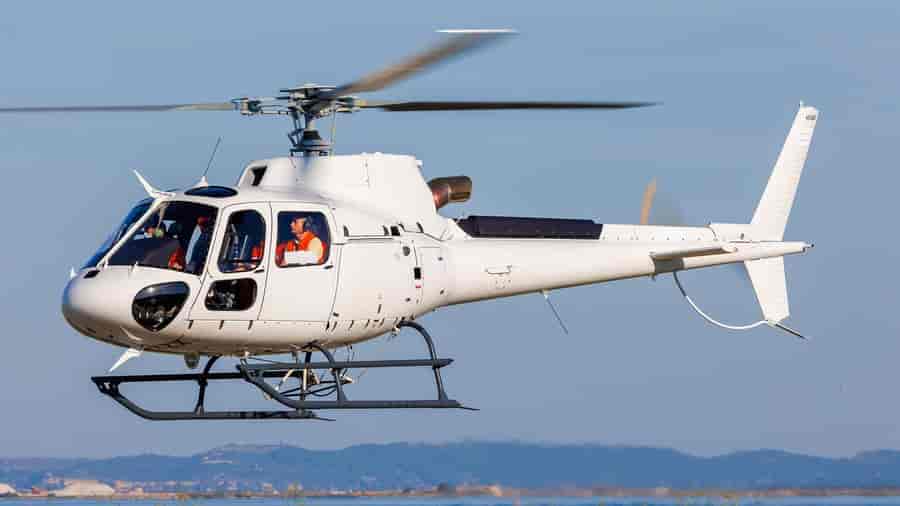
India’s aerospace ambitions just touched new heights, literally. On February 17, 2026, Prime Minister Narendra Modi and French President Emmanuel Macron virtually inaugurated the Tata Advanced Systems Limited (TASL) Final Assembly Line (FAL) for Airbus H-125 light utility helicopters in Vemagal, Karnataka, from Mumbai. This isn’t mere infrastructure; it’s a fusion of strategic trust, technological prowess, and economic firepower, propelling India’s Make-in-India and Aatmanirbhar Bharat visions skyward.A Historic Virtual Ribbon-CuttingPicture this: Leaders from two global powers, Modi and Macron, hitting the digital button to unveil a facility that symbolises Indo-French synergy. Raksha Mantri Rajnath Singh, on-site at Vemagal, called it a “milestone in the strategic partnership between India and France,” quipping that “even the sky is not the limit.” Joining him were French Minister of Armed Forces and Veterans Affairs Catherine Vautrin, Union Civil Aviation Minister KR Naidu, Karnataka’s Minister for Large & Medium Industries MB Patil, Chief of Air Staff Air Chief Marshal AP Singh, Defence Secretary Rajesh Kumar Singh, and Secretary (Defence Production) Sanjeev Kumar.This event builds directly on TASL-Airbus’ prior triumph: the C-295 military transport aircraft FAL, India’s first private-sector final assembly for military planes. Now, the H-125 line cements a full-spectrum military aerospace ecosystem, blending French engineering with Indian manufacturing muscle.H-125: The Everest-Conquering WorkhorseAt its core, the H-125 is no ordinary chopper; it’s the world’s most trusted single-engine light utility helicopter, with unmatched reliability across brutal conditions. The military-optimised H-125M variant acts as a high-altitude force multiplier: stealthy low acoustic and thermal signatures enable tactical reconnaissance and surveillance. It delivers logistics to remote frontline outposts, rushes search-and-rescue (SAR) or medical evacuations (MEDEVAC), and thrives where others falter.Why? It’s the only helicopter to land on Mount Everest’s summit, proof of its extreme performance ceiling. For India’s armed forces, battling “hot-and-high” terrains from Ladakh’s icy peaks to Siachen’s glaciers, this is gold. Traditional fleets struggle above 6,000 meters; the H-125 powers through, ensuring supply drops, troop insertions, and rapid response in oxygen-starved zones. Globally, over 9,000 H-125 family units fly missions, from VIP transport to firefighting, logging 45+ million flight hours.PM Modi captured the pride: “We take pride in manufacturing in India the world’s only helicopter capable of flying to the heights of Mount Everest and exporting it worldwide.” Raksha Mantri echoed, praising its “exceptional reliability, versatility, and outstanding performance.”Economic Engine: Jobs, Investment, and ExportsThis FAL isn’t just about rotors; it’s an economic turbocharger. Projected investment surpasses ₹1,000 crore, igniting direct and indirect jobs for India’s “skilled and hardworking youth.” It supercharges the MSME ecosystem, now boasting 16,000+ defence-linked units supplying global giants.Since 2014, under Modi, reforms have flipped the script: Ordnance Factories corporatised into seven DPSUs, liberalised FDI (up to 74% on the automatic route), and twin Defence Industrial Corridors (Uttar Pradesh-Tamil Nadu). Private sector share? A robust 25% of total defence production. Exports? Multi-fold surge, ranking India among the top global defence exporters. Foreign OEMs now tap Indian MSMEs for components, with Rajnath Singh inviting deeper tech transfers to fuel security solutions worldwide.Schemes like Production Linked Incentives (PLI), massive infrastructure (roads, ports), and startup boosts have slashed gestation periods, drawing high-capital plays like this. Result: Holistic growth, from domestic self-reliance to export powerhouse.Economic Impact MetricsDetailsInvestment>₹1,000 croreEmploymentDirect + indirect jobs for youth; boosts 16,000+ MSMEsDefence ReformsPrivate share at 25%; exports up manifoldBroader EcosystemPLI schemes, FDI liberalisation, industrial corridorsGlobal ReachComponent sourcing by foreign firms; export-ready H-125sMake-in-India’s Aerospace AscentLaunched in 2014, Make-in-India targeted manufacturing revival; Aatmanirbhar Bharat amplified it post-COVID, prioritising critical tech. Defence exemplifies: From 65% import dependence, India now produces 70%+ indigenously. Private players like TASL lead, absorbing complex tech via offsets and partnerships.This H-125 FAL exemplifies “mutually beneficial partnerships.” Airbus gains India as a low-cost hub; TASL masters final assembly, testing, and avionics integration. Future? Potential exports to friendly nations, plus civilian H-125 variants for tourism, charters, and disaster relief. Karnataka’s Vemagal, near Bengaluru’s aerospace cluster, optimises logistics, skills, and supply chains.Indo-French Ties: Boundless HorizonsIndia-France defence bonds run deep: Rafale jets, Scorpene submarines, joint exercises. Macron’s visit layered geopolitics, countering China in Indo-Pacific, onto tech ties. Vautrin’s presence signals sustained commitment. As Singh noted, collaborations are “limitless,” eyeing AI, drones, and sixth-gen fighters.Charting the Future SkiesThe Vemagal FAL isn’t an endpoint; it’s a launchpad. For troops in unforgiving Himalayas, it means swifter rescues. For workers, stable careers. For India, a louder global voice in aerospace. As helicopters hum off the line, they carry more than passengers; they ferry self-reliance, innovation, and unbreakable partnerships into tomorrow’s skies.
Delhi–Meerut RRTS Fully Operational: India’s First Regional Rapid Transit Corridor Becomes a Reality
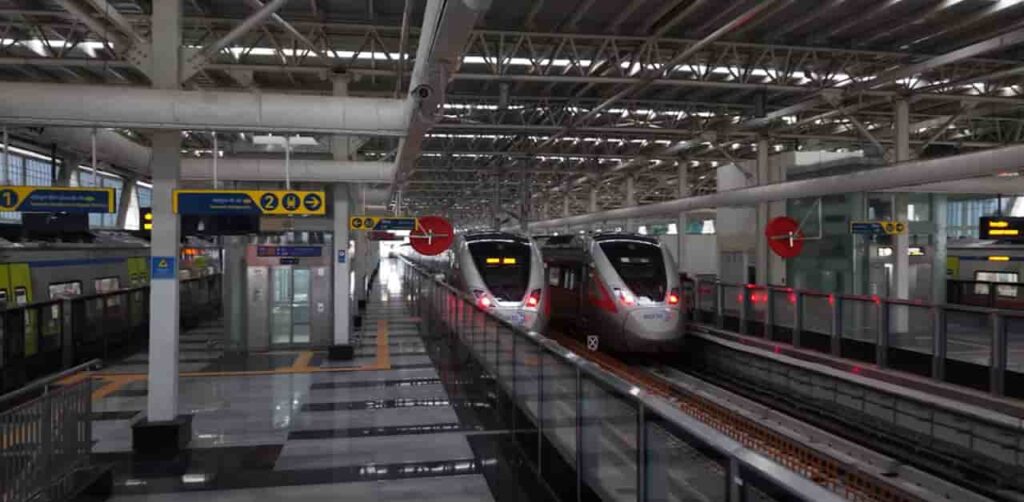
In a major milestone for India’s urban transport infrastructure, the full stretch of the Delhi–Meerut Regional Rapid Transit System (RRTS) has now been opened for public operations. Developed by the National Capital Region Transport Corporation (NCRTC), the corridor marks the country’s first semi-high-speed regional rail system, designed to significantly reduce travel time between Delhi and key cities in western Uttar Pradesh.The corridor connects Delhi, Ghaziabad, and Meerut, transforming daily commuting across the National Capital Region into a faster, more efficient experience.A High-Speed Alternative to Road TravelThe Delhi–Meerut RRTS corridor spans approximately 82 kilometres, making it one of the most advanced regional rail projects in the country. With trains designed to operate at a maximum speed of 180 km/h and an operational speed of around 160 km/h, the system drastically cuts down travel time.Commuters can now travel between Delhi and Meerut in less than one hour, compared to the earlier duration of over two to three hours by road, depending on traffic conditions. This is expected to ease congestion on highways and reduce dependence on private vehicles.Modern Stations and InfrastructureThe corridor includes over 20 strategically located stations, covering major residential, commercial, and transit hubs along the route. Key stations include:Sarai Kale Khan (Delhi)Anand ViharGhaziabadModinagarMeerut SouthMeerut CentralThese stations are equipped with modern facilities such as:Platform screen doorsAutomated ticketing systemsEscalators and elevatorsSeamless integration with metro and bus networksThe infrastructure has been designed keeping in mind accessibility, safety, and passenger comfort.Advanced Technology and Passenger ExperienceThe RRTS introduces a new standard of rail travel in India, combining speed with technology-driven convenience.Trains on the corridor are fully air-conditioned and feature:Ergonomic seatingDedicated luggage spaceOnboard information systemsWi-Fi connectivityCCTV surveillance for securityA separate premium coach has also been introduced, offering business-class-like seating and additional comfort for passengers willing to pay a higher fare.Integration with Urban Transport NetworksOne of the key advantages of the RRTS is its integration with existing urban transit systems. Stations such as Anand Vihar and Sarai Kale Khan connect with metro lines, railway stations, and bus terminals, enabling seamless last-mile connectivity.This multimodal approach is expected to encourage greater use of public transport and reduce traffic congestion in the region.Economic and Regional ImpactThe full operationalisation of the Delhi–Meerut RRTS corridor is expected to have far-reaching economic implications.Improved connectivity will:Boost real estate development along the corridorFacilitate faster movement of workforce between citiesEncourage business expansion beyond DelhiSupport balanced regional development in NCRCities like Ghaziabad and Meerut are likely to witness increased investment and urban growth as commuting becomes more convenient.Environmental BenefitsBy providing a fast and reliable alternative to road travel, the RRTS is also expected to contribute to environmental sustainability.Reduced vehicular traffic will lead to:Lower carbon emissionsDecreased fuel consumptionImproved air quality in the NCR regionThe project aligns with India’s broader goals of promoting sustainable and green mobility solutions.A New Era of Regional ConnectivityThe Delhi–Meerut RRTS is the first of several planned corridors under the regional rapid transit system network. Its successful implementation sets a benchmark for similar projects connecting other parts of the National Capital Region.With high-speed travel, modern infrastructure, and seamless connectivity, the corridor represents a significant leap in how intercity commuting is approached in India—bringing cities closer while improving quality of life for millions of daily commuters.