


CII Annual Business Summit 2026: Navigating Disruption, Charting India’s Path to Viksit Bharat
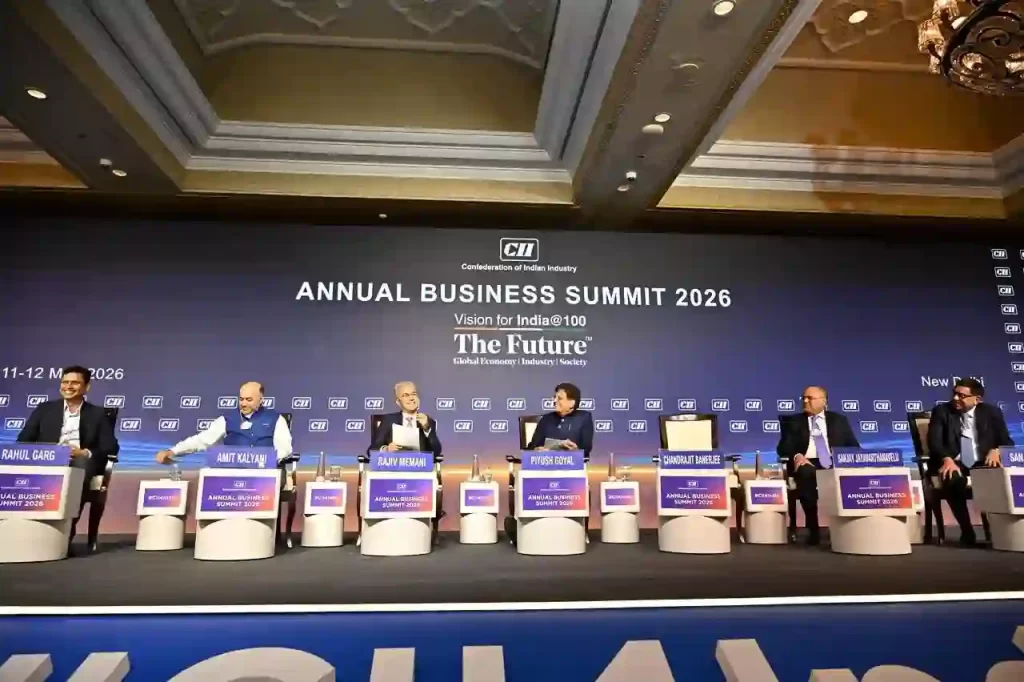
IntroductionThe Confederation of Indian Industry’s Annual Business Summit is one of India’s most consequential conversations between government and industry — a two-day forum where policy signals are sent, investment narratives are shaped, and the mood of Indian business leadership is read out loud for the entire economy to hear. The 2026 edition, held on May 11 and 12 in New Delhi, arrived at a moment of unusual global pressure: a war blocking the world’s most critical energy artery, a trade architecture being rewritten by American tariffs, an AI revolution reshaping every sector simultaneously, and India sitting at the precise intersection of all four.The CII Annual Business Summit 2026 convened under the theme “The Future | Global Economy, Industry, Society.” The focus was on navigating disruption and exercising leadership: aligning policy, industry, and society to translate this moment of inflection into sustained national advantage.The theme was not chosen casually. At a defining moment of global transformation, multiple forces including geopolitical shifts, technological change, climate urgency, and evolving societal expectations are reshaping the world. In this environment, trust, resilience, and effective governance are becoming central to long-term competitiveness. The challenge is no longer to resist change but to harness it through strong institutions, partnerships, and adaptive capabilities.About CII: The Institution Behind the SummitBefore the summit’s content can be fully appreciated, the institution organising it deserves its own introduction, because CII is not simply a trade body. It is one of India’s most influential policy-shaping institutions.Founded in 1895 as the Engineering and Iron Trades Association, the Confederation of Indian Industry has grown into India’s largest apex industry organisation, representing over 9,000 direct member companies and 300,000 companies within its associate and affiliated network through 65 sectoral industry bodies. It operates across 63 offices in India and 10 overseas offices, with institutional partnerships in 119 countries.CII works to create and sustain an environment conducive to the development of India by partnering industry, government, and civil society through advisory and consultative processes. It has been central to many of India’s significant economic policy transitions — from the liberalisation of the 1990s to the ease of doing business reforms of the 2010s to the PLI scheme architecture of the 2020s. When CII speaks, Finance Ministry officials, NITI Aayog planners, and cabinet ministers are typically in the room, listening. The Annual Business Summit is the highest-visibility manifestation of that engagement each year.The CII Annual General Meeting, which determines the organisation’s leadership and strategic direction for the year ahead, was held on May 12, the second day of the summit.The Context: Why the 2026 Summit Carried Extra WeightThe annual summit always takes place against the backdrop of the economic moment. The 2026 edition was held against a particularly demanding one.The Strait of Hormuz crisis, which had closed the world’s most critical oil transit route since late February, was still unresolved at the time of the summit. India, which imports nearly 85 percent of its crude oil and depends heavily on Hormuz-transiting Gulf supply, had been absorbing a significant cost shock to its energy import bill for months. Oil prices had spiked to record levels in March and remained elevated. The rupee had come under pressure. Inflation in fuel and logistics had fed through into manufacturing input costs and consumer prices.Simultaneously, the Trump administration’s tariff architecture — which had imposed sweeping duties on Indian exports in several categories — was creating both anxiety and opportunity for Indian industry. Anxiety because export competitiveness in affected sectors had been hurt. Opportunity because the same tariffs on Chinese goods were accelerating the global search for alternative manufacturing bases, and India remained the most credible alternative at scale.India’s own macroeconomic position entering the summit was one of relative resilience. The economy had maintained its position as the fastest-growing major economy through 2025-26, with GDP growth continuing to outperform most comparable peers. The Viksit Bharat 2047 agenda — India’s aspiration to be a fully developed economy by the centenary of independence — provided the long-term frame within which the short-term disruptions were being absorbed.As India approaches its centenary, India@100 provides a roadmap for inclusive and sustainable growth. The CII Annual Business Summit 2026 connects this long-term vision with the realities of a rapidly evolving global economy.The Theme: Three Questions for India’s FutureThe summit’s overarching theme — “The Future | Global Economy, Industry, Society” — was anchored in three interlocking questions that ran across every session of the two-day programme.Three system enablers were identified as decisive. First, governance must build trust, embed ethics, and sustain institutional legitimacy in an increasingly complex and risk-prone environment. Second, strong state capacity is essential to design coherent policy. Third, robust financial architecture must mobilise long-term capital, manage risk, and support sustained investment. Together, these enablers determine whether transformation becomes credible, resilient, and enduring across sectors, enabling growth that is both competitive and inclusive.Industry will play a central role in shaping India’s future economy as growth increasingly depends on how firms invest, innovate, and engage with society. The shift from shareholder value to broader responsibility calls for alignment with national priorities while remaining globally competitive. Leadership must extend beyond firms to ecosystems, driving R&D, integrating MSMEs, and strengthening trust through ethical governance.India’s energy transition is now a strategic economic advantage, with rapid growth in renewables reshaping cost structures and competitiveness. That last point carries particular weight in the context of the Hormuz crisis: India’s accelerating transition to non-fossil energy — non-fossil sources already account for over 50 percent of installed power capacity — is now seen not just as a climate obligation but as a strategic hedge against the kind of energy price shock that the Gulf war has delivered.Key Sessions and SpeakersLabour Reforms: Government’s CommitmentUnion Minister Mansukh Mandaviya addressed the session on “Next-Gen Labour Reforms: Driving Industry Growth and Job Creation.” He said social security coverage has increased from 29 crore people a decade ago to 94 crore at present. Highlighting the new labour codes, Mandaviya said the reforms are both labour-centric and industry-centric. He added that the
India’s Semiconductor Manufacturing Story: How New Chip Plants Are Transforming the Country’s Technological Future
IntroductionSemiconductors are often described as the “new oil” of the digital economy. These tiny electronic chips serve as the brains behind modern technology, powering smartphones, computers, automobiles, telecommunications equipment, medical devices, defence systems, artificial intelligence platforms, and industrial machinery. In an increasingly digital world, access to semiconductors has become a matter not only of economic growth but also of national security and technological sovereignty.For years, India remained heavily dependent on imported semiconductors despite being one of the world’s largest consumers of electronic products and a major hub for chip design services. While Indian engineers contributed significantly to global semiconductor design, the country lacked large-scale manufacturing facilities capable of producing chips domestically.The global semiconductor shortage that emerged during and after the COVID-19 pandemic exposed the vulnerabilities of this dependence. Supply chain disruptions affected industries worldwide, delaying automobile production, consumer electronics manufacturing, and critical infrastructure projects. The crisis prompted governments across the globe to invest heavily in domestic semiconductor capabilities.India responded by launching an ambitious strategy aimed at building a complete semiconductor ecosystem. Over the last few years, this vision has begun to materialise through a series of major investments, policy initiatives, and the launch of new semiconductor manufacturing and packaging facilities across the country.Today, India’s semiconductor story is no longer about future possibilities—it is increasingly about projects under construction, facilities being established, and the emergence of a domestic chip manufacturing ecosystem.Why Semiconductors MatterModern economies run on semiconductors. Every smartphone contains multiple chips. Electric vehicles depend on semiconductors for battery management, safety systems, and autonomous features. Data centres, cloud computing infrastructure, artificial intelligence applications, telecommunications networks, and defence technologies all rely on advanced semiconductor components.As digitalisation accelerates worldwide, demand for semiconductors continues to grow rapidly.Industry estimates suggest that India’s semiconductor consumption could exceed $100 billion annually in the coming years. This growth is being driven by:Expansion of the electronics manufacturing sectorRising smartphone penetrationGrowth of electric vehiclesDeployment of 5G networksArtificial intelligence and cloud computing adoptionIncreasing digitisation of public servicesWithout domestic manufacturing capabilities, India would remain vulnerable to external supply disruptions and geopolitical uncertainties.The Semiconductor Mission: India’s Strategic PushRecognising the strategic importance of semiconductors, the Government of India launched the India Semiconductor Mission (ISM) as part of a broader effort to strengthen the country’s electronics manufacturing sector.The government announced incentive packages worth tens of thousands of crores aimed at attracting investments in semiconductor fabrication, assembly, testing, packaging, and display manufacturing.The objective was not merely to establish individual factories but to create a complete semiconductor ecosystem involving:Chip fabrication plants (fabs)Assembly and packaging facilitiesDesign centresResearch and development infrastructureTalent development programsSupply chain networksThe initiative marked one of the largest industrial policy interventions in India’s recent history.Tata Electronics and the Dholera Semiconductor FabOne of the most significant milestones in India’s semiconductor journey came with the announcement of a semiconductor fabrication facility by Tata Electronics in partnership with Taiwan-based Powerchip Semiconductor Manufacturing Corporation (PSMC).The facility is being established at Dholera in Gujarat, a location that has emerged as a key industrial hub under India’s infrastructure development plans.The project represents India’s first major commercial semiconductor fabrication plant and involves an investment estimated at over ₹91,000 crore.The facility is expected to manufacture chips used in:AutomobilesConsumer electronicsCommunication systemsComputing devicesIndustrial applicationsIndustry experts consider the Dholera fab a landmark development because semiconductor fabrication represents the most technologically complex and capital-intensive segment of the semiconductor value chain.For decades, only a handful of countries such as Taiwan, South Korea, the United States, Japan, and China have possessed significant semiconductor fabrication capabilities.The Dholera project signals India’s entry into this highly strategic domain.Micron Technology’s Semiconductor Facility in GujaratAnother major development has been the investment by American semiconductor giant Micron Technology.Micron announced a substantial investment in a semiconductor assembly and testing facility in Sanand, Gujarat.The facility focuses on:AssemblyTestingMarkingPackaging (ATMP)These activities are critical parts of semiconductor manufacturing and represent an important step toward building a complete semiconductor ecosystem.The project has attracted significant attention because it marks one of the largest semiconductor investments by a global company in India.Commercial production is expected to play a crucial role in integrating India into global semiconductor supply chains.Semiconductor Expansion in AssamIndia’s semiconductor ambitions are not limited to western India.The Tata Group has also announced a semiconductor assembly and testing facility in Assam, making the northeastern state an unexpected but important participant in the country’s technology manufacturing push.The project is expected to generate thousands of direct and indirect jobs while promoting industrial development in a region historically less associated with high-technology manufacturing.The facility demonstrates the government’s effort to geographically diversify semiconductor investments rather than concentrating them in a few industrial clusters.For Assam, the project represents one of the most significant industrial investments in recent history.Additional Semiconductor Projects Across IndiaRecent years have witnessed multiple semiconductor-related announcements involving both domestic and international players.Several projects have been proposed in areas such as:Semiconductor packagingCompound semiconductorsDisplay manufacturingAdvanced electronics productionCompanies have expressed interest in participating across different stages of the semiconductor value chain, creating the foundations of a broader manufacturing ecosystem.These investments indicate growing confidence in India’s policy framework and long-term market potential.Why Global Companies Are Looking at IndiaSeveral factors have contributed to India’s emergence as a preferred destination for semiconductor investments.Growing Domestic MarketIndia is among the world’s fastest-growing markets for electronics and digital technologies.The rapid adoption of smartphones, connected devices, electric vehicles, and digital services creates substantial domestic demand for semiconductors.China Plus One StrategyGlobal companies are increasingly seeking to diversify manufacturing operations beyond China.The strategy, often referred to as “China Plus One,” has encouraged businesses to establish additional production bases in countries such as India, Vietnam, and Mexico.India has emerged as a major beneficiary of this shift.Government IncentivesGenerous fiscal incentives, capital subsidies, and infrastructure support have significantly improved the attractiveness of semiconductor investments.The government has committed substantial financial resources to reduce the high costs associated with semiconductor manufacturing.Skilled WorkforceIndia already possesses one of the world’s largest pools of semiconductor design talent.Many global semiconductor companies operate research and design centres in cities such as Bengaluru, Hyderabad, Noida, and Pune.This existing talent base provides a strong foundation for manufacturing expansion.Challenges Facing
Indus Awakens: Sarvam’s Homegrown AI Chatbot Challenges ChatGPT in India’s Language Arena
India’s AI battlefield just got fiercer. Bengaluru-based startup Sarvam AI stealth-launched Indus, its multilingual chat app powered by the mighty Sarvam 105B model, on February 20, 2026, mere days after disclosing 105B and 30B LLMs at the India AI Impact Summit. Now in beta on iOS, Android, and web (indus.sarvam.ai), Indus is entering a market where ChatGPT boasts 100M+ weekly Indian users, and Claude claims a 5.8% global share (second to the US).Google CEO Sundar Pichai’s recent praise, “Sarvam’s local models have no impediments, very well positioned,” fuels the hype. As OpenAI, Anthropic, and Google dominate, Sarvam bets on sovereignty: Built entirely in India for 22+ Indic languages, voice-first, culturally attuned.From Summit Spotlight to Consumer HandsIndus interfaces Sarvam 105B (105B parameters, mixture-of-experts for complex reasoning; 128K token context) and nimble 30B (real-time chats). Disclosed amid summit buzz, partnerships with HMD (Nokia feature phones), Bosch (auto AI), the app rolled out gradually on limited compute. Beta quirks: No per-chat deletion (full account wipe only), mandatory reasoning mode (slows some responses). Phone/Google/Microsoft/Apple login; India-limited now. Early users rave on Reddit/YouTube: Seamless Hinglish switching, ethical dilemmas solved step by step, puzzles cracked in Hindi.ModelParametersStrengthsUse CaseSarvam 105B105BComplex reasoning, 128K contextDeep analysis, docs/imagesSarvam 30B30BReal-time convos, efficiencyVoice chats, daily queries Tailored for Bharat: Features That Speak LocalIndus shines where globals falter, Indic mastery. Type/speak in any of 22 scheduled languages; mid-chat switches (English→Hindi→Tamil) flow naturally. Upload images/PDFs for analysis; future AI agents automate tasks, in-app doc edit/write.Voice-first: Bulbul TTS (11 langs, 39 voices), Saaras STT (code-mixed, telephony audio). Reasoning demos crush: River crossing puzzles, math series, trolley ethics, historical what-ifs, all Hindi/English, step-by-step. YouTube tests (e.g., Nitish Verma) hail puzzle-solving, troubleshooting smarts.Beta perks: Free API trials for devs; file uploads for visual reasoning (charts/tables/handwritten Indic scripts).Sarvam’s Rebel Rise: $41M Fuel, Sovereign VisionFounded in 2023 by Raghavan/Kumar, Sarvam snagged $41M from Lightspeed, Peak XV, and Khosla, building Indic-optimized LLMs amid data scarcity. Unlike English-biased GPT-4, Sarvam trains on local data for accuracy in dialects/scripts. Summit feats: Outperformed Gemini/ChatGPT on Indic OCR (84.3% olmOCR-Bench).Enterprise wins: UIDAI (Aadhaar voice/fraud), Odisha/Tamil Nadu AI hubs, SBI Life (11-lang policy bots). Consumer Indus democratizes it.Full List of Supported LanguagesSarvam 105B supports all 22 scheduled languages of India, as defined in the Constitution’s Eighth Schedule, trained on high-quality Indic datasets for superior handling of code-mixed speech, scripts, and contexts.These form India’s official linguistic backbone, enabling seamless multilingual interactions in Indus and enterprise apps:AssameseBengaliBodoDogriGujaratiHindiKannadaKashmiriKonkaniMaithiliMalayalamManipuri (Meitei)MarathiNepaliOdiaPunjabiSanskritSantaliSindhiTamilTeluguUrduBattle for India’s AI SoulIndia’s genAI frenzy, 100M ChatGPT users, demands sovereignty. Indus fights import reliance, privacy risks. Competitors: Global giants (latency, culture gaps); locals like Krutrim, CoRover lag scale. Sarvam’s edge: Open-source leanings, partnerships (Nokia cars/glasses).Challenges: Compute scaling (waitlists), refinement (deletions/reasoning toggle). Upside: Population-scale data moat, govt IndiaAI Mission backing.Indus isn’t just code, it’s India’s digital voice. From Hinglish banter to ethical debates, Sarvam crafts AI that gets us.
ODOP – One District One Product: Transforming Local Economies into Global Opportunities
The One District One Product (ODOP) initiative has emerged as a key strategy in India’s effort to promote balanced regional development and strengthen local economies. The programme focuses on identifying and promoting a unique product from each district, with the aim of boosting manufacturing, generating employment, and enhancing exports.By linking traditional skills and local specialisations with modern market access, ODOP seeks to position India’s diverse district-level products on both national and global platforms.Concept and Origin of ODOPThe idea behind ODOP is rooted in the principle that every district has a distinct product, craft, or agricultural strength that can be developed into a competitive economic asset. The initiative was first implemented at the state level in Uttar Pradesh, where it gained considerable success in promoting local industries and artisans.Building on this model, the concept was later adopted at the national level to encourage districts across India to identify and develop their unique products. These include handicrafts, textiles, agricultural goods, processed foods, and industrial products.Objectives of the InitiativeODOP is designed to address multiple economic and developmental challenges through a focused approach. The initiative aims to promote indigenous products, support local artisans and manufacturers, and create sustainable employment opportunities at the district level.Another key objective is to reduce regional imbalances by ensuring that economic growth is not limited to major urban centres but is distributed across smaller districts. By strengthening local industries, ODOP also contributes to increasing exports and enhancing India’s global trade presence.Implementation and Institutional FrameworkThe ODOP initiative is implemented through coordination between central ministries, state governments, and district administrations. Each district identifies its flagship product based on factors such as historical significance, availability of raw materials, and existing skill sets.Once identified, support is provided in areas such as production, processing, packaging, branding, and marketing. Financial assistance, training programmes, and infrastructure development are also part of the implementation framework.The initiative is closely aligned with broader national programmes aimed at promoting self-reliance and entrepreneurship.Focus on Skill Development and Capacity BuildingA significant component of ODOP is the emphasis on skill development. Artisans and producers are trained in modern techniques, quality control, and business practices to improve productivity and competitiveness.Capacity-building programmes also focus on enhancing design, innovation, and value addition, enabling local products to meet global standards. This approach helps traditional industries adapt to changing market demands without losing their authenticity.Market Linkages and Export PromotionOne of the major challenges faced by local producers has been access to markets. ODOP addresses this by facilitating market linkages through exhibitions, e-commerce platforms, and export channels.Products identified under the initiative are promoted through various trade fairs and government-supported platforms, helping them reach a wider audience. The focus on branding and packaging has further improved the visibility and appeal of these products in international markets.Economic and Social ImpactThe ODOP initiative has contributed to strengthening local economies by creating employment opportunities and increasing income levels in districts. By promoting district-specific industries, it has encouraged entrepreneurship and reduced migration to urban areas.Socially, the initiative has helped preserve traditional crafts and cultural heritage, providing recognition and support to artisans who were previously operating in informal sectors.Integration with National Development GoalsODOP aligns with India’s broader vision of self-reliance and inclusive growth, complementing initiatives focused on manufacturing and exports. It also supports the development of micro, small, and medium enterprises (MSMEs), which play a crucial role in the country’s economy.The initiative contributes to the goal of making India a global manufacturing hub by leveraging local strengths and diversifying production bases.Challenges and the Way ForwardDespite its potential, the implementation of ODOP faces certain challenges. These include issues related to infrastructure, supply chain inefficiencies, and limited awareness among producers in some regions.Ensuring consistent quality, scaling production, and maintaining competitiveness in global markets are also areas that require continued attention. Strengthening digital platforms and improving logistics will be crucial for the initiative’s long-term success.The One District One Product initiative represents a strategic approach to decentralised economic development. By focusing on local strengths and connecting them to larger markets, it is creating new opportunities for growth while preserving India’s rich cultural and industrial diversity.
Bharatiya GPT: India’s Push Towards Indigenous AI Models
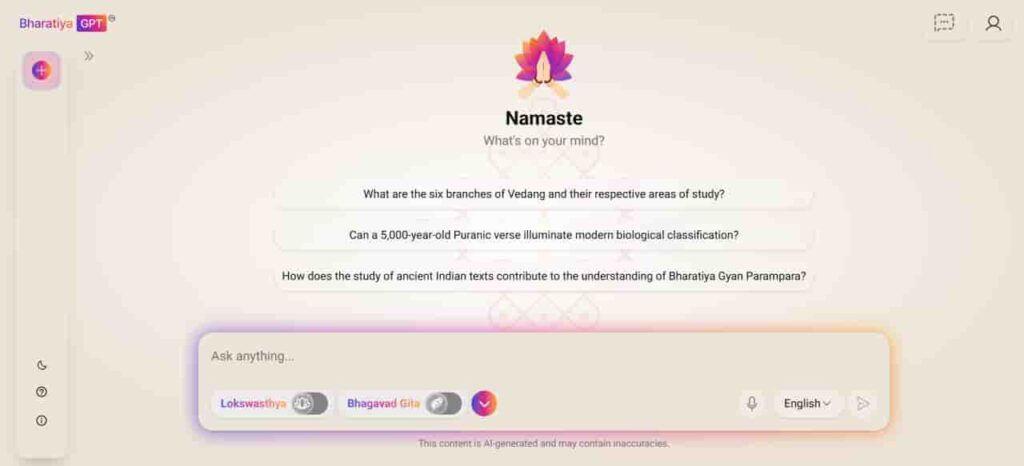
As artificial intelligence continues to reshape industries globally, India has been steadily moving towards building its own large language models (LLMs), often referred to in public discourse as “Bharatiya GPT.” The term does not denote a single product, but rather represents a broader effort to develop India-focused AI systems that understand the country’s languages, cultural context, and governance needs.At the centre of this movement are government-backed initiatives, academic collaborations, and private sector innovations aimed at reducing dependence on global AI platforms.The Need for an India-Centric AI ModelMost globally dominant AI systems, including those developed by OpenAI and Google, are primarily trained on English-heavy datasets and Western contexts. While they perform well globally, their understanding of India’s linguistic diversity and socio-cultural nuances remains limited.India, with over 20 officially recognised languages and hundreds of dialects, requires AI systems that can:Understand and generate regional languages accuratelyInterpret local context, idioms, and governance frameworksServe sectors like agriculture, healthcare, and public administration at scale“Bharatiya GPT” is therefore envisioned as a solution tailored specifically to these needs.Government-Led Initiatives and Policy PushThe Indian government has played a key role in advancing indigenous AI capabilities. Under its broader digital transformation agenda, several initiatives have been launched to support AI research and deployment.One of the central efforts is the IndiaAI Mission, which focuses on:Building domestic AI infrastructureSupporting startups and research institutionsCreating datasets in Indian languagesAdditionally, institutions like Indian Institute of Technology Madras and Indian Institute of Technology Bombay have been actively involved in AI research, contributing to language models and speech technologies tailored for Indian users.Rise of Indigenous AI ModelsIndia has already seen the emergence of several homegrown AI models that align with the idea of “Bharatiya GPT.”Key Developments:AI4BharatA research initiative focused on building open-source datasets and models for Indian languages. It has played a significant role in enabling multilingual AI capabilities.KrutrimDeveloped by Ola, Krutrim is one of India’s first large language models designed specifically for Indian users, supporting multiple regional languages.Reliance Jio AI initiativesIn collaboration with global technology partners, Jio has been working on AI platforms aimed at large-scale deployment across its digital ecosystem.These developments indicate a growing ecosystem where both public and private players are contributing to India’s AI ambitions.Challenges in Building Bharatiya GPTDespite strong momentum, developing a fully indigenous AI model comes with several challenges:1. Data AvailabilityHigh-quality datasets in Indian languages are limited compared to English, making training complex.2. Computing InfrastructureTraining large AI models requires massive computational resources, an area where global players still have an advantage.3. Linguistic ComplexityIndia’s linguistic diversity adds layers of difficulty in ensuring accuracy, consistency, and contextual understanding.4. Funding and ScaleBuilding and maintaining LLMs is capital-intensive, requiring sustained investment.Strategic Importance for IndiaThe push for Bharatiya GPT is not just technological—it is also strategic.Key Benefits:Digital SovereigntyReduces dependence on foreign AI systemsInclusionEnables access to AI in regional languages, especially in rural areasEconomic GrowthSupports startups, innovation, and job creationGovernance EfficiencyHelps in citizen services, policy implementation, and digital governanceGlobal Context and CompetitionIndia’s efforts mirror a broader global trend, where countries are developing their own AI models to maintain technological independence. Nations like China and the European Union have already invested heavily in localized AI systems.In this context, Bharatiya GPT represents India’s attempt to establish itself as a serious player in the global AI ecosystem, rather than just a consumer of foreign technology.The Road AheadIndia’s journey towards building a fully functional “Bharatiya GPT” is still evolving. Future developments are expected to focus on:Expanding multilingual capabilitiesImproving accuracy and contextual understandingScaling infrastructure through public-private partnershipsIntegrating AI into everyday governance and business use casesConclusion“Bharatiya GPT” is not a single product but a national vision for AI self-reliance. It reflects India’s ambition to create technology that is not only globally competitive but also deeply rooted in its own linguistic and cultural landscape.As development continues, the success of this initiative will depend on how effectively India can balance innovation, inclusivity, and scale—while building AI systems that truly understand and serve its diverse population.
India AI Impact Summit 2026: Detailed Agenda for Global AI Action in New Delhi
New Delhi, February 9, 2026 – India gears up for the India AI Impact Summit 2026, set for February 16-20 at Bharat Mandapam, Pragati Maidan, New Delhi, the primary venue for the India AI Impact Summit 2026, which will host the main events on February 19-20.Hosted by the Ministry of Electronics and Information Technology (MeitY), this first Global South edition, billed by Union Minister Ashwini Vaishnaw as the “largest yet,” transitions AI discourse from vision to verifiable impact under the “Three Sutras”: People, Planet, and Progress.Some sources mention a broader program across February 16-20, potentially using additional Delhi venues like Sushma Swaraj Bhawan for side events, sessions, or exhibitions. Bharat Mandapam, one of India’s largest convention centers, was upgraded by NDMC for this flagship gathering. Chief Guests and Stellar LineupPrime Minister Narendra Modi serves as the Chief Guest, inaugurating on February 16 with a keynote and hosting a leaders’ dinner. Expected heads of government include representatives from Singapore, the UAE, and Brazil (15-20 total), plus 50+ ministers. Key speakers feature Google’s Sundar Pichai, Anthropic’s Dario Amodei, Microsoft’s Satya Nadella, and Indian luminaries like Nandan Nilekani (Infosys co-founder) and Ola’s Bhavish Aggarwal. Over 40 CEOs from Reliance, TCS, and global firms join, along with a Chinese delegation, signaling a thaw in collaboration. Event Schedule and Dialogues Feb 16: Inauguration, Modi address, CEO roundtable.Feb 17-18: Plenary sessions and seven “Chakras” (working groups) on core topics.Feb 19: Startup showcase (500+ ventures), AI model launches, bilateral dialogues.Feb 20: Closing with actionable declarations.Expect 500+ parallel sessions, hackathons, and exhibitions. Dialogues include G20-style tracks on AI ethics, public-private partnerships, and Global South priorities. Participating Governments in India AI Impact Summit 2026 The summit, hosted by India’s Ministry of Electronics and Information Technology (MeitY) under the IndiaAI Mission, expects involvement from over 100 countries. Key highlights:High-Level Representation: 15-20 heads of government and 50+ ministers confirmed, including from Singapore, UAE, Brazil, and others.China: Delegation attending after India’s formal invitation, signaling AI collaboration.Preceding Hosts: Builds on summits by UK (2023 Bletchley), South Korea (2024 Seoul), France (2025 Paris).Collaborators: NITI Aayog (India’s policy think tank), state governments like Uttarakhand (pre-summit host), and international bodies (ITU, World Economic Forum).Global Engagement: Multinational working groups across Chakras, with US, UK, EU, and ASEAN nations active in prep consultations. Key Topics and Seven ChakrasThe India AI Impact Summit 2026 is structured around three foundational “Sutras” (People, Planet, Progress) that guide its discussions, with seven interconnected “Chakras” (working groups) translating these into specific, actionable themes.Core SutrasPeople: Focuses on human-centric AI, including safeguarding rights, enhancing access to services (e.g., healthcare, education), building user trust, workforce reskilling amid job impacts, and ensuring equitable benefits across societies.Planet: Addresses sustainable AI deployment, such as energy-efficient models, responsible resource use (e.g., reducing GPU/data center power demands), and AI applications for climate action, environmental monitoring, and resilience.Progress: Emphasizes inclusive innovation, capacity-building, productivity gains in sectors like agriculture and manufacturing, economic growth, and bridging the AI divide for the Global South. Seven Chakras (Key Discussion Topics)These working groups, involving 100+ countries, cover:AI governance and ethical frameworks.Trust and safety protocols for AI models (e.g., bias mitigation, transparency).AI’s impact on work and future jobs.Sector-specific applications (healthcare, agriculture, industry).Innovation and scalable solutions.Sustainability and environmental integration.Equitable access, inclusion, and development outcomes.Sessions will also spotlight IndiaAI Mission launches, startup innovations, and global standards, prioritizing “on-ground” results over regulations. What to Expect in India AI Summit?MeitY leads with partners like NITI Aayog, NASSCOM, World Economic Forum, and ITU. Corporate backers include Google, Microsoft, NVIDIA (GPU focus), and Indian firms like Tata and Adani (data centers). Governments from US, UK, EU, and ASEAN collaborate. Attendees (10,000+), policymakers, researchers, startups, NGOs, can expect networking zones, live demos (e.g., edge AI), policy labs, and a “Global AI Talent Fair.” Launches include indigenous foundational models under the Rs 10,370 crore IndiaAI Mission. India’s Strategic Push Amid HurdlesEchoing Bletchley (2023), Seoul (2024), and Paris (2025), India’s summit prioritizes “on-ground” wins for 1.4 billion people, as per Secretary S. Krishnan. AI could add $500B to GDP (NASSCOM), but challenges like GPU imports persist—eased by US trade deals and data center tax holidays to 2047. Budget 2026-27 tweaks fund nuclear-powered AI infra, as Vaishnaw eyes energy self-reliance.Vaishnaw hailed “phenomenal” global buy-in, with NDMC upgrading venues. Beyond talks, expect MoUs on compute sharing, talent visas, and sustainable AI pacts, positioning India as an AI diplomacy hub.This summit promises not just dialogue, but deliverables: inclusive, green AI for humanity’s progress.Video credit: YT@/Digital India
National Startup Day 2026: India Celebrates a Decade of Entrepreneurial Transformation
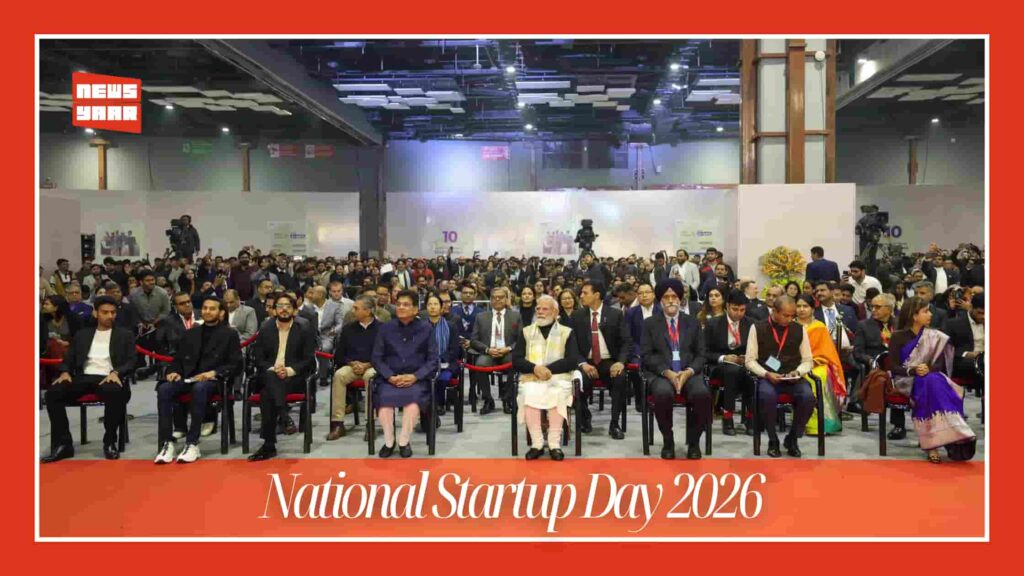
New Delhi, 16 January 2026: India marked National Startup Day 2026 with grand celebrations highlighting ten years of the government’s Startup India initiative and its transformative impact on the nation’s innovation landscape. The event drew founders, investors, policymakers, and ecosystem leaders from across the country to reflect on the journey of entrepreneurship and chart the path ahead.At a flagship event held in New Delhi, Prime Minister Narendra Modi joined startup founders and industry stakeholders to commemorate the milestone. Addressing the gathering, he emphasized the courage and innovative spirit of India’s youth, calling startups engines of economic growth and societal change. His remarks underscored how risk–taking and problem-solving have become mainstream within the entrepreneurial community.Over the past decade since the launch of Startup India, more than 200,000 startups have been recognised across sectors such as technology, healthcare, climate solutions, logistics, fintech, and education. These ventures have collectively generated millions of jobs and helped India emerge as one of the world’s largest and most dynamic startup ecosystems.The celebrations showcased a broad shift in the startup narrative—from chasing rapid valuations to focusing on sustainable growth and real-world impact. Industry experts highlighted that Indian startups are increasingly building deep-tech and AI-driven solutions tailored to local challenges, with a rising emphasis on climate tech, healthcare innovation, and sovereign AI platforms.A notable trend highlighted during the day was the geographical diversification of entrepreneurship. Recent data suggests that over half of registered startups now originate from Tier-2 and Tier-3 cities, signalling a decentralisation of innovation beyond traditional metropolitan hubs.Panel discussions and keynote sessions throughout the event brought to light how startups are contributing to India’s economic resilience, job creation, and technological advancement. Speakers also discussed policy priorities for the next decade, including a renewed push into manufacturing, deep-tech research, and global market expansion.Celebrations were not limited to New Delhi alone. Across states and regions, local startup communities hosted meetups, pitch events, and mentoring sessions, reinforcing a nationwide commitment to empowering entrepreneurs.As National Startup Day 2026 concluded, the startup ecosystem stood not only proud of its achievements over the last ten years but also energized for future challenges, firmly anchored in innovation, inclusivity, and impact.