


Tata Sierra EV: The Return of an Icon in an Electric Avatar
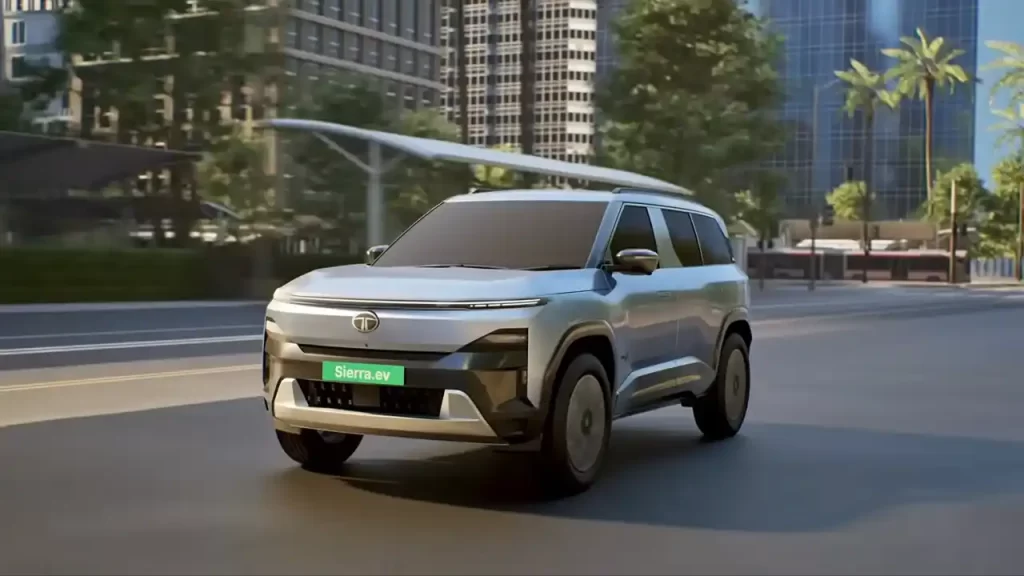
Few vehicles have enjoyed the kind of emotional connect that the Tata Sierra has among Indian automobile enthusiasts. First introduced in 1991, the Sierra was India’s first indigenously developed lifestyle SUV and became instantly recognisable for its distinctive three-door design and panoramic rear-side glass windows. Although production ended in the early 2000s, the Sierra continued to hold a special place in Indian automotive history, symbolising an era when Tata Motors was beginning to establish itself as a passenger vehicle manufacturer.More than two decades later, Tata Motors has revived the iconic nameplate in an entirely new form. The Tata Sierra EV, launched in 2026, combines the nostalgic appeal of the original Sierra with a modern electric powertrain, advanced technology and premium features. Rather than recreating the original SUV, Tata has reimagined it for a new generation of buyers while retaining design elements that pay tribute to the classic model.The launch of the Sierra EV is significant not only because it marks the return of one of India’s most iconic SUVs, but also because it reflects Tata Motors’ broader strategy of strengthening its leadership in the country’s fast-growing electric vehicle (EV) market. Built on the company’s latest Acti.ev architecture, the Sierra EV is positioned as a premium electric SUV designed to compete in one of India’s most competitive automobile segments.The Legacy of the Original Tata SierraThe Tata Sierra occupies a unique place in the history of India’s automotive industry. Launched in 1991, it was among the country’s earliest home-grown SUVs and stood apart with its bold styling, elevated driving position and large wraparound rear windows. At a time when the Indian passenger vehicle market offered limited choices, the Sierra appealed to customers looking for a lifestyle-oriented vehicle rather than a conventional utility vehicle.Although it was discontinued in 2003, the Sierra remained a cult favourite among enthusiasts. Over the years, its distinctive design became one of the most recognisable in Indian automotive history, leading to repeated speculation about a possible revival. Tata Motors first showcased a modern Sierra EV concept at Auto Expo 2020 before unveiling an updated production-ready version in subsequent years, signalling its intention to bring the iconic nameplate back as part of its electric mobility strategy.Launch of the Tata Sierra EVAfter years of anticipation, Tata Motors officially launched the Sierra EV in India in June 2026. The electric SUV entered the market with an introductory ex-showroom starting price of $18.79 lakh, while bookings opened immediately after the launch and customer deliveries commenced in July 2026. The vehicle is available in multiple variants and battery configurations, allowing buyers to choose between different performance and range options.The Sierra EV sits in Tata Motors’ electric SUV portfolio above the Curvv EV and below the Harrier EV, strengthening the company’s premium EV lineup. It is aimed at customers seeking a spacious family SUV that combines long driving range, advanced technology and modern design.Design: Blending Heritage with Modern StylingOne of the Sierra EV’s defining characteristics is its ability to retain the identity of the original Sierra while embracing contemporary SUV styling.The vehicle preserves the signature wraparound rear-quarter glass, a design element that made the original Sierra instantly recognisable. However, the overall body has evolved into a modern five-door SUV with proportions suited to present-day family buyers.The front fascia features Tata’s latest EV design language with connected LED daytime running lights, sleek headlamps and a closed grille typical of electric vehicles. Flush door handles, aerodynamic alloy wheels and clean body lines contribute to improved efficiency while giving the SUV a premium appearance.The rear design includes connected LED tail lamps and sculpted surfaces that maintain visual continuity with the front. Although inspired by its predecessor, the new Sierra EV is unmistakably a contemporary electric SUV.Interior and TechnologyThe Sierra EV represents one of Tata Motors’ most technologically advanced interiors to date.The cabin adopts a minimalist design centred around a triple-screen dashboard, integrating the digital instrument cluster, infotainment display and passenger-side screen into a single panoramic layout. Premium upholstery, ambient lighting and a spacious cabin contribute to an upmarket experience.The SUV also features a panoramic sunroof, connected car technology, wireless smartphone integration, multiple USB charging options, premium audio, ventilated seats and a comprehensive suite of comfort features designed for long-distance travel.The emphasis on digital interfaces reflects broader trends within the global automotive industry, where software and connectivity increasingly influence customer experience alongside traditional mechanical performance.Powertrain and PerformanceThe Sierra EV is built on Tata Motors’ dedicated Acti.ev platform, which has been developed specifically for electric vehicles. This architecture supports multiple battery sizes, advanced electronics and future software upgrades.Customers can choose between 63 kWh and 75 kWh battery packs depending on the selected variant. Tata Motors also offers both rear-wheel-drive (RWD) and quad-wheel-drive (QWD) dual-motor configurations, with the latter providing enhanced traction and performance.The larger battery variant delivers a claimed driving range of up to 665 kilometres (MIDC Part 1+2), making the Sierra EV one of the longest-range electric SUVs offered by an Indian manufacturer. The dual-motor version also introduces a dedicated Boost Mode, enabling quicker acceleration and improved driving dynamics.Charging CapabilitiesCharging convenience remains one of the most important considerations for electric vehicle buyers, and Tata Motors has equipped the Sierra EV with support for both AC and DC charging.Using a compatible 120 kW DC fast charger, the battery can be charged from 20% to 80% in approximately 26 minutes, making it suitable for long-distance travel. For home charging, Tata offers a 7.2 kW AC charger, allowing overnight charging for daily usage. The company also provides a 15-year battery warranty, underlining its confidence in the long-term durability of the battery system.Safety and Driver AssistanceSafety has become a key focus for Tata Motors in recent years, and the Sierra EV continues that approach with a comprehensive package of active and passive safety technologies.The SUV is equipped with Level 2+ Advanced Driver Assistance Systems (ADAS), including features such as adaptive cruise control, lane keeping assistance, traffic sign recognition and autonomous emergency braking. Additional technologies include a 540-degree surround-view camera, automatic parking assistance,
Tata Motors Inaugurates ₹9,000 Crore JLR Manufacturing Plant in Tamil Nadu: A Major Boost to India’s Auto Sector
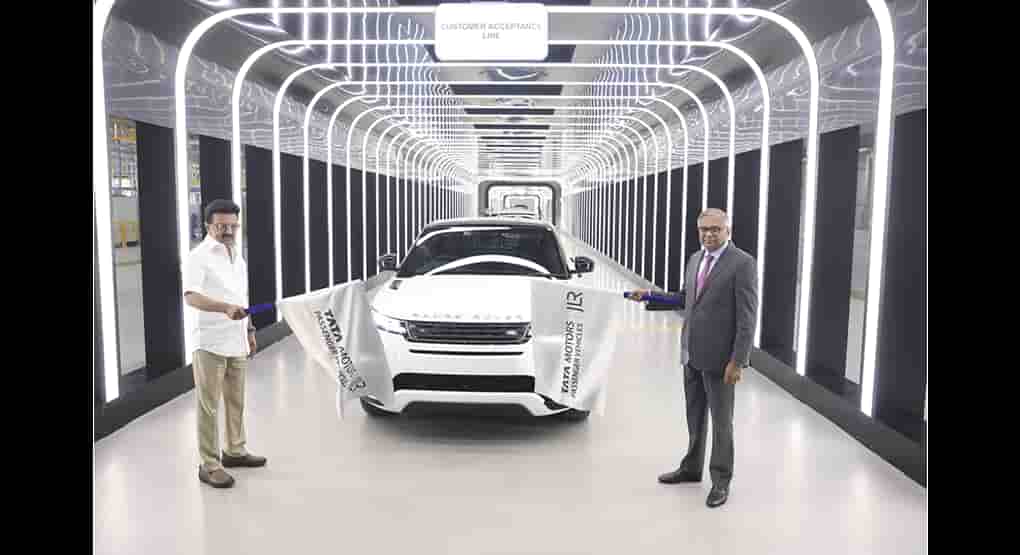
In a significant milestone for India’s automotive manufacturing landscape, Tata Motors today inaugurated its new Jaguar Land Rover (JLR) car manufacturing plant in Ranipet, Tamil Nadu. The state-of-the-art facility, developed at an investment of ₹9,000 crore, is expected to dramatically enhance India’s role in global automotive production, strengthen exports, create thousands of skilled jobs and deepen the country’s integration into premium vehicle supply chains.The inauguration was presided over by key dignitaries from the government and industry, highlighting the strategic importance of the facility not only for Tamil Nadu’s industrial ecosystem but also for India’s ambitions in high-end manufacturing and global value chains.A Strategic Expansion in India’s Premium EV and Auto Manufacturing HubThe new JLR manufacturing plant in Ranipet — located near Chennai — represents one of the largest foreign direct investments in India’s automotive sector in recent years. Spread over a sprawling industrial campus, the facility will initially focus on the assembly of Jaguar and Land Rover vehicles for both domestic sales and global exports.This manufacturing expansion aligns with Tata Motors’ broader objective of scaling its electrified offerings and premium portfolio, including future electric vehicle (EV) platforms under the JLR marque. Observers note that India’s position as a cost-competitive and skilled manufacturing destination was a key factor in Tata Motors’ decision to invest heavily in the Ranipet facility.Production, Technology and Employment ImpactWith world-class assembly lines and advanced manufacturing processes, the Ranipet plant is equipped to produce multiple variants of Jaguar and Land Rover vehicles with high levels of localisation. Over time, the facility plans to incorporate EV production capabilities, battery integration and digital manufacturing systems that leverage automation and industry 4.0 technologies.The new plant is projected to generate thousands of direct and indirect jobs, supporting local supply chains, component manufacturers, logistics service providers and associated sectors. Chief executives from Tata Motors highlighted that the Ranipet facility would be a key centre of excellence for JLR operations globally, integrating India more deeply into the premium automotive production network.Government and Industry ReactionsAcross government and industry forums, the plant’s inauguration was widely welcomed as a major boost to manufacturing confidence in India. Officials from the Union Ministry of Heavy Industries, the Tamil Nadu State Government and Tata Motors leadership emphasised the role of stable policy frameworks, infrastructure readiness and skilled workforce availability in attracting such large-scale investments.Tamil Nadu’s Industries Minister described the plant as a ‘transformational investment’ for the region, citing its long-term potential to anchor a premium automotive cluster and drive technology-intensive jobs.Exports, EV Focus and Global IntegrationWhile initial production will serve domestic demand, a significant portion of output from the Ranipet facility is earmarked for international markets. Tata Motors has outlined plans to progressively increase export volumes, particularly for models in the Land Rover and Jaguar portfolio that meet evolving global emission standards and premium quality benchmarks.In line with India’s ambitions in electric mobility, the plant is being equipped to adapt for future EV production. Industry analysts see this as crucial, given the accelerating global transition toward electrification and the premium segment’s growing focus on electric and hybrid powertrains.The Ranipet facility also positions Tata Motors to capture advantages from existing and emerging trade agreements, strengthen supply chain resilience and reduce lead times for regional markets in Asia, Europe and beyond.Investment, Infrastructure and Economic GrowthThe ₹9,000 crore investment underlines Tata Motors’ confidence in India’s manufacturing ecosystem. The facility is expected to catalyse ancillary investments in local component suppliers, tooling and engineering firms, and technology partners, further multiplying economic impact in the state.Tamil Nadu — already a leading auto manufacturing hub — stands to benefit from the plant through infrastructure upgrades, increased employment opportunities and expanded participation in global automotive networks.Manufacturing Excellence and Skill DevelopmentThe Ranipet plant has been designed with a strong emphasis on sustainability, safety and digital integration. Tata Motors has announced plans to work with local technical institutes and training partners to develop skilled workforces capable of operating advanced manufacturing systems — reinforcing the company’s commitment to building human capital alongside physical infrastructure.Why This MattersThe inauguration of the JLR manufacturing facility in Ranipet carries significance on multiple fronts:It represents one of the largest recent automotive investments in India, especially in the premium vehicle segment.It reinforces India’s credentials as a global manufacturing hub, especially for high-end vehicles and future electric models.It underlines the success of policies that support large industrial investment, infrastructure readiness and skilled workforce development.It is expected to create significant employment and economic spillovers, particularly in the automotive value chain.Looking AheadAs production ramps up and export volumes grow, the Ranipet JLR plant is expected to become a cornerstone of Tata Motors’ global operations. Its success may also encourage further large-scale investments from automakers seeking to leverage India’s competitive strengths in manufacturing, skilled labour and regional connectivity.In the rapidly evolving automotive landscape, the Ranipet facility stands as a testament to India’s growing influence in advanced manufacturing — particularly in segments once seen as the exclusive domain of developed economies.
Tata Sierra 2025: Retro nameplate meets modern SUV
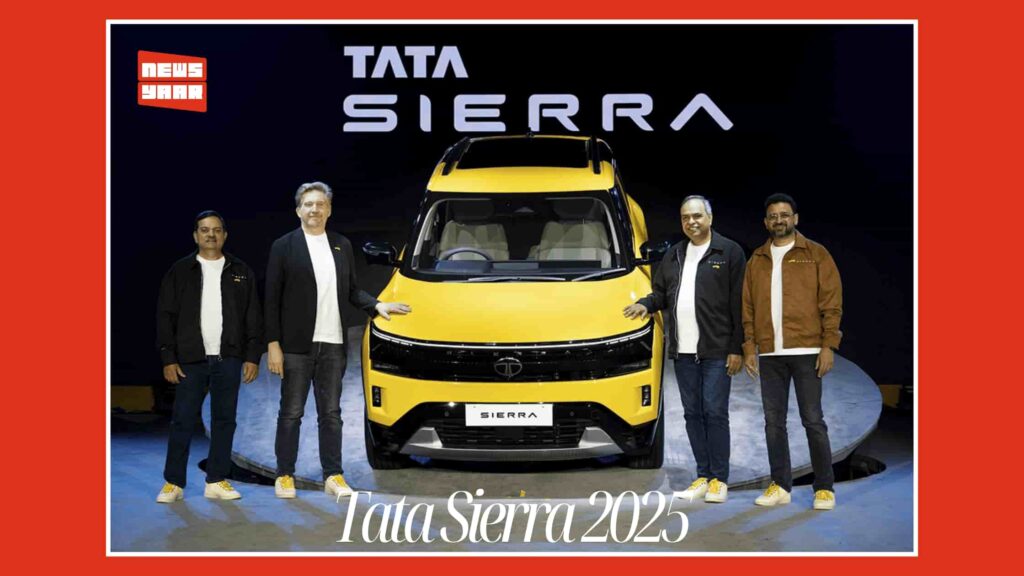
The 2025 edition of Tata Sierra brings back a legendary name from the 1990s, but this time, in a thoroughly modern, feature‑packed avatar aimed at India’s mid‑size SUV crowd.Launched at a starting ex‑showroom price of ₹ 11.49 lakh for the base variant, the new Sierra marks a strong comeback for the brand, as it attempts to re-establish itself in the SUV space. Design & Exterior: Classic feel with modern touchesTata has retained some of the classic SUV cues that made the original Sierra popular: a robust, boxy silhouette, upright stance, and an overall rugged appeal. But to match 2025 sensibilities, the new Sierra brings modern touches: full‑LED lighting, flush door handles, black cladding, sleek 19‑inch alloy wheels, and a contrasting roof band, giving it a “modern heritage” look.The rear features a clamshell‑style tailgate and full‑width light bar, echoing contemporary SUV styling, while the overall proportions make it useful for both city driving and occasional highway/family trips. Interior & Cabin FeaturesOn the inside, Sierra aims high.Its cabin adapts what Tata calls the “Life Space” philosophy, with spacious dimensions, ample headroom, legroom, shoulder room, a flat floor, and smart packaging for both comfort and convenience.The interior layout is premium: a triple‑screen setup with instrument cluster, infotainment and passenger screen, soft‑touch materials, ambient lighting, and a large panoramic sunroof. Ventilated & power‑adjustable seats, rear AC vents, sun‑shades, adjustable headrests and a reclinable rear bench are expected to appeal well to families.For infotainment and convenience: wireless Apple/Android connectivity, wireless charging / USB‑C fast charging ports, 12‑speaker JBL sound system, and multiple storage/grab‑hold points make it practical for long drives or vacations.Powertrains & Performance: Balanced choicesAt launch, Sierra offers multiple ICE engine options, including a turbo‑petrol engine delivering healthy power & torque, and a 1.5‑litre diesel for efficiency‑focused buyers. Transmission and drive options include both manual and automatic variants, enabling flexibility depending on buyer preferences. The SUV’s chassis and suspension setup make it suitable for both city commuting and occasional rough-road / long-distance use.What It Means For buyers & for the marketFor many Indian buyers, the new Sierra offers a compelling blend: classic‑SUV DNA and modern comfort, technology and practicality, at a competitive price point. For families seeking a comfortable mid‑size SUV that isn’t too heavy on the wallet yet doesn’t compromise on features, the Sierra becomes a very attractive option.At a time when competition in the mid‑size SUV segment is heating up, Sierra’s arrival challenges popular models, giving buyers another strong, value‑for‑money alternative.Furthermore, with Tata hinting at a future EV version of Sierra (likely in FY 2026), the SUV may double down on relevance as India slowly pivots toward electrification, offering both ICE convenience now and EV readiness later.Video credit: Tata MotorsVideo credit: Tata MotorsVideo credit: Tata Motors