


Trump’s China Visit: Big on Pageantry, Short on Specifics, Long on Consequence
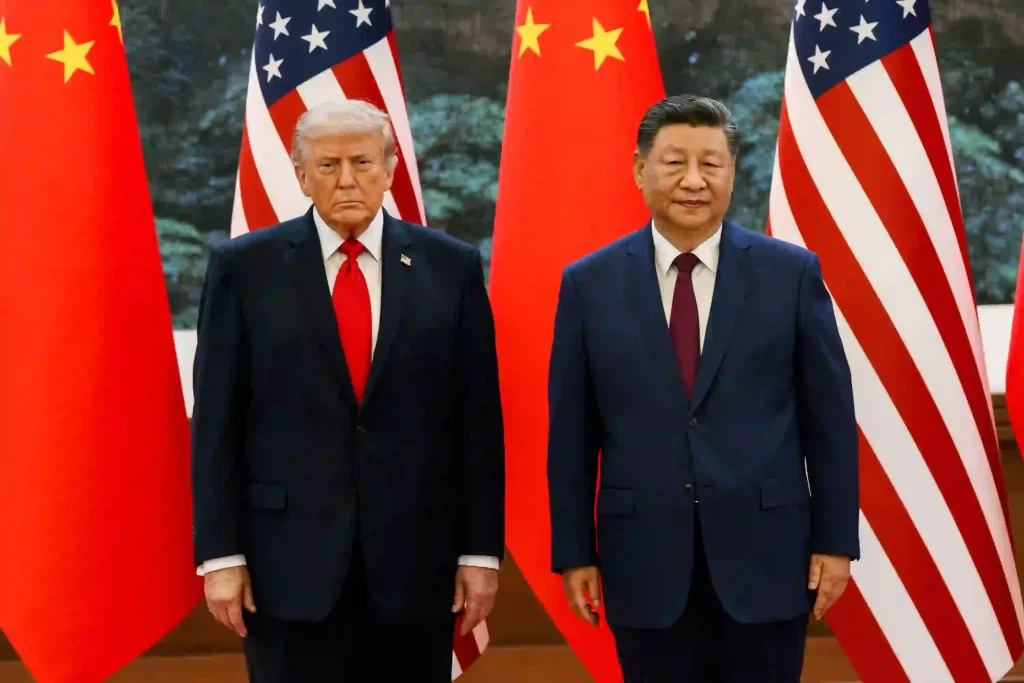
IntroductionFor three days in May 2026, the most consequential bilateral relationship in the world was conducted in person, on Chinese soil, for the first time in nearly nine years. President Donald Trump’s state visit to China — the first by an American president since his own November 2017 trip during his first term — was equal parts diplomatic theatre and strategic test, wrapped in the symbolism of Zhongnanhai gardens, Peking duck, and the careful grammar of superpower summitry.Trump called the trip “incredible,” but while it was big on pageantry, it fell short on concrete agreements. Still, Trump hailed business deals for American companies and farmers, while Chinese leader Xi Jinping touted a new era for the stability of China-US relations.The gap between those two descriptions — one transactional, one strategic — captures the essential character of what happened in Beijing. Enough was accomplished to make the visit a diplomatic success by the standards of the moment. Not enough was accomplished to resolve the crises that brought both leaders to the table.The Road to Beijing: How the Visit Was MadeThe roots of this visit go back to the Busan Summit of October 30, 2025, held on the sidelines of a regional gathering in South Korea. Trump and Xi held their first meeting during Trump’s second presidency at the Busan Summit. At the meeting, Trump announced plans to visit China in April of the following year and invited Xi to visit the United States at an appropriate time.The April timeline did not hold. The state visit was planned for the first week of April, but the meeting was postponed to May due to the 2026 Iran war. The conflict that had closed the Strait of Hormuz and sent oil prices to record highs became both the reason for delay and the dominant agenda item when the visit finally happened.The diplomatic preparation was extensive. On April 16, Defense Secretary Pete Hegseth announced that Beijing had provided high-level assurances to the White House that it would not send weapons to Iran, explicitly ruling out the potential transfer of surface-to-air missiles to the Iranian military. Hegseth attributed this breakthrough to the “strong and direct relationship” between President Trump and Xi Jinping. Secretary of State Marco Rubio had met Chinese Foreign Minister Wang Yi in February and held a further phone call on April 30 to prepare the ground for the summit.The Chinese Foreign Ministry confirmed Trump would pay a state visit to China from May 13 to 15 at President Xi Jinping’s invitation. It marked the first visit to China by an American president in almost nine years, coming at a time of heightened bilateral tensions over a range of issues, including trade, technology, and defence, and intersecting with a precarious US-Iran ceasefire and a dual blockade of the Strait of Hormuz that was driving up energy prices and weighing on global economic growth.The Arrival: Red Carpets and 300 Waving ChildrenBeijing rolled out the literal and figurative red carpet for Trump as he arrived in China on Wednesday evening local time. Three hundred Chinese children dressed in blue and white uniforms waved American and Chinese flags as Trump descended the steps of Air Force One. He was also joined on the tarmac by his son, Eric Trump, and daughter-in-law, Lara Trump.Trump was greeted at the airport by Chinese Vice President Han Zheng, Chinese Ambassador to the US Xie Feng, Executive Vice Foreign Minister Ma Zhaoxu, and US Ambassador to China David Perdue, as well as a military honour guard, a military band, and around 300 Chinese students waving Chinese and American flags. Trump and his entourage then boarded a motorcade to the Four Seasons Beijing Hotel.The visual grammar of this welcome was deliberate. Han Zheng, as China’s Vice President, is a figure of considerable standing, and his presence on the tarmac signalled the importance Beijing attached to the visit. The children chanting in Mandarin “Welcome, welcome, enthusiastically welcome” was choreography, but choreography that conveyed a message: China wanted this summit to succeed, or at least to be seen to succeed.The last time Trump visited Beijing — in November 2017 during his first term — he was given a tour of the Forbidden City and a dinner inside it, an honour granted to no other foreign leader since 1949. It remains to be seen whether this trip matched the pomp and circumstance of last time, but already there were significant events on Trump’s schedule: a welcome ceremony, a tour of the Temple of Heaven, a UNESCO World Heritage Site, and a state banquet.The Summit: The Great Hall, the Temple, and ZhongnanhaiAt 10 AM, Trump arrived at the Great Hall of the People, where he was greeted by Xi Jinping and received an opening ceremony featuring the national anthems of the United States and China, after which they inspected troops of the People’s Liberation Army and then greeted children waving Chinese and American flags.The formal bilateral meetings between Trump and Xi took place across two days, with the agenda covering trade and economic relations, the Iran war and the Strait of Hormuz, Taiwan, North Korea, rare earths and technology, and the broader structure of the bilateral relationship.On the final day, Trump headed back to the US after having lunch with Xi at Zhongnanhai, a rare visit to the Beijing compound where top Chinese officials live and work. Xi said it was meant to reciprocate Trump’s hosting him at Mar-a-Lago during his first term. “It means that China attaches great importance to this visit by President Trump to China,” said one analyst who attended the dinner banquet. “It also reflects the positive personal relationship between the two leaders.”At their last meeting, the two leaders toured the gardens at Zhongnanhai, with Trump admiring the roses. “These are the most beautiful roses anyone’s ever seen,” Trump said. Xi said he would share some Chinese rose seeds for Trump to have planted in the White House Rose Garden.The menu of the state banquet was circulated online afterward. It included cold
PM Modi Launches Five-Nation Tour to Secure Energy, Tech Ties Amid Iran War
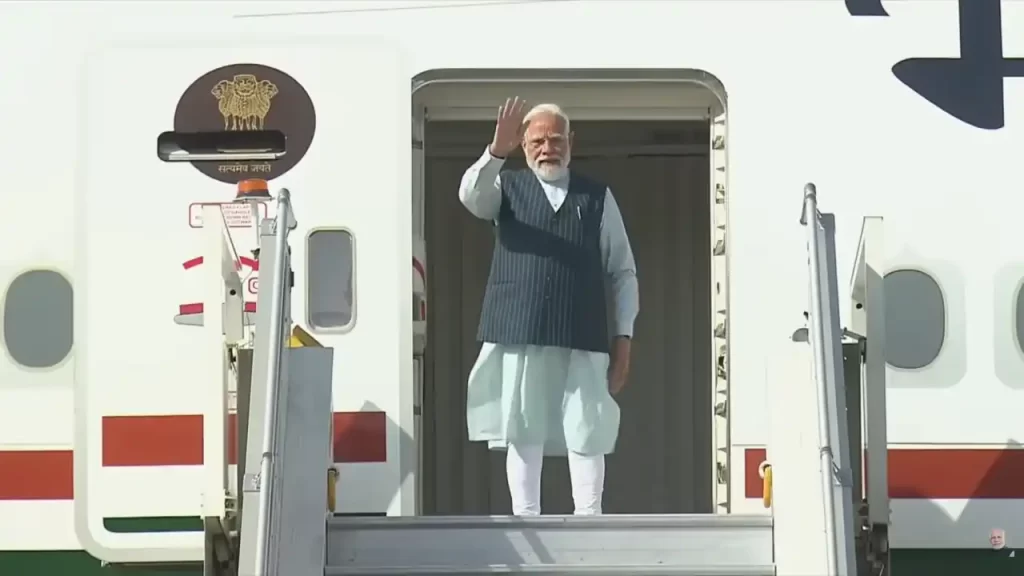
Prime Minister Narendra Modi has begun a massive five-nation tour starting in the United Arab Emirates (UAE). The trip runs from May 15 to May 20, 2026. It includes visits to the UAE, the Netherlands, Sweden, Norway, and Italy. The Prime Minister travels at a critical time when the ongoing war between the US and Iran has disrupted global shipping routes. Tensions around the Strait of Hormuz have caused oil prices to rise. This tour aims to secure India’s energy supply and strengthen technology partnerships. The visit comes right after India and the European Union signed a historic free trade agreement. Modi calls this deal the “mother of all deals.”The journey highlights India’s effort to build strong economic ties while managing global instability. Experts say diplomacy can reduce market panic, but oil prices will stay high until the war ends. Until then, India must focus on energy security and protecting its economy from rising costs.Visit to UAE: Fortifying Energy and Strategic TiesPM Modi landed in the UAE on May 15 to meet President Sheikh Mohamed bin Zayed Al Nahyan. Since 2014, Modi has visited the UAE seven times. President Sheikh Mohamed has visited India five times. Their relationship has only grown stronger over the years. The UAE has remained one of India’s most reliable energy partners even during this Gulf crisis. Long-term oil and gas supply agreements protect India’s energy security.Two important Memorandums of Understanding (MoUs) are likely to be signed during this visit. One deals with Liquefied Petroleum Gas (LPG). The other focuses on Strategic Petroleum Reserves. These deals will help India store more fuel for emergencies. Bilateral trade between India and the UAE crossed $101.25 billion in the last financial year. Both nations aim to double this trade to $200 billion by 2032. The UAE is India’s seventh-largest investor, with over $25 billion in cumulative investment.The UAE also hosts the largest group of Indian expatriates in the world. Over 4.5 million Indians live there. They form the backbone of the UAE economy. The leaders will discuss their welfare and safety. Remittances from these workers help India’s foreign exchange reserves. A Local Currency Settlement system allows trade in Indian Rupees and UAE Dirhams. This reduces dependence on the US dollar.Netherlands: Chip Deals and Water TechnologyThe Prime Minister arrived in the Netherlands from May 15 to 17. This is only his second visit since 2017. The partnership focuses on “innovation meets scale.” Dutch technology combines with India’s massive market size. Areas like semiconductors, water management, hydrogen, and maritime tech are key.A major business highlight is the agreement between Tata Electronics and ASML Netherlands. They will sign a deal to equip a semiconductor fabrication plant in Dholera, Gujarat. This boosts India’s chip-making capabilities. PM Modi and the Dutch Prime Minister visited the Afsluitdijk Dam together. This site shows cooperation in clean energy and sustainable fisheries. The Netherlands is India’s largest trading partner in Europe. Trade reached $27.8 billion in FY 2024-25. It is also India’s fourth-largest investor.The PM addressed the Indian community of over 90,000 NRIs. The visit also reached out to over 200,000 Surinami Hindustanis, the largest Indian-origin group in mainland Europe. Both nations are streamlining migration and mobility. Tourism between the two countries is set to grow.Sweden: Defense, AI, and Strategically De-risking from ChinaModi visited Sweden after an eight-year gap. He last went there in April 2018 for the first India-Nordic Summit. Sweden invests over 3 percent of its GDP in research and development. It ranks among the top innovators in Europe. Sweden has taken a firm stance to reduce its reliance on China. They removed Chinese vendors from their telecom networks. This makes India a key strategic partner.Bilateral trade reached $7.75 billion in 2025. Over 280 Swedish companies work in India. A major project is the Saab manufacturing plant in Jhajjar. Saab is building its first Carl-Gustaf weapon plant outside Sweden here. This is India’s first 100 percent FDI-driven defense project. Sweden also holds large critical mineral deposits. This helps India secure supply chains for electric vehicles and defense electronics.A new Statement of Intent created the Sweden-India Technology and AI Corridor (SITAC). It covers 6G, Artificial Intelligence, quantum computing, and life sciences. Over 80 Swedish companies attended the AI Impact Summit 2026. The Maharashtra government signed an MoU for electric boat investment worth Rs 1,990 crore.Norway: First Solo Visit in 43 Years and Arctic TechThis trip marks the first standalone visit by an Indian Prime Minister to Norway in 43 years. Modi attended the third India-Nordic Summit in Oslo. This summit places India in a high tier of Nordic engagement, joining only the United States. The India-EFTA TEPA agreement is now in force. It promises $100 billion in investment and one million jobs over 15 years.Norway’s sovereign wealth fund, the world’s largest at $2 trillion, has invested nearly $30 billion in India. Indian shipyards now hold 11 percent of Norwegian ship orders. Cochin Shipyard is building eco-friendly vessels for Norway. An MoU between GRSE and Kongsberg Maritime will deliver India’s first indigenous Polar Research Vessel.ISRO antennas at Svalbard became operational in 2026. They support India’s Arctic research. Norwegian tunneling technology helps the Char Dham railway project. Clean energy cooperation will diversify India’s energy mix. Norway also sees opportunities for Indian talent due to its aging population.Italy: Strategic Partnership and Submarine CablesPM Modi travels to Italy from May 19 to 21. He meets Prime Minister Giorgia Meloni to reaffirm their strategic partnership. The visit follows the Joint Strategic Plan of Action 2025-29. Italy views India as a major power and an indispensable partner.Italy champions the India-Middle East-Europe Economic Corridor (IMEEC). A new submarine cable, Sparkle-Airtel Blue-Raman, connects Genoa to India. This secures supply chains and boosts energy security. Bilateral trade reached $16.77 billion in 2025. The target is 20 billion euros by 2029. Tata Motors acquired the Iveco Group for 3.8 billion euros. This is the largest Indian investment in Italy. Italy opened a SIMEST office in Delhi to support SMEs.Energy Crisis and Global ImpactThe Iran war has caused
French President Macron’s India Visit Strengthens Tech and Defense Ties
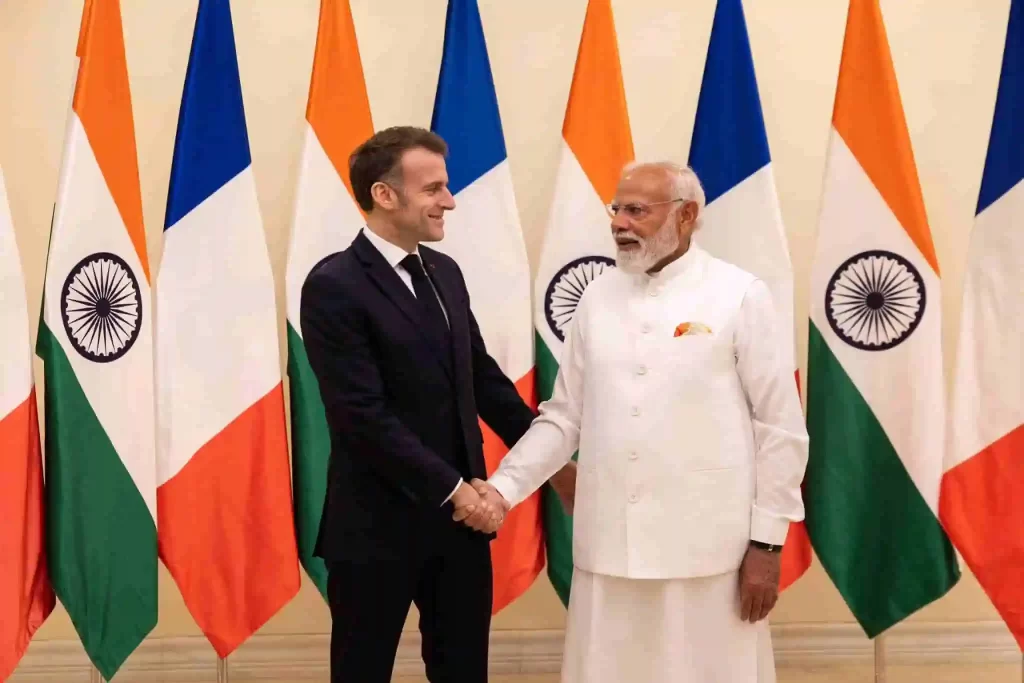
French President Emmanuel Macron and his wife, Brigitte Macron, completed a successful three-day official visit to India from February 17 to 19, 2026. This marked President Macron’s fourth trip to India since 2017 and built on the strong friendship between the two nations. The visit highlighted shared goals in technology, defense, and innovation. It followed Prime Minister Narendra Modi’s trip to France in February 2025 and came one year after the AI Action Summit in Paris. Both leaders focused on the Horizon 2047 Roadmap, a plan set in 2023 to guide ties until India’s 100th Independence anniversary.Mumbai Welcomes Leaders with Tribute and Cultural LaunchThe visit kicked off in Mumbai, India’s bustling financial hub, on February 17. President Macron and Mrs. Macron first paid heartfelt tribute to the victims of the 2008 terrorist attacks at the iconic Taj Mahal Palace hotel. This emotional moment honored those lost in the tragic events and underscored the shared commitment to fight terrorism. Later that morning, they joined a special lunch focused on the film industry. Indian and French cultural figures, filmmakers, and Bollywood stars gathered to celebrate creative exchanges between the two countries.In the afternoon, President Macron met Prime Minister Modi for in-depth bilateral talks at the Residence of the Governor of Maharashtra in Lok Bhavan. The leaders reviewed progress in their strategic partnership and discussed ways to expand it into new areas like defense, space, and digital technology. They addressed regional and global issues, including cooperation in the Indo-Pacific region. Around 5:15 PM, they jointly inaugurated the India-France Year of Innovation 2026 at the majestic Gateway of India. This year-long initiative will feature events across both nations to boost collaboration in innovation, research, startups, and people-to-people ties. The two leaders then addressed a lively gathering of business leaders, innovators, researchers, and entrepreneurs from India and France.On February 18, President Macron engaged with Indian investors during a dynamic round-table discussion. He shared insights on economic opportunities and partnership potential. He also gave an exclusive interview to popular Indian podcaster Raj Shamani, reaching young audiences with talks on leadership and global challenges. That evening, he flew to New Delhi for the next phase of the visit. Business France and Mission French Tech brought over 100 French companies to explore collaborations, signaling strong economic momentum.New Delhi Hosts AI Impact Summit and Strategic DialoguesThe visit shifted to New Delhi on February 19, where President Macron participated in the AI Impact Summit. Hosted by India, this was the first major global AI summit in the Global South. It revolved around three guiding principles: People, Planet, and Progress, structured across seven key focus areas or “chakras.” The summit showcased cutting-edge discussions on artificial intelligence’s role in solving global problems. President Macron’s presence highlighted France and India’s leadership in AI governance and ethical tech development.During the Delhi leg, the leaders continued their bilateral engagements. They exchanged views on pressing issues like climate action, sustainable development, and security. The talks elevated the India-France relationship to a “Special Global Strategic Partnership.” This upgrade expands cooperation in defense, civil nuclear energy, space, AI, and multilateral affairs. Bilateral trade had already reached €12.67 billion, boosted by the recent India-EU Free Trade Agreement and rising investments.Raj Shammi Podcast with the President Raj Shamani’s Historic Podcast with French President Emmanuel Macron (FO473) stands out as a groundbreaking episode of his popular “Figuring Out” series. Recorded on February 18, 2026, in Mumbai during President Macron’s official visit to India, this marked the French leader’s first-ever podcast appearance worldwide. At just 28 years old, Raj Shamani, host of one of India’s top-ranked global podcasts, bypassed traditional media to secure this exclusive, reaching millions of young viewers directly through digital platforms. The 40-minute conversation went viral instantly, blending diplomacy, tech vision, and personal insights.Horizon 2047 Roadmap Drives Ambitious Future PlansThe Horizon 2047 Roadmap forms the backbone of this partnership. Launched on July 14, 2023, by President Macron and Prime Minister Modi, it sets bold targets for the next two decades. The plan focuses on three pillars. First, Partnership for Security and Sovereignty covers defense, space, civil nuclear energy, digital tech, emerging technologies, the Indo-Pacific, and counter-terrorism. Second, Partnership for the Planet addresses environment, climate, health, energy transitions, and sustainable development. Third, Partnership for the People promotes student and professional mobility, as well as cultural exchanges.In defense, exciting developments include India’s clearance for 114 Rafale fighter jets from France’s Dassault Aviation, potentially worth €30 billion, the “contract of the century.” Most jets will be manufactured in India, reducing reliance on imports and boosting local production. This adds to the 62 Rafales already in service. The leaders also inaugurated India’s first helicopter final assembly line via videoconference. A Tata Group-Airbus joint venture in Karnataka near Bengaluru will produce the H125 single-engine helicopter, Airbus’s bestseller. Ongoing Scorpène submarine projects and co-development of advanced military tech further deepen ties.Space cooperation shines bright too. The third India-France Strategic Space Dialogue is set for 2026. India will join the International Space Summit in France in July. New initiatives include the India-France Innovation Network, a binational center for digital sciences with France’s National Institute for Research in Digital Science and Technology, and a Joint Center for Advanced Materials.A Partnership for Global Stability and InnovationPresident Modi called the relationship a “partnership for global stability” in today’s turbulent world. President Macron praised the “remarkable acceleration” of ties amid a changing international order. They referred to each other as “dear friends” on social media, reflecting personal rapport. The visit celebrated 25 years of strategic cooperation and 100 years of diplomatic relations approaching in 2047.France sees India as a key player in demographics, economy, science, and diplomacy. The trip consolidated diplomatic, economic, and civil society links. It addressed G20 outcomes from New Delhi in 2023, security challenges, and growth in defense, space, and cyber sectors. Over 100 French firms joined to tap India’s vibrant market. Challenges like defense delays, AI regulations, trade barriers, and geopolitical differences persist, but momentum is strong.This visit reinforces India and France as forces for good. From Mumbai’s cultural
India-US Trade Deal 2026: Comprehensive Framework, Key Terms and Strategic Implications
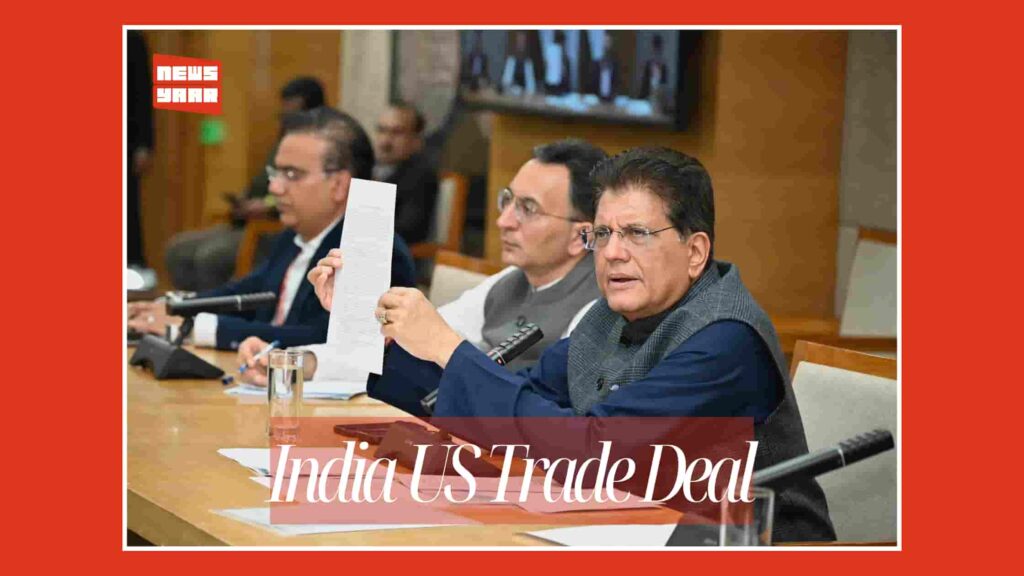
India and the United States have announced a framework for an interim trade agreement aimed at deepening economic ties, expanding market access, and strengthening bilateral cooperation on trade and investment. The trade deal represents progress in long-running negotiations between the two largest democracies and is viewed by New Delhi and Washington as a step toward a broader Bilateral Trade Agreement (BTA). The framework was unveiled following discussions between Prime Minister Narendra Modi and U.S. President Donald J. Trump, who first launched formal talks on a comprehensive India-U.S. trade arrangement in February 2025. Interim Framework OverviewUnder the interim framework, both countries have agreed to substantial tariff reductions and preferential market access commitments, while also embedding safeguards for politically sensitive and strategic sectors in their respective economies. The agreement stops short of a full free-trade agreement but sets out structured commitments that could be built upon in future negotiations. According to the joint statement issued by India and the U.S., the interim agreement emphasises mutual and reciprocal market access, rule-based trade enhancement, and sustained cooperation in areas of economic interest. It also commits both sides to work on non-tariff barriers to facilitate smoother trade flows. Tariff Reductions and Market AccessOne of the central features of the deal is reduction of mutually imposed tariffs on a wide range of goods:The United States will reduce its **reciprocal tariffs on Indian exports to 18 per cent from previous levels that reached up to 50 per cent on certain products, significantly improving access to the U.S. market. Tariffs will also be entirely eliminated for select Indian exports, including generic pharmaceuticals, gems and diamonds, and aircraft parts. India has agreed to eliminate or reduce tariffs on all U.S. industrial goods and a broad spectrum of American food and agricultural products, including dried distillers’ grains (DDGs), red sorghum for animal feed, tree nuts, fresh and processed fruits, soybean oil, wine and spirits. The reciprocal tariff arrangement is expected to open up significant opportunities for Indian exporters in traditional and emerging sectors, while also making a range of American products more competitive within India’s markets.Agriculture and Sensitive Sector ProtectionsA major concern throughout negotiations has been safeguarding India’s agricultural and rural economy, which supports a vast portion of the population. Commerce and Industry Minister Piyush Goyal has repeatedly emphasised that the deal will fully protect sensitive agricultural and dairy products from tariff concessions. Products explicitly shielded include:Staple crops such as maize, wheat, rice and soyaDairy and poultry products including milk, cheese and meatOther items critical to rural livelihoods such as ethanol (fuel), tobacco and certain vegetablesThese protections are intended to prevent adverse impacts on the livelihoods of farmers, smallholder producers and rural communities, who form the backbone of India’s agricultural economy. At the same time, India has offered zero-duty access for its farm products entering the U.S. market, including items such as spices, tea, coffee, coconut and coconut oil, cashew nuts, certain fruits like mangoes, bananas and pineapples, bakery products and vegetable waxes. This is expected to enhance export earnings for agricultural producers and MSMEs. Sectoral Gains and Strategic OutcomesThe interim framework includes sectoral provisions designed to boost trade and cooperation across diverse industries:Pharmaceuticals and Medical Devices: Zero tariffs on generic drugs and improved regulatory alignment are expected to bolster India’s strong position in the U.S. pharmaceutical market. Aerospace and Defence: Eliminating tariffs on aircraft parts and securing Section 232 exemptions are expected to benefit aerospace trade and support defence and commercial aircraft manufacturing. Manufacturing and ICT Goods: Commitments to address non-tariff barriers and streamline standards are expected to facilitate trade in information and communication technology (ICT) products and select machinery. Auto Components and Heavy Industry: The agreement anticipates tariff rate quotas for auto parts and preferential access for certain manufactured goods, enhancing industrial trade cooperation. Combined, these measures aim to reduce supply chain friction, attract investment, and support India’s Make in Indiainitiative by integrating domestic production more closely with global value chains.Energy and Long-term Procurement CommitmentsAs part of the broader economic engagement, India has signalled intentions to import approximately USD 500 billion worth of goods from the United States over the next five years. These imports include energy products such as crude oil, liquefied natural gas (LNG) and liquefied petroleum gas (LPG), along with aircraft and aircraft parts, technology products, precious metals and coking coal. These procurement commitments align with India’s strategy of diversifying its energy sources and deepening strategic economic ties with the U.S. . Expected Economic ImpactCommerce Minister Goyal has described the interim framework as a “historic and equitable agreement” that could potentially open a US$ 30 trillion market for Indian exporters. This expanded access is expected to deliver significant benefits for micro, small and medium enterprises (MSMEs), artisans, agricultural producers and women- and youth-led businesses by removing tariff barriers in the U.S. market. Key economic gains envisaged include:Boost to Indian exports in textiles, leather and footwear, plastic and rubber products, organic chemicals, home decor, artisanal goods and select machinery. Increased competitiveness for Indian pharmaceutical and aerospace sectors through zero tariff access. Enhancement of India’s MSME ecosystem through sustained preferential access and reduced non-tariff barriers. Political and Analytical PerspectivesThe trade framework has drawn both support and criticism within India. Proponents highlight its potential to create jobs, expand market reach for diverse sectors and attract foreign direct investment. Several state leaders have welcomed the deal as a step forward for economic growth and industrial development. Critics — including farmer unions and opposition figures — argue that the framework lacks sufficient detail and may expose certain sectors to unfair competition, particularly if tariff reductions are asymmetric. Concerns have been raised about the long-term impact on domestic agriculture and industrial policies. Why the Deal MattersThe interim India-U.S. trade deal is significant on multiple fronts:It marks a milestone in trade relations between the world’s two largest democracies, anchoring economic cooperation alongside strategic and defense ties. It represents a shift in India’s trade policy, balancing openness with protection for sensitive sectors while pursuing broader market access. For the United States, it strengthens economic engagement with a high-growth market and supports bilateral cooperation on technology, supply chains and industrial standards. The interim framework is
World Economic Forum 2026: Global Leaders Converge in Davos Amid Major Economic and Geopolitical Challenges
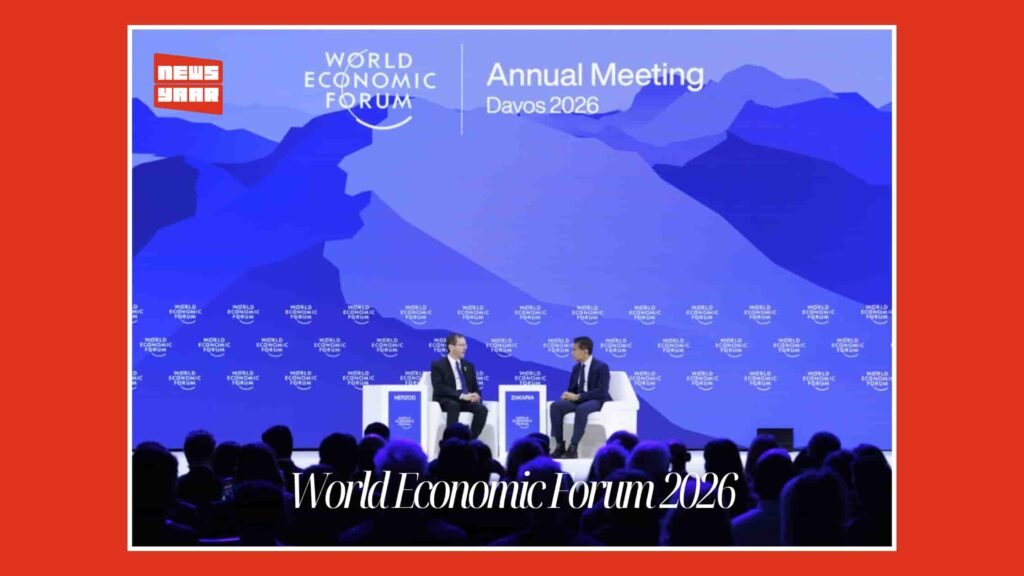
The World Economic Forum (WEF) Annual Meeting 2026 took place from January 19 to 23 in Davos-Klosters, Switzerland, bringing together leaders from government, business, international organisations and civil society to discuss the most pressing global issues of the moment. Now in its 56th year, the forum — commonly referred to simply as “Davos” — is a flagship platform for public-private cooperation on economic policy, technology governance, sustainability and global security.The meeting’s official theme, “A Spirit of Dialogue,” underscored a widely recognised need for renewed cooperation in an era marked by geopolitical tensions, slowing economic growth, technological disruption and environmental risk. Organisers, delegates and analysts alike framed the discussions around the idea that dialogue — even amid disagreement — is essential for addressing interconnected global challenges. Scale of Participation and Global Profile The WEF 2026 drew thousands of participants from over 100 countries, including government ministers, heads of state, central bankers, chief executives of major corporations, academics and representatives of international institutions. The meeting’s scale and diversity reflect its enduring role as a central venue for high-level engagement on global policy priorities.Among the most notable attendees was United States President Donald Trump, whose presence drew significant media attention and marked a return to Davos for a leader of his stature. Delegations also included major European figures, leaders from Asia, Africa and Latin America, and senior representatives from international organisations and think tanks. Economic Priorities and Global Growth Concerns Economic issues formed a core pillar of the 2026 agenda. Discussions highlighted uneven global growth, persistent inflationary pressures and heightened uncertainty in financial markets. Organisers and speakers emphasised that sluggish expansions in major economies, coupled with high debt levels, pose risks to stability and investment confidence.According to WEF research and policy discussions at Davos, cooperation on economic policy, trade facilitation and investment frameworks remains essential to navigate these headwinds. Investments in human capital, innovation and sustainable growth models were also highlighted as central to unlocking new sources of economic opportunity. Technology, Innovation and Governance Technological advancement — particularly artificial intelligence (AI) — was a prominent topic throughout the meeting. Delegates debated how to harness innovation responsibly while addressing associated risks such as workforce displacement, data protection, ethical use cases and the broader social impact of AI deployment.Speakers noted the absence of globally coordinated regulatory frameworks for emerging technologies, emphasising the need for international dialogue to manage both the opportunities and risks of rapid digital transformation. Geopolitics and International Security Geopolitical tensions and international security issues shaped several panels and bilateral discussions. The ongoing conflict in Ukraine, instability in parts of the Middle East, and great-power competition in regions such as the Indo-Pacific were recurring themes.In this context, world leaders discussed the importance of resilient supply chains, energy security and strategic partnerships while acknowledging that geopolitical fragmentation continues to complicate efforts toward shared economic and diplomatic goals.A particularly high-profile moment at the forum involved exchanges around NATO and Arctic security, with debates over territorial issues such as the strategic role of Greenland drawing media attention and highlighting how security concerns intersect with economic and environmental priorities. Climate, Sustainability and Emerging Risks Climate change and sustainable development remained central to Davos discussions, but delegates acknowledged the gap between global climate commitments and action on the ground. Energy transition strategies, climate finance for developing economies and nature-based risk frameworks were all debated, often in conjunction with economic policy and innovation priorities.A distinctive focus this year was on water systems and planetary stability, with experts warning that imbalances in the global water cycle — including drought, flood extremes and freshwater scarcity — require urgent collective action. These discussions, sometimes referred to as part of the “Blue Davos” agenda, highlighted water as a foundational element of global resilience. Outcomes and Forward Agenda Unlike treaty negotiations or binding international agreements, the World Economic Forum does not issue enforceable resolutions. Instead, its role is to shape the global conversation, build networks of cooperation and catalyse voluntary initiatives. At the conclusion of the 2026 meeting, several partnerships, memoranda of understanding and investment dialogues were announced, particularly in areas such as clean energy, digital infrastructure and sustainable finance.For example, global and regional delegations highlighted collaborative efforts to expand green growth and industrial innovation, reflecting businesses and states seeking resilient growth pathways amid global uncertainty.Beyond formal sessions, the informal interactions in Davos — from bilateral talks between heads of state to private sector strategy meetings — often influence policy choices throughout the year. These engagements are frequently cited by governments and corporations as contributing to priority setting and risk assessment in economic and geopolitical planning. Why World Economic Forum 2026 Matters The World Economic Forum Annual Meeting remains significant because it brings together diverse decision-makers at a time when coordination on global issues has become more fragmented. As geopolitical tensions rise and economic risks persist, forums like Davos offer a rare structured environment where dialogues between competing interests can occur.In 2026, the emphasis on dialogue — even amid disagreement on trade, security, technology and climate policy — reflected a shared recognition that global challenges cannot be addressed in isolation. While the outcomes of Davos are not always immediately visible, the convergence of leaders and ideas continues to shape international conversations and influence public and private sector strategies in the months and years that follow.
India, France Hold High-Level Talks on $36–39 Billion Rafale Fighter Jet Deal
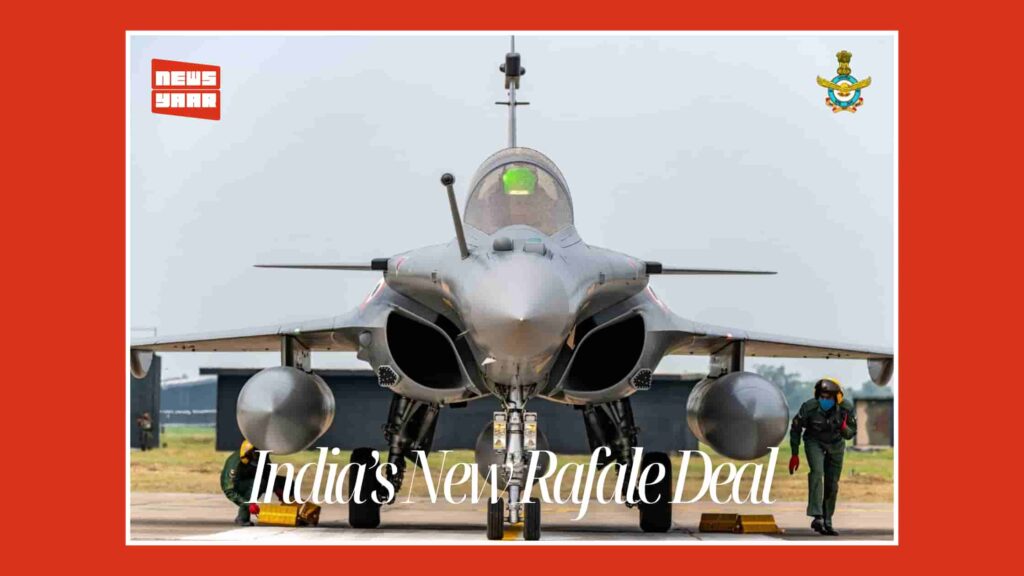
New Delhi is preparing for crucial high-level discussions with France this week on a proposal to acquire 114 additional Rafale fighter jets, a defence deal estimated at around $36–39 billion (approximately ₹3.25 trillion). If cleared, the agreement would become India’s largest-ever defence procurement, significantly boosting the combat capability of the Indian Air Force (IAF) and deepening strategic ties between the two countries.According to defence officials, the proposal will be reviewed at a senior-level Defence Ministry meeting after months of internal assessment by the IAF. The plan, formally known as the Statement of Case, must receive Defence Ministry approval before being sent to the Cabinet Committee on Security (CCS), the highest authority on defence decisions in India.The proposed acquisition comes at a critical time for the Indian Air Force, which continues to face a shortage of fighter squadrons. Several squadrons are operating below sanctioned strength, raising concerns over long-term operational readiness amid evolving regional security challenges.If approved, the deal would raise India’s total Rafale fleet to 176 aircraft, including the 36 Rafale jets already in service with the IAF and 26 Rafale-M jets contracted by the Indian Navy for aircraft carrier operations. India would then become one of the world’s largest operators of the Rafale platform.A key feature of the proposal is its strong Make in India component. Defence sources say over 30 per cent of the aircraft content would be indigenous, with most of the jets assembled domestically. Only 12 to 18 aircraft are expected to be delivered in “fly-away” condition for immediate operational use, while the rest would be produced in India in partnership with local industry.India is also seeking French approval to integrate indigenously developed weapons and electronic systems onto the Rafale. However, officials noted that the aircraft’s proprietary source codes would remain under French control, consistent with global defence norms.The deal is expected to significantly expand Dassault Aviation’s industrial footprint in India. Plans include enhanced maintenance, repair and overhaul (MRO) facilities and a proposed engine maintenance hub for Rafale’s M88 engines in Hyderabad, which could serve regional requirements as well. Indian private sector firms, including the Tata Group, are likely to play a major role in manufacturing and sustainment activities.The Rafale proposal comes amid offers from other global defence majors, including the United States’ F-35 stealth fighter and Russia’s Su-57. However, Indian officials have emphasised that proven operational performance and immediate readiness are key priorities. The Rafale’s advanced avionics, sensors and electronic warfare systems have reportedly performed strongly during recent IAF exercises.The talks follow the 38th India–France Strategic Dialogue, co-chaired by National Security Adviser Ajit Doval and French President Emmanuel Macron’s diplomatic adviser Emmanuel Bonne. Defence cooperation, technology partnerships and joint production were among the key issues discussed, setting the stage for an expected visit by President Macron to India.While the Rafale deal is still under consideration, defence analysts say it reflects India’s balanced approach, combining foreign technology with domestic manufacturing, to modernise its armed forces in an increasingly complex Indo-Pacific security environment.
Germany Visa-Free Transit for Indians: What It Means and How It Works
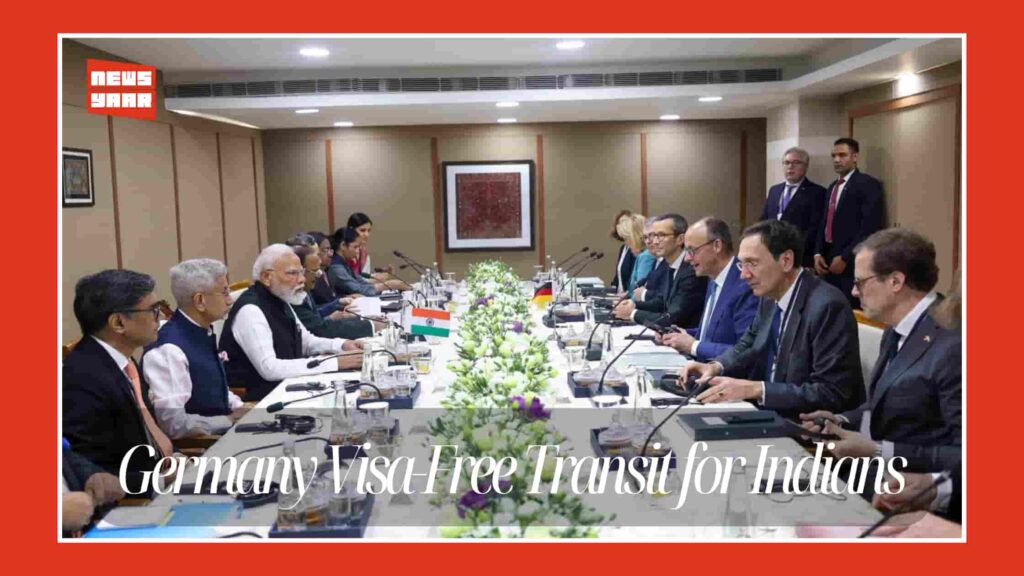
Germany has introduced a new visa-free transit facility for Indian passport holders that is set to simplify international travel for many flyers. Announced during German Chancellor Friedrich Merz’s official visit to India in January 2026, this move aims to reduce paperwork and costs for Indians connecting through major German airports en route to non-European destinations. What Is the New Germany Visa-Free Transit Rule?Under the updated rule, Indian citizens no longer need an Airport Transit Visa (Type A) to change flights at selected German international airports, such as Frankfurt, Munich, Berlin, Düsseldorf and Hamburg, provided certain conditions are met. This transit privilege applies only if travellers remain within the international transit area and are en route to destinations outside the Schengen Zone — for example, flights from India to the United States, Canada or the United Kingdom with a stopover in Germany.It is important to note that this policy does not grant entry into Germany or the wider Schengen Area. If passengers plan to enter Germany (even briefly) or travel within the Schengen region, they must still obtain the appropriate visa before arrival. Why This Change Matters for Indian TravellersFor many Indian passengers, Germany was previously a less convenient transit option due to its Airport Transit Visa requirement, which could involve paperwork, costs and added delays even if the traveller never left the airport. Here’s why the new rule is significant: Easier Airline ConnectionsPassengers can now book flights with layovers at major German hubs without worrying about additional visa requirements — making options like Frankfurt and Munich more attractive for long-haul itineraries. Lower Costs and Less PaperworkEarlier, Indian nationals needed to apply for and pay for a transit visa (around €90 or roughly ₹9,000–₹10,000) even for short airport layovers. With this requirement lifted for eligible transits, travellers can save both time and money. Improved Travel FlexibilityThis change could encourage travellers to choose more direct or efficient routes, especially when flying to global destinations beyond Europe. Who Benefits MostLong-haul travellers flying from India to the Americas, Africa or the UK with German stopoversStudents and professionals connecting through German airports on their way to academic or work destinations abroadFamilies and leisure travellers seeking flexible multi-leg itineraries without extra visa hurdlesHowever, travellers should ensure they remain airside in the transit area and are not entering Germany or the Schengen Zone, as that still requires a separate visa. How to Use the Visa-Free Transit FacilityHere are the key conditions to benefit from the rule:You must remain within the international transit zone of the German airport.Your final destination must be outside the Schengen Area.Your layover must not exceed the allowed airport transit period (usually under 24 hours).You must have confirmed onward tickets and boarding passes for your connecting flight.If any of these conditions are not met — for example, if you wish to exit the airport or travel to a Schengen destination — you still need a Schengen visa. When Did This Rule Come Into Effect?The policy was announced during Chancellor Merz’s visit to India in early January 2026 and has started to be implemented since then, aligning with broader efforts to strengthen India-Germany ties and enhance travel facilitation for Indian passport holders. What This Means for Future TravelWhile this facility does not change the general visa requirements for entry into Germany or the Schengen Zone, it reflects a broader trend of travel facilitation and cooperation between India and Germany. The move is likely to make Germany a more competitive transit hub in global air travel, especially for Indian travellers heading to destinations beyond Europe. In SummaryGermany has introduced visa-free airport transit for Indian passport holders at major airports.The rule applies only when passengers stay within the international transit area and travel onwards to non-Schengen destinations.Travellers still need a Schengen or national visa if they intend to enter Germany or other Schengen countries.The change reduces costs and documentation for Indian travellers connecting through German hubs.It enhances travel flexibility and could attract more Indians to fly via German airports.