


Epstein Files: All You Need To Know
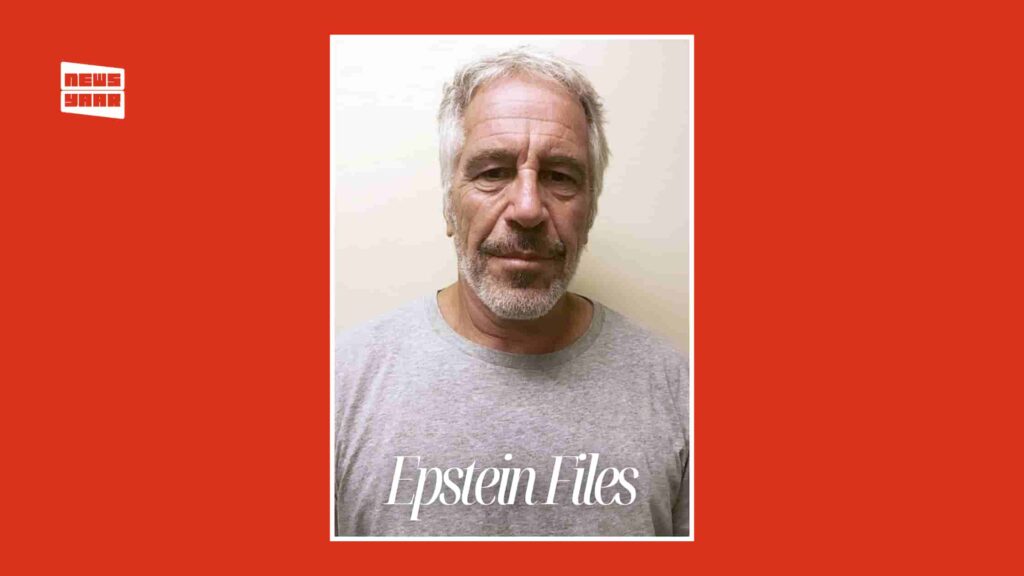
Jeffrey Epstein’s case spans decades of allegations, lenient deals, and high-profile scrutiny. It began with early reports of abuse in the 2000s, escalated through his 2019 arrest and death, and continues unfolding via mandated file releases today. Jeffrey Epstein’s files, a massive trove of emails, documents, and records from the US Department of Justice, expose the financier’s web of connections to power, science, and controversy. Released under the 2025 Epstein Transparency Act, these files, totaling over three million items, detail his funding of elite projects and interactions with prominent figures, though most mentions do not imply criminality. Who Was Jeffrey Epstein? Epstein, a convicted sex offender, built a fortune as a financier and cultivated ties with scientists, politicians, and celebrities. Arrested in 2019 on federal sex trafficking charges, he died by suicide in a New York jail cell that August, sparking endless speculation. His associate Ghislaine Maxwell was convicted in 2021 and is serving 20 years for her role in recruiting victims. Early History (2002–2008) Abuse allegations surfaced in March 2005 when Palm Beach police probed Epstein for paying a 14-year-old girl for a “massage” at his mansion, uncovering claims from dozens more minors dating back to 2002.’ In 2006, he faced multiple unlawful sex act charges, but a grand jury indicted only on one minor count of solicitation. Federal involvement grew via the FBI’s “Operation Leap Year.” By June 2008, Epstein secured a controversial non-prosecution deal from U.S. Attorney Alexander Acosta: pleading guilty to state solicitation charges, 18 months in jail (mostly work release), sex offender registration, and victim restitution, sparing him federal time despite 36 identified victims. The Epstein Files 2026 Less than 1% of files are public; redactions shield victims, with more expected. No “client list” or conspiracy proof; DOJ upholds suicide ruling, lists ~10 co-conspirators (some subpoenaed). Revelations fuel global probes (Norway politics shaken) and speculation (e.g., “Cody Rudland” email), but focus remains on Epstein’s science/power ties without broad prosecutions. Online tools like Jmail drive public analysis, sustaining debate. Recent Document Releases The US Department of Justice’s January 31, 2026, release—over three million pages, 180,000 images, and 2,000 videos—marks the biggest batch yet under the Epstein Transparency Act. It includes Epstein’s jail evaluations, Ghislaine Maxwell details, and searchable emails via Jmail. These files highlight Epstein’s post-2008 conviction dealings, like his $800,000 MIT donations that triggered resignations and probes. No “client list” or blackmail evidence emerged, per a July 2025 DOJ memo confirming his death as suicide. Prominent Associates in Files Files name ~150 from lawsuits, emails, flight logs; many social/financial ties, no proven criminality. Bill Clinton: Frequent flyer on Epstein’s jet (post-presidency); denied island visits or knowledge of crimes. Donald Trump: Early friendship (banned Epstein from Mar-a-Lago); Maxwell emails reference “girls,” denied by White House. Prince Andrew: Giuffre alleged abuse (settled 2022 civil suit); stripped of titles. Leon Black: Paid $158M for advice; files allege coerced massages Lawrence Krauss: $250K funding; emails on his scandals.Lisa Randall: Island visit, house arrest joke email Martin Nowak: $6.5M Harvard center funding.Nathan Wolfe: Pitched “horny virus” study. Corina Tarnita: Facilitated Romanian scholarships Harvey Weinstein: One victim alleged a paid encounter via Maxwell Other Notables Files reference ~10 potential co-conspirators (FBI list, some subpoenaed) plus 25 unnamed with secret settlements per Maxwell. Scientists, politicians (Norwegian fallout), Bill Gates (odd emails).
World Economic Forum 2026: Global Leaders Converge in Davos Amid Major Economic and Geopolitical Challenges
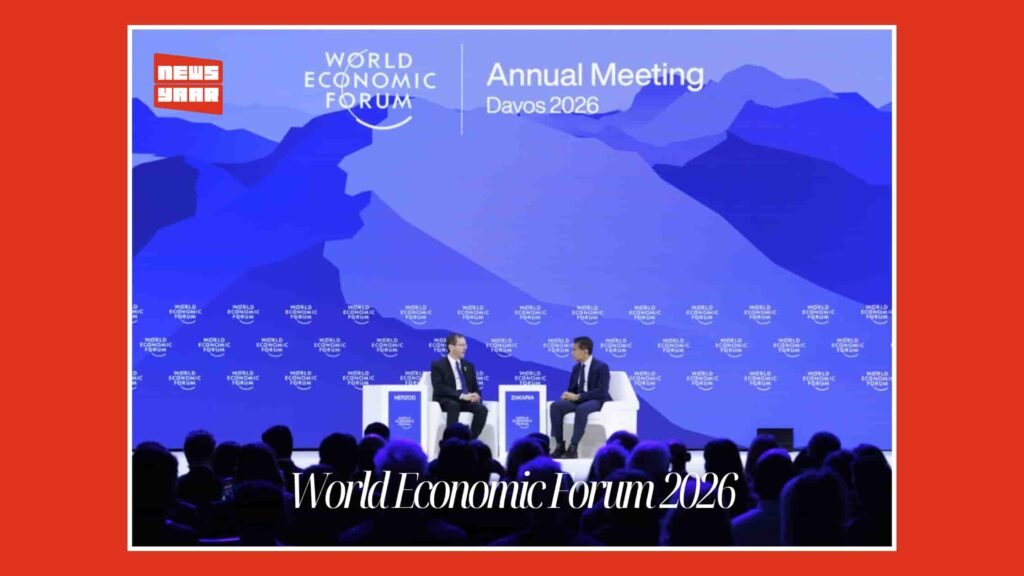
The World Economic Forum (WEF) Annual Meeting 2026 took place from January 19 to 23 in Davos-Klosters, Switzerland, bringing together leaders from government, business, international organisations and civil society to discuss the most pressing global issues of the moment. Now in its 56th year, the forum — commonly referred to simply as “Davos” — is a flagship platform for public-private cooperation on economic policy, technology governance, sustainability and global security.The meeting’s official theme, “A Spirit of Dialogue,” underscored a widely recognised need for renewed cooperation in an era marked by geopolitical tensions, slowing economic growth, technological disruption and environmental risk. Organisers, delegates and analysts alike framed the discussions around the idea that dialogue — even amid disagreement — is essential for addressing interconnected global challenges. Scale of Participation and Global Profile The WEF 2026 drew thousands of participants from over 100 countries, including government ministers, heads of state, central bankers, chief executives of major corporations, academics and representatives of international institutions. The meeting’s scale and diversity reflect its enduring role as a central venue for high-level engagement on global policy priorities.Among the most notable attendees was United States President Donald Trump, whose presence drew significant media attention and marked a return to Davos for a leader of his stature. Delegations also included major European figures, leaders from Asia, Africa and Latin America, and senior representatives from international organisations and think tanks. Economic Priorities and Global Growth Concerns Economic issues formed a core pillar of the 2026 agenda. Discussions highlighted uneven global growth, persistent inflationary pressures and heightened uncertainty in financial markets. Organisers and speakers emphasised that sluggish expansions in major economies, coupled with high debt levels, pose risks to stability and investment confidence.According to WEF research and policy discussions at Davos, cooperation on economic policy, trade facilitation and investment frameworks remains essential to navigate these headwinds. Investments in human capital, innovation and sustainable growth models were also highlighted as central to unlocking new sources of economic opportunity. Technology, Innovation and Governance Technological advancement — particularly artificial intelligence (AI) — was a prominent topic throughout the meeting. Delegates debated how to harness innovation responsibly while addressing associated risks such as workforce displacement, data protection, ethical use cases and the broader social impact of AI deployment.Speakers noted the absence of globally coordinated regulatory frameworks for emerging technologies, emphasising the need for international dialogue to manage both the opportunities and risks of rapid digital transformation. Geopolitics and International Security Geopolitical tensions and international security issues shaped several panels and bilateral discussions. The ongoing conflict in Ukraine, instability in parts of the Middle East, and great-power competition in regions such as the Indo-Pacific were recurring themes.In this context, world leaders discussed the importance of resilient supply chains, energy security and strategic partnerships while acknowledging that geopolitical fragmentation continues to complicate efforts toward shared economic and diplomatic goals.A particularly high-profile moment at the forum involved exchanges around NATO and Arctic security, with debates over territorial issues such as the strategic role of Greenland drawing media attention and highlighting how security concerns intersect with economic and environmental priorities. Climate, Sustainability and Emerging Risks Climate change and sustainable development remained central to Davos discussions, but delegates acknowledged the gap between global climate commitments and action on the ground. Energy transition strategies, climate finance for developing economies and nature-based risk frameworks were all debated, often in conjunction with economic policy and innovation priorities.A distinctive focus this year was on water systems and planetary stability, with experts warning that imbalances in the global water cycle — including drought, flood extremes and freshwater scarcity — require urgent collective action. These discussions, sometimes referred to as part of the “Blue Davos” agenda, highlighted water as a foundational element of global resilience. Outcomes and Forward Agenda Unlike treaty negotiations or binding international agreements, the World Economic Forum does not issue enforceable resolutions. Instead, its role is to shape the global conversation, build networks of cooperation and catalyse voluntary initiatives. At the conclusion of the 2026 meeting, several partnerships, memoranda of understanding and investment dialogues were announced, particularly in areas such as clean energy, digital infrastructure and sustainable finance.For example, global and regional delegations highlighted collaborative efforts to expand green growth and industrial innovation, reflecting businesses and states seeking resilient growth pathways amid global uncertainty.Beyond formal sessions, the informal interactions in Davos — from bilateral talks between heads of state to private sector strategy meetings — often influence policy choices throughout the year. These engagements are frequently cited by governments and corporations as contributing to priority setting and risk assessment in economic and geopolitical planning. Why World Economic Forum 2026 Matters The World Economic Forum Annual Meeting remains significant because it brings together diverse decision-makers at a time when coordination on global issues has become more fragmented. As geopolitical tensions rise and economic risks persist, forums like Davos offer a rare structured environment where dialogues between competing interests can occur.In 2026, the emphasis on dialogue — even amid disagreement on trade, security, technology and climate policy — reflected a shared recognition that global challenges cannot be addressed in isolation. While the outcomes of Davos are not always immediately visible, the convergence of leaders and ideas continues to shape international conversations and influence public and private sector strategies in the months and years that follow.
U.S. Arrest of Venezuelan President Nicolás Maduro: A Comprehensive Overview
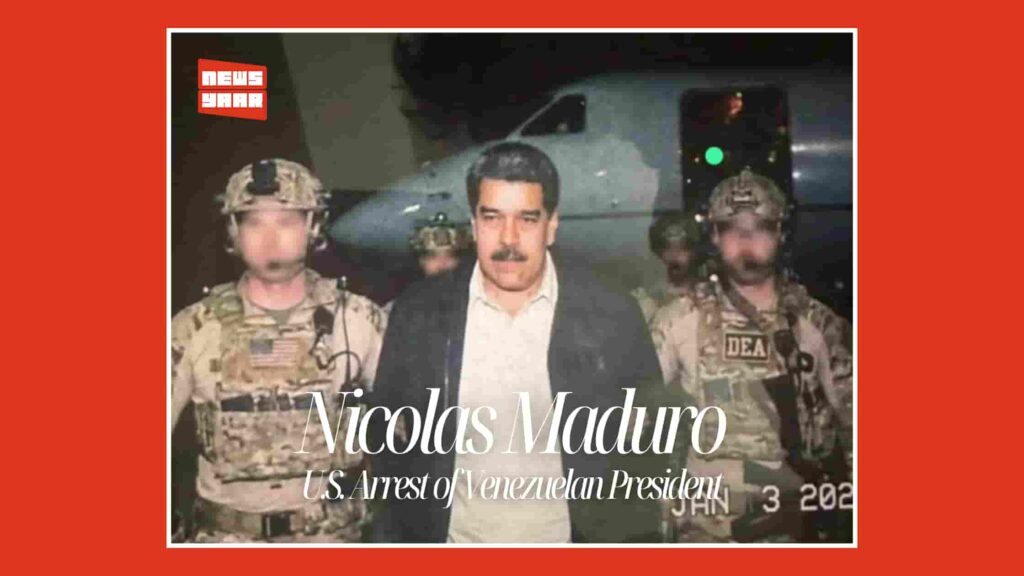
In one of the most dramatic international developments of 2026, the United States military captured Venezuelan President Nicolás Maduro in a large-scale operation on January 3, 2026, removed him from power, and brought him to the United States to face criminal charges. The operation has had far-reaching political, legal and diplomatic implications for Venezuela, the United States, and global geopolitics. What Happened and When In the early hours of January 3, 2026, U.S. forces launched a major military operation in Caracas, Venezuela’s capital, known as “Operation Absolute Resolve.” Using air strikes and special operations units, U.S. troops seized President Nicolás Maduro and his wife, Cilia Flores, in what Washington described as the execution of arrest warrants related to drug trafficking and narco-terrorism. Maduro and Flores were transported to the United States, where they appeared in federal court in Manhattan, New York, on January 5, 2026, and pleaded not guilty to multiple serious charges, including leading a corrupt government and involvement in extensive drug trafficking. Why the U.S. Acted The Trump administration has long accused Maduro’s government of corruption, human rights abuses and facilitating large-scale drug trafficking into the United States. The U.S. Department of Justice had prosecuted Maduro in absentia on these charges and the U.S. issued a series of increasing bounties for information leading to his arrest. In November 2025, Washington designated the shadowy criminal network linked to the Venezuelan regime — often referred to as the “Cartel of the Suns” — as a Foreign Terrorist Organization, amplifying pressure on the Maduro government. A detailed U.S. government timeline shows the operation followed months of military buildup off the Venezuelan coast, where warships, aircraft and strike groups were deployed, signaling escalating tensions and intent. How It Happened According to experts and official accounts, the operation involved: U.S. Army and special forces units engaged in strikes and capture operations in Caracas. Initial detainment aboard a U.S. Navy ship before transfer to New York. Charges brought in a federal court linked to narcotics trafficking, weapons, and narco-terrorism. The Trump administration framed the seizure as a law enforcement action supported by military force, although critics argue it constitutes a direct intervention in a sovereign state. Legal Charges and Court Proceedings Maduro and his wife were charged with multiple federal crimes in the Southern District of New York. These included: Narcotics trafficking Conspiracy to import large quantities of cocaine Narco-terrorism and organized crime offenses. In court, Maduro maintained he was still Venezuela’s legitimate leader and repeatedly insisted on his innocence, describing himself as a victim of U.S. political action rather than a criminal defendant. Who Is Nicolás Maduro? Nicolás Maduro first became president of Venezuela in 2013 after the death of Hugo Chávez and consolidated power through increasingly authoritarian measures. His rule has been marked by widespread economic crisis, allegations of election manipulation, suppression of opposition, and mass migration from Venezuela. Despite winning a third term in a disputed election in July 2024, recognized by Maduro’s government but denounced as illegitimate by many nations, criticism of his leadership and accusations of corruption and repression continued. Immediate Aftermath in Venezuela Following Maduro’s removal, Venezuela’s Supreme Court appointed Vice President Delcy Rodríguez as interim president for 90 days. Rodríguez has sought to consolidate power amid internal factional tensions. Various military and political elites remain influential, notably Interior Minister Diosdado Cabello, who has not been detained despite prior U.S. warnings. Rodríguez, a long-time Maduro ally, has moved quickly to reorganize government leadership while maintaining resistance to U.S. intervention. Her rise has intensified internal political divisions and raised concerns about stability. International and Regional Reactions The operation elicited a wide range of reactions: Supporters: Some U.S. lawmakers and allied leaders hailed the capture as a victory against corruption and narco-terrorism. Critics: Many Latin American governments and international legal experts condemned the U.S. action as a violation of international law and Venezuelan sovereignty, arguing the U.S. had no legal justification without Security Council authorization. Countries like Russia explicitly criticized the operation as destabilizing, while some regional governments warned of broader geopolitical consequences. Impact on Oil and Economy Venezuela sits atop some of the world’s largest proven oil reserves, and control of these resources has long been a major strategic focus. Following Maduro’s ouster, the U.S. has moved to sell Venezuelan oil assets, starting with a $500 million sale aimed at benefiting both U.S. and Venezuelan citizens while stabilizing markets. The U.S. plans further sales with revenues held under U.S. oversight. This shift underscores the interplay of energy strategy with geopolitical goals and highlights the economic stakes involved in the crisis. Legal and International Law Debate The U.S. Department of Justice released internal memos asserting that international law compliance was not required for the operation, given domestic authority — a position sharply criticized by legal scholars who argue a foreign head of state’s forcible capture violates the United Nations Charter prohibitions on use of force without Security Council approval. Humanitarian and Domestic Concerns Venezuela’s population has endured a profound humanitarian crisis for years, with severe shortages of food, medicine, and basic services, resulting in one of the largest migrations in the Western Hemisphere in recent history. The removal of Maduro has sparked mixed reactions domestically — some Venezuelans see it as a hopeful moment, while others fear renewed instability and uncertainty about future governance. What’s Next Maduro’s next court date is scheduled, keeping international attention on his criminal case. Political transition plans remain unsettled, with Rodríguez’s interim leadership drawing scrutiny. U.S. involvement in Venezuelan governance, including oil and economic reconstruction, is likely to continue to be a major issue in diplomatic and regional politics. International opposition and legal challenges could shape the broader geopolitical fallout of the operation.