
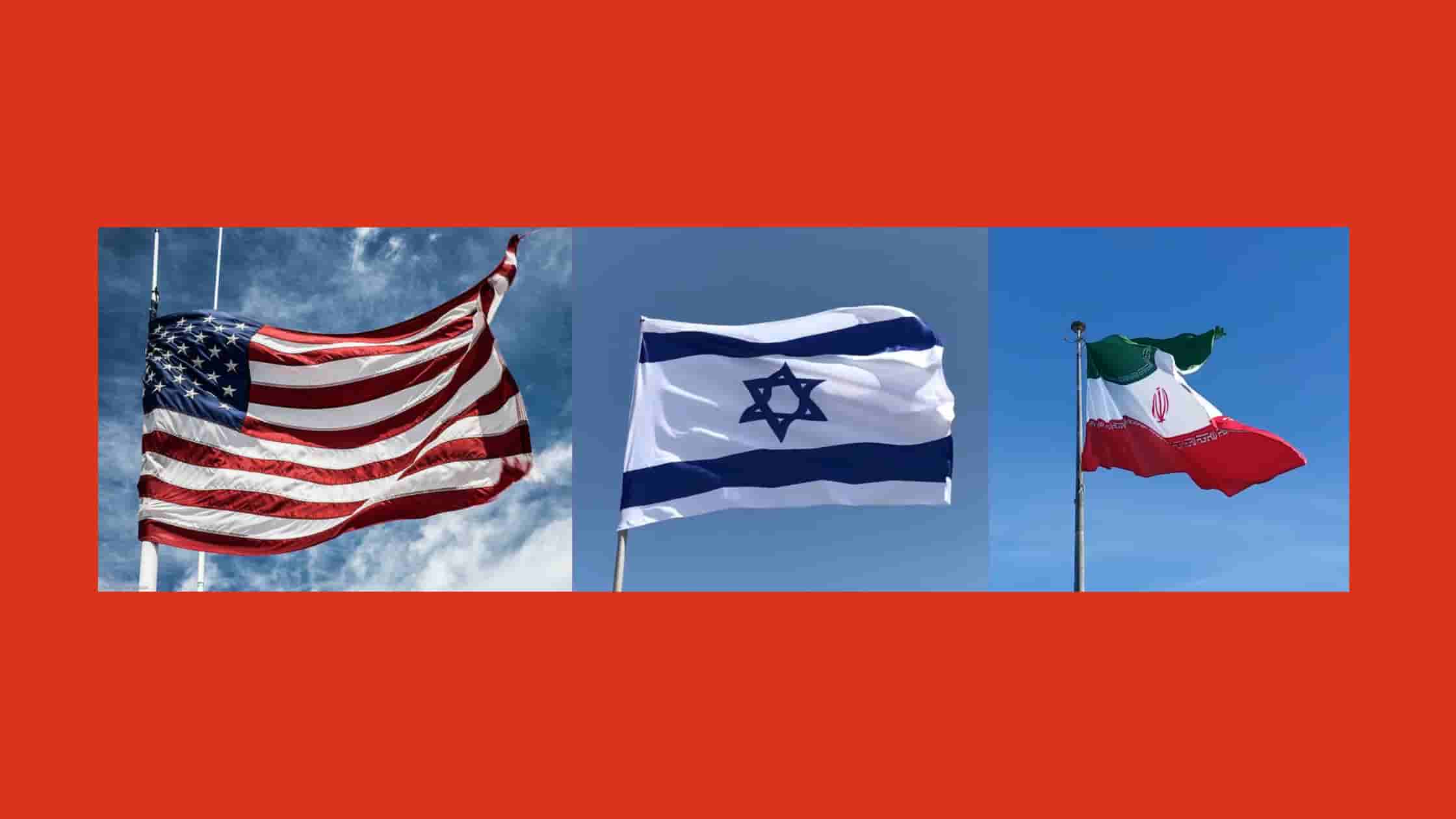
The escalating conflict involving Israel, the United States, and Iran has rapidly transformed into one of the most serious geopolitical crises of the 21st century. What began as targeted military operations has now evolved into a broader regional confrontation with global consequences. The war has not only destabilised the Middle East but has also created significant ripple effects across global trade, financial markets, aviation routes, energy supply chains, and international security.
A turning point in the conflict came with the death of Iran’s Supreme Leader, Ayatollah Ali Khamenei, which dramatically intensified the geopolitical situation and reshaped the power dynamics within Iran and across the Middle East.
Background of the Conflict
Tensions between Iran, Israel, and the United States have existed for decades, primarily due to ideological differences, nuclear ambitions, and regional power struggles. Israel has consistently viewed Iran’s nuclear and missile programmes as an existential threat to its national security, while Iran has strongly opposed U.S. military presence and Israeli influence in the region.
These tensions reached a breaking point when coordinated military strikes were carried out against Iranian targets. The operation targeted strategic facilities, military installations, and high-level leadership structures in Iran. The strikes were designed to weaken Iran’s military capabilities and disrupt its command network.
However, instead of de-escalating tensions, the attacks triggered large-scale retaliation from Iran, rapidly expanding the conflict across the Middle East.
Death of Ali Khamenei and Its Impact
One of the most dramatic developments in the war was the death of Iran’s Supreme Leader Ali Khamenei, who had ruled the Islamic Republic since 1989. He was killed during a targeted strike on Iranian leadership facilities during the early phase of the conflict.
Khamenei was the most powerful figure in Iran’s political and religious system. As Supreme Leader, he held ultimate authority over the armed forces, intelligence agencies, judiciary, and major political decisions of the country. His influence shaped Iran’s domestic governance as well as its foreign policy for more than three decades.
His death sent shockwaves through Iran and the wider Middle East. The Iranian government declared national mourning and vowed strong retaliation against Israel and the United States. The Islamic Revolutionary Guard Corps (IRGC) intensified military operations and pledged to continue resistance against what it described as foreign aggression.
The assassination of a sitting supreme leader during wartime is extremely rare in modern international politics. Instead of weakening Iran’s political system, the event strengthened nationalist sentiment within the country and intensified calls for retaliation.
Leadership Transition in Iran
Following Khamenei’s death, Iran’s Assembly of Experts appointed Mojtaba Khamenei, the son of the late leader, as the new Supreme Leader. This marked a controversial and historic transition, as the leadership appeared to move toward a dynastic style of succession within the Islamic Republic.
Mojtaba Khamenei had long been considered an influential figure behind the scenes in Iranian politics, particularly within religious and military circles. However, his appointment sparked debate both inside and outside Iran regarding the future direction of the country’s political system.
The leadership transition has also influenced the ongoing war, as the new leadership seeks to demonstrate strength and maintain internal stability while confronting external military pressure.
Escalation of Military Conflict
Following the initial strikes and leadership assassination, Iran launched large-scale missile and drone attacks targeting Israeli territory and American military installations across the region. Military bases in the Persian Gulf, naval facilities, and intelligence infrastructure became potential targets.
The conflict also spread beyond Iran and Israel. Tensions intensified in neighbouring regions, including Lebanon, Syria, and the Persian Gulf, raising fears of a wider regional war involving multiple countries.
Air defence systems across the Middle East were activated, and military forces in several countries were placed on high alert.
Impact on Global Energy Markets
One of the most immediate consequences of the war has been disruption to global energy markets. The Middle East remains one of the world’s most critical energy-producing regions, and any instability in this area directly affects global oil supply.
A major concern during the conflict has been the security of the Strait of Hormuz, a narrow waterway through which nearly one-fifth of the world’s oil supply passes. Any threat to shipping in this region has the potential to disrupt global energy flows.
As tensions increased, oil prices surged significantly due to fears of supply disruptions. Higher energy prices have direct implications for transportation, manufacturing, agriculture, and electricity generation around the world.
Countries that rely heavily on imported oil are particularly vulnerable to such price shocks.
Disruption of Global Trade and Shipping
The war has also affected international trade routes. The Middle East serves as a critical junction connecting Asia, Europe, and Africa, making it central to global shipping and logistics.
Increased military activity and security risks in maritime corridors have forced shipping companies to reroute vessels or delay operations. Insurance costs for ships travelling through the region have also risen sharply due to heightened risk.
Because the majority of global trade is transported by sea, disruptions in these strategic routes can quickly affect supply chains worldwide. Industries dependent on global shipping—including electronics, manufacturing, energy, and agriculture—are already facing logistical challenges.
Economic Consequences Worldwide
The conflict has also created volatility in global financial markets. Investors often react strongly to geopolitical uncertainty, leading to fluctuations in stock markets and currency values.
Rising energy prices are likely to contribute to inflation in many economies. Higher fuel costs affect transportation, manufacturing, and food production, which ultimately increases the cost of living for consumers.
Economists have warned that prolonged geopolitical tensions could slow global economic growth while simultaneously increasing inflationary pressure.
Developing economies may face the most severe challenges because they rely heavily on imported energy and international trade.
Impact on Aviation and International Travel
The war has also disrupted global aviation routes. Much of the airspace above the Middle East lies along major flight corridors connecting Europe, Asia, and Africa.
Airlines have had to reroute flights to avoid conflict zones, which increases flight durations and fuel costs. In some cases, flights have been cancelled or delayed due to security concerns.
Travel advisories have been issued by multiple governments warning citizens about travelling to conflict-affected regions. Tourism industries across several Middle Eastern countries have already begun experiencing economic losses due to cancelled trips and declining visitor numbers.
Humanitarian Risks and Civilian Impact
Beyond geopolitical and economic consequences, the war has also raised serious humanitarian concerns. Military strikes, missile attacks, and drone warfare have resulted in casualties and infrastructure damage in several areas.
Civilian populations in conflict zones face threats ranging from displacement and shortages of essential supplies to damage to homes, hospitals, and public infrastructure.
Humanitarian organisations have warned that prolonged conflict could lead to large-scale displacement and regional humanitarian crises.
The possibility of additional countries becoming involved in the conflict further increases the risks to civilian populations.
Global Security Concerns
The assassination of Iran’s supreme leader and the widening war have raised fears of broader global security threats. Intelligence agencies in several countries have warned about possible cyberattacks, terrorism, or retaliatory actions targeting Western interests abroad.
Governments have increased security at diplomatic missions, airports, and strategic infrastructure as a precautionary measure.
The conflict has also intensified geopolitical rivalries among global powers, raising concerns that the war could evolve into a larger international confrontation.
Summary
The war involving Israel, the United States, and Iran represents one of the most serious geopolitical crises in recent years. The conflict escalated dramatically following the death of Ali Khamenei, which reshaped Iran’s leadership and intensified military retaliation across the region. His successor, Mojtaba Khamenei, now leads a country facing both internal pressure and external conflict.
Beyond the battlefield, the war is affecting global energy markets, international trade routes, aviation networks, financial stability, and humanitarian conditions. Rising oil prices, disrupted shipping lanes, and security threats are already impacting economies and populations far beyond the Middle East.
As the conflict continues to unfold, its consequences are likely to shape global politics, economic stability, and international security for years to come.