


The Strait of Hormuz: The World’s Most Consequential Waterway and the 2026 Crisis That Changed Everything
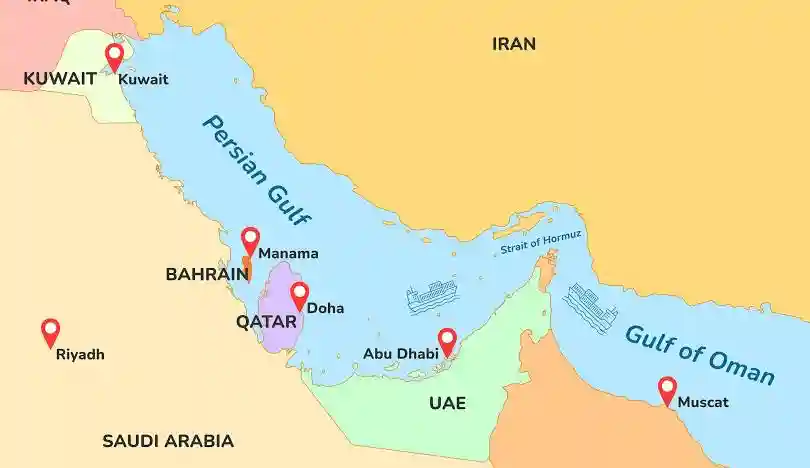
IntroductionThere are a handful of places on the map whose disruption alone can determine the fate of the global economy. The Strait of Hormuz is the most consequential of them all. A narrow strip of water barely 39 kilometres wide at its most constricted point, sitting between the southern coast of Iran and the Musandam Peninsula shared by Oman and the United Arab Emirates, it has for decades carried approximately 20 percent of the world’s seaborne oil supply and 20 percent of its liquefied natural gas.In February 2026, this artery was effectively shut. The consequences have been catastrophic.Following United States and Israeli strikes on Iran on February 28, 2026, the conflict prompted a closure of the Strait of Hormuz, through which most oil produced in the Persian Gulf is exported. Iran’s Islamic Revolutionary Guard Corps closed the strait to commercial shipping in retaliation for strikes that killed Iran’s Supreme Leader Ayatollah Ali Khamenei. What followed was the most severe energy shock the world has ever experienced, surpassing, by multiple measures, the oil crises of the 1970s, the Iran-Iraq War of the 1980s, and Iraq’s invasion of Kuwait in 1990.This article covers the geography, history, and strategic importance of the Strait of Hormuz in full, and then details the 2026 crisis that has brought the world’s energy system to the edge of collapse.Geography: What the Strait Actually IsThe Strait of Hormuz connects the Persian Gulf to the Gulf of Oman. It provides the only sea passage from the Persian Gulf to the open ocean and is one of the world’s most strategically important choke points. On the north coast lies Iran, and on the south coast lies the Musandam Peninsula, shared by the United Arab Emirates and the Musandam Governorate, an exclave of Oman. The strait is about 104 miles long, with a width varying from about 60 miles to 24 miles.Despite that width, the usable shipping lane is far more constrained. To reduce the risk of collision, ships moving through the strait follow a traffic separation scheme: inbound ships use one lane, outbound ships another, each lane being two miles wide. The lanes are separated by a two-mile-wide median. The combined active shipping corridor is therefore, in practice, just six miles wide.The northern coast belongs entirely to Iran. To traverse the strait, ships pass through the territorial waters of Iran and Oman under the transit passage provisions of the United Nations Convention on the Law of the Sea. Both Iran and Oman have expanded their territorial seas to 12 nautical miles, which means, by 1972, the entire strait fell within the combined territorial waters of the two states.Key features of the strait include Hormuz Island and Qeshm Island on the Iranian side. The main Iranian port city on the strait is Bandar Abbas, which serves as the base for Iran’s naval forces and the headquarters of the IRGC Navy. On the Omani side, the port town of Khasab in the Musandam Governorate sits along the strait’s southern edge.Historical Significance: A Trade Route Since AntiquityThe Strait of Hormuz is not merely a modern energy artery. It has been one of the world’s most strategically important trade routes for over two millennia.The 1st century AD mariner’s guide, the Periplus of the Erythraean Sea, described the mouth of the Persian Gulf as a passage connecting to vast interior trading networks, noting that pearl diving was prevalent at its upper end. Memoirs of Babur, who established the Mughal Empire, recount how almonds had to be carried from the distant Ferghana region in Central Asia to Hormuz to reach markets. From the 10th to the 17th centuries AD, the Kingdom of Ormus, which occupied the territory around the strait and appears to have given it its name, was one of the most prosperous trading kingdoms in the medieval world.The origin of the name is debated. Popular etymology derives “Hormuz” from the Middle Persian pronunciation of the name of the Zoroastrian god Ahura Mazda. Scholars and historians also derive the name from the local Persian word “Hur-mogh,” meaning date palm. A third theory links it to “hormos,” the Greek word for cove or bay.The Portuguese were the first European power to recognise the strait’s imperial importance. They occupied Hormuz Island from 1507 to 1622, using it as a base to control trade between the Persian Gulf and Europe. Their expulsion by Shah Abbas I of Persia, with British assistance, ended European direct control, but confirmed the strait as the fulcrum of Indian Ocean power politics.During the modern era, the strait’s importance shifted from spice and luxury goods to oil. When Persian Gulf oil exports began in earnest in the mid-20th century, the Strait of Hormuz became the primary commercial artery for the world’s most critical energy supply.Strategic Importance: The NumbersThe raw statistics explain why the closure of the Strait of Hormuz has no precedent in peacetime energy disruption.During 2023 to 2025, 20 percent of the world’s liquefied natural gas and 25 percent of seaborne oil trade passed through the strait annually. In 2018, 21 million barrels a day passed through the strait, worth USD 1.2 billion at 2019 prices. In 2011, according to the US Energy Information Administration, an average of 14 tankers per day passed outbound through the strait carrying 17 million barrels of crude oil. More than 85 percent of these crude oil exports went to Asian markets, with Japan, India, South Korea, and China the largest destinations.In 2024, an estimated 84 percent of crude oil and condensate shipments through the strait were destined for Asian markets, with China receiving a third of its oil via the strait. Europe gets 12 to 14 percent of its LNG from Qatar, through the strait.Beyond oil and gas, the strait is critical for the global fertiliser trade. Over 30 percent of global urea, which is widely used and produced from natural gas, is exported from Gulf countries through the Strait. Gulf countries account for roughly 45 percent of global sulfur supply, a key input for everything
Strait of Hormuz Crisis: Why This Narrow Waterway Controls Global Oil and Sparks Economic Chaos
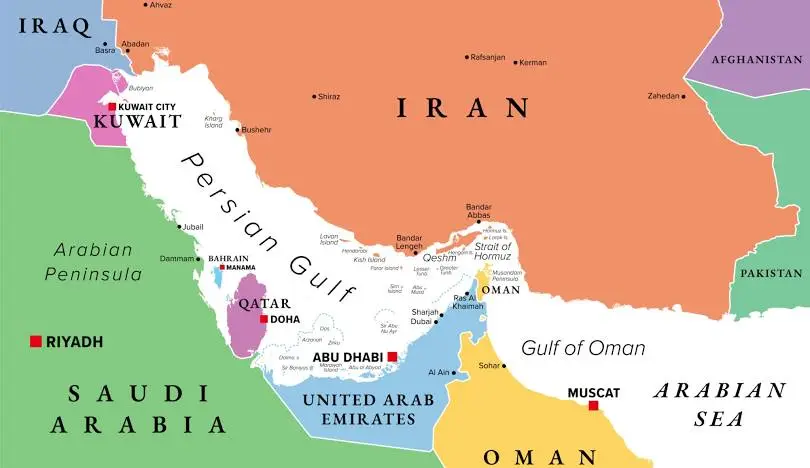
A tense new threat hangs over world trade. Iran has warned it will “set fire” to any ships passing through the Strait of Hormuz and block all oil exports from the region. This comes after US and Israeli strikes on Iran starting February 28, 2026. Already, oil prices have jumped, ships are avoiding the area, and experts fear big problems for countries like India, China, and Japan. Let’s explain this vital sea route in simple terms, what it is, why it matters, and what happens if it closes.What is the Strait of Hormuz?The Strait of Hormuz is a narrow waterway between Iran (north) and Oman/UAE (south). At its narrowest, it’s just 33 km (21 miles) wide, with shipping lanes only about 3 km (2 miles) each way. It connects the Persian Gulf to the Arabian Sea and the open ocean.Size: Deep enough for giant oil tankers; the busiest oil chokepoint in the world.Daily traffic: Around 3,000 ships per month; 20 million barrels of oil per day (20% of global supply).Value: Nearly $600 billion in oil/gas trade yearly.Big producers like Saudi Arabia, Iraq, Kuwait, Qatar, the UAE, and Iran send oil here. Most goes to Asia (84% crude oil).Why is It So Important for World Trade?This strait is like a busy highway for energy, with no good shortcuts. Without it:Global oil: 20-27% of all seaborne oil (14-20 million barrels/day). LNG (gas): 20% of world supply, mostly Qatar to Europe/Asia.Other goods: 1/3 of global fertilizer trade (hits farming/food prices).Top destinations (2024-2025 data):CountryOil ShareWhy It HurtsChina5.4M b/d (27%)90% of Iran’s oil goes here; factories are slow. India1.6-2.1M b/dHalf of India’s oil imports; fuel/food prices rise. Japan/S. Korea1.6-2.1M eachPower plants, cars affected. Europe/USSmaller but key LNGGas bills up. Saudi leads exports: 5.5M b/d (38%). Iran: 1.7M b/d ($67B/year)Current Crisis: Threats, Attacks, and Shipping StoppedIran’s General Sardar Jabbari said no “single drop of oil” leaves. After US/Israel missiles sank Iranian warships and hit tankers:Ships flee: Hapag-Lloyd/CMA CGM paused transits; 150+ tankers stranded.Prices soar: Brent crude hit $82/bbl (up 10%); could reach $100+ if blocked long.reuters+1Ports shut: Dubai’s Jebel Ali fire from missile debris.Insurance skyrockets: Supertanker to China: $400K (doubled).UKMTO warns of “miscalculation” near military ships. Flows dropped to 4M b/d (from 16-20M).How Could Iran Close It—and Can They?UN rules give coastal control up to 12 nautical miles, covering the strait fully (Iran/Oman waters).Iran’s options:Mine: Fast boats/subs drop them, hard to clear.Missiles/drones: From IRGC navy boats/subs.Attacks: On tankers/warships.But risky: US Navy could strike back (1980s “Tanker War” escorts won). Trump vows to destroy Iran’s navy.Economic Impact: Higher Prices EverywhereShort block: Oil $80-90/bbl. Month-long: $100+; gas surges 130%.Consumers: Petrol, diesel, heating 20-50%.India/Asia: Factories slow; inflation hits food/transport.Gulf hurt too: Saudi/UAE lose exports (economies rely 70% on oil).Ripple effect: Airlines, plastics, fertilizers cost more—global goods pricier.OPEC+: Boost 206K b/d April, but tiny vs 20M gap.Worst case: Sunk tanker = eco-disaster, months closed.What Happens Next?Short-term: Ships wait; prices are high for days/weeks.India: Stockpiles activated; seeks other suppliers.Global: OPEC output up, but war drags = recession risk.The Strait of Hormuz isn’t just water; it’s the world’s energy lifeline. Iran’s threat tests whether one narrow gap can choke global trade. Eyes on ships, missiles, and oil pumps.
Israel–America and Iran War: Global Impact on Trade, Travel, Economy and Lives at Risk
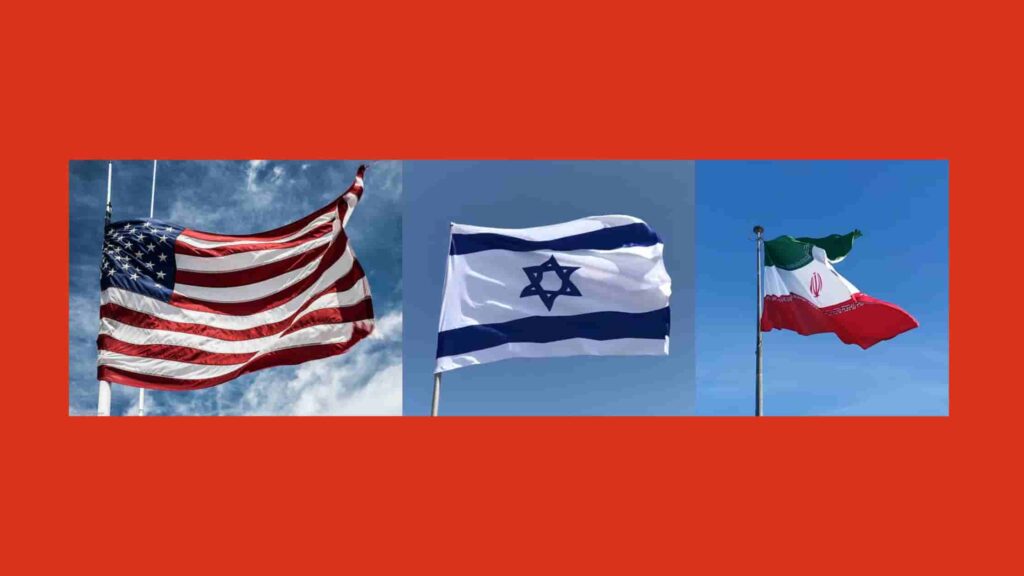
The escalating conflict involving Israel, the United States, and Iran has rapidly transformed into one of the most serious geopolitical crises of the 21st century. What began as targeted military operations has now evolved into a broader regional confrontation with global consequences. The war has not only destabilised the Middle East but has also created significant ripple effects across global trade, financial markets, aviation routes, energy supply chains, and international security.A turning point in the conflict came with the death of Iran’s Supreme Leader, Ayatollah Ali Khamenei, which dramatically intensified the geopolitical situation and reshaped the power dynamics within Iran and across the Middle East.Background of the ConflictTensions between Iran, Israel, and the United States have existed for decades, primarily due to ideological differences, nuclear ambitions, and regional power struggles. Israel has consistently viewed Iran’s nuclear and missile programmes as an existential threat to its national security, while Iran has strongly opposed U.S. military presence and Israeli influence in the region.These tensions reached a breaking point when coordinated military strikes were carried out against Iranian targets. The operation targeted strategic facilities, military installations, and high-level leadership structures in Iran. The strikes were designed to weaken Iran’s military capabilities and disrupt its command network.However, instead of de-escalating tensions, the attacks triggered large-scale retaliation from Iran, rapidly expanding the conflict across the Middle East.Death of Ali Khamenei and Its ImpactOne of the most dramatic developments in the war was the death of Iran’s Supreme Leader Ali Khamenei, who had ruled the Islamic Republic since 1989. He was killed during a targeted strike on Iranian leadership facilities during the early phase of the conflict.Khamenei was the most powerful figure in Iran’s political and religious system. As Supreme Leader, he held ultimate authority over the armed forces, intelligence agencies, judiciary, and major political decisions of the country. His influence shaped Iran’s domestic governance as well as its foreign policy for more than three decades.His death sent shockwaves through Iran and the wider Middle East. The Iranian government declared national mourning and vowed strong retaliation against Israel and the United States. The Islamic Revolutionary Guard Corps (IRGC) intensified military operations and pledged to continue resistance against what it described as foreign aggression.The assassination of a sitting supreme leader during wartime is extremely rare in modern international politics. Instead of weakening Iran’s political system, the event strengthened nationalist sentiment within the country and intensified calls for retaliation.Leadership Transition in IranFollowing Khamenei’s death, Iran’s Assembly of Experts appointed Mojtaba Khamenei, the son of the late leader, as the new Supreme Leader. This marked a controversial and historic transition, as the leadership appeared to move toward a dynastic style of succession within the Islamic Republic.Mojtaba Khamenei had long been considered an influential figure behind the scenes in Iranian politics, particularly within religious and military circles. However, his appointment sparked debate both inside and outside Iran regarding the future direction of the country’s political system.The leadership transition has also influenced the ongoing war, as the new leadership seeks to demonstrate strength and maintain internal stability while confronting external military pressure.Escalation of Military ConflictFollowing the initial strikes and leadership assassination, Iran launched large-scale missile and drone attacks targeting Israeli territory and American military installations across the region. Military bases in the Persian Gulf, naval facilities, and intelligence infrastructure became potential targets.The conflict also spread beyond Iran and Israel. Tensions intensified in neighbouring regions, including Lebanon, Syria, and the Persian Gulf, raising fears of a wider regional war involving multiple countries.Air defence systems across the Middle East were activated, and military forces in several countries were placed on high alert.Impact on Global Energy MarketsOne of the most immediate consequences of the war has been disruption to global energy markets. The Middle East remains one of the world’s most critical energy-producing regions, and any instability in this area directly affects global oil supply.A major concern during the conflict has been the security of the Strait of Hormuz, a narrow waterway through which nearly one-fifth of the world’s oil supply passes. Any threat to shipping in this region has the potential to disrupt global energy flows.As tensions increased, oil prices surged significantly due to fears of supply disruptions. Higher energy prices have direct implications for transportation, manufacturing, agriculture, and electricity generation around the world.Countries that rely heavily on imported oil are particularly vulnerable to such price shocks.Disruption of Global Trade and ShippingThe war has also affected international trade routes. The Middle East serves as a critical junction connecting Asia, Europe, and Africa, making it central to global shipping and logistics.Increased military activity and security risks in maritime corridors have forced shipping companies to reroute vessels or delay operations. Insurance costs for ships travelling through the region have also risen sharply due to heightened risk.Because the majority of global trade is transported by sea, disruptions in these strategic routes can quickly affect supply chains worldwide. Industries dependent on global shipping—including electronics, manufacturing, energy, and agriculture—are already facing logistical challenges.Economic Consequences WorldwideThe conflict has also created volatility in global financial markets. Investors often react strongly to geopolitical uncertainty, leading to fluctuations in stock markets and currency values.Rising energy prices are likely to contribute to inflation in many economies. Higher fuel costs affect transportation, manufacturing, and food production, which ultimately increases the cost of living for consumers.Economists have warned that prolonged geopolitical tensions could slow global economic growth while simultaneously increasing inflationary pressure.Developing economies may face the most severe challenges because they rely heavily on imported energy and international trade.Impact on Aviation and International TravelThe war has also disrupted global aviation routes. Much of the airspace above the Middle East lies along major flight corridors connecting Europe, Asia, and Africa.Airlines have had to reroute flights to avoid conflict zones, which increases flight durations and fuel costs. In some cases, flights have been cancelled or delayed due to security concerns.Travel advisories have been issued by multiple governments warning citizens about travelling to conflict-affected regions. Tourism industries across several Middle Eastern countries have already begun experiencing economic
Prime Minister Modi’s Israel Visit: Strategic Engagement Amid Regional Uncertainty
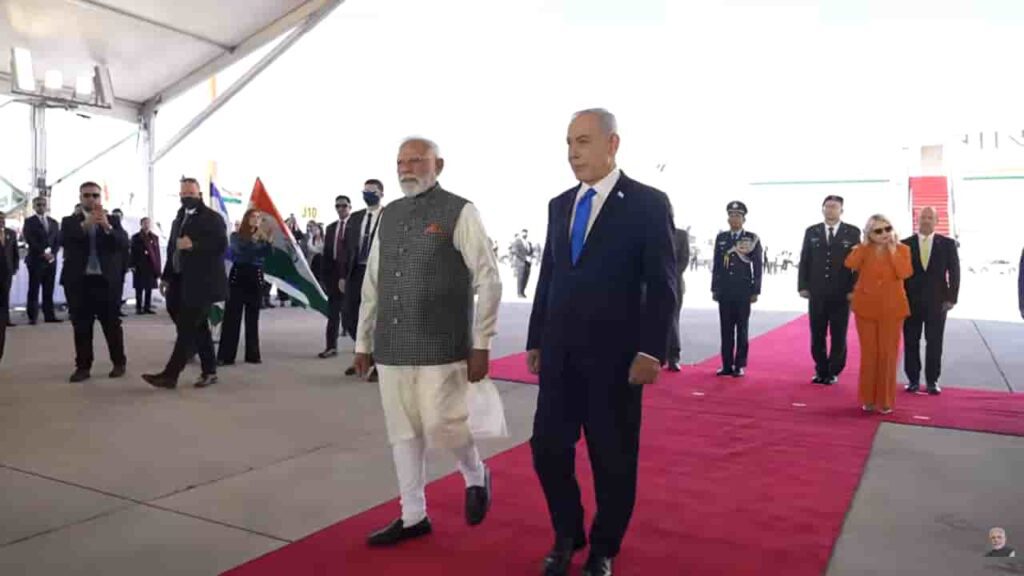
Prime Minister Narendra Modi undertook a two-day official visit to Israel, marking a significant moment in India–Israel relations at a time of heightened geopolitical volatility in West Asia. The visit, described by official sources as historic, was aimed at consolidating India’s long-standing strategic partnership with Israel while navigating the complex regional and global environment shaping Middle Eastern politics.The visit underscored India’s commitment to sustained engagement with Israel across defence, technology, agriculture, innovation and economic cooperation, even as regional conflicts and shifting alliances pose diplomatic headwinds.Context and Timing of the VisitPrime Minister Modi’s Israel visit comes at a sensitive juncture for the region. West Asia continues to witness prolonged instability, with security concerns, evolving power equations and humanitarian challenges dominating the geopolitical landscape. Against this backdrop, India’s outreach to Israel reflects a calibrated diplomatic approach that balances strategic interests with regional stability and global responsibilities.India and Israel share a relationship that has evolved steadily since the establishment of full diplomatic ties in 1992. Over the years, cooperation has expanded from defence procurement to joint research, innovation-driven partnerships and people-centric development projects. The current visit builds on this foundation while acknowledging the realities of a strained regional environment.High-Level Engagements and Bilateral TalksDuring the visit, Prime Minister Modi held extensive talks with Benjamin Netanyahu, focusing on deepening the India–Israel strategic partnership. The discussions reviewed the full spectrum of bilateral cooperation, including defence and security, economic engagement, technological collaboration, water management and agricultural innovation.Both leaders reaffirmed their commitment to strengthening institutional mechanisms that support cooperation in critical and emerging sectors. Emphasis was placed on sustaining momentum in joint initiatives that align with India’s development priorities and Israel’s technological expertise.Defence and Strategic CooperationDefence cooperation remains a central pillar of India–Israel relations. Israel is among India’s key defence partners, particularly in areas such as surveillance systems, missile defence technologies, unmanned aerial vehicles and advanced electronics.During the talks, the two sides reviewed ongoing defence collaboration and explored avenues for deeper cooperation under India’s ‘Make in India’ and ‘Atmanirbhar Bharat’ initiatives. Officials highlighted the importance of co-development, technology transfer and long-term industrial partnerships rather than transactional procurement.The visit reaffirmed mutual interest in enhancing defence industrial ties while ensuring that cooperation remains aligned with international norms and India’s strategic autonomy.Technology, Innovation and Economic CooperationA major focus of the visit was expanding collaboration in technology and innovation, areas where India and Israel share strong complementarities. Israel’s globally recognised startup ecosystem and India’s scale in digital adoption and manufacturing offer significant opportunities for joint growth.Discussions covered cooperation in fields such as artificial intelligence, cybersecurity, digital public infrastructure, healthcare technologies and sustainable innovation. Both sides acknowledged the growing role of startups, research institutions and private enterprises in driving the next phase of bilateral engagement.Economic ties were also reviewed, with leaders noting the steady expansion of bilateral trade and investment. Efforts are underway to diversify trade baskets and encourage partnerships in manufacturing, services and high-technology sectors.Agriculture and Water ManagementAgriculture and water management — long-standing areas of India–Israel cooperation — featured prominently during the visit. Israel’s expertise in drip irrigation, water recycling and arid-zone farming has contributed significantly to India’s agricultural productivity initiatives over the years.The two sides discussed strengthening cooperation through Centres of Excellence across Indian states, capacity-building programmes and joint research initiatives focused on climate-resilient agriculture.Geopolitical Considerations and India’s Balanced ApproachPrime Minister Modi’s Israel visit unfolded amid ongoing geopolitical tensions in West Asia, a factor acknowledged in diplomatic discussions. India reiterated its principled position of supporting peace, dialogue and stability in the region while maintaining constructive relations with all key stakeholders.India’s engagement with Israel is part of a broader West Asia strategy that also encompasses strong ties with Arab nations, Iran and other regional actors. Officials emphasised that India’s foreign policy is guided by national interest, strategic autonomy and respect for sovereignty, rather than bloc-based alignments.People-to-People Ties and Cultural EngagementBeyond strategic and economic discussions, the visit also highlighted the importance of people-to-people ties. The Indian diaspora in Israel, academic exchanges and cultural interactions continue to add depth to bilateral relations.Educational cooperation, student mobility and cultural dialogue were identified as areas with potential for further expansion, particularly among younger generations.Significance of the VisitPrime Minister Modi’s Israel visit is significant not merely for the agreements discussed or reviewed, but for its broader diplomatic message. It signals continuity in India–Israel relations, resilience in engagement despite regional uncertainties, and a forward-looking approach to cooperation in technology-driven and innovation-led sectors.At a time when global geopolitics is marked by uncertainty and realignment, the visit reinforces India’s intent to remain an active, reliable and independent partner on the world stage.The Road AheadThe outcomes of the visit are expected to translate into strengthened institutional cooperation, faster implementation of joint projects and expanded engagement between businesses, research institutions and innovation ecosystems in both countries.As India and Israel look ahead, their partnership is likely to continue evolving — shaped by shared strategic interests, technological collaboration and a mutual commitment to long-term cooperation in an increasingly complex global environment.