


Asha Bhosle (1933 – 2026): The Voice That Defined Eight Decades of Indian Music
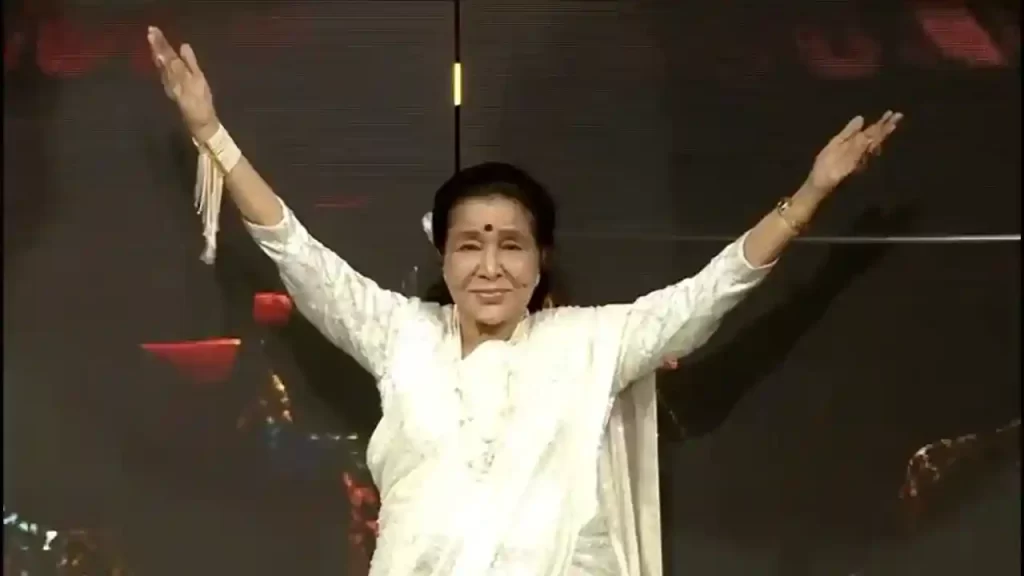
IntroductionIndia fell silent on the morning of April 12, 2026, when the news arrived that Asha Bhosle had died. She was 92 years old. For most of those 92 years, she had been singing — for films, for concerts, for studios, for the world. She leaves behind more than 12,000 recorded songs in over 20 Indian languages, a Guinness World Record as the most recorded artist in music history, and a voice so indelibly woven into the fabric of Indian life that generations who never saw her perform can still hum her melodies from memory.She was born Asha Mangeshkar on September 8, 1933, in Sangli, in what was then the Bombay Presidency of British India. She died in Mumbai’s Breach Candy Hospital, where she had been admitted the previous day following extreme exhaustion and a pulmonary chest infection. Dr Pratit Samdani from Breach Candy Hospital confirmed that she passed away due to multiple organ failure.Her son Anand Bhosle, speaking to ANI and PTI, confirmed her death and said: “My mother passed away today. People can pay their last respects to her at 11 AM tomorrow at Casa Grande, Lower Parel, where she lived. Her last rites will be performed at 4 PM tomorrow at Shivaji Park.” Her last rites were performed with full state honours at Shivaji Park on April 13, 2026.Early Life: Born Into Music, Thrown Into StruggleAsha Bhosle was born into one of India’s most extraordinary musical families. Her father, Dinanath Mangeshkar, was a classical singer and theatre actor of considerable repute in Maharashtra. When he died in 1942, Asha was just eight years old. The family, with no income, relocated from Pune to Kolhapur and then to Mumbai. Her elder sister Lata Mangeshkar, barely in her teens, began singing for films to support the family. Asha followed.She made her singing debut as a child, appearing in the Marathi film Majha Bal in 1943 singing Chala Chala Nav Bala. She also made an early onscreen acting appearance in Badi Maa in 1945. But the defining break that determined the shape of her life came not from music, but from a decision that shattered the family.At the age of 16, Asha eloped with Ganpatrao Bhosle, who was 31 years old and Lata Mangeshkar’s personal secretary. The Mangeshkar family cast her out after this incident. The marriage was troubled and abusive. In her biography, Bhosle described traumatic experiences from those years, including being forced out of her home while pregnant and, at one point, attempting suicide. The couple had three children: Hemant, Varsha, and Anand. The marriage ended in divorce in 1960.She emerged from those years alone, raising three children, with no family support structure, and with the most competitive female voice in Indian film music, her own elder sister Lata Mangeshkar, already firmly established as the dominant playback singer in Bollywood. In any other career, that context would have defined the ceiling. Asha Bhosle turned it into a foundation.Building an Identity: O. P. Nayyar and the Bold Voice of the 1950sThe early years of Asha Bhosle’s professional career were marked by work that was, by her own description, whatever she could get. She sang devotional songs, film numbers, minor assignments. The industry treated her largely as an alternative to her sister, to be used when Lata was unavailable.That changed when she began working with music director O. P. Nayyar, who first encountered her in 1952 at the recording of Chham Chhama Chham. Nayyar had a different aesthetic from the dominant classical-influenced style of the era. He wanted something bolder, more rhythmic, more modern. He saw in Asha’s slightly husky, earthier timbre precisely the voice that could carry the kind of songs he wanted to compose.Nayyar never worked with Lata Mangeshkar. That decision, almost unique in the industry of that era, gave Asha Bhosle an entire musical landscape to herself. Under his direction, she found her distinct identity: a voice that could be playful, flirtatious, mischievous, and deeply sensual, in ways that the more classically constrained female singing of the era rarely permitted.Her breakout came with B. R. Chopra’s Naya Daur in 1957. She became a regular presence in Chopra’s subsequent films, with major songs in Gumrah in 1963, Waqt in 1965, Hamraaz in 1967, and Dhund in 1973.In 1954, Raj Kapoor signed her to sing Nanhe Munne Bachche in Boot Polish with Mohammed Rafi, which brought her wider recognition. Across the mid-to-late 1950s and the 1960s, she was establishing herself as one of the most versatile voices in Hindi cinema.The R. D. Burman Era: A Partnership That Redefined Indian Popular MusicIf Asha Bhosle’s early career established her as a distinctive voice, her collaboration with music director Rahul Dev Burman, known universally as R. D. Burman or Pancham, transformed her into a legend.She first met R. D. Burman when she was already a mother of two and he was still in school, having dropped out of the tenth grade to pursue music. She would call him Bubs. Their first collaboration came with the 1958 film Chalti Ka Naam Gaadi, a comedy classic. What followed over the next three decades was one of the most creative partnerships in the history of Indian popular music. D. Burman’s compositions were unlike anything Indian film music had heard before. He incorporated Latin rhythms, Afro-Caribbean music, jazz, rock, and experimental orchestration. He required a voice that could carry all of it without flinching. Asha Bhosle not only kept pace but pushed those ideas further.The songs from this collaboration read like a catalogue of India’s most loved film music moments. Piya Tu Ab To Aaja from Caravan in 1971 was an extraordinary fusion of blues and Indian idiom. Chura Liya Hai Tumne Jo Dil Ko from Yaadon Ki Baaraat in 1973 with Mohammed Rafi became one of the most beloved duets in Hindi film history. Yeh Mera Dil from Don in 1978 brought a disco sensibility to Hindi film music that no one had attempted before. Duniya Mein Logon Ko from Apna Desh, Hum Kisise