Introduction
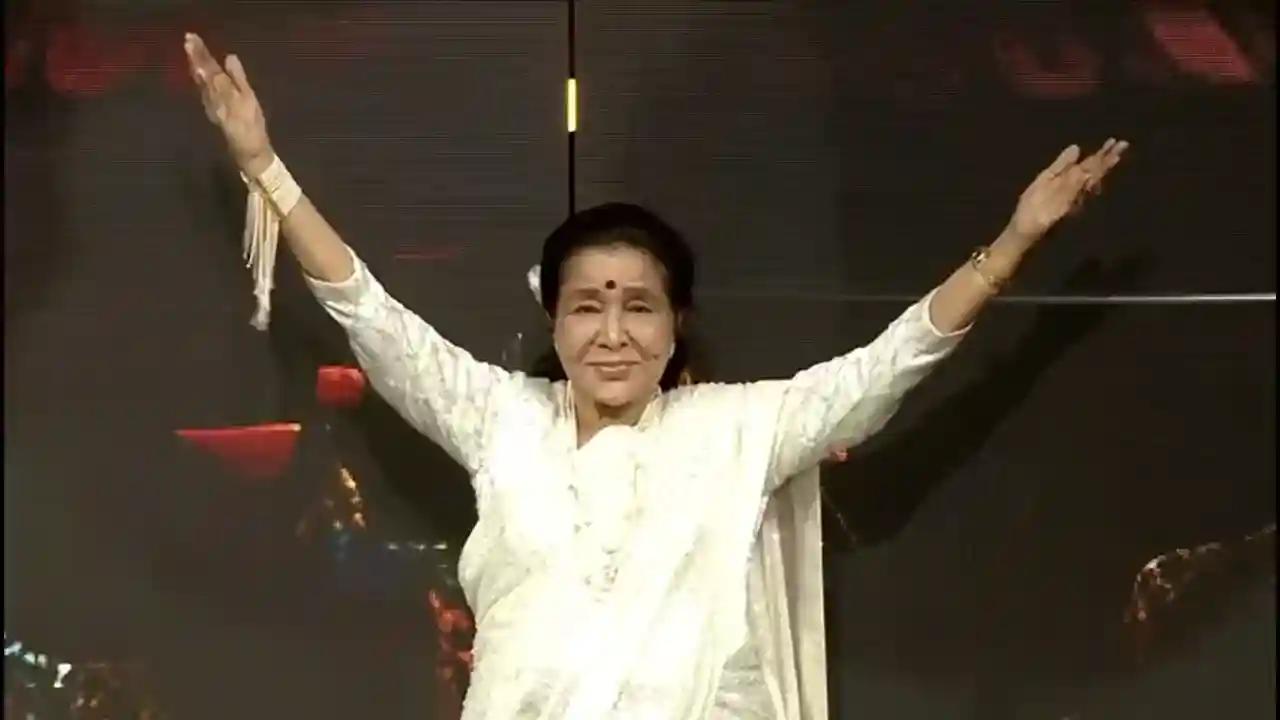
India fell silent on the morning of April 12, 2026, when the news arrived that Asha Bhosle had died. She was 92 years old. For most of those 92 years, she had been singing — for films, for concerts, for studios, for the world. She leaves behind more than 12,000 recorded songs in over 20 Indian languages, a Guinness World Record as the most recorded artist in music history, and a voice so indelibly woven into the fabric of Indian life that generations who never saw her perform can still hum her melodies from memory.
She was born Asha Mangeshkar on September 8, 1933, in Sangli, in what was then the Bombay Presidency of British India. She died in Mumbai's Breach Candy Hospital, where she had been admitted the previous day following extreme exhaustion and a pulmonary chest infection. Dr Pratit Samdani from Breach Candy Hospital confirmed that she passed away due to multiple organ failure.
Her son Anand Bhosle, speaking to ANI and PTI, confirmed her death and said: "My mother passed away today. People can pay their last respects to her at 11 AM tomorrow at Casa Grande, Lower Parel, where she lived. Her last rites will be performed at 4 PM tomorrow at Shivaji Park." Her last rites were performed with full state honours at Shivaji Park on April 13, 2026.
Early Life: Born Into Music, Thrown Into Struggle
Asha Bhosle was born into one of India's most extraordinary musical families. Her father, Dinanath Mangeshkar, was a classical singer and theatre actor of considerable repute in Maharashtra. When he died in 1942, Asha was just eight years old. The family, with no income, relocated from Pune to Kolhapur and then to Mumbai. Her elder sister Lata Mangeshkar, barely in her teens, began singing for films to support the family. Asha followed.
She made her singing debut as a child, appearing in the Marathi film Majha Bal in 1943 singing Chala Chala Nav Bala. She also made an early onscreen acting appearance in Badi Maa in 1945. But the defining break that determined the shape of her life came not from music, but from a decision that shattered the family.
At the age of 16, Asha eloped with Ganpatrao Bhosle, who was 31 years old and Lata Mangeshkar's personal secretary. The Mangeshkar family cast her out after this incident. The marriage was troubled and abusive. In her biography, Bhosle described traumatic experiences from those years, including being forced out of her home while pregnant and, at one point, attempting suicide. The couple had three children: Hemant, Varsha, and Anand. The marriage ended in divorce in 1960.
She emerged from those years alone, raising three children, with no family support structure, and with the most competitive female voice in Indian film music, her own elder sister Lata Mangeshkar, already firmly established as the dominant playback singer in Bollywood. In any other career, that context would have defined the ceiling. Asha Bhosle turned it into a foundation.
Building an Identity: O. P. Nayyar and the Bold Voice of the 1950s
The early years of Asha Bhosle's professional career were marked by work that was, by her own description, whatever she could get. She sang devotional songs, film numbers, minor assignments. The industry treated her largely as an alternative to her sister, to be used when Lata was unavailable.
That changed when she began working with music director O. P. Nayyar, who first encountered her in 1952 at the recording of Chham Chhama Chham. Nayyar had a different aesthetic from the dominant classical-influenced style of the era. He wanted something bolder, more rhythmic, more modern. He saw in Asha's slightly husky, earthier timbre precisely the voice that could carry the kind of songs he wanted to compose.
Nayyar never worked with Lata Mangeshkar. That decision, almost unique in the industry of that era, gave Asha Bhosle an entire musical landscape to herself. Under his direction, she found her distinct identity: a voice that could be playful, flirtatious, mischievous, and deeply sensual, in ways that the more classically constrained female singing of the era rarely permitted.
Her breakout came with B. R. Chopra's Naya Daur in 1957. She became a regular presence in Chopra's subsequent films, with major songs in Gumrah in 1963, Waqt in 1965, Hamraaz in 1967, and Dhund in 1973.
In 1954, Raj Kapoor signed her to sing Nanhe Munne Bachche in Boot Polish with Mohammed Rafi, which brought her wider recognition. Across the mid-to-late 1950s and the 1960s, she was establishing herself as one of the most versatile voices in Hindi cinema.
The R. D. Burman Era: A Partnership That Redefined Indian Popular Music
If Asha Bhosle's early career established her as a distinctive voice, her collaboration with music director Rahul Dev Burman, known universally as R. D. Burman or Pancham, transformed her into a legend.
She first met R. D. Burman when she was already a mother of two and he was still in school, having dropped out of the tenth grade to pursue music. She would call him Bubs. Their first collaboration came with the 1958 film Chalti Ka Naam Gaadi, a comedy classic. What followed over the next three decades was one of the most creative partnerships in the history of Indian popular music.
- D. Burman's compositions were unlike anything Indian film music had heard before. He incorporated Latin rhythms, Afro-Caribbean music, jazz, rock, and experimental orchestration. He required a voice that could carry all of it without flinching. Asha Bhosle not only kept pace but pushed those ideas further.
The songs from this collaboration read like a catalogue of India's most loved film music moments. Piya Tu Ab To Aaja from Caravan in 1971 was an extraordinary fusion of blues and Indian idiom. Chura Liya Hai Tumne Jo Dil Ko from Yaadon Ki Baaraat in 1973 with Mohammed Rafi became one of the most beloved duets in Hindi film history. Yeh Mera Dil from Don in 1978 brought a disco sensibility to Hindi film music that no one had attempted before. Duniya Mein Logon Ko from Apna Desh, Hum Kisise Kum Naheen, Ijaazat, Hare Rama Hare Krishna, Amar Prem: across film after film, the Bhosle-Burman combination was the signature sound of Hindi popular music through the 1970s and 1980s.
Their professional partnership deepened into a personal one. In 1980, Asha Bhosle married R. D. Burman. He was six years younger than her. The marriage brought her the most stable happiness of her personal life, and the collaboration that followed was among the most productive of both their careers. R. D. Burman died on January 4, 1994. Asha Bhosle never remarried.
The Range: Cabaret, Ghazal, Classical, Pop, and Everything Between
What distinguished Asha Bhosle from every other playback singer of her era was not just longevity but range. She did not specialize. She transformed.
She sang cabaret numbers of gleeful audacity, most memorably Mehbooba Mehbooba from Sholay in 1975, and In Aankhon Ki Masti Ke from Umrao Jaan in 1981. She recorded ghazals of devastating emotional precision, including Dil Cheez Kya Hai from Umrao Jaan in 1981, for which she won the National Film Award for Best Female Playback Singer, and Mera Kuch Samaan from Ijaazat in 1987, for which she won the National Film Award a second time.
She sang classical-influenced compositions with rigour and discipline. She sang devotional bhajans. She sang rock-influenced pop numbers for Boney M-influenced Bollywood productions of the late 1970s. She sang folk-inflected regional cinema across Bengali, Marathi, Gujarati, Tamil, Telugu, Punjabi, and Urdu films. She sang with Kishore Kumar, Mohammed Rafi, Manna Dey, Mukesh, and every major male voice of the golden age of Hindi film music.
Her Bengali work deserves particular mention. She sang her first Bengali song in 1958 under His Master's Voice. Through the 1970s she recorded frequently with composers Sudhin Dasgupta, Nachiketa Ghosh and others. R. D. Burman converted several Hindi tracks to Bengali, with Asha recording both versions. Duets including Sara Pyaar Tumhara with Kishore Kumar in Anand Ashram in 1977 are Bengali film music milestones.
She also sang for ghazal albums with extraordinary artists, releasing tributes to maestros including Mehdi Hassan, Ghulam Ali, Farida Khanum, and Jagjit Singh. Her 2005 album features eight ghazals, including Farida Khanum's Aaj Jaane Ki Zid Na Karo and Ghulam Ali's Chupke Chupke.
International Recognition: From Cornershop to Boy George to Gorillaz
Asha Bhosle was not merely celebrated within India. Her impact on global popular music was acknowledged repeatedly across her career, in ways that spanned continents and decades.
In 1997, British band Cornershop paid tribute to her with their song Brimful of Asha, which became an international hit and was later remixed by Fatboy Slim to reach number one in the UK charts. The song was an unambiguous celebration of her music as a cultural force.
She gained international attention through her collaborations with British musician Boy George, including the song Bow Down Mister, which reached number 27 on the UK Singles Chart in 1991.
In 2001, the CD single of Nelly Furtado's I'm Like a Bird included a Nellie vs. Asha Remix created by Digital Cutup Lounge. In 2003, British opera pop singer Sarah Brightman sampled her song Dil Cheez Kya Hai on her album Harem, using it as the introduction to the song You Take My Breath Away.
In 2005, American string quartet Kronos Quartet re-recorded R. D. Burman compositions including Chura Liya, Piya Tu, and Mera Kuchh Saaman and had Asha Bhosle record the vocals. Despite her age, she recorded three to four songs a day, leaving the quartet members in awe. The resulting album, You've Stolen My Heart: Songs from R.D. Burman's Bollywood, was released in the United States in August 2005 and was nominated for a Grammy Award in the category of Best Contemporary World Music Album.
In 2026, in the final months of her life, Bhosle featured on the British virtual band Gorillaz's ninth studio album The Mountain, on the track The Shadowy Light.
The Guinness Record: The Most Recorded Artist in Music History
The numbers surrounding Asha Bhosle's output strain belief. More than 12,000 songs in over 20 Indian languages recorded over eight decades. Songs for over 950 Bollywood films. Recordings for every major music director from the 1940s through to the 2020s: from S. D. Burman to R. D. Burman to A. R. Rahman.
In 2011, the Guinness Book of World Records officially acknowledged Bhosle, at The Asian Awards ceremony, as the most recorded artist in the history of music. She was awarded a certificate for the most studio recordings in singles, for recording up to 11,000 solo, duet, and chorus-backed songs in over 20 Indian languages since 1947. At the same event, she received a Lifetime Achievement Award.
The recognition was significant not merely as a statistical achievement but as a statement about the cultural weight that Indian film music, long dismissed in global critical conversations about the 20th century's great popular music traditions, actually carried.
Distinctions and Awards
Over the course of her career, Asha Bhosle received India's highest institutional recognition across both the arts and the state.
She was awarded the Dadasaheb Phalke Award in 2000, India's highest honour in cinema. She received the Padma Vibhushan in 2008, India's second-highest civilian honour. In 2021, the Government of Maharashtra honoured her with the Maharashtra Bhushan award. She received a Lifetime Achievement Award from the Filmfare Awards. She won the National Film Award for Best Female Playback Singer twice, for Umrao Jaan in 1981 and for Ijaazat in 1987. The BBC named her among the 100 inspiring women of 2015. She received an honorary Doctor of Literature from Jodhpur National University.
She was also nominated for two Grammy Awards, the second most prestigious music recognition in the world.
Later Life: Relevance, Resilience, and Restaurant Chains
Even after she had established every conceivable claim to legendary status, Asha Bhosle refused the comfort of an elder statesperson role. She kept performing. She kept recording. She kept evolving.
She launched the Asha's restaurant chain, with outlets in Dubai and the United Kingdom, combining her passion for food with her public persona in a commercial venture that introduced a different dimension of her personality to international audiences.
She appeared in films as an actor, making her onscreen debut in a narrative role with the Marathi film Mai in 2013, in which she played a mother. She also trained her granddaughter Zanai Bhosle, Anand's daughter, who made her singing debut in the same film.
She performed concerts and appeared at public events into her late eighties and early nineties. In 2024, she was filmed dancing energetically at a public event in Dubai to the contemporary Bollywood hit Tauba Tauba, a video that circulated widely and served as a reminder that her spirit remained as combustible as her voice.
Her final public appearance was in March 2026, at the wedding of Sachin Tendulkar's son, Arjun, in Mumbai.
In 2025, she won a court case against the unauthorized use of her voice and personality through artificial intelligence and digital reproduction tools, a case that legal observers noted as one of the first significant personality rights victories by an Indian artist in the AI era.
The Final Hours
On April 11, 2026, Asha Bhosle's health took a sudden turn. Her granddaughter Zanai Bhosle shared an update on social media, stating that the singer was experiencing extreme exhaustion and a chest infection and had been hospitalised at Breach Candy Hospital in Mumbai. She appealed to the public to respect the family's privacy and confirmed that treatment was underway.
On April 12, 2026, at the age of 92, Asha Bhosle passed away at Breach Candy Hospital due to multiple organ failure. Her son Anand Bhosle confirmed the news to ANI.
Members of the public were invited to pay their last respects between 10:30 AM and 2:00 PM on April 13 at her residence Casa Grande in Lower Parel, Mumbai. Her last rites were performed at 4 PM on April 13, 2026, at Shivaji Park, with full state honours.
Tributes: A Nation Mourns
The tributes that followed her death reflected the scale of her presence in Indian life.
Prime Minister Narendra Modi said he was deeply saddened by her passing. In a statement on X, he wrote: "Her extraordinary musical journey, spanning decades, enriched our cultural heritage and touched countless hearts across the world. Be it her soulful melodies or vibrant compositions, her voice carried timeless brilliance." He added: "I will forever cherish the memories of my conversations with her. Her songs will forever resonate in people's lives."
Home Minister Amit Shah and West Bengal Chief Minister Mamata Banerjee also offered public condolences. President Droupadi Murmu described her death as an irreparable loss to music lovers.
Film industry tributes came from across generations. A. R. Rahman, who had worked with her in her later career, offered condolences. Akshay Kumar and Suniel Shetty posted tribute messages. Bollywood actress and Member of Parliament Hema Malini said: "It is especially hard for me as I have an emotional connect with Asha ji. She has made many of my songs so popular with her unique voice and style."
A moment of silence was observed before the IPL match between Mumbai Indians and Royal Challengers Bengaluru at Wankhede Stadium in Mumbai, the city where she had lived and worked for most of her life. Players from both teams wore black armbands as a tribute.
Personal Losses and a Life Shaped by Grief
Asha Bhosle's life was not only defined by professional triumph. It was shaped by personal grief that would have broken most people.
Her first marriage, entered in rebellion at 16, brought abuse and estrangement from her family. Her second husband, R. D. Burman, died in 1994 after only 14 years of marriage, leaving her widowed at 60. In 2012, her daughter Varsha, who had worked as a journalist and columnist for The Sunday Observer and Rediff, died by suicide at the age of 56. Her elder sister Lata Mangeshkar, with whom she had reconciled after the estrangement of their youth and alongside whom she had jointly dominated Indian female playback singing for six decades, died in February 2022.
By the time of her own death, Asha Bhosle had outlived her parents, her siblings, her husband, and one of her children. She had survived personal hardship, professional competition, changing musical tastes, technological disruption, and the disappearance of the entire ecosystem in which she had first built her career. Through all of it, she sang.
Legacy: The Soundtrack of Modern India
Asha Bhosle is survived by her sons Hemant and Anand Bhosle, and by grandchildren including Zanai Bhosle, who carries the musical tradition forward.
She leaves behind a body of work that no single assessment can contain. She sang for queens and courtesan roles, for heroines and villains, for grief and euphoria, for longing and mischief, for devotion and desire. She sang for every era of independent India, from the idealism of the 1950s through the social upheavals of the 1970s, the liberalisation of the 1990s, and into the digital age.
Her voice was, as one obituary put it, the soundtrack of modern India's love, longing, mischief, and heartbreak.
In 1997, the Cornershop lyric Brimful of Asha on the 45 seemed like a clever line. Now it reads like a fact of Indian cultural life. There was never not an Asha Bhosle song playing somewhere in India. There may never not be.