


Prambanan Temple, Indonesia: Java’s Majestic Hindu Monument and a Living Bridge Between Civilizations
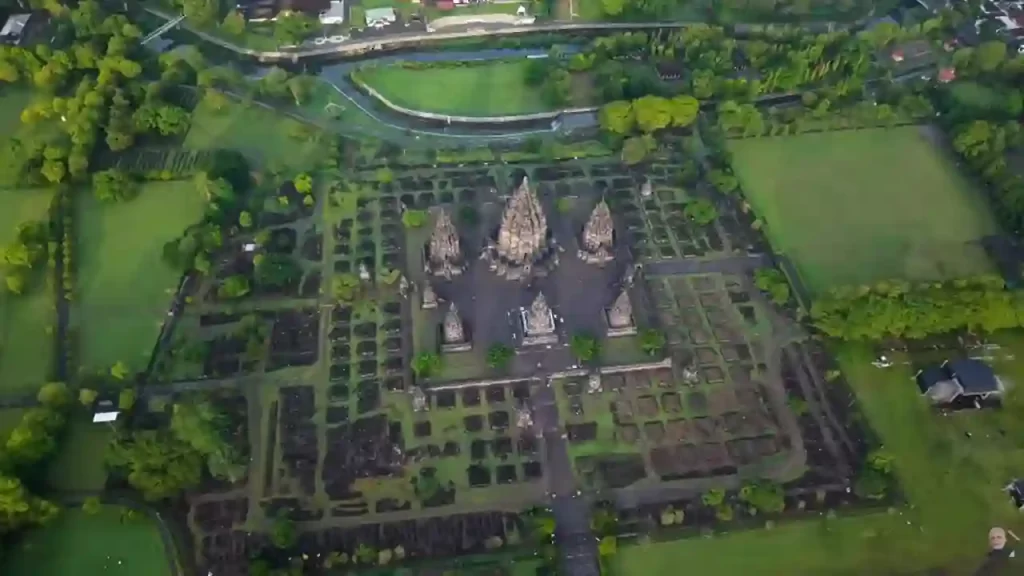
Prambanan Temple is one of Indonesia’s most remarkable historical treasures, a soaring 9th-century Hindu complex near Yogyakarta that still feels powerful even in ruins, not because it is perfectly preserved, but because it carries the grandeur of an ancient civilization in every carved stone and rising spire. As the largest Hindu temple complex in Indonesia and one of the most important in Southeast Asia, it stands today not only as a UNESCO World Heritage Site, but also as a symbol of the long cultural conversation between India and Indonesia.The recent visit by Indian Prime Minister Narendra Modi to Prambanan, alongside Indonesian President Prabowo Subianto, gave the temple renewed international attention, especially after the two leaders marked the beginning of India’s archaeological conservation and restoration project for the site. That gesture matters because Prambanan is more than a monument; it is a shared civilizational memory, built in stone and preserved through diplomacy, scholarship, and devotion.A Monument With Deep RootsPrambanan was built during the 9th and 10th centuries under the Sanjaya dynasty of the ancient Mataram Kingdom, at a time when Hinduism and Buddhism both shaped life on Java’s fertile plains. The temple was dedicated to the Hindu Trimurti, Shiva, Vishnu, and Brahma, and was designed as a sacred landscape rather than a single isolated shrine.What makes its origin story so fascinating is the way it reflects the cosmopolitan character of ancient Southeast Asia. Java was not a peripheral outpost of Indic culture; it was a place where Hindu ideas were absorbed, adapted, and given local artistic expression, creating a monument that feels both familiar and distinctly Indonesian. In that sense, Prambanan is not simply an import from India’s religious world, but a mature regional interpretation of it.Scale and StructureThe Prambanan Temple Compound is made up of several groups of buildings, including the main Prambanan temple complex as well as Sewu, Bubrah, and Lumbung temples. At the heart of the site once stood roughly 240 temples, large and small, spread across a landscape of nearly 40 hectares, making it one of the grandest religious complexes ever built in ancient Java.The central shrine arrangement is especially striking. Three main temples honor Shiva, Vishnu, and Brahma, with Shiva’s temple rising highest at around 47 metres and dominating the skyline with a verticality that immediately sets Prambanan apart from many other temple traditions in Asia. That upward sweep creates a sense of aspiration and sacred hierarchy, as if the entire complex is trying to lift the visitor’s gaze toward the divine.The Architecture & Carvings That SpeakThe first impression Prambanan gives is one of dramatic elegance. Unlike sprawling temple compounds that spread horizontally across a broad footprint, Prambanan rises sharply and symmetrically, with stone towers that create a powerful silhouette against the Javanese sky. This vertical design is not just beautiful; it reflects Hindu cosmology and the idea of sacred order expressed through geometry, elevation, and alignment.Inside the Shiva temple are chambers that house statues of Shiva, Durga, Ganesha, and the sage Agastya, reinforcing the temple’s theological depth and ritual purpose. Around the central shrines, rows of smaller pervara shrines once created a dense sacred field, and although many are now in ruins, their remains still help convey the scale and ambition of the original complex.One of Prambanan’s greatest artistic achievements is its relief sculpture. The temple galleries are decorated with finely carved bas-reliefs depicting episodes from the Ramayana, allowing visitors to move around the structure almost as if they are reading a sacred story in stone. That narrative quality gives the site a remarkable human texture. The carvings are not merely decorative; they function as theological instruction, cultural memory, and visual storytelling, connecting architecture to epic literature in a way that turns the temple into a living manuscript. Visitors traditionally walk clockwise around the corridors, following the sequence of scenes, which turns movement itself into an act of contemplation.Prambanan and BorobudurPrambanan is often discussed alongside Borobudur, the great Buddhist monument nearby, and the pairing is one of the most compelling features of Java’s cultural landscape. Where Borobudur represents the island’s Buddhist heritage, Prambanan reveals its Hindu legacy, and together they show that ancient Java was home to overlapping traditions rather than a single religious identity.That coexistence is historically important because it reminds us that Southeast Asian civilizations were deeply plural, creative, and interconnected. The two monuments, standing in the same broader region, make a powerful case for understanding heritage not as a fixed label, but as a layered record of exchange, adaptation, and local genius.UNESCO Recognition and PreservationPrambanan was designated a UNESCO World Heritage Site in 1991, a recognition that underlined both its architectural importance and its vulnerability. Like many ancient monuments, it has faced damage from age, weathering, and seismic events, which is why conservation has been central to its survival.India’s involvement in the current restoration effort is especially notable because the Archaeological Survey of India has a long history of heritage conservation in Southeast Asia, including documentation work at the Borobudur temple compounds. The Prambanan project is therefore part of a broader effort to preserve not just a structure, but a shared historical vocabulary that connects South and Southeast Asia across centuries.Why Prambanan Still MattersPrambanan matters today because it speaks to more than religion or tourism. It is a reminder that civilizations travel through architecture, that faith can become form, and that cultural influence often survives longest in stone. For Indonesia, it is a monument to the Hindu past that helped shape its early history; for India, it is a reminder of how widely Indic traditions once flowed and how deeply they were transformed abroad.It also matters because heritage diplomacy is not abstract. When leaders jointly restore a temple, they are not only protecting old walls; they are affirming a relationship between histories, publics, and identities. The plaque unveiled by Modi and Prabowo at Prambanan therefore carries meaning well beyond ceremony, because it ties preservation to friendship, scholarship, and mutual respect.ConclusionPrambanan Temple is one of Southeast Asia’s great cultural masterpieces, a place
The Strait of Hormuz: The World’s Most Consequential Waterway and the 2026 Crisis That Changed Everything
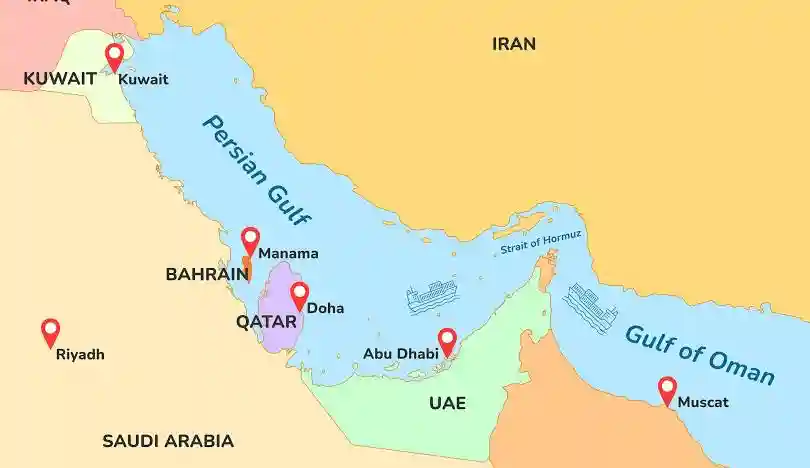
IntroductionThere are a handful of places on the map whose disruption alone can determine the fate of the global economy. The Strait of Hormuz is the most consequential of them all. A narrow strip of water barely 39 kilometres wide at its most constricted point, sitting between the southern coast of Iran and the Musandam Peninsula shared by Oman and the United Arab Emirates, it has for decades carried approximately 20 percent of the world’s seaborne oil supply and 20 percent of its liquefied natural gas.In February 2026, this artery was effectively shut. The consequences have been catastrophic.Following United States and Israeli strikes on Iran on February 28, 2026, the conflict prompted a closure of the Strait of Hormuz, through which most oil produced in the Persian Gulf is exported. Iran’s Islamic Revolutionary Guard Corps closed the strait to commercial shipping in retaliation for strikes that killed Iran’s Supreme Leader Ayatollah Ali Khamenei. What followed was the most severe energy shock the world has ever experienced, surpassing, by multiple measures, the oil crises of the 1970s, the Iran-Iraq War of the 1980s, and Iraq’s invasion of Kuwait in 1990.This article covers the geography, history, and strategic importance of the Strait of Hormuz in full, and then details the 2026 crisis that has brought the world’s energy system to the edge of collapse.Geography: What the Strait Actually IsThe Strait of Hormuz connects the Persian Gulf to the Gulf of Oman. It provides the only sea passage from the Persian Gulf to the open ocean and is one of the world’s most strategically important choke points. On the north coast lies Iran, and on the south coast lies the Musandam Peninsula, shared by the United Arab Emirates and the Musandam Governorate, an exclave of Oman. The strait is about 104 miles long, with a width varying from about 60 miles to 24 miles.Despite that width, the usable shipping lane is far more constrained. To reduce the risk of collision, ships moving through the strait follow a traffic separation scheme: inbound ships use one lane, outbound ships another, each lane being two miles wide. The lanes are separated by a two-mile-wide median. The combined active shipping corridor is therefore, in practice, just six miles wide.The northern coast belongs entirely to Iran. To traverse the strait, ships pass through the territorial waters of Iran and Oman under the transit passage provisions of the United Nations Convention on the Law of the Sea. Both Iran and Oman have expanded their territorial seas to 12 nautical miles, which means, by 1972, the entire strait fell within the combined territorial waters of the two states.Key features of the strait include Hormuz Island and Qeshm Island on the Iranian side. The main Iranian port city on the strait is Bandar Abbas, which serves as the base for Iran’s naval forces and the headquarters of the IRGC Navy. On the Omani side, the port town of Khasab in the Musandam Governorate sits along the strait’s southern edge.Historical Significance: A Trade Route Since AntiquityThe Strait of Hormuz is not merely a modern energy artery. It has been one of the world’s most strategically important trade routes for over two millennia.The 1st century AD mariner’s guide, the Periplus of the Erythraean Sea, described the mouth of the Persian Gulf as a passage connecting to vast interior trading networks, noting that pearl diving was prevalent at its upper end. Memoirs of Babur, who established the Mughal Empire, recount how almonds had to be carried from the distant Ferghana region in Central Asia to Hormuz to reach markets. From the 10th to the 17th centuries AD, the Kingdom of Ormus, which occupied the territory around the strait and appears to have given it its name, was one of the most prosperous trading kingdoms in the medieval world.The origin of the name is debated. Popular etymology derives “Hormuz” from the Middle Persian pronunciation of the name of the Zoroastrian god Ahura Mazda. Scholars and historians also derive the name from the local Persian word “Hur-mogh,” meaning date palm. A third theory links it to “hormos,” the Greek word for cove or bay.The Portuguese were the first European power to recognise the strait’s imperial importance. They occupied Hormuz Island from 1507 to 1622, using it as a base to control trade between the Persian Gulf and Europe. Their expulsion by Shah Abbas I of Persia, with British assistance, ended European direct control, but confirmed the strait as the fulcrum of Indian Ocean power politics.During the modern era, the strait’s importance shifted from spice and luxury goods to oil. When Persian Gulf oil exports began in earnest in the mid-20th century, the Strait of Hormuz became the primary commercial artery for the world’s most critical energy supply.Strategic Importance: The NumbersThe raw statistics explain why the closure of the Strait of Hormuz has no precedent in peacetime energy disruption.During 2023 to 2025, 20 percent of the world’s liquefied natural gas and 25 percent of seaborne oil trade passed through the strait annually. In 2018, 21 million barrels a day passed through the strait, worth USD 1.2 billion at 2019 prices. In 2011, according to the US Energy Information Administration, an average of 14 tankers per day passed outbound through the strait carrying 17 million barrels of crude oil. More than 85 percent of these crude oil exports went to Asian markets, with Japan, India, South Korea, and China the largest destinations.In 2024, an estimated 84 percent of crude oil and condensate shipments through the strait were destined for Asian markets, with China receiving a third of its oil via the strait. Europe gets 12 to 14 percent of its LNG from Qatar, through the strait.Beyond oil and gas, the strait is critical for the global fertiliser trade. Over 30 percent of global urea, which is widely used and produced from natural gas, is exported from Gulf countries through the Strait. Gulf countries account for roughly 45 percent of global sulfur supply, a key input for everything
Epstein Files: All You Need To Know
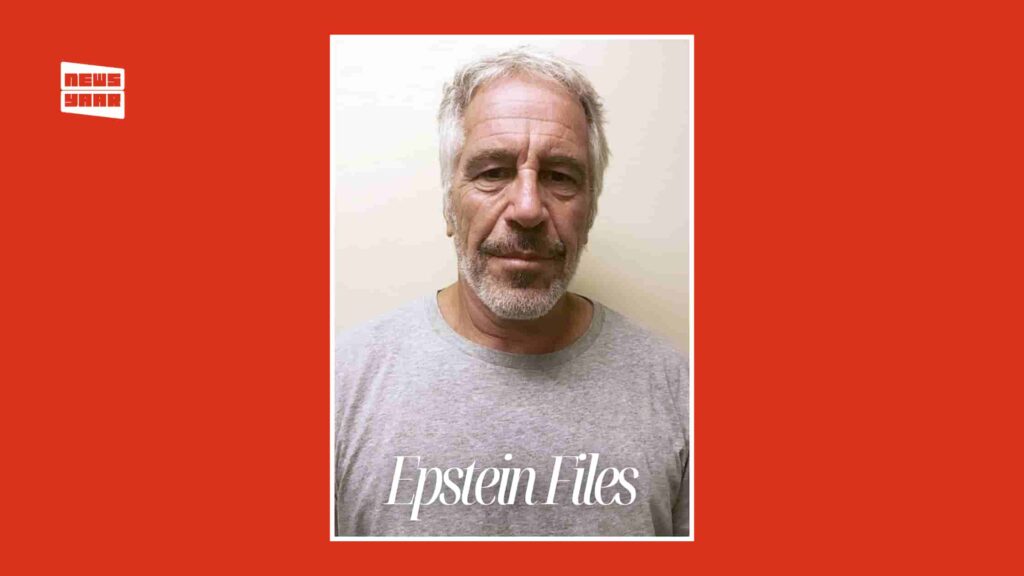
Jeffrey Epstein’s case spans decades of allegations, lenient deals, and high-profile scrutiny. It began with early reports of abuse in the 2000s, escalated through his 2019 arrest and death, and continues unfolding via mandated file releases today. Jeffrey Epstein’s files, a massive trove of emails, documents, and records from the US Department of Justice, expose the financier’s web of connections to power, science, and controversy. Released under the 2025 Epstein Transparency Act, these files, totaling over three million items, detail his funding of elite projects and interactions with prominent figures, though most mentions do not imply criminality. Who Was Jeffrey Epstein? Epstein, a convicted sex offender, built a fortune as a financier and cultivated ties with scientists, politicians, and celebrities. Arrested in 2019 on federal sex trafficking charges, he died by suicide in a New York jail cell that August, sparking endless speculation. His associate Ghislaine Maxwell was convicted in 2021 and is serving 20 years for her role in recruiting victims. Early History (2002–2008) Abuse allegations surfaced in March 2005 when Palm Beach police probed Epstein for paying a 14-year-old girl for a “massage” at his mansion, uncovering claims from dozens more minors dating back to 2002.’ In 2006, he faced multiple unlawful sex act charges, but a grand jury indicted only on one minor count of solicitation. Federal involvement grew via the FBI’s “Operation Leap Year.” By June 2008, Epstein secured a controversial non-prosecution deal from U.S. Attorney Alexander Acosta: pleading guilty to state solicitation charges, 18 months in jail (mostly work release), sex offender registration, and victim restitution, sparing him federal time despite 36 identified victims. The Epstein Files 2026 Less than 1% of files are public; redactions shield victims, with more expected. No “client list” or conspiracy proof; DOJ upholds suicide ruling, lists ~10 co-conspirators (some subpoenaed). Revelations fuel global probes (Norway politics shaken) and speculation (e.g., “Cody Rudland” email), but focus remains on Epstein’s science/power ties without broad prosecutions. Online tools like Jmail drive public analysis, sustaining debate. Recent Document Releases The US Department of Justice’s January 31, 2026, release—over three million pages, 180,000 images, and 2,000 videos—marks the biggest batch yet under the Epstein Transparency Act. It includes Epstein’s jail evaluations, Ghislaine Maxwell details, and searchable emails via Jmail. These files highlight Epstein’s post-2008 conviction dealings, like his $800,000 MIT donations that triggered resignations and probes. No “client list” or blackmail evidence emerged, per a July 2025 DOJ memo confirming his death as suicide. Prominent Associates in Files Files name ~150 from lawsuits, emails, flight logs; many social/financial ties, no proven criminality. Bill Clinton: Frequent flyer on Epstein’s jet (post-presidency); denied island visits or knowledge of crimes. Donald Trump: Early friendship (banned Epstein from Mar-a-Lago); Maxwell emails reference “girls,” denied by White House. Prince Andrew: Giuffre alleged abuse (settled 2022 civil suit); stripped of titles. Leon Black: Paid $158M for advice; files allege coerced massages Lawrence Krauss: $250K funding; emails on his scandals.Lisa Randall: Island visit, house arrest joke email Martin Nowak: $6.5M Harvard center funding.Nathan Wolfe: Pitched “horny virus” study. Corina Tarnita: Facilitated Romanian scholarships Harvey Weinstein: One victim alleged a paid encounter via Maxwell Other Notables Files reference ~10 potential co-conspirators (FBI list, some subpoenaed) plus 25 unnamed with secret settlements per Maxwell. Scientists, politicians (Norwegian fallout), Bill Gates (odd emails).
New York Gets Indian-Origin Mayor Zohran Mamdani: A Historic Moment in Global Politics
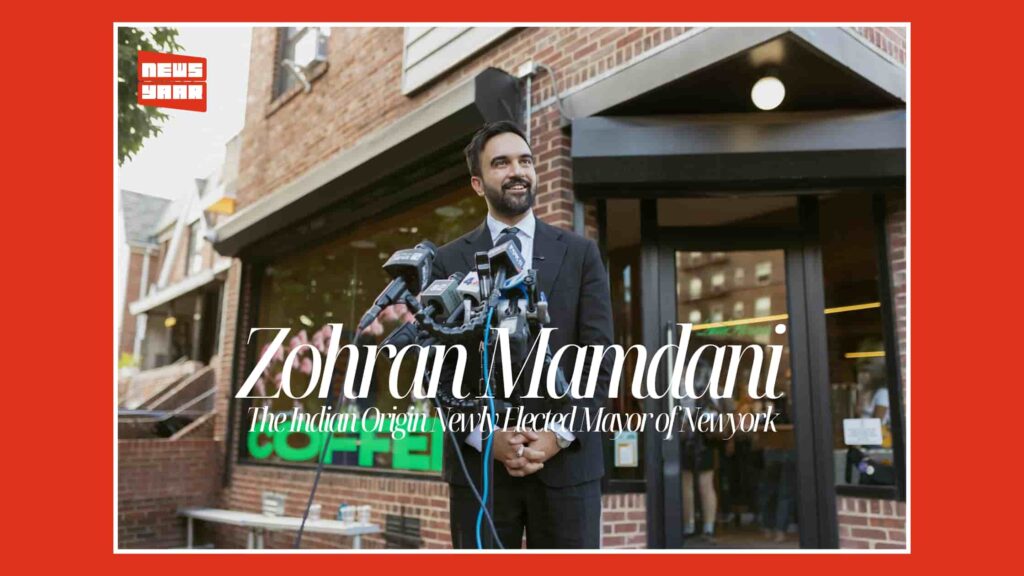
In a historic political shift that has captured international attention, Zohran Kwame Mamdani has been sworn in as the 112th mayor of New York City, becoming the first Indian-origin, South Asian, and Muslim leader to hold the post in one of the world’s most influential cities.Mamdani, aged 34, officially took the oath on January 1, 2026, succeeding Eric Adams after an electrifying election victory in November 2025. His swearing-in ceremony took place in a symbolic location. At this historic Old City Hall subway station, he took the oath on two Qur’ans, including one belonging to his grandfather, highlighting both his faith and multicultural identity.Born in Kampala, Uganda, in 1991 to Indian heritage parents, acclaimed filmmaker Mira Nair and academic Mahmood Mamdani, Zohran moved to the United States as a child and grew up in New York City. He attended top local schools before graduating from Bowdoin College. Mamdani began his political career in the New York State Assembly, representing Queens, and quickly established a reputation as a progressive and community-focused leader.Mamdani’s election is seen as a major milestone for representation and diversity in American politics. As both the first Muslim and first South Asian mayor of New York City, his victory resonates far beyond municipal boundaries, symbolizing how multicultural identities are increasingly shaping the political landscapes of major Western democracies.His campaign platform focused heavily on critical issues such as affordability, public transit, and social infrastructure. Promises included fare-free city buses, universal public childcare, expanded affordable housing, and city-run grocery stores, initiatives aimed at addressing the deep economic challenges facing millions of city residents. Public response to Mamdani’s progressive agenda It turned out to be mixed. While a recent poll showed that a majority of New Yorkers support his democratic socialist policies, concerns remain among some voters about the financial feasibility of his ambitious reforms and potential budget deficits.Cultural celebrations followed his inauguration, including a block party near City Hall and Punjabi music echoing through parts of the city, reflecting pride in his heritage and the diverse identity of New York itself.As Mamdani begins his term, the world watches to see whether his blend of progressive policy, grassroots leadership, and global heritage will chart a new path for urban governance in the 21st century and what his success might mean for emerging leaders from diverse backgrounds.Video credit: Zohran Mamdani’s Youtube