


India’s Hydrogen Train: NaMo Green Rail and the Beginning of a New Era in Green Rail Mobility
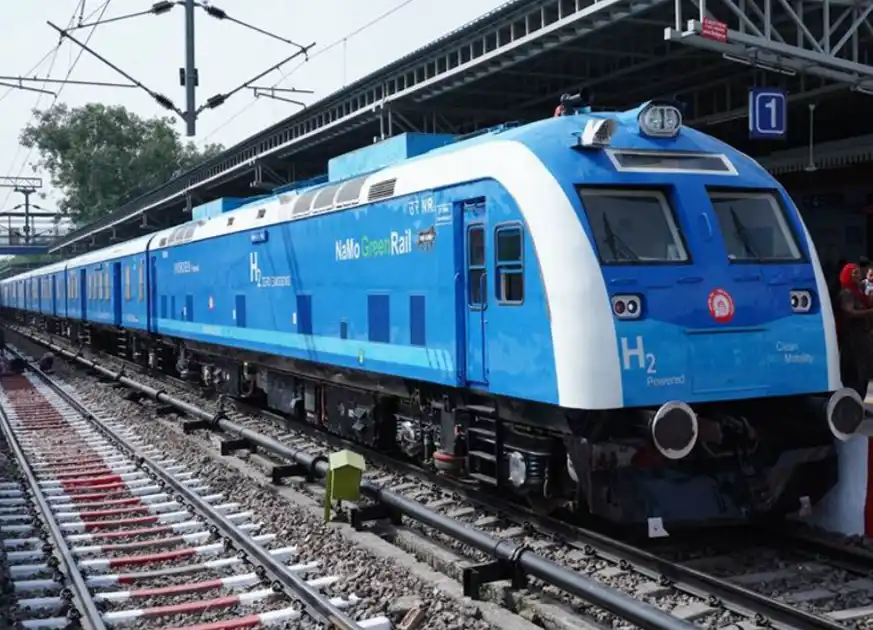
Indian Railways has taken a major step towards introducing alternative-energy propulsion with the launch of NaMo Green Rail, India’s first hydrogen-powered train. The train was flagged off by Prime Minister Narendra Modi from Jind in Haryana on July 17, 2026, and has begun passenger operations on the Jind–Sonipat route. The project is being presented as a significant milestone in the development of indigenous hydrogen-powered railway technology and the country’s broader shift towards cleaner transportation.The launch is significant not only because India now has a hydrogen-powered passenger train in operation, but also because the project covers the wider ecosystem required to run such a train. Along with the train itself, Indian Railways has developed hydrogen storage and refuelling infrastructure at Jind, allowing the technology to be tested under actual operating conditions.The NaMo Green Rail is designed to demonstrate how hydrogen fuel-cell technology can be used as an alternative to conventional diesel propulsion, particularly on railway routes where electrification may not always be the most practical option.What Is NaMo Green Rail?NaMo Green Rail is the official name of India’s first hydrogen-powered train. It has been designed and developed in India as part of Indian Railways’ efforts to explore next-generation fuel technologies.Unlike a conventional diesel train, which burns diesel in an internal-combustion engine to generate mechanical power, a hydrogen fuel-cell train uses an electrochemical process to generate electricity.Hydrogen stored onboard the train is supplied to fuel cells, where it reacts with oxygen from the air. This produces electricity, which is then used to power the train’s traction system. At the point of operation, the principal by-product of the process is water vapour rather than the carbon dioxide and particulate emissions associated with diesel combustion.The environmental benefit, however, depends on how the hydrogen is produced. Hydrogen produced using renewable electricity can have a substantially lower carbon footprint than hydrogen produced using fossil fuels.The Jind–Sonipat RouteNaMo Green Rail is being operated on the Jind–Sonipat section of Northern Railway in Haryana.The route provides Indian Railways with an opportunity to assess hydrogen propulsion in actual railway conditions rather than limiting the technology to laboratory or controlled trials.The passenger service began after the train was flagged off on July 17. The route covers approximately 89 kilometres, connecting Jind with Sonipat in Haryana. The deployment is particularly important because it allows Indian Railways to collect operational data on hydrogen consumption, fuel-cell performance, reliability, maintenance, safety and refuelling requirements.The experience gained from this route could help determine where hydrogen-powered trains can be practically deployed in the future.A 10-Coach Hydrogen TrainThe NaMo Green Rail trainset consists of 10 coaches, including two driving power cars and eight passenger coaches.Each driving power car has a power output of 1,200 kW, giving the trainset a combined installed power of 2,400 kW. Indian Railways has described it as the world’s longest and most powerful hydrogen trainset on a broad-gauge platform.The train has been designed to operate at speeds of up to 75 kmph in regular service.Its passenger capacity is approximately 2,600 people, according to officials. The combination of hydrogen fuel-cell propulsion and battery-based energy management allows the train to generate and use electricity without relying on a conventional diesel engine.How Does a Hydrogen Train Work?The basic principle behind a hydrogen fuel-cell train is different from both diesel and conventional electric trains.A conventional electric train receives electricity through an external system, generally an overhead catenary or third rail. A diesel locomotive carries its fuel onboard and uses combustion to produce power.A hydrogen train carries its own energy source in the form of hydrogen.Inside the fuel-cell system, hydrogen is combined with oxygen through an electrochemical reaction. The process generates electricity, which powers the train’s electric traction motors.The direct by-product is water vapour.This means that the train does not produce carbon dioxide from hydrogen fuel-cell operation at the point of use. Indian Railways has therefore positioned NaMo Green Rail as a cleaner alternative for routes where diesel trains are still required. Why Is Hydrogen Being Considered for Railways?India has made substantial progress in railway electrification, and electric traction remains the primary direction for the majority of the network.Hydrogen is therefore not intended to replace electric trains across the country.Its potential lies in specific applications, particularly on routes that are difficult or expensive to electrify.Installing overhead electrical infrastructure requires significant investment in catenary systems, substations and other supporting infrastructure. On some low-density, heritage or difficult-to-electrify routes, a hydrogen train could provide an alternative without requiring the entire route to be equipped with overhead electrical systems.Hydrogen trains can also operate independently of an overhead power supply because their electricity is generated onboard.The Role of Green HydrogenThe environmental case for hydrogen trains depends heavily on the source of the hydrogen.Hydrogen itself is not automatically a zero-carbon fuel.If hydrogen is produced using renewable electricity, the resulting fuel can have a much lower lifecycle carbon footprint. This is generally referred to as green hydrogen.Green hydrogen is produced by splitting water into hydrogen and oxygen through electrolysis, using electricity. When renewable sources such as solar or wind power provide that electricity, the production process can be significantly cleaner than conventional fossil-fuel-based hydrogen production.This makes hydrogen relevant to India’s broader clean-energy strategy and its efforts to build a domestic green hydrogen economy.Indigenous Technology and Atmanirbhar BharatOne of the most important aspects of NaMo Green Rail is its indigenous development.Indian Railways says the project involved designing the train from the initial stages, prototype manufacturing and the development of hydrogen traction technology specifically for Indian Railways. The project is being presented as an example of Atmanirbhar Bharat, or self-reliance in technology and manufacturing. Developing hydrogen railway technology domestically has strategic significance.Hydrogen propulsion requires expertise in fuel cells, power electronics, energy storage, hydrogen handling, control systems and safety technologies. Building these capabilities within India can help create a domestic industrial ecosystem around hydrogen-powered transportation.It also gives Indian engineers and manufacturers experience with a technology that is still developing globally.Hydrogen Refuelling Infrastructure at JindA hydrogen train requires infrastructure that is fundamentally different from conventional railway fuelling systems.To support NaMo Green Rail, Indian
Vande Bharat Cargo: India’s Push to Build a Faster, Modern Freight Rail Network
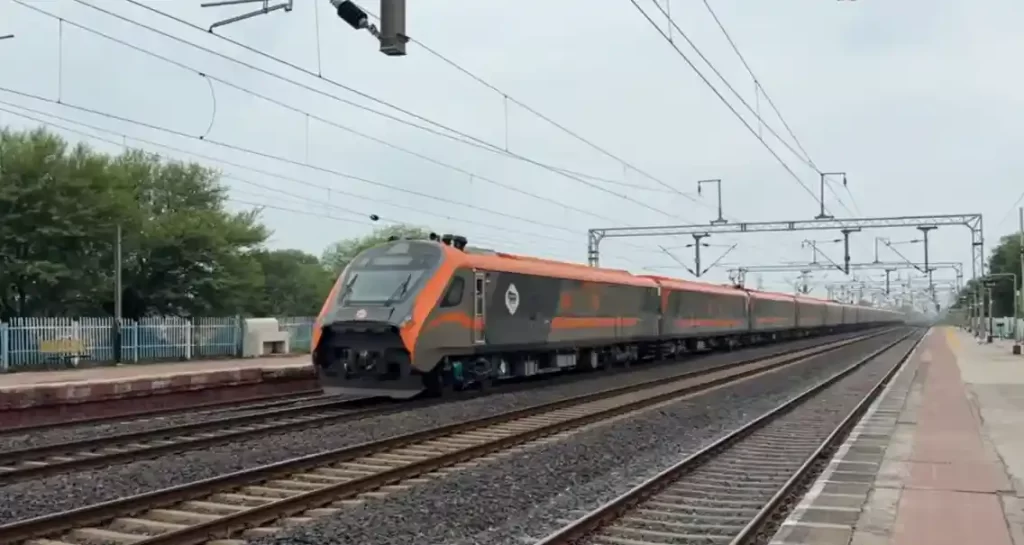
Indian Railways is looking beyond passenger trains as it expands its next generation of railway services. Alongside the rapid rollout of Vande Bharat passenger trains, the railways is also exploring a new generation of faster, more modern freight services designed to move high-value and time-sensitive goods more efficiently.This effort has brought the Vande Bharat Cargo concept into focus.Unlike conventional freight trains, which are primarily designed to move large volumes of bulk commodities, a Vande Bharat-style cargo train is intended for a different segment of the logistics market: time-sensitive, high-value and relatively lightweight cargo. The idea is to use modern train technology and dedicated logistics infrastructure to make rail more competitive with road and air transport for certain categories of goods.The concept is part of a broader transformation underway in Indian Railways, where freight is increasingly being viewed not simply as a source of railway revenue but as a critical component of India’s logistics and supply-chain infrastructure.What Is Vande Bharat Cargo?Vande Bharat Cargo refers to the development of a dedicated freight version of the Vande Bharat train platform, designed specifically for cargo movement rather than passenger transportation.The concept builds on the technology and design philosophy of the Vande Bharat trainsets, including modern propulsion, faster acceleration and efficient use of railway infrastructure.The fundamental difference is the interior.Instead of passenger seats, a cargo train would use its available space for transporting goods. The configuration can be designed around loading and unloading efficiency, cargo protection and rapid turnaround at terminals.The objective is not to replace conventional freight trains.India will continue to depend on long, heavy freight trains to transport coal, iron ore, cement, foodgrains, fertilisers, petroleum products and other bulk commodities. Vande Bharat Cargo is aimed at a different market: goods where speed, reliability and delivery time are more important than simply moving the largest possible tonnage.Why Does India Need Faster Cargo Trains?India’s logistics sector remains heavily dependent on road transport.Roads offer the flexibility of door-to-door delivery and can reach destinations that are not connected directly to railway lines. However, road freight can be affected by congestion, fuel costs, weather conditions and unpredictable travel times.Rail transport, on the other hand, can move large quantities over long distances with comparatively high energy efficiency.The challenge is that traditional freight rail is often optimised for bulk cargo rather than speed.This creates a gap between rail and road for time-sensitive shipments.A faster cargo train could potentially fill that gap.For example, products such as electronics, pharmaceuticals, automobile components, e-commerce shipments, perishables and other high-value goods may benefit from a predictable rail service that offers shorter transit times than conventional freight trains.The Vande Bharat Technology AdvantageThe Vande Bharat platform was developed as a modern self-propelled trainset rather than a conventional locomotive-hauled passenger train.One of its key characteristics is distributed propulsion, with traction equipment distributed across the trainset rather than concentrated entirely in a locomotive.This configuration allows the train to accelerate quickly and makes better use of its available track time.For a cargo application, faster acceleration could be particularly useful because freight trains frequently need to start, stop and operate around other railway services.A modern trainset could potentially reduce turnaround times and improve schedule reliability.However, speed alone does not determine whether a freight service will be commercially successful. Loading and unloading time, terminal infrastructure, cargo handling, route availability and pricing will be equally important.What Kind of Cargo Could It Carry?A Vande Bharat Cargo service would be best suited to goods that have a relatively high value compared with their weight and need to reach their destination quickly.Potential categories include:E-commerce shipments: India’s online retail market generates enormous volumes of parcels that need predictable delivery times.Electronics: Smartphones, computers, components and other electronic goods are relatively high-value and can benefit from secure transportation.Pharmaceuticals: Medicines and medical products can be time-sensitive and, in some cases, require controlled transportation conditions.Automobile components: Manufacturers increasingly operate integrated supply chains in which delays in receiving components can disrupt production.Perishable goods: Fruits, vegetables, dairy products, seafood and other perishables can lose value rapidly if transportation takes too long.Express parcels: Courier and logistics companies could potentially use dedicated rail services for inter-city movement.High-value industrial goods: Precision equipment, machinery components and other specialised products could also be candidates.The key consideration is that the cargo must justify paying a premium for faster and more predictable rail transportation.How It Would Differ From Conventional Freight TrainsThe distinction between Vande Bharat Cargo and traditional freight services is important.Conventional freight trains are designed primarily around capacity and haulage efficiency. Their strength is the ability to move thousands of tonnes of cargo over long distances.A Vande Bharat Cargo service would focus more heavily on speed and turnaround time.A conventional freight train carrying coal, for instance, may consist of dozens of wagons and be hauled by one or more powerful locomotives.A cargo train designed around the Vande Bharat platform would instead operate as a dedicated trainset, with cargo space integrated into the train.This makes the two services complementary rather than competing.India needs both.Heavy freight trains will remain essential for the country’s industrial economy, while faster services could target the rapidly expanding express logistics market.The E-Commerce OpportunityThe growth of e-commerce has fundamentally changed India’s logistics requirements.Consumers increasingly expect products to be delivered within one or two days, particularly on routes connecting major cities.This has created enormous demand for faster inter-city logistics.Most e-commerce deliveries currently depend heavily on road transportation for the middle-mile segment.A dedicated rail cargo service could potentially provide a faster and more predictable alternative for certain long-distance routes.For example, parcels could be consolidated at a logistics hub, transported overnight by rail between major cities and then transferred to local delivery networks for the final mile.Such a model would essentially turn railways into a high-speed middle-mile logistics network.The Perishables MarketAgricultural products present another potential opportunity.India is one of the world’s largest producers of fruits, vegetables, dairy products and other agricultural commodities. However, post-harvest losses remain a significant concern, particularly for products with short shelf lives.Faster transportation can help reduce the time between production and consumption.A dedicated cargo train
India’s First Semi-High-Speed Rail Corridor: The Ahmedabad–Dholera Project Set to Transform Gujarat
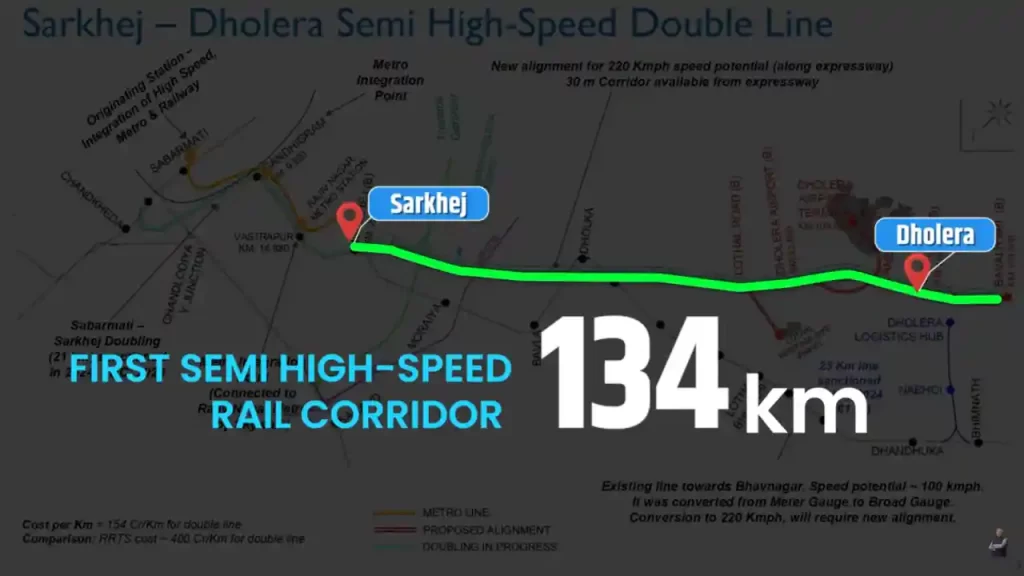
In a landmark decision that marks a new chapter in India’s railway modernization, the Cabinet Committee on Economic Affairs (CCEA), chaired by Prime Minister Narendra Modi, approved the ₹20,667 crore Ahmedabad (Sarkhej)–Dholera Semi High-Speed Double Line Rail Project on May 13, 2026. This 134-kilometer corridor will be Indian Railways’ first semi-high-speed rail project developed entirely with indigenously engineered technology, embodying the nation’s “Aatmanirbhar Bharat” vision while setting a reference model for phased semi-high-speed rail expansion across the country. By slashing travel time between Ahmedabad and Dholera to under an hour, potentially as fast as 34 minutes from Sarkhej to Dholera and 48 minutes from Sabarmati to Dholera, the corridor will enable comfortable daily commuting, same-day business trips, and seamless connectivity to Dholera Special Investment Region (SIR), the upcoming Dholera International Airport, and the Lothal National Maritime Heritage Complex.The project, implemented under the PM Gati Shakti National Master Plan, emphasizes multi-modal connectivity and logistical efficiency through integrated planning and stakeholder consultations. It will expand Indian Railways’ network by approximately 134 km, enhance mobility for around 284 villages with a combined population of 5 lakh people, and support both passenger and freight movement. Officials projecting completion by 2030–31 highlight that trains will operate at speeds up to 200 kmph, with the line designed for 220 kmph, making it a pioneering initiative that will accelerate industrial growth, strengthen Dholera’s position as a smart city and investment hub, and significantly boost employment and regional development under the government’s vision for a New India.Indigenous Technology and the Aatmanirbhar Bharat VisionThis historic corridor is planned with indigenously developed technology, reflecting the government’s strategic push toward “Aatmanirbhar Bharat” and reducing dependence on foreign systems for critical infrastructure. By relying on domestic engineering expertise, the project showcases India’s capability to design and deploy semi-high-speed rail systems without external dependency, setting a benchmark for future railway expansions. The Railways Ministry stated that this initiative will act as a pioneer model for phased semi-high-speed rail expansion across the country, demonstrating how indigenous innovation can drive large-scale infrastructure development while maintaining cost efficiency and technological sovereignty.The emphasis on indigenous technology also aligns with Prime Minister Modi’s vision of making people in the region “Atmanirbhar” through comprehensive development that enhances employment and self-employment opportunities. By integrating local engineering firms, manufacturing units, and research institutions into the project’s execution, the corridor will foster a domestic ecosystem capable of delivering next-generation rail infrastructure, transferring skills, and creating high-value jobs in Gujarat and beyond.Transforming Connectivity: Ahmedabad, Dholera SIR, Airport, and LothalThe corridor will provide seamless connectivity to Ahmedabad, the Dholera Special Investment Region (SIR), the upcoming Dholera International Airport, and the Lothal National Maritime Heritage Complex (NHMC), creating a multi-modal transport network that integrates rail, air, and maritime infrastructure. Dholera SIR, being developed as a major industrial and manufacturing hub, will gain direct access to Ahmedabad’s urban and economic infrastructure, enabling businesses to locate operations in Dholera while maintaining easy access to Ahmedabad’s markets, logistics networks, and skilled workforce. The upcoming Dholera Airport will further enhance connectivity, positioning the region as a hub for aviation, trade, and tourism, while the Lothal National Maritime Heritage Complex will benefit from improved rail access, promoting cultural tourism and heritage preservation.Connecting Ahmedabad with Dholera will drastically cut passenger travel time, enabling comfortable daily commuting and same-day return trips. This semi-high-speed railway will not only bring two cities closer but also connect people living hundreds of kilometres away, fostering greater social and economic integration across the region. Government estimates suggest the project will improve mobility for nearly 284 villages with a combined population of around 5 lakh people, boosting employment opportunities, enabling access to education and healthcare, and strengthening regional development under the PM Gati Shakti National Master Plan.Industrial Growth, Logistics Efficiency, and Economic ImpactThe corridor is expected to support both passenger and freight movement, improving access to Dholera SIR and enhancing logistics efficiency for industries operating in the region. By providing faster and more reliable rail transport, the project will reduce logistics costs, minimize dependency on road transport, and enable manufacturers to move goods more efficiently between Ahmedabad, Dholera, and other industrial hubs. This will accelerate industrial growth, attract investment to Dholera SIR, and strengthen the region’s position as a leading smart city and investment destination, contributing to Gujarat’s and India’s broader economic development goals.The project is aligned with Prime Minister Modi’s vision of a New India, which emphasizes comprehensive development that enhances employment and self-employment opportunities. By improving connectivity to 284 villages and enabling easier access to urban markets, education, and healthcare, the corridor will empower rural communities, create new economic opportunities, and support the government’s goal of inclusive growth. The semi-high-speed rail project will also facilitate the movement of people, goods, and services seamlessly, integrating regional economies and fostering greater economic integration across Gujarat.Environmental Sustainability and Climate GoalsAs an environment-friendly and energy-efficient mode of transportation, the rail corridor will contribute significantly to India’s climate goals by reducing oil consumption and lowering carbon emissions. Official projections estimate the project will reduce oil imports by 0.48 crore litres and lower CO₂ emissions by 2 crore kg, equivalent to planting 10 lakh trees, demonstrating its potential to mitigate environmental impact while supporting sustainable development. By encouraging rail-based travel and logistics instead of road transport, the corridor will reduce greenhouse gas emissions, lower air pollution, and promote cleaner, greener transportation aligned with India’s long-term climate commitments.The environmental benefits extend beyond emission reductions. The project will minimize land degradation and habitat disruption associated with road expansion, reduce noise pollution in urban and rural areas, and promote sustainable urban planning by integrating rail infrastructure with smart city development in Dholera. This aligns with the PM Gati Shakti National Master Plan’s focus on enhancing multi-modal connectivity and logistical efficiency through integrated planning, ensuring that infrastructure development balances economic growth with environmental sustainability.Project Timeline, Speed, and Operational HighlightsThe 134-km broad-gauge semi-high-speed rail corridor is targeted for completion by 2030–31, with trains expected to operate at speeds up to 200 kmph, while the line is
Anji Khad Bridge: India’s First Cable-Stayed Railway Marvel Connecting Kashmir to the Nation
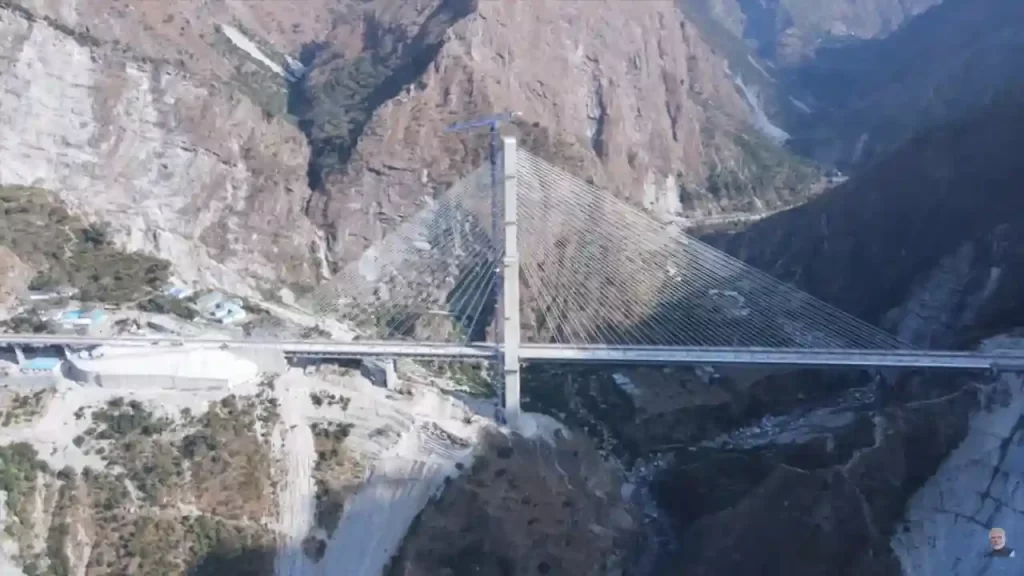
In the rugged hills of Jammu & Kashmir, where steep gorges and fierce winds challenge every builder, a stunning engineering wonder now stands tall. The Anji Khad Bridge is India’s very first cable-stayed railway bridge, a key piece of the massive Udhampur-Srinagar-Baramulla Rail Link (USBRL) project. This 272-kilometer all-weather rail line will finally connect the beautiful Kashmir Valley to the rest of India, ending decades of isolation. Prime Minister Narendra Modi inaugurated it on June 6, 2025, alongside the world’s highest rail bridge over the Chenab River. These bridges mark a historic moment, turning tough Himalayan dreams into reality and opening doors for faster travel, trade, and tourism.Where It Stands and What It ConnectsThe Anji Khad Bridge stretches gracefully across the Anji River, a sparkling tributary of the mighty Chenab, in Reasi district of Jammu & Kashmir. It links the pilgrimage town of Katra (base for the Vaishno Devi temple) to Reasi, about 80 kilometers from Jammu city. This spot sits in the young, shaky folds of the Himalayas – a place with deep gorges, near-vertical walls, earthquakes, and winds gusting up to 213 km/h (almost cyclone strength). Before this bridge, trains had to take long, winding detours. Now, passengers zoom through safely, cutting travel time and costs.Part of the USBRL mega-project, which includes 943 bridges and 36 tunnels, the bridge ensures year-round connectivity. No more snow-blocked roads or floods, trains will run smoothly, carrying people, goods, and hope to Srinagar and beyond.A First in India: Cable-Stayed Design Explained SimplyCable-stayed bridges are like giant clotheslines holding up a road or rail deck. Strong cables stretch from tall pylons (towers) directly to the bridge floor, making them perfect for long spans over deep valleys. Unlike suspension bridges (like Howrah), these are simpler, cheaper, and quicker to build in tough spots.The Anji Khad Bridge shines with these standout features:Total length: 725 meters (about 2,380 feet), with a 473-meter cable-stayed section.Height: 331 meters (1,086 feet) above the riverbed – taller than many skyscrapers.Main pylon: Inverted Y-shape, rising 193-196 meters (633 feet) from foundation – one of the tallest of its kind.Cables: 96 high-tensile cables of different lengths, using 653 kilometers of strands total. They create an asymmetrical design for stability.Deck width: Supports double rail tracks, plus a 12.3-foot service road and 5-foot footpaths on both sides.Train speed: Safe for 100 km/h services like Vande Bharat.Built with 8,200 metric tonnes of steel, it took just 11 months for the main structure. Italian firm Italferr (FS Group) handled design and supervision, their $70 million project won the 2024 ENR Global Best Projects Award for excellence, innovation, and safety.Built for Battle: Surviving the Himalayas’ FuryThe Himalayas don’t play nice. Steep slopes, loose rocks, quakes (Zone V), and howling winds tested every bolt. Engineers used:Seismic-proof tech: Flexible joints absorb shocks.Wind tunnels: Tested for 213 km/h gusts.Sensors everywhere: Integrated health monitoring tracks stress, vibrations, and cracks in real-time.Special concrete: Resists extreme cold (-20°C) and heat.One clever trick? Asymmetrical layout let most work happen from one side, avoiding unstable slopes. Construction used cranes, helicopters for cables, and precision tech, all without harming the fragile ecology.Part of USBRL: Kashmir’s Rail LifelineThe USBRL (started 2002, cost Rs 40,000+ crore) drills through mountains to link Udhampur (on Jammu-Del train line) to Baramulla near Srinagar. Highlights:Chenab Bridge: World’s highest rail arch (359m/1,178 ft), inaugurated same day.Tunnels: 119 km total, including the longest at 12.7 km.Benefits: Srinagar is 3.5 hours from Delhi; apples, saffron to markets fast; jobs, tourism boom.PM Modi flagged Vande Bharat trains from Katra to Srinagar, zipping tourists to Vaishno Devi and Kashmir’s valleys.Global Praise and Real ImpactThe bridge isn’t just Indian pride, it’s world-class. ENR Award beat 120 entries for bridging tough terrain sustainably. Italferr calls it “unprecedented” for India. Locals cheer: Faster pilgrimages, cheaper goods, and army supplies secure.Challenges? Monsoon floods, landslides delayed it years. But grit won, now trains roll where eagles soar.
Chenab Bridge: India’s Engineering Marvel Over the Himalayas
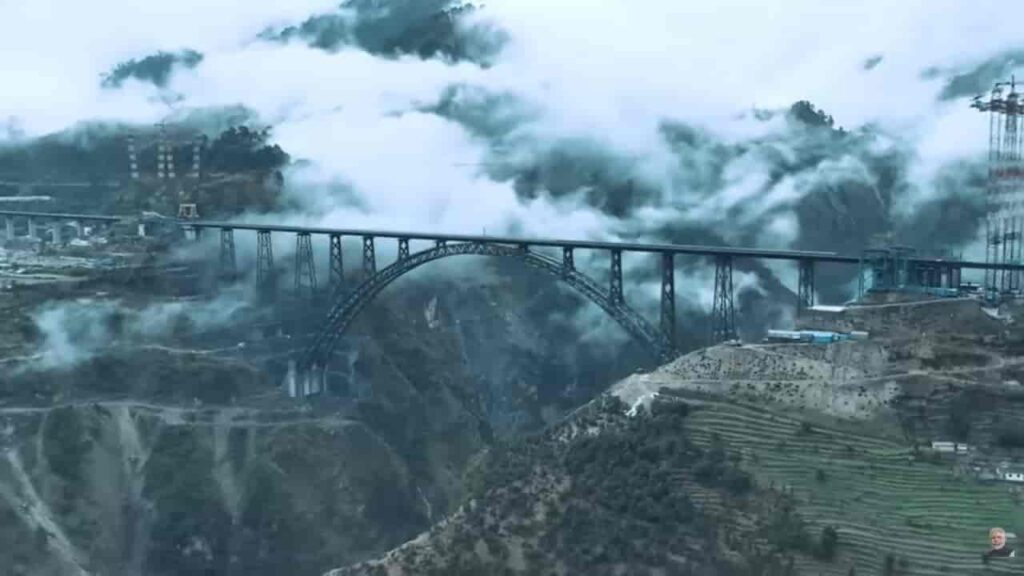
The Chenab Bridge, built across the Chenab River in the Union Territory of Jammu and Kashmir, stands as one of the most remarkable feats of modern engineering in India. Constructed as part of the ambitious Udhampur–Srinagar–Baramulla Rail Link (USBRL), the bridge has gained global attention for its height, design complexity, and strategic importance.Often described as a symbol of India’s infrastructural progress in difficult terrain, the Chenab Bridge is now recognized as the world’s highest railway bridge, surpassing even iconic structures like the Eiffel Tower in height from its base.Location and Strategic ImportanceThe Chenab Bridge is located between Bakkal and Kauri in the Reasi district of Jammu and Kashmir, spanning the deep gorge of the Chenab River. The region is known for its rugged Himalayan terrain, seismic sensitivity, and challenging weather conditions, making construction extremely demanding.The bridge is a crucial component of the USBRL project, which aims to provide all-weather rail connectivity to the Kashmir Valley, linking it with the rest of India. This connectivity is expected to significantly improve:Transportation and logisticsTourism and economic activityStrategic and defence mobility in the regionRecord-Breaking Height and StructureThe Chenab Bridge stands at an astonishing height of 359 metres above the riverbed, making it the highest railway bridge in the world. For perspective, it is about 35 metres taller than the Eiffel Tower.The total length of the bridge is approximately 1,315 metres, and it is designed as a steel arch bridge, a structure chosen specifically to withstand the extreme conditions of the region.Engineering and Design FeaturesThe bridge has been designed to endure some of the harshest environmental and geological challenges. Key features include:High Wind ResistanceThe structure is capable of withstanding wind speeds of up to 260 km/h, ensuring safety even in extreme weather conditions.Seismic SafetyGiven that the region falls in a high seismic zone, the bridge has been engineered to withstand earthquakes of significant magnitude, making it structurally resilient.Blast-Proof DesignConsidering its strategic importance, the bridge has been designed with blast-resistant features, adding an additional layer of security.LongevityThe structure has an estimated lifespan of over 120 years, reflecting the durability of materials and engineering precision used in its construction.Construction ChallengesBuilding the Chenab Bridge was not just an engineering task but a logistical and environmental challenge.The remote and mountainous location made transportation of materials extremely difficult.Extreme temperatures, landslides, and high winds frequently disrupted construction work.Specialised equipment and techniques were required to construct the massive steel arch over a deep gorge.Advanced technologies such as cable cranes, incremental launching, and precision welding were used to complete the structure.The project involved collaboration between Indian Railways and several international engineering firms, highlighting the global scale of expertise required.Role in the USBRL ProjectThe Indian Railways has undertaken the USBRL project to connect Kashmir via rail for the first time in history. The Chenab Bridge is considered the most critical and iconic segment of this project.Once fully operational, the rail link is expected to:Reduce travel time between Jammu and SrinagarProvide reliable connectivity in all seasonsBoost regional integration and developmentEconomic and Social ImpactThe completion of the Chenab Bridge is expected to have far-reaching effects:Tourism Boost: Easier access to Kashmir could significantly increase tourist inflow.Trade and Commerce: Improved logistics will benefit local businesses and industries.Employment Opportunities: Infrastructure development will generate jobs in the region.Regional Connectivity: It will reduce isolation and improve access to essential services.A Symbol of Modern IndiaBeyond its technical specifications, the Chenab Bridge represents a broader narrative of India’s infrastructural ambition and capability. Constructed in one of the most challenging terrains in the world, it reflects the country’s ability to execute large-scale projects with precision and resilience.It also stands as a testament to the dedication of engineers, workers, and planners who turned a seemingly impossible vision into reality.The Chenab Bridge is not just a railway structure—it is a landmark achievement that has redefined engineering possibilities in India, while playing a pivotal role in connecting the Kashmir Valley to the national railway network.
Delhi–Meerut RRTS Fully Operational: India’s First Regional Rapid Transit Corridor Becomes a Reality
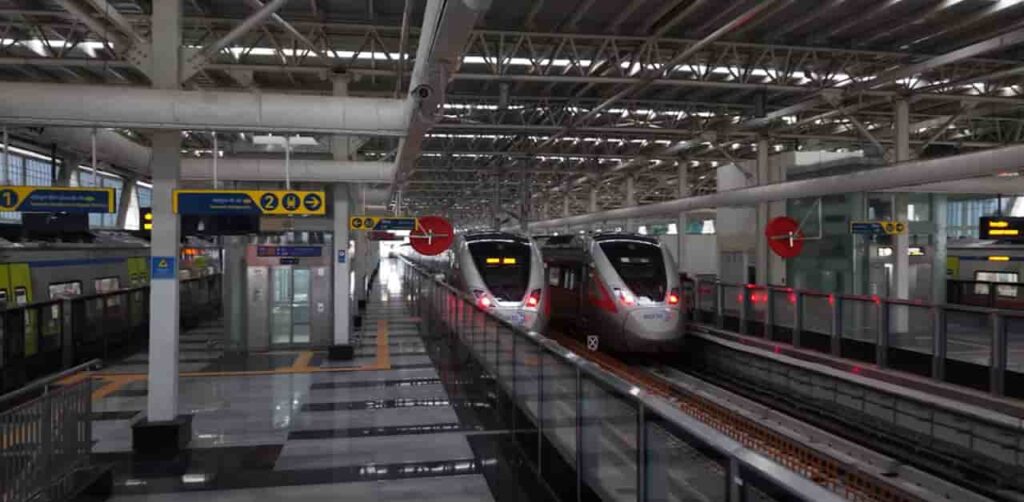
In a major milestone for India’s urban transport infrastructure, the full stretch of the Delhi–Meerut Regional Rapid Transit System (RRTS) has now been opened for public operations. Developed by the National Capital Region Transport Corporation (NCRTC), the corridor marks the country’s first semi-high-speed regional rail system, designed to significantly reduce travel time between Delhi and key cities in western Uttar Pradesh.The corridor connects Delhi, Ghaziabad, and Meerut, transforming daily commuting across the National Capital Region into a faster, more efficient experience.A High-Speed Alternative to Road TravelThe Delhi–Meerut RRTS corridor spans approximately 82 kilometres, making it one of the most advanced regional rail projects in the country. With trains designed to operate at a maximum speed of 180 km/h and an operational speed of around 160 km/h, the system drastically cuts down travel time.Commuters can now travel between Delhi and Meerut in less than one hour, compared to the earlier duration of over two to three hours by road, depending on traffic conditions. This is expected to ease congestion on highways and reduce dependence on private vehicles.Modern Stations and InfrastructureThe corridor includes over 20 strategically located stations, covering major residential, commercial, and transit hubs along the route. Key stations include:Sarai Kale Khan (Delhi)Anand ViharGhaziabadModinagarMeerut SouthMeerut CentralThese stations are equipped with modern facilities such as:Platform screen doorsAutomated ticketing systemsEscalators and elevatorsSeamless integration with metro and bus networksThe infrastructure has been designed keeping in mind accessibility, safety, and passenger comfort.Advanced Technology and Passenger ExperienceThe RRTS introduces a new standard of rail travel in India, combining speed with technology-driven convenience.Trains on the corridor are fully air-conditioned and feature:Ergonomic seatingDedicated luggage spaceOnboard information systemsWi-Fi connectivityCCTV surveillance for securityA separate premium coach has also been introduced, offering business-class-like seating and additional comfort for passengers willing to pay a higher fare.Integration with Urban Transport NetworksOne of the key advantages of the RRTS is its integration with existing urban transit systems. Stations such as Anand Vihar and Sarai Kale Khan connect with metro lines, railway stations, and bus terminals, enabling seamless last-mile connectivity.This multimodal approach is expected to encourage greater use of public transport and reduce traffic congestion in the region.Economic and Regional ImpactThe full operationalisation of the Delhi–Meerut RRTS corridor is expected to have far-reaching economic implications.Improved connectivity will:Boost real estate development along the corridorFacilitate faster movement of workforce between citiesEncourage business expansion beyond DelhiSupport balanced regional development in NCRCities like Ghaziabad and Meerut are likely to witness increased investment and urban growth as commuting becomes more convenient.Environmental BenefitsBy providing a fast and reliable alternative to road travel, the RRTS is also expected to contribute to environmental sustainability.Reduced vehicular traffic will lead to:Lower carbon emissionsDecreased fuel consumptionImproved air quality in the NCR regionThe project aligns with India’s broader goals of promoting sustainable and green mobility solutions.A New Era of Regional ConnectivityThe Delhi–Meerut RRTS is the first of several planned corridors under the regional rapid transit system network. Its successful implementation sets a benchmark for similar projects connecting other parts of the National Capital Region.With high-speed travel, modern infrastructure, and seamless connectivity, the corridor represents a significant leap in how intercity commuting is approached in India—bringing cities closer while improving quality of life for millions of daily commuters.
First Vande Bharat Sleeper Train to Run Between Guwahati and Howrah: Route, Features, Speed and Fare
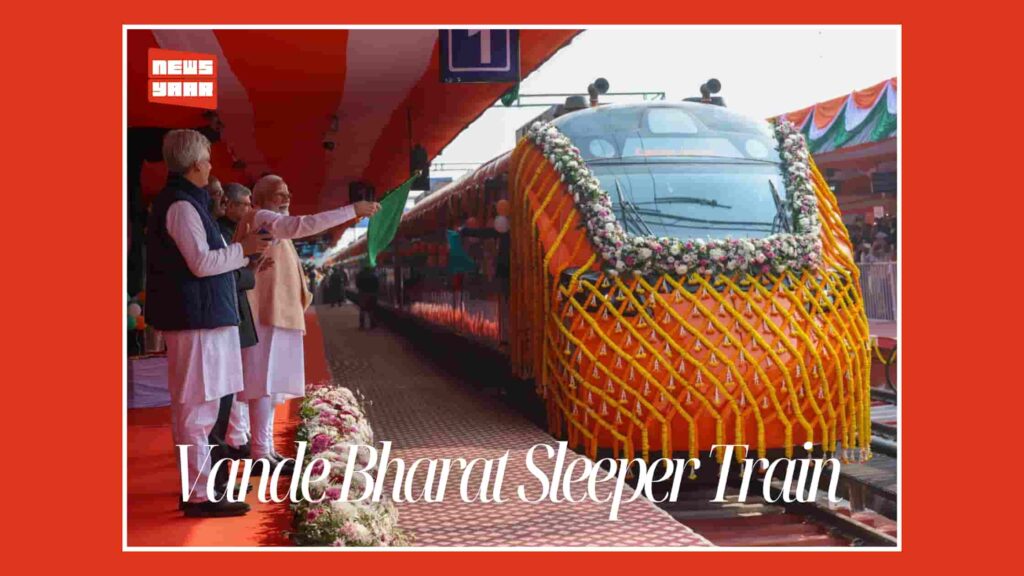
India has launched its first Vande Bharat sleeper train, marking a major milestone in the modernisation of long-distance rail travel. The new service will operate between Guwahati and Howrah, providing an overnight, high-speed connection between the Northeast and eastern India.Prime Minister Narendra Modi flagged off the sleeper variant of the Vande Bharat train from Malda Town in West Bengal, while the return Guwahati–Howrah service was inaugurated virtually. The launch signals the expansion of the Vande Bharat network beyond short daytime routes into long-haul overnight travel.Guwahati–Howrah Vande Bharat Sleeper Train RouteThe Vande Bharat sleeper train connects Howrah in West Bengal with Kamakhya Junction in Guwahati, one of the most important railway hubs in Assam. Designed as an overnight service, the train aims to offer faster, safer and more comfortable travel on a busy inter-state corridor.According to official estimates, the new service is expected to reduce travel time by nearly two and a half hours compared to existing trains on the route.Speed and Operational CapacityThe sleeper Vande Bharat train has been engineered for a top speed of 180 kilometres per hour. However, its operational speed is expected to range between 120 and 130 kilometres per hour, in line with current track conditions and safety protocols.Despite this, railway officials say the train will significantly improve journey efficiency and punctuality on the Guwahati–Howrah sector.Designed for Overnight ComfortUnlike the earlier Vande Bharat chair car services, this train has been specifically developed for long overnight journeys. It is fully air-conditioned and offers three classes of accommodation.Passenger comfort has been prioritised through ergonomically designed berths and a modern suspension system that ensures a smoother ride. Updated linens and improved onboard hygiene systems have also been introduced to enhance the travel experience.Safety and Automation FeaturesThe train is equipped with advanced safety systems, including the indigenous Kavach automatic train protection technology. Comprehensive onboard surveillance systems have been installed to improve passenger security.In addition, automated sliding doors remain closed while the train is in motion and open only when it reaches a station, adding an extra layer of safety and efficiency.Local Cuisine on BoardCatering services are included in the ticket price and have been designed to reflect regional food preferences. Passengers travelling from Guwahati to Howrah will be served Assamese cuisine, while those on the return journey can expect Bengali dishes.The initiative mirrors airline-style meal services and aims to offer passengers a more personalised travel experience.Ticket Fare and ClassesThe Guwahati–Howrah Vande Bharat sleeper train offers three classes of travel. Expected one-way fares are:3AC: Around Rs 2,3002AC: Approximately Rs 3,0001AC: Close to Rs 3,600The pricing positions the train in the premium segment while remaining competitive with existing long-distance rail services.Boost to Connectivity and TourismRailway authorities believe the introduction of the Vande Bharat sleeper train will strengthen connectivity between West Bengal and Assam. Faster overnight travel is expected to benefit business travellers, tourists and pilgrims, while also supporting economic activity across the region.With this launch, Indian Railways has indicated that sleeper variants of the Vande Bharat platform will play a key role in the future of long-distance rail travel in the country.Video credit: YT@/NaMo
Madhavi Latha: The Engineer Behind the World’s Highest Rail Bridge
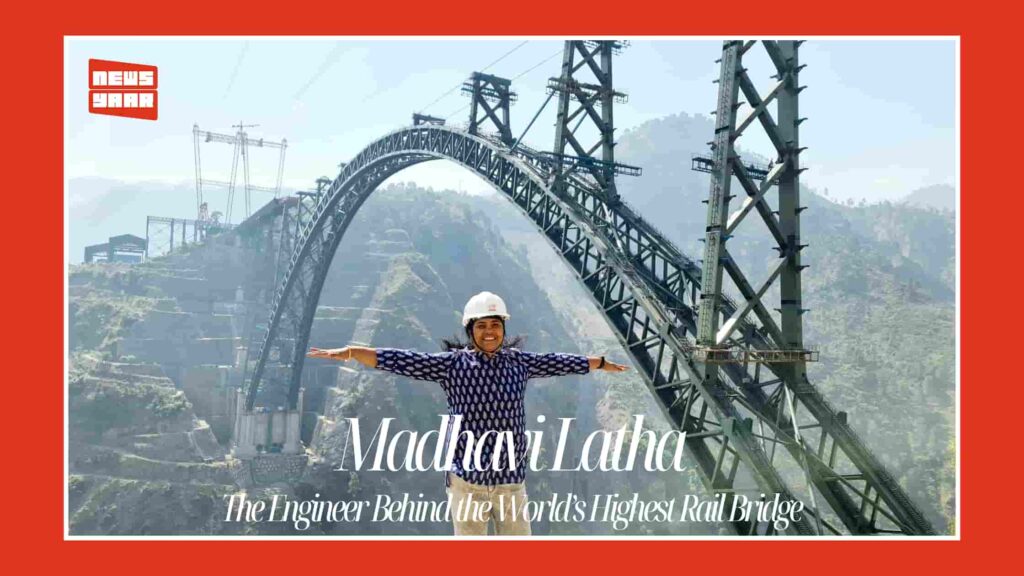
When the Chenab Rail Bridge, the world’s highest railway bridge, stands tall amid the rugged Himalayas, it represents more than an engineering marvel. It tells the story of Dr. G. Madhavi Latha, the engineer whose expertise and vision played a pivotal role in turning an impossible idea into reality. She has also been awarded the NDTV Science Icon of the Year Award.Towering at 359 metres above the Chenab River in Jammu and Kashmir, the bridge is higher than the Eiffel Tower and is one of India’s most ambitious infrastructure projects. Designed to withstand extreme winds, earthquakes, and challenging geological conditions, the Chenab Bridge is a symbol of modern India’s engineering strength, and Dr. Madhavi Latha was at the heart of it.A professor at IIT Madras, Dr. Madhavi Latha, served as the geotechnical consultant for the project. Her role was crucial: the bridge stands in a highly seismic zone with fragile rock formations and unpredictable terrain. Traditional construction methods were not enough. Innovative geotechnical solutions were required to stabilise slopes, design foundations, and ensure long-term safety in one of the most hostile environments imaginable.Dr. Latha and her team worked extensively on slope stabilisation, foundation design, and rock reinforcement, addressing landslide risks and geological uncertainties. What made the challenge even greater was the remoteness of the site, harsh weather conditions, and limited accessibility. Despite these obstacles, her scientific approach and practical problem-solving ensured that the bridge could safely support high-speed trains while enduring nature’s extremes.Beyond its technical brilliance, Dr. Madhavi Latha’s contribution carries deep symbolic value. In a field traditionally dominated by men, her leadership and expertise have made her an inspiration for young engineers across India. She has often spoken about how the project demanded patience, collaboration, and unwavering commitment, qualities as critical as technical knowledge.The Chenab Rail Bridge is a vital link in the Udhampur–Srinagar–Baramulla Rail Line (USBRL) project, aimed at improving connectivity, mobility, and development in Jammu and Kashmir. Its completion marks a major milestone in India’s infrastructure journey.Dr. Madhavi Latha’s story reminds us that behind every iconic structure lies human effort, intellect, and resilience. As trains begin to cross the world’s highest rail bridge, they carry with them not just passengers, but the legacy of an engineer who redefined what was possible.