


Cheetahs Run Free Again: The Full Story of India’s Project Cheetah
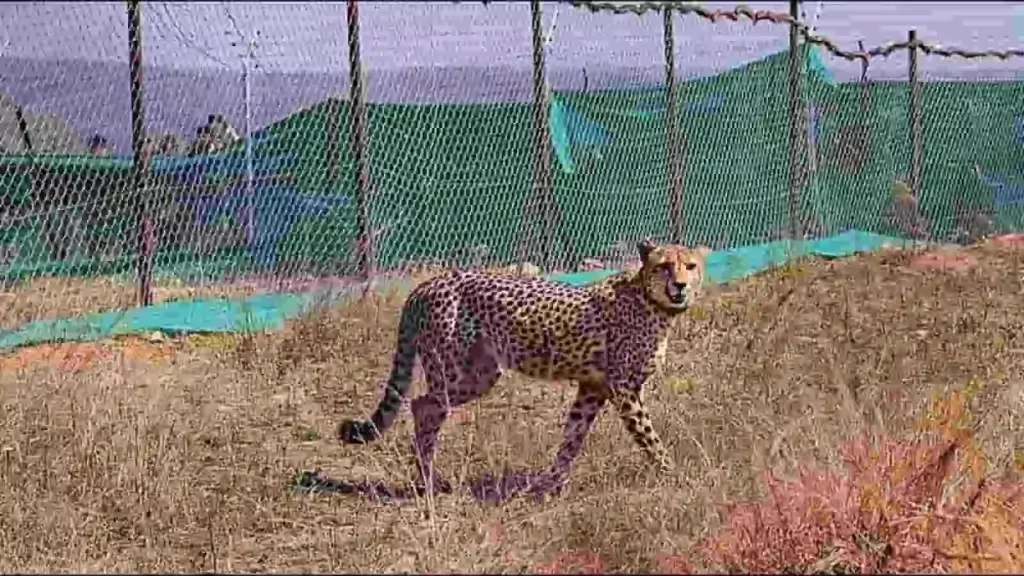
Kuno National Park, Madhya Pradesh- Cheetahs disappeared from India 70 years ago. Now they are back and growing in number. Project Cheetah is the world’s first project to move big cats across continents. Prime Minister Narendra Modi started it in 2022. Today, India has over 50 cheetahs, with many cubs born here. This simple story covers everything from history to the latest news.A Lost Past: Cheetahs in Indian HistoryCheetahs once lived all over India. They ran in grasslands from Punjab in the north to Tamil Nadu in the south. They also lived in Gujarat, Rajasthan, and Bengal. These cats liked open lands, scrub forests, and dry areas.Kings and Mughals used them to hunt deer like blackbuck. Old drawings show nobles with cheetahs on leashes. But too much hunting, stealing of land for farms, fewer animals to eat, and hot weather ended their story. The last three wild cheetahs were killed in 1947 in Chhattisgarh. India said they were extinct in 1952.The Dream Comes True: Starting Project CheetahThe project began on September 17, 2022. It comes from a 2013 plan to bring back cheetahs. Courts said yes. The Environment Ministry, Tiger Authority, and Madhya Pradesh forest teams run it.The goal is to make cheetahs a star animal again. They help keep grasslands healthy by controlling deer numbers. This helps all plants and animals. It matches the world goals to save nature.Kuno Park: A Safe New HomeKuno National Park was chosen because it has wide open grass. No lions or tigers live there to fight the cheetahs. Teams moved 24 villages away so people and cats live apart. This gave 6,000 hectares of free space.The next park is Gandhi Sagar. The plan covers 17,000 square kilometers for 60 to 70 cheetahs by 203Bringing Cheetahs Home: Flights from Far AwayCheetah walks across a grassy field following its release into Kuno National Park in September 2022. India brought cheetahs from Africa in steps.First, eight came from Namibia in September 2022. Five females and three males flew on an Air Force plane. PM Modi let them out himself.Next, 12 from South Africa arrived in February 2023. Five females and seven males.In late 2025, nine from Botswana joined. Six females and three males. They stayed in quarantine for one month.More are coming: Eight from Botswana in early 2026 and 20 from South Africa soon.A cheetah takes its first steps free in Kuno after release.Babies Bring Hope: The Growing FamilyAn 1812 engraving of Mughal aristocrats hunting blackbuck with an Asiatic cheetah. Cheetahs started having cubs fast. This shows they like their new home.India’s first cub, Mukhi, was born on March 29, 2023, to mother Jwala from Namibia. Her mom left her alone. Heat killed her brothers and sister. Forest workers raised her like family. Now Mukhi is three years old. In November 2025, she had five cubs – the first babies from an India-born mom!Jwala had more litters, too. In March 2026, she gave birth to five more cubs.Other moms like Aasha and Gamini had nine cubs in February 2026.Of the 20 adults brought over, 39 cubs were born. About 27 lived. As of March 2026, India has 53 cheetahs. Kuno holds most, with a few at Gandhi Sagar.What Comes NextIndia wants a strong group of 60 to 70 cheetahs that live on their own. More parks will join. Teams will link lands so cats move freely. This makes India a leader in saving big wild cats.Project Cheetah shows hard work can fix old wrongs. Cheetahs sprint again, and nature thanks India.
India’s First Wildlife-Friendly Highway Stretch Developed on NH-45 in Madhya Pradesh
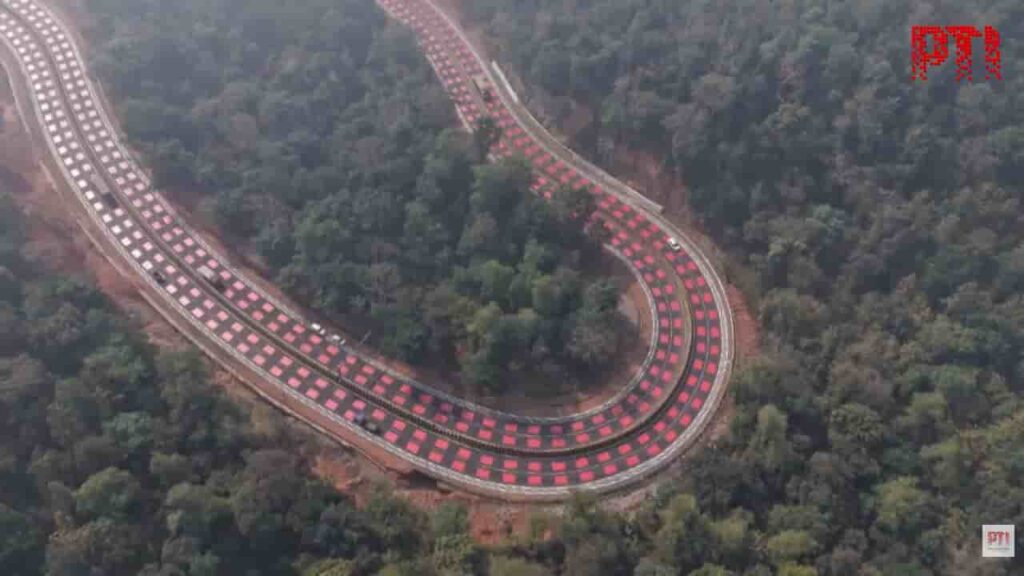
Image: PTIIndia has introduced its first wildlife-friendly highway stretch on National Highway-45 (NH-45) in Madhya Pradesh, marking an important step toward balancing infrastructure development with wildlife conservation. The initiative has been implemented by the National Highways Authority of India to reduce animal-vehicle collisions in ecologically sensitive forest corridors.The project covers an 11.96-kilometre stretch on the Hiran–Sindoor section of NH-45, which connects Bhopal and Jabalpur and passes through the Veerangana Durgavati Tiger Reserve. The corridor also lies close to the Nauradehi Wildlife Sanctuary, making it an important route for wildlife movement between forest habitats.Innovative “Table-Top” Red MarkingsA key feature of the wildlife-friendly highway is the introduction of “table-top red road markings.” These markings consist of 5-millimetre thick thermoplastic red layers applied across the road surface in areas where wildlife movement is frequent.The raised texture of these markings creates mild vibrations and audible feedback when vehicles pass over them. This tactile and visual cue encourages drivers to slow down naturally without requiring abrupt braking. The bright red colour also serves as a warning that the vehicle is entering a wildlife-sensitive zone.The design was inspired by similar traffic-calming techniques used on the Sheikh Zayed Road in Dubai, where road engineering solutions are used to control vehicle speeds in specific areas.Infrastructure for Wildlife ProtectionIn addition to the innovative road markings, the highway corridor includes several other features aimed at protecting wildlife.Authorities have constructed 25 dedicated wildlife underpasses along the stretch to allow animals to move safely beneath the road. Continuous fencing has also been installed along both sides of the highway to guide animals toward these crossing points and prevent them from wandering onto the roadway.Cameras and monitoring systems have also been installed at certain locations to track wildlife movement and ensure that the safety measures remain effective.Importance of the InitiativeThe NH-45 corridor passes through a forest ecosystem that supports a variety of wildlife species, including tigers, deer, sambar and jackals. Increased traffic on highways running through such habitats often leads to animal-vehicle collisions, posing risks both to wildlife and motorists.The wildlife-friendly highway design aims to reduce these incidents by encouraging slower driving and providing safe crossing infrastructure for animals.A Model for Sustainable Highway DevelopmentThe project is part of the government’s broader push toward environmentally responsible infrastructure under initiatives such as the Green Highways Policy. If successful, the model could be replicated on other national highways that pass through wildlife corridors and protected forest areas.Experts believe that integrating wildlife-friendly features into road design is essential as India continues expanding its highway network while also preserving its biodiversity.