
Kuno National Park, Madhya Pradesh- Cheetahs disappeared from India 70 years ago. Now they are back and growing in number. Project Cheetah is the world's first project to move big cats across continents.
Prime Minister Narendra Modi started it in 2022. Today, India has over 50 cheetahs, with many cubs born here. This simple story covers everything from history to the latest news.
A Lost Past: Cheetahs in Indian History
Cheetahs once lived all over India. They ran in grasslands from Punjab in the north to Tamil Nadu in the south. They also lived in Gujarat, Rajasthan, and Bengal. These cats liked open lands, scrub forests, and dry areas.
Kings and Mughals used them to hunt deer like blackbuck. Old drawings show nobles with cheetahs on leashes. But too much hunting, stealing of land for farms, fewer animals to eat, and hot weather ended their story. The last three wild cheetahs were killed in 1947 in Chhattisgarh. India said they were extinct in 1952.
The Dream Comes True: Starting Project Cheetah
The project began on September 17, 2022. It comes from a 2013 plan to bring back cheetahs. Courts said yes. The Environment Ministry, Tiger Authority, and Madhya Pradesh forest teams run it.
The goal is to make cheetahs a star animal again. They help keep grasslands healthy by controlling deer numbers. This helps all plants and animals. It matches the world goals to save nature.
Kuno Park: A Safe New Home
Kuno National Park was chosen because it has wide open grass. No lions or tigers live there to fight the cheetahs. Teams moved 24 villages away so people and cats live apart. This gave 6,000 hectares of free space.
The next park is Gandhi Sagar. The plan covers 17,000 square kilometers for 60 to 70 cheetahs by 203
Bringing Cheetahs Home: Flights from Far Away
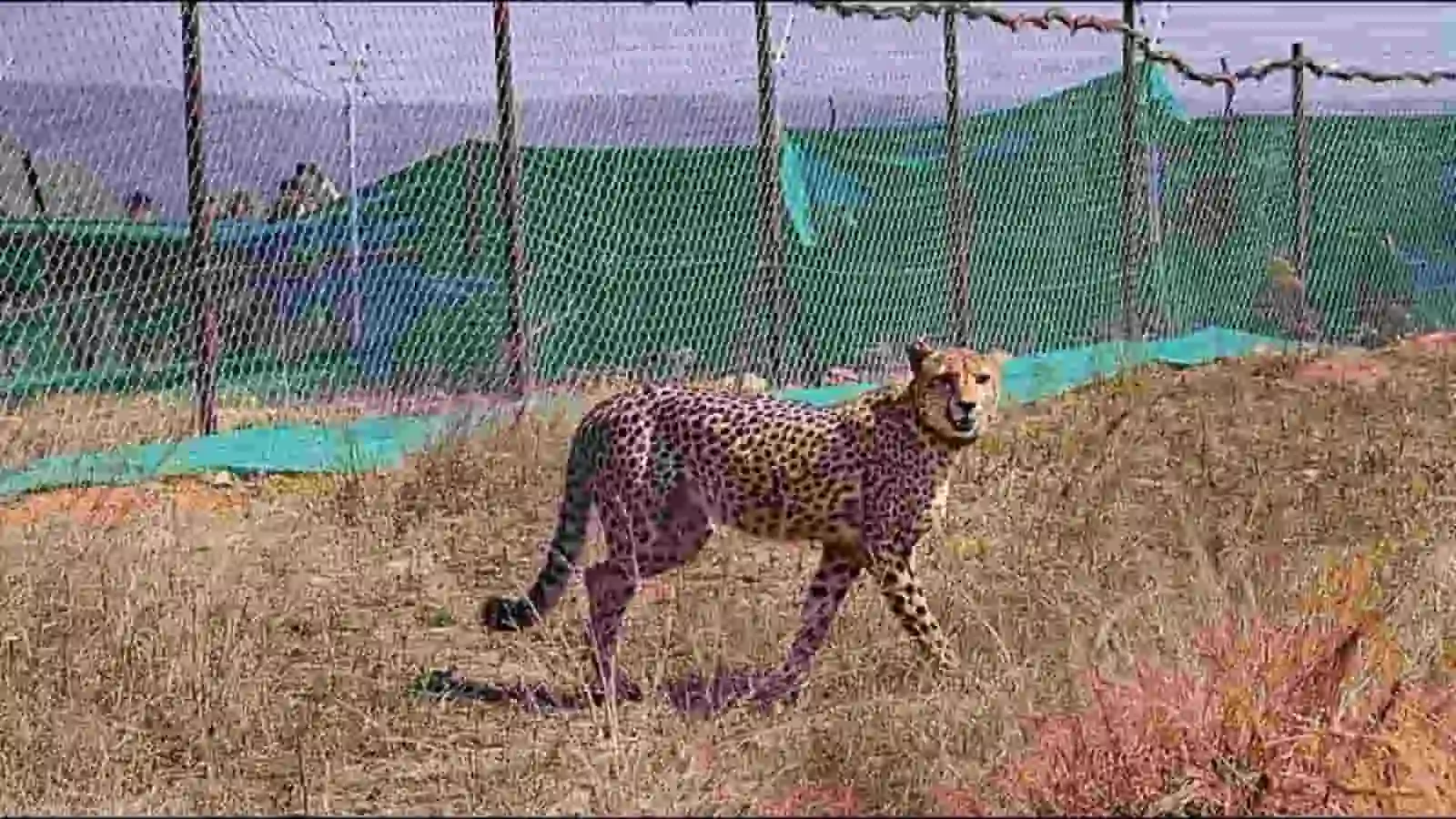
Cheetah walks across a grassy field following its release into Kuno National Park in September 2022.
India brought cheetahs from Africa in steps.
First, eight came from Namibia in September 2022. Five females and three males flew on an Air Force plane. PM Modi let them out himself.
Next, 12 from South Africa arrived in February 2023. Five females and seven males.
In late 2025, nine from Botswana joined. Six females and three males. They stayed in quarantine for one month.
More are coming: Eight from Botswana in early 2026 and 20 from South Africa soon.
A cheetah takes its first steps free in Kuno after release.
Babies Bring Hope: The Growing Family
An 1812 engraving of Mughal aristocrats hunting blackbuck with an Asiatic cheetah.
Cheetahs started having cubs fast. This shows they like their new home.
India's first cub, Mukhi, was born on March 29, 2023, to mother Jwala from Namibia. Her mom left her alone. Heat killed her brothers and sister. Forest workers raised her like family. Now Mukhi is three years old. In November 2025, she had five cubs – the first babies from an India-born mom!
Jwala had more litters, too. In March 2026, she gave birth to five more cubs.
Other moms like Aasha and Gamini had nine cubs in February 2026.
Of the 20 adults brought over, 39 cubs were born. About 27 lived. As of March 2026, India has 53 cheetahs. Kuno holds most, with a few at Gandhi Sagar.
What Comes Next
India wants a strong group of 60 to 70 cheetahs that live on their own. More parks will join.
Teams will link lands so cats move freely. This makes India a leader in saving big wild cats.
Project Cheetah shows hard work can fix old wrongs. Cheetahs sprint again, and nature thanks India.