


Prawaas 5.0: How India’s Largest Passenger Mobility Platform Is Shaping the Future of Public Transport
India’s passenger transport sector is undergoing one of its biggest transformations in decades. Rapid urbanisation, growing demand for efficient public transport, the push towards electric mobility, and the government’s vision of developing world-class infrastructure have collectively accelerated the need for smarter and more sustainable mobility solutions. At the same time, policymakers, vehicle manufacturers, technology companies and transport operators are increasingly working together to modernise a sector that serves millions of people every day.Against this backdrop, Prawaas 5.0 emerged as one of the country’s most significant industry events dedicated to passenger mobility. Organised by the Bus and Car Operators Confederation of India (BOCI), the fifth edition of the event was held from 9 to 11 July 2026 at the Helipad Exhibition Centre (HEC) in Gandhinagar, Gujarat under the theme “Towards Safe, Smart & Sustainable Public Transport.” More than an exhibition, Prawaas 5.0 functioned as a national platform where governments, transport authorities, manufacturers, startups, investors and fleet operators came together to discuss the future of passenger mobility in India. The event reflected the country’s broader ambition of building an integrated, technology-driven and environmentally sustainable transport ecosystem in line with the vision of Viksit Bharat. What is Prawaas?Prawaas is India’s flagship multimodal passenger transport platform that focuses on improving public mobility through collaboration between the public and private sectors. Since its inception, the event has brought together stakeholders from across the transport ecosystem to discuss policy reforms, showcase new technologies and encourage investment in modern transport infrastructure.Unlike conventional automobile exhibitions that primarily focus on launching new vehicles, Prawaas examines the entire passenger transport ecosystem. Discussions extend beyond buses and commercial vehicles to include metro connectivity, electric mobility, school transport, tourist vehicles, taxis, fleet management, digital technologies, financing models, road safety and last-mile connectivity.The event is organised by the Bus and Car Operators Confederation of India (BOCI), the apex body representing private passenger transport operators across the country. Over the years, Prawaas has evolved into an important industry platform where transport policies, operational challenges and emerging technologies are discussed under one roof. Prawaas 5.0: The Largest Edition So FarThe fifth edition marked the biggest Prawaas event organised so far.Held over three days in Gandhinagar, the event attracted more than 20,000 registered participants from 31 States and Union Territories as well as 11 countries, making it one of India’s largest gatherings dedicated exclusively to passenger transport and mobility. Participants included government officials, State Transport Undertakings (STUs), private bus operators, automobile manufacturers, technology companies, startups, financiers, consultants and international mobility experts. The event was inaugurated by Union Minister for Road Transport and Highways Nitin Gadkari, whose presence highlighted the growing importance of public transport in India’s infrastructure and economic development agenda. Several ministers, policymakers and industry leaders also participated in panel discussions and policy sessions during the conference. Why Passenger Mobility MattersPassenger transport is one of the most critical components of India’s economy.Every day, millions of people depend on buses, taxis, metro systems and shared mobility services to travel for work, education, healthcare and business. As cities continue to expand and urban populations increase, the demand for reliable, affordable and environmentally sustainable public transport is expected to grow significantly.Road transport continues to carry the majority of passenger traffic in India, making improvements in fleet quality, safety standards, digital ticketing, operational efficiency and clean mobility essential for future growth.Prawaas 5.0 was organised with this larger objective in mind—to encourage collaboration that can improve accessibility, reduce congestion, enhance passenger safety and support India’s transition towards cleaner modes of transport. Focus on Safe, Smart and Sustainable TransportThe central theme of Prawaas 5.0 was “Towards Safe, Smart & Sustainable Public Transport.”Safety remained one of the most important discussion areas. Experts examined measures to improve vehicle safety standards, strengthen driver training, modernise fleet management systems and reduce road accidents through better technology and regulatory reforms.The event also focused on “smart” mobility, highlighting the growing role of digital technologies such as GPS-enabled fleet management, intelligent transport systems, AI-based route optimisation, digital ticketing platforms and data-driven transport planning.Sustainability formed the third pillar of the discussions. Sessions explored the transition towards electric buses, cleaner fuels, reduced emissions and environmentally responsible transport systems that support India’s climate goals. Key Themes Discussed During the ConferenceThe conference programme covered a wide range of issues that are shaping the future of passenger transport in India.Panel discussions examined policy reforms required to accelerate bus transport and electric mobility while addressing challenges such as financing, insurance frameworks and regulatory approvals.Dedicated sessions focused on the electrification of school buses, the shortage of buses across Indian cities, strategies for achieving net-zero transport goals and the role of startups in developing innovative mobility solutions.Other discussions explored toll policies, driver skill development, fleet digitisation, tourism mobility, connected transport systems and the future of electric vehicles in India’s passenger transport sector. Industry experts also debated how technology, investment and policy can work together to modernise public transport infrastructure across the country. Electric Mobility Takes Centre StageElectric mobility was among the dominant themes throughout the event.India has been steadily increasing the adoption of electric buses and other zero-emission vehicles through initiatives such as the PM e-Drive Scheme and state-level EV policies. Prawaas 5.0 provided a platform for manufacturers to showcase electric buses, charging technologies, battery innovations and digital fleet management solutions.Industry leaders discussed the opportunities and challenges associated with electrifying commercial passenger transport, including charging infrastructure, financing models, battery technology, operational costs and policy incentives.The event reflected the growing consensus that electric mobility will play a major role in reducing urban pollution while lowering operating costs for transport operators over the long term. Platform for Startups and InnovationPrawaas 5.0 also highlighted the increasing role of startups in transforming passenger mobility.Emerging companies presented solutions related to fleet management, mobility software, passenger safety, artificial intelligence, route optimisation, predictive maintenance and smart ticketing systems.Dedicated startup sessions enabled entrepreneurs to interact with transport operators, investors and policymakers, creating opportunities for partnerships and commercial deployment of innovative technologies.The inclusion of startups demonstrated that India’s transport sector is no longer driven solely by vehicle manufacturers but increasingly by software, digital
Lucknow-Kanpur Expressway: Uttar Pradesh’s New High-Speed Corridor
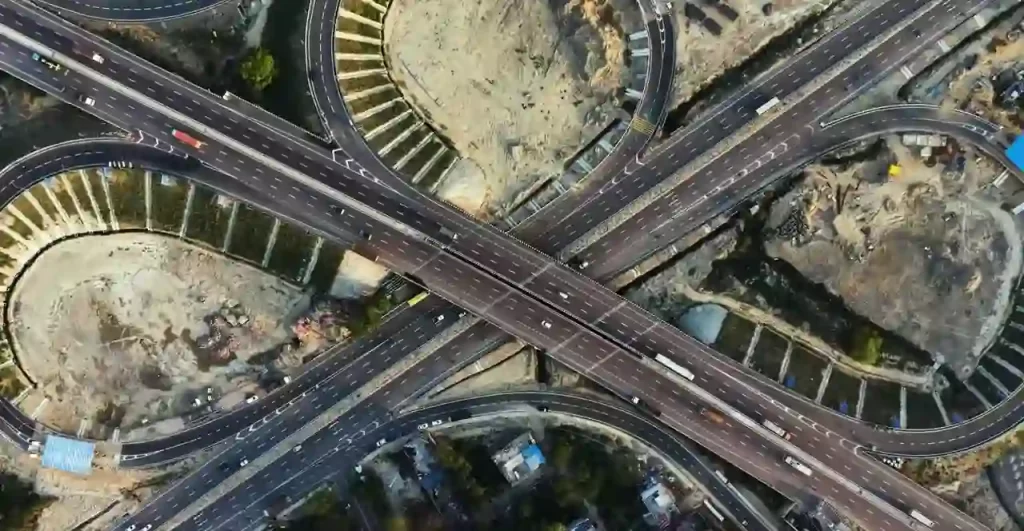
The Lucknow-Kanpur Expressway is one of the most important road infrastructure projects to come out of Uttar Pradesh in recent years, and its opening marks a major shift in how people, goods, and economic activity will move between the state’s two biggest urban centres. Built as a six-lane, access-controlled corridor with advanced traffic systems and a substantial elevated stretch, it is designed to cut travel time dramatically while also easing pressure on the older and more congested routes that commuters have relied on for decades.For travelers, the biggest change is simple and immediate: what used to be a tiring, unpredictable journey of well over two hours can now be completed in a fraction of that time. For the state, the expressway is more than a convenience project; it is a growth corridor that connects Lucknow, Kanpur, Unnao, and surrounding districts through faster mobility, smarter highway management, and stronger investment potential.A Long-Awaited CorridorThe Lucknow-Kanpur road link has been a long-standing demand, and the expressway finally gives that connection a modern, high-capacity form. The project has been completed by the National Highways Authority of India, with construction handled by PNC Infratech, and it runs for about 62.76 km between Amausi in Lucknow and Shuklaganj near Kanpur.What makes the corridor especially significant is that it combines greenfield and brownfield development, meaning it was built both on new land and through upgraded sections near existing urban areas. That blend allowed planners to create a faster, more direct route while still dealing with the practical realities of dense settlements, traffic pressure, and urban connectivity.Route and StructureThe expressway is not just a straight strip of asphalt; it is a carefully engineered corridor with multiple layers of mobility planning built into it. Around 45 km of the route is greenfield alignment, while about 18 km is elevated, making it one of the more advanced highway projects in the state.Its key stretches pass through or near Nawabganj, Banthara, Bani, and Unnao, with integration planned toward the upcoming Ganga Expressway at Unnao. The route includes major bridges, minor bridges, underpasses, flyovers, and interchanges, all of which help the expressway function as an access-controlled corridor rather than a conventional road with frequent interruptions.Faster Travel, Smarter AccessThe main promise of the expressway is time savings. Reports indicate that travel between Lucknow and Kanpur, which currently takes roughly 1.5 to 2.5 hours and sometimes more in heavy traffic, may be reduced to around 45 to 60 minutes, with some early reporting even suggesting a 35- to 45-minute range under ideal conditions.That kind of reduction matters because the corridor links two cities that are central to Uttar Pradesh’s economy, administration, education, and industry. A commuter, logistics operator, or business traveler using the route regularly does not just save time; they gain predictability, and in transport planning, predictability is often as valuable as speed.Elevated Section and Urban ReliefOne of the most impressive engineering features of the project is the elevated stretch through the Lucknow side of the corridor. This section helps vehicles bypass some of the worst congestion around areas such as Amausi, Sarojininagar, and parts of NH-27, which is crucial in a region where urban traffic often slows even fast roads to a crawl.The elevated corridor also shows how expressway planning has evolved in India. Instead of simply widening roads and hoping for better flow, modern projects increasingly try to separate through-traffic from local traffic, allowing long-distance vehicles to move efficiently while reducing conflict with city movement.Technology on the HighwayWhat sets the Lucknow-Kanpur Expressway apart from older highways is its heavy use of intelligent transport systems. The corridor has been equipped with surveillance cameras, variable message signs, video incident detection systems, emergency call boxes, speed radars, and other digital safety tools intended to make the road not just faster, but more manageable and safer.It is also described as India’s first barrier-free expressway, using Automatic Number Plate Recognition technology alongside FASTag-based tolling so vehicles can move without the stop-and-go experience of conventional toll booths. That barrier-free model is important because it reduces delay, lowers congestion at toll points, and creates a more modern highway experience overall.Tolling and User CostsThe expressway’s toll structure is an important part of the public conversation because affordability always shapes how widely such infrastructure is used. Available project details indicate that regular cars may be charged around ₹275 for a one-way trip, with a return trip within 24 hours costing around ₹415, while higher rates apply to light commercial vehicles, buses, trucks, and heavy vehicles.There are also notes that annual FASTag users may benefit from lower effective charges on eligible trips, although final toll notifications are issued by the authorities before public operations begin. For many users, the key question will be whether the time saved and fuel efficiency gained justify the toll cost, especially for frequent intercity travel.Why the Project Matters EconomicallyThe Lucknow-Kanpur Expressway is expected to influence land values, logistics activity, and regional business development along the corridor. Areas near interchanges and access points, particularly around Amausi, Unnao, and Shuklaganj, are likely to draw investor interest as improved connectivity makes them more attractive for residential and commercial development.This kind of effect is common around major highways, but the scale here could be especially notable because the expressway ties into industrial and administrative centres rather than only passing through remote land. Faster movement between airports, highways, warehouses, and city markets can encourage warehousing, manufacturing support services, and new township development in surrounding districts.Engineering College FlyoverAlong with the expressway inauguration, the government is also laying the foundation stone for a four-lane flyover at Engineering College intersection in Lucknow, reportedly at a cost of ₹108 crore. That project is meant to reduce a major local bottleneck and improve access in northern parts of the city, which shows that the highway program is not being treated as a standalone corridor but as part of a wider urban mobility plan.This matters because highway success often depends on what happens at the edges. If entry and exit zones remain congested, the road’s benefits
Maruti Suzuki and Hero MotoCorp Launch Flex-Fuel Vehicles: A New Chapter in India’s Clean Mobility Journey
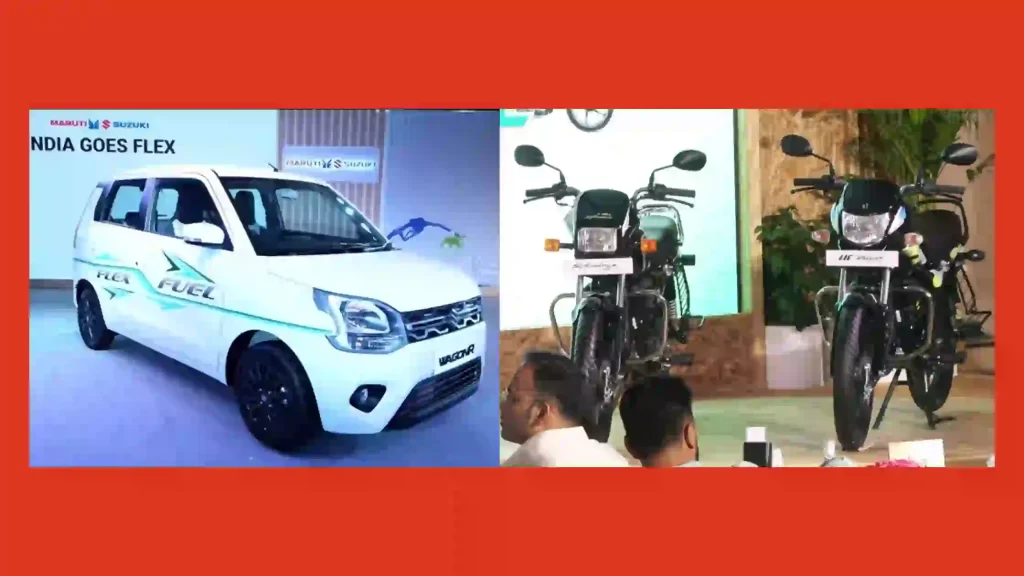
IntroductionIndia’s transition towards cleaner and more sustainable mobility received a major boost with the launch of flex-fuel vehicles by two of the country’s largest automobile manufacturers—Maruti Suzuki and Hero MotoCorp. While Maruti Suzuki introduced the country’s first mass-market flex-fuel passenger car, Hero MotoCorp launched India’s first flex-fuel motorcycles in the commuter segment, marking an important milestone in the government’s push towards alternative fuels.The launches are more than just new product introductions. They reflect India’s broader strategy to reduce dependence on imported crude oil, promote ethanol as an alternative fuel, lower vehicular emissions, and strengthen the country’s energy security. As the government continues to expand ethanol blending across the country, flex-fuel technology is expected to play a significant role in shaping the future of India’s automobile industry. Understanding Flex-Fuel TechnologyA flex-fuel vehicle is designed to operate on petrol as well as ethanol-blended fuels. Unlike conventional petrol vehicles that are compatible only with lower ethanol blends, flex-fuel vehicles can run on a wide range of blends—from E20 (20 per cent ethanol) to E85 and, in some cases, even E100, depending on the vehicle’s engineering.Since ethanol has different chemical properties compared to petrol, flex-fuel vehicles require specially designed engines, fuel pumps, injectors, sensors and fuel lines that can withstand higher ethanol concentrations without affecting performance or durability.The technology has already been widely adopted in countries such as Brazil and is gradually gaining attention in India as part of the country’s clean energy transition.Maruti Suzuki’s Entry into the Flex-Fuel SegmentMaruti Suzuki, India’s largest passenger vehicle manufacturer, unveiled its first flex-fuel passenger car, based on the WagonR platform. The model is capable of operating on ethanol-rich fuel blends and has been developed specifically to support India’s evolving ethanol fuel programme.The flex-fuel WagonR features several engineering modifications compared to the conventional model. These include changes to the engine management system, upgraded fuel injectors, corrosion-resistant fuel lines and components designed to handle higher ethanol concentrations. These upgrades ensure that the vehicle can switch between petrol and ethanol blends while maintaining reliable performance and efficiency.For Maruti Suzuki, the launch represents an important step in preparing for India’s future fuel ecosystem. The company has already introduced E20-compatible vehicles across its portfolio, and the flex-fuel model further expands its alternative fuel strategy.Hero MotoCorp Introduces India’s First Flex-Fuel MotorcyclesHero MotoCorp, the country’s largest two-wheeler manufacturer, also entered the flex-fuel segment with the launch of the Splendor+ Flex Fuel and HF Deluxe Flex Fuel motorcycles.Built on two of Hero’s most popular commuter platforms, the motorcycles are engineered to operate on ethanol-blended fuels of up to E85. Although they closely resemble their standard petrol counterparts, they feature several mechanical upgrades, including revised fuel delivery systems, ethanol-compatible engine components and modified engine calibration to accommodate higher ethanol blends.The launch is particularly significant because commuter motorcycles account for a substantial share of India’s two-wheeler market. Introducing flex-fuel technology in this segment has the potential to bring cleaner fuel options to millions of daily commuters across the country. Why India is Promoting Ethanol-Based MobilityThe push towards flex-fuel vehicles is closely linked to the Government of India’s ethanol blending programme. India imports a large portion of its crude oil requirements, making the country vulnerable to fluctuations in global oil prices and geopolitical uncertainties.By increasing the use of ethanol—produced domestically from crops such as sugarcane, maize and other agricultural feedstock—the government aims to reduce dependence on imported fossil fuels while supporting domestic agriculture.The National Policy on Biofuels and the Ethanol Blended Petrol (EBP) Programme have already accelerated ethanol adoption across the country. India successfully achieved nationwide availability of E20 fuel ahead of schedule, and the introduction of flex-fuel vehicles represents the next stage of this transition. Environmental and Economic BenefitsFlex-fuel vehicles offer several potential environmental and economic advantages.Since ethanol is a renewable biofuel, its use can help reduce greenhouse gas emissions compared to conventional petrol. Increased ethanol consumption may also contribute to improved air quality by lowering certain vehicle emissions.From an economic perspective, greater ethanol usage can reduce India’s crude oil import bill and improve energy security. It also creates additional demand for agricultural produce used in ethanol production, providing farmers with new market opportunities and supporting the rural economy.For consumers, ethanol-based fuels are expected to become more affordable as production increases and distribution infrastructure expands, although the actual cost benefits will depend on fuel prices and vehicle efficiency. Challenges Before Large-Scale AdoptionDespite the optimism surrounding flex-fuel technology, several challenges remain before widespread adoption becomes a reality.One of the biggest challenges is the availability of higher ethanol blends such as E85 and E100 across fuel stations. While E20 has become increasingly accessible, infrastructure for dispensing higher ethanol blends is still in the early stages of development.Vehicle affordability is another consideration. Flex-fuel vehicles require specialised components, making them slightly more expensive than conventional petrol models. Consumer awareness regarding ethanol compatibility, fuel availability and long-term maintenance will also play an important role in determining adoption rates.Additionally, ethanol production must continue to expand sustainably to meet growing demand without adversely affecting food security or water resources.Impact on the Automobile IndustryThe launch of flex-fuel vehicles by Maruti Suzuki and Hero MotoCorp is expected to encourage other automobile manufacturers to accelerate their own alternative fuel programmes.Several companies have already showcased flex-fuel prototypes and announced plans to introduce ethanol-compatible vehicles in the coming years. As government policies continue to favour cleaner mobility solutions, flex-fuel technology is likely to become an important part of India’s multi-fuel automotive strategy alongside electric vehicles, CNG, hybrid technology and hydrogen-powered mobility.Industry experts believe that rather than relying on a single technology, India’s transition towards cleaner transportation will involve multiple solutions tailored to different consumer needs and regional requirements. Looking AheadThe introduction of flex-fuel cars and motorcycles represents an important milestone in India’s journey towards sustainable mobility. While widespread adoption will depend on fuel infrastructure, pricing and consumer acceptance, the launch demonstrates that the country’s automobile industry is preparing for a future where alternative fuels will play a larger role.With continued government support, expansion of ethanol production and increased participation from automobile manufacturers, flex-fuel
Government Approves E85 and E100 Fuels: India Opens the Door to a New Ethanol-Driven Mobility Era
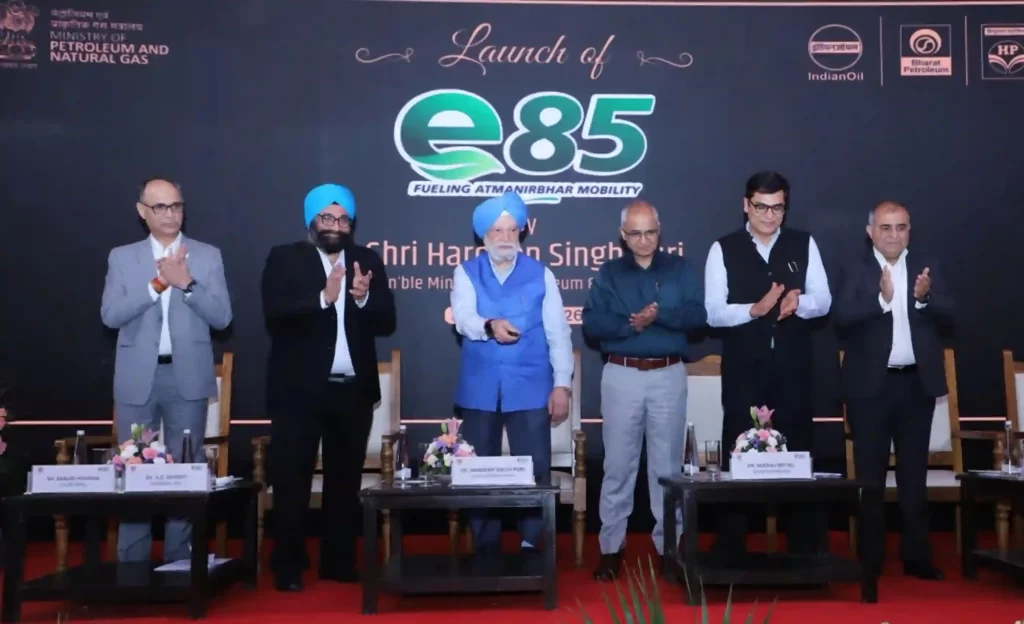
India has taken a significant step toward cleaner and more diversified transport energy by clearing the regulatory framework for E100 fuel, while E85 has already begun appearing in the market in limited form. The move is important not only because it gives legal backing to ethanol-only vehicles, but because it signals that India’s fuel strategy is no longer just about blending ethanol into petrol, it is now about creating a parallel mobility ecosystem around biofuels.The announcement by Union Road Transport and Highways Minister Nitin Gadkari, made at the Sugar, Ethanol & Bio-Energy India Conference in Nagpur, marks a turning point for automakers, fuel retailers, and policy makers alike. Gadkari said he signed the file authorising the use of 100 percent ethanol at 8 pm, giving manufacturers the regulatory certainty they need to invest in flex-fuel platforms and ethanol-compatible powertrains. What E85 and E100 MeanE85 is a high-ethanol fuel blend that contains roughly 85 percent ethanol and a smaller share of petrol or additives, while E100 refers to fuel that is essentially pure ethanol for transport use, though in practice it usually includes a small amount of petrol and additives to support cold starts and handling. These fuels are very different from India’s current E20 programme, which uses 20 percent ethanol blended with petrol.That distinction matters because E20 can be used in vehicles designed or calibrated for it, while E100 requires much more specialised hardware, fuel-system materials, and engine tuning. In other words, this is not a simple switch at the pump; it is a structural shift in how vehicles are designed, tested, and supplied.Why the Approval MattersThe biggest significance of the E100 approval is that it gives the market a legal framework for ethanol-only mobility, something India has been inching toward for years through its broader ethanol-blending push. By creating a formal pathway for E100, the government has effectively opened another route for low-carbon transport alongside electric, CNG, hybrid, and hydrogen technologies. It also sends a strong signal to manufacturers. When policy becomes clearer, investment typically follows, and that is especially true in the auto sector, where new engine families and fuel systems cannot be developed without regulatory certainty. Gadkari said that flex-fuel vehicles are already entering the market, citing Maruti Suzuki’s WagonR flex-fuel model and Hero’s ethanol-compatible motorcycles, with Toyota and Hyundai expected to launch E100-capable vehicles soon. The Technology Behind Flex-Fuel VehiclesFlex-fuel vehicles are built to run on multiple fuel mixes, often ranging from petrol-heavy blends to high-ethanol fuels. To do that safely and efficiently, they need specific changes in engine calibration, corrosion-resistant fuel-system components, and software that can manage combustion differently depending on the blend.This is especially important because ethanol behaves differently from petrol. It absorbs moisture more readily, can be more corrosive to certain materials, and contains less energy per litre than petrol, which means fuel consumption tends to rise when vehicles run on higher ethanol blends. That is one reason E100-compatible vehicles cannot simply be older petrol cars with a software update. Why India Is Pushing EthanolIndia’s ethanol strategy is not just about cleaner tailpipes; it is also about energy security and rural economics. The country imports more than 85 percent of its crude requirement, so every litre of domestic biofuel that replaces imported petrol or diesel helps reduce exposure to volatile global oil prices and improves the trade balance. At the same time, ethanol creates a stronger market for agricultural feedstocks such as sugarcane and maize. Gadkari described the sugar and bio-energy sector as the backbone of rural development, arguing that higher ethanol production can support farm incomes, stimulate bio-refinery investment, and create more value in the countryside rather than only in refineries and fuel-import channels. What Still Needs to HappenFor E100 to move from regulation to widespread use, India will need more than a policy announcement. Oil marketing companies will have to build dedicated E100 dispensing infrastructure, and storage and transportation systems may need upgrades because ethanol’s moisture sensitivity and handling requirements differ from conventional petrol.There is also a vehicle-readiness challenge. Existing E20-compatible vehicles cannot simply be switched to E100, and consumers will need clear guidance on which cars and two-wheelers are certified for which fuel. Emission certification, homologation standards, and warranty frameworks will also need to align before E100 can become a normal part of the retail fuel network. Market Impact for AutomakersFor automakers, the E100 framework creates a new option at a time when the industry is already balancing electrification, hybridisation, CNG, and conventional ICE innovation. That matters because not every market or customer will move to EVs at the same pace, and ethanol-based mobility gives manufacturers an additional decarbonisation path that can be localised more quickly than imported technology chains.It may also accelerate component localisation. If India builds a strong ethanol vehicle ecosystem, suppliers of fuel injectors, seals, sensors, elastomers, and engine control systems could all develop new product lines around alcohol-compatible mobility. In practical terms, that means E100 could become not just a fuel story but a manufacturing story as well.The Consumer QuestionFor consumers, the immediate question is simple: will E100 be cheaper to run? The answer is not straightforward. Ethanol is usually domestically produced and can help reduce dependency on imported fuel, but because it has lower energy density than petrol, a vehicle typically consumes more of it to travel the same distance.So while the policy may improve energy security and support farmers, ownership economics will depend on the final pump price, vehicle efficiency, and how widely the fuel is available. In the short term, the appeal of E100 is likely to be strongest for fleet operators, fuel-conscious early adopters, and buyers who want to support alternative-fuel mobility without moving fully to electric.ConclusionIndia’s approval of the E100 regulatory framework is a major policy shift because it moves ethanol from being only a blending ingredient to being a standalone transport fuel with its own future in the mobility market. Combined with the rollout of E85 in limited markets and the growth of flex-fuel vehicles, the decision shows that the government wants ethanol to play a
Raipur-Vizag Expressway: Forests and Hills to Link Heartland to Coast in 6 Hours Flat

India’s infrastructure revolution accelerates with the Raipur–Visakhapatnam Expressway (NH-130CD), a 464-km six-lane greenfield marvel threading Chhattisgarh’s forests, Odisha’s mineral belts, and Andhra Pradesh’s Eastern Ghats. Slated for December 2026 completion at ₹16,482–20,000 crore under Bharatmala Pariyojana Phase-I, this Economic Corridor (EC-15) shrinks the 595-km NH-26 slog – from 12–13 hours to just 5–7 hours – fueling exports, tourism, and tribal upliftment.Prime Minister Narendra Modi laid the foundation stone in November 2022, igniting construction across 19 packages via the Hybrid Annuity Model (HAM). South Korean firm YONGMA Engineering crafted the Detailed Project Report (DPR), with most stretches under active build by giants like Dilip Buildcon, HG Infra, Adani Transport, and NKC Projects. Tunnels pierce Ghat valleys – a 2.9-km twin bore in Koraput nears 90% completion, boasting jet fans, fire systems, and SOS every 200m.Route Breakdown: From Abhanpur to SabbavaramKicking off at Kurud/Abhanpur (Raipur district) on NH-30/NH-130C/SH-22, it slices southeast:Chhattisgarh (4 districts, ~125 km)Raipur → Dhamtari (Package-1: Abhanpur-Magerlod, Shalimar Corp.)Kanker (Package-2: Sargi-Basanwahi, Dilip Buildcon; via Sarona)Kondagaon (east of Keskal)Border at Marangpuri/Salna (Package-3: KMV Projects)Odisha (2 districts, ~214 km)Nabarangpur (Packages 1–4: Sunapali-Raighar-Umerkote-Nabarangpur; NKC, Barbrik, Adani)Koraput (Packages 5–11: Borigumma-Dasamantpur-Koraput-Sunabeda-Pottangi; HG Infra, DRA Infracon; 3 pending notices). Tunnels and noise barriers shield Indravati National Park greenery.Andhra Pradesh (Vizianagaram-Visakhapatnam, ~125 km)Parvathipuram Manyam-Vizianagaram (Packages 1–3: Aluru-Jakkuva-Korlam-Kantakapalle; HG Infra, NKC, PSK)Ends at Sabbavaram Interchange on NH-16 Golden Quadrilateral, linking Visakhapatnam Port. ROB over Araku rail line; land hurdles linger in final stretches.Access-controlled for 100 km/h speeds, it hugs NH-26 strategically, with sustainable medians, tree-lined edges, and Ghat eco-shields.SectionLength (km)Key PackagesProgress NotesChhattisgarh~1251–3Viaducts, earthwork advancingOdisha~2141–11Koraput tunnels 70–90%; Nabarangpur 70%AP~1251–4Interchange/Fastag ready; land acquisition delaysEconomic Lifeline: Ports, Minerals, and MarketsTethering Raipur’s steel-coal hub to Vizag Port slashes logistics costs, supercharging exports to East Asia (China, Japan, Korea). Mineral-rich Chhattisgarh-Odisha gain freight efficiency; industries sprout along spurs. Farmers hail land value surges – from ₹15 lakh/acre to ₹1.5 crore – with fair compensation fueling hope: “What we lost turns into a better future,” says Vizianagaram’s Srinivasulu. Truckers like Vishal foresee day trips: “One-and-a-half days to nighttime arrivals.” PM Gati Shakti vision integrates it with East Coast Corridor (Kolkata-Kanyakumari).infra.Tourism and Tribal TransformationUnlocks Dandakaranya’s hidden gems: Araku Valley coffee trails, Sitanadi/Indravati sanctuaries, Jagdalpur’s Chitrakoot Falls. Remote spots like Kanker, Koraput, and Borigumma integrate via faster access to markets/services, spawning jobs in hospitality, realty, and agro-processing.Future Web: National and Global ReachBharatmala spurs eye NCR-CMC links: Bathinda-Hisar-Jaipur-Gwalior (Chambal bridges); Ludhiana-Patiala-Narnaul-Alwar; Paradeep-Raxaul Eastern Corridor loop. Ties to Delhi-Mumbai Expressway, Yamuna Eway, Amritsar-Jamnagar – even Nepal – forge a pan-India artery.As cranes hum near Kothavalasa bridges, this corridor embodies Bharat’s build: not roads, but rivers of opportunity carving equity from terrain. By 2026, Raipur-Vizag won’t just connect – it’ll catalyze destinies.
Atal Setu: India’s Longest Sea Bridge Transforming Mumbai’s Connectivity
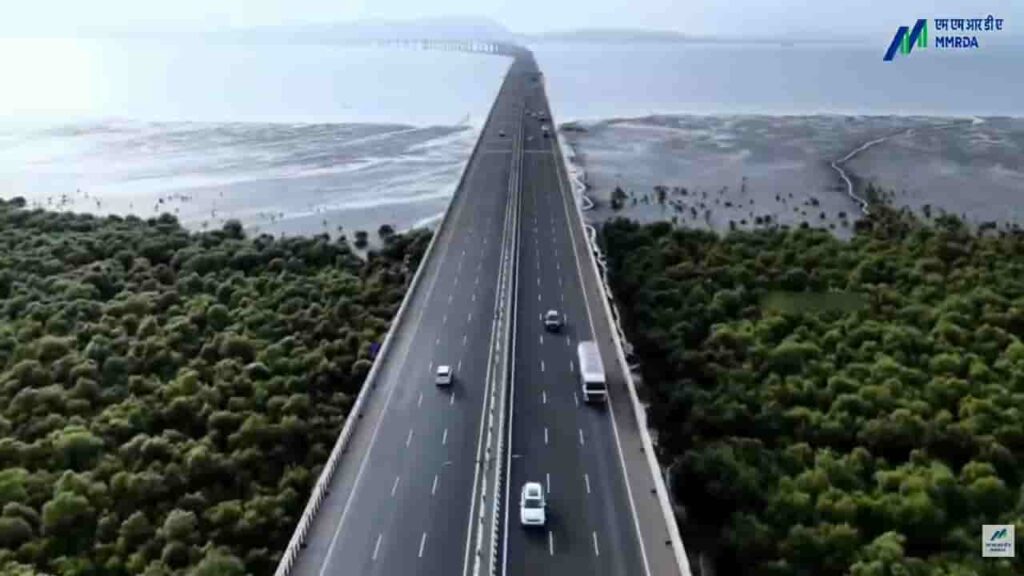
IntroductionThe Atal Setu, officially known as the Mumbai Trans Harbour Link, is one of India’s most remarkable infrastructure achievements. Connecting Mumbai with Navi Mumbai, this sea bridge has significantly transformed travel across the Mumbai Metropolitan Region.Inaugurated in January 2024, the project stands as India’s longest sea bridge and represents a major milestone in enhancing urban mobility, reducing congestion, and supporting economic growth in one of the country’s busiest regions.Project OverviewThe Atal Setu stretches approximately 21.8 kilometres, of which around 16.5 kilometres lies over the Arabian Sea. Developed by the Mumbai Metropolitan Region Development Authority, the bridge connects Sewri in Mumbai to Nhava Sheva in Navi Mumbai.Designed as a six-lane access-controlled expressway, the bridge allows high-speed travel and provides a direct link between South Mumbai and key areas such as:Navi MumbaiJawaharlal Nehru Port TrustNavi Mumbai International Airport (upcoming)This strategic alignment makes the bridge a critical infrastructure asset for both passenger and cargo movement.Need and Strategic ImportanceBefore the construction of Atal Setu, connectivity between Mumbai and Navi Mumbai relied heavily on longer routes via Thane or Vashi, often leading to heavy congestion and extended travel times.The bridge was conceptualised to:Provide a faster alternative routeReduce traffic burden on existing corridorsImprove connectivity to ports and upcoming infrastructure projectsIt is expected to reduce travel time between Sewri and Nhava Sheva from nearly two hours during peak traffic to about 20 minutes.Engineering Excellence and DesignSpecial materials and coatings were used to ensure durability and long-term performance.Intelligent Transport SystemsThe bridge is equipped with modern traffic management systems, including:Speed monitoring camerasEmergency response systemsSurveillance infrastructureThese features enhance safety and ensure smooth traffic flow.Safety RestrictionsTo maintain safety, certain categories of vehicles such as two-wheelers, auto-rickshaws, and tractors are restricted from using the bridge.Economic and Urban ImpactThe Atal Setu is expected to play a transformative role in the economic and urban development of the Mumbai Metropolitan Region.Boost to Logistics and TradeWith improved access to Jawaharlal Nehru Port Trust, India’s largest container port, the bridge enhances the efficiency of cargo transportation and logistics operations.Real Estate and Urban ExpansionThe project is expected to accelerate development in Navi Mumbai, making it a more attractive destination for residential and commercial investment.Airport ConnectivityThe bridge provides seamless access to the upcoming Navi Mumbai International Airport, strengthening regional connectivity.The Atal Setu is a testament to advanced engineering and modern construction techniques.Sea Bridge ConstructionBuilding a long bridge over open sea posed several challenges, including:Strong tidal currentsCorrosion due to saline conditionsEnvironmental constraintsEnvironmental ConsiderationsGiven its location over the sea, the project required careful environmental planning.Measures included:Minimising impact on marine ecosystemsMonitoring coastal biodiversityAdhering to environmental regulationsDespite these efforts, environmental concerns were raised during the planning and construction phases, particularly regarding potential effects on marine life.Challenges During ConstructionThe construction of Atal Setu involved multiple challenges:Working in deep-sea conditionsManaging logistics for large-scale constructionEnsuring minimal disruption to shipping routesDelays due to environmental clearances and pandemic-related disruptionsDespite these obstacles, the project was completed through coordinated efforts and advanced engineering solutions.Integration with Other Infrastructure ProjectsThe Atal Setu is part of a broader infrastructure network aimed at improving connectivity in the Mumbai region. It complements:Mumbai Coastal Road ProjectNavi Mumbai International AirportExisting highway and rail networksThis integrated approach enhances overall transport efficiency and supports regional growth.Final PerspectiveThe Atal Setu stands as a landmark achievement in India’s infrastructure development, symbolising innovation, scale, and ambition. By drastically reducing travel time and improving connectivity between Mumbai and Navi Mumbai, it has reshaped commuting patterns and opened new avenues for economic expansion.More than just a bridge, Atal Setu represents a critical link in India’s journey towards building world-class infrastructure that supports both urban growth and national development.
Parvatmala Project: India’s National Ropeway Development Programme
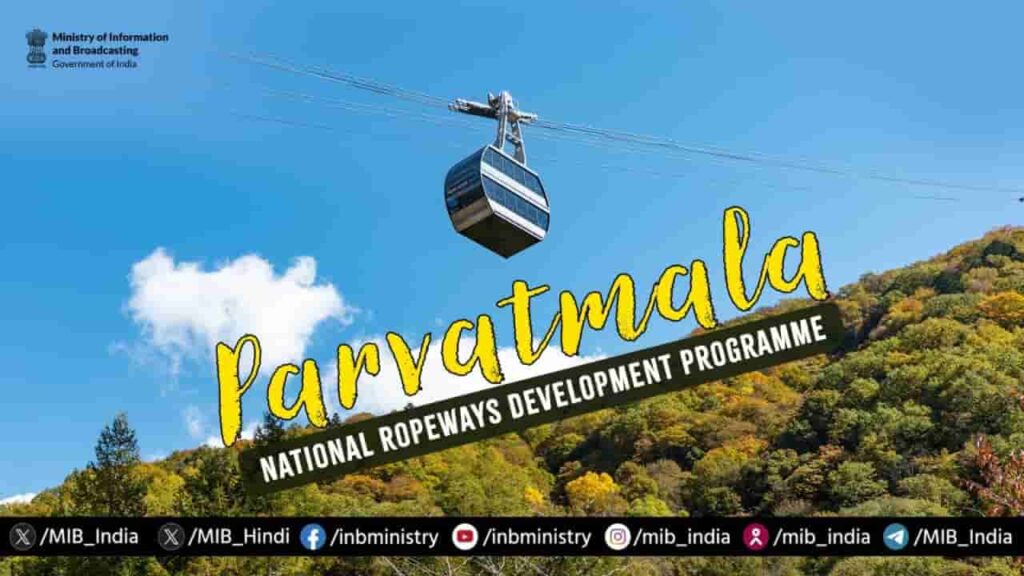
Image: MIBIntroductionThe Parvatmala Project, officially known as Parvatmala Pariyojana, was announced in the Union Budget 2022–23 as a major initiative to develop ropeway infrastructure across India, particularly in hilly and mountainous regions. The project aims to provide safe, efficient and sustainable connectivity in areas where traditional road and rail infrastructure face geographical and environmental challenges.It is being implemented under the guidance of the Ministry of Road Transport and Highways, with a strong focus on boosting connectivity, tourism, and local economic activity.Vision and ObjectivesThe core vision of the Parvatmala Project is to transform mobility in difficult terrains by introducing ropeways as a viable alternative to conventional transport systems. In many hill regions, road construction is not only expensive but also environmentally disruptive. Ropeways offer a cleaner and more efficient solution.The project is designed to:Improve last-mile connectivity in remote and hilly areasReduce travel time significantlyPromote eco-friendly transportationBoost tourism in scenic destinationsBy focusing on these objectives, the initiative seeks to integrate remote regions more effectively into the mainstream economy.Implementation StrategyThe Parvatmala Project is being developed under the Public-Private Partnership (PPP) model, which allows private players to participate in financing, constructing, and operating ropeway systems.The government has identified multiple corridors across states such as Uttarakhand, Himachal Pradesh, Jammu & Kashmir, and the Northeast for ropeway development. These routes are selected based on their tourism potential, connectivity needs, and feasibility.The project is expected to be implemented in phases, with initial priority given to high-demand routes and pilgrimage circuits.Key Features of Ropeway SystemsRopeways under the Parvatmala Project are expected to offer several advantages over traditional transport:They are designed to operate in difficult terrains with minimal land use, reducing the need for large-scale construction. Travel through ropeways is significantly faster, especially in areas where road journeys can take several hours due to winding routes.Additionally, ropeways are considered environmentally sustainable, as they produce lower emissions compared to fuel-based transport systems. They also help in reducing traffic congestion in popular tourist destinations.Economic and Tourism ImpactOne of the major expected outcomes of the Parvatmala Project is the boost to tourism. Improved connectivity to hill stations, धार्मिक sites, and remote scenic locations can increase tourist footfall and generate employment opportunities for local communities.The project is also likely to:Support small businesses in remote areasEnhance accessibility for pilgrims and touristsCreate jobs in construction, operations, and maintenanceBy improving connectivity, the initiative can play a key role in regional economic development.Challenges and ConcernsDespite its potential, the Parvatmala Project faces several challenges. Land acquisition, environmental clearances, and coordination between multiple agencies can slow down implementation.There are also concerns regarding the financial viability of certain routes, especially in areas with seasonal tourist demand. Ensuring safety standards and maintenance of ropeway systems will be critical for long-term success.The Road AheadThe government aims to develop over 200 ropeway projects covering more than 1,200 km in the coming years under the Parvatmala initiative. As implementation progresses, the focus will be on balancing infrastructure development with environmental sustainability.Successful execution of the project will depend on efficient planning, strong private sector participation, and timely clearances.ConclusionThe Parvatmala Project represents a significant shift in India’s approach to infrastructure development in mountainous regions. By introducing ropeways as a mainstream mode of transport, the initiative offers a practical solution to long-standing connectivity challenges.If implemented effectively, it has the potential to not only transform mobility in hilly areas but also drive tourism and economic growth, making remote regions more accessible and integrated with the rest of the country.
Kumar Bhaskar Varma Bridge Over Brahmaputra River: Strengthening Connectivity in Assam
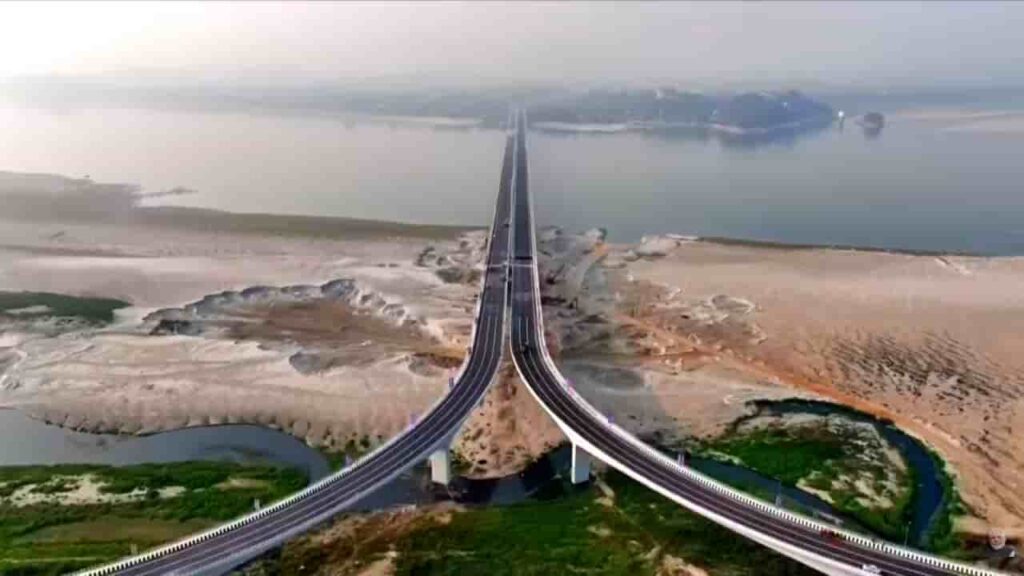
The construction and development of the Kumar Bhaskar Varma Bridge over the Brahmaputra River marks a significant step in enhancing connectivity across Assam. Named after the ancient ruler Kumar Bhaskar Varma, the bridge stands as both an infrastructure milestone and a tribute to the region’s historical legacy.Strategically located, the bridge connects the north and south banks of the Brahmaputra, addressing long-standing challenges of transportation in one of India’s most geographically complex regions.Strategic Location and ImportanceThe Kumar Bhaskar Varma Bridge is being developed near Tezpur, a crucial urban centre in Assam. The Brahmaputra, known for its vast width and unpredictable flow, has historically posed a barrier to seamless connectivity between regions on either side.By linking key districts across the river, the bridge is expected to significantly reduce travel time and improve accessibility for both passengers and goods transport. It will serve as an important alternative route to existing crossings, easing pressure on older bridges and ferry services.Enhancing Regional ConnectivityConnectivity has long been a challenge in Assam, particularly in areas separated by the Brahmaputra. The new bridge aims to transform this by providing:Faster inter-district travelImproved access to healthcare and education facilitiesBetter connectivity for rural and semi-urban areasStrengthened road networks linking national highwaysThe bridge will play a vital role in integrating remote regions with major economic centres, thereby supporting inclusive development.Boost to Trade and Economic ActivityThe project is expected to have a strong economic impact on the region. Assam’s economy relies heavily on agriculture, tea production, and small-scale industries, all of which depend on efficient transportation.With improved connectivity:Movement of goods will become faster and more cost-effectiveTrade between northern and southern Assam will increaseLocal businesses will gain better access to marketsTourism in nearby regions will receive a boostThe bridge is also likely to support cross-border trade routes in the broader Northeast region.Engineering and Infrastructure SignificanceConstructing a bridge over the Brahmaputra is a complex engineering challenge due to the river’s strong currents, shifting channels, and seasonal flooding. The Kumar Bhaskar Varma Bridge reflects advancements in modern engineering techniques designed to withstand such conditions.The structure is expected to feature:Multiple spans to accommodate the river’s widthHigh load-bearing capacity for heavy vehiclesDurable materials suited for flood-prone conditionsSafety features for all-weather usageSuch infrastructure is crucial for ensuring year-round connectivity in a region often affected by monsoon disruptions.Social and Developmental ImpactBeyond economic benefits, the bridge will have a meaningful social impact. Improved connectivity often translates into better quality of life for local communities.Residents will experience:Easier access to hospitals and emergency servicesGreater educational opportunitiesEnhanced mobility for daily commutingReduced isolation of remote areasFor many communities, the bridge represents not just infrastructure, but improved access to essential services and opportunities.Cultural and Historical SignificanceNaming the bridge after Kumar Bhaskar Varma adds a cultural dimension to the project. He was a prominent ruler of the ancient Kamarupa kingdom and is remembered for his contributions to the region’s history.The naming reflects an effort to connect modern development with historical identity, preserving regional pride while moving forward with infrastructure growth.Toward a More Connected NortheastThe Kumar Bhaskar Varma Bridge is part of a broader push by the government to improve infrastructure across Northeast India. Enhanced connectivity is seen as a key driver for economic growth, national integration, and strategic development in the region.As Assam continues to expand its transport network, projects like this bridge are expected to play a central role in shaping the state’s future—bringing regions closer, improving mobility, and unlocking new opportunities across sectors.
Modi Calls Nitin Nabin His ‘Boss’ as New BJP President Takes Charge
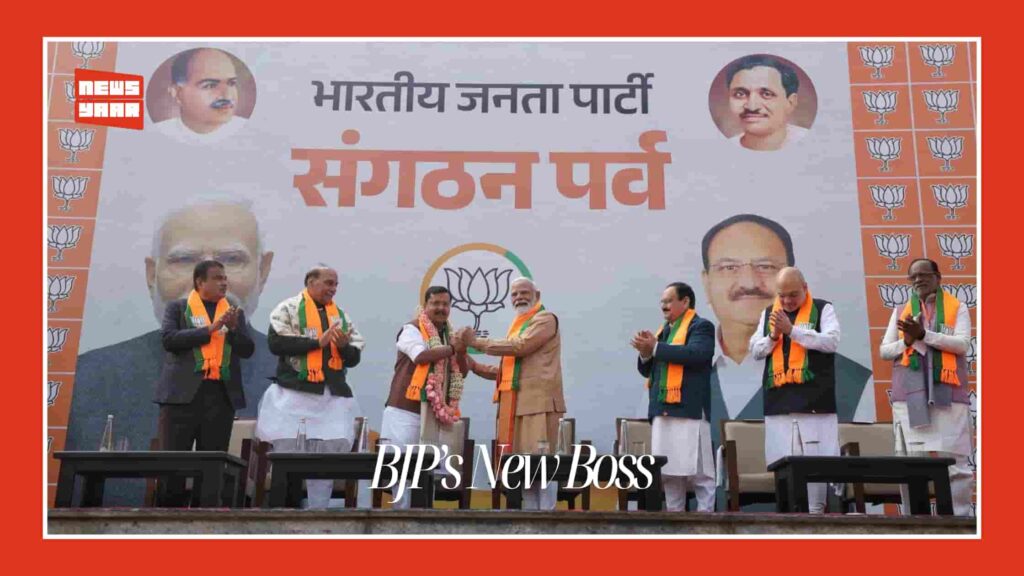
New Delhi:In a moment rich with symbolism and political messaging, Prime Minister Narendra Modi on Tuesday formally welcomed Nitin Nabin as the new national president of the Bharatiya Janata Party (BJP), declaring that in party matters, the newly appointed chief would be his “boss”. The remark, made at a felicitation event on January 20, 2026, with the BJP’s emphasis on organisational discipline and a clear separation between the party and the government.Nitin Nabin, 45, officially assumed charge in the presence of senior party leaders and Prime Minister Modi, marking the beginning of a new phase for the BJP’s organisational leadership. Addressing party workers, Modi said he had presented an account of his own work to the new president, adding with a touch of humour that he now awaited Nabin’s “guidance” and confidential report.“When it comes to party matters, honourable Nitin Nabin ji is my boss. I am a worker,” Modi said, drawing applause from the audience. The Prime Minister had made a similar statement in 2019 alongside then BJP president Amit Shah, reiterating a long-standing message within the party that the organisation functions independently of the government.Highlighting Nabin’s generational outlook, Modi pointed to the new president’s ability to bridge tradition and modernity. He remarked that while he himself grew up listening to news on the radio, Nabin represents a generation comfortable with technology and artificial intelligence, an implicit nod to the BJP’s evolving political strategies in a digital age.Nitin Nabin was officially declared the BJP national president on January 19, following the completion of an extensive internal organisational election process. According to party sources, 37 nominations were filed in his support, all of which were found valid.While the event largely focused on organisational unity, Modi also touched upon broader political issues. He reiterated the BJP’s position on national security, stating that infiltrators posed a serious threat to the country and must be identified and deported. He stressed the importance of learning from the mistakes of other political parties, a veiled reference to the Congress, and urged BJP workers to remain disciplined and connected to grassroots concerns.As Nitin Nabin steps into his new role, he faces the challenge of steering the BJP through complex electoral terrain and internal expectations. His relatively young age and organisational mandate signal a leadership style that blends experience with adaptability, qualities the party believes are essential for navigating the evolving political landscape.The transition, marked by Modi’s symbolic deference, reinforces the BJP’s core message: strong leadership thrives on organisational clarity, collective responsibility, and disciplined separation between party and power.