


Nation First: PM Modi’s Seven Appeals to India in a Time of Global Energy Crisis
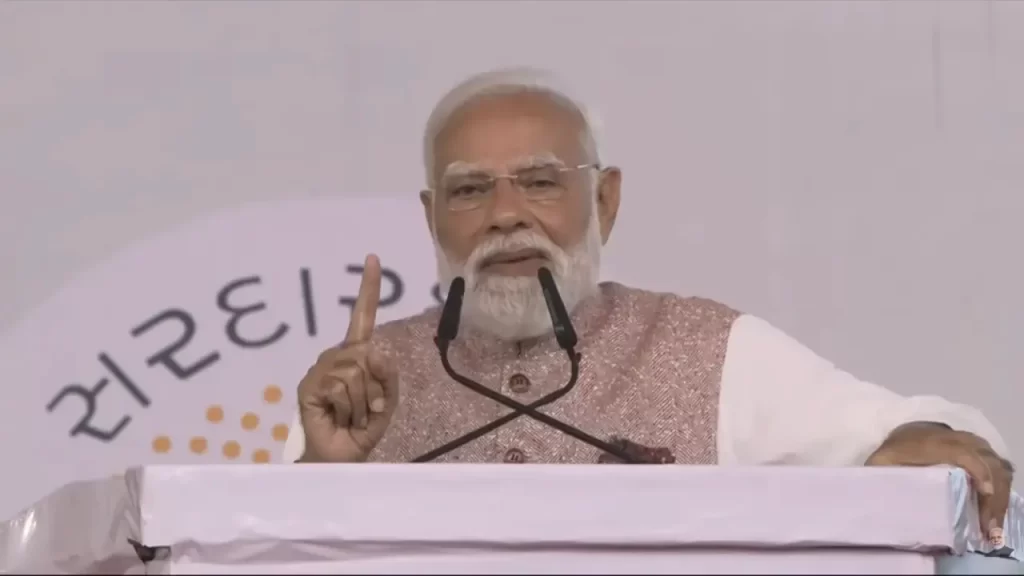
IntroductionPrime Minister Narendra Modi has made some of his most consequential speeches in front of Parliament. He has made others at Red Fort, at election rallies, and on Mann Ki Baat. But the speech he delivered at a public function in Hyderabad in the second week of May 2026 was different from most of them in one important way: it asked nothing of the government. It asked everything of the citizen.Prime Minister Modi called upon countrymen to become partners in strengthening the nation amid the West Asia crisis. Addressing a function in Hyderabad, he made seven appeals to the nation.Seven specific asks. No legislation behind them, no penalty for non-compliance, no new taxes or emergency decree. Just a Prime Minister standing before a crowd and asking 1.4 billion people to change their daily behaviour — voluntarily, collectively, and urgently — because a war they had no part in starting was now threatening the economic stability of a country they shared.”If 140 crore people take one step forward, the country also moves 140 crore steps forward,” Modi said, setting the tone for what followed.The speech was, at one level, a call to austerity. At another level, it was the government’s most explicit public acknowledgement yet of how deeply the Strait of Hormuz crisis was beginning to press on India’s economic foundations — and of how much the government needed its citizens to understand and respond to that pressure.The Context: Why This Speech Was NecessaryTo understand what Modi said in Hyderabad, you need to understand the specific economic weight that the West Asia conflict had placed on India by early May 2026.India is the world’s third-largest oil importer, behind only China and the United States. From April 2025 to March 2026, India imported crude oil worth $123 billion — the single largest contributor to India’s import budget. That was before the Strait of Hormuz closed. After it closed, oil prices surged past $120 per barrel at their March peak. Brent crude was still trading above $100 per barrel at the time of the Hyderabad speech, with a 52-week high of $126 per barrel recorded at the end of the previous month.India imports approximately 88 percent of its crude oil requirements and roughly 60 percent of its LPG, with 90 percent of that supply historically transiting the Strait of Hormuz. Every dollar by which the oil price rises above its baseline represents billions of additional dollars in India’s import bill annually.Oil is only one part of the problem. Indians imported gold worth $72 billion in the 2025-2026 fiscal year — second in the world only to China. Gold imports are paid in US dollars. They add nothing to India’s productive capacity. They represent pure foreign exchange outflow.Indians travelling abroad spent $31.7 billion in 2023-24, with about 30.9 million Indian nationals departing India in 2024, up from 27.9 million in 2023. Foreign travel, like gold, is paid in foreign currency and constitutes a direct drain on reserves.India is also the world’s largest importer of urea, having imported about 10 million tonnes of the fertiliser last year. Edible oil imports add another $14 to 16 billion annually.The International Monetary Fund projected that India’s current account deficit will be $84 billion in 2026. A current account deficit of that magnitude, in a year when the country’s largest import — oil — had risen dramatically in cost, and when the rupee was under pressure from dollar strengthening, created precisely the kind of economic vulnerability that the government needed citizens to help manage.A weaker rupee means imports become more expensive, which eventually affects fuel prices, transportation costs and inflation across sectors. The government wanted citizens to voluntarily adopt spending discipline before global economic conditions worsened further. The appeal was also being viewed as a preventive measure to control the current account deficit and reduce pressure on India’s forex reserves.This was the economic landscape when the Prime Minister took the stage in Hyderabad.The Seven Appeals: In FullAppeal 1: Use Public Transport and CarpoolingPM Modi urged citizens to help conserve foreign exchange reserves by reducing the consumption of imported fuel through the use of public transport and carpooling.Calling fuel conservation the “need of the hour,” Modi appealed to citizens to reduce unnecessary usage of petrol, diesel, and gas amid fears of rising crude oil prices due to tensions in West Asia. He said that shifting to buses, metros, and shared rides — even partially and temporarily — would reduce the national import burden at a time when every barrel saved had a direct and measurable impact on India’s foreign exchange position.Appeal 2: Revive Work-From-HomeModi said people should move to online meetings instead of physical gatherings and use the work-from-home model that was adopted globally during the COVID-19 pandemic. He explained that such practices would cut down the use of fuel.Modi said India had successfully adapted to virtual work, video conferencing, and online meetings during the Covid-19 period and those habits should be revived in the national interest. He urged offices and businesses to bring back work-from-home practices wherever possible to cut fuel consumption.The COVID parallel was deliberate. During the pandemic, India’s fuel consumption dropped significantly — not because of any conscious conservation effort, but as a side effect of lockdowns. Modi was asking the country to replicate that consumption reduction voluntarily, without waiting for an emergency to force it.Appeal 3: Avoid Foreign Travel for One YearModi asked Indians to cut nonessential overseas travel for at least a year. He urged citizens to rethink discretionary spending, including reconsidering destination weddings abroad.This was perhaps the most direct ask directed at urban, upper-middle-class Indians. Foreign travel — holidays in Europe and Southeast Asia, business trips, destination weddings in Bali and Tuscany — has become a significant and growing category of Indian consumer spending. Every overseas holiday spent in foreign currency is dollars leaving India. The aggregate of millions of such decisions, Modi’s argument ran, had a real and measurable impact on the reserve position.Appeal 4: Stop or Limit Gold Purchases for a
The Cockroach Janta Party: How a Judge’s Insult Became India’s Loudest Youth Protest in Years
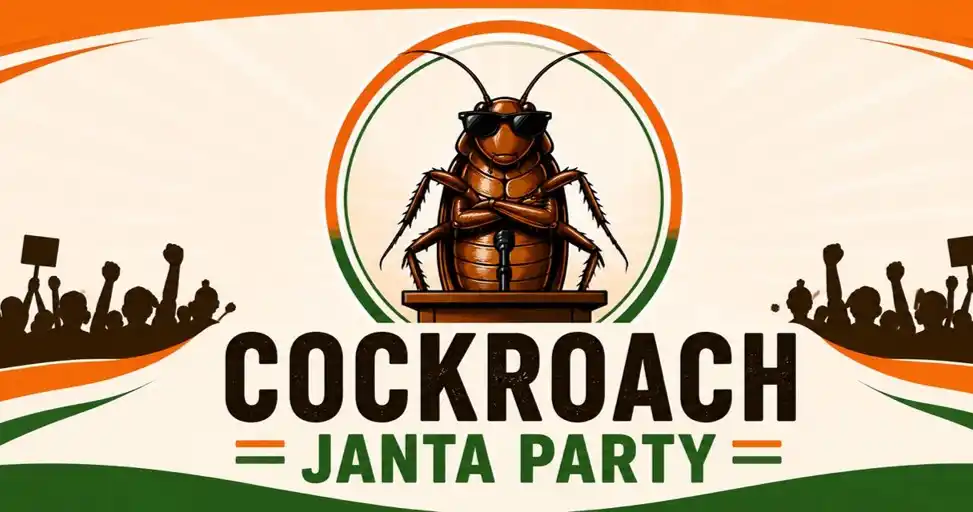
One Remark. One Week. Twenty Million Followers.It started with a judge. It became a movement. And then the government tried to shut it down — which, as anyone who has followed internet culture for five minutes could have predicted, only made it louder.The Cockroach Janta Party, or CJP, is an Indian satirical political movement founded on May 16, 2026 by Abhijeet Dipke, a political communications strategist who formerly worked with the Aam Aadmi Party. Within days of its launch, the fake party had garnered more followers on some social media platforms than India’s main political parties. The CJP’s Instagram account surpassed the BJP’s 8.7 million Instagram followers within four days of launch, reaching 10.9 million by May 21, over 14 million by May 22, and 22.8 million as of May 26.To put that in perspective: the BJP has been around for over 40 years. The CJP has been around for less than two weeks.Where It All Started: A Judge, a Courtroom, and a Word That DetonatedOn May 15, 2026, Chief Justice of India Surya Kant compared some unemployed youth to “cockroaches” and “parasites of society” during a Supreme Court hearing on fake professional credentials, according to The Wire.The context, as the Chief Justice later clarified, was specific. Kant tried to put a lid on the controversy, insisting he hadn’t referred to unemployed youth in general as vermin, just those who get jobs by faking degrees. “What I had specifically criticized were those who have entered professions like the bar with the aid of fake and bogus degrees,” he said.The clarification was accurate. The damage was already done.Gen Z and millennial social media users adopted the moniker as a satirical badge of protest against unemployment and inflation. Because here is the thing about calling India’s unemployed youth cockroaches in 2026: the youth unemployment crisis is not a fringe issue. It is the defining economic anxiety of an entire generation. When you hand that generation a slur and a Wi-Fi connection, you do not get contrition. You get a movement.The Man Who Built the Movement in 24 HoursAbhijeet Dipke, an Indian student studying public relations at Boston University, launched the online party on May 16 — turning the judge’s purported insult into a symbol of youth anger. The pseudo-party describes itself as a “political front of the youth, by the youth, for the youth” and a “Voice of the Lazy and Unemployed.”The party’s website went live on May 16 under the tagline “Voice of the Lazy and Unemployed.” Dipke used artificial intelligence tools like Claude and ChatGPT to design the website and the manifesto. AI-generated images were used to promote the movement across issues.The name “Cockroach Janta Party” is a play on the ruling party, the Bharatiya Janata Party. The founder claims that CJP is not affiliated with any political organisation. That last point matters. This is not Congress in disguise. It is not an AAP operation. It is not an opposition front. It is something that established political commentary in India genuinely does not have a framework for: a purely organic, social media-native, Gen Z-first satirical movement that is angry at everyone.Dipke said: “We have to understand that five years ago nobody was ready to speak up against Modi or the government. The times are changing.”The Manifesto: Satire With Real Demands InsideThe CJP is self-described satire. But its manifesto is not a joke. The Cockroach Janta Party manifesto has five demands: first, no Rajya Sabha seat for any retiring Chief Justice; second, the Chief Election Commissioner to be held accountable under UAPA for deleted voter rolls; third, women’s reservation raised to 55 percent; fourth, time-bound Election Commission action on vote deletion; and fifth, political literacy for India’s youth.In its manifesto, the Cockroach Janta Party said it will cancel the licences of “all media houses owned by Ambani and Adani” — referring to two of India’s richest men, Mukesh Ambani and Gautam Adani, who own prominent television channels and are seen as being close to Modi — “to make way for a truly independent media.”Read that list again. The SIR voter roll deletions that dominated the West Bengal and Tamil Nadu election campaigns. Women’s reservation, which Parliament passed but failed to implement. Judicial accountability. Media independence. Political literacy. These are not troll demands. These are the actual policy grievances of a generation that watched the 2026 elections unfold and concluded that the system was not working for them.The movement has also engaged in offline activities, with volunteers participating in protests and clean-up drives dressed in cockroach costumes. A cockroach cleaning up a city. The metaphor practically writes itself.The Government’s Response: A Masterclass in How Not to Handle SatireHere is where the story pivots from funny to serious.On May 21, 2026, MeitY directed X to withhold the CJP’s @CJP_2029 account under Section 69A of the Information Technology Act, 2000, citing Intelligence Bureau inputs on national security. No public order was issued. The blocking order remains confidential under Rule 16 of the Information Technology Blocking Rules.The IB cited “national security concerns” and a threat to the “sovereignty of India.”Union Minister Sukanta Majumdar alleged that 49 percent of CJP followers are from Pakistan and only 9 percent are from India. However, a screen recording from Dipke shows that over 94 percent of the audience is Indian.The government did not ban the manifesto text directly, but it blocked every platform the manifesto was published on: X withheld under Section 69A on May 21, the Instagram account hacked on May 23, and the .org website blocked by MeitY on May 23. The CJP continues to operate at an alternative domain.By moving to block the account, the government ended up validating the very criticism the satire sought to make. A parody page that might otherwise have remained a passing internet joke suddenly acquired political significance because of official intervention. In trying to suppress ridicule, the authorities amplified it.This is a lesson as old as the internet and apparently still being learned: nothing makes a meme go more
Quad Foreign Ministers’ Meeting 2026: Reinforcing Indo-Pacific Unity Amid Global Turbulence
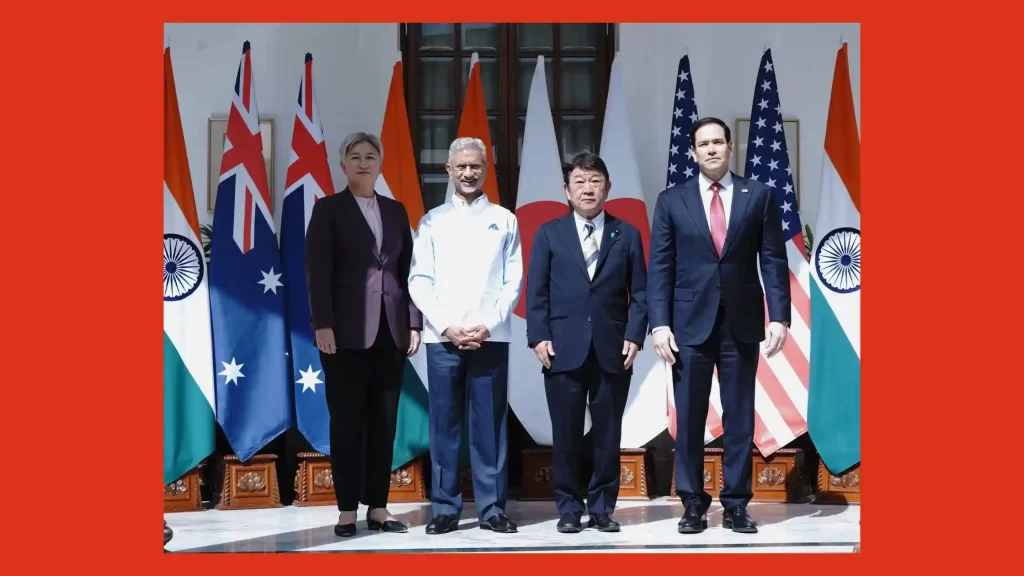
The Quad Foreign Ministers’ Meeting convened in New Delhi on May 26, 2026, bringing together the Foreign Ministers of Australia, India, and Japan, along with U.S. Secretary of State Marco Rubio, for a critical dialogue amid unprecedented global challenges and opportunities. Hosted by India’s External Affairs Minister S. Jaishankar, the third such engagement since President Donald Trump began his tenure reaffirmed the grouping’s continued relevance despite rapid geopolitical developments. The ministers agreed to firm up numerous initiatives spanning maritime security, critical minerals cooperation, energy security, and the first-ever Quad infrastructure project to build a port in Fiji, demonstrating that the Quad remains valid and viable as a cornerstone of Indo-Pacific stability.The meeting took place after a 10-month hiatus, following earlier speculation about the Quad’s continued survival. Before the gathering, analysts debated whether the grouping had become moribund without summit-level engagement, with some comparing its architecture to the Five Eyes intelligence-sharing group and arguing that sub-leader meetings create vital “habits of cooperation” essential for sustaining momentum. The successful conclusion of this four-way ministerial proved these concerns unfounded, as the four nations reaffirmed traditional areas of emphasis while addressing new challenges, including the proliferation of online scam centres in Southeast Asia, repercussions from the West Asia crisis, and rising tensions in the East and South China Seas.A Free and Open Indo-Pacific: Reaffirming Core PrinciplesThe Joint Statement opened with a powerful acknowledgment that the Quad convenes at a time of not only great challenges but also unprecedented opportunities. In the midst of conflicts, geopolitical tensions, and strains on global supply chains, the ministers reaffirmed that peace, stability, and prosperity of the Indo-Pacific hinge on upholding international law and the peaceful resolution of disputes. They committed to defending the rule of law, sovereignty, and territorial integrity while recognizing the immense potential of innovation, emerging technologies, and trusted partnerships to drive economic prosperity across the Indo-Pacific and beyond. The statement strongly opposed any destabilizing or unilateral actions seeking to change the status quo, including by force or coercion, which escalate tensions and undermine regional peace and stability.The ministers affirmed support for a free and open Indo-Pacific that allows countries to develop resilience and strengthen capacity to determine their own paths. Developments in key maritime regions underscored the vulnerability of critical sea lanes and risks posed to uninterrupted commerce flow, with disruptions carrying significant implications for global fuel, food, and fertilizer security as well as seafarer safety. The Quad discussed the West Asia situation, reaffirming support for ongoing diplomatic efforts and hope for lasting peace while reiterating the importance of adhering to UNCLOS regarding navigational rights, freedoms, and safety of global commerce through the Strait of Hormuz and Red Sea.Maritime Security: Three New Initiatives Strengthen Domain AwarenessOn Indo-Pacific maritime security, the Quad agreed on three groundbreaking initiatives, including the Indo-Pacific Maritime Surveillance Collaboration (IPMSC), the Quad Indo-Pacific Partnership for Maritime Domain Awareness (IPMDA), and continuation of the Quad-at-Sea Ship Observer Mission. India operationalized the Indian Ocean Region programme of IPMDA through the Information Fusion Centre – Indian Ocean Region in Gurugram, and partners will work to develop a Common Operational Picture across the Indo-Pacific by drawing upon existing IPMDA efforts. The IPMSC, integrating the latest technological developments, will augment IPMDA by enabling Quad partners to share real-time information and provide enhanced vessel pictures supporting a free and open Indo-Pacific region.Following the success of the first-ever Quad-at-Sea Ship Observer Mission from Palau to Guam in July 2025, India will host the next edition to strengthen interoperability and knowledge-sharing for addressing unlawful maritime activities. The ministers expressed serious concerns about developments in the East China Sea and South China Sea, opposing destabilizing unilateral actions, including force or coercion, threatening regional peace. They expressed grave concern regarding dangerous and coercive actions, including interference with offshore resource development, repeated obstruction of freedom of navigation and overflight, dangerous military aircraft and coast guard maneuvers, unsafe use of water cannons and flares, and ramming or blocking actions in the South China Sea, alongside deep concern about militarization of disputed features.Critical Minerals and Energy Security: Building Resilient Supply ChainsThe Quad announced the Quad Critical Minerals Framework, guiding how partners can leverage economic policy tools and coordinate investment with the private sector to strengthen critical minerals supply chains, including mining, processing, and recycling. The ministers reiterated grave concerns over economic coercion and non-market policies, including arbitrary export restrictions, price manipulation, and disruptions, particularly on critical minerals impacting global supply chains and critical industrial sectors. They underscored the importance of diversified and reliable global supply chains and the need to avoid reliance on any one country, recognizing that economic security is fundamental to Quad partners and the Indo-Pacific region.Recognizing shifts in the global energy landscape, the Quad launched the Quad Initiative on Indo-Pacific Energy Security to cooperate on energy security and resilience. Partners will work together to ensure open, well-functioning, and stable energy markets with resilient and diversified supply chains. Disruptions to global energy product markets and important downstream derivatives like fertilizers fall heavily on the Indo-Pacific region, making maintaining open trade flows in essential goods critical for regional security and prosperity. Following the successful Quad Ports of the Future Partnership Conference hosted by India in October 2025, the Quad countries will work with Fiji’s government to advance port infrastructure and associated activities in the country, marking the first-ever Quad infrastructural project.Humanitarian Assistance and Terrorism: Condemning Attacks, Strengthening ResponseThe Quad unequivocally condemned terrorism in all its forms, including cross-border terrorism and the horrific terrorist attacks perpetrated at Pahalgam in India on April 22, 2025, and Bondi Beach in Australia on December 14, 2025. The ministers called for decisive and sustained international efforts to combat terrorism according to international law, including action against globally proscribed terrorists and terror entities and their proxies, affiliates, sponsors, and financiers. They remain deeply concerned about the proliferation of online scam centres within Southeast Asia linked to transnational crime, including human trafficking, drug trafficking, sexual extortion, illicit financing, and cybercrime, committing to deepening cooperation, particularly in law enforcement and regulatory engagement.The Quad
V.D. Satheesan Sworn In as Kerala’s 13th Chief Minister, Leading Congress-Led UDF to Landslide Victory
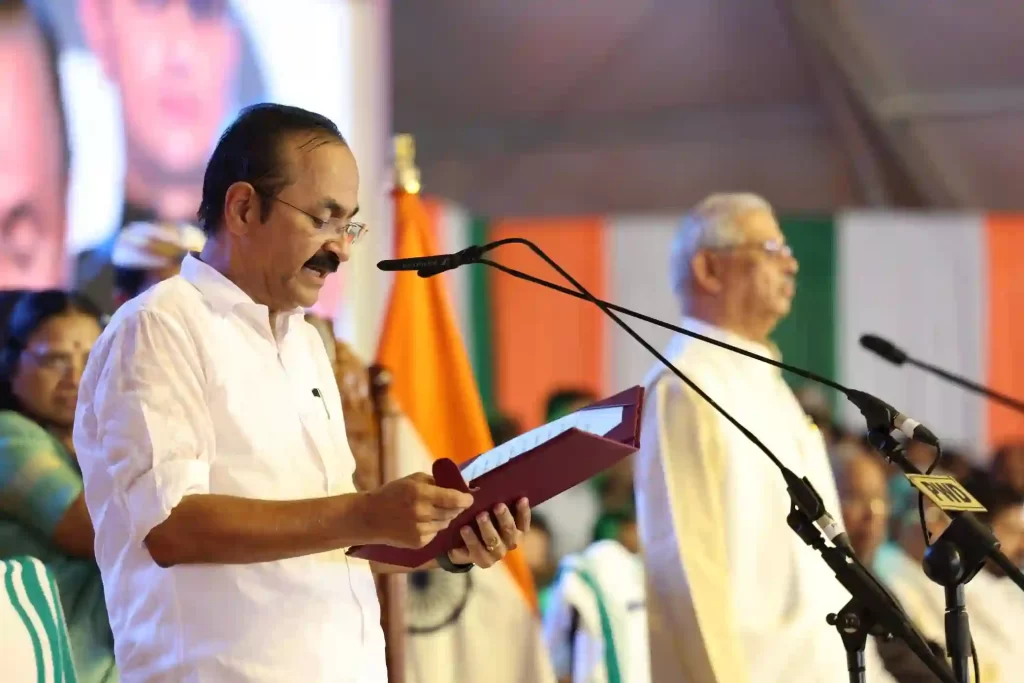
V.D. Satheesan was sworn in as the 13th Chief Minister of Kerala on May 18, 2026, at a grand ceremony held at the packed Central Stadium in Thiruvananthapuram. Governor Rajendra Vishwanath Arlekar administered the oath of office and secrecy to Satheesan and his 20-member council of ministers over a one-hour ceremony that commenced around 10:15 a.m. The Congress-led United Democratic Front (UDF) scripted a landslide victory over the CPI(M)-led Left Democratic Front in the April 9 Assembly elections, winning 102 of the 140 seats in the State Assembly, ending a decade of LDF rule and marking the UDF’s return to power.Satheesan, 61, who served as Leader of the Opposition during 2021–2026, became the first to be sworn in. The ceremony concluded around 11:30 a.m. with the recital of Vande Mataram followed by the National Anthem. Congress president Mallikarjun Kharge, senior leaders Rahul Gandhi and Priyanka Gandhi Vadra, along with several leaders from Congress-ruled states, including Karnataka Chief Minister Siddaramaiah, Telangana Chief Minister Revanth Reddy, and Himachal Pradesh Chief Minister Sukhvinder Singh Sukhu, attended the event. Outgoing Chief Minister Pinarayi Vijayan, who is set to become Kerala’s new Opposition Leader, was also present on stage along with BJP State president Rajeev Chandrasekhar.From Student Politics to Chief Minister: A Five-Decade JourneyV.D. Satheesan was born on May 31, 1964, at Nettoor in Ernakulam district (Maradu Municipality) as the fourth son of Vadassery Damodara Menon and Smt. V. Vilasini Amma. He entered public life through the Kerala Students Union (KSU), the student wing of the Indian National Congress, during his college days and rose to leadership ranks through student politics in Kerala. He served as University Union Councillor at Rajagiri College, Kalamassery, and later as Chairman of the Mahatma Gandhi University Union during 1986–1987. He was also actively associated as a Union Councillor in both Mahatma Gandhi University and the University of Kerala.Satheesan completed his primary education at Nettoor S.V.U.P School and passed SSLC from Panangad High School. He completed his Pre-Degree and Degree studies from Sacred Heart College, Thevara, and later obtained an MSW degree from Rajagiri College, Kalamassery. He earned his LL.B degree from Thiruvananthapuram Law Academy and obtained a Master’s Degree in Law from Government Law College. Alongside political activities, Satheesan practiced as an advocate in the Kerala High Court for nearly ten years and held leadership positions in several trade unions affiliated with the Indian National Trade Union Congress (INTUC).Historic Distinction: Sixth Leader to Become CM Without Prior Ministerial ExperienceSatheesan was first elected to the Kerala Legislative Assembly in 2001 from the Paravur Assembly Constituency and has been continuously re-elected in the Assembly elections held in 2006, 2011, 2016, 2021, and 2026. He holds the distinction of being the sixth political leader in Kerala to assume the office of Chief Minister without previously serving as a Minister in the State Cabinet. He is also the first Congress Chief Minister from Ernakulam district, representing a significant shift in the party’s leadership geography.In the 12th Kerala Legislative Assembly in 2006, he served as the Chief Whip of the Indian National Congress. In 2013, he was appointed as the AICC Secretary in charge of Tamil Nadu, and in 2014, he was appointed Vice President of the Kerala Pradesh Congress Committee (KPCC). Satheesan has emerged as a prominent public leader through his active involvement in student politics, the legal profession, organizational activities, and legislative responsibilities. Through his commitment to democratic values, social justice, and people-oriented development, he has secured a significant place in the public life of Kerala.A Complete Cabinet After 60 Years with Focus on AusteritySatheesan announced that a “complete Cabinet” was being sworn in at one go for the first time in 60 years. The Cabinet includes two women and two ministers from the Scheduled Castes, reflecting a commitment to social representation. The Congress has 12 members in the Cabinet, including the Chief Minister. The Indian Union Muslim League (IUML) has five Ministers, while Kerala Congress (Joseph), Kerala Congress (Jacob), RSP, and CMP have one each. As many as 14 members of the cabinet are new faces, bringing fresh energy to the government.Senior Congress figures in the cabinet include Ramesh Chennithala, K Muraleedharan, and Kerala Pradesh Congress Congress chief Sunny Joseph. The IUML ministers include P.K. Kunhalikutty, K.M. Shaji, P.K. Basheer, N. Shamsudheen, and V.E. Abdul Gafoor. Other ministers include Mons Joseph, Shibu Baby John (Revolutionary Socialist Party), Anoop Jacob (Kerala Congress-Jacob), C.P. John (Communist Marxist Party), A.P. Anil Kumar, P.C. Vishnunadh, Roji M. John, Bindu Krishna, M. Liju, T. Siddique, K.A. Thulasi, and O.J. Janeesh. All except Shibu Baby John and C.P. John took the oath in the name of God, with the two making solemn affirmation of their commitment.In keeping with austerity measures for the state, Satheesan has ordered that there be no convoys, security vehicles, or ambulances. He has also said he would not require a new vehicle, setting an example of frugal governance. The portfolios of the Chief Minister and Ministers were made public later on Monday, with Thiruvanchoor Radhakrishnan announced as Speaker and Shanimol Usman as Deputy Speaker.Building Puthuyuga Keralam: Vision for a New EraSatheesan stated that the UDF government was committed to working towards building a “Puthuyuga Keralam” (New Era Kerala). Following the declaration of election results on May 4, the Congress party took ten days to pick Satheesan over Ramesh Chennithala and AICC General Secretary K.C. Venugopal as the Congress Legislative Party leader and CM-designate. After that, the entire focus shifted to Cabinet formation, with discussions stretching into Sunday afternoon before Satheesan presented the list of ministers to the Governor on May 17 evening.The swearing-in ceremony witnessed huge crowds gathering at Central Stadium since early morning. Extensive arrangements, including traffic regulations, were in place across the State capital. Among those present were AICC General Secretaries K.C. Venugopal and Deepa Dasmunshi, CPI State secretary Binoy Viswam, and numerous other dignitaries. Rahul Gandhi greeted the new Chief Minister with a warm hug after Satheesan repeated the oath and signed the oath books.Satheesan’s Rise Reshapes Kerala Political
N. Rangaswamy: The Man Who Came Back Five Times
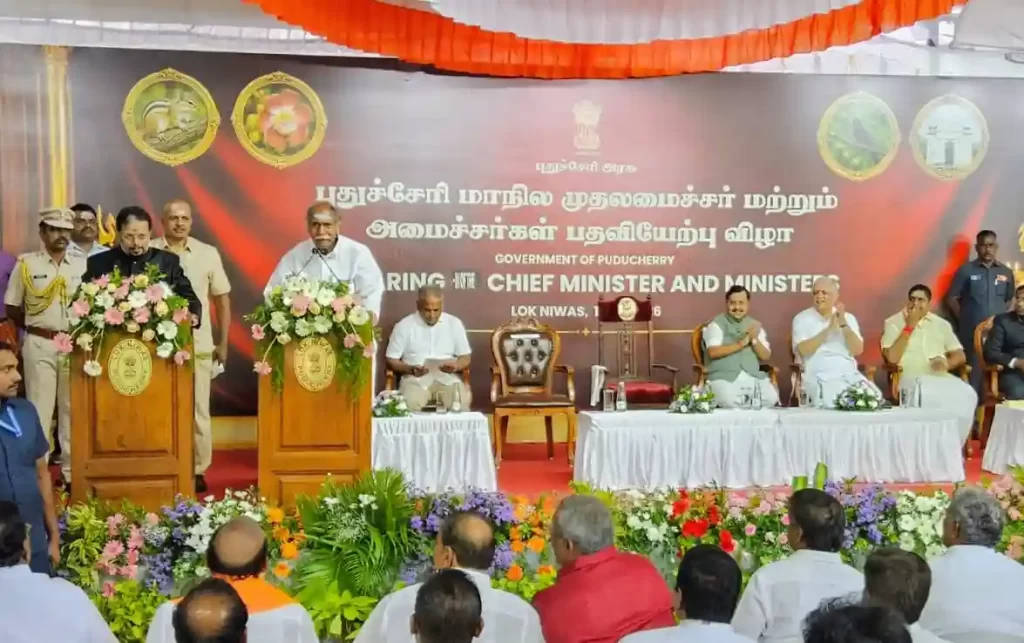
IntroductionIn a country where political careers are won and lost in single terms, N. Rangaswamy has done something that no other leader in Puducherry’s history has managed, and very few across India can claim. At 75 years old, he has been sworn in as Chief Minister of the Union Territory for the fifth time.Following the victory of the AINRC-led NDA combine in the recent assembly elections, N. Rangaswamy was sworn in as the Chief Minister of Puducherry for a record fifth term at Lok Nivas on May 13, 2026. The swearing-in ceremony was held at the Puducherry Lok Bhavan, where Lieutenant Governor K. Kailasanathan administered the oath of office and secrecy to Rangaswamy and the newly inducted ministers.PM Modi, in his message, said: “Congratulations to Thiru N. Rangaswamy on taking oath as Puducherry’s Chief Minister. He has made a mark as an experienced and effective administrator who has strengthened Puducherry’s growth journey. Looking forward to working with him for the people’s well-being.”Five terms. Two different parties. Three different political eras. One relentlessly resilient man. The story of N. Rangaswamy is, in many ways, the story of Puducherry itself.The Beginning: Born in Puducherry, Rooted in Its PeopleNatesan Krishnasamy Gounder Rangaswamy was born on 4 August 1950 in Puducherry to parents Natesan Krishnasamy and Panchali. He completed his Bachelor of Commerce from Tagore Arts College and Bachelor of Laws from Dr. Ambedkar Government Law College.He is a trained lawyer who never lost the habits of the courtroom: patience, precision, and the ability to read a room. Those qualities would serve him far better in the chamber of the Puducherry assembly than in any court.Rangaswamy began his political journey with the Congress, winning from Thattanchavady in 1991. He served as a cabinet minister for nearly a decade before becoming Chief Minister in 2001. He was elected again from the same constituency during the 1996, 2001, and 2006 assembly elections. In 1996, Rangaswamy was appointed as Co-operative Minister. In 2000, he became Education Minister.Those ministerial years were not glamorous. Education and cooperative affairs are not the portfolios that attract headlines. They are, however, the portfolios that build grassroots credibility. Rangaswamy used them to do exactly that, cultivating the kind of direct public relationship — house visits, welfare distributions, personal accessibility — that would sustain him through every political crisis that followed.The First Two Terms: Congress and the Dawn of Welfare PoliticsDuring his long stint as Chief Minister from 2001, Rangaswamy brought in developmental reforms in the tiny Union Territory. Housing subsidy for hut dwellers, free breakfast for school children, financial assistance for students in professional colleges, and a host of other infrastructural reforms consolidated his popularity.His approach was simple and had a clear logic: Puducherry is small. What it lacks in size, it compensates with the intensity of its political engagement. Welfare programmes that deliver tangible benefits directly and visibly to voters work here with a directness that is harder to achieve in larger states. Rangaswamy understood this instinctively and governed accordingly.He served as Chief Minister from 2001 to 2006 and again from 2006 to 2008 as a Congress leader. The back-to-back terms were a sign of confidence from both the Congress leadership and the Puducherry electorate. But the Congress gave, and the Congress could also take away.The Fall and the Reinvention: From Congress to AINRCRangaswamy stepped down as Chief Minister in August 2008 after internal issues within the party. Citing irreconcilable differences, he formed his own party, the AINRC.The departure from Congress was not merely a political move. It was, by every account of those who witnessed it, a deeply personal rupture. Rangaswamy had given the Congress party in Puducherry his best years, built its base, and won it elections. To be pushed out by internal maneuvering — by colleagues within his own party rather than by voters — was a humiliation that would have broken less resilient politicians.Instead, it produced something remarkable. He formed his own party, AINRC, and on 7 February 2011 launched the All India N.R. Congress as a breakaway from the Indian National Congress.The audacity of the move should not be understated. Puducherry’s political landscape at the time was dominated by the Congress and the DMK-aligned AIADMK. Breaking away from the Congress in a territory where it had deep roots, building a new party from scratch, and then winning an election within months — this is what political resilience looks like in practice.In the assembly elections held in April 2011, AINRC contested the elections in an alliance with the Jayalalithaa-led AIADMK and won 15 out of the 17 seats it contested. AINRC formed the government independently, with the support of an Independent, which enabled it to get a majority in the 30-seat assembly. Rangaswamy won from the Kadirkamam Assembly constituency and was sworn in as Chief Minister of Puducherry for the third time on 16 May 2011.The Setback of 2016 and the Road BackThe 2016 election was the low point of Rangaswamy’s career. AINRC, no longer in alliance with the AIADMK, contested alone. Though Rangaswamy won from the Indira Nagar Assembly constituency, the party won only eight seats in the assembly. Hence, Rangaswamy resigned as Chief Minister on 6 June 2016. He later served as the leader of the opposition in the Puducherry assembly from August 2016 to February 2021.Five years in opposition. For a man who had been Chief Minister three times, the leader of the opposition bench is a dramatically different vantage point. He used those years the way he had always used difficult periods — to rebuild the ground-level network, to remain accessible, and to wait.The wait ended in dramatic fashion. After the Puducherry government led by V. Narayanasamy lost a trust vote in the assembly in February 2021, the 2021 legislative assembly elections were held in April 2021. AINRC became part of the National Democratic Alliance and allied with the Bharatiya Janata Party and the AIADMK. The NDA won 16 seats, with AINRC winning 10 of the 16 seats it contested.Rangaswamy was sworn in
BRICS Foreign Ministers’ Meeting, New Delhi: A Bloc Divided by the War It Could Not Name
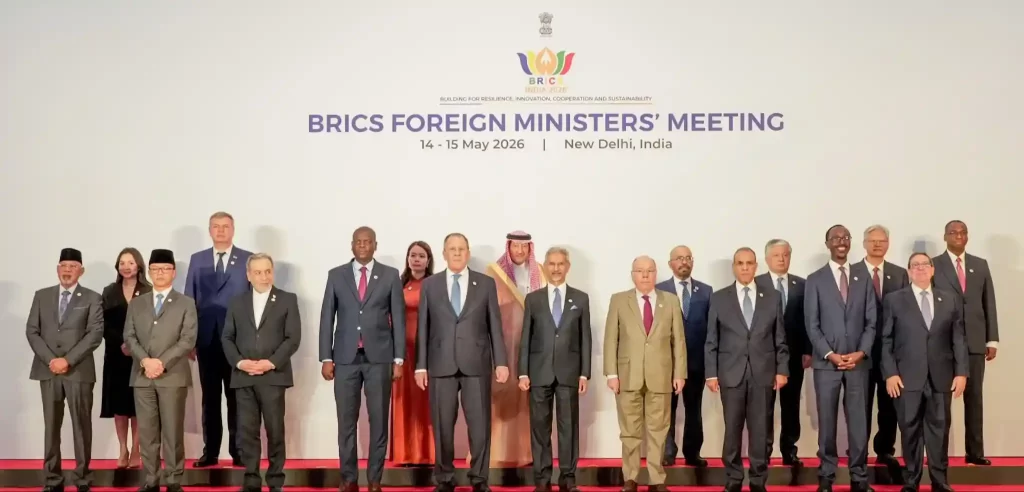
IntroductionWhen India’s External Affairs Minister S. Jaishankar took the chair at Bharat Mandapam in New Delhi, he was presiding over the most consequential BRICS Foreign Ministers’ Meeting since the bloc’s expansion. Eleven member states sat around the table. The agenda was India’s: global institutional reform, South-South cooperation, economic resilience, and the priorities of the developing world. The problem that arrived uninvited was the Iran war.Top diplomats from BRICS nations, including rivals Iran and the United Arab Emirates, failed to issue a joint statement after a two-day meeting in New Delhi, exposing divisions within the bloc over the war in Iran. Host nation India instead released a Chair’s Statement and Outcome Document, saying there were “differing views among some members” as regards the situation in the West Asia and Middle East region.The inability to produce a joint declaration — the standard diplomatic deliverable of any ministerial meeting — was not a procedural failure. It was a substantive one, and it went to the heart of what BRICS is, what it has become after its 2024-2025 expansion, and whether it can function as a coherent voice for the Global South when its own members are on opposite sides of an active war.The Meeting: Who Was There and What Was PlannedThe meeting was held at Bharat Mandapam under India’s 2026 chairship. It followed a preparatory ministerial held on September 26, 2025, on the sidelines of UNGA 80, where India as the incoming chair had set out its agenda.Those in attendance included Indonesia’s Foreign Minister Sugiono, Iran’s Foreign Minister Abbas Araghchi, South Africa’s Foreign Minister Ronald Lamola, Russia’s Foreign Minister Sergei Lavrov, India’s External Affairs Minister S. Jaishankar, Brazil’s Foreign Minister Mauro Vieira, Egypt’s Foreign Minister Badr Abdelatty, Ethiopia’s Foreign Minister Gedion Timothewos, China’s Ambassador to India Xu Feihong, and UAE’s Minister of State for Foreign Affairs Khalifa bin Shaheen Al Marar. Uganda’s Foreign Minister Odondo Jeje Abubakha was also present as a representative of the bloc’s outreach partners.India’s intended agenda was carefully constructed to avoid precisely the kind of confrontation that ultimately occurred. India’s chairship theme — Building for Resilience, Innovation, Cooperation and Sustainability — framed the meeting. Ministers reaffirmed BRICS’s three pillars: political and security cooperation, economic and financial cooperation, and people-to-people exchanges. They repeated the bloc’s commitment to openness, equality, and consensus.What the Chair’s Statement CoveredDespite the headline failure to produce a joint declaration, the Chair’s Statement and Outcome Document ran to 63 paragraphs covering a wide range of issues where agreement was possible.The Chair’s Statement gave most space to reform of global institutions: the United Nations and its Security Council, the IMF, the World Bank, and the WTO. Members argued that present structures do not reflect contemporary realities and favour developed Western powers. The statement reiterated support for a multipolar order and for greater representation of Africa, Asia, and Latin America in global decision-making.On economic matters, the ministers called for resilient supply chains, fair trade, reform of the global financial architecture, expansion of local-currency trade, and stronger South-South cooperation. The bloc opposed unilateral sanctions, protectionism, and trade barriers, and backed a rules-based multilateral trading system centred on the WTO.The document also covered cooperation on artificial intelligence, digital infrastructure, cybersecurity, climate change, energy transition, health security, food security, and innovation-led growth. Initiatives endorsed included the BRICS Grain Exchange, cross-border payment systems, and a stronger role for the New Development Bank and the Contingent Reserve Arrangement.On geopolitics, the ministers discussed West Asia, Gaza, Lebanon, Sudan, Syria, and Yemen, but could not agree on language for the Iran war. The text instead set out general principles: diplomacy, humanitarian access, ceasefires, protection of civilians, and respect for international law. The ministers strongly condemned terrorism, including the Pahalgam attack of April 22, 2025, and called for closer counter-terrorism cooperation.On Palestine specifically, the Chair’s Statement had four paragraphs on Palestine, including one recognising a two-state solution with East Jerusalem as the capital of an independent Palestine. The ministers recalled that the Gaza Strip is an inseparable part of the Occupied Palestinian Territory and reaffirmed the right of the Palestinian people to self-determination, including the right to an independent State of Palestine.The Fault Line: Iran vs. the UAE Inside the Same BlocThe meeting’s collapse into a Chair’s Statement rather than a joint declaration had a specific cause, a specific pair of actors, and a specific set of paragraphs that could not be reconciled.The central dispute was over how BRICS should describe the war involving Iran, the US, and Israel. Iran wanted the grouping to condemn US-Israeli attacks on it, while accusing the UAE — a fellow BRICS member and US ally — of direct involvement in military operations against Iran.On the first day of talks, Iranian Foreign Minister Abbas Araghchi called upon BRICS member states and the international community to explicitly condemn violations of international law by the United States and Israel, including their illegal aggression against Iran, to prevent the politicisation of international institutions, and to take concrete action to halt warmongering and bring an end to the impunity of those who violated the UN Charter.Araghchi explicitly accused the UAE of being “directly involved in the aggression against my country.” Tehran views the UAE and Saudi Arabia not as neutral neighbours but as “hostile bases” because they host critical US military infrastructure and failed to condemn the initial US-Israeli strikes on Iran.The UAE’s response was unequivocal. UAE’s Minister of State for Foreign Affairs Khalifa bin Shaheen Al Marar categorically rejected the allegations levelled by Iran and condemned what he termed “unjustified attacks” on civilian infrastructure. He defended UAE sovereignty against Iran’s charges in his national statement. “Despite numerous international and regional resolutions and condemnations, Iran has continued its terrorist attacks against the UAE and other countries in the region, in clear disregard of the international consensus,” he said.It is learnt that Iran had an issue specifically with paragraphs 26 and 29 of the proposed joint statement — the paragraphs covering Palestine and the Red Sea respectively. However, Araghchi, without naming the UAE, blamed a country
Himanta Biswa Sarma Sworn In as Assam Chief Minister for Second Term
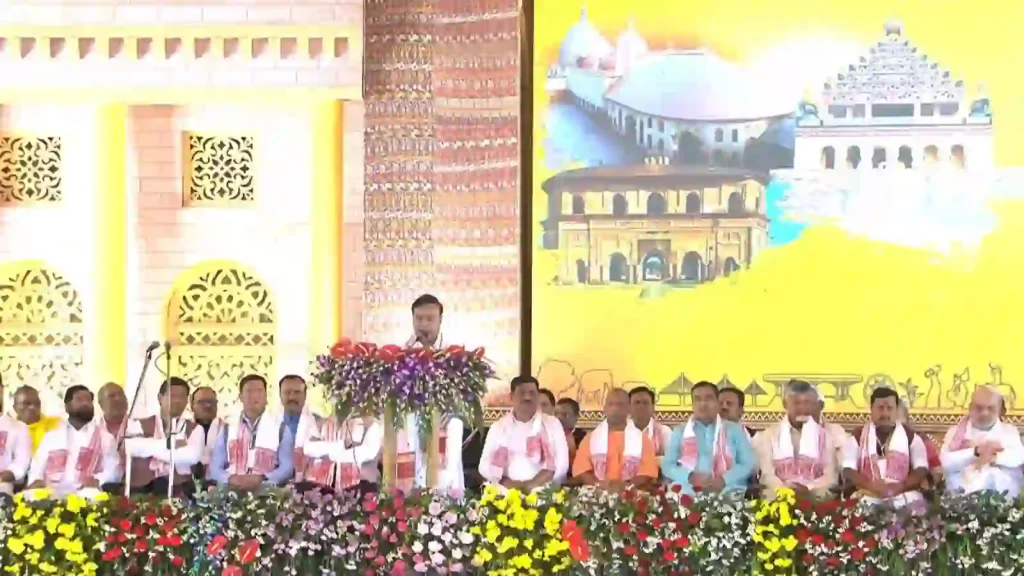
Himanta Biswa Sarma has taken oath as the Chief Minister of Assam for a second consecutive term. The swearing-in ceremony took place on May 12, 2026, in Guwahati. A large crowd gathered from across the state to witness the event. Prime Minister Narendra Modi, Union Home Minister Amit Shah, and BJP Chief Ministers from several states attended the ceremony. Sarma was elected as the leader of the BJP-led National Democratic Alliance (NDA) legislature party on May 10. Governor Lakshman Prasad Acharya administered the oath of office and secrecy. Along with Sarma, four new ministers were also sworn in. Two belong to the BJP, and two come from local alliance partners.The BJP-led NDA won a decisive victory in the Assam Assembly elections held on April 9. The party secured 82 seats out of 126 in the assembly. Its allies, the Asom Gana Parishad (AGP) and the Bodoland People’s Front (BPF), won 10 seats each. The NDA total reached 102 seats, giving it a two-thirds majority. This marks the third consecutive term for the BJP in Assam. The victory consolidates Sarma’s position as one of the most powerful leaders in India’s Northeast.From Congress to BJP: A Political Journey That Transformed AssamHimanta Biswa Sarma was born into a middle-class family in Assam. He started his political career with the Indian National Congress. He served as a minister in the Congress government led by former Chief Minister Tarun Gogoi. Gogoi’s son, Gaurav Gogoi, is now the main opposition leader in Assam. Gaurav lost the recent election in the Jorhat seat. Sarma has held the Jalukbari constituency seat near Guwahati since 2001. He won it despite changing political parties.Sarma’s move to the BJP in 2015 became a turning point for the party in the Northeast. He brought several loyal legislators with him. This defection weakened the Congress significantly. Many political observers call it the moment the BJP truly entered Assam politics. Before 2015, the BJP’s vote share in Assam was less than 12 percent. Today, it has grown to 38 percent. The BJP came to power in 2016 for the first time and has kept it since.During Sarbananda Sonowal’s tenure as Chief Minister from 2016, Sarma worked as a back-end organizer. He fueled the BJP’s expansion drive across the region. He helped build alliances with local groups in Arunachal Pradesh, Manipur, and Tripura. Sarma became the chief minister in 2021. His re-election in 2026 shows he has strengthened his position within the party. Colleagues credit his aggressive campaigns, welfare programs, and tight organizational control for his success.Sarma’s Winning Formula: Identity, Outreach, and DevelopmentPolitical scientists say Sarma’s strategy works on three levels. Professor Akhil Ranjan Dutta of Gauhati University explains these clearly. The first aspect is identity. The BJP brought indigenous communities closer to a broader Hindu identity. At the same time, the party portrayed some groups as outsiders. This approach resonated with many voters in Assam.The second aspect is targeted outreach. The BJP under Sarma engaged women, young people, farmers, and small business owners. Schemes and messaging were aimed directly at their needs. The Orunodoi program became the most popular initiative. It provides financial assistance to women from low-income households. Millions of women received monthly payments. This scheme created a direct link between the government and rural families.The third aspect is development. Sarma focused heavily on roads, bridges, and infrastructure. Remote villages got better connectivity. Schools and hospitals received upgrades. The government emphasized digital services and ease of living. Supporters call him an effective administrator who delivers results. They say his leadership brought stability and progress to Assam after decades of unrest.Controversies Around Migration, Identity, and Minority PoliciesCritics argue that Sarma’s rise came with divisive political messaging. Issues of migration and identity have dominated Assam politics for decades. Immigration from neighboring Bangladesh remains highly sensitive. Debates over language, land, and identity shape every election. Opposition parties and rights groups accuse the BJP government of targeting minorities. Bengali-speaking Muslims face particular criticism under Sarma’s administration.Sarma’s policies linked to Islamic schools sparked intense debate. The government announced that all government-run madrassas would be shut down. Supporters say this modernizes education. Critics call it an attack on Muslim culture. Policies on child marriage also drew attention. The government tightened rules to prevent early marriages. Many see this as social reform. Others view it as interference in religious practices.Earlier this year, an AI-generated video created controversy. The state BJP unit shared a video that appeared to show Sarma firing at images of political opponents wearing Muslim skull caps. The video was later deleted. Opposition parties and civil society groups condemned it. The Congress asked the judiciary to take action. Sarma and BJP leaders reject accusations of targeting minorities. They say their policies protect Assamese culture and address illegal immigration.Key Achievements and Popular Welfare SchemesThe Orunodoi scheme remains Sarma’s most beloved achievement. It provides direct cash transfer to women in poor households. Over 2.5 million families receive monthly support. The program empowers women financially. It reduces dependency on men. Rural women say the money helps buy food, medicine, and school supplies.Infrastructure development has improved significantly. New bridges connected remote villages. Roads reached areas that lacked motorable access for decades. The PMGSY scheme was expanded under Sarma’s leadership. Healthcare facilities improved in the districts. Mobile health units visit remote blocks. Education saw upgrades, too. Digital classrooms were introduced in government schools.Scheme implementation focused on transparency. Direct benefit transfers reduced corruption. Middlemen could not siphon funds. Technology helped track delivery. Sarma’s government used data to identify beneficiaries. This approach increased efficiency. People saw money reaching their accounts quickly. The administration promoted itself as technology-driven and result-oriented.Challenges Ahead: Governance, Unity, and National RoleSarma faces several challenges in his second term. He must balance development with social harmony. The state remains polarized along identity lines. Rebuilding trust with minority communities requires effort. The government must address unemployment among youth. Education-quality gaps persist in rural areas. Healthcare infrastructure needs further strengthening.Environmental concerns also matter. Assam faces floods almost every year. Climate change increases rainfall intensity.
PM Modi Launches Five-Nation Tour to Secure Energy, Tech Ties Amid Iran War
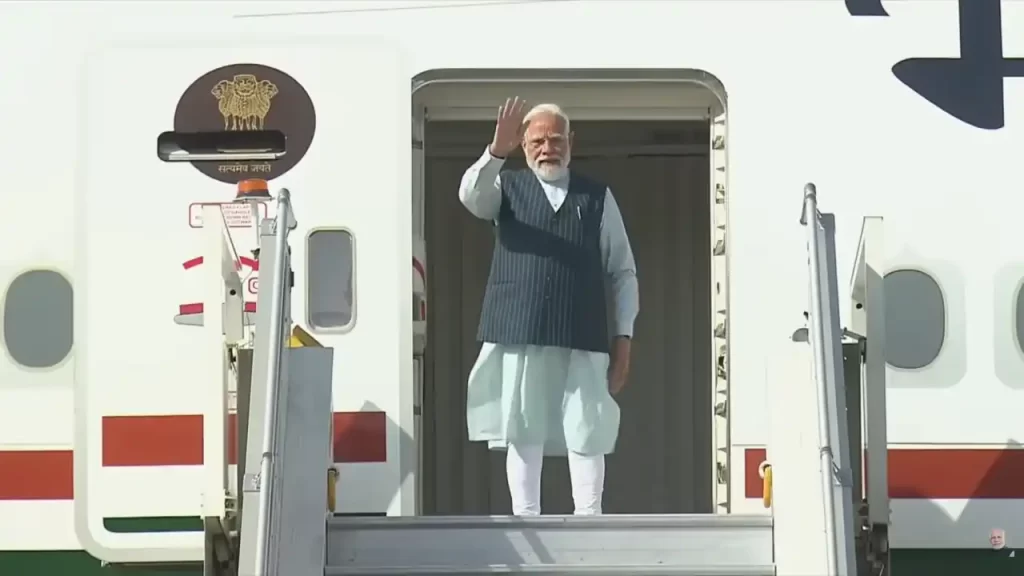
Prime Minister Narendra Modi has begun a massive five-nation tour starting in the United Arab Emirates (UAE). The trip runs from May 15 to May 20, 2026. It includes visits to the UAE, the Netherlands, Sweden, Norway, and Italy. The Prime Minister travels at a critical time when the ongoing war between the US and Iran has disrupted global shipping routes. Tensions around the Strait of Hormuz have caused oil prices to rise. This tour aims to secure India’s energy supply and strengthen technology partnerships. The visit comes right after India and the European Union signed a historic free trade agreement. Modi calls this deal the “mother of all deals.”The journey highlights India’s effort to build strong economic ties while managing global instability. Experts say diplomacy can reduce market panic, but oil prices will stay high until the war ends. Until then, India must focus on energy security and protecting its economy from rising costs.Visit to UAE: Fortifying Energy and Strategic TiesPM Modi landed in the UAE on May 15 to meet President Sheikh Mohamed bin Zayed Al Nahyan. Since 2014, Modi has visited the UAE seven times. President Sheikh Mohamed has visited India five times. Their relationship has only grown stronger over the years. The UAE has remained one of India’s most reliable energy partners even during this Gulf crisis. Long-term oil and gas supply agreements protect India’s energy security.Two important Memorandums of Understanding (MoUs) are likely to be signed during this visit. One deals with Liquefied Petroleum Gas (LPG). The other focuses on Strategic Petroleum Reserves. These deals will help India store more fuel for emergencies. Bilateral trade between India and the UAE crossed $101.25 billion in the last financial year. Both nations aim to double this trade to $200 billion by 2032. The UAE is India’s seventh-largest investor, with over $25 billion in cumulative investment.The UAE also hosts the largest group of Indian expatriates in the world. Over 4.5 million Indians live there. They form the backbone of the UAE economy. The leaders will discuss their welfare and safety. Remittances from these workers help India’s foreign exchange reserves. A Local Currency Settlement system allows trade in Indian Rupees and UAE Dirhams. This reduces dependence on the US dollar.Netherlands: Chip Deals and Water TechnologyThe Prime Minister arrived in the Netherlands from May 15 to 17. This is only his second visit since 2017. The partnership focuses on “innovation meets scale.” Dutch technology combines with India’s massive market size. Areas like semiconductors, water management, hydrogen, and maritime tech are key.A major business highlight is the agreement between Tata Electronics and ASML Netherlands. They will sign a deal to equip a semiconductor fabrication plant in Dholera, Gujarat. This boosts India’s chip-making capabilities. PM Modi and the Dutch Prime Minister visited the Afsluitdijk Dam together. This site shows cooperation in clean energy and sustainable fisheries. The Netherlands is India’s largest trading partner in Europe. Trade reached $27.8 billion in FY 2024-25. It is also India’s fourth-largest investor.The PM addressed the Indian community of over 90,000 NRIs. The visit also reached out to over 200,000 Surinami Hindustanis, the largest Indian-origin group in mainland Europe. Both nations are streamlining migration and mobility. Tourism between the two countries is set to grow.Sweden: Defense, AI, and Strategically De-risking from ChinaModi visited Sweden after an eight-year gap. He last went there in April 2018 for the first India-Nordic Summit. Sweden invests over 3 percent of its GDP in research and development. It ranks among the top innovators in Europe. Sweden has taken a firm stance to reduce its reliance on China. They removed Chinese vendors from their telecom networks. This makes India a key strategic partner.Bilateral trade reached $7.75 billion in 2025. Over 280 Swedish companies work in India. A major project is the Saab manufacturing plant in Jhajjar. Saab is building its first Carl-Gustaf weapon plant outside Sweden here. This is India’s first 100 percent FDI-driven defense project. Sweden also holds large critical mineral deposits. This helps India secure supply chains for electric vehicles and defense electronics.A new Statement of Intent created the Sweden-India Technology and AI Corridor (SITAC). It covers 6G, Artificial Intelligence, quantum computing, and life sciences. Over 80 Swedish companies attended the AI Impact Summit 2026. The Maharashtra government signed an MoU for electric boat investment worth Rs 1,990 crore.Norway: First Solo Visit in 43 Years and Arctic TechThis trip marks the first standalone visit by an Indian Prime Minister to Norway in 43 years. Modi attended the third India-Nordic Summit in Oslo. This summit places India in a high tier of Nordic engagement, joining only the United States. The India-EFTA TEPA agreement is now in force. It promises $100 billion in investment and one million jobs over 15 years.Norway’s sovereign wealth fund, the world’s largest at $2 trillion, has invested nearly $30 billion in India. Indian shipyards now hold 11 percent of Norwegian ship orders. Cochin Shipyard is building eco-friendly vessels for Norway. An MoU between GRSE and Kongsberg Maritime will deliver India’s first indigenous Polar Research Vessel.ISRO antennas at Svalbard became operational in 2026. They support India’s Arctic research. Norwegian tunneling technology helps the Char Dham railway project. Clean energy cooperation will diversify India’s energy mix. Norway also sees opportunities for Indian talent due to its aging population.Italy: Strategic Partnership and Submarine CablesPM Modi travels to Italy from May 19 to 21. He meets Prime Minister Giorgia Meloni to reaffirm their strategic partnership. The visit follows the Joint Strategic Plan of Action 2025-29. Italy views India as a major power and an indispensable partner.Italy champions the India-Middle East-Europe Economic Corridor (IMEEC). A new submarine cable, Sparkle-Airtel Blue-Raman, connects Genoa to India. This secures supply chains and boosts energy security. Bilateral trade reached $16.77 billion in 2025. The target is 20 billion euros by 2029. Tata Motors acquired the Iveco Group for 3.8 billion euros. This is the largest Indian investment in Italy. Italy opened a SIMEST office in Delhi to support SMEs.Energy Crisis and Global ImpactThe Iran war has caused
PM Modi Celebrates Nari Shakti at National Sammelan in Delhi
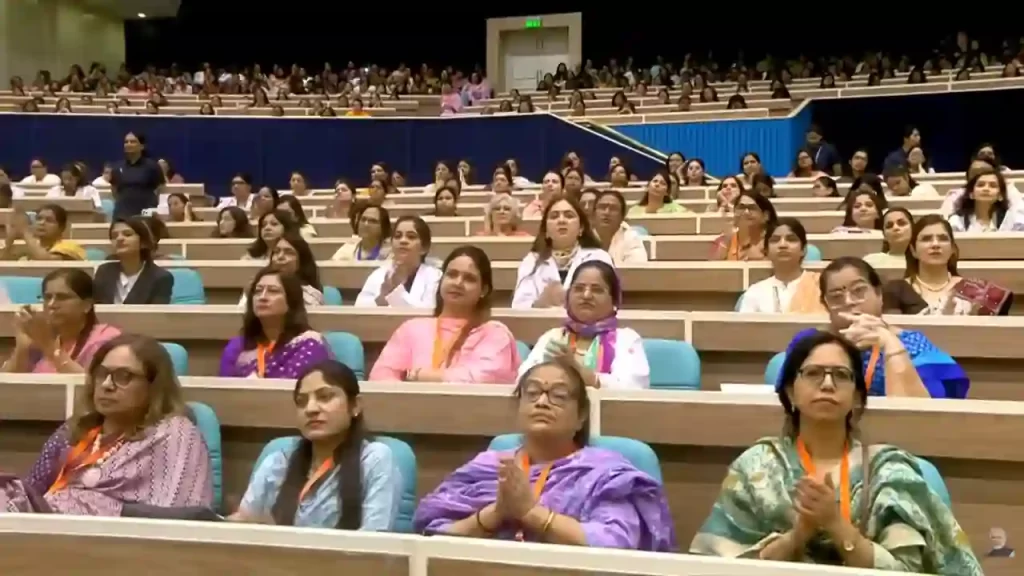
Prime Minister Narendra Modi addressed a large gathering of women achievers in New Delhi. The event, called Nari Shakti Vandan Sammelan, took place at Vigyan Bhawan on April 13, 2026. He spoke at around 11 AM to honor India’s women’s power, known as Nari Shakti. The program brought together successful women from many fields. These included government, science, sports, business, media, social work, arts, and education. The Sammelan showed India’s strong push for women-led growth as part of the Viksit Bharat 2047 vision.The Prime Minister called the day historic. It came just before a special Parliament session on April 16, 2026. That session focused on rolling out the Nari Shakti Vandan Adhiniyam. Parliament passed this law in September 2023. It reserves one-third of seats for women in the Lok Sabha and state assemblies. PM Modi stressed that all parties agreed to implement it by 2029 at the latest. He urged women to stay active and talk to their MPs about their hopes. This law ends decades of waiting for equal say in law-making.Event Highlights Women’s Rise from Panchayat to ParliamentThe Sammelan gathered top women leaders and everyday heroes. They shared stories of breaking barriers. PM Modi praised their hard work, courage, and confidence. He said India’s Nari Shakti has reached new heights. Now, the nation must open more doors for them. The event linked local wins to national goals. Over 14 lakh women lead panchayats today. In 21 states, nearly half of panchayat seats go to women. Their work surprises global experts and boosts India’s image.Women in power bring fresh views, said the PM. They focus on water, health, schools, and food. The Jal Jeevan Mission succeeds because panchayat women push it. These leaders have years of experience. The new law gives them a path to bigger roles. The journey from village councils to Parliament will get easier.Government Schemes Support Women at Every Life StagePM Modi listed many programs his government has started since 2014. They cover women from birth to old age. Beti Bachao Beti Padhao fights female foeticide. Mothers get Rs 5,000 under the Matru Vandan Yojana for good nutrition. Sukanya Samriddhi Yojana saves for girls’ education with high interest.Kids get Mission Indradhanush vaccines on time. Swachh Bharat builds toilets. Nearly free sanitary pads help teens. Khel India funds sports. Sainik Schools and NDA now welcome girls. Adults gain from Ujjwala’s gas connections. Har Ghar Nal Se Jal brings water home. Free rations ensure food. Ayushman Bharat gives Rs 5 lakh health cover. Jan Aushadhi cuts medicine costs by 80 percent.Homes under PM Awas Yojana register in women’s names first. Over 3 crore women own houses now. This makes them strong financially. Jan Dhan opened bank accounts for 32 crore women. Mudra loans go 60 percent to women. Startups list women directors in 45 percent of cases. Maternity leave lasts 26 weeks. Drone Didis teaches farmers with tech. Ten crore women join self-help groups. Three crore are Lakhpati Didis, earning lakhs yearly. They promote Vocal for Local.Women Break into Male-Dominated FieldsIndia leads the world with the highest share of women pilots. Daughters fly fighter jets. PhD enrollments for women doubled since 2014. Half of higher education spots go to women. In math and science, girls make up 43 percent. PM Modi said old mindsets are changing fast.Safety gets top focus, too. Fast-track courts speed justice. Bharatiya Nyaya Sanhita protects women. File e-FIR or Zero-FIR anywhere. Record statements with audio-video. The government acts on women’s dreams.PM’s Call to Action for All WomenThe Prime Minister paid tribute to the Jallianwala Bagh martyrs on Baisakhi. He tied the event to social justice. India wants real equality, not just words. Women from the freedom fights to today’s leaders have built the nation. The President and Finance Minister show women’s mark.PM Modi appealed to all women. Take this message to every village. Use meetings and social media. Help every woman know her power. Dream big for assemblies and Parliament. He promised the nation stands with mothers, sisters, and daughters.Bigger Picture: Women-Led Development for Viksit BharatThe Sammelan fits India’s big plan. Viksit Bharat 2047 means a developed India by 2047. Women lead it. From panchayats to Parliament, their voice grows. The law strengthens democracy. It ensures decisions reflect half the population.Similar events happened elsewhere. In Mumbai, actor Raveena Tandon was honored. Maharashtra CM Devendra Fadnavis praised women from teaching, music, films, and fashion. They back the quick rollout of the Act. Rouble Nagi, Vaishali Samant, Prajakta Mali, and Archana Kochhar joined.The Sammelan builds excitement nationwide. Women voice hopes for Parliament seats. A positive wave spreads. PM Modi wants dialogue and teamwork. This honors Parliament and empowers Nari Shakti.India nears a landmark choice for women. The Sammelan lights the path. It celebrates past wins and future roles. Nari Shakti will shape a strong, fair India.Video: @YT/NaMo
India’s Women’s Reservation Bill: A 30-Year Journey from Parliament’s Margins to Its Centre
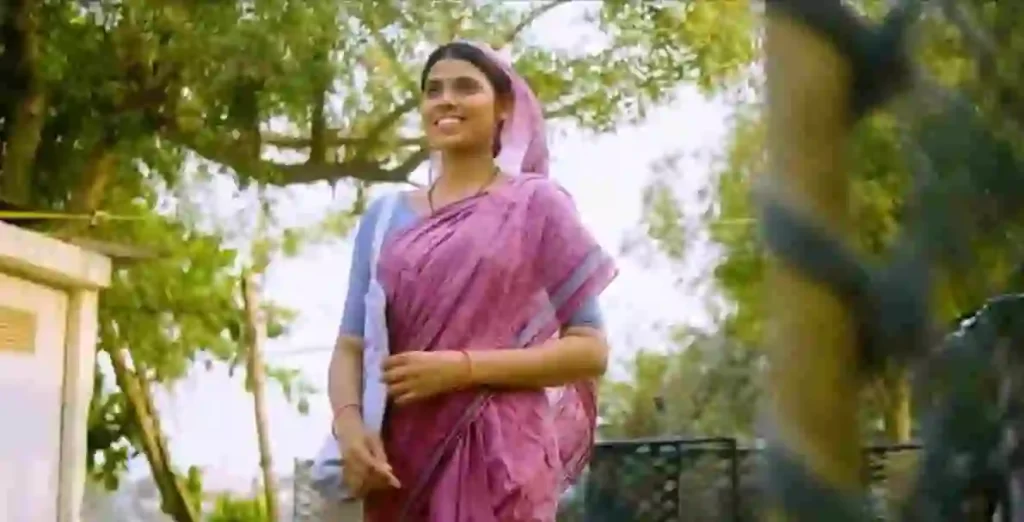
IntroductionFew pieces of legislation in India’s post-independence history have travelled as far, fallen as many times, and returned as persistently as the Women’s Reservation Bill. First introduced in Parliament in 1996, the bill seeking to reserve one-third of seats in India’s legislature for women spent nearly three decades being introduced, disrupted, shelved, lapsed, revived, and deferred — a legislative saga that became as much about India’s political fault lines as it was about gender equality.In September 2023, the bill finally crossed its highest hurdle when it was passed by both houses of Parliament and signed into law by President Droupadi Murmu, becoming the Constitution (One Hundred and Sixth Amendment) Act, 2023, officially named the Nari Shakti Vandan Adhiniyam. But the story did not end there. The Act came with a critical condition: the reservation would only take effect after a fresh national census and the subsequent delimitation of constituencies. That condition sparked a fresh chapter of political conflict, and in April 2026, a government attempt to accelerate implementation was defeated in the Lok Sabha, pushing the effective realisation of women’s reservation into a future that remains uncertain.What follows is the full account of this bill’s journey — its origins, its repeated failures, its historic passage in 2023, and where things stand today.The Pre-Legislative History: Why the Demand AroseIndia’s Constitution, adopted in 1950, guarantees universal adult franchise and prohibits discrimination on the basis of sex. Yet from the very first general election, women remained dramatically underrepresented in Parliament and state legislatures. The question of reserving seats for women was actually debated in the Constituent Assembly as early as 1946, but members, including prominent women leaders like Hansa Mehta, argued against it. Their position rested on the belief that universal franchise would, over time, correct historical imbalances on its own.Fifty years later, that belief had only been partially realised. By the mid-1990s, women constituted barely 6.5 percent of Lok Sabha membership. The state assemblies fared no better, with many registering single-digit female representation for decades.Meanwhile, India had taken decisive steps in the other direction at the local governance level. In 1992, Prime Minister P. V. Narasimha Rao’s government passed the 73rd and 74th Constitutional Amendment Acts, which mandated 33.3 percent reservation for women in Panchayati Raj Institutions. The results were transformative. Women went on to constitute over 46 percent of elected representatives at the grassroots level, totalling more than 1.4 million women in elected local governance roles across India.The Panchayati Raj experiment demonstrated what reservation could achieve at scale. It also strengthened the argument that structural barriers, not a lack of capable women, explained the gap between the grassroots and Parliament.Seven Attempts: The Legislative History from 1996 to 2026First Attempt: 1996The first formal bill was introduced on September 12, 1996, as the Constitution (81st Amendment) Bill under the United Front government led by Prime Minister H. D. Deve Gowda. It was referred to a Joint Parliamentary Committee chaired by Communist Party of India leader Geeta Mukherjee, who reviewed the bill extensively, but no consensus emerged. The bill lapsed with the dissolution of the 11th Lok Sabha.Within minutes of its introduction, the bill ran into fierce opposition. Male MPs questioned whether reservation could produce “enough capable women.” OBC leaders from parties like the RJD and SP demanded a sub-quota for women from backward communities within the 33 percent — a demand that would become the bill’s recurring stumbling block for the next three decades.Second and Third Attempts: 1998 and 1999The second attempt was in 1998 under Atal Bihari Vajpayee’s NDA government, when then Law Minister M. Thambidurai introduced it. Opposition parties, especially the RJD and SP, strongly opposed it, demanding a quota within a quota for OBC reservation. The bill lapsed again when the 12th Lok Sabha was dissolved. The third attempt was in 1999 when the Vajpayee government tried again. Both times it failed to progress. The Vajpayee government required the support of Congress and other parties to secure the two-thirds majority required for a constitutional amendment, and that support was conditional or absent.Fourth and Fifth Attempts: 2002 and 2003Two more attempts during the Vajpayee era met the same fate. The pattern was now clear: no government had been able to build the two-thirds parliamentary consensus necessary for a constitutional amendment on this issue.The 2008 Bill and the 2010 Rajya Sabha PassageThe United Progressive Alliance government under Prime Minister Manmohan Singh introduced a revised version of the bill in the Rajya Sabha in 2008. The most significant legislative progress came in 2010, where the bill secured the mandated two-thirds majority in the Rajya Sabha with 186 votes in favour. In 2010, the bill’s passage in Parliament was derailed after Samajwadi Party and Rashtriya Janata Dal MPs tore documents amid loud protests. The then UPA government under Prime Minister Manmohan Singh was unable to pass the bill in the face of resistance from allies.Despite the Rajya Sabha approval, the UPA government never brought the bill to the Lok Sabha floor. It was repeatedly deferred, with the government citing a lack of consensus among coalition partners. When the 15th Lok Sabha was dissolved in 2014, the bill lapsed for the fifth time.The Nari Shakti Vandan Adhiniyam: How the 2023 Bill Was PassedA Special Session in the New Parliament BuildingOn September 18, 2023, the government called a special session of Parliament. The Constitution (One Hundred and Sixth Amendment) Act, popularly known as the Women’s Reservation Bill, 2023, was introduced in Lok Sabha on September 19, 2023 during the special session of Parliament. The bill was the first to be considered in the new Parliament building.The political backdrop was significant. The BJP-led NDA held a strong parliamentary majority on its own, making it the first time any government in Indian history had the independent parliamentary strength to push through a constitutional amendment of this kind without depending on opposition cooperation.The Lok Sabha Vote: September 20, 2023The Lok Sabha took up the bill for debate on September 20, 2023. The discussion saw broad cross-party support in