


PM Modi’s Mann Ki Baat: Episode – 134th
PM Modi’s Mann Ki Baat: Episode – 134thVideo: YT/NaMo
Pachpadra Refinery: India’s Most Delayed, Most Contested, and Most Important Energy Project
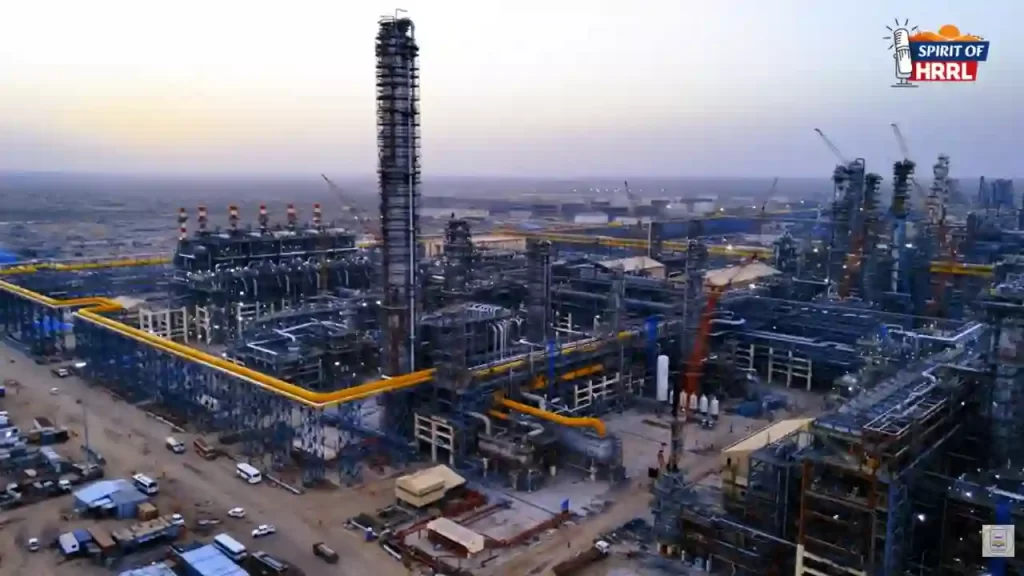
IntroductionFor over a decade, the Pachpadra refinery in Rajasthan’s Balotra district has been India’s most politically freighted infrastructure project — a facility that has had two foundation stones laid by two different prime ministers from two different parties, a cost that nearly doubled before a single barrel was processed, and an inauguration that was stopped one day before it was to happen by a fire that broke out in the Crude Distillation Unit.It is also, when you set aside the politics and the delays and the drama, one of the most consequential energy projects India has built in a generation.HPCL Rajasthan Refinery Limited, known as HRRL, is a 9 million metric tonnes per annum greenfield refinery-cum-petrochemical complex with 2.4 million metric tonnes per annum petrochemical production capacity, located in Pachpadra, Balotra district, Rajasthan. It is India’s first greenfield integrated refinery-cum-petrochemical complex, built at an estimated cost of nearly Rs 80,000 crore. It is spread across 4,400.4 acres of land in the Thar desert, operated by HPCL Rajasthan Refinery Limited, with HPCL holding 74 percent and the Government of Rajasthan holding 26 percent.When it becomes fully operational, it will be the first major refinery India has built from scratch since the 1990s — and the first one specifically designed to process the heavy, waxy crude oil that sits beneath Rajasthan’s Barmer basin, one of India’s most significant onshore oil reserves.The Origin Story: A Project That Belongs to Every PartyThe Pachpadra refinery’s political genealogy is unusual even by Indian standards. No single government can claim it. Every government has tried to.The story begins not with a foundation stone but with oil. The discovery of the Mangala oilfield in Barmer — the largest onshore oil discovery in India in more than 22 years at the time — created an obvious question: why is all this crude being pumped out of Rajasthan and sent to refineries in Gujarat and Maharashtra? Why is Rajasthan not refining its own oil?The project was first conceptualised under the Congress government. On September 18, 2013, then Congress president Sonia Gandhi laid the first foundation stone for the project, with an initial estimated cost of Rs 43,129 crore. The Ashok Gehlot government in Rajasthan was a co-signatory, and the project carried the political imprimatur of both the state and central Congress establishments.Then came 2014. The Congress lost the general election, Vasundhara Raje’s BJP government came to power in Rajasthan, and a project associated with the Congress went into the freezer — not officially abandoned, but quietly deprioritised. The joint venture structure was complicated, the land acquisition was incomplete, and the financing arrangements required renegotiation.Four years later, the BJP arrived to claim the project as its own. On January 16, 2018, Prime Minister Narendra Modi laid a second foundation stone for the same project, which now had two foundation stones from rival parties. Modi declared that the refinery would be ready by 2022 and would change the economic landscape of Rajasthan. He was wrong about 2022. He was not wrong about the economic landscape.The Project: What Is Actually Being BuiltThe refinery is operated by HPCL Rajasthan Refinery Limited, with HPCL holding 74 percent and the Government of Rajasthan holding 26 percent. An MoU for the project was signed between the state government and HPCL on April 18, 2017.The facility is not simply a refinery. The integrated nature of the project — combining refining with a large-scale petrochemical complex on the same site — is what makes it distinct from existing Indian refineries and from the original 2013 design.The refinery has a capacity of 9 million metric tonnes per annum of refining and 2.4 million metric tonnes per annum of petrochemical production. The Scheduled Commercial Operation Date is July 1, 2026.The petrochemical capacity is particularly significant. India is one of the world’s largest importers of petrochemical products — the plastic resins, synthetic fibres, rubber, adhesives, and industrial chemicals that feed into every sector of manufacturing. A domestic integrated complex reduces that import dependence and creates a foundation for downstream manufacturing investment in Rajasthan.The crude feedstock for the refinery will be Mangala crude from the Barmer basin — heavy and waxy crude that requires specialised handling including insulated pipelines and dedicated processing units. The Mangala field, discovered in January 2004, is the largest onshore oil discovery in India in more than two decades. It sits directly in Rajasthan’s backyard, and Pachpadra was designed specifically to process it, eliminating the need to transport it all the way to coastal refineries in Gujarat.HRRL is an important project considering the growing energy needs and petrochemical requirements of the country, thereby reducing the country’s dependence on imports, which will result in saving foreign exchange. The project will also contribute towards industrialisation of a backward area, usage of locally available Mangala crude and help promote India as a refining hub.The Cost: From Rs 43,129 Crore to Rs 79,459 CroreThe most uncomfortable aspect of the Pachpadra story is its cost trajectory. The initial estimated cost of the refinery was Rs 43,129 crore, and the work was scheduled to be completed by October 31, 2022. During the previous state government’s tenure, the project cost increased to Rs 72,937 crore by June 2, 2023. HPCL Rajasthan Refinery Limited submitted a proposal for a second revision of the refinery’s cost to the state government on July 24, 2025.The total project cost has been revised to Rs 79,459 crore. The Union Cabinet approved the revised cost on April 8, 2026 — just twelve days before the inauguration fire.That escalation — from Rs 43,129 crore to Rs 79,459 crore — represents an 84 percent increase from the original estimate. Several factors contributed to it: the construction delays caused by land acquisition disputes and coordination failures during the political transitions between Congress and BJP governments in both Rajasthan and at the centre; Covid-19 disruptions that halted construction for an extended period; global commodity price inflation that drove up the cost of steel, cement, and equipment; and the expansion of the petrochemical complex beyond the
Borivali–Thane Tunnel Project: Mumbai’s Underground Connectivity Revolution
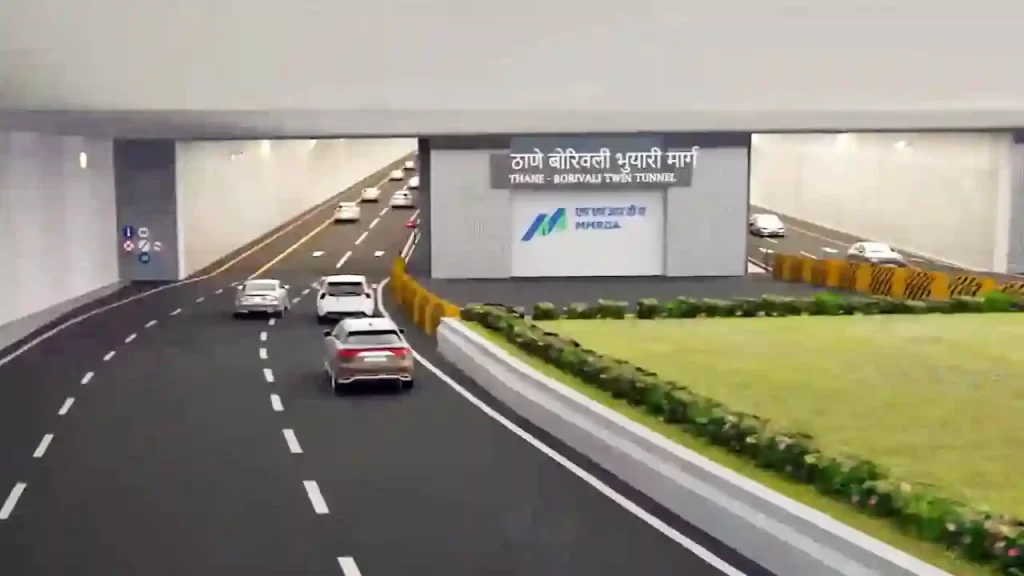
IntroductionThe Borivali–Thane Tunnel Project has emerged as one of the most ambitious urban infrastructure initiatives in India, promising to redefine mobility across the Mumbai Metropolitan Region (MMR). Designed to establish a direct underground road link between Borivali in Mumbai’s western suburbs and Thane city, the project aims to address one of the region’s most persistent transportation challenges—long travel times caused by severe traffic congestion.For decades, commuters travelling between Mumbai’s western suburbs and Thane have depended largely on Ghodbunder Road, a corridor that has become synonymous with bottlenecks, delays, and increasing traffic pressure. As residential development expanded rapidly in both Thane and the western suburbs, existing road infrastructure struggled to keep pace with growing demand.The Borivali–Thane Tunnel Project was conceived as a transformative solution to this problem. By creating a direct underground route beneath the Sanjay Gandhi National Park, the project seeks to reduce travel time dramatically while enhancing regional connectivity and supporting future urban growth.Infrastructure experts have described the tunnel as a game-changing project that could reshape commuting patterns across the Mumbai Metropolitan Region in much the same way that metro rail networks and expressways have transformed mobility in other major cities.Why the Project Became NecessaryMumbai and Thane together form one of India’s largest urban agglomerations. Every day, lakhs of people travel between the two cities for employment, education, business, healthcare, and other purposes.However, despite their geographical proximity, road connectivity between Borivali and Thane has historically been inadequate.The primary route connecting the two locations passes through Ghodbunder Road, a stretch that experiences some of the highest traffic volumes in the region. During peak hours, commuters often spend more than an hour travelling between the two destinations, with travel times occasionally extending beyond ninety minutes due to congestion.The situation has worsened over the years because of rapid urbanisation. Areas such as Thane, Mira-Bhayandar, Borivali, Kandivali, and Dahisar have witnessed substantial residential and commercial growth, leading to a significant increase in vehicular traffic.Urban planners recognised that simply widening existing roads would not be sufficient to address future transportation needs. A new high-capacity corridor was required—one that could bypass congested surface roads while preserving environmentally sensitive areas.This led to the concept of an underground tunnel connecting Borivali and Thane.Project Design and Technical SpecificationsThe tunnel system will be equippeThe project is being implemented by the Mumbai Metropolitan Region Development Authority (MMRDA) and represents one of the most technically complex road infrastructure projects currently underway in India.The tunnel will consist of twin underground tubes carrying traffic in opposite directions. Each tunnel has been designed to accommodate multiple lanes, allowing a large volume of vehicles to move efficiently between Mumbai and Thane.The alignment has been planned carefully to minimise disruption to existing urban areas while ensuring the shortest possible route between the two destinations.One of the most notable features of the project is that it passes beneath the Sanjay Gandhi National Park, enabling a direct connection without disturbing large portions of the protected forest at the surface level.The tunnel system will be equipped with state-of-the-art infrastructure, including: Modern ventilation systemsIntelligent traffic management systemsHigh-definition surveillance camerasEmergency communication networksFire detection and suppression mechanismsDedicated evacuation passagesAdvanced lighting systemsReal-time monitoring and control centresThese features are intended to ensure both operational efficiency and passenger safety. The Engineering Challenge Beneath a National ParkConstructing a tunnel beneath a protected national park presents extraordinary engineering challenges.The Sanjay Gandhi National Park is one of the few national parks located within a major metropolitan area and serves as an important ecological zone. It is home to diverse flora and fauna, including leopards and numerous bird species.Engineers must therefore ensure that tunnelling activities do not adversely affect wildlife habitats or destabilise the geological structure of the region.Extensive geotechnical surveys were conducted before finalising the alignment. These studies examined rock formations, soil characteristics, groundwater movement, and seismic conditions.The project is expected to rely on advanced Tunnel Boring Machines (TBMs), which allow underground excavation with minimal surface disturbance. These machines can cut through rock and soil while simultaneously installing tunnel lining segments, making construction safer and more efficient.Experts have noted that the project represents one of the most sophisticated applications of underground transportation engineering in India.Travel Time Reduction: The Biggest BenefitPerhaps the most significant advantage of the Borivali–Thane Tunnel Project is the dramatic reduction in travel time it promises.At present, a journey between Borivali and Thane can take anywhere between 60 and 90 minutes depending on traffic conditions.Once operational, the tunnel is expected to reduce travel time to approximately 15–20 minutes.This reduction will fundamentally change commuting patterns across the region.For daily commuters, it means:Less time spent in trafficReduced fuel consumptionLower transportation costsImproved productivityBetter work-life balanceFor businesses, faster connectivity translates into improved logistics, reduced delays, and greater operational efficiency.Environmental Debate and ConcernsDespite its expected benefits, the project has attracted considerable environmental scrutiny.The Sanjay Gandhi National Park is regarded as one of Mumbai’s most important green lungs, and environmental groups have raised concerns regarding potential impacts on biodiversity and ecological balance.Project authorities have argued that the underground alignment was specifically chosen to minimise ecological disruption.Compared with conventional road construction through forest land, tunnelling offers several advantages:Reduced tree cuttingMinimal disturbance to wildlife movementLower land acquisition requirementsPreservation of surface ecosystemsNevertheless, environmental clearances were subject to detailed assessments, and various mitigation measures have been incorporated into project planning.Balancing infrastructure development with environmental conservation remains one of the most closely watched aspects of the project.Economic Significance for the Mumbai Metropolitan RegionThe Borivali–Thane Tunnel is expected to generate substantial economic benefits extending far beyond transportation.Improved connectivity often acts as a catalyst for economic activity. Regions that become easier to access typically attract higher levels of investment, commercial development, and real estate growth.The tunnel is expected to strengthen economic integration between Mumbai’s western suburbs and Thane, creating new opportunities for businesses and industries.Real estate experts anticipate that enhanced connectivity could increase demand for residential and commercial properties in both regions.The project is also expected to create employment opportunities during construction and operation, benefiting multiple sectors including engineering, construction, materials manufacturing, and services.Integration with Mumbai’s Expanding Infrastructure NetworkThe tunnel
NexCAR19: How India Built the World’s Most Affordable Cancer Therapy — and Changed the Rules for the Global South
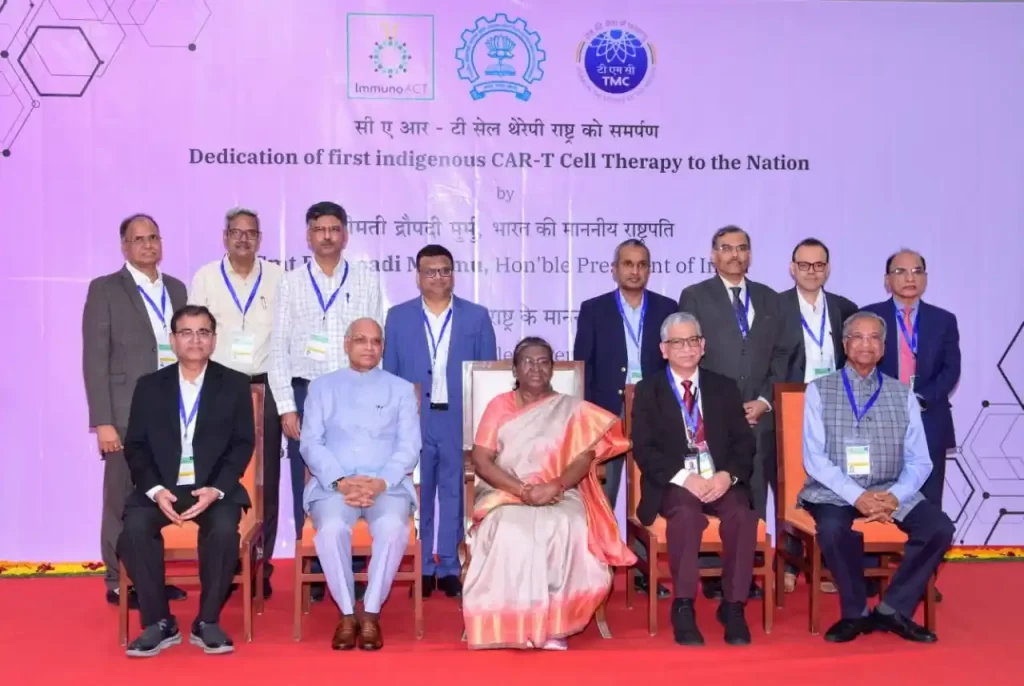
IntroductionFor most of human history, a cancer diagnosis in a low-income or middle-income country meant one of two things: treatment with whatever the public health system could afford, or no treatment at all. The world’s most advanced cancer therapies — the ones that could put terminal patients into complete remission — existed only in American and European hospitals, at price tags that put them beyond the reach of 90 percent of the world’s cancer patients.That equation began to change in October 2023, when India’s Central Drugs Standard Control Organisation approved NexCAR19 — the country’s first indigenous CAR-T cell therapy, developed by ImmunoACT, a spinoff from the Indian Institute of Technology Bombay in collaboration with the Tata Memorial Centre in Mumbai. It changed further when the therapy entered commercial use in April 2024. And it changed decisively when the numbers from that first year of commercial operations came in: over 350 patients treated across 70 hospitals, revenue of Rs 62 crore, and a profit before tax of Rs 12 crore in FY25 — marking rare profitability for an Indian biotech startup in its first full year of operations.A therapy that costs $400,000 in the United States. The same category of therapy, built entirely in India, costing Rs 30 lakh — approximately $36,000 — and falling. This is not incremental progress. This is a structural disruption of one of the most expensive categories of medicine ever created.What CAR-T Cell Therapy Actually IsBefore understanding why NexCAR19 matters, it helps to understand what CAR-T therapy is and why it has been so transformative — and so inaccessible.CAR-T stands for Chimeric Antigen Receptor T-cell therapy. It is a form of immunotherapy that does not use drugs in the conventional sense. Instead, it reprograms the patient’s own immune system to become the weapon.The process works as follows. A sample of T-cells — the immune system’s primary fighters — is extracted from the patient’s blood. These cells are then genetically engineered in a laboratory to express a Chimeric Antigen Receptor on their surface, a specially designed protein that enables them to recognise and bind to a specific marker on cancer cells. The modified cells are then multiplied into tens of millions and reinfused into the patient’s body, where they seek out and destroy cancer cells bearing that marker with a precision that conventional chemotherapy cannot approach.CAR-T therapy is not a treatment that reduces tumour size. In many cases, it eliminates tumours entirely. For patients with relapsed or refractory blood cancers — patients who have already failed multiple rounds of chemotherapy and have essentially run out of conventional options — it has produced complete remission rates that were previously considered impossible.The problem is the cost. Every step of the process — extracting T-cells, engineering them, manufacturing the viral vectors used to introduce the new genetic instructions, multiplying the cells under sterile conditions, quality-testing the final product, and infusing it — requires specialised equipment, expertise, and infrastructure that, until recently, existed only in a handful of countries.The Journey: A Decade from Research Lab to PatientImmunoACT was established in 2018 as a spinoff from IIT Bombay’s Biosciences and Bioengineering department, built on research that began in 2013. That five-year gap between research and company formation is itself a story. ImmunoACT was founded by immunologist Dr. Rahul Purwar following his research experience in the United States and Germany.Dr. Alka Dwivedi, along with her colleague Rahul Purwar and Gaurav Narula, sought guidance from the National Cancer Institute in Bethesda, Maryland, to advance their research. Through collaboration with leading experts at NCI’s Center for Cancer Research, including Dr. Nirali Shah, the team gained valuable insights and training in designing an effective CAR-T cell therapy suitable for the Indian healthcare system.The collaboration with Tata Memorial Centre — India’s premier cancer hospital — gave the research its clinical backbone. The CAR-T cell therapy was developed by Prof. Rahul Purwar and his team, with clinical investigations and translational studies led by Dr. Hasmukh Jain and Dr. Gaurav Narula and their teams at Tata Memorial Hospital.Atharva Karulkar, Alka Dwivedi and the team led by Rahul Purwar, IIT Bombay associate professor, designed and developed NexCAR19, which subsequently underwent integrative process development and manufacturing under current Good Manufacturing Practice, or cGMP, at ImmunoACT.The result of that decade of work was an indigenously developed CD19-targeted CAR-T cell therapy — meaning it targets the CD19 protein on the surface of B-cells, which is the marker present on the cancer cells in B-cell lymphomas and leukemias.The Clinical Trials: Results That Surprised the WorldThe multi-centre Phase I and Phase II pivotal clinical trial for NexCAR19 was led by Dr. Hasmukh Jain.The trial was conducted with 60 patients of relapsed or refractory B-cell lymphomas and leukemia. The clinical data indicated approximately 70 percent overall response rate.Clinical trials involving 64 patients with advanced lymphoma or leukemia showed promising results, with 67 percent experiencing significant cancer reduction and about half achieving complete remission.But the headline clinical achievement was not just the efficacy. It was the safety profile. Unlike US-approved therapies that use mouse-derived antibody fragments, India’s “humanised” CAR-T cells caused fewer severe side effects, with no reported neurologic complications and only 5 percent experiencing severe cytokine release syndrome.This distinction requires explanation. Cytokine release syndrome — essentially an immune system overreaction triggered by the infusion of millions of activated CAR-T cells — is the most dangerous side effect of CAR-T therapy and has historically required intensive care unit admission for many patients in US-based treatments. Neurological toxicity has also been a documented concern. The safety profile in terms of cytokine release syndrome and absence of neurotoxicity indicates a significant improvement over other commercially approved CD19-directed CAR-T cell therapies.Dr. Hasmukh Jain said: “NexCAR19 has shown an excellent balance of efficacy and low-toxicity, which is a significant advantage in clinical management of patients in our resource-constrained settings.”The humanised design of the CAR construct — using human antibody fragments rather than the mouse-derived sequences used in the original American CAR-T products — is believed to be a significant factor
India’s Semiconductor Manufacturing Story: How New Chip Plants Are Transforming the Country’s Technological Future
IntroductionSemiconductors are often described as the “new oil” of the digital economy. These tiny electronic chips serve as the brains behind modern technology, powering smartphones, computers, automobiles, telecommunications equipment, medical devices, defence systems, artificial intelligence platforms, and industrial machinery. In an increasingly digital world, access to semiconductors has become a matter not only of economic growth but also of national security and technological sovereignty.For years, India remained heavily dependent on imported semiconductors despite being one of the world’s largest consumers of electronic products and a major hub for chip design services. While Indian engineers contributed significantly to global semiconductor design, the country lacked large-scale manufacturing facilities capable of producing chips domestically.The global semiconductor shortage that emerged during and after the COVID-19 pandemic exposed the vulnerabilities of this dependence. Supply chain disruptions affected industries worldwide, delaying automobile production, consumer electronics manufacturing, and critical infrastructure projects. The crisis prompted governments across the globe to invest heavily in domestic semiconductor capabilities.India responded by launching an ambitious strategy aimed at building a complete semiconductor ecosystem. Over the last few years, this vision has begun to materialise through a series of major investments, policy initiatives, and the launch of new semiconductor manufacturing and packaging facilities across the country.Today, India’s semiconductor story is no longer about future possibilities—it is increasingly about projects under construction, facilities being established, and the emergence of a domestic chip manufacturing ecosystem.Why Semiconductors MatterModern economies run on semiconductors. Every smartphone contains multiple chips. Electric vehicles depend on semiconductors for battery management, safety systems, and autonomous features. Data centres, cloud computing infrastructure, artificial intelligence applications, telecommunications networks, and defence technologies all rely on advanced semiconductor components.As digitalisation accelerates worldwide, demand for semiconductors continues to grow rapidly.Industry estimates suggest that India’s semiconductor consumption could exceed $100 billion annually in the coming years. This growth is being driven by:Expansion of the electronics manufacturing sectorRising smartphone penetrationGrowth of electric vehiclesDeployment of 5G networksArtificial intelligence and cloud computing adoptionIncreasing digitisation of public servicesWithout domestic manufacturing capabilities, India would remain vulnerable to external supply disruptions and geopolitical uncertainties.The Semiconductor Mission: India’s Strategic PushRecognising the strategic importance of semiconductors, the Government of India launched the India Semiconductor Mission (ISM) as part of a broader effort to strengthen the country’s electronics manufacturing sector.The government announced incentive packages worth tens of thousands of crores aimed at attracting investments in semiconductor fabrication, assembly, testing, packaging, and display manufacturing.The objective was not merely to establish individual factories but to create a complete semiconductor ecosystem involving:Chip fabrication plants (fabs)Assembly and packaging facilitiesDesign centresResearch and development infrastructureTalent development programsSupply chain networksThe initiative marked one of the largest industrial policy interventions in India’s recent history.Tata Electronics and the Dholera Semiconductor FabOne of the most significant milestones in India’s semiconductor journey came with the announcement of a semiconductor fabrication facility by Tata Electronics in partnership with Taiwan-based Powerchip Semiconductor Manufacturing Corporation (PSMC).The facility is being established at Dholera in Gujarat, a location that has emerged as a key industrial hub under India’s infrastructure development plans.The project represents India’s first major commercial semiconductor fabrication plant and involves an investment estimated at over ₹91,000 crore.The facility is expected to manufacture chips used in:AutomobilesConsumer electronicsCommunication systemsComputing devicesIndustrial applicationsIndustry experts consider the Dholera fab a landmark development because semiconductor fabrication represents the most technologically complex and capital-intensive segment of the semiconductor value chain.For decades, only a handful of countries such as Taiwan, South Korea, the United States, Japan, and China have possessed significant semiconductor fabrication capabilities.The Dholera project signals India’s entry into this highly strategic domain.Micron Technology’s Semiconductor Facility in GujaratAnother major development has been the investment by American semiconductor giant Micron Technology.Micron announced a substantial investment in a semiconductor assembly and testing facility in Sanand, Gujarat.The facility focuses on:AssemblyTestingMarkingPackaging (ATMP)These activities are critical parts of semiconductor manufacturing and represent an important step toward building a complete semiconductor ecosystem.The project has attracted significant attention because it marks one of the largest semiconductor investments by a global company in India.Commercial production is expected to play a crucial role in integrating India into global semiconductor supply chains.Semiconductor Expansion in AssamIndia’s semiconductor ambitions are not limited to western India.The Tata Group has also announced a semiconductor assembly and testing facility in Assam, making the northeastern state an unexpected but important participant in the country’s technology manufacturing push.The project is expected to generate thousands of direct and indirect jobs while promoting industrial development in a region historically less associated with high-technology manufacturing.The facility demonstrates the government’s effort to geographically diversify semiconductor investments rather than concentrating them in a few industrial clusters.For Assam, the project represents one of the most significant industrial investments in recent history.Additional Semiconductor Projects Across IndiaRecent years have witnessed multiple semiconductor-related announcements involving both domestic and international players.Several projects have been proposed in areas such as:Semiconductor packagingCompound semiconductorsDisplay manufacturingAdvanced electronics productionCompanies have expressed interest in participating across different stages of the semiconductor value chain, creating the foundations of a broader manufacturing ecosystem.These investments indicate growing confidence in India’s policy framework and long-term market potential.Why Global Companies Are Looking at IndiaSeveral factors have contributed to India’s emergence as a preferred destination for semiconductor investments.Growing Domestic MarketIndia is among the world’s fastest-growing markets for electronics and digital technologies.The rapid adoption of smartphones, connected devices, electric vehicles, and digital services creates substantial domestic demand for semiconductors.China Plus One StrategyGlobal companies are increasingly seeking to diversify manufacturing operations beyond China.The strategy, often referred to as “China Plus One,” has encouraged businesses to establish additional production bases in countries such as India, Vietnam, and Mexico.India has emerged as a major beneficiary of this shift.Government IncentivesGenerous fiscal incentives, capital subsidies, and infrastructure support have significantly improved the attractiveness of semiconductor investments.The government has committed substantial financial resources to reduce the high costs associated with semiconductor manufacturing.Skilled WorkforceIndia already possesses one of the world’s largest pools of semiconductor design talent.Many global semiconductor companies operate research and design centres in cities such as Bengaluru, Hyderabad, Noida, and Pune.This existing talent base provides a strong foundation for manufacturing expansion.Challenges Facing
Noida International Airport Officially Opens: Commercial Flights Begin June 15, Marking New Era for Viksit UP and Viksit Bharat
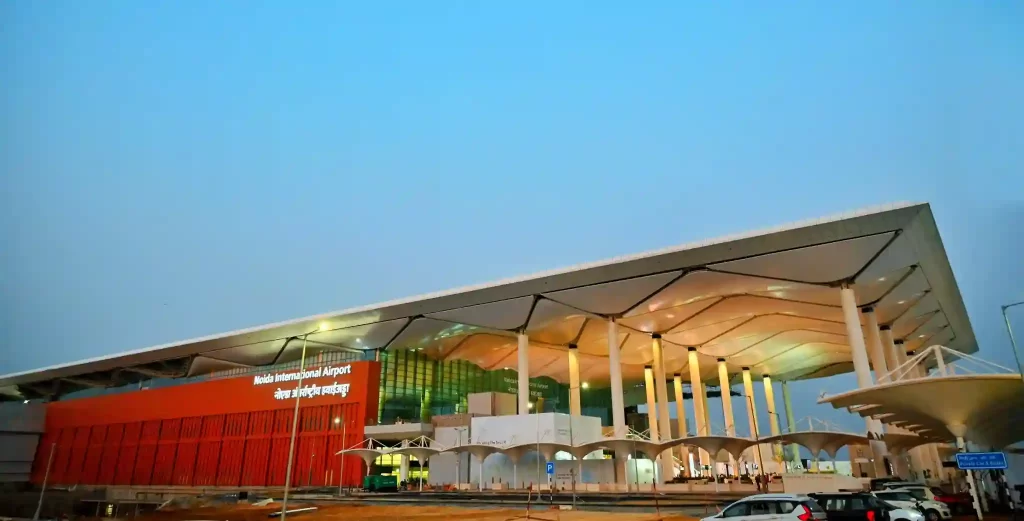
Noida, May 27, 2026 — Prime Minister Narendra Modi officially inaugurated Phase I of the Noida International Airport at Jewar in Gautam Buddha Nagar district of Uttar Pradesh on March 28, 2026, marking a transformative moment for India’s aviation sector and northern India’s connectivity. Noida International Airport at Jewar has officially opened for commercial operations, with flights scheduled to commence from June 15, 2026, marking a transformative moment for India’s aviation sector and northern India’s connectivity. Prime Minister Narendra Modi inaugurated the first phase of the airport earlier this month at Jewar in Gautam Buddha Nagar district of Uttar Pradesh, and the facility has now received final security clearance from the Bureau of Civil Aviation Security. The Prime Minister also laid the foundation stone for 40 acres of Maintenance, Repair, and Overhaul (MRO) facilities at the site during the inauguration ceremony. Speaking on the occasion, Modi declared this a new chapter for the Viksit UP and Viksit Bharat campaign, emphasizing that Uttar Pradesh has now emerged as one of the states with the highest number of international airports in India.Noida International Airport stands among the largest greenfield airport projects in the country, with Phase I developed at a total investment of approximately ₹11,200 crore under a Public-Private Partnership model. The airport will initially handle 12 million passengers per annum, with scalability up to 70 million passengers annually upon full development. Commercial flight operations officially begin June 15, following receipt of approval for its Aerodrome Security Programme from the Bureau of Civil Aviation Security, which certified that the airport’s security framework meets regulatory requirements for commercial operations. IndiGo will operate the first flight from NIA, marking the start of scheduled passenger services, followed shortly by Akasa Air and Air India Express.From Vision to Reality: A 23-Year Journey to CompletionThe airport project was first approved in 2003 during the tenure of former Prime Minister Atal Bihari Vajpayee, making this operational launch the culmination of a 23-year vision. Prime Minister Modi recalled that as soon as the current government was formed, the foundation was laid, construction happened, and now it has started operations. He expressed feeling doubly proud, first for having laid the foundation stone of this airport and now seeing it operational, and second because the name of this grand airport is linked to Uttar Pradesh, the state that chose him as its representative and made him a Member of Parliament.The airport will benefit numerous districts across western UP, including Agra, Mathura, Aligarh, Ghaziabad, Meerut, Etawah, Bulandshahr, and Faridabad, bringing new opportunities for farmers, small and medium enterprises, and the youth of the region. The site is positioned near freight corridors and logistics networks, supporting the movement of goods by air and rail. The area around Dadri, where freight routes converge, has been identified as a key logistics point for northern India. Prime Minister Modi pointed out that this area is becoming the hub of two major freight corridors with special railway tracks laid for goods trains, enhancing North India’s connectivity with the seas of Bengal and Gujarat.Economic Impact Connecting Western UP to Global MarketsPrime Minister Modi emphasized that airports are not just basic facilities in any country but give wings to progress. Due to the expansion of connectivity in the region, agricultural products of western UP will reach the global market in a much better way. The airport will bring numerous new opportunities for farmers, small and medium industries, and the youth of western Uttar Pradesh, with aircraft flying from here to the world, and the airport becoming a symbol of a developed Uttar Pradesh taking flight.The expansion of modern connectivity will further boost food processing prospects in western UP. Prime Minister Modi expressed gratitude to the farmers who gave up their lands to make this project a reality, noting that agriculture and farming hold great importance in the region’s economy. He highlighted that today, Noida is ready to welcome the entire world, and this whole area is strengthening the resolve of Aatmanirbhar Bharat. This multi-modal connectivity is making UP a major attraction for investors worldwide, as whatever farmers grow and industries produce here can now reach every corner of the world swiftly by land and by air.MRO Facility Lays Foundation for Aviation Self-RelianceAddressing a critical gap in India’s aviation ecosystem, Prime Minister Modi drew attention to the Maintenance, Repair, and Overhaul sector, noting that 85 percent of Indian aircraft still have to go abroad for MRO services. The government has resolved to make India self-reliant in the MRO sector, and the foundation stone of an MRO facility was laid at Jewar during the inauguration. When ready, it will serve aircraft from India and abroad, generating revenue for the country, keeping money within India, and creating numerous jobs for the youth.This facility will support aircraft servicing within India, where a significant share of such work is currently carried out overseas, reducing dependency on foreign MRO providers and saving foreign exchange. The government has decided to make India self-reliant in this sector as part of its broader economic policy framework, positioning India as a global hub for aircraft maintenance services.Operational Timeline and First Year ProjectionsThe airport will commence commercial flight operations from June 15 after appointing an Indian CEO, following the security regulator’s approval for its Aerodrome Security Programme. An airport official stated they are looking at 50-60 lakh passengers in the first year of operations. After domestic operations stabilize, they will launch international services, confident of going international before the end of 2026. The airport currently features one runway and one passenger terminal with a capacity to handle 12 million passengers annually, with its master plan including future expansion to accommodate over 70 million passengers each year.The launch follows the DGCA’s clearance granted in March, with PM Modi inaugurating the airport in late March. The airport said the June 15 start date marks the final stage of security clearance after regulatory concerns over a foreign CEO were addressed by appointing Chief Financial Officer Nitu Samra as interim CEO, replacing Swiss national
Mumbai to Have India’s First Pod Taxi: A Driverless AI-Powered Revolution in Urban Mobility

Maharashtra Chief Minister Devendra Fadnavis laid the foundation for India’s first Pod Taxi project, an Automated Rapid Transit System (ARTS), in Mumbai, marking a transformative moment for the city’s urban transport infrastructure. The groundbreaking ceremony was performed with Deputy Chief Ministers Eknath Shinde and Sunetra Pawar, formally launching work on this futuristic, driverless pod taxi system. The 8.85-kilometer elevated, driverless corridor will connect Bandra (East) and Kurla, providing seamless first- and last-mile connectivity to suburban rail and metro stations while aiming to decongest one of Mumbai’s busiest business districts, the Bandra-Kurla Complex (BKC).The project aims to provide seamless last-mile connectivity between Kurla and the Bandra Kurla Complex, serving an estimated four to six lakh commuters traveling to BKC daily. Planned with 22 air-conditioned stations spaced roughly 200 meters apart, the system will be implemented in phases, with Phase I covering 3.36 kilometers between Kurla Terminal and Bandra (East) terminals, expected to be completed within 20 months. Key stations in the first phase include Kurla (Terminal), LBS Marg, MMRDA Pay & Park (G Block), BDB Gate-11, Kalanagar, Old MMRDA Building, and the Excise Department, before terminating at Bandra (East).AI-Driven, Zero-Carbon Transportation SystemThe pods are driverless and AI-powered, running on battery power along a dedicated guideway. Each pod can carry up to six passengers with a maximum speed of 40 km/h and a headway of just 15 seconds, ensuring high frequency and minimal waiting time. Unlike conventional systems, pods stop only at stations chosen by passengers, bypassing others to reduce travel time through an innovative on-demand stop mechanism.Each pod measures 3.9 meters in length, 2.01 meters in width, and 1.8 meters in height, and will be fully air-conditioned for passenger comfort. Operations will be monitored from a central control room to maintain safety and efficiency, while a dedicated depot is planned at the RLDA Plot in Bandra East. Speaking at the foundation-laying ceremony, Chief Minister Fadnavis said, “The Pod Taxi project reflects Mumbai’s move towards future-ready, sustainable transport solutions. It will ease congestion in BKC and offer fast, eco-friendly connectivity to thousands of commuters.”Transforming Urban Mobility in Mumbai’s Business HubDescribing the project as a “game-changer for urban mobility,” a senior official from the Mumbai Metropolitan Region Development Authority (MMRDA) said, “The Pod Taxi will transform the way people move within BKC. It is designed to provide fast, predictable, and green transport while significantly reducing pressure on roads.” The fully automated system will operate on AI-based, driverless technology, representing a major advancement in Mumbai’s transformation into a smart city and aligning its urban mobility with tech-savvy global centers such as London and Dubai.Urban transport experts believe the system will drastically cut short intra-BKC travel times that often stretch due to heavy vehicular congestion. By offering a zero-carbon, battery-operated alternative, the project is also expected to contribute to sustainable mobility goals and improved air quality in one of India’s most polluted metropolitan areas. An MMRDA official added, “This is not just a transport project; it is a step towards smart, future-ready infrastructure for Mumbai. The Pod Taxi will strengthen connectivity between Bandra and Kurla stations while making travel within BKC smooth, quick, and environmentally friendly.”Strong Metro Integration Creating Multi-Modal Transport GridThe Pod Taxi corridor will integrate with Mumbai Metro Line 3 at the BKC metro station and connect with ITO and IL&FS stations on Mumbai Metro Line 2B, creating a multi-modal transport grid in the commercial hub. This integration will improve multimodal access for commuters, allowing seamless transfers between different modes of transportation and reducing overall travel time for daily commuters navigating Mumbai’s complex transport network.Officials said the service will cater to 1.09 lakh daily commuters by 2031, with fares proposed at ₹21 per kilometer (2022 rates). The project is being implemented under a Public-Private Partnership (PPP) model, with no financial burden on the state government or MMRDA, while still generating revenue for the authority. With an estimated budget of approximately ₹1,017 crore, this project is set to transform daily commuting for the estimated four to six lakh commuters traveling to BKC.Implementation Timeline and Phased DevelopmentThe project in Mumbai is being executed by the Mumbai Metropolitan Region Development Authority (MMRDA) to strengthen urban transport. The project will be developed in phases, with the first phase covering 3.36 kilometers between Kurla Terminal and Bandra East terminals. CM Fadnavis directed officials to immediately escalate any hurdles posed by government agencies or departments, assuring such issues would be resolved at the highest level to ensure the project is executed in a hassle-free environment and within the deadline.Once completed by 2031, the Automated Rapid Transit System is expected to redefine short-distance urban commuting in Mumbai, positioning the city among global adopters of next-generation personal rapid transit solutions. The full system will span approximately 8.85 kilometers, establishing Mumbai as a pioneer in India’s urban mobility landscape and setting a precedent for other metropolitan cities to follow.A Vision for Future-Ready Sustainable TransportChief Minister Fadnavis described the project as reflecting Mumbai’s move towards future-ready, sustainable transport solutions that will ease congestion in BKC and offer fast, eco-friendly connectivity to thousands of commuters. The Pod Taxi represents India’s entry into advanced personal rapid transit technology, demonstrating the country’s commitment to adopting cutting-edge urban mobility solutions that combine sustainability, efficiency, and technological innovation.
V.D. Satheesan Sworn In as Kerala’s 13th Chief Minister, Leading Congress-Led UDF to Landslide Victory
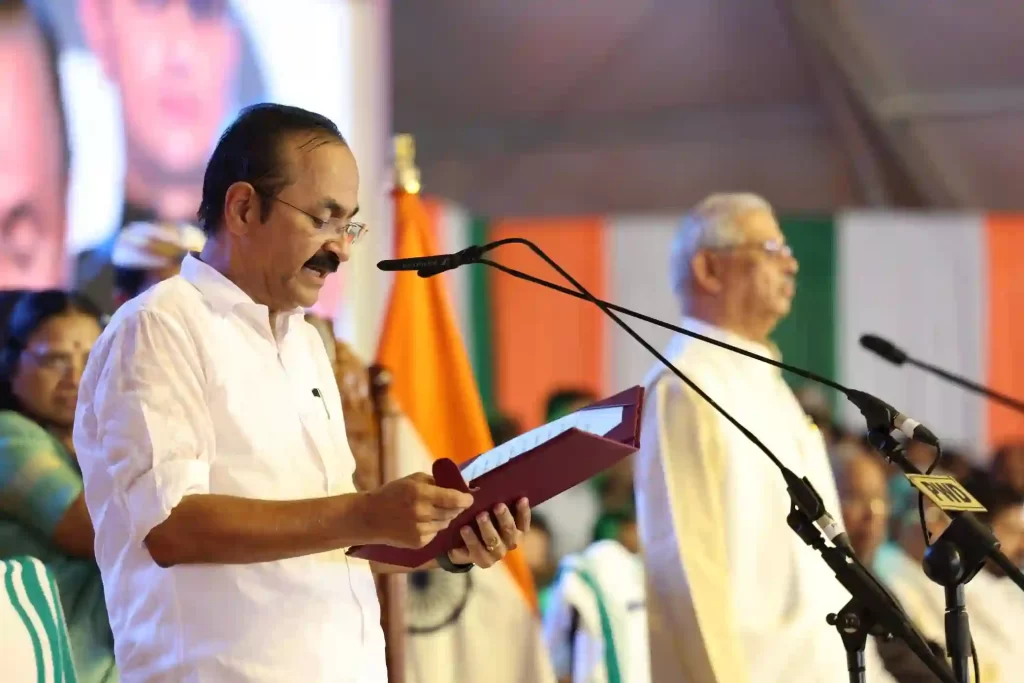
V.D. Satheesan was sworn in as the 13th Chief Minister of Kerala on May 18, 2026, at a grand ceremony held at the packed Central Stadium in Thiruvananthapuram. Governor Rajendra Vishwanath Arlekar administered the oath of office and secrecy to Satheesan and his 20-member council of ministers over a one-hour ceremony that commenced around 10:15 a.m. The Congress-led United Democratic Front (UDF) scripted a landslide victory over the CPI(M)-led Left Democratic Front in the April 9 Assembly elections, winning 102 of the 140 seats in the State Assembly, ending a decade of LDF rule and marking the UDF’s return to power.Satheesan, 61, who served as Leader of the Opposition during 2021–2026, became the first to be sworn in. The ceremony concluded around 11:30 a.m. with the recital of Vande Mataram followed by the National Anthem. Congress president Mallikarjun Kharge, senior leaders Rahul Gandhi and Priyanka Gandhi Vadra, along with several leaders from Congress-ruled states, including Karnataka Chief Minister Siddaramaiah, Telangana Chief Minister Revanth Reddy, and Himachal Pradesh Chief Minister Sukhvinder Singh Sukhu, attended the event. Outgoing Chief Minister Pinarayi Vijayan, who is set to become Kerala’s new Opposition Leader, was also present on stage along with BJP State president Rajeev Chandrasekhar.From Student Politics to Chief Minister: A Five-Decade JourneyV.D. Satheesan was born on May 31, 1964, at Nettoor in Ernakulam district (Maradu Municipality) as the fourth son of Vadassery Damodara Menon and Smt. V. Vilasini Amma. He entered public life through the Kerala Students Union (KSU), the student wing of the Indian National Congress, during his college days and rose to leadership ranks through student politics in Kerala. He served as University Union Councillor at Rajagiri College, Kalamassery, and later as Chairman of the Mahatma Gandhi University Union during 1986–1987. He was also actively associated as a Union Councillor in both Mahatma Gandhi University and the University of Kerala.Satheesan completed his primary education at Nettoor S.V.U.P School and passed SSLC from Panangad High School. He completed his Pre-Degree and Degree studies from Sacred Heart College, Thevara, and later obtained an MSW degree from Rajagiri College, Kalamassery. He earned his LL.B degree from Thiruvananthapuram Law Academy and obtained a Master’s Degree in Law from Government Law College. Alongside political activities, Satheesan practiced as an advocate in the Kerala High Court for nearly ten years and held leadership positions in several trade unions affiliated with the Indian National Trade Union Congress (INTUC).Historic Distinction: Sixth Leader to Become CM Without Prior Ministerial ExperienceSatheesan was first elected to the Kerala Legislative Assembly in 2001 from the Paravur Assembly Constituency and has been continuously re-elected in the Assembly elections held in 2006, 2011, 2016, 2021, and 2026. He holds the distinction of being the sixth political leader in Kerala to assume the office of Chief Minister without previously serving as a Minister in the State Cabinet. He is also the first Congress Chief Minister from Ernakulam district, representing a significant shift in the party’s leadership geography.In the 12th Kerala Legislative Assembly in 2006, he served as the Chief Whip of the Indian National Congress. In 2013, he was appointed as the AICC Secretary in charge of Tamil Nadu, and in 2014, he was appointed Vice President of the Kerala Pradesh Congress Committee (KPCC). Satheesan has emerged as a prominent public leader through his active involvement in student politics, the legal profession, organizational activities, and legislative responsibilities. Through his commitment to democratic values, social justice, and people-oriented development, he has secured a significant place in the public life of Kerala.A Complete Cabinet After 60 Years with Focus on AusteritySatheesan announced that a “complete Cabinet” was being sworn in at one go for the first time in 60 years. The Cabinet includes two women and two ministers from the Scheduled Castes, reflecting a commitment to social representation. The Congress has 12 members in the Cabinet, including the Chief Minister. The Indian Union Muslim League (IUML) has five Ministers, while Kerala Congress (Joseph), Kerala Congress (Jacob), RSP, and CMP have one each. As many as 14 members of the cabinet are new faces, bringing fresh energy to the government.Senior Congress figures in the cabinet include Ramesh Chennithala, K Muraleedharan, and Kerala Pradesh Congress Congress chief Sunny Joseph. The IUML ministers include P.K. Kunhalikutty, K.M. Shaji, P.K. Basheer, N. Shamsudheen, and V.E. Abdul Gafoor. Other ministers include Mons Joseph, Shibu Baby John (Revolutionary Socialist Party), Anoop Jacob (Kerala Congress-Jacob), C.P. John (Communist Marxist Party), A.P. Anil Kumar, P.C. Vishnunadh, Roji M. John, Bindu Krishna, M. Liju, T. Siddique, K.A. Thulasi, and O.J. Janeesh. All except Shibu Baby John and C.P. John took the oath in the name of God, with the two making solemn affirmation of their commitment.In keeping with austerity measures for the state, Satheesan has ordered that there be no convoys, security vehicles, or ambulances. He has also said he would not require a new vehicle, setting an example of frugal governance. The portfolios of the Chief Minister and Ministers were made public later on Monday, with Thiruvanchoor Radhakrishnan announced as Speaker and Shanimol Usman as Deputy Speaker.Building Puthuyuga Keralam: Vision for a New EraSatheesan stated that the UDF government was committed to working towards building a “Puthuyuga Keralam” (New Era Kerala). Following the declaration of election results on May 4, the Congress party took ten days to pick Satheesan over Ramesh Chennithala and AICC General Secretary K.C. Venugopal as the Congress Legislative Party leader and CM-designate. After that, the entire focus shifted to Cabinet formation, with discussions stretching into Sunday afternoon before Satheesan presented the list of ministers to the Governor on May 17 evening.The swearing-in ceremony witnessed huge crowds gathering at Central Stadium since early morning. Extensive arrangements, including traffic regulations, were in place across the State capital. Among those present were AICC General Secretaries K.C. Venugopal and Deepa Dasmunshi, CPI State secretary Binoy Viswam, and numerous other dignitaries. Rahul Gandhi greeted the new Chief Minister with a warm hug after Satheesan repeated the oath and signed the oath books.Satheesan’s Rise Reshapes Kerala Political
N. Rangaswamy: The Man Who Came Back Five Times
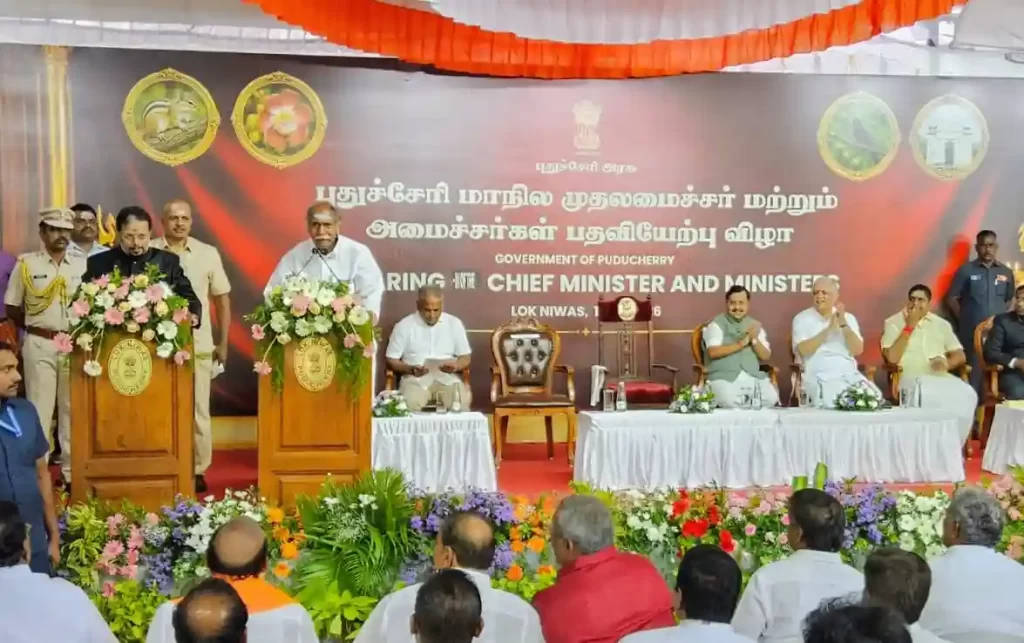
IntroductionIn a country where political careers are won and lost in single terms, N. Rangaswamy has done something that no other leader in Puducherry’s history has managed, and very few across India can claim. At 75 years old, he has been sworn in as Chief Minister of the Union Territory for the fifth time.Following the victory of the AINRC-led NDA combine in the recent assembly elections, N. Rangaswamy was sworn in as the Chief Minister of Puducherry for a record fifth term at Lok Nivas on May 13, 2026. The swearing-in ceremony was held at the Puducherry Lok Bhavan, where Lieutenant Governor K. Kailasanathan administered the oath of office and secrecy to Rangaswamy and the newly inducted ministers.PM Modi, in his message, said: “Congratulations to Thiru N. Rangaswamy on taking oath as Puducherry’s Chief Minister. He has made a mark as an experienced and effective administrator who has strengthened Puducherry’s growth journey. Looking forward to working with him for the people’s well-being.”Five terms. Two different parties. Three different political eras. One relentlessly resilient man. The story of N. Rangaswamy is, in many ways, the story of Puducherry itself.The Beginning: Born in Puducherry, Rooted in Its PeopleNatesan Krishnasamy Gounder Rangaswamy was born on 4 August 1950 in Puducherry to parents Natesan Krishnasamy and Panchali. He completed his Bachelor of Commerce from Tagore Arts College and Bachelor of Laws from Dr. Ambedkar Government Law College.He is a trained lawyer who never lost the habits of the courtroom: patience, precision, and the ability to read a room. Those qualities would serve him far better in the chamber of the Puducherry assembly than in any court.Rangaswamy began his political journey with the Congress, winning from Thattanchavady in 1991. He served as a cabinet minister for nearly a decade before becoming Chief Minister in 2001. He was elected again from the same constituency during the 1996, 2001, and 2006 assembly elections. In 1996, Rangaswamy was appointed as Co-operative Minister. In 2000, he became Education Minister.Those ministerial years were not glamorous. Education and cooperative affairs are not the portfolios that attract headlines. They are, however, the portfolios that build grassroots credibility. Rangaswamy used them to do exactly that, cultivating the kind of direct public relationship — house visits, welfare distributions, personal accessibility — that would sustain him through every political crisis that followed.The First Two Terms: Congress and the Dawn of Welfare PoliticsDuring his long stint as Chief Minister from 2001, Rangaswamy brought in developmental reforms in the tiny Union Territory. Housing subsidy for hut dwellers, free breakfast for school children, financial assistance for students in professional colleges, and a host of other infrastructural reforms consolidated his popularity.His approach was simple and had a clear logic: Puducherry is small. What it lacks in size, it compensates with the intensity of its political engagement. Welfare programmes that deliver tangible benefits directly and visibly to voters work here with a directness that is harder to achieve in larger states. Rangaswamy understood this instinctively and governed accordingly.He served as Chief Minister from 2001 to 2006 and again from 2006 to 2008 as a Congress leader. The back-to-back terms were a sign of confidence from both the Congress leadership and the Puducherry electorate. But the Congress gave, and the Congress could also take away.The Fall and the Reinvention: From Congress to AINRCRangaswamy stepped down as Chief Minister in August 2008 after internal issues within the party. Citing irreconcilable differences, he formed his own party, the AINRC.The departure from Congress was not merely a political move. It was, by every account of those who witnessed it, a deeply personal rupture. Rangaswamy had given the Congress party in Puducherry his best years, built its base, and won it elections. To be pushed out by internal maneuvering — by colleagues within his own party rather than by voters — was a humiliation that would have broken less resilient politicians.Instead, it produced something remarkable. He formed his own party, AINRC, and on 7 February 2011 launched the All India N.R. Congress as a breakaway from the Indian National Congress.The audacity of the move should not be understated. Puducherry’s political landscape at the time was dominated by the Congress and the DMK-aligned AIADMK. Breaking away from the Congress in a territory where it had deep roots, building a new party from scratch, and then winning an election within months — this is what political resilience looks like in practice.In the assembly elections held in April 2011, AINRC contested the elections in an alliance with the Jayalalithaa-led AIADMK and won 15 out of the 17 seats it contested. AINRC formed the government independently, with the support of an Independent, which enabled it to get a majority in the 30-seat assembly. Rangaswamy won from the Kadirkamam Assembly constituency and was sworn in as Chief Minister of Puducherry for the third time on 16 May 2011.The Setback of 2016 and the Road BackThe 2016 election was the low point of Rangaswamy’s career. AINRC, no longer in alliance with the AIADMK, contested alone. Though Rangaswamy won from the Indira Nagar Assembly constituency, the party won only eight seats in the assembly. Hence, Rangaswamy resigned as Chief Minister on 6 June 2016. He later served as the leader of the opposition in the Puducherry assembly from August 2016 to February 2021.Five years in opposition. For a man who had been Chief Minister three times, the leader of the opposition bench is a dramatically different vantage point. He used those years the way he had always used difficult periods — to rebuild the ground-level network, to remain accessible, and to wait.The wait ended in dramatic fashion. After the Puducherry government led by V. Narayanasamy lost a trust vote in the assembly in February 2021, the 2021 legislative assembly elections were held in April 2021. AINRC became part of the National Democratic Alliance and allied with the Bharatiya Janata Party and the AIADMK. The NDA won 16 seats, with AINRC winning 10 of the 16 seats it contested.Rangaswamy was sworn in
BRICS Foreign Ministers’ Meeting, New Delhi: A Bloc Divided by the War It Could Not Name
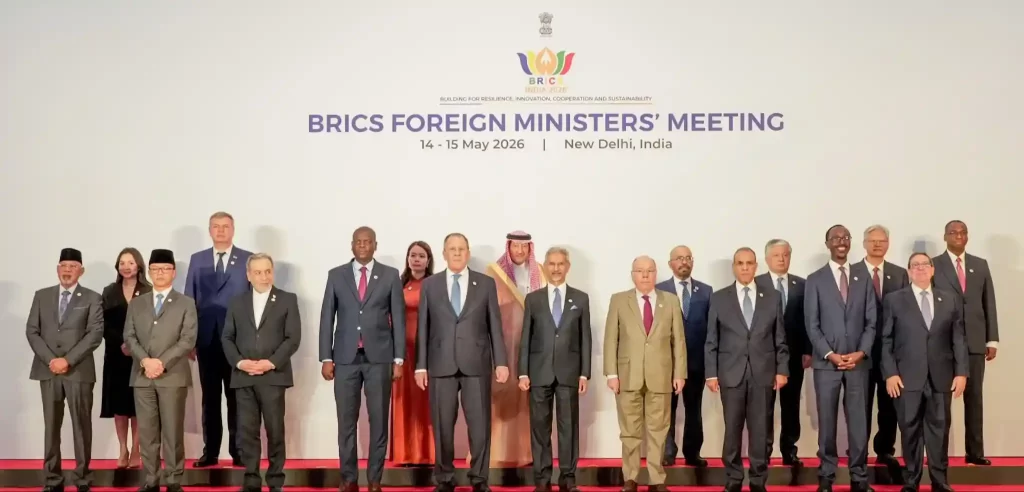
IntroductionWhen India’s External Affairs Minister S. Jaishankar took the chair at Bharat Mandapam in New Delhi, he was presiding over the most consequential BRICS Foreign Ministers’ Meeting since the bloc’s expansion. Eleven member states sat around the table. The agenda was India’s: global institutional reform, South-South cooperation, economic resilience, and the priorities of the developing world. The problem that arrived uninvited was the Iran war.Top diplomats from BRICS nations, including rivals Iran and the United Arab Emirates, failed to issue a joint statement after a two-day meeting in New Delhi, exposing divisions within the bloc over the war in Iran. Host nation India instead released a Chair’s Statement and Outcome Document, saying there were “differing views among some members” as regards the situation in the West Asia and Middle East region.The inability to produce a joint declaration — the standard diplomatic deliverable of any ministerial meeting — was not a procedural failure. It was a substantive one, and it went to the heart of what BRICS is, what it has become after its 2024-2025 expansion, and whether it can function as a coherent voice for the Global South when its own members are on opposite sides of an active war.The Meeting: Who Was There and What Was PlannedThe meeting was held at Bharat Mandapam under India’s 2026 chairship. It followed a preparatory ministerial held on September 26, 2025, on the sidelines of UNGA 80, where India as the incoming chair had set out its agenda.Those in attendance included Indonesia’s Foreign Minister Sugiono, Iran’s Foreign Minister Abbas Araghchi, South Africa’s Foreign Minister Ronald Lamola, Russia’s Foreign Minister Sergei Lavrov, India’s External Affairs Minister S. Jaishankar, Brazil’s Foreign Minister Mauro Vieira, Egypt’s Foreign Minister Badr Abdelatty, Ethiopia’s Foreign Minister Gedion Timothewos, China’s Ambassador to India Xu Feihong, and UAE’s Minister of State for Foreign Affairs Khalifa bin Shaheen Al Marar. Uganda’s Foreign Minister Odondo Jeje Abubakha was also present as a representative of the bloc’s outreach partners.India’s intended agenda was carefully constructed to avoid precisely the kind of confrontation that ultimately occurred. India’s chairship theme — Building for Resilience, Innovation, Cooperation and Sustainability — framed the meeting. Ministers reaffirmed BRICS’s three pillars: political and security cooperation, economic and financial cooperation, and people-to-people exchanges. They repeated the bloc’s commitment to openness, equality, and consensus.What the Chair’s Statement CoveredDespite the headline failure to produce a joint declaration, the Chair’s Statement and Outcome Document ran to 63 paragraphs covering a wide range of issues where agreement was possible.The Chair’s Statement gave most space to reform of global institutions: the United Nations and its Security Council, the IMF, the World Bank, and the WTO. Members argued that present structures do not reflect contemporary realities and favour developed Western powers. The statement reiterated support for a multipolar order and for greater representation of Africa, Asia, and Latin America in global decision-making.On economic matters, the ministers called for resilient supply chains, fair trade, reform of the global financial architecture, expansion of local-currency trade, and stronger South-South cooperation. The bloc opposed unilateral sanctions, protectionism, and trade barriers, and backed a rules-based multilateral trading system centred on the WTO.The document also covered cooperation on artificial intelligence, digital infrastructure, cybersecurity, climate change, energy transition, health security, food security, and innovation-led growth. Initiatives endorsed included the BRICS Grain Exchange, cross-border payment systems, and a stronger role for the New Development Bank and the Contingent Reserve Arrangement.On geopolitics, the ministers discussed West Asia, Gaza, Lebanon, Sudan, Syria, and Yemen, but could not agree on language for the Iran war. The text instead set out general principles: diplomacy, humanitarian access, ceasefires, protection of civilians, and respect for international law. The ministers strongly condemned terrorism, including the Pahalgam attack of April 22, 2025, and called for closer counter-terrorism cooperation.On Palestine specifically, the Chair’s Statement had four paragraphs on Palestine, including one recognising a two-state solution with East Jerusalem as the capital of an independent Palestine. The ministers recalled that the Gaza Strip is an inseparable part of the Occupied Palestinian Territory and reaffirmed the right of the Palestinian people to self-determination, including the right to an independent State of Palestine.The Fault Line: Iran vs. the UAE Inside the Same BlocThe meeting’s collapse into a Chair’s Statement rather than a joint declaration had a specific cause, a specific pair of actors, and a specific set of paragraphs that could not be reconciled.The central dispute was over how BRICS should describe the war involving Iran, the US, and Israel. Iran wanted the grouping to condemn US-Israeli attacks on it, while accusing the UAE — a fellow BRICS member and US ally — of direct involvement in military operations against Iran.On the first day of talks, Iranian Foreign Minister Abbas Araghchi called upon BRICS member states and the international community to explicitly condemn violations of international law by the United States and Israel, including their illegal aggression against Iran, to prevent the politicisation of international institutions, and to take concrete action to halt warmongering and bring an end to the impunity of those who violated the UN Charter.Araghchi explicitly accused the UAE of being “directly involved in the aggression against my country.” Tehran views the UAE and Saudi Arabia not as neutral neighbours but as “hostile bases” because they host critical US military infrastructure and failed to condemn the initial US-Israeli strikes on Iran.The UAE’s response was unequivocal. UAE’s Minister of State for Foreign Affairs Khalifa bin Shaheen Al Marar categorically rejected the allegations levelled by Iran and condemned what he termed “unjustified attacks” on civilian infrastructure. He defended UAE sovereignty against Iran’s charges in his national statement. “Despite numerous international and regional resolutions and condemnations, Iran has continued its terrorist attacks against the UAE and other countries in the region, in clear disregard of the international consensus,” he said.It is learnt that Iran had an issue specifically with paragraphs 26 and 29 of the proposed joint statement — the paragraphs covering Palestine and the Red Sea respectively. However, Araghchi, without naming the UAE, blamed a country