
Introduction
For over a decade, the Pachpadra refinery in Rajasthan's Balotra district has been India's most politically freighted infrastructure project — a facility that has had two foundation stones laid by two different prime ministers from two different parties, a cost that nearly doubled before a single barrel was processed, and an inauguration that was stopped one day before it was to happen by a fire that broke out in the Crude Distillation Unit.
It is also, when you set aside the politics and the delays and the drama, one of the most consequential energy projects India has built in a generation.
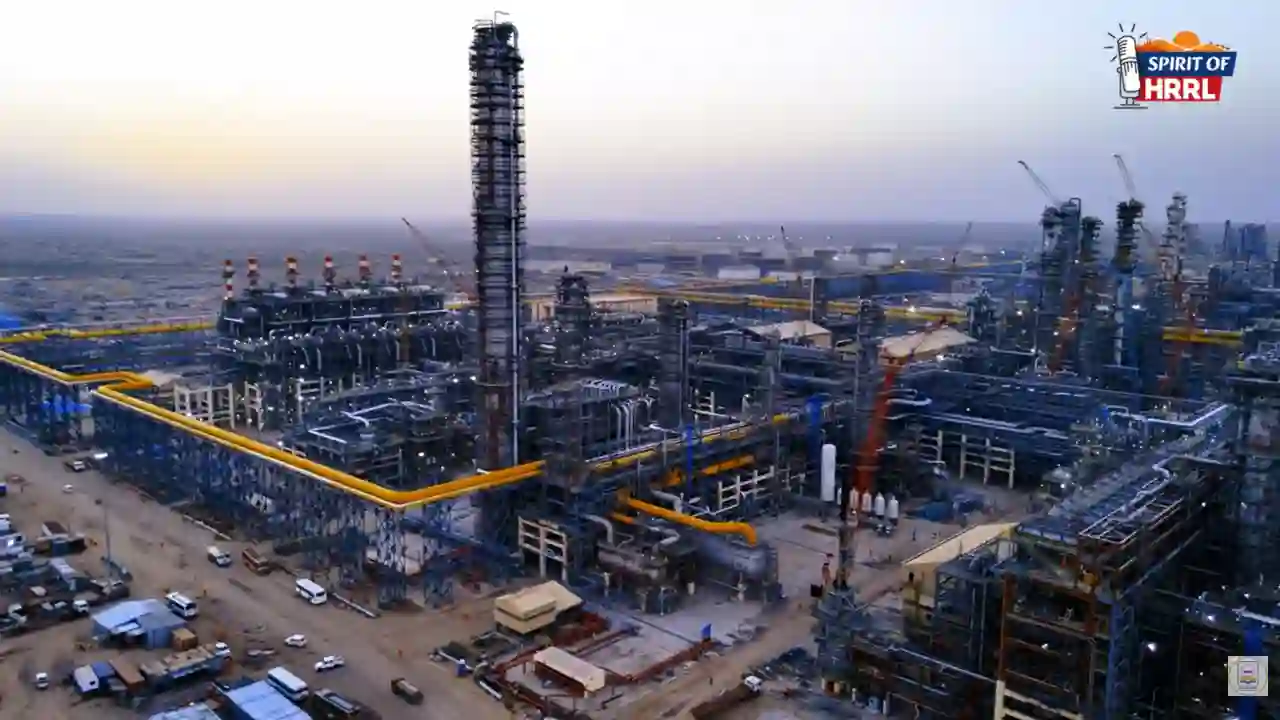
HPCL Rajasthan Refinery Limited, known as HRRL, is a 9 million metric tonnes per annum greenfield refinery-cum-petrochemical complex with 2.4 million metric tonnes per annum petrochemical production capacity, located in Pachpadra, Balotra district, Rajasthan. It is India's first greenfield integrated refinery-cum-petrochemical complex, built at an estimated cost of nearly Rs 80,000 crore. It is spread across 4,400.4 acres of land in the Thar desert, operated by HPCL Rajasthan Refinery Limited, with HPCL holding 74 percent and the Government of Rajasthan holding 26 percent.
When it becomes fully operational, it will be the first major refinery India has built from scratch since the 1990s — and the first one specifically designed to process the heavy, waxy crude oil that sits beneath Rajasthan's Barmer basin, one of India's most significant onshore oil reserves.
The Origin Story: A Project That Belongs to Every Party
The Pachpadra refinery's political genealogy is unusual even by Indian standards. No single government can claim it. Every government has tried to.
The story begins not with a foundation stone but with oil. The discovery of the Mangala oilfield in Barmer — the largest onshore oil discovery in India in more than 22 years at the time — created an obvious question: why is all this crude being pumped out of Rajasthan and sent to refineries in Gujarat and Maharashtra? Why is Rajasthan not refining its own oil?
The project was first conceptualised under the Congress government. On September 18, 2013, then Congress president Sonia Gandhi laid the first foundation stone for the project, with an initial estimated cost of Rs 43,129 crore. The Ashok Gehlot government in Rajasthan was a co-signatory, and the project carried the political imprimatur of both the state and central Congress establishments.
Then came 2014. The Congress lost the general election, Vasundhara Raje's BJP government came to power in Rajasthan, and a project associated with the Congress went into the freezer — not officially abandoned, but quietly deprioritised. The joint venture structure was complicated, the land acquisition was incomplete, and the financing arrangements required renegotiation.
Four years later, the BJP arrived to claim the project as its own. On January 16, 2018, Prime Minister Narendra Modi laid a second foundation stone for the same project, which now had two foundation stones from rival parties. Modi declared that the refinery would be ready by 2022 and would change the economic landscape of Rajasthan. He was wrong about 2022. He was not wrong about the economic landscape.
The Project: What Is Actually Being Built
The refinery is operated by HPCL Rajasthan Refinery Limited, with HPCL holding 74 percent and the Government of Rajasthan holding 26 percent. An MoU for the project was signed between the state government and HPCL on April 18, 2017.
The facility is not simply a refinery. The integrated nature of the project — combining refining with a large-scale petrochemical complex on the same site — is what makes it distinct from existing Indian refineries and from the original 2013 design.
The refinery has a capacity of 9 million metric tonnes per annum of refining and 2.4 million metric tonnes per annum of petrochemical production. The Scheduled Commercial Operation Date is July 1, 2026.
The petrochemical capacity is particularly significant. India is one of the world's largest importers of petrochemical products — the plastic resins, synthetic fibres, rubber, adhesives, and industrial chemicals that feed into every sector of manufacturing. A domestic integrated complex reduces that import dependence and creates a foundation for downstream manufacturing investment in Rajasthan.
The crude feedstock for the refinery will be Mangala crude from the Barmer basin — heavy and waxy crude that requires specialised handling including insulated pipelines and dedicated processing units. The Mangala field, discovered in January 2004, is the largest onshore oil discovery in India in more than two decades. It sits directly in Rajasthan's backyard, and Pachpadra was designed specifically to process it, eliminating the need to transport it all the way to coastal refineries in Gujarat.
HRRL is an important project considering the growing energy needs and petrochemical requirements of the country, thereby reducing the country's dependence on imports, which will result in saving foreign exchange. The project will also contribute towards industrialisation of a backward area, usage of locally available Mangala crude and help promote India as a refining hub.
The Cost: From Rs 43,129 Crore to Rs 79,459 Crore
The most uncomfortable aspect of the Pachpadra story is its cost trajectory. The initial estimated cost of the refinery was Rs 43,129 crore, and the work was scheduled to be completed by October 31, 2022. During the previous state government's tenure, the project cost increased to Rs 72,937 crore by June 2, 2023. HPCL Rajasthan Refinery Limited submitted a proposal for a second revision of the refinery's cost to the state government on July 24, 2025.
The total project cost has been revised to Rs 79,459 crore. The Union Cabinet approved the revised cost on April 8, 2026 — just twelve days before the inauguration fire.
That escalation — from Rs 43,129 crore to Rs 79,459 crore — represents an 84 percent increase from the original estimate. Several factors contributed to it: the construction delays caused by land acquisition disputes and coordination failures during the political transitions between Congress and BJP governments in both Rajasthan and at the centre; Covid-19 disruptions that halted construction for an extended period; global commodity price inflation that drove up the cost of steel, cement, and equipment; and the expansion of the petrochemical complex beyond the original scope.
The state government has hailed the project as a milestone in Rajasthan's economic and social development. The opposition has used the cost escalation as a political weapon in both directions — Congress criticising the BJP for delays, and the BJP criticising the Congress for the original underestimation. The project, characteristically, belongs to everyone when things go right and to nobody's party when the bills come in.
The Fire: One Day Before History
India's first greenfield integrated refinery-cum-petrochemical complex was twelve hours from its formal inauguration by the Prime Minister when it caught fire.
A fire broke out near the Crude Distillation Unit at the HRRL refinery on April 20, 2026, just 24 hours before Prime Minister Narendra Modi was set to dedicate the facility to the nation.
Dozens of fire tenders from Balotra and nearby areas were rushed to the site. The blaze was doused in around two hours. There were no reports of any casualties.
In a statement on X, the Ministry of Petroleum and Natural Gas said: "Due to an unfortunate fire incident today in the vicinity of the Crude Distillation Unit at the HRRL refinery, the scheduled dedication of the refinery by the Hon'ble Prime Minister on April 21, 2026, has been postponed. The fire has been brought under control and there are no reports of any casualties. An investigation has been initiated."
Rajasthan Chief Minister Bhajan Lal Sharma ordered a high-level probe into the fire, terming it "extremely unfortunate." He said he had held immediate consultations with administrative officials and refinery management and that safety standards would be prioritised above all else. The situation was described as completely under control.
According to reports, the fire caused extensive damage to the Crude Distillation Unit and repairs could take up to four months. The official assessment of damage is still underway.
Former Chief Minister Ashok Gehlot, whose government had originally conceived the project, said: "The Pachpadra refinery is a matter of pride for all Rajasthanis. The incident at such a time is extremely unfortunate. I pray for everyone's safety." Leader of Opposition in the state assembly Tika Ram Jully termed the incident "serious and concerning." Congress alleged it showed "safety lapses" in the rush to inaugurate.
Industry insiders noted that while the fire was quickly contained, the structural integrity of the plant appears unharmed. However, a rigorous safety audit is now mandatory before full commissioning can proceed, and the July 1, 2026 commercial operation date may face pressure depending on the extent of repairs needed to the CDU.
What the Project Means for Rajasthan
The Pachpadra refinery is not primarily a national energy security story. It is, first, a Rajasthan story.
During the course of execution of this project, HRRL generated employment opportunities of approximately 25,000 workmen deployed by various stakeholders engaged in the construction of the refinery units. Those are construction phase jobs. The refinery's operational phase will create thousands of permanent skilled positions at the plant itself and tens of thousands more in the downstream industries — petrochemical manufacturers, packaging companies, logistics operators, component suppliers — that locate near a major integrated refinery complex.
Barmer and Balotra are among Rajasthan's less developed districts. The region has historically been defined by agriculture, salt production, and the oil wells that Cairn Energy drilled into the Mangala field from the 2000s onward. The refinery was always meant to be the next stage of that economic evolution — capturing the value of the oil that leaves the region rather than simply extracting it.
The refinery will also change the logistics calculus of the entire western Rajasthan region. In October 2025, the Jodhpur Division of North Western Railway finalised plans to connect Pachpadra Refinery to the railway network, which is expected to support freight transport and regional development in Rajasthan. A refinery that processes 9 million tonnes of crude annually generates an enormous volume of inbound crude shipments and outbound product distribution — in fuel, in petrochemical feedstock, in liquefied petroleum gas. All of that moves through the regional economy.
The National Picture: Energy Security and Import Reduction
HRRL is an important project considering the growing energy needs and the petrochemical requirements of the country. The project will reduce the country's dependence on imports, resulting in saving of foreign exchange.
India's refining capacity has not kept pace with its consumption growth. The country's refinery utilisation rate has consistently been among the highest in Asia, meaning existing refineries are running close to capacity. New greenfield capacity was urgently needed. Pachpadra provides it in a location that is geographically optimal for processing domestic Rajasthan crude — reducing the cost and carbon footprint of crude logistics compared to shipping it to coastal refineries in Gujarat or Maharashtra.
The petrochemical integration is the other significant national contribution. India's petrochemical import bill runs into billions of dollars annually. The 2.4 million tonnes per annum of petrochemical production capacity at Pachpadra will reduce that bill and strengthen the domestic manufacturing supply chain for industries ranging from textiles to packaging to automotive components.
The project will help in promoting India as a refining hub. That ambition — positioning India not just as a refining consumer but as a refining exporter in the same way Singapore and the UAE have built refining-hub economies — is a longer-term goal that Pachpadra alone cannot achieve but meaningfully advances.
What Comes Next
The fire of April 20 has cast uncertainty over the July 1 commercial operation date. A detailed engineering assessment of the Crude Distillation Unit will determine the actual timeline for repairs. The CDU is the first and most critical processing unit in any refinery — it is where crude oil is separated into its constituent fractions by heat and distillation. Any extended damage to the CDU would delay the start of commercial operations, potentially pushing the timeline from July into the latter part of 2026 or beyond.
The investigation ordered by Rajasthan Chief Minister Bhajan Lal Sharma will need to establish whether the fire was caused by a commissioning procedure failure, an equipment defect, or a design issue — and that finding will shape both the repair timeline and the safety audit required before the refinery can formally begin operations.
The inauguration date by the Prime Minister has not been rescheduled as of publication. The Ministry of Petroleum and Natural Gas stated a revised date would be announced in due course.
What is not in doubt is the project's completion. The main structures are built, the plant is essentially ready, and the commercial operation target is within the current financial year. The refinery that has had two foundation stones from rival governments, survived a decade of delays, cost escalation of 84 percent, and a fire the day before its grand opening is, despite everything, about to start working.
For Rajasthan, which has been waiting since 2013, and for India, which needs the capacity, that is the part of the story that matters most.