
India's passenger transport sector is undergoing one of its biggest transformations in decades. Rapid urbanisation, growing demand for efficient public transport, the push towards electric mobility, and the government's vision of developing world-class infrastructure have collectively accelerated the need for smarter and more sustainable mobility solutions. At the same time, policymakers, vehicle manufacturers, technology companies and transport operators are increasingly working together to modernise a sector that serves millions of people every day.
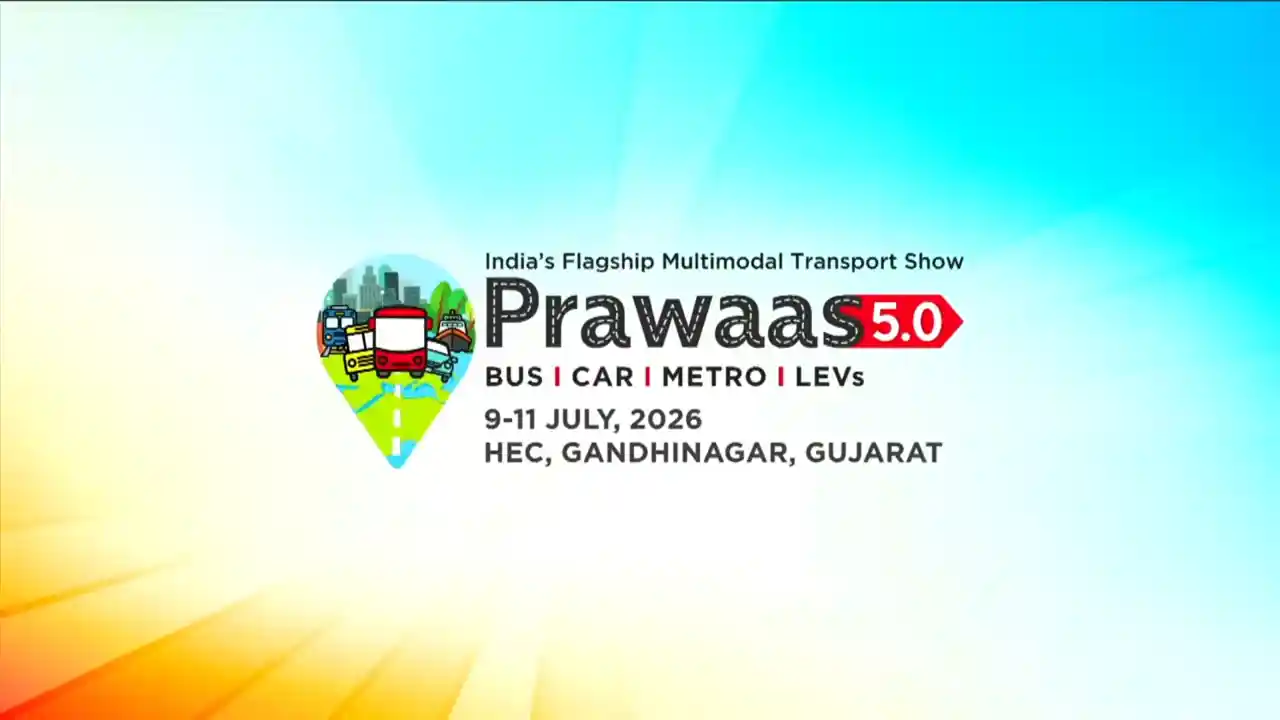
Against this backdrop, Prawaas 5.0 emerged as one of the country's most significant industry events dedicated to passenger mobility. Organised by the Bus and Car Operators Confederation of India (BOCI), the fifth edition of the event was held from 9 to 11 July 2026 at the Helipad Exhibition Centre (HEC) in Gandhinagar, Gujarat under the theme "Towards Safe, Smart & Sustainable Public Transport."
More than an exhibition, Prawaas 5.0 functioned as a national platform where governments, transport authorities, manufacturers, startups, investors and fleet operators came together to discuss the future of passenger mobility in India. The event reflected the country's broader ambition of building an integrated, technology-driven and environmentally sustainable transport ecosystem in line with the vision of Viksit Bharat.
What is Prawaas?
Prawaas is India's flagship multimodal passenger transport platform that focuses on improving public mobility through collaboration between the public and private sectors. Since its inception, the event has brought together stakeholders from across the transport ecosystem to discuss policy reforms, showcase new technologies and encourage investment in modern transport infrastructure.
Unlike conventional automobile exhibitions that primarily focus on launching new vehicles, Prawaas examines the entire passenger transport ecosystem. Discussions extend beyond buses and commercial vehicles to include metro connectivity, electric mobility, school transport, tourist vehicles, taxis, fleet management, digital technologies, financing models, road safety and last-mile connectivity.
The event is organised by the Bus and Car Operators Confederation of India (BOCI), the apex body representing private passenger transport operators across the country. Over the years, Prawaas has evolved into an important industry platform where transport policies, operational challenges and emerging technologies are discussed under one roof.
Prawaas 5.0: The Largest Edition So Far
The fifth edition marked the biggest Prawaas event organised so far.
Held over three days in Gandhinagar, the event attracted more than 20,000 registered participants from 31 States and Union Territories as well as 11 countries, making it one of India's largest gatherings dedicated exclusively to passenger transport and mobility. Participants included government officials, State Transport Undertakings (STUs), private bus operators, automobile manufacturers, technology companies, startups, financiers, consultants and international mobility experts.
The event was inaugurated by Union Minister for Road Transport and Highways Nitin Gadkari, whose presence highlighted the growing importance of public transport in India's infrastructure and economic development agenda. Several ministers, policymakers and industry leaders also participated in panel discussions and policy sessions during the conference.
Why Passenger Mobility Matters
Passenger transport is one of the most critical components of India's economy.
Every day, millions of people depend on buses, taxis, metro systems and shared mobility services to travel for work, education, healthcare and business. As cities continue to expand and urban populations increase, the demand for reliable, affordable and environmentally sustainable public transport is expected to grow significantly.
Road transport continues to carry the majority of passenger traffic in India, making improvements in fleet quality, safety standards, digital ticketing, operational efficiency and clean mobility essential for future growth.
Prawaas 5.0 was organised with this larger objective in mind—to encourage collaboration that can improve accessibility, reduce congestion, enhance passenger safety and support India's transition towards cleaner modes of transport.
Focus on Safe, Smart and Sustainable Transport
The central theme of Prawaas 5.0 was "Towards Safe, Smart & Sustainable Public Transport."
Safety remained one of the most important discussion areas. Experts examined measures to improve vehicle safety standards, strengthen driver training, modernise fleet management systems and reduce road accidents through better technology and regulatory reforms.
The event also focused on "smart" mobility, highlighting the growing role of digital technologies such as GPS-enabled fleet management, intelligent transport systems, AI-based route optimisation, digital ticketing platforms and data-driven transport planning.
Sustainability formed the third pillar of the discussions. Sessions explored the transition towards electric buses, cleaner fuels, reduced emissions and environmentally responsible transport systems that support India's climate goals.
Key Themes Discussed During the Conference
The conference programme covered a wide range of issues that are shaping the future of passenger transport in India.
Panel discussions examined policy reforms required to accelerate bus transport and electric mobility while addressing challenges such as financing, insurance frameworks and regulatory approvals.
Dedicated sessions focused on the electrification of school buses, the shortage of buses across Indian cities, strategies for achieving net-zero transport goals and the role of startups in developing innovative mobility solutions.
Other discussions explored toll policies, driver skill development, fleet digitisation, tourism mobility, connected transport systems and the future of electric vehicles in India's passenger transport sector. Industry experts also debated how technology, investment and policy can work together to modernise public transport infrastructure across the country.
Electric Mobility Takes Centre Stage
Electric mobility was among the dominant themes throughout the event.
India has been steadily increasing the adoption of electric buses and other zero-emission vehicles through initiatives such as the PM e-Drive Scheme and state-level EV policies. Prawaas 5.0 provided a platform for manufacturers to showcase electric buses, charging technologies, battery innovations and digital fleet management solutions.
Industry leaders discussed the opportunities and challenges associated with electrifying commercial passenger transport, including charging infrastructure, financing models, battery technology, operational costs and policy incentives.
The event reflected the growing consensus that electric mobility will play a major role in reducing urban pollution while lowering operating costs for transport operators over the long term.
Platform for Startups and Innovation
Prawaas 5.0 also highlighted the increasing role of startups in transforming passenger mobility.
Emerging companies presented solutions related to fleet management, mobility software, passenger safety, artificial intelligence, route optimisation, predictive maintenance and smart ticketing systems.
Dedicated startup sessions enabled entrepreneurs to interact with transport operators, investors and policymakers, creating opportunities for partnerships and commercial deployment of innovative technologies.
The inclusion of startups demonstrated that India's transport sector is no longer driven solely by vehicle manufacturers but increasingly by software, digital platforms and technology-led mobility solutions.
Exhibition and Industry Participation
Alongside the conference, Prawaas 5.0 hosted a large exhibition featuring commercial vehicles, buses, electric mobility solutions, transport technologies and passenger service innovations.
Leading automobile manufacturers, component suppliers, fleet operators, technology providers and service companies showcased products ranging from next-generation buses and electric vehicles to intelligent transport systems, telematics, digital payment platforms and fleet management software.
The exhibition enabled operators to explore new technologies while creating opportunities for manufacturers and solution providers to engage directly with customers and policymakers.
Bharat Prawaas Awards
One of the major highlights of the event was the Bharat Prawaas Awards, which recognised excellence and innovation within India's passenger transport sector.
The awards honoured organisations and individuals that have contributed to improving public transport through technological innovation, operational excellence, sustainability initiatives and leadership within the mobility ecosystem.
Such recognition encourages best practices while promoting innovation across the industry.
Why Prawaas Matters
Events such as Prawaas have gained increasing importance as India's mobility ecosystem becomes more complex.
Developing efficient passenger transport today requires close coordination between central and state governments, transport authorities, vehicle manufacturers, technology firms, infrastructure developers, financiers and operators.
Prawaas provides a common platform where these stakeholders can exchange ideas, discuss policy reforms, build business partnerships and identify solutions to shared challenges.
It also reflects India's broader transition towards integrated multimodal transport, where buses, metro systems, taxis, electric vehicles and last-mile connectivity function as interconnected components of a unified mobility network.
Looking Ahead
India's transport sector is expected to witness significant investment over the coming years as urbanisation accelerates and demand for public mobility continues to rise.
Future growth will depend on cleaner vehicles, digital technologies, intelligent transport systems, stronger infrastructure and supportive government policies.
Platforms such as Prawaas are likely to play an increasingly important role by facilitating dialogue between policymakers and industry while encouraging innovation and investment across the mobility ecosystem.
The discussions held during Prawaas 5.0 indicate that India's future transport strategy will extend beyond expanding vehicle numbers to creating a safer, more efficient and environmentally sustainable passenger mobility system.
Conclusion
Prawaas 5.0 highlighted the rapid transformation taking place within India's passenger transport sector. Bringing together government leaders, transport operators, manufacturers, startups and technology providers, the event served as a comprehensive platform for discussing the future of public mobility in the country.
From electric mobility and smart transport technologies to policy reforms and sustainable infrastructure, the conference reflected the industry's changing priorities and India's ambition to build a modern, integrated and future-ready transport network. As the country moves towards the goal of becoming a developed economy, initiatives such as Prawaas are expected to play an important role in shaping policies, encouraging innovation and strengthening collaboration across the passenger mobility ecosystem.
Video: PRAWAAS
Video: PRAWAAS
Video: PRAWAAS