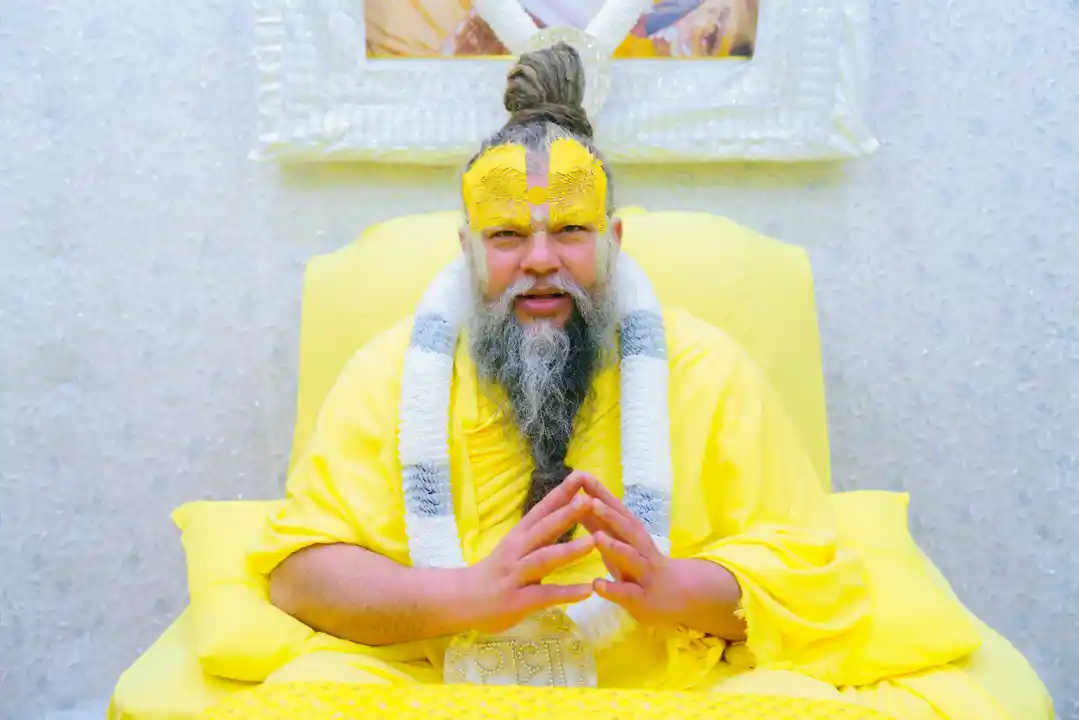
Guru Purnima is one of the most spiritually meaningful days in the Hindu calendar, a day devoted to honoring the gurus, teachers, mentors, and guiding figures who shape a person’s journey from ignorance to understanding. Observed on the full moon day of the Ashadha month, it is a festival built not around celebration in the usual sense, but around gratitude, reflection, and reverence for the people and principles that help us grow. In 2026, Guru Purnima was celebrated on July 29, and the day will once again invite millions of devotees, seekers, students, and spiritual practitioners to pause and acknowledge the source of their wisdom.
What makes Guru Purnima so enduring is that it speaks to something almost universal. Whether one approaches it as a religious observance or a broader cultural tradition, the message remains the same: no person becomes wise alone. Somewhere along the way, someone teaches, corrects, inspires, consoles, or awakens us, and this day is meant to recognize that invisible but life-changing contribution.
What Guru Really Means
The word “guru” carries a depth that goes far beyond the idea of a teacher in the ordinary sense. Traditionally, *gu* means darkness and *ru* means the one who removes it, which is why a guru is understood as the one who dispels ignorance and reveals a clearer way of seeing life.
That darkness can take many forms. It may be the darkness of confusion, self-doubt, moral uncertainty, spiritual restlessness, or simply not knowing how to live with clarity and purpose. A true guru does not merely transfer information; they transform understanding, often by helping a person move beyond surface thinking into a deeper, more stable awareness of life.
This is also why the concept of a guru in Indian tradition is wider than many people initially assume. A mother can be a guru if she teaches compassion. A father can be a guru if he teaches discipline. An elder sibling can be a guru if they offer direction during difficult times. A schoolteacher, a spiritual master, or even a mentor at work can all occupy the role of guru if they genuinely help another person grow into wisdom and responsibility.
Vyasa Purnima and the Lineage of Knowledge
Guru Purnima is also known as Vyasa Purnima, because it marks the birth anniversary of Maharishi Ved Vyasa, one of the most revered sages in Indian spiritual history. Vyasa is remembered as the great compiler and organizer of Vedic knowledge, the sage who preserved the spiritual and philosophical inheritance of India by giving it a structure that could be transmitted across generations. He is credited with compiling the four Vedas, composing the Mahabharata, authoring the Puranas, and shaping the literary and spiritual framewor through which sacred knowledge could reach ordinary people.
That is a remarkable legacy when one thinks about it carefully. Vyasa did not merely create texts; he made wisdom transmissible. He turned a vast body of oral tradition into a form that could survive time, travel across regions, and remain alive in the hands of countless teachers and disciples. This is one of the reasons Guru Purnima is so closely tied to the idea of lineage, because it celebrates not just one sage, but the entire chain of knowledge passed down from master to student.
In many traditions, especially within bhakti and Vedantic communities, this disciplic succession is central. The guru is not seen as a personality to be admired from a distance, but as a living link in a long chain of transmission stretching back through generations. On Guru Purnima, devotees honor not only their immediate teacher, but also the larger spiritual inheritance that teacher represents.
The Spiritual Meaning of the Festival
At its heart, Guru Purnima is a day of surrender and gratitude. It reminds devotees that spiritual progress is not achieved merely through effort, but through grace, discipline, and guidance. A person may study scriptures for years, perform rituals, or sit in meditation, but without the guidance of a guru, the path can remain incomplete, unclear, or even misunderstood.
This is why many scriptures and spiritual traditions place such emphasis on the relationship between teacher and disciple. The guru is not simply someone who explains the path; they are someone who helps the seeker walk it without losing direction. In that sense, Guru Purnima is not just about honoring a person. It is about honoring the principle of guidance itself.
The festival also carries a strong emotional dimension. People often think of gurus as figures of authority, but the best teachers are usually remembered because they were patient, generous, and deeply invested in the growth of others. Guru Purnima becomes, then, not only a spiritual observance but also a deeply human one, because it invites people to remember who believed in them, who corrected them gently, and who stayed with them while they were still learning.
Rituals and Customs
The traditional observance of Guru Purnima begins early in the morning. Devotees rise with a sense of purity and intention, often touching the feet of parents and elders as a gesture of respect, since the festival includes all those who have guided one’s life. Water is offered to the Sun God, Lord Ganesha is worshipped for wisdom and success, and prayers are offered to one’s guru, if living, or to a symbolic representation of the guru principle if not.
Many devotees visit their spiritual teacher, bow before them, and offer flowers, fruits, clothes, dakshina, or other tokens of gratitude. The act of touching the guru’s feet is especially significant in Indian tradition, because it represents humility, surrender, and the acknowledgment that knowledge is received, not possessed.
Chanting mantras is also an important part of the day. Prayers such as “Om Namah Shivaya” and “Om Gan Ganapataye Namah” are recited by many devotees, not as empty formulae but as expressions of inward focus and reverence. The atmosphere in temples, ashrams, and homes often becomes deeply serene, with incense, lamps, devotional songs, and scriptural readings creating a mood of gratitude and contemplation.
Guru Purnima Across Traditions
One of the most beautiful aspects of Guru Purnima is how widely it is observed across spiritual traditions. ISKCON temples honor the disciplic succession and especially Śrīla Prabhupāda, whose role as founder-acharya brought Krishna consciousness to people around the world in a modern, accessible form.
At the Ramakrishna Mission, the day is observed with homage to Sri Ramakrishna and Swami Vivekananda, whose teachings continue to influence seekers across generations. At Sivananda Ashram in Rishikesh, the day is marked by Vyasa Puja, satsang, bhajans, and discourse, often in a traditional and reflective atmosphere. The Art of Living and Isha Foundation also observe Guru Purnima with meditation, satsang, and large gatherings that emphasize the inward dimension of the festival.
Buddhist communities observe the same full moon with their own spiritual associations, particularly the Buddha’s first sermon at Sarnath. That convergence across traditions is revealing, because it shows that the idea behind Guru Purnima is not limited to one faith. It is a universal recognition that wisdom must be transmitted, and that those who transmit it deserve reverence.
A Festival for the Modern World
Even for people who do not identify strongly with religion, Guru Purnima still offers something deeply relevant. Modern life is noisy, fragmented, and often shaped by self-reliance to the point of isolation, yet most people know, if they are honest, that they did not become who they are alone. Someone taught them how to think, how to endure, how to decide, or how to recover after failure.
That is what makes Guru Purnima feel so contemporary despite its ancient roots. It is a reminder that gratitude is not a weakness or a formality; it is a mature recognition of interdependence. We are shaped by others, and acknowledging that truth can be an act of both humility and strength. This is also why many people observe the day in very simple ways. They clean a corner of the house, place a photo of a teacher, parent, or spiritual master, light a diya, offer a flower or fruit, and spend a few minutes in silence. Some call their guru, some send a message, and some simply sit alone and reflect on who helped them move from confusion to clarity. These small acts often carry more meaning than elaborate ritual because they come from sincerity rather than obligation.
The Inner Journey
There is also a more contemplative way to understand Guru Purnima, especially in traditions influenced by teachers such as Osho and other modern spiritual guides. In this view, the guru is not a destination but a doorway, someone who does not ask for worship in a literal sense so much as encourage the disciple to awaken to their own inner truth.
This interpretation shifts the festival from external reverence to internal transformation. Instead of only asking “How do I honor my guru?”, the deeper question becomes, “How do I allow the teaching to change me?” That shift is subtle, but it is profound, because it moves the festival from ceremony into lived practice. In that sense, Guru Purnima is not only about remembering a guide. It is about becoming a more attentive student of life itself. The gratitude expressed on this day becomes meaningful when it translates into discipline, honesty, service, and a willingness to grow.
Conclusion
Guru Purnima is beautiful precisely because it is both simple and profound. It is simple in its outward form: a day of reverence, prayer, and thanks. But it is profound in what it asks of us inwardly: to remember the people and principles that brought light into our lives, and to acknowledge that wisdom is something received through relationships, not achieved in isolation.
As Guru Purnima 2026 approached on July 29, the day offered a chance to pause, bow inwardly, and say thank you to whoever helped remove a little darkness from our path. Whether that guru is a spiritual master, a parent, a teacher, or a mentor who quietly changed the direction of your life, the essence is the same. The festival reminds us that the highest form of respect is not only to remember the guide, but to live the guidance well.