


Pachpadra Refinery: India’s Most Delayed, Most Contested, and Most Important Energy Project
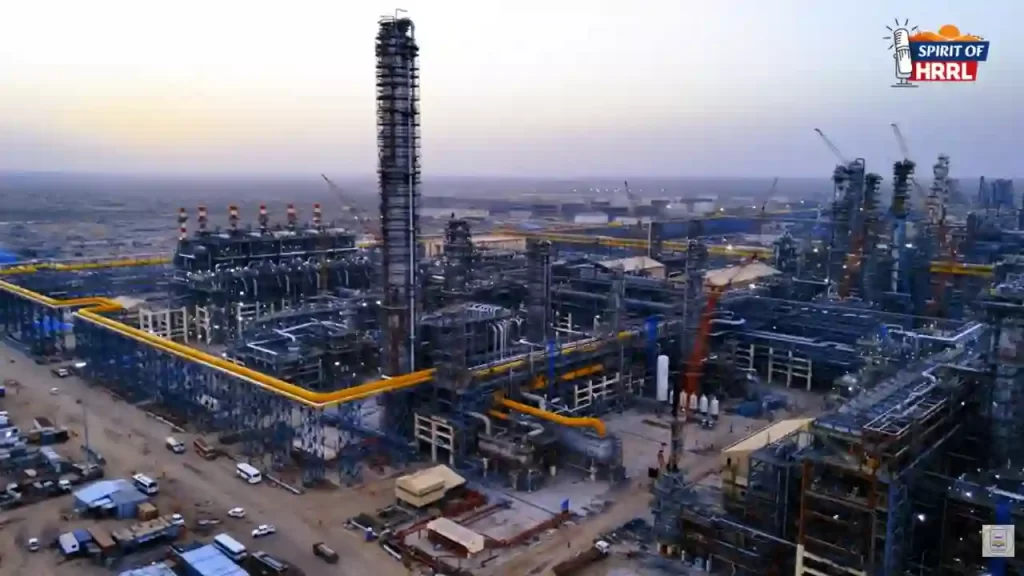
IntroductionFor over a decade, the Pachpadra refinery in Rajasthan’s Balotra district has been India’s most politically freighted infrastructure project — a facility that has had two foundation stones laid by two different prime ministers from two different parties, a cost that nearly doubled before a single barrel was processed, and an inauguration that was stopped one day before it was to happen by a fire that broke out in the Crude Distillation Unit.It is also, when you set aside the politics and the delays and the drama, one of the most consequential energy projects India has built in a generation.HPCL Rajasthan Refinery Limited, known as HRRL, is a 9 million metric tonnes per annum greenfield refinery-cum-petrochemical complex with 2.4 million metric tonnes per annum petrochemical production capacity, located in Pachpadra, Balotra district, Rajasthan. It is India’s first greenfield integrated refinery-cum-petrochemical complex, built at an estimated cost of nearly Rs 80,000 crore. It is spread across 4,400.4 acres of land in the Thar desert, operated by HPCL Rajasthan Refinery Limited, with HPCL holding 74 percent and the Government of Rajasthan holding 26 percent.When it becomes fully operational, it will be the first major refinery India has built from scratch since the 1990s — and the first one specifically designed to process the heavy, waxy crude oil that sits beneath Rajasthan’s Barmer basin, one of India’s most significant onshore oil reserves.The Origin Story: A Project That Belongs to Every PartyThe Pachpadra refinery’s political genealogy is unusual even by Indian standards. No single government can claim it. Every government has tried to.The story begins not with a foundation stone but with oil. The discovery of the Mangala oilfield in Barmer — the largest onshore oil discovery in India in more than 22 years at the time — created an obvious question: why is all this crude being pumped out of Rajasthan and sent to refineries in Gujarat and Maharashtra? Why is Rajasthan not refining its own oil?The project was first conceptualised under the Congress government. On September 18, 2013, then Congress president Sonia Gandhi laid the first foundation stone for the project, with an initial estimated cost of Rs 43,129 crore. The Ashok Gehlot government in Rajasthan was a co-signatory, and the project carried the political imprimatur of both the state and central Congress establishments.Then came 2014. The Congress lost the general election, Vasundhara Raje’s BJP government came to power in Rajasthan, and a project associated with the Congress went into the freezer — not officially abandoned, but quietly deprioritised. The joint venture structure was complicated, the land acquisition was incomplete, and the financing arrangements required renegotiation.Four years later, the BJP arrived to claim the project as its own. On January 16, 2018, Prime Minister Narendra Modi laid a second foundation stone for the same project, which now had two foundation stones from rival parties. Modi declared that the refinery would be ready by 2022 and would change the economic landscape of Rajasthan. He was wrong about 2022. He was not wrong about the economic landscape.The Project: What Is Actually Being BuiltThe refinery is operated by HPCL Rajasthan Refinery Limited, with HPCL holding 74 percent and the Government of Rajasthan holding 26 percent. An MoU for the project was signed between the state government and HPCL on April 18, 2017.The facility is not simply a refinery. The integrated nature of the project — combining refining with a large-scale petrochemical complex on the same site — is what makes it distinct from existing Indian refineries and from the original 2013 design.The refinery has a capacity of 9 million metric tonnes per annum of refining and 2.4 million metric tonnes per annum of petrochemical production. The Scheduled Commercial Operation Date is July 1, 2026.The petrochemical capacity is particularly significant. India is one of the world’s largest importers of petrochemical products — the plastic resins, synthetic fibres, rubber, adhesives, and industrial chemicals that feed into every sector of manufacturing. A domestic integrated complex reduces that import dependence and creates a foundation for downstream manufacturing investment in Rajasthan.The crude feedstock for the refinery will be Mangala crude from the Barmer basin — heavy and waxy crude that requires specialised handling including insulated pipelines and dedicated processing units. The Mangala field, discovered in January 2004, is the largest onshore oil discovery in India in more than two decades. It sits directly in Rajasthan’s backyard, and Pachpadra was designed specifically to process it, eliminating the need to transport it all the way to coastal refineries in Gujarat.HRRL is an important project considering the growing energy needs and petrochemical requirements of the country, thereby reducing the country’s dependence on imports, which will result in saving foreign exchange. The project will also contribute towards industrialisation of a backward area, usage of locally available Mangala crude and help promote India as a refining hub.The Cost: From Rs 43,129 Crore to Rs 79,459 CroreThe most uncomfortable aspect of the Pachpadra story is its cost trajectory. The initial estimated cost of the refinery was Rs 43,129 crore, and the work was scheduled to be completed by October 31, 2022. During the previous state government’s tenure, the project cost increased to Rs 72,937 crore by June 2, 2023. HPCL Rajasthan Refinery Limited submitted a proposal for a second revision of the refinery’s cost to the state government on July 24, 2025.The total project cost has been revised to Rs 79,459 crore. The Union Cabinet approved the revised cost on April 8, 2026 — just twelve days before the inauguration fire.That escalation — from Rs 43,129 crore to Rs 79,459 crore — represents an 84 percent increase from the original estimate. Several factors contributed to it: the construction delays caused by land acquisition disputes and coordination failures during the political transitions between Congress and BJP governments in both Rajasthan and at the centre; Covid-19 disruptions that halted construction for an extended period; global commodity price inflation that drove up the cost of steel, cement, and equipment; and the expansion of the petrochemical complex beyond the
Barefoot Warriors of the Thar: The 725-Km Fight to Save Rajasthan’s Sacred Sands
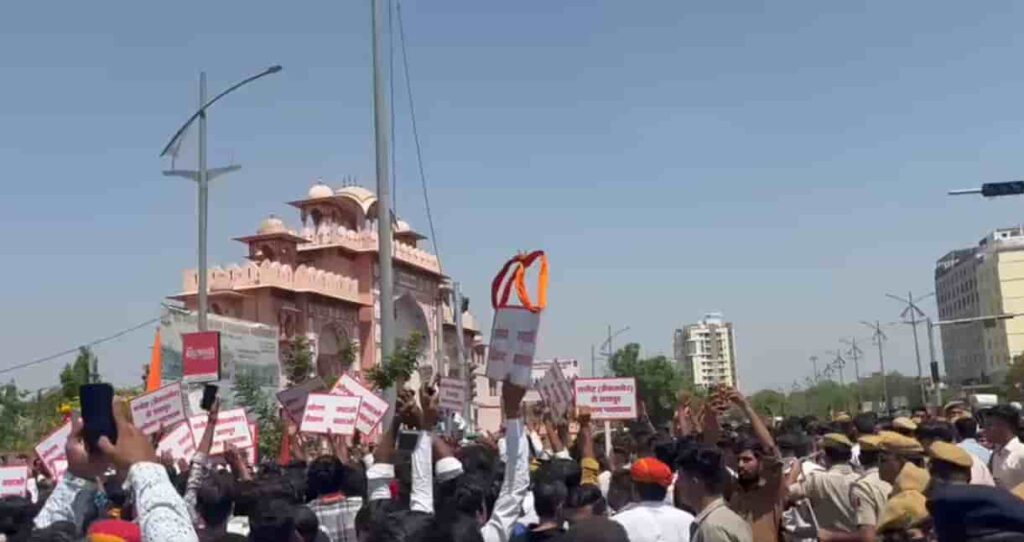
In the blazing heart of Rajasthan’s Thar Desert, where the sun scorches the earth and mirages dance on endless dunes, a remarkable movement is in making. It’s the Oran Bachao Yatra, a massive 725-kilometer barefoot march from Jaisalmer to Jaipur. Started on January 21, 2026, at the holy Tanot Rai Mata Temple (just 30 km from the Pakistan border), this isn’t just a protest. It’s a pilgrimage of faith, culture, and survival. Hundreds of villagers, farmers, camel herders, women, children as young as 10, and elders up to 75 – walk daily under the relentless sun. They shout slogans like “Oran bachao, gochar bachao!” (Save the Oran, save the pastures!) and sing bhajans at night. Why? To stop solar companies from swallowing sacred “Oran” lands that hold their gods, animals, and future.What Exactly is Oran? A Desert LifelineImagine patches of green in a sea of sand – that’s Oran. In western Rajasthan, especially Jaisalmer and Barmer, villages have set aside these lands for centuries. No one farms here. No trees get cut. They’re holy spots for folk gods like Ramdevji, Pabuji, and local deities. Khejri trees (Rajasthan’s state tree) provide life-saving shade and fodder. Ponds catch rainwater, keeping groundwater alive. Rare wildlife thrives: Great Indian Bustards (near extinction), chinkaras (deer), foxes, jackals, pelicans, cranes, and desert birds.Oran isn’t “waste” land, it’s the desert’s beating heart. It supports livestock (key for herders), stops soil erosion, and fights climate change. After 15 years of local struggles, only 300,000 bighas (about 75,000 hectares) are officially registered as Oran in the revenue records. But 2.5 million more bighas across Jaisalmer alone are at risk – labeled “gair mumkin” (uncultivable) or “banjar” (barren) by officials. Without protection, they’re easy prey for “development.”Solar Dreams vs. Desert Reality: The Spark of AngerRajasthan leads India in solar power, with over 22,000 MW installed, and 41,000 hectares more for new projects. Great for clean energy! But locals cry foul. Governments (Congress earlier, now the current one) hand over the Oran lands to companies. Examples: 745 hectares allotted in Jaisalmer’s Ramgarh tehsil recently. Trees uprooted, ponds filled, temples demolished. Leader Sumer Singh Sawanta of Team Oran fumes: “Cows’ grazing spots and deity lands vanish overnight.”Past betrayals sting. Officials once promised fixes in three months, but nothing happened. Herders lose pastures, so animals starve, forcing migration. Biodiversity crumbles: No Bustards means lost eco-tourism. Water tables drop without ponds. Women, remembering 1730’s Amrita Devi Bishnoi (who hugged Khejri trees to death against choppers), now lead the charge. It’s not anti-development, it’s a call for sustainable growth.The Epic Journey: Feet on Fire, Hearts AblazeDay by day, the yatra moves. Sunrise prayers at temples kick off barefoot walks. Drums beat, flags wave. They cover villages, explaining Oran’s role in water, forests, faith, and food. By evening: Chaupals (village squares) for bhajans, songs to gods give strength. “This fuels us,” says marcher Harish Dhandev.Covered 400 km so far! Highlights: Jodhpur stop. Shiv Sena MLA Ravindra Singh Bhati joined, carrying Sawanta on his shoulders for 1.5 km. Massive rally at Rajput Sabha Bhawan, then march to Collectorate. Hundreds submitted a memorandum demanding 17,562 bighas registered in Jaisalmer. Mahant Satyamani warned: “Public anger boils – protect forests now!”Bhopal Singh, 35: “We’ve met collectors everywhere, woken villages.” No full-time politicians walk, but support grows from all sides. Multi-state backing shows it’s bigger than party lines.Voices from the Sands: Real Stories, Raw PassionSumer Singh Sawanta (Team Oran leader): “Govt tests our patience. Temples razed, wrong! Both parties did this.”Mahant Satyamani: “Issue orders fast. Register grazing lands, people are furious.”Harish Dhandev: “Kids to grannies join. We love progress, but save our heritage first.”Women marchers: Echo Amrita Devi, carrying water pots as symbols of life-giving Orans.Why This Matters – A Wake-Up for IndiaOran Bachao isn’t local; it’s a green alert. Solar boom is vital against climate change, but at what cost? Lose Orans, lose desert balance: Herders flee, wildlife vanishes, culture fades. This yatra revives folk pride, unites faiths, and empowers women.