


Atal Setu: India’s Longest Sea Bridge Transforming Mumbai’s Connectivity
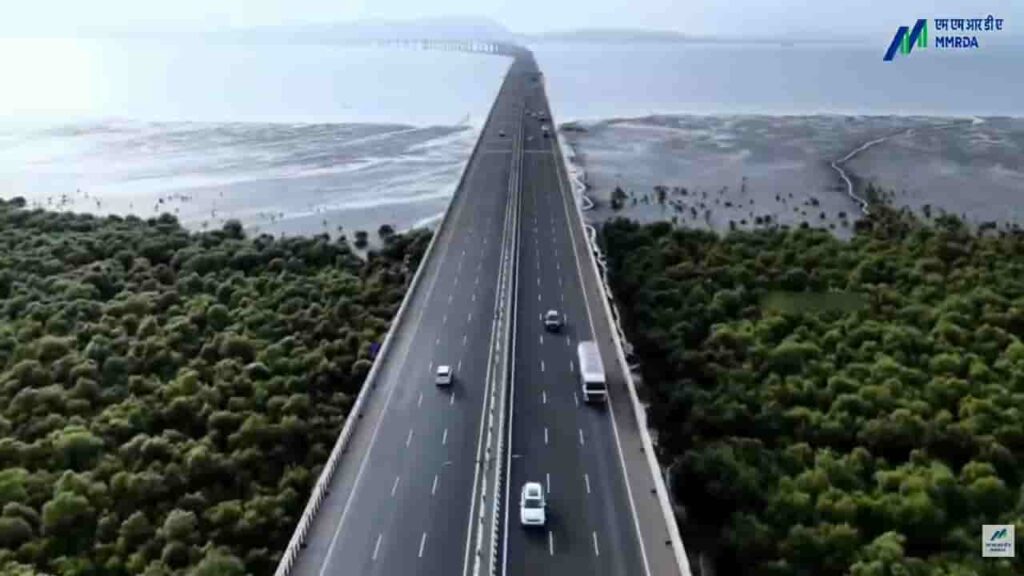
IntroductionThe Atal Setu, officially known as the Mumbai Trans Harbour Link, is one of India’s most remarkable infrastructure achievements. Connecting Mumbai with Navi Mumbai, this sea bridge has significantly transformed travel across the Mumbai Metropolitan Region.Inaugurated in January 2024, the project stands as India’s longest sea bridge and represents a major milestone in enhancing urban mobility, reducing congestion, and supporting economic growth in one of the country’s busiest regions.Project OverviewThe Atal Setu stretches approximately 21.8 kilometres, of which around 16.5 kilometres lies over the Arabian Sea. Developed by the Mumbai Metropolitan Region Development Authority, the bridge connects Sewri in Mumbai to Nhava Sheva in Navi Mumbai.Designed as a six-lane access-controlled expressway, the bridge allows high-speed travel and provides a direct link between South Mumbai and key areas such as:Navi MumbaiJawaharlal Nehru Port TrustNavi Mumbai International Airport (upcoming)This strategic alignment makes the bridge a critical infrastructure asset for both passenger and cargo movement.Need and Strategic ImportanceBefore the construction of Atal Setu, connectivity between Mumbai and Navi Mumbai relied heavily on longer routes via Thane or Vashi, often leading to heavy congestion and extended travel times.The bridge was conceptualised to:Provide a faster alternative routeReduce traffic burden on existing corridorsImprove connectivity to ports and upcoming infrastructure projectsIt is expected to reduce travel time between Sewri and Nhava Sheva from nearly two hours during peak traffic to about 20 minutes.Engineering Excellence and DesignSpecial materials and coatings were used to ensure durability and long-term performance.Intelligent Transport SystemsThe bridge is equipped with modern traffic management systems, including:Speed monitoring camerasEmergency response systemsSurveillance infrastructureThese features enhance safety and ensure smooth traffic flow.Safety RestrictionsTo maintain safety, certain categories of vehicles such as two-wheelers, auto-rickshaws, and tractors are restricted from using the bridge.Economic and Urban ImpactThe Atal Setu is expected to play a transformative role in the economic and urban development of the Mumbai Metropolitan Region.Boost to Logistics and TradeWith improved access to Jawaharlal Nehru Port Trust, India’s largest container port, the bridge enhances the efficiency of cargo transportation and logistics operations.Real Estate and Urban ExpansionThe project is expected to accelerate development in Navi Mumbai, making it a more attractive destination for residential and commercial investment.Airport ConnectivityThe bridge provides seamless access to the upcoming Navi Mumbai International Airport, strengthening regional connectivity.The Atal Setu is a testament to advanced engineering and modern construction techniques.Sea Bridge ConstructionBuilding a long bridge over open sea posed several challenges, including:Strong tidal currentsCorrosion due to saline conditionsEnvironmental constraintsEnvironmental ConsiderationsGiven its location over the sea, the project required careful environmental planning.Measures included:Minimising impact on marine ecosystemsMonitoring coastal biodiversityAdhering to environmental regulationsDespite these efforts, environmental concerns were raised during the planning and construction phases, particularly regarding potential effects on marine life.Challenges During ConstructionThe construction of Atal Setu involved multiple challenges:Working in deep-sea conditionsManaging logistics for large-scale constructionEnsuring minimal disruption to shipping routesDelays due to environmental clearances and pandemic-related disruptionsDespite these obstacles, the project was completed through coordinated efforts and advanced engineering solutions.Integration with Other Infrastructure ProjectsThe Atal Setu is part of a broader infrastructure network aimed at improving connectivity in the Mumbai region. It complements:Mumbai Coastal Road ProjectNavi Mumbai International AirportExisting highway and rail networksThis integrated approach enhances overall transport efficiency and supports regional growth.Final PerspectiveThe Atal Setu stands as a landmark achievement in India’s infrastructure development, symbolising innovation, scale, and ambition. By drastically reducing travel time and improving connectivity between Mumbai and Navi Mumbai, it has reshaped commuting patterns and opened new avenues for economic expansion.More than just a bridge, Atal Setu represents a critical link in India’s journey towards building world-class infrastructure that supports both urban growth and national development.
PM Modi’s Mann Ki Baat E-133 | 26th April, 2026
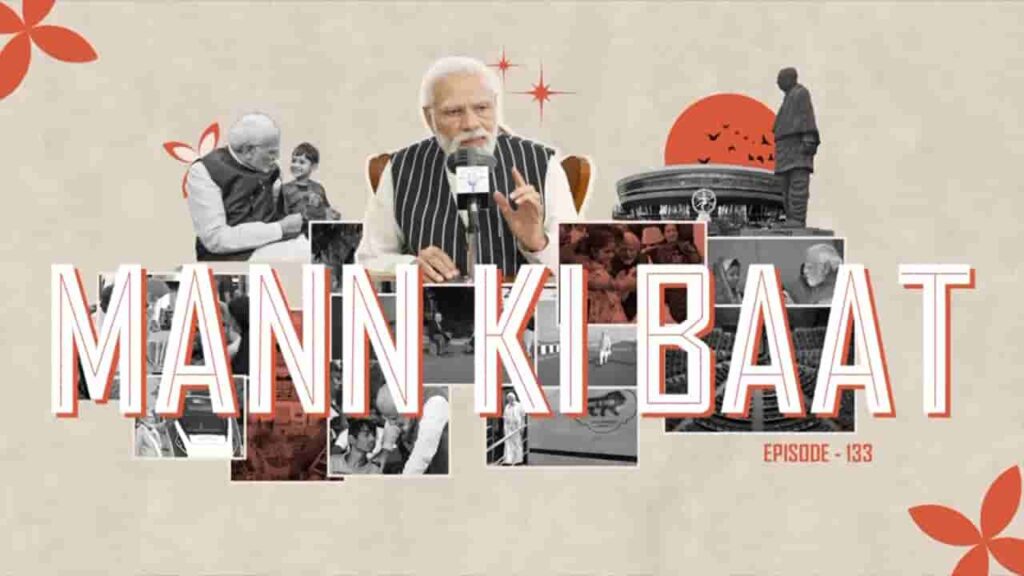
PM Modi’s Mann Ki Baat E-133 | 26th April, 2026 Video: YT/@NaMo
Samruddhi Mahamarg: Maharashtra’s High-Speed Economic Corridor
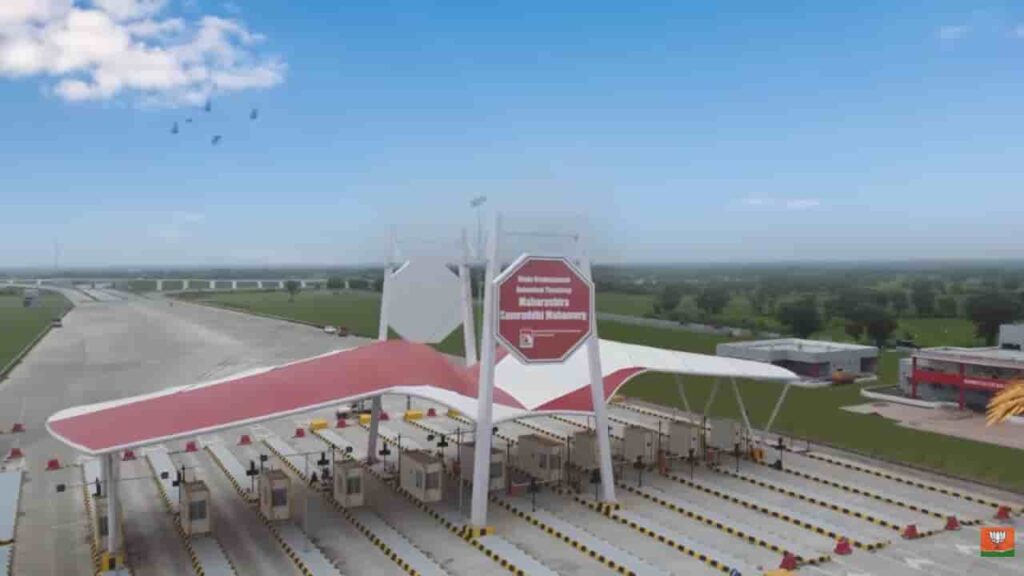
IntroductionThe Hindu Hrudaysamrat Balasaheb Thackeray Maharashtra Samruddhi Mahamarg, commonly known as the Samruddhi Mahamarg, is one of India’s most ambitious expressway projects aimed at transforming connectivity and economic development across Maharashtra. Designed as a high-speed, access-controlled corridor, the expressway connects the state capital Mumbai with Nagpur, significantly reducing travel time and boosting regional growth.The project represents a major step in strengthening infrastructure while promoting balanced development across urban and rural regions of the state.Project Overview and RouteThe Samruddhi Mahamarg spans approximately 701 kilometres, making it one of the longest expressways in India. It passes through 10 districts and connects key regions including Nashik, Aurangabad (now Chhatrapati Sambhajinagar), and Amravati.The expressway has been developed by the Maharashtra State Road Development Corporation and is designed for high-speed vehicular movement, with a maximum speed limit of up to 120 km/h.The corridor begins near Mumbai and stretches eastward to Nagpur, creating a direct and efficient link between the two major cities.Need and Vision Behind the ProjectBefore the construction of the Samruddhi Mahamarg, travel between Mumbai and Nagpur could take up to 16–18 hours due to traffic congestion and road conditions. The need for a faster, safer, and more efficient route was critical for both passenger and freight movement.The vision behind the project goes beyond connectivity. It aims to create an “economic corridor” by:Linking underdeveloped regions with major marketsPromoting industrial and agricultural growthEncouraging investment along the routeThe expressway is expected to serve as a backbone for regional development in Maharashtra.Key Features and DesignThe Samruddhi Mahamarg incorporates modern infrastructure and safety features to ensure smooth and secure travel.Access-Controlled ExpresswayThe highway is fully access-controlled, meaning vehicles can enter and exit only at designated interchanges. This reduces traffic interruptions and enhances safety.High-Speed CorridorWith multiple lanes and a high design speed, the expressway enables faster travel compared to traditional highways.Advanced Safety MeasuresThe project includes:Wildlife crossings and underpassesEmergency response systemsSurveillance and monitoring infrastructureThese measures aim to minimise accidents and ensure passenger safety.Smart InfrastructureThe expressway is equipped with intelligent traffic management systems, making it one of the technologically advanced road projects in India.Economic Impact and Development PotentialThe Samruddhi Mahamarg is expected to have a transformative impact on Maharashtra’s economy.Boost to Trade and LogisticsBy reducing travel time and transportation costs, the expressway enhances the efficiency of goods movement across the state.Industrial GrowthThe government has planned the development of industrial hubs, logistics parks, and smart cities along the corridor. These developments are expected to attract investment and generate employment.Agricultural BenefitsFarmers in rural regions will gain better access to markets, reducing wastage and increasing income opportunities.Progress and ImplementationThe expressway has been opened in phases, with major sections becoming operational between 2022 and 2024. By 2024, the full stretch connecting Mumbai and Nagpur was largely completed and made accessible to the public.The phased approach allowed for gradual integration of the expressway into the state’s transport network while ensuring quality construction.Environmental and Social ConsiderationsGiven the scale of the project, environmental and social impacts have been closely monitored.Land AcquisitionThe project required acquisition of land across multiple districts, which involved compensation and rehabilitation of affected communities.Environmental MeasuresEfforts have been made to:Develop green belts along the expresswayProvide wildlife crossings in forest areasMinimise ecological disruptionDespite these efforts, concerns have been raised about environmental impact and land use changes.Challenges FacedThe development of the Samruddhi Mahamarg encountered several challenges:Large-scale land acquisitionCoordination across multiple districtsEnvironmental clearancesConstruction during the COVID-19 pandemicHowever, the project was completed through coordinated efforts between government agencies and contractors.Strategic ImportanceThe expressway is not just a transport project but a strategic infrastructure initiative that strengthens Maharashtra’s position as an economic powerhouse.By connecting major cities and emerging regions, it supports:Balanced regional developmentImproved connectivity to ports and industrial zonesIntegration with national highway networksFinal PerspectiveThe Samruddhi Mahamarg stands as a landmark achievement in India’s infrastructure development. By drastically reducing travel time between Mumbai and Nagpur and creating new economic opportunities along its route, the project has redefined connectivity in Maharashtra.More importantly, it reflects a broader shift towards building infrastructure that not only facilitates movement but also drives inclusive growth, linking cities, industries, and rural communities into a unified economic corridor.
Parvatmala Project: India’s National Ropeway Development Programme
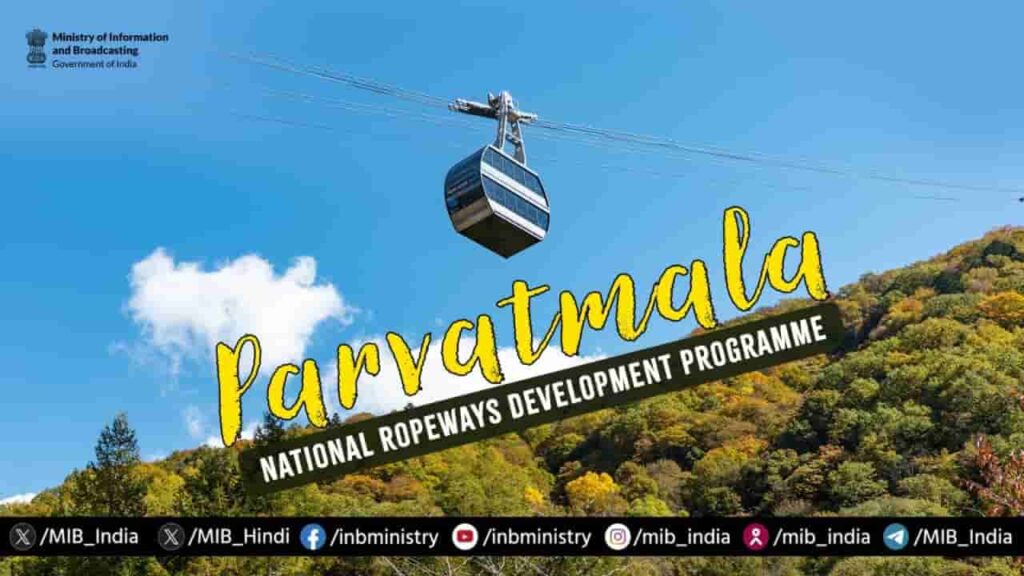
Image: MIBIntroductionThe Parvatmala Project, officially known as Parvatmala Pariyojana, was announced in the Union Budget 2022–23 as a major initiative to develop ropeway infrastructure across India, particularly in hilly and mountainous regions. The project aims to provide safe, efficient and sustainable connectivity in areas where traditional road and rail infrastructure face geographical and environmental challenges.It is being implemented under the guidance of the Ministry of Road Transport and Highways, with a strong focus on boosting connectivity, tourism, and local economic activity.Vision and ObjectivesThe core vision of the Parvatmala Project is to transform mobility in difficult terrains by introducing ropeways as a viable alternative to conventional transport systems. In many hill regions, road construction is not only expensive but also environmentally disruptive. Ropeways offer a cleaner and more efficient solution.The project is designed to:Improve last-mile connectivity in remote and hilly areasReduce travel time significantlyPromote eco-friendly transportationBoost tourism in scenic destinationsBy focusing on these objectives, the initiative seeks to integrate remote regions more effectively into the mainstream economy.Implementation StrategyThe Parvatmala Project is being developed under the Public-Private Partnership (PPP) model, which allows private players to participate in financing, constructing, and operating ropeway systems.The government has identified multiple corridors across states such as Uttarakhand, Himachal Pradesh, Jammu & Kashmir, and the Northeast for ropeway development. These routes are selected based on their tourism potential, connectivity needs, and feasibility.The project is expected to be implemented in phases, with initial priority given to high-demand routes and pilgrimage circuits.Key Features of Ropeway SystemsRopeways under the Parvatmala Project are expected to offer several advantages over traditional transport:They are designed to operate in difficult terrains with minimal land use, reducing the need for large-scale construction. Travel through ropeways is significantly faster, especially in areas where road journeys can take several hours due to winding routes.Additionally, ropeways are considered environmentally sustainable, as they produce lower emissions compared to fuel-based transport systems. They also help in reducing traffic congestion in popular tourist destinations.Economic and Tourism ImpactOne of the major expected outcomes of the Parvatmala Project is the boost to tourism. Improved connectivity to hill stations, धार्मिक sites, and remote scenic locations can increase tourist footfall and generate employment opportunities for local communities.The project is also likely to:Support small businesses in remote areasEnhance accessibility for pilgrims and touristsCreate jobs in construction, operations, and maintenanceBy improving connectivity, the initiative can play a key role in regional economic development.Challenges and ConcernsDespite its potential, the Parvatmala Project faces several challenges. Land acquisition, environmental clearances, and coordination between multiple agencies can slow down implementation.There are also concerns regarding the financial viability of certain routes, especially in areas with seasonal tourist demand. Ensuring safety standards and maintenance of ropeway systems will be critical for long-term success.The Road AheadThe government aims to develop over 200 ropeway projects covering more than 1,200 km in the coming years under the Parvatmala initiative. As implementation progresses, the focus will be on balancing infrastructure development with environmental sustainability.Successful execution of the project will depend on efficient planning, strong private sector participation, and timely clearances.ConclusionThe Parvatmala Project represents a significant shift in India’s approach to infrastructure development in mountainous regions. By introducing ropeways as a mainstream mode of transport, the initiative offers a practical solution to long-standing connectivity challenges.If implemented effectively, it has the potential to not only transform mobility in hilly areas but also drive tourism and economic growth, making remote regions more accessible and integrated with the rest of the country.
Bharatiya GPT: India’s Push Towards Indigenous AI Models

As artificial intelligence continues to reshape industries globally, India has been steadily moving towards building its own large language models (LLMs), often referred to in public discourse as “Bharatiya GPT.” The term does not denote a single product, but rather represents a broader effort to develop India-focused AI systems that understand the country’s languages, cultural context, and governance needs.At the centre of this movement are government-backed initiatives, academic collaborations, and private sector innovations aimed at reducing dependence on global AI platforms.The Need for an India-Centric AI ModelMost globally dominant AI systems, including those developed by OpenAI and Google, are primarily trained on English-heavy datasets and Western contexts. While they perform well globally, their understanding of India’s linguistic diversity and socio-cultural nuances remains limited.India, with over 20 officially recognised languages and hundreds of dialects, requires AI systems that can:Understand and generate regional languages accuratelyInterpret local context, idioms, and governance frameworksServe sectors like agriculture, healthcare, and public administration at scale“Bharatiya GPT” is therefore envisioned as a solution tailored specifically to these needs.Government-Led Initiatives and Policy PushThe Indian government has played a key role in advancing indigenous AI capabilities. Under its broader digital transformation agenda, several initiatives have been launched to support AI research and deployment.One of the central efforts is the IndiaAI Mission, which focuses on:Building domestic AI infrastructureSupporting startups and research institutionsCreating datasets in Indian languagesAdditionally, institutions like Indian Institute of Technology Madras and Indian Institute of Technology Bombay have been actively involved in AI research, contributing to language models and speech technologies tailored for Indian users.Rise of Indigenous AI ModelsIndia has already seen the emergence of several homegrown AI models that align with the idea of “Bharatiya GPT.”Key Developments:AI4BharatA research initiative focused on building open-source datasets and models for Indian languages. It has played a significant role in enabling multilingual AI capabilities.KrutrimDeveloped by Ola, Krutrim is one of India’s first large language models designed specifically for Indian users, supporting multiple regional languages.Reliance Jio AI initiativesIn collaboration with global technology partners, Jio has been working on AI platforms aimed at large-scale deployment across its digital ecosystem.These developments indicate a growing ecosystem where both public and private players are contributing to India’s AI ambitions.Challenges in Building Bharatiya GPTDespite strong momentum, developing a fully indigenous AI model comes with several challenges:1. Data AvailabilityHigh-quality datasets in Indian languages are limited compared to English, making training complex.2. Computing InfrastructureTraining large AI models requires massive computational resources, an area where global players still have an advantage.3. Linguistic ComplexityIndia’s linguistic diversity adds layers of difficulty in ensuring accuracy, consistency, and contextual understanding.4. Funding and ScaleBuilding and maintaining LLMs is capital-intensive, requiring sustained investment.Strategic Importance for IndiaThe push for Bharatiya GPT is not just technological—it is also strategic.Key Benefits:Digital SovereigntyReduces dependence on foreign AI systemsInclusionEnables access to AI in regional languages, especially in rural areasEconomic GrowthSupports startups, innovation, and job creationGovernance EfficiencyHelps in citizen services, policy implementation, and digital governanceGlobal Context and CompetitionIndia’s efforts mirror a broader global trend, where countries are developing their own AI models to maintain technological independence. Nations like China and the European Union have already invested heavily in localized AI systems.In this context, Bharatiya GPT represents India’s attempt to establish itself as a serious player in the global AI ecosystem, rather than just a consumer of foreign technology.The Road AheadIndia’s journey towards building a fully functional “Bharatiya GPT” is still evolving. Future developments are expected to focus on:Expanding multilingual capabilitiesImproving accuracy and contextual understandingScaling infrastructure through public-private partnershipsIntegrating AI into everyday governance and business use casesConclusion“Bharatiya GPT” is not a single product but a national vision for AI self-reliance. It reflects India’s ambition to create technology that is not only globally competitive but also deeply rooted in its own linguistic and cultural landscape.As development continues, the success of this initiative will depend on how effectively India can balance innovation, inclusivity, and scale—while building AI systems that truly understand and serve its diverse population.
O Romeo: A Contemporary Take on Love and Modern Relationships

O Romeo emerged as a romantic drama that attempts to reinterpret the idea of love in today’s fast-paced, emotionally complex world. Drawing inspiration from the timeless theme of passionate romance—echoing the essence of Shakespeare’s Romeo and Juliet—the film presents a modern narrative shaped by urban relationships, individual aspirations, and emotional vulnerability.Positioned as a youth-centric film, O Romeo explores how love is experienced, expressed, and often challenged in contemporary society.Storyline and Narrative ApproachAt its core, O Romeo revolves around the journey of a young man navigating love, heartbreak, and self-discovery. The narrative follows his emotional evolution as he encounters relationships that test his understanding of commitment and identity.Unlike traditional romantic films that rely heavily on idealised love stories, O Romeo leans towards a more realistic portrayal of relationships, where misunderstandings, personal struggles, and societal expectations play a significant role.The film captures:The intensity of first loveThe confusion and vulnerability that come with emotional attachmentThe impact of external pressures on personal relationshipsThrough its storytelling, the film attempts to reflect the emotional landscape of modern youth.Themes and Emotional DepthOne of the defining aspects of O Romeo is its focus on emotional realism. The film does not present love as a flawless experience but rather as something that evolves through challenges.Key themes explored in the film include:The fragility of modern relationshipsThe conflict between personal ambition and emotional commitmentThe idea of love in the age of independence and self-identityThe narrative also touches upon heartbreak and healing, portraying how individuals cope with emotional setbacks and grow through them.Performances and Character PortrayalThe performances in O Romeo contribute significantly to its storytelling. The lead character’s journey is portrayed with a sense of relatability, capturing the confusion and intensity often associated with young love.The supporting cast adds depth to the narrative, representing different perspectives on relationships and life choices. Together, the characters create a layered portrayal of contemporary social dynamics.Music and Visual ToneAs with many romantic dramas, music plays an important role in O Romeo. The soundtrack complements the emotional tone of the film, enhancing moments of love, longing, and introspection.Visually, the film adopts a modern aesthetic, with urban settings and stylised cinematography reflecting the lifestyle and environment of its characters. The use of lighting and framing helps convey mood shifts, particularly during emotionally charged scenes.Reception and Audience ConnectO Romeo has been positioned as a film that resonates primarily with younger audiences. Its attempt to depict realistic relationships and emotional struggles makes it relatable to viewers navigating similar experiences.While it draws inspiration from classical romantic themes, its treatment is distinctly contemporary, focusing more on internal conflicts than external drama.A Modern Interpretation of Timeless LoveThe film’s title itself reflects a connection to the idea of a “Romeo”—a symbol of passionate love—but reimagined in a present-day context. Instead of grand gestures and idealised romance, O Romeo presents a more grounded and introspective view of relationships.O Romeo stands as a reflection of how love stories are evolving in modern cinema. By blending emotional realism with relatable storytelling, it attempts to capture the complexities of relationships in today’s world, offering audiences a narrative that feels both familiar and introspective.Video: YT/@NadiadwalaGrandson
Noida International Airport (Jewar Airport) Inauguration: A Transformational Push to India’s Aviation and Regional Growth
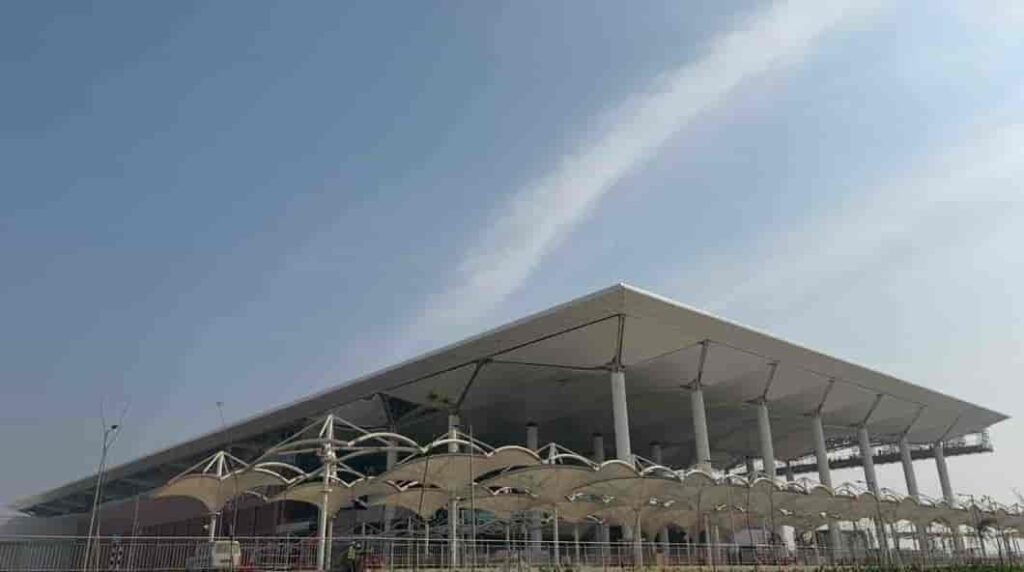
The inauguration of the Noida International Airport, widely known as Jewar Airport, marked a landmark moment in India’s aviation and infrastructure expansion. Positioned as one of the country’s largest and most ambitious greenfield airport projects, its launch has been seen as a strategic move to decongest existing aviation hubs and unlock new economic potential across northern India.Located in Jewar in Uttar Pradesh’s Gautam Buddha Nagar district, the airport has been developed to serve the rapidly growing travel demand of the National Capital Region (NCR), while also acting as a catalyst for industrial, logistical, and urban development in surrounding areas.Why India Needed a Second Major Airport in NCRFor years, the Indira Gandhi International Airport in Delhi has handled the bulk of air traffic in northern India. With passenger numbers steadily rising, the airport has been operating close to its maximum capacity, leading to congestion, delays, and operational strain.The idea of developing a second airport in the NCR was not just about expansion, but about redistributing aviation load and future-proofing infrastructure. The Noida International Airport was conceptualised to address these issues while supporting the long-term growth of one of India’s busiest urban corridors.Its location near the Yamuna Expressway provides strategic access not only to Delhi but also to key cities like Noida, Greater Noida, Ghaziabad, Agra, Mathura, and Aligarh. This makes it a regional hub rather than just an alternative airport.Scale, Design and Multi-Phase DevelopmentWhat sets the Noida International Airport apart is its scale and long-term vision. Unlike many existing airports that evolved through gradual expansion, this project has been planned from the outset as a multi-phase mega infrastructure development.In its first phase, the airport has been designed to handle around 12 million passengers annually, with a single runway and terminal. However, the long-term plan is far more ambitious. Once fully developed, the airport is expected to:Handle over 70 million passengers per yearOperate multiple runwaysInclude expansive cargo terminals and logistics parksSupport maintenance, repair, and overhaul (MRO) operationsThis phased approach ensures that the airport can scale alongside demand, making it a future-ready aviation hub.Focus on Sustainability and Modern InfrastructureOne of the defining aspects of the project is its emphasis on sustainability. The airport has been planned as an environmentally responsible infrastructure project, incorporating:Energy-efficient terminal designsWater conservation systemsReduced carbon footprint strategiesSustainable construction practicesGlobally, there has been increasing focus on green aviation infrastructure, and the Noida International Airport aligns with this shift by aiming to become one of the more eco-conscious airports in the region.Connectivity and Integration with Transport NetworksA major strength of the Jewar airport lies in its planned connectivity. The project is not being developed in isolation but as part of a larger, integrated transport ecosystem.The airport is expected to be connected through:The Yamuna Expressway and Eastern Peripheral ExpresswayProposed metro rail extensionsRegional Rapid Transit Systems (RRTS)High-speed rail links in the futureThis multi-modal integration will ensure seamless movement of passengers and goods, significantly reducing travel time and improving accessibility across the NCR and beyond.Economic Impact: A New Growth Engine for Uttar PradeshThe inauguration of the airport is expected to trigger a wave of economic activity in the region. Large infrastructure projects often act as growth multipliers, and Jewar is already witnessing rapid transformation.The airport is likely to:Generate thousands of direct and indirect employment opportunitiesBoost real estate demand in nearby areasAttract domestic and international investmentPromote development of logistics and warehousing hubsPlans for an aerotropolis—a city built around the airport—are also underway, which could include business districts, commercial centres, hotels, and industrial zones.This development is expected to strengthen Uttar Pradesh’s position as a major economic and industrial hub in northern India.Boost to Trade, Cargo and LogisticsBeyond passenger travel, the airport is expected to play a crucial role in cargo and logistics operations. With increasing demand for faster supply chains and export-oriented industries, the need for efficient cargo infrastructure has grown significantly.The Noida International Airport is being developed with dedicated cargo facilities, which will:Facilitate faster movement of goodsSupport export industries in the regionImprove connectivity for perishable and high-value goodsIts proximity to industrial clusters makes it particularly well-suited to serve as a logistics hub.Impact on Travel and Passenger ExperienceFor travellers, the airport is expected to bring noticeable improvements in convenience and efficiency. With reduced pressure on Delhi’s main airport, passengers can expect:Shorter wait timesBetter flight availabilityImproved travel experienceResidents of Noida, Greater Noida, and nearby regions will especially benefit, as they will no longer need to rely solely on Delhi for international travel.A Shift Towards Decentralised Urban DevelopmentThe development of the Jewar airport reflects a broader shift in India’s urban planning strategy—moving away from over-centralisation towards distributed growth models.By creating infrastructure hubs outside major metropolitan centres, the government aims to:Reduce pressure on existing citiesEncourage balanced regional developmentImprove quality of life in emerging urban zonesThe airport is expected to play a key role in shaping the future growth of the NCR, particularly in the Noida-Greater Noida belt.A Defining Moment in India’s Infrastructure StoryThe inauguration of the Noida International Airport is not just about adding another airport to the country’s aviation network. It represents a long-term vision for connectivity, economic expansion, and urban transformation.As air travel continues to grow in India, projects like Jewar airport will play a crucial role in ensuring that infrastructure keeps pace with demand. With its scale, strategic location, and integrated planning, the airport is poised to become one of the most important aviation hubs in the country in the coming years.In many ways, it signals how India is preparing for the next phase of growth—by investing in infrastructure that is not only large in scale but also forward-looking in design and impact.
Chenab Bridge: India’s Engineering Marvel Over the Himalayas
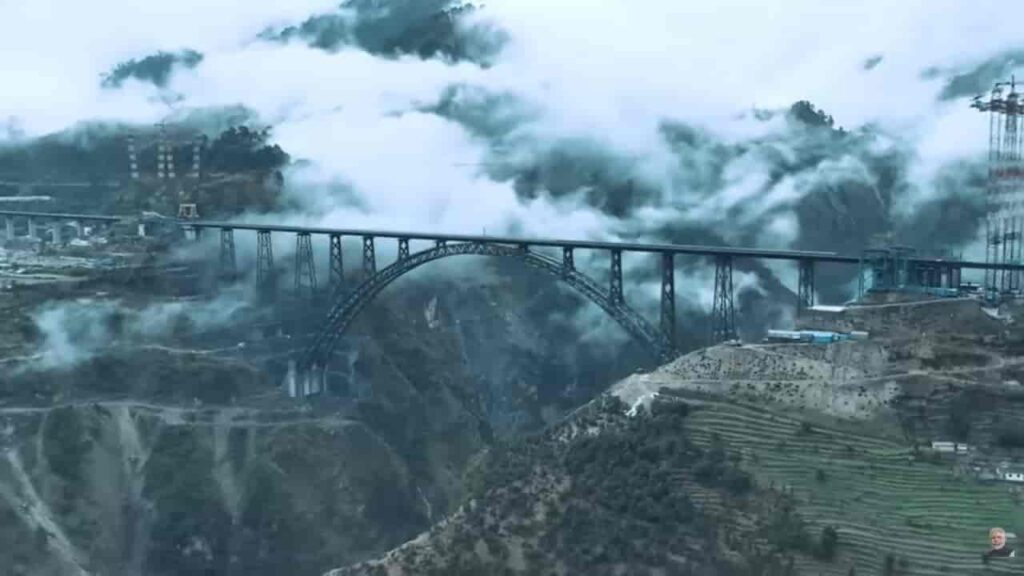
The Chenab Bridge, built across the Chenab River in the Union Territory of Jammu and Kashmir, stands as one of the most remarkable feats of modern engineering in India. Constructed as part of the ambitious Udhampur–Srinagar–Baramulla Rail Link (USBRL), the bridge has gained global attention for its height, design complexity, and strategic importance.Often described as a symbol of India’s infrastructural progress in difficult terrain, the Chenab Bridge is now recognized as the world’s highest railway bridge, surpassing even iconic structures like the Eiffel Tower in height from its base.Location and Strategic ImportanceThe Chenab Bridge is located between Bakkal and Kauri in the Reasi district of Jammu and Kashmir, spanning the deep gorge of the Chenab River. The region is known for its rugged Himalayan terrain, seismic sensitivity, and challenging weather conditions, making construction extremely demanding.The bridge is a crucial component of the USBRL project, which aims to provide all-weather rail connectivity to the Kashmir Valley, linking it with the rest of India. This connectivity is expected to significantly improve:Transportation and logisticsTourism and economic activityStrategic and defence mobility in the regionRecord-Breaking Height and StructureThe Chenab Bridge stands at an astonishing height of 359 metres above the riverbed, making it the highest railway bridge in the world. For perspective, it is about 35 metres taller than the Eiffel Tower.The total length of the bridge is approximately 1,315 metres, and it is designed as a steel arch bridge, a structure chosen specifically to withstand the extreme conditions of the region.Engineering and Design FeaturesThe bridge has been designed to endure some of the harshest environmental and geological challenges. Key features include:High Wind ResistanceThe structure is capable of withstanding wind speeds of up to 260 km/h, ensuring safety even in extreme weather conditions.Seismic SafetyGiven that the region falls in a high seismic zone, the bridge has been engineered to withstand earthquakes of significant magnitude, making it structurally resilient.Blast-Proof DesignConsidering its strategic importance, the bridge has been designed with blast-resistant features, adding an additional layer of security.LongevityThe structure has an estimated lifespan of over 120 years, reflecting the durability of materials and engineering precision used in its construction.Construction ChallengesBuilding the Chenab Bridge was not just an engineering task but a logistical and environmental challenge.The remote and mountainous location made transportation of materials extremely difficult.Extreme temperatures, landslides, and high winds frequently disrupted construction work.Specialised equipment and techniques were required to construct the massive steel arch over a deep gorge.Advanced technologies such as cable cranes, incremental launching, and precision welding were used to complete the structure.The project involved collaboration between Indian Railways and several international engineering firms, highlighting the global scale of expertise required.Role in the USBRL ProjectThe Indian Railways has undertaken the USBRL project to connect Kashmir via rail for the first time in history. The Chenab Bridge is considered the most critical and iconic segment of this project.Once fully operational, the rail link is expected to:Reduce travel time between Jammu and SrinagarProvide reliable connectivity in all seasonsBoost regional integration and developmentEconomic and Social ImpactThe completion of the Chenab Bridge is expected to have far-reaching effects:Tourism Boost: Easier access to Kashmir could significantly increase tourist inflow.Trade and Commerce: Improved logistics will benefit local businesses and industries.Employment Opportunities: Infrastructure development will generate jobs in the region.Regional Connectivity: It will reduce isolation and improve access to essential services.A Symbol of Modern IndiaBeyond its technical specifications, the Chenab Bridge represents a broader narrative of India’s infrastructural ambition and capability. Constructed in one of the most challenging terrains in the world, it reflects the country’s ability to execute large-scale projects with precision and resilience.It also stands as a testament to the dedication of engineers, workers, and planners who turned a seemingly impossible vision into reality.The Chenab Bridge is not just a railway structure—it is a landmark achievement that has redefined engineering possibilities in India, while playing a pivotal role in connecting the Kashmir Valley to the national railway network.
Karan Aujla’s P-Pop Culture India Tour 2026: A Musical Wave Sweeping Across the Country

Punjabi music has steadily grown into one of the most powerful cultural movements in India’s entertainment landscape, and in 2026, singer-songwriter Karan Aujla is taking that energy to stadiums across the country with his much-anticipated P-Pop Culture India Tour 2026.The tour, which began in late February, is already creating massive excitement among fans. From packed stadiums and electrifying stage production to thousands of people singing along to every lyric, Aujla’s tour is quickly becoming one of the most talked-about live music events of the year.Celebrating what Aujla calls “P-Pop Culture”—a vibrant blend of Punjabi music, global hip-hop influences, and modern pop production—the tour represents the growing power of Punjabi music on the national stage.As of 10 March 2026, the tour has already kicked off in spectacular fashion and is continuing to travel across India with several cities still waiting to witness the musical phenomenon.A Historic Opening Night in DelhiThe tour began on 28 February 2026 in New Delhi, where Aujla delivered a jaw-dropping performance at the iconic Jawaharlal Nehru Stadium.The opening night was nothing short of historic. Nearly 70,000 fans filled the stadium, turning the venue into a sea of lights, music, and excitement. The atmosphere resembled a massive festival rather than just a concert, as fans waved flashlights, danced to every beat, and sang along to Aujla’s biggest hits.With towering LED screens, dramatic lighting effects, and thunderous sound systems, the Delhi concert set the tone for the rest of the tour—bold, energetic, and unforgettable.Holi Celebrations Turn Musical in Mumbai and PuneFrom Delhi, the tour travelled to Mumbai and Pune on 3 March 2026, where special Holi edition concerts were organised.The Mumbai show took place at MMRDA Grounds, where thousands of fans gathered to celebrate both music and the festival of colours. The concert became a vibrant spectacle filled with dance, colours, and pulsating Punjabi beats.The same day, Pune hosted another energetic show, continuing the Holi celebrations with fans dancing late into the night.Ahmedabad Welcomes the Punjabi SuperstarThe P-Pop Culture tour continued its journey to Ahmedabad, where Aujla performed on 7 March 2026.The Gujarat audience responded with immense enthusiasm, proving once again that Punjabi music has grown far beyond regional boundaries. Fans travelled from nearby cities to attend the concert, making the event one of the most energetic musical gatherings in the city.Cities on the P-Pop Culture India TourThe tour spans several major cities across India, taking Aujla’s music to fans nationwide. The confirmed tour schedule includes:28 February 2026 — New Delhi • 3 March 2026 — Mumbai (Holi Special Concert) • 3 March 2026 — Pune (Holi Special Concert) • 7 March 2026 — Ahmedabad • 14 March 2026 — Chandigarh • 21 March 2026 — Indore • 29 March 2026 — Bengaluru • 3 April 2026 — Kolkata • 5 April 2026 — Jaipur • 10 April 2026 — Lucknow • 14 April 2026 — LudhianaEach city is expected to host thousands of fans, many of whom travel long distances to witness the performances live.Mumbai 2.0: A Second Night for the FansOne of the biggest talking points of the tour has been Aujla’s decision to host another concert in Mumbai.After fans raised concerns about overcrowding and arrangements during the earlier Mumbai show, the singer announced a second Mumbai concert on 12 April 2026, often referred to as “Mumbai 2.0.”In a gesture that won the hearts of fans, Aujla revealed that people who had already purchased tickets for the earlier Mumbai concert would be allowed to attend the new show free of cost.The announcement quickly went viral on social media and strengthened Aujla’s reputation for staying connected with his fanbase.A Global-Scale Concert ExperienceWhat makes the P-Pop Culture tour stand out is its massive production scale. Each concert features a 50-foot stage, huge LED screens, advanced lighting technology, and an international production crew working behind the scenes.The concerts are designed to deliver a stadium-level experience similar to global music tours. From laser lights and synchronized visuals to powerful sound systems, every element of the show is built to immerse the audience in music.The Rise of Punjabi PopOver the past decade, Punjabi music has transformed from a regional genre into a global phenomenon. Artists like Karan Aujla are at the forefront of this movement.Known for chart-topping hits such as Softly, Winning Speech, and Admiring You, Aujla has built a massive international fanbase across India, Canada, the United Kingdom, and beyond.Through the P-Pop Culture tour, he is showcasing how Punjabi music can command stadium crowds and compete with the biggest global music acts.A Tour That Feels Like a FestivalMore than just a series of concerts, the P-Pop Culture India Tour 2026 feels like a travelling music festival. Every city brings its own energy, its own crowd, and its own unforgettable moments.From the roaring crowds in Delhi to the colourful Holi concerts in Mumbai and Pune, and with many cities still waiting for their turn, the tour is proving that Punjabi music today is louder, bigger, and more influential than ever.As the tour continues through March and April, one thing is clear—wherever Karan Aujla performs, thousands of fans are ready to turn the night into a celebration of music, culture, and pure concert energy.
Dhanda Nyoliwala’s Electrifying Jaipur Concert Celebrates Haryanvi Culture
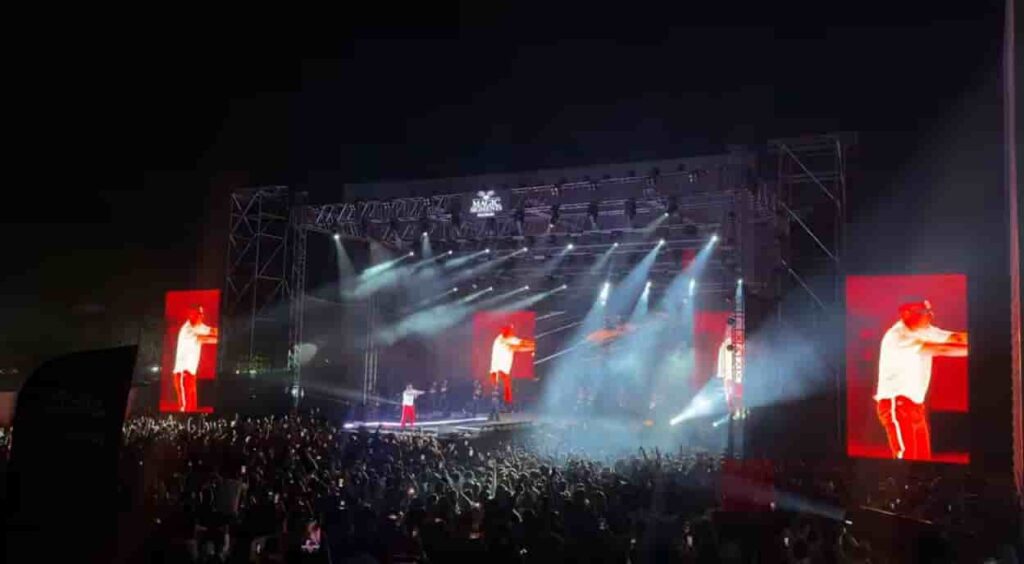
The city of Jaipur recently witnessed an energetic musical celebration as Haryanvi rapper Dhanda Nyoliwala brought his powerful stage presence to Rajasthan with a high-octane live concert that highlighted regional music and cultural identity. The concert turned into an unforgettable cultural spectacle when actor Randeep Hooda joined him on stage, transforming the performance into a vibrant celebration of Haryanvi pride and artistic expression.Held as part of Nyoliwala’s ongoing music tour, the Jaipur show attracted a large crowd of fans who gathered to experience the rising popularity of Haryanvi rap and contemporary regional music. The event stood out not only for its high-energy performances but also for the deeper cultural message it carried—showcasing the language, rhythm, and identity of Haryana on a wider national platform.A Celebration of Haryanvi Identity Through MusicDhanda Nyoliwala has rapidly emerged as one of the most recognizable voices in the Haryanvi independent music scene. Known for his distinctive rap style that blends modern hip-hop beats with raw Haryanvi dialect and storytelling, his performances often reflect everyday life, regional pride, and cultural authenticity.At the Jaipur concert, Nyoliwala performed several of his popular tracks that resonate strongly with young audiences across northern India. His music, often characterized by bold lyrics and energetic rhythms, created an electrifying atmosphere as the crowd enthusiastically sang along to his verses.The concert formed part of a broader effort by regional artists to bring local music traditions into mainstream entertainment spaces. Over the past few years, Haryanvi music has gained significant attention beyond its home state, and performers like Nyoliwala are playing a key role in pushing the genre to national and global audiences.Randeep Hooda’s Surprise Appearance on StageOne of the most memorable moments of the evening came when actor Randeep Hooda made a surprise appearance on stage alongside Dhanda Nyoliwala. Known for proudly representing his Haryanvi roots, Hooda’s presence added a new dimension to the performance and was met with loud cheers from the audience.As Nyoliwala delivered his signature rap verses infused with Haryanvi flavour, Hooda joined him in an energetic performance that blended cinema and music. The actor matched the rhythm with spirited dance moves and traditional Haryanvi expressions, creating an atmosphere that felt both authentic and celebratory.For many fans, this moment symbolised a rare and powerful collaboration between regional music and mainstream cinema. Hooda’s participation was not merely a celebrity cameo but a personal expression of cultural pride, reflecting his long-standing commitment to promoting Haryanvi language and traditions.A Cultural Spectacle Beyond a ConcertWhat began as a musical performance gradually transformed into a larger cultural event. The stage showcased a blend of contemporary rap and traditional Haryanvi spirit, creating a fusion that resonated strongly with the audience.Observers noted that the chemistry between Dhanda Nyoliwala and Randeep Hooda felt natural and spontaneous. Both artists share deep connections to Haryana’s culture, and their collaboration reflected a shared desire to bring regional voices to broader audiences.During the performance, Hooda embraced the lively atmosphere by dancing in classic Haryanvi style while Nyoliwala continued delivering his powerful rap sequences. The combination of music, cultural expression, and stage energy created a memorable experience for fans attending the concert.Audience Response and Social Media BuzzThe Jaipur concert quickly became a trending topic on social media as clips from the event circulated widely online. Videos capturing Hooda’s surprise entry and his energetic participation alongside Nyoliwala generated significant excitement among fans.Audience members described the show as one of the most vibrant musical events in Jaipur in recent months. The crowd’s enthusiastic response demonstrated the growing popularity of regional music genres that reflect local identity while appealing to younger listeners.The concert also highlighted how regional artists are increasingly using live performances to strengthen their connection with audiences beyond their home states.Growing Influence of Haryanvi MusicThe Jaipur concert underscored a broader trend in the Indian music industry: the rising influence of regional languages and independent artists. While Punjabi music has long enjoyed national popularity, Haryanvi music has recently begun carving its own space in mainstream entertainment.Artists like Dhanda Nyoliwala represent a new generation of performers who combine local storytelling with global musical influences such as hip-hop and rap. Their music resonates strongly with young audiences who connect with its authenticity and cultural roots.Collaborations with well-known public figures like Randeep Hooda further help amplify this cultural movement, bringing greater visibility to regional art forms.A Moment of Cultural PrideBeyond the music and entertainment, the Jaipur concert served as a reminder of how art and performance can celebrate identity and heritage. By bringing together contemporary rap and cinematic charisma, Dhanda Nyoliwala and Randeep Hooda created a moment that felt both entertaining and meaningful.The event reflected a growing confidence among regional artists who are proudly presenting their language and traditions to wider audiences. As more musicians and performers continue to explore these cultural roots, concerts like the one in Jaipur demonstrate the evolving landscape of India’s music scene—where regional voices are gaining recognition and influence far beyond their local origins.